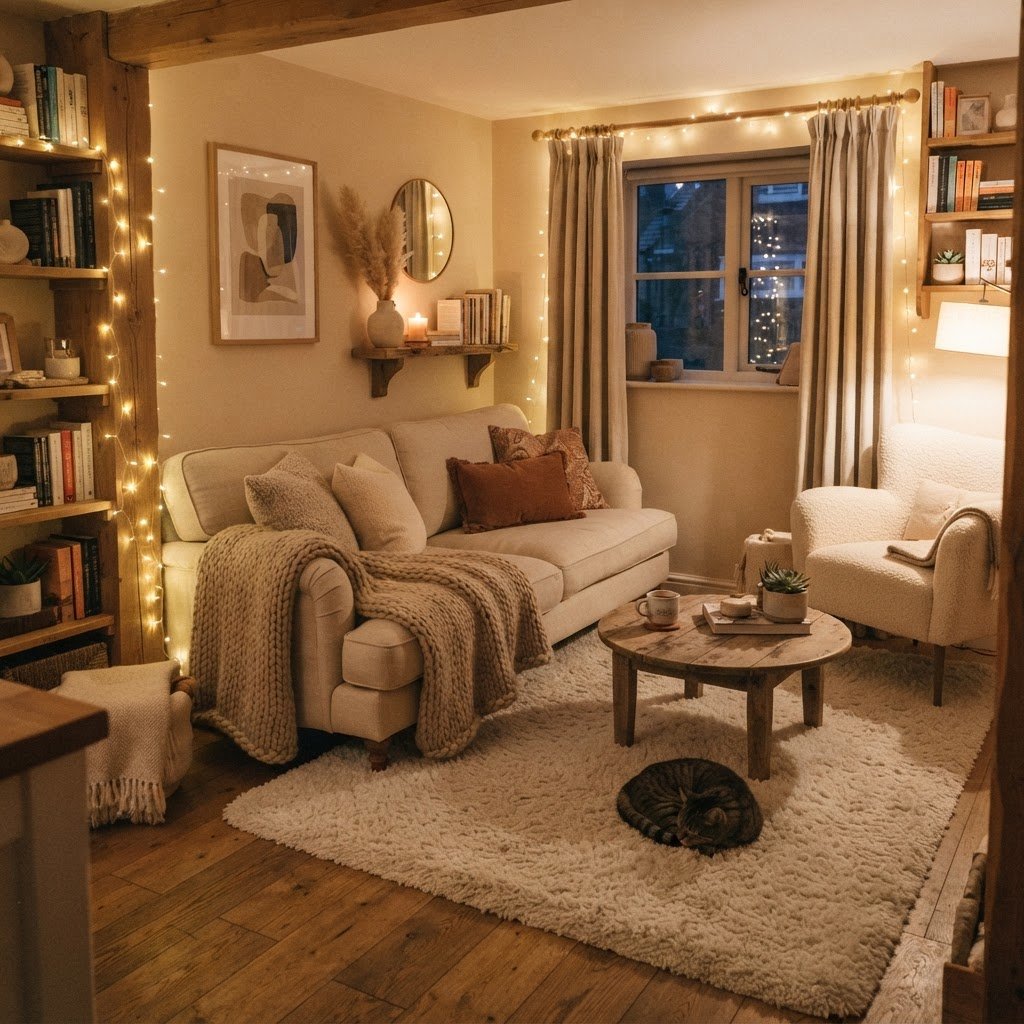
To create a cozy living room in a small apartment on a budget, prioritize multi-functional furniture, utilize vertical storage, and layer warm textures to maximize comfort without crowding your floor space. Focus on lighting, mirrors, and a cohesive neutral color palette to make compact areas feel significantly more intentional, spacious, and inviting.
Rethink Your Furniture Layout for Maximum Flow
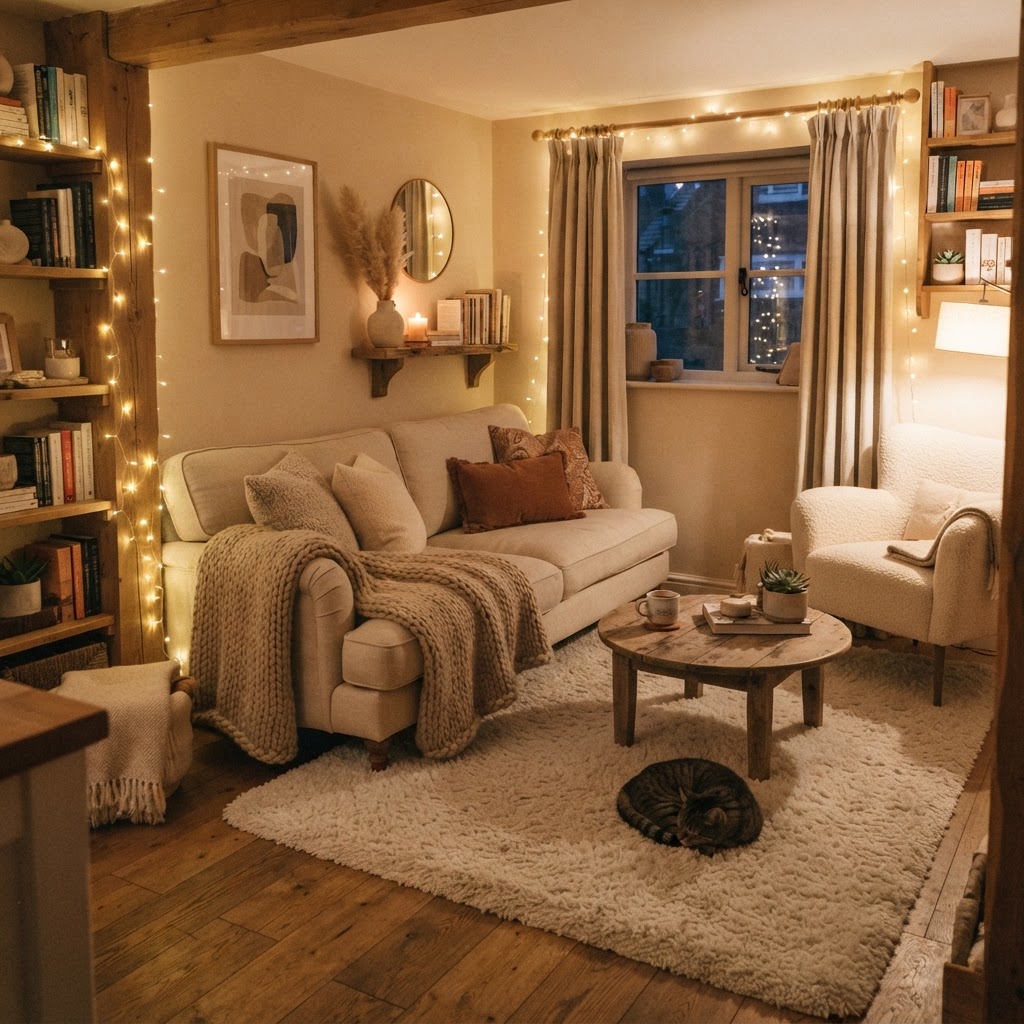
Strategic furniture placement is the foundation of a functional room, and pulling your sofa even 3 to 5 inches away from the wall immediately improves air circulation and creates a more professional design flow. Many renters default to pushing furniture flush against walls, which creates a ‘boxed-in’ feeling and wastes perimeter space. Instead, floating your seating group toward the center of the room encourages conversation and makes the floor plan feel curated rather than accidental. When planning your layout, aim to keep major traffic pathways at least 30 inches wide to ensure the room remains accessible. If your footprint is exceptionally small, consider swapping a bulky coffee table for two smaller nesting tables, which provide the same surface area while offering the flexibility to be tucked away when hosting guests. This approach prevents visual stagnation and ensures your living room remains a comfortable sanctuary rather than a cramped storage unit.
Prioritize Multi-Functional Pieces
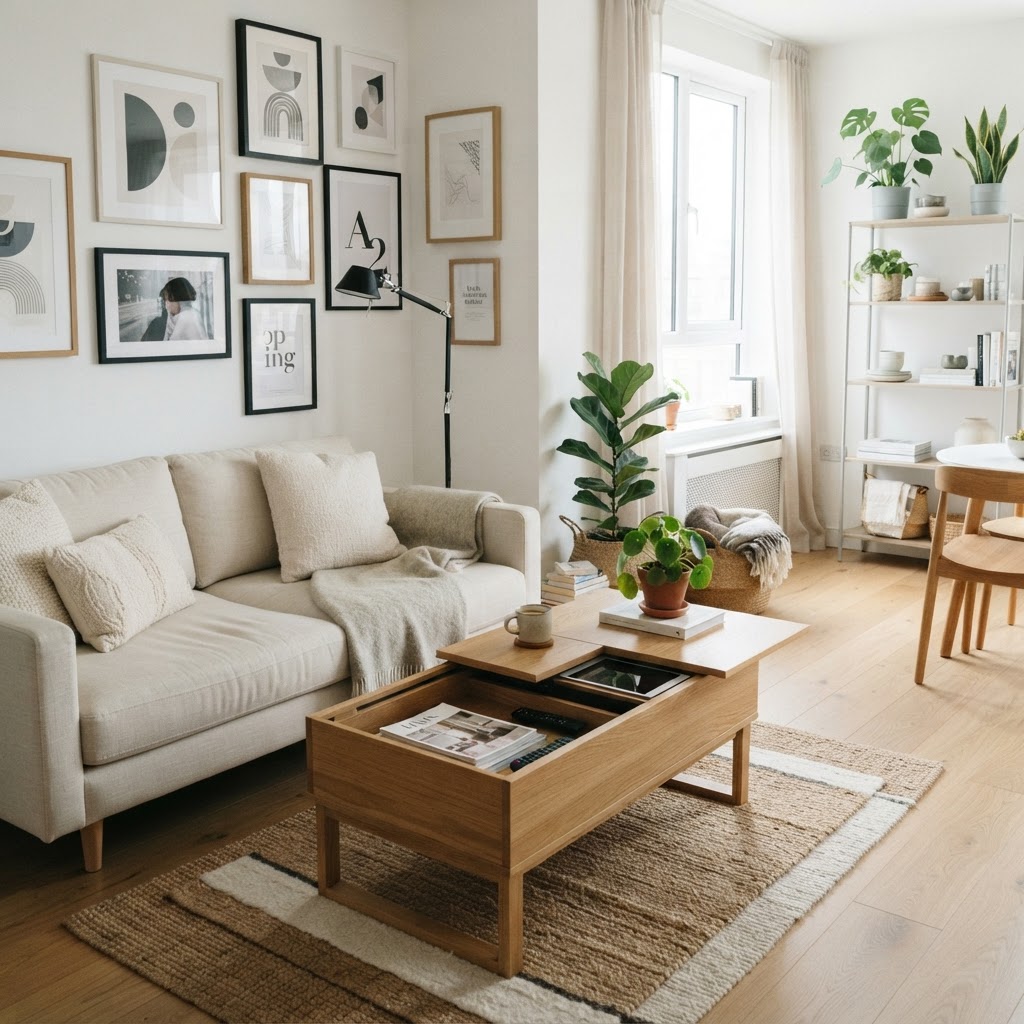
When you are operating on a budget, you cannot afford to buy furniture that serves only one purpose. Look for ottomans that include hidden storage for blankets or magazines, or invest in a coffee table that features a lifting top to serve as a makeshift desk. These items reduce clutter, which is the number one enemy of a cozy living room, while providing practical solutions for everyday living.
Master the Art of Lighting for Warmth
Lighting is perhaps the most underrated aspect of interior design, and layering multiple sources is the fastest way to eliminate the “sterile” look common in small apartments. Instead of relying on a single overhead light, which casts harsh shadows and flattens a room, aim for three distinct light sources at different heights: floor lamps, task lamps, and accent lighting like fairy lights. By using warm-toned LED bulbs (2700K to 3000K), you mimic the soft glow of sunset, which psychologically signals the brain to relax. A well-lit room feels larger because light pushes back the corners of the space, effectively increasing the perceived square footage. Incorporating a smart bulb or a plug-in dimmer switch, which typically costs less than $20, provides the ability to adjust ambiance instantly. This shift from bright, clinical overhead lighting to targeted, warm accent illumination allows you to manipulate the mood of your living area without needing a single renovation project.
Incorporate Textiles for Tactile Comfort
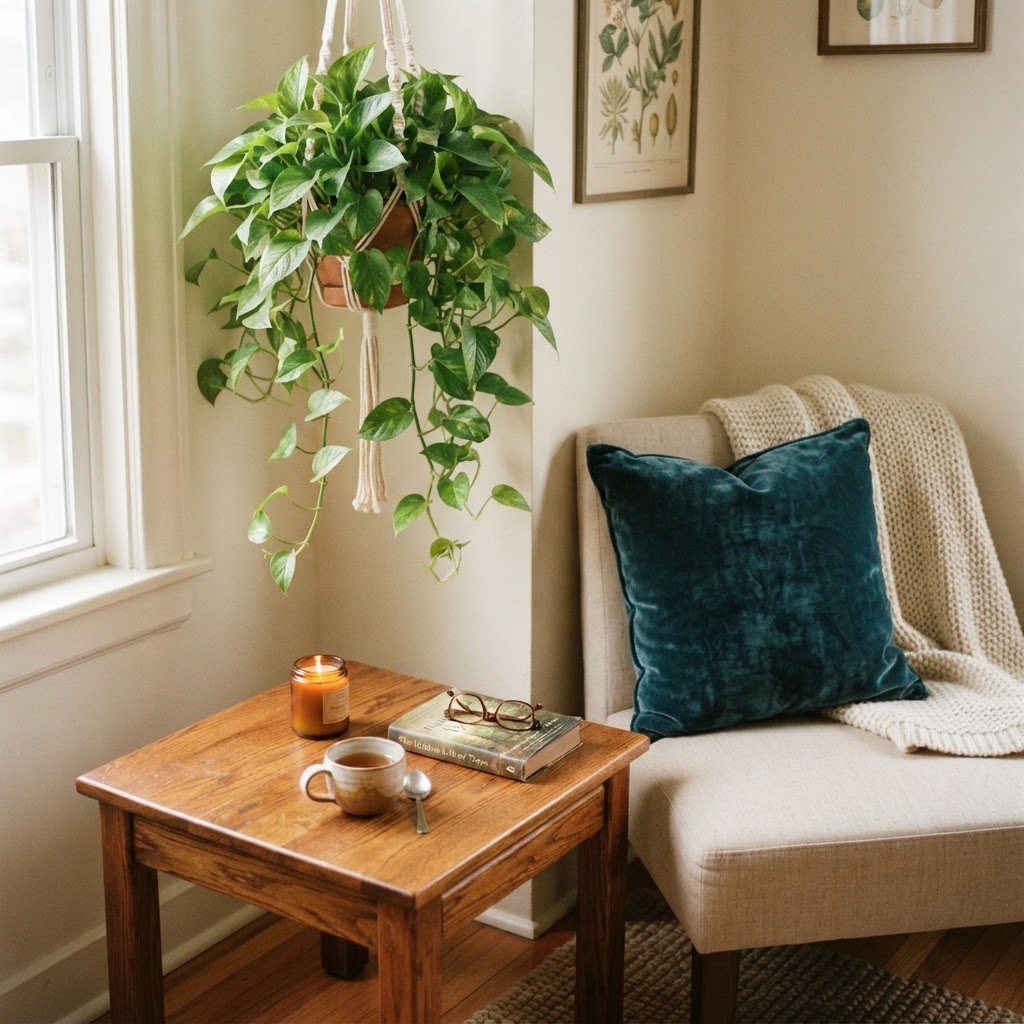
Texture is the secret ingredient for turning a house into a home, acting as a budget-friendly way to introduce depth without needing expensive furniture upgrades. A neutral, budget-friendly sofa can be transformed into a high-end centerpiece by layering textiles that invite physical interaction. Start with a plush area rug—ideally a 5×7 or 6×9 size depending on your seating area—to define your conversation zone and anchor the room visually. When choosing soft goods, look for contrasting materials such as velvet pillow covers paired with chunky knit wool blankets or faux-fur accents. By mixing these high-tactile materials, you prevent a neutral room from appearing one-dimensional or boring. According to recent interior design trends, spending 10-15% of your total room budget on quality textiles provides the highest “visual return on investment” for creating a cozy aesthetic. These items are easily swappable by season, allowing you to refresh the entire look of your apartment for under $50 during sales events.
Utilize Vertical Space to Reduce Floor Clutter
One of the most effective budget cozy living room ideas for small apartments involves looking up and treating your walls as functional square footage. If your floor space is limited, wall-mounted floating shelves serve as the perfect low-cost storage solution to elevate decor and books off of high-traffic surfaces. By installing shelves at varying heights, you draw the eye toward the ceiling, which creates the optical illusion that your walls are taller and your room is more spacious. A simple set of three floating shelves can often be sourced for under $30, offering an immediate home for plants, photographs, and personal artifacts that would otherwise create surface clutter. This “vertical strategy” keeps the floor clear, making the room feel organized, expansive, and intentionally curated.
Creative Wall Storage
Consider using wall-mounted racks for hats or scarves if you have an open floor plan, or add a gallery wall to draw the eye upward. Drawing the gaze toward the ceiling makes a room feel taller. You can create a gallery wall using budget frames from thrift stores or local craft shops, filling them with personal photos or printed botanical art to inject character.
Introduce Indoor Greenery
Plants are a game-changer for small apartments, providing a natural, inexpensive way to soften sharp architectural lines and improve air quality. Incorporating greenery is essential in small spaces, where the natural contrast of organic shapes against linear furniture adds a layer of depth that artificial decor cannot replicate. For low-light apartments, resilient varieties like the Snake Plant (Sansevieria) or Pothos (Epipremnum aureum) are ideal, as they require minimal care and thrive in typical indoor conditions. To maximize space, utilize vertical planters or ceiling hooks to hang trailing plants, which adds visual interest without sacrificing your limited end-table surface area. Studies have shown that adding indoor plants can improve mood and productivity, making them a high-value, low-cost investment for your apartment sanctuary. Start by propagating cuttings from friends or purchasing small ‘starter’ pots at local big-box retailers to keep your initial investment under $15 per plant while allowing your collection to grow organically over time.
Mirror Magic and Visual Deception
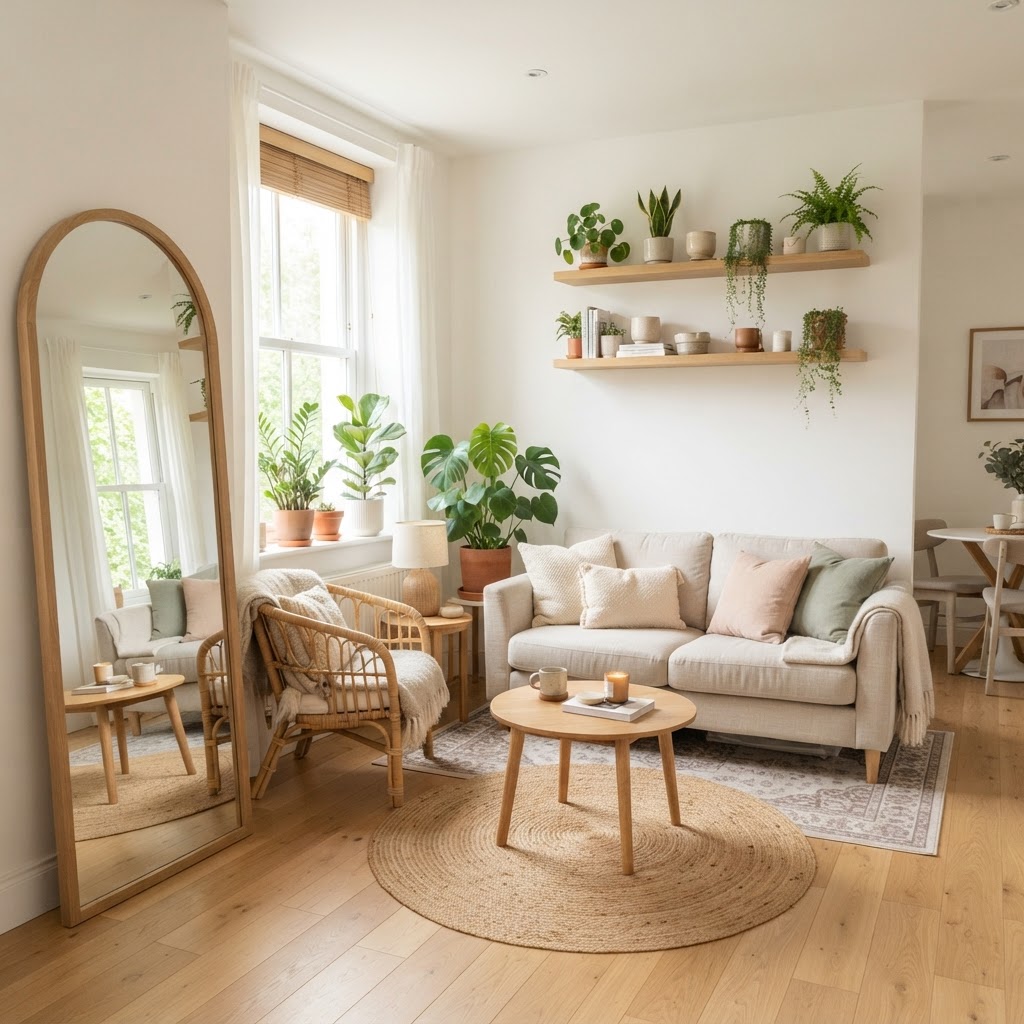
Mirrors are the oldest trick in the design book, but they remain one of the most effective tools for small apartment living to amplify natural light. Placing a large, full-length mirror directly opposite a window will bounce sunlight into the deepest corners of your room, effectively doubling the brightness without increasing your energy costs. For maximum impact, aim for a mirror that occupies at least 25% of the wall surface it is placed on, creating a significant focal point that breaks up solid wall space. If a large floor mirror exceeds your budget, create a “mirror gallery” using smaller thrifted frames to achieve a similar reflective effect while adding vintage charm. This technique creates a sense of openness and airy flow, preventing smaller living rooms from feeling trapped or heavy, and serves as an excellent “visual hack” to make a studio or one-bedroom apartment feel like a more spacious home.
Maintain a Consistent Color Palette
When trying to keep your space feeling cozy rather than chaotic, color discipline is essential, as too many clashing hues can make a small room feel claustrophobic. A monochromatic or neutral palette creates a seamless visual flow, which allows the eye to travel across the room without hitting sharp visual stops. You can achieve this by choosing a primary base color—such as cream, warm grey, or beige—and layering various tones and textures of that same shade throughout your curtains, rug, and furniture. This method, often called “tonal layering,” provides depth and sophistication while maintaining the peaceful, airy atmosphere necessary for small-space living. If you desire a pop of color, stick to a 60-30-10 rule: 60% of the room as your neutral base, 30% as a secondary color, and 10% as an accent shade. This prevents the room from feeling busy and keeps the focus on the cohesive, cozy aesthetic rather than the individual, disjointed pieces of furniture.
Personalize with Meaningful Decor
Finally, the most important part of any cozy home is that it reflects your personal history, as a space filled with meaningful items will always feel warmer than one decorated strictly following trends. Display your favorite travel souvenirs, your book collection, or family heirlooms on your shelves to infuse your living area with “soul.” Do not feel pressured to achieve a “perfect” interior design look; the goal of a cozy apartment is to create a personal refuge where you feel comfortable to kick back after a long day. If that means a stack of books on the floor or a framed drawing from a friend, embrace it. These unique elements act as conversation starters and create a genuine connection to your space, transforming a generic rental into a personalized home. Remember that budget-friendly design is about quality of life, not spending money, so prioritize items that spark joy and comfort above expensive retail pieces.
FAQ
How can I make a small living room look cozy on a budget?
Focus on layering soft textures, using warm-toned lighting, and introducing indoor plants to create a welcoming atmosphere. Keeping a tight, neutral color palette and using multi-functional furniture will also prevent clutter, which is essential for making a tiny space feel like a comfortable sanctuary.
What is the best furniture layout for a tiny apartment?
Pulling furniture away from the walls by a few inches improves air flow and makes the room feel intentionally designed rather than cramped. Avoid blocking traffic paths by keeping major walkways clear and using multifunctional pieces like lift-top coffee tables to save floor space.
How does lighting affect small room perception?
Layering soft, warm-toned light sources rather than using a single overhead bulb makes a small room feel larger and more intimate. Placing lights at different heights helps illuminate hidden corners, which physically and visually expands the space while eliminating harsh, sterile shadows.
How can mirrors make my apartment look bigger?
Positioning a mirror opposite a window allows it to reflect natural light, effectively doubling the brightness and opening up the visual depth of the room. This “trick of the eye” makes cramped areas feel significantly more expansive without requiring any structural changes or expensive renovations.
Why should I prioritize vertical space in a small living room?
Utilizing wall space for shelving and decor keeps surfaces clear, which reduces visual clutter and prevents a room from feeling crowded. By drawing the eye upward toward the ceiling, you create an optical illusion that the room has more height, making the total footprint feel larger.

Leave a Reply