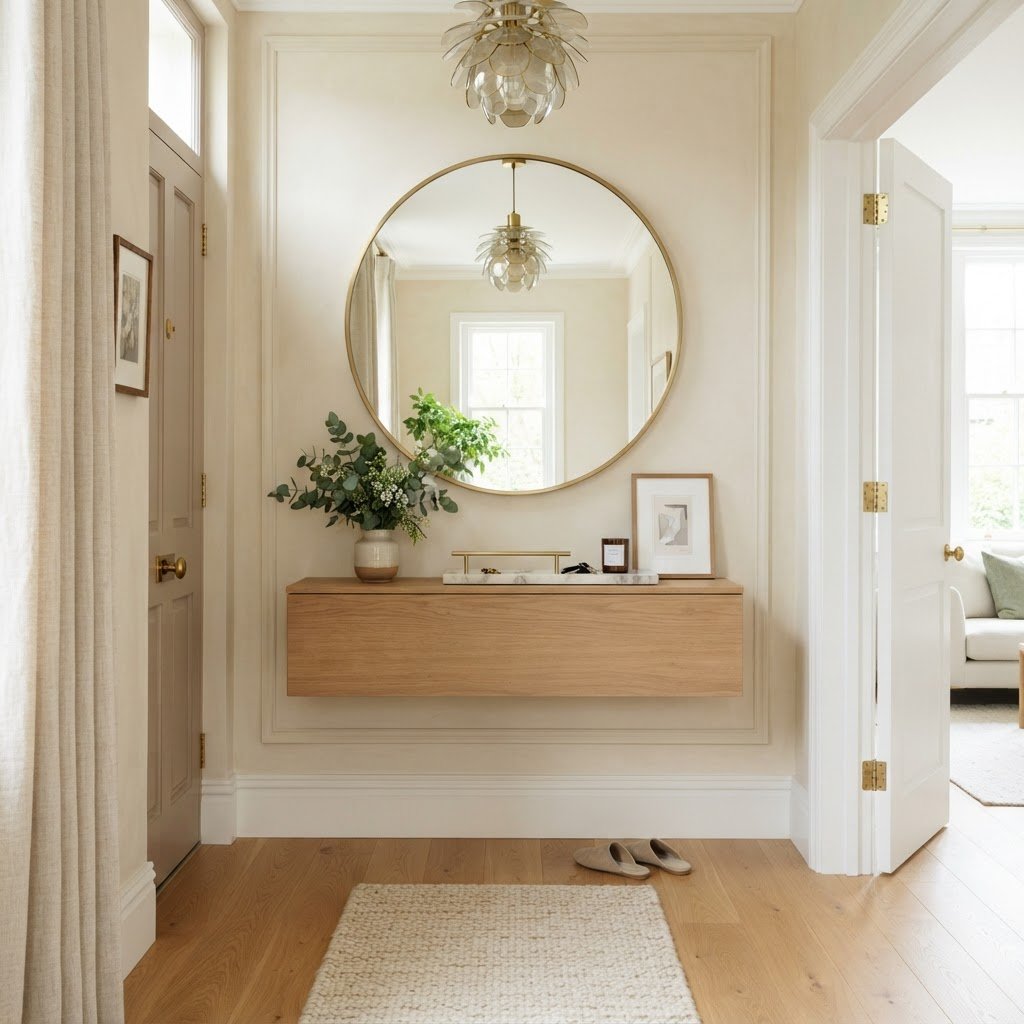
Cream and beige small entryway ideas create an expensive, calming atmosphere by using high-contrast textures and monochromatic palettes to visually expand narrow spaces. By layering warm oatmeal with crisp ivory tones, prioritizing floor-clearing furniture, and utilizing soft, layered lighting, you can transform a cramped foyer into a sophisticated, high-end sanctuary that feels both airy and intentionally curated.
The Power of Neutral Palettes in Small Spaces
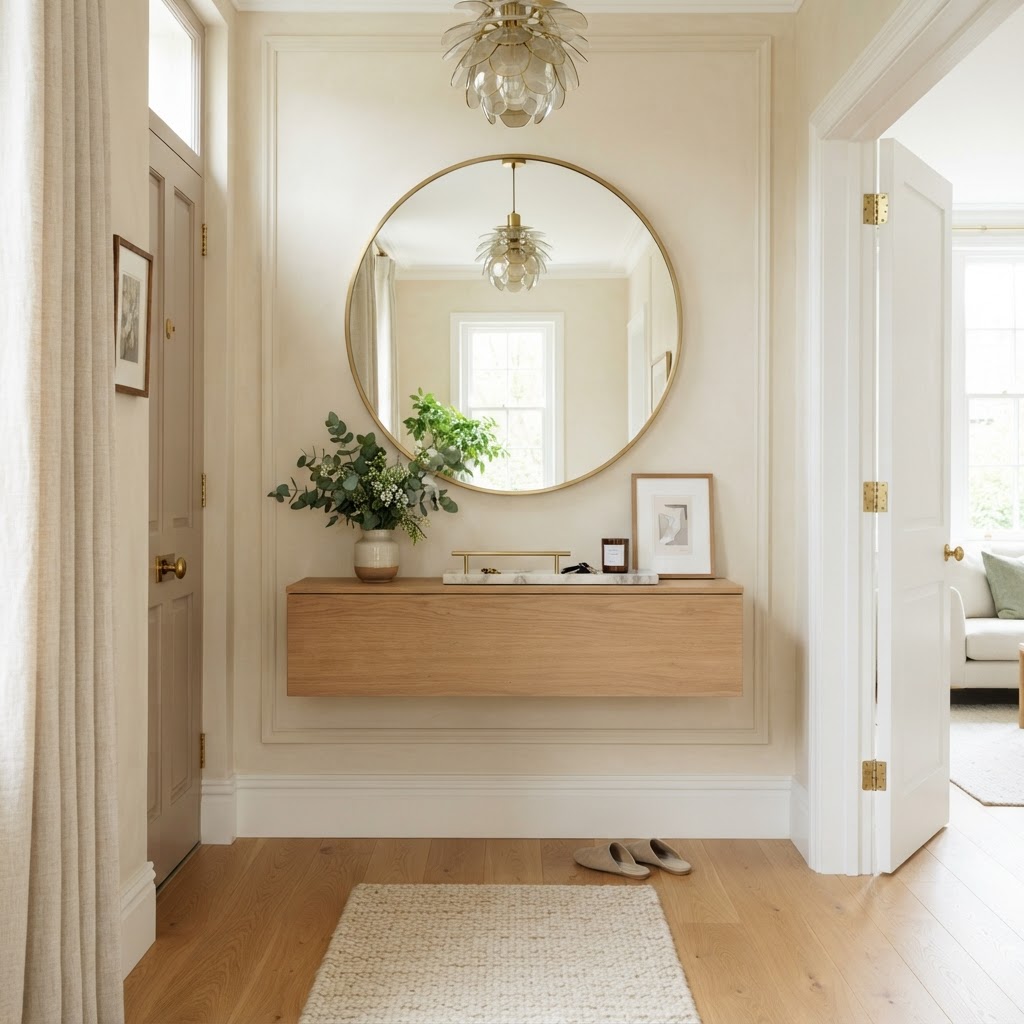
Neutral color palettes, specifically cream and beige, serve as the most effective design tool for overcoming the constraints of limited square footage. When walls and large furniture pieces are finished in shades of white or light taupe, the boundaries of the room seem to recede, effectively tricking the eye into perceiving a larger volume. This minimalist approach focuses on the interplay of light reflection, where lighter hues bounce natural and artificial illumination throughout the corridor, preventing the claustrophobic feeling common in smaller foyers.
To ensure the space does not appear sterile, you must incorporate tonal variation by layering warm, earthy beiges with clean, bright creams. This technique provides essential depth and character, mimicking the luxury design language found in high-end boutique hotels. By focusing on quality over quantity, you reduce visual noise, allowing the architectural silhouette of your furniture to take center stage.
Why Cream and Beige Work Together
Cream provides the freshness and brightness that small spaces desperately need, while beige introduces warmth, ensuring the room doesn’t feel cold. Together, they create a balanced, inviting environment. This combination is inherently calming, which is exactly the mood you want to establish as soon as you walk through your front door.
Maximizing Your Foyer Layout
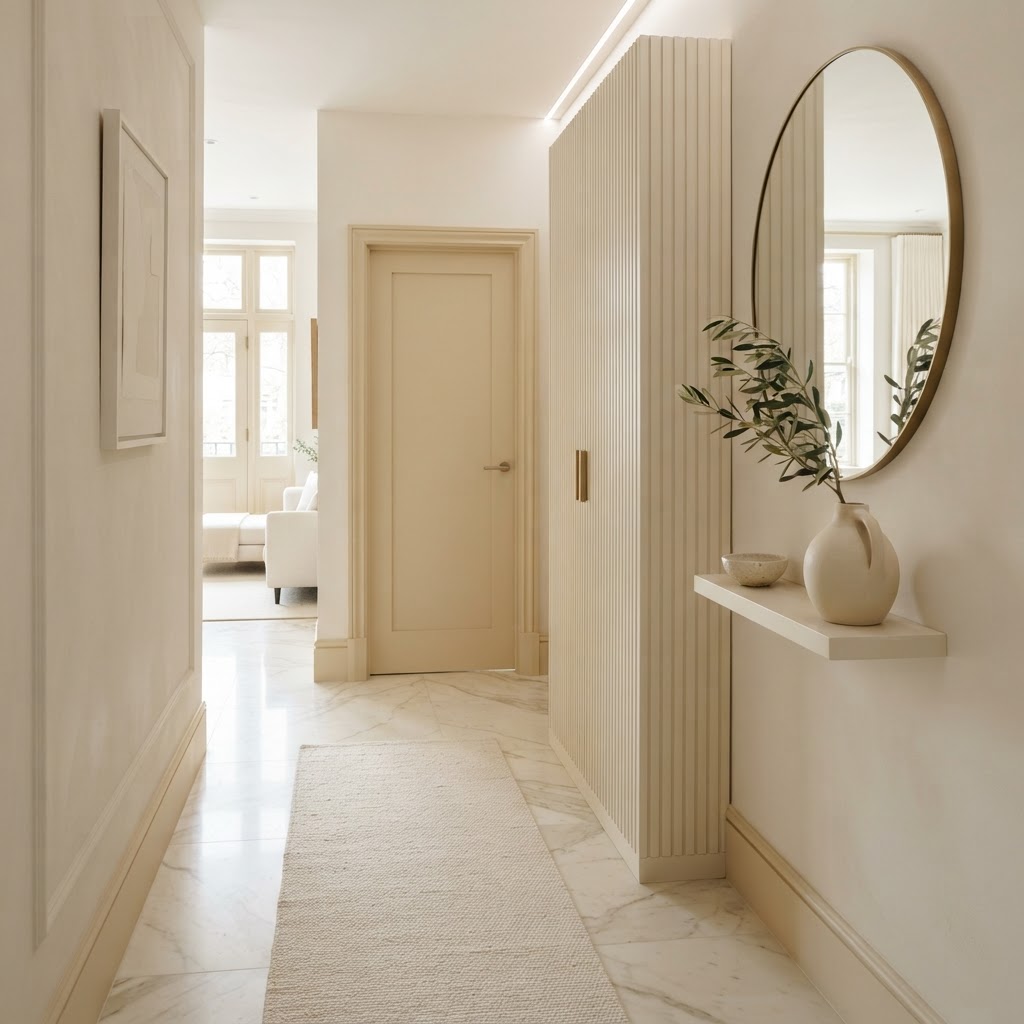
Optimizing your foyer layout requires a disciplined approach to storage, where every square inch serves both a functional and aesthetic purpose to maintain a premium feel. In compact homes, floor space is the most valuable commodity; therefore, replacing bulky standalone furniture with wall-mounted or built-in alternatives is essential for creating a high-end look. Custom cabinetry that matches your wall color at a standard depth of 12 to 14 inches can hide shoe clutter, coats, and accessories, keeping the visual lines clean and unobtrusive.
If custom cabinetry falls outside your budget, a wall-mounted floating console table is the ideal solution. By keeping the floor beneath the table clear, you maintain an open sightline, which significantly contributes to a feeling of expansiveness. When selecting hardware, opt for finishes like unlacquered brass, which develops a patina over time, or brushed nickel for a sleek, modern touch. Avoid over-furnishing; in a small entryway, a single, high-quality statement piece often outperforms three smaller, lower-quality items. This intentional selection process is the hallmark of professional interior design, ensuring your space feels deliberate rather than cluttered.
Texture as a Design Element
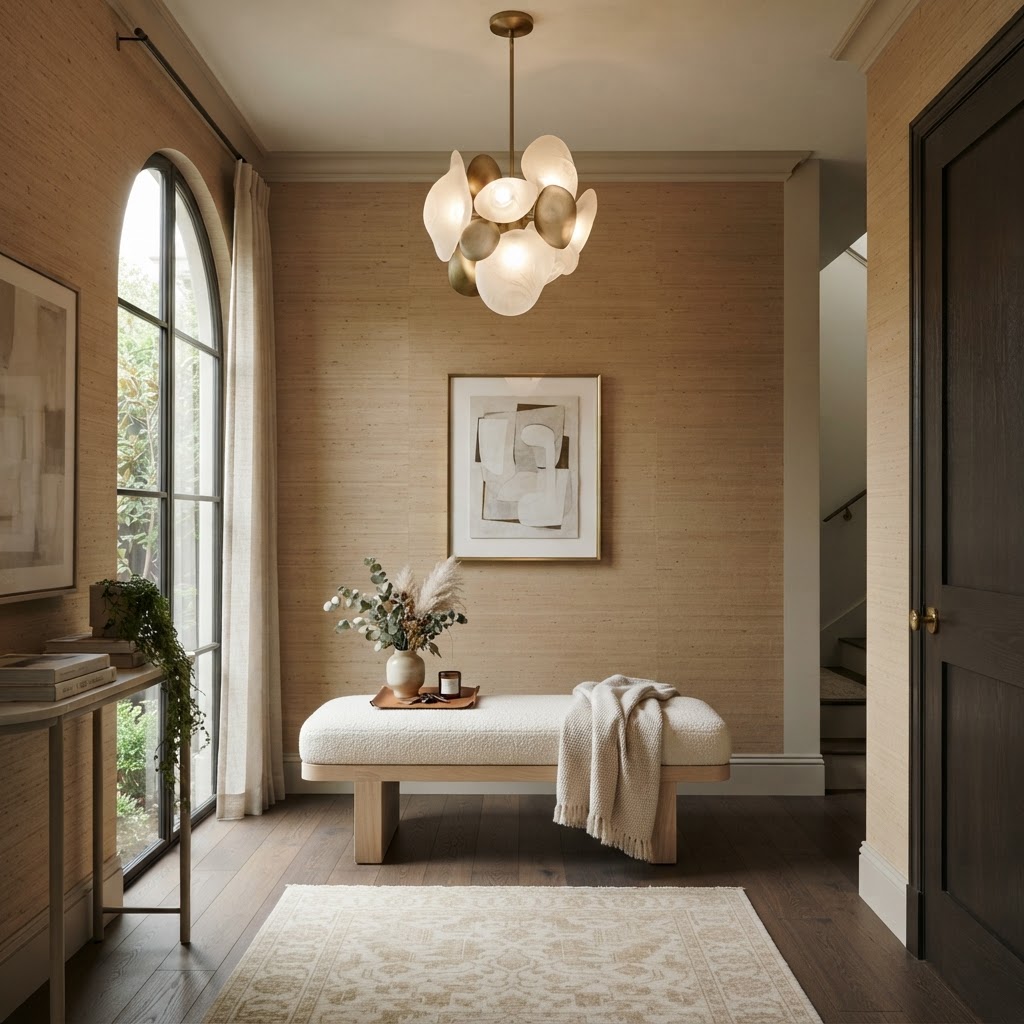
In a space devoid of bold color, texture becomes the primary vehicle for visual interest, preventing the room from appearing flat or uninspired. To achieve an expensive aesthetic, you must layer different tactile surfaces, such as linen, boucle, grasscloth, and raw wood, which add physical and visual weight to the entry. For instance, applying a grasscloth wallpaper in a soft sand tone introduces subtle, natural variations that reflect light differently throughout the day, creating a sophisticated environment that changes with the sun’s position.
Flooring also plays a critical role in this textural story. A heavy-duty, low-pile runner in a neutral weave can protect high-traffic zones while grounding the space. Consider the following guide for incorporating texture effectively:
- Wall Treatments: Use grasscloth or linen-texture paint to add depth.
- Soft Goods: Incorporate boucle cushions on benches for a high-end, tactile experience.
- Natural Elements: Use carved wooden bowls or stone trays for key storage.
- Hardware: Select matte or brushed metal finishes to avoid distracting glare.
- Reflective Surfaces: Use mirrors with heavy frames to add structural weight.
Strategic Texture Layering:
- Use a chunky knit throw if you have a bench or seating area.
- Incorporate raw wood elements, such as a carved wooden bowl for keys.
- Choose matte metal finishes like brushed nickel or antique brass for hardware.
- Add a mirror with a heavy, textured frame to anchor the wall space.
Lighting for a Luxe Atmosphere
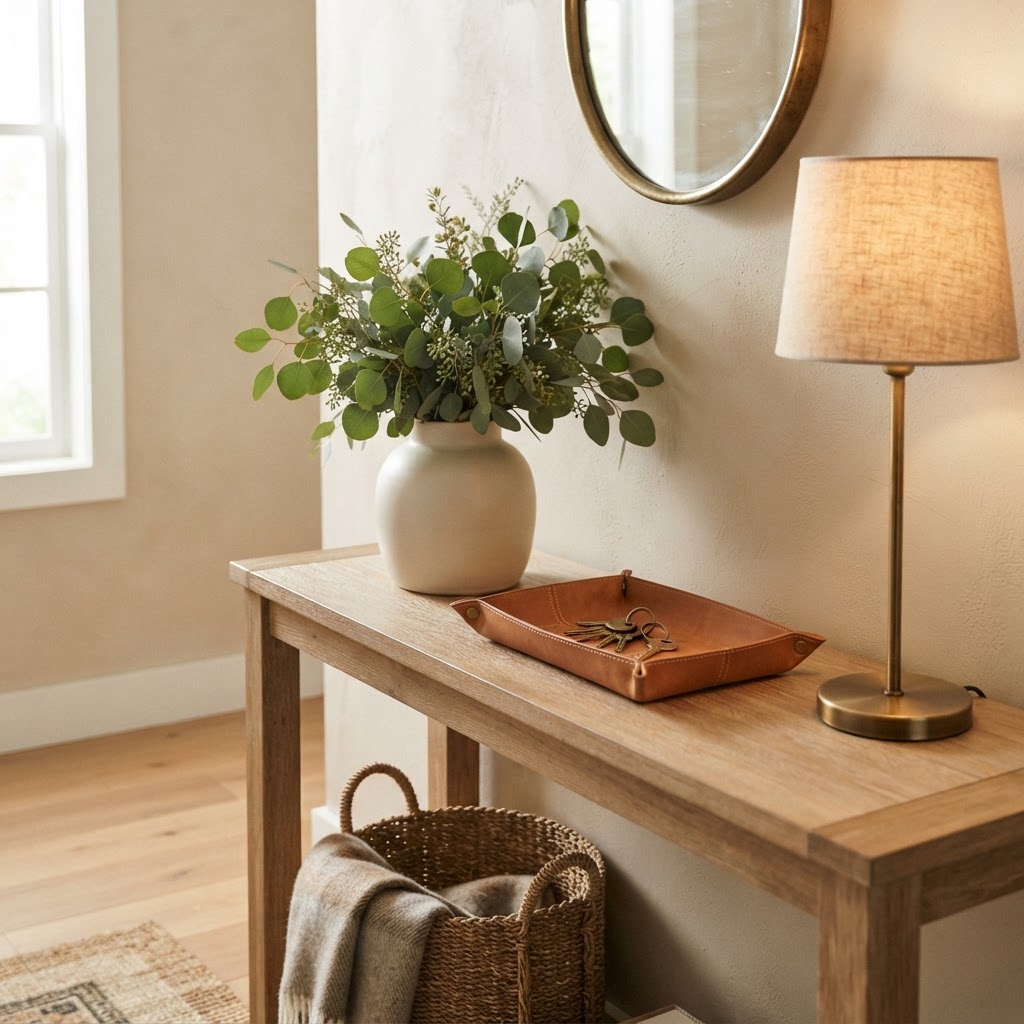
Lighting functions as the defining factor for the ambiance of a foyer, often determining whether the area feels like a functional hallway or a thoughtfully designed space. To move beyond standard, harsh overhead lighting, you must implement a three-tier lighting scheme: general, task, and accent lighting. Start with a statement fixture, such as a glass or brass pendant, which serves as the “jewelry” of the room. A pendant with a diameter of 12 to 16 inches is typically ideal for standard foyer heights to avoid overwhelming the space.
Supplement the primary light source with a sculptural table lamp on your console. Lamps with warm-toned bulbs (2700K color temperature) create a soft, inviting glow that makes guests feel instantly welcome. If your budget allows, consider adding LED strip lighting under floating consoles to create a “floating” effect, which adds a layer of modern luxury. Placing a mirror opposite your primary light source is a classic interior design technique that effectively doubles the visual space and distributes light evenly. By controlling the light levels, you can transform a dull corridor into a grand introduction to your residence.
Selecting Furniture and Hardware
Selecting furniture for a small, neutral entryway requires a focus on scale and material quality to avoid the common pitfall of selecting oversized or low-quality pieces. Because your palette is subtle, the materials you choose must stand up to close inspection. Opt for furniture constructed from solid white oak, marble with subtle grey veining, or high-quality boucle fabric. These materials offer tactile complexity that makes a small piece look significantly more expensive than mass-produced alternatives.
When choosing furniture, prioritize items that feature slim, tapered legs or floating designs. This allows light to travel underneath the piece, preventing the room from feeling grounded or “heavy.” Hardware replacements are the most cost-effective way to elevate the space; by swapping standard builder-grade door handles and light switch covers for high-end brass or polished nickel, you create a cohesive, bespoke appearance. Ensure all metal finishes are consistent throughout the hallway to maintain a seamless, professional aesthetic.
Styling Your Entryway for Impact
Styling serves as the finishing touch that brings your cream and beige design into focus, requiring a strict adherence to the “less is more” philosophy to preserve the expensive look. Avoid the temptation to clutter console surfaces with everyday items; instead, follow the rule of three, which dictates that grouping objects in odd numbers creates a visually balanced and professional composition. For example, pair a tall ceramic vase with a small, flat-bottomed wooden tray and a single sculptural object to create an engaging focal point.
Fresh, organic elements are non-negotiable in neutral designs because they provide the necessary life and movement that synthetic decor lacks. A single, large branch in a matte cream vase can provide height and drama without requiring additional floor space. Furthermore, consider that luxury is a sensory experience; the scent of your entryway is just as important as the visual elements. Using a high-quality reed diffuser with notes of sandalwood or white tea can leave a lasting impression on visitors. When choosing decorative accents, stick to a muted, tonal range within the cream, beige, and greige spectrum to ensure the space remains calm and harmonious.
Maintaining the Calm and Expensive Look
Maintaining a curated, luxurious appearance in a high-traffic zone requires a strict zero-clutter policy to prevent the accumulation of daily life from destroying the intended atmosphere. In a small entryway, there is no “forgiving” space for overflow, which means that every item—from keys and mail to jackets and shoes—must have a hidden, designated home. By keeping all surfaces clear, you allow the high-quality textures and thoughtful lighting to remain the focus of the area.
Maintenance Checklist:
- Use a designated tray for mail to avoid pile-ups.
- Store shoes out of sight in a closed cabinet.
- Wipe down surfaces weekly to prevent dust accumulation on light colors.
- Rotate your decor seasonally to keep the look fresh but aligned with the neutral theme.
By prioritizing daily organization, you ensure that the tranquil, expensive vibe remains intact regardless of how busy your life gets. Dedicating five minutes at the end of each day to reset your foyer ensures that your first interaction with your home remains as serene as the day the design was completed.
FAQ
Q: How can I make a dark, windowless entryway look expensive?
Paint your walls a warm, high-sheen cream to reflect whatever light is present. Add a large, floor-to-ceiling mirror opposite the entrance to maximize depth and install high-quality, sculptural lighting fixtures to replace dim, builder-grade bulbs.
Q: What is the best way to hide shoe clutter in a small foyer?
Install slim-profile, wall-mounted shoe cabinets that extend only 6-8 inches from the wall. Matching the cabinet color to the wall color creates an invisible, built-in look that maintains clean lines.
Q: Does beige look outdated in modern homes?
Beige is currently trending as a “new neutral” when paired with modern textures like boucle and raw, light-toned woods. The key to keeping it modern is ensuring you layer multiple shades of beige and cream rather than using a single, flat shade throughout.
Q: What hardware finish goes best with cream and beige?
Unlacquered brass is the premium choice for cream and beige, as it develops a warm, organic patina that complements earthy tones. If your style is more contemporary, polished nickel provides a clean, mirror-like sparkle that enhances light reflection.
Q: How do I choose the right rug for a small entryway?
Select a low-pile runner in a performance fabric like wool, which resists staining while providing a soft texture underfoot. Choose a pattern that is tone-on-tone, such as a raised ivory weave on a beige background, to add interest without creating visual clutter.

Leave a Reply