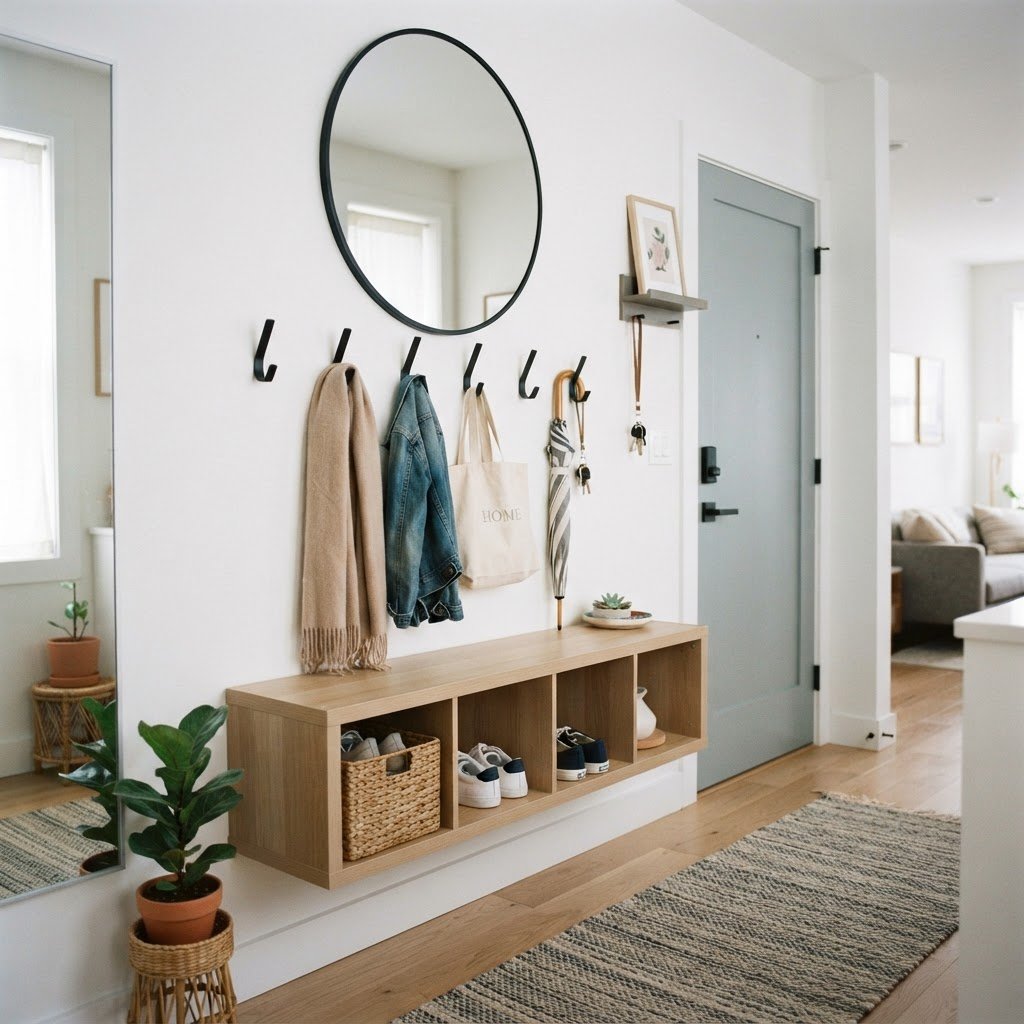
No Mudroom? How to Create a Functional Drop Zone
To create a functional drop zone without a dedicated mudroom, utilize vertical wall space for hooks, install slim-profile console tables (10–12 inches deep), and implement a dedicated landing strip for daily essentials like keys and mail. By zoning your entryway for specific habits, you can eliminate floor clutter in under 10 square feet.
Assess Your Entryway Needs
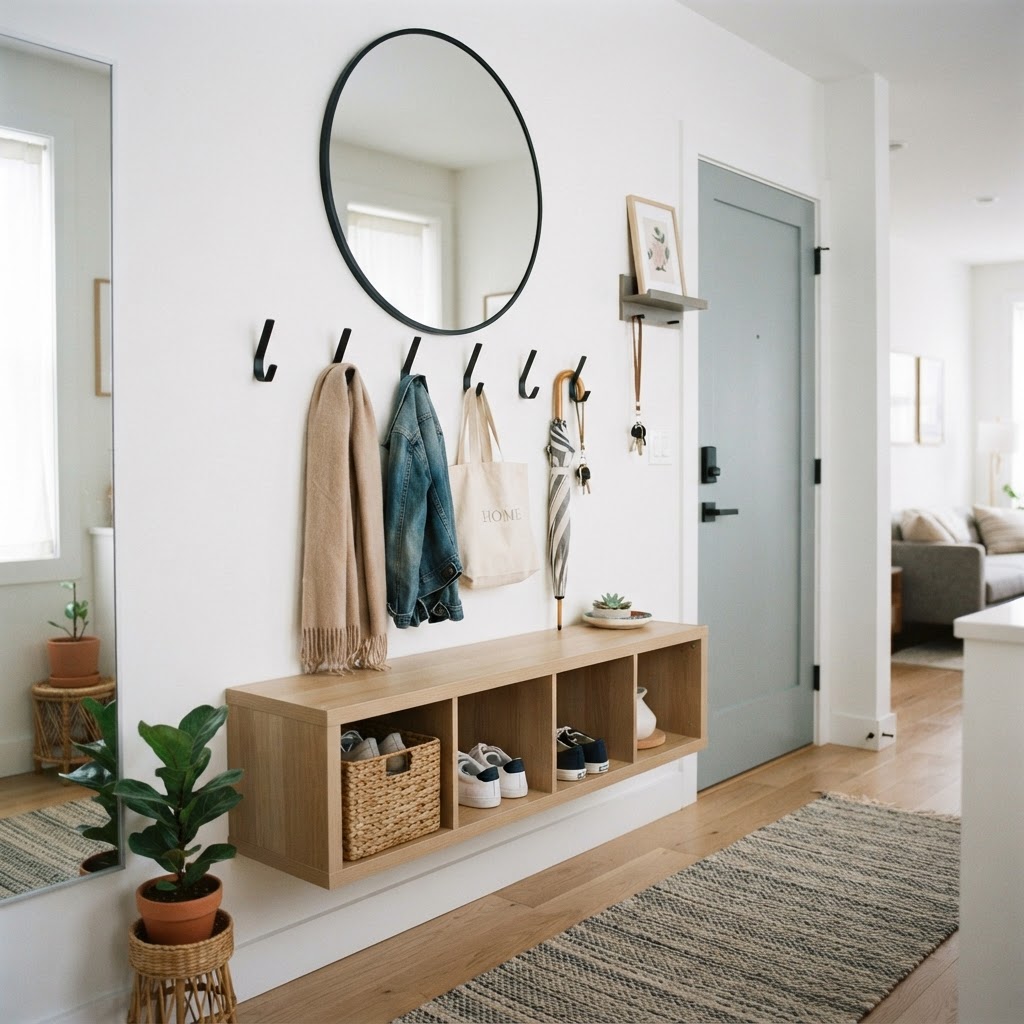
Before you start buying baskets or hooks, take a moment to observe how you move through your home. The key to a successful drop zone is recognizing that it must serve your specific habits, not just some idealized version of home organization. What do you immediately drop when you walk through the door? For most people, the culprits are keys, shoes, coats, and mail. According to interior organization experts, 80% of entry clutter is caused by items that lack a designated home within three feet of the front door.
Audit Your Daily Essentials
Create a list of the top five items you touch upon entering. Does your family have a sports bag habit? Do you frequently receive packages? Are you prone to kicking off shoes as soon as you step inside? Identifying these pain points is the first step toward a clutter-free entrance.
Once you have your list, look at the wall space or floor space immediately available. Even a narrow hallway can accommodate a wall-mounted unit. Do not feel constrained by the lack of a formal room; instead, look for vertical opportunities that can handle the heavy lifting of your daily storage needs. A standard wall-mounted organizer typically requires only 12 to 15 inches of width, making it feasible for even the tightest urban apartment entryways.
Choose the Right Storage Hardware
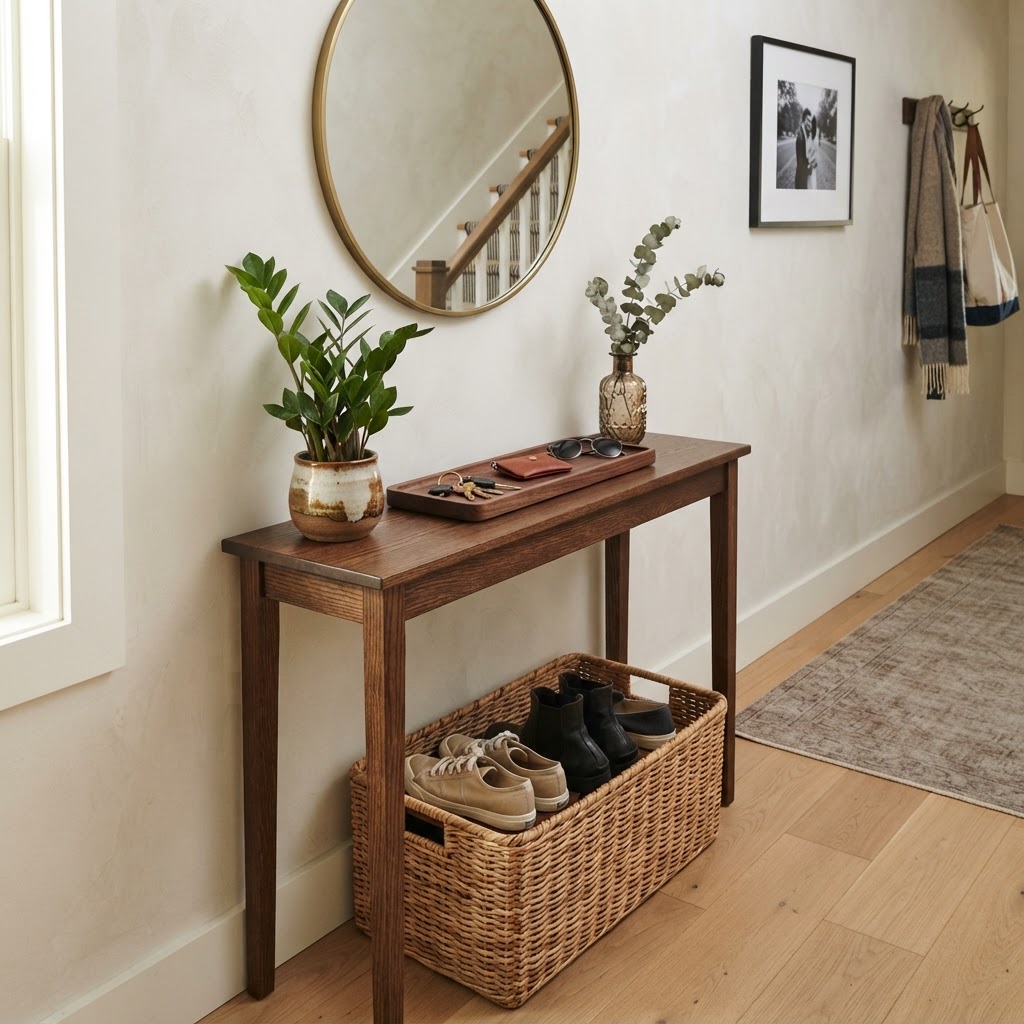
When square footage is limited, vertical storage is your best friend. A ‘drop zone’ is not just about the floor; it is about utilizing the full height of your walls to keep items off the ground. Heavy-duty wall hooks are essential for coats, umbrellas, and tote bags, as they take up zero floor space while keeping the area looking tidy. Research suggests that wall-mounted storage increases perceived space in a small hallway by approximately 25% compared to freestanding floor racks.
Why Hooks Trump Closets in Small Spaces
Closet doors consume valuable floor area when they swing open, which is a luxury that tight entryways often cannot afford. By installing high-quality, sturdy hooks, you provide an immediate destination for outdoor gear. Consider installing them at varying heights—typically 40 inches for children and 60 inches for adults—so that family members can reach their own backpacks, fostering independence while keeping the floor clear.
Selecting the Right Material
Choose hardware that matches the aesthetic of your home, but prioritize durability. Brushed nickel or matte black hooks are popular choices that blend with various interior design styles. Ensure that your wall anchors are properly installed into studs or use high-rated toggle bolts—which can support up to 50–100 pounds—to prevent the hooks from pulling out when burdened with heavy winter coats.
Implement Smart Furniture Solutions
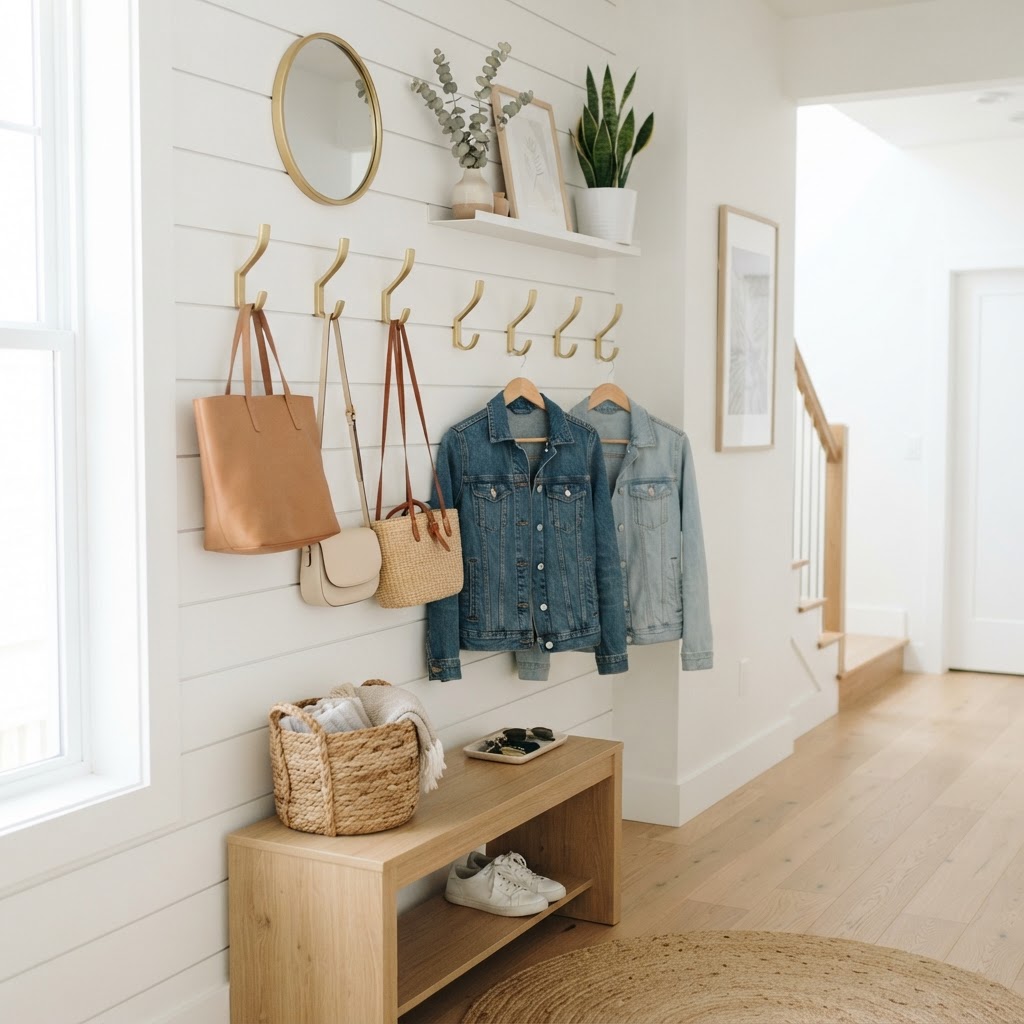
If you have a bit more room, a narrow console table or a slim bench can transform a blank wall into a sophisticated command center. A bench with built-in cubbies underneath is the ultimate multitasking furniture piece. It provides a place to sit while removing shoes, while the cubbies hide the visual clutter of footwear that would otherwise be strewn about the hallway. Most standard entryway benches range from 12 to 18 inches in depth, perfect for standard hallway clearance codes of 36 inches.
For those with extremely narrow entryways, look for console tables that are only 10 to 12 inches deep. These pieces add a layer of surface area for dropping keys or placing a small bowl for incoming mail, while also providing a base for wall-mounted mirrors or art that makes the space feel intentional rather than like a hallway.
The Power of Hidden Storage
Closed storage is the secret to a calm entryway. While open hooks are great for frequently used items, baskets and lidded bins provide a place to tuck away items that look messy. Assign one bin to each family member to minimize morning arguments and ensure that lost items have a specific, reachable home. Using labeled bins can reduce the time spent searching for misplaced items by up to 10 minutes per morning.
Zone Your Space for Functionality
Even in a small area, you can create distinct zones to prevent clutter from bleeding into the rest of your home. Think of this as a micro-zoning project. The ‘Drop Zone’ should be divided into three logical phases: the landing space for immediate items, the storage space for daily gear, and the transition space for things leaving the house.
By clearly defining these areas, you train your brain to follow a routine. When you walk through the door, you place your keys in the tray, hang your coat on the hook, and slip your shoes into the bin. This habit-forming process is just as important as the physical furniture you choose.
Incorporate Lighting and Mirrors
Never underestimate the power of design elements to make a space feel larger and more welcoming. A mirror placed above your drop zone does double duty; it allows for a last-minute check before heading out and reflects light to make a cramped entryway feel much more expansive. Designers suggest a mirror size should be roughly 60-75% of the width of your console table for visual balance.
Pair this with adequate lighting. If your entry lacks a direct ceiling fixture, consider a slim wall sconce or a small table lamp on your console. Lighting defines the space as a ‘destination’ rather than just a pass-through area, giving your drop zone a professional, designed feel that adds value to your home. Use warm-toned bulbs (2700K–3000K) to create an inviting atmosphere.
Maintain Your New System
Design is only the beginning. Maintenance is what keeps your drop zone functional over the long term. Conduct a weekly audit of your entryway to ensure that items haven’t started to ‘migrate’ from their designated spots. If the bin for scarves is overflowing, it is time to relocate those items to a bedroom closet or donate unused gear.
The One-In, One-Out Rule
Apply the ‘one-in, one-out’ rule to your entry storage. If you buy a new pair of shoes, ensure there is space in the cubby or bin; if not, an old pair must be removed. This simple mindset shift prevents the gradual buildup of clutter that leads many homeowners to believe their space is simply ‘too small’ when in reality, it is just ‘too full.’
FAQ
Q: What is the minimum depth required for an entryway drop zone?
A: You need at least 10 to 12 inches of depth to accommodate a slim console table or wall-mounted shelving. This allows for sufficient surface area to drop keys and mail without obstructing hallway traffic flow in standard-sized homes.
Q: How can I organize shoes in a small entryway without a closet?
A: Use a bench with built-in cubbies or an under-console shoe rack. Keeping shoes off the floor using these solutions clears visual clutter and prevents tripping hazards in narrow corridors, keeping the space looking intentional.
Q: Are wall hooks better than coat racks for small spaces?
A: Wall hooks are superior for small spaces because they utilize vertical wall real estate and leave the floor completely clear. Unlike coat racks, which have a wide footprint, wall hooks can be installed at any height to maximize your specific layout.
Q: How do I stop mail from piling up in my drop zone?
A: Install a wall-mounted mail sorter or use a dedicated decorative tray specifically for incoming mail. Immediately discard junk mail over a recycling bin as you walk in to prevent accumulation and keep your landing strip functional.

Leave a Reply