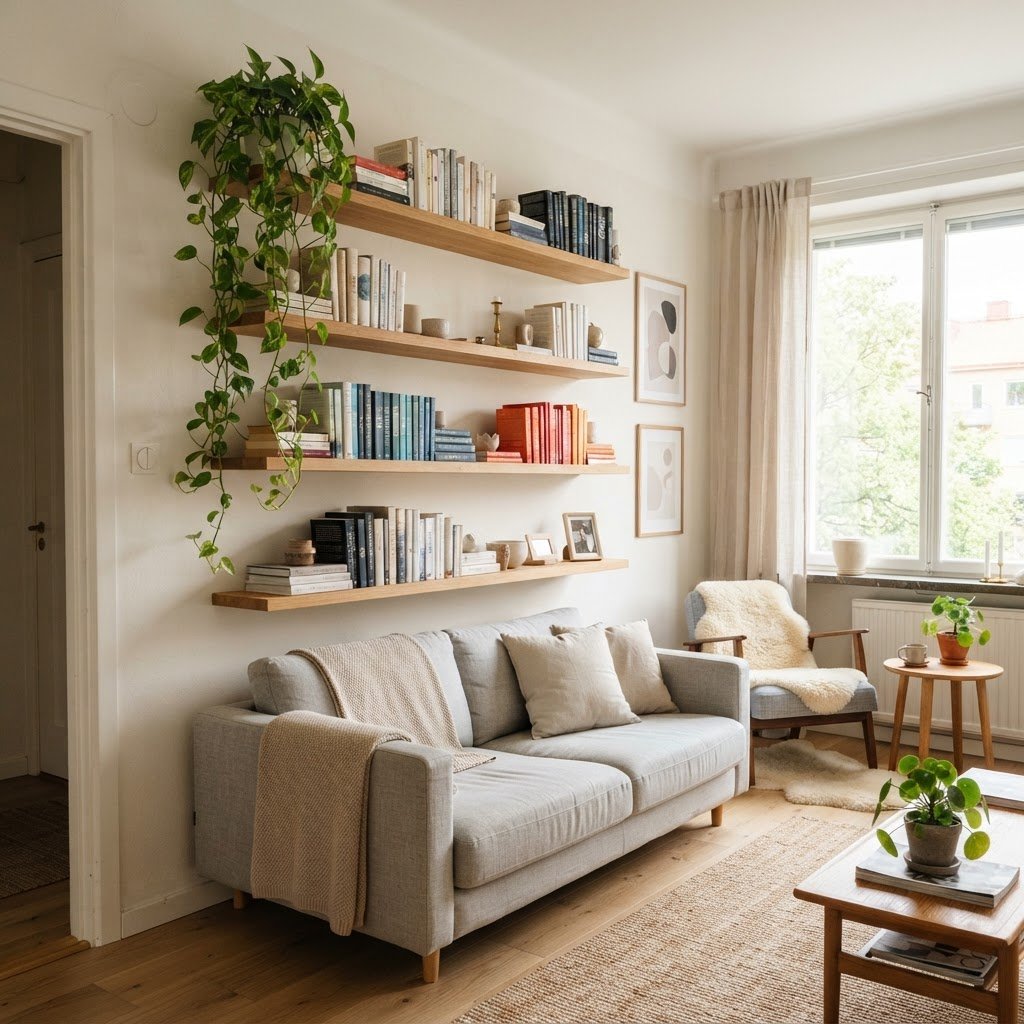
11 Clever Floating Shelf Ideas for Small Apartment Storage
Floating shelves maximize small apartment storage by utilizing vertical wall space to lift clutter off the floor and draw the eye upward, creating an illusion of higher ceilings. By installing shelves in unused areas like corners, above doorways, or over appliances, you transform dead wall space into functional, minimalist display areas without sacrificing floor area.
The Psychology of Vertical Space
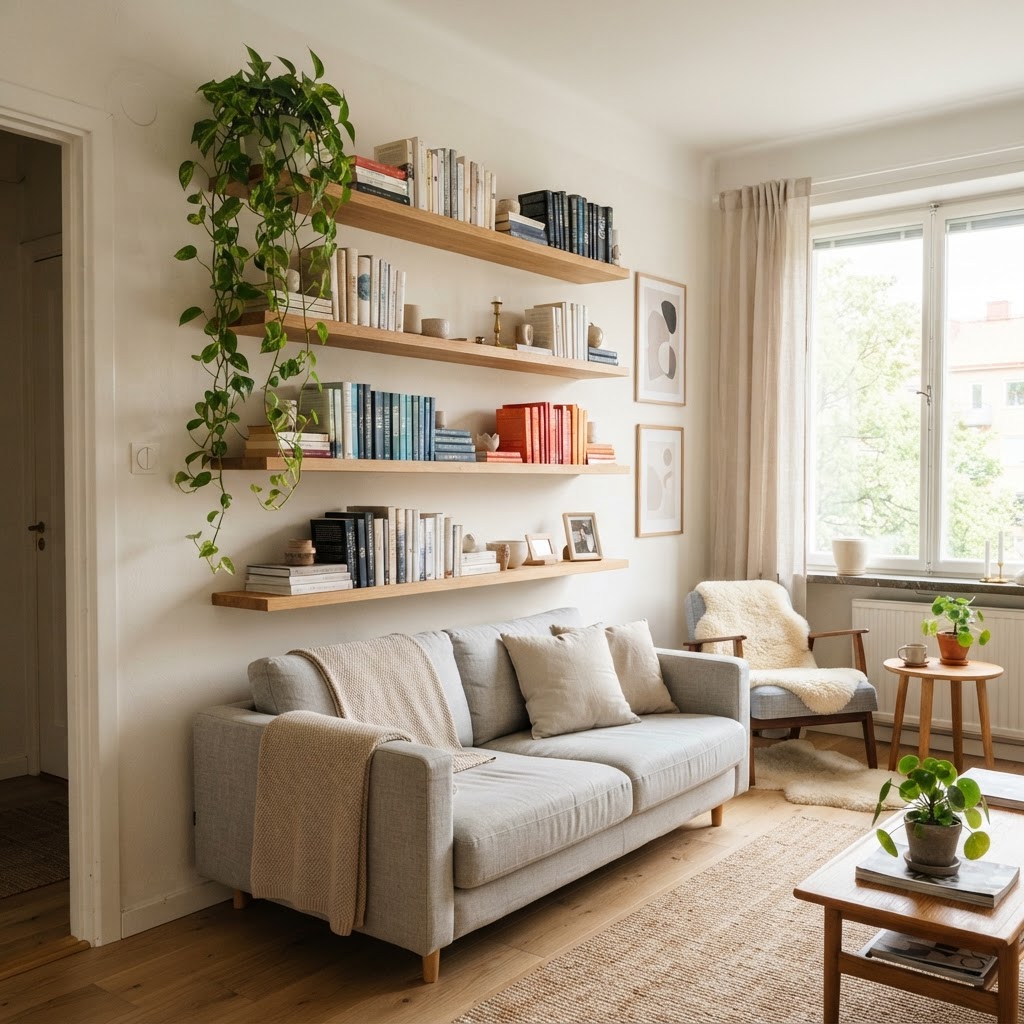
Human perception is heavily influenced by floor-level clutter, which makes rooms feel inherently cramped and smaller than their actual square footage. When you clear your surfaces and move storage to eye level or above, you utilize vertical space effectively, creating a spacious atmosphere. Integrating these into your home design alongside other hidden and vertical storage ideas allows you to reclaim lost room functionality.
Research indicates that mounting shelves at eye level creates a “floating” effect due to the absence of visible brackets, which maintains a weightless aesthetic. This design choice is critical for small apartments because it prevents the visual “boxing in” caused by bulky, traditional bookcases. By elevating items, you manipulate depth perception, making walls appear taller.
Floating Shelves vs. Traditional Storage
1. The Living Room Library
A series of long, reclaimed wood shelves spanning the width of a living room wall can house dozens of books while functioning as a curated display. If you are looking to decorate a small apartment on a budget, these shelving projects are a perfect way to add character without breaking the bank. By grouping books by height or color, you turn a storage necessity into a visual feature that anchors the living space. For structural integrity, ensure shelves are spaced at least 10–12 inches apart to accommodate standard hardcover sizes.
2. Kitchen Corner Shelves
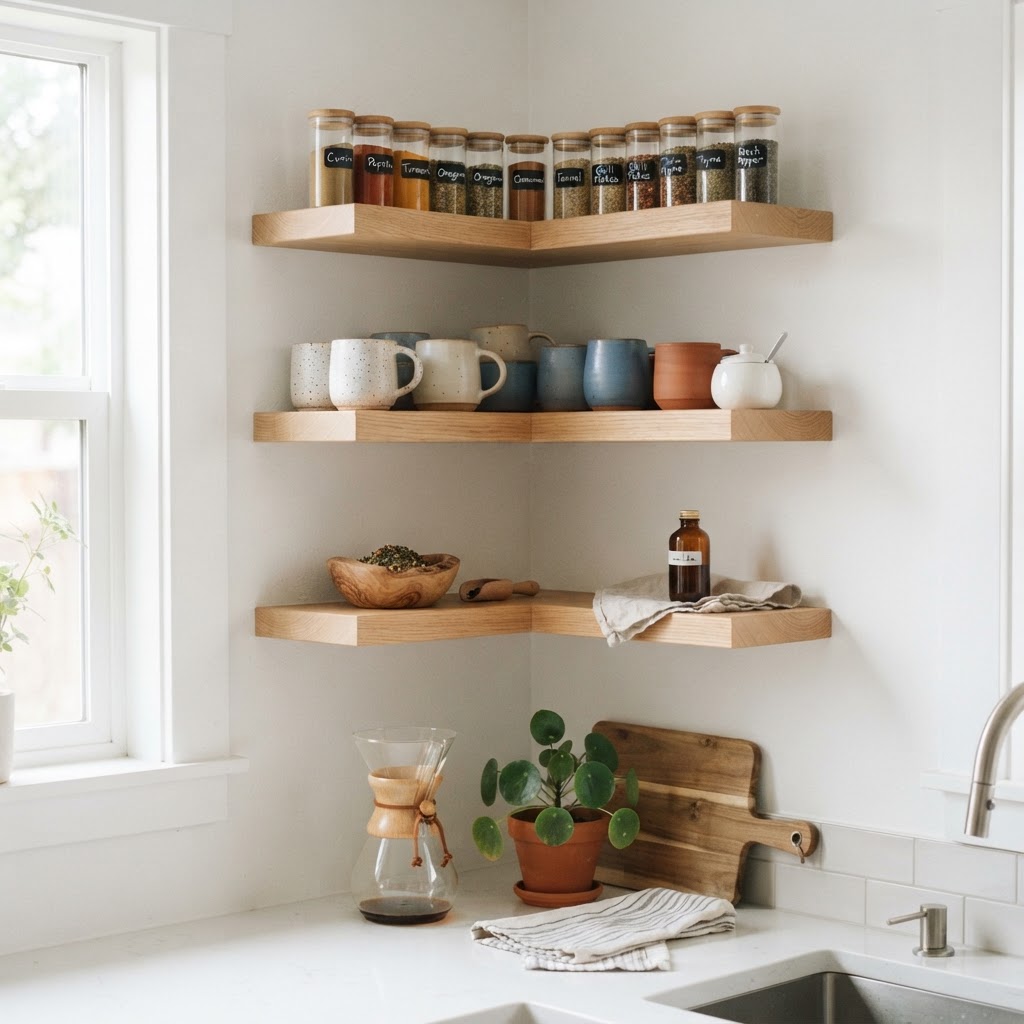
Corner floating shelves are a genius hack for maximizing underutilized dead space in tiny kitchens where every square inch of counter space matters. Installing L-shaped or staggered shelves in these corners allows for the organized storage of frequently used items like spices, oil bottles, or specialized mugs. This strategy prevents “counter creep,” keeping your workspace clean for food preparation.
Maximize Verticality
When installing these, calibrate shelf height based on the contents. Spices generally require only 5–6 inches of clearance, while canisters or small appliances need 12–15 inches. Measuring your tallest item before drilling prevents the need for re-installation later, ensuring every vertical inch is optimized.
3. The Bedside “Floating” Table
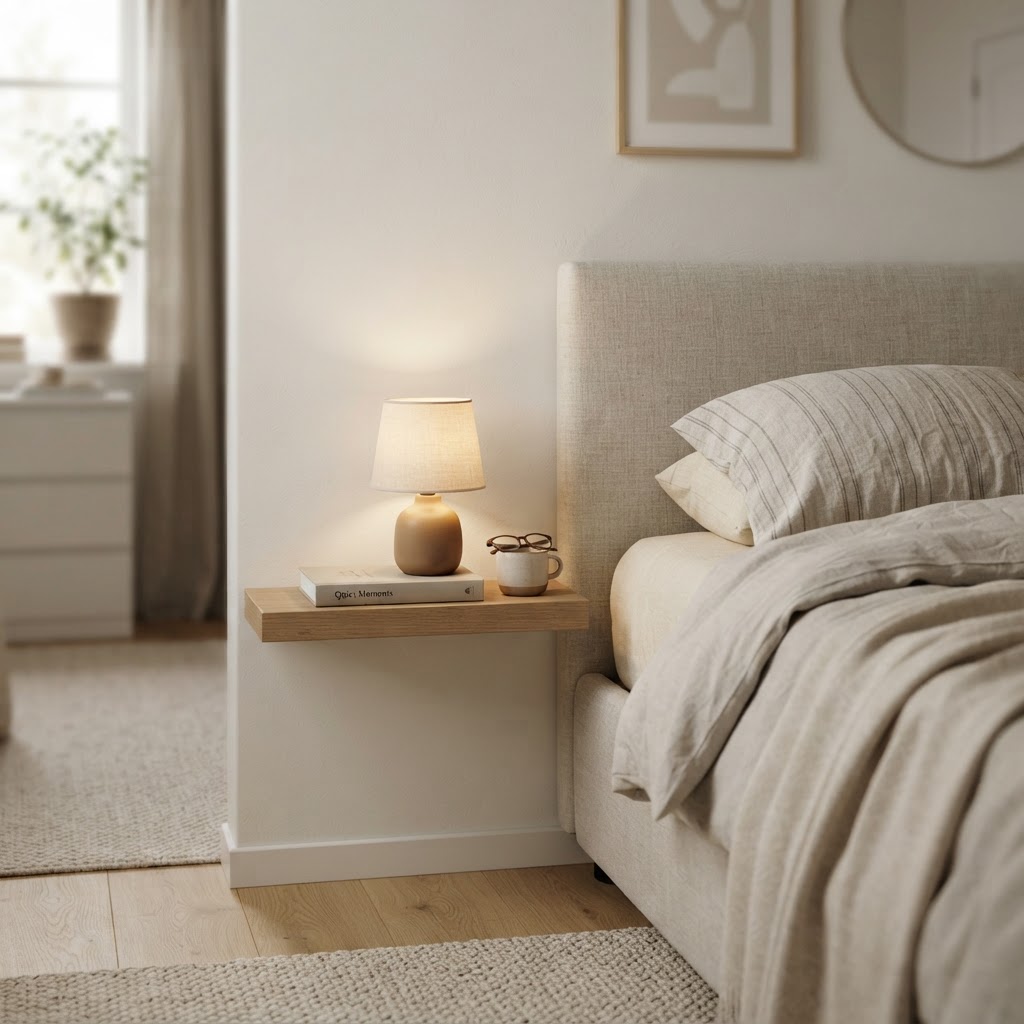
Replacing a traditional bulky nightstand with a single, sturdy floating shelf mounted exactly 24–28 inches from the floor creates a sleek, functional bedside surface. This minimalist approach provides sufficient space for a phone charger, a glass of water, and a reading lamp while keeping the floor clear for easy cleaning. It is particularly effective in studio layouts where floor space is limited.
4. Above the Doorway Displays
Dead space above doorways is often ignored, yet it provides prime real estate for seasonal storage or decorative collections. Installing a single, robust shelf roughly 6–8 inches above a door frame creates a hidden storage ledge for items like extra linens stored in uniform baskets, vintage cameras, or non-daily decor. This effectively utilizes space that would otherwise be wasted, keeping the room tidy.
5. Bathroom Vanity Extensions
Bathrooms in small apartments often suffer from minimal storage, but vertical wall space remains vast. Installing floating shelves above the toilet or next to the vanity provides an organized home for apothecary jars, folded towels, and essential toiletries. Using clear or matching opaque containers minimizes visual clutter and creates a cohesive, spa-like environment that feels professionally curated.
6. Entryway Drop Zones
A slim floating shelf placed near the front door functions as an efficient drop zone for mail, keys, and wallets. To maximize the utility of this small footprint, add 3–4 brass or nickel hooks underneath the shelf for bags or jackets. This design ensures that everyday items have a dedicated landing spot the moment you enter, preventing kitchen counter clutter.
7. The Media Console Alternative
Large media consoles often occupy significant floor space, but mounting a long floating shelf directly beneath a wall-mounted TV offers a streamlined alternative. This setup provides sufficient room for gaming consoles, streaming devices, and remotes while keeping the floor area underneath open. This openness allows for better airflow around electronics and makes the room feel significantly larger.
8. Indoor Jungle Vertical Garden
Floating shelves are ideal for apartment dwellers wanting to integrate nature without occupying precious floor space with plant stands. By staggering shelves at different heights and depths, you can create a “vertical jungle” that adds texture and air-purifying benefits to the room. Utilizing trailing plants like Pothos or Philodendrons helps soften the hard lines of the shelves and adds visual interest.
9. Home Office Wall Organization
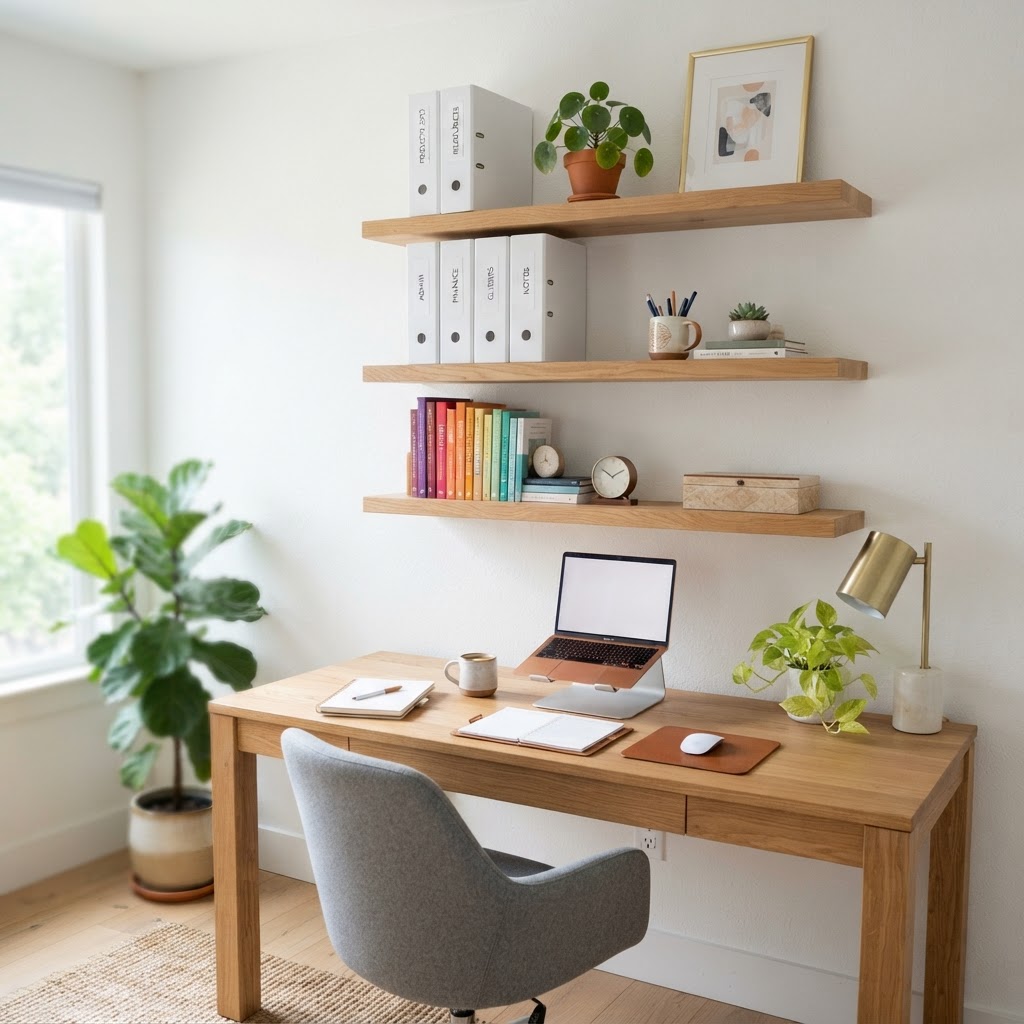
For remote workers, clearing the desk surface is vital for productivity, and moving books and supplies to wall-mounted shelves is the best solution. Installing tiered shelves directly above your monitor or to the side of your desk keeps essential hardware and reference materials reachable but out of the way. This prevents the cramped, “over-desk” feeling and improves work focus.
10. The Art Gallery Shelf
A narrow ledge shelf, often 2–3 inches deep, serves as a dynamic gallery for rotating artwork, family photos, or mementos. Unlike permanently mounted frames, ledge shelves allow you to swap your decor in seconds without needing to patch wall holes. This keeps your apartment interior feeling fresh and personalized without the physical clutter of multiple heavy frames on the wall.
11. Laundry Room Utility
Small laundry closets benefit immensely from shelving installed directly above the machines. Placing detergent, dryer sheets, and hampers on these shelves frees up the floor space within the closet, which is often needed for larger items like a vacuum or a folding step stool. This creates a high-functioning zone in an otherwise cramped, underutilized utility area.
Choosing the Right Hardware and Installation
Installation security is non-negotiable when dealing with floating shelves. Always aim to anchor your hardware into wall studs using long, heavy-duty wood screws. In instances where studs are unavailable or incorrectly spaced, utilize high-quality toggle bolts; these are significantly stronger than standard plastic anchors and are better suited for the weight-bearing demands of floating shelving.
Key Considerations for Renters
Renters should always prioritize non-permanent options if lease agreements restrict drilling. Tension-pole shelving units provide a vertical storage solution that mimics the floating aesthetic without requiring hardware. If you are permitted to drill, keep a small container of wood filler and touch-up paint on hand to restore the wall to its original state upon moving out.
Designing Your Shelving Layout
Visualizing your layout with painter’s tape before drilling is the most effective way to ensure symmetry and proper spacing. Aim for a mix of long and short shelves to create visual rhythm rather than a uniform, institutional look. When balancing weight, place heavier items like books or printers on the lower shelves and lighter, decorative objects on the higher tiers.
FAQ
Q: Can I install floating shelves on drywall without studs?
Yes, you can install them, but you must use specialized heavy-duty toggle bolts or drywall anchors rated for the specific weight of your items. Avoid using basic plastic expansion anchors for shelves intended to hold heavy books or appliances.
Q: What is the ideal height for a floating bedside shelf?
Most people find that mounting a bedside shelf 24 to 28 inches from the floor creates the most ergonomic height for reaching items while lying in bed. This height aligns well with the standard mattress level of most bed frames.
Q: How deep should a floating shelf be for books?
A depth of 8 to 10 inches is usually sufficient for most standard hardcovers and trade paperbacks. If you are storing larger art books, you may need a depth of 12 inches to ensure they do not hang over the edge.
Q: How do I hide the hardware on floating shelves?
Most professional-grade floating shelves use a blind bracket system, consisting of steel rods that slide into pre-drilled holes in the back of the shelf. This effectively conceals the mounting hardware, creating the “floating” illusion.
Q: Are floating shelves safe for heavy items?
Floating shelves can safely support heavy items if they are mounted into studs using thick steel brackets. Always check the manufacturer’s weight limit, as overloading a shelf beyond its rated capacity can lead to hardware failure or drywall damage.

Leave a Reply