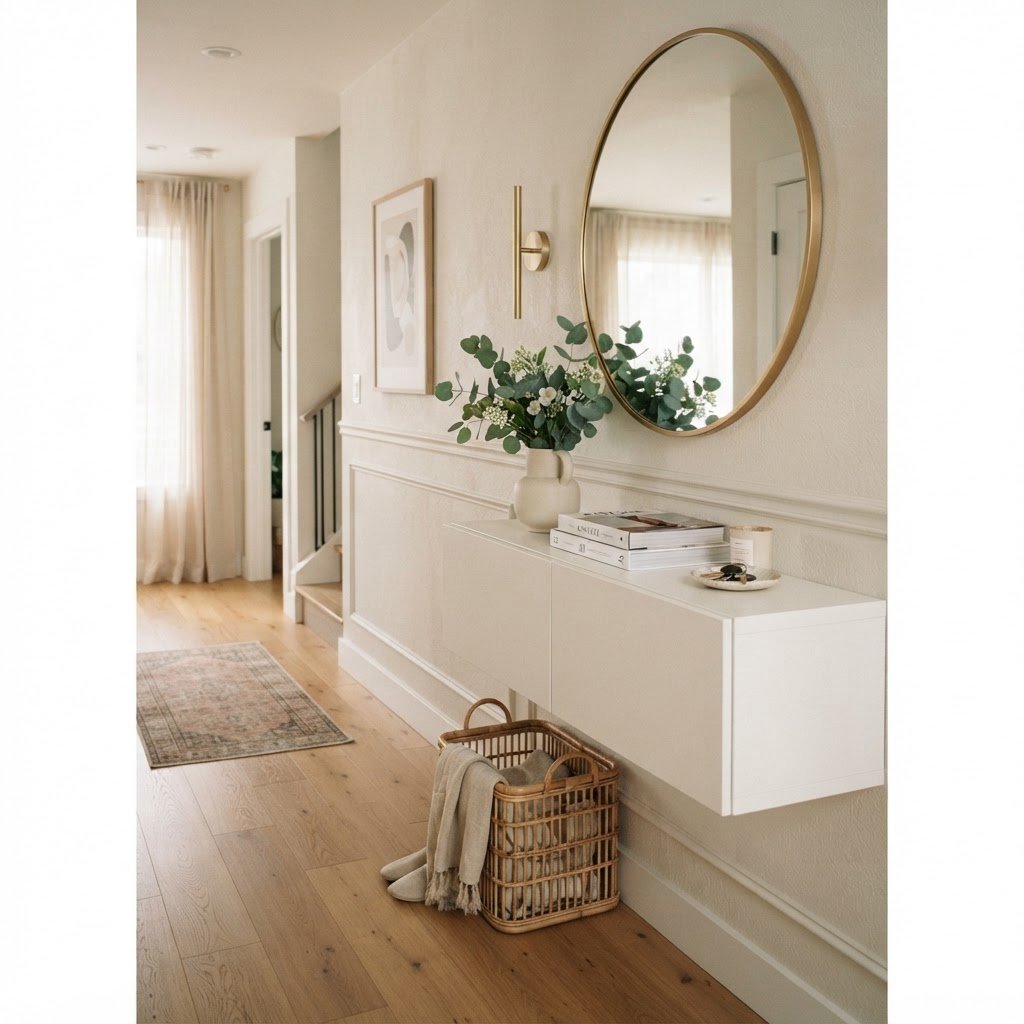
11 Modern Entryway Decor Ideas for Very Small Spaces
To decorate a very small entryway effectively, prioritize vertical storage, multifunctional furniture like floating consoles, and light-reflecting mirrors to maximize square footage. Implementing a “drop zone” routine with wall-mounted hooks and slim, tilt-out shoe cabinets allows you to maintain a clutter-free, functional, and stylish transition space between the outdoors and your home.
Rethink the Layout with Vertical Storage
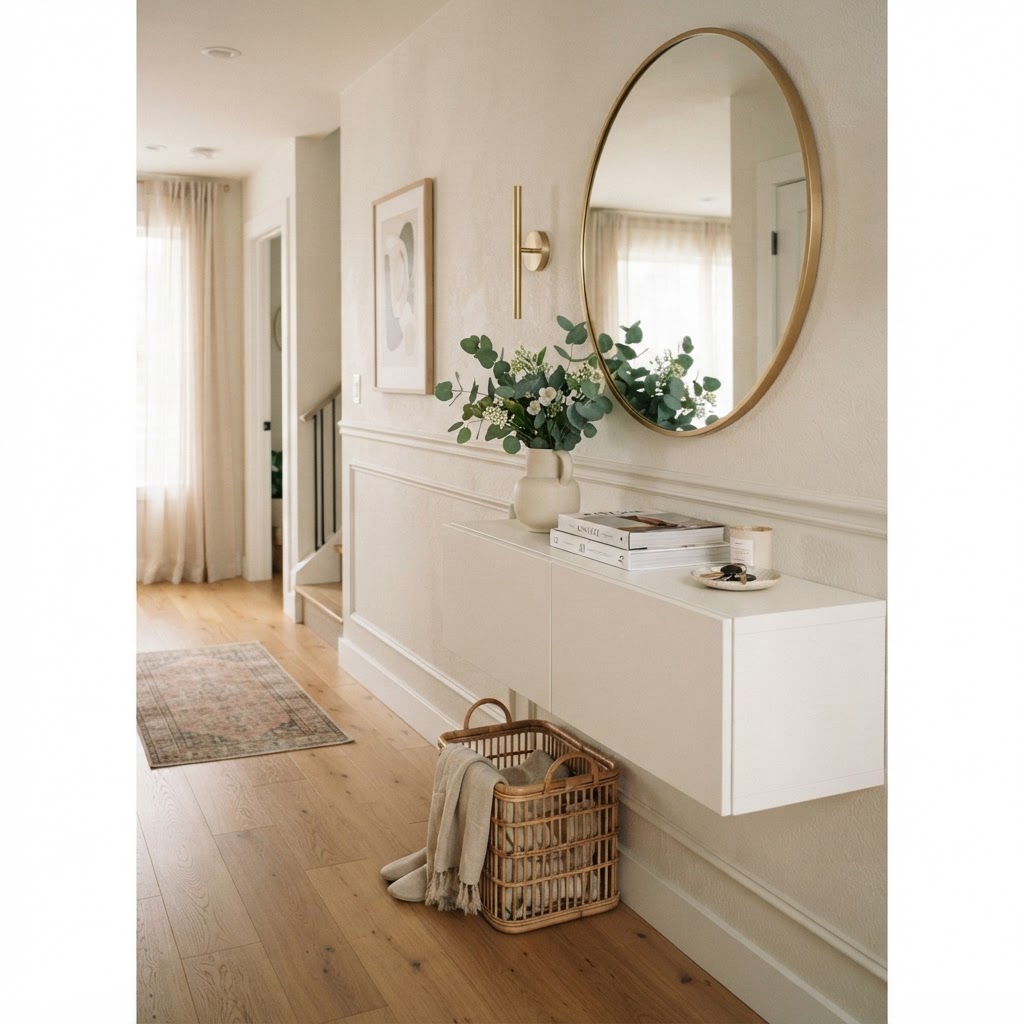
When floor space is limited, the only way to effectively increase capacity is to utilize your vertical wall surfaces. Wall-mounted systems and overhead storage prevent floor clutter, which is the primary factor in making a small room feel cramped. By moving storage from the ground to eye level or above, you create the illusion of a larger footprint while keeping essential items like keys, mail, and umbrellas within arm’s reach.
The Power of Floating Consoles
A floating console is a game-changer for narrow entries because it removes bulky floor-based legs that interrupt visual flow. For the best results, select a console depth of 10 to 12 inches to ensure it doesn’t impede traffic. Pro-tip: Match the finish of your console to your wall color to create a “disappearing” effect that makes the piece look like it is built into the architecture.
Why Hooks Beat Closets
If you lack a dedicated coat closet, open wall hooks are superior to bulky coat racks because they offer a 0-inch depth profile when not in use. Installing a row of hooks at approximately 60 inches from the floor keeps coats accessible but tidy. Consider matte black or brushed brass finishes for a modern aesthetic that doubles as wall art.
Brighten and Expand with Strategic Lighting and Mirrors
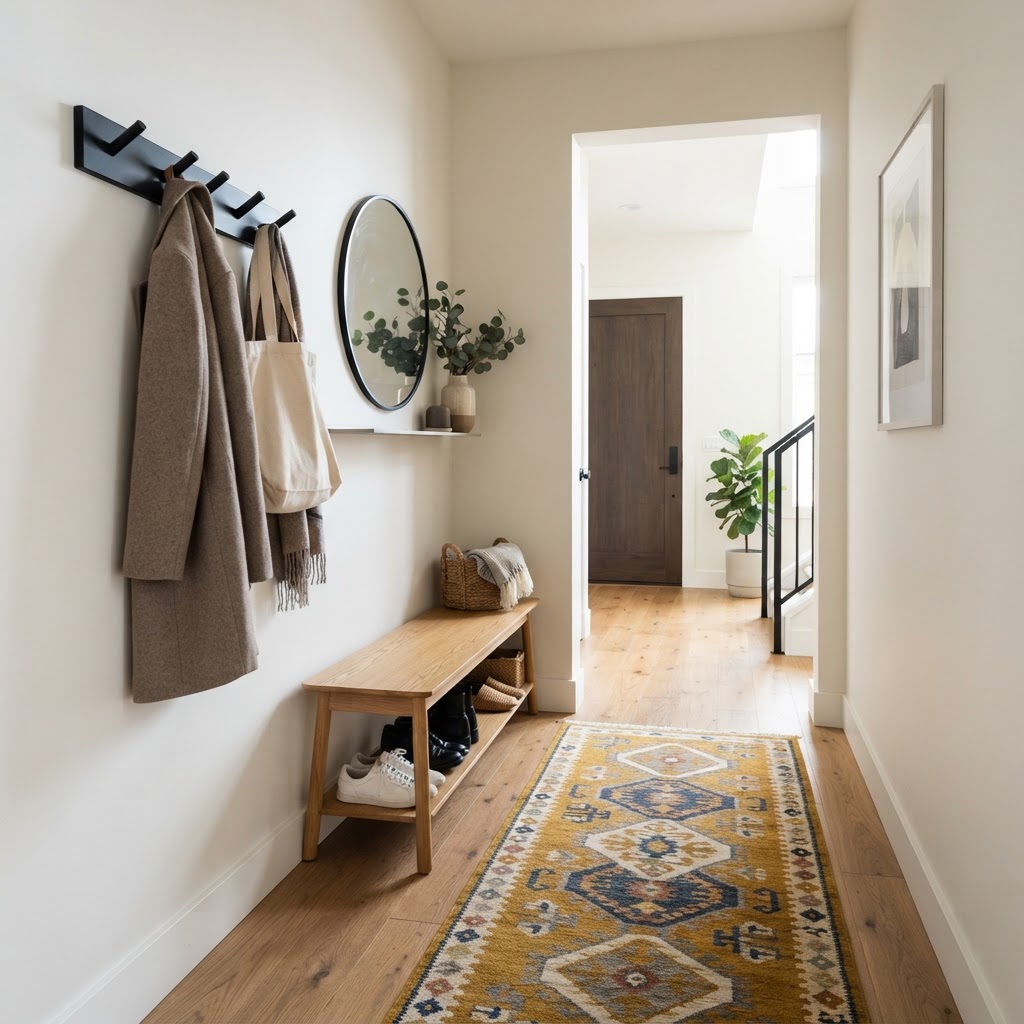
Strategic lighting and reflective surfaces are the most cost-effective methods for doubling the perceived size of a tiny entryway. Mirrors are essential in modern entryway design because they bounce natural light into windowless corners and create a focal point that adds depth. A large, oversized floor mirror leaning against a wall or a decorative circular mirror hung above a console can instantly transform a dim, claustrophobic hallway into a bright, inviting foyer.
Pair your mirror with a statement light fixture to enhance the atmosphere. A flush-mount pendant is ideal for standard 8-foot ceilings, as it avoids encroaching on head space while providing 360-degree illumination. For a luxury feel, install LED strips hidden under a console table or behind a mirror frame. These hidden lights provide a soft, ambient glow that highlights floor space and adds a high-end, professional design touch. When choosing your lighting, aim for a warm color temperature (around 2700K to 3000K) to ensure the space feels welcoming rather than clinical or harsh.
The Functional Minimalism Approach
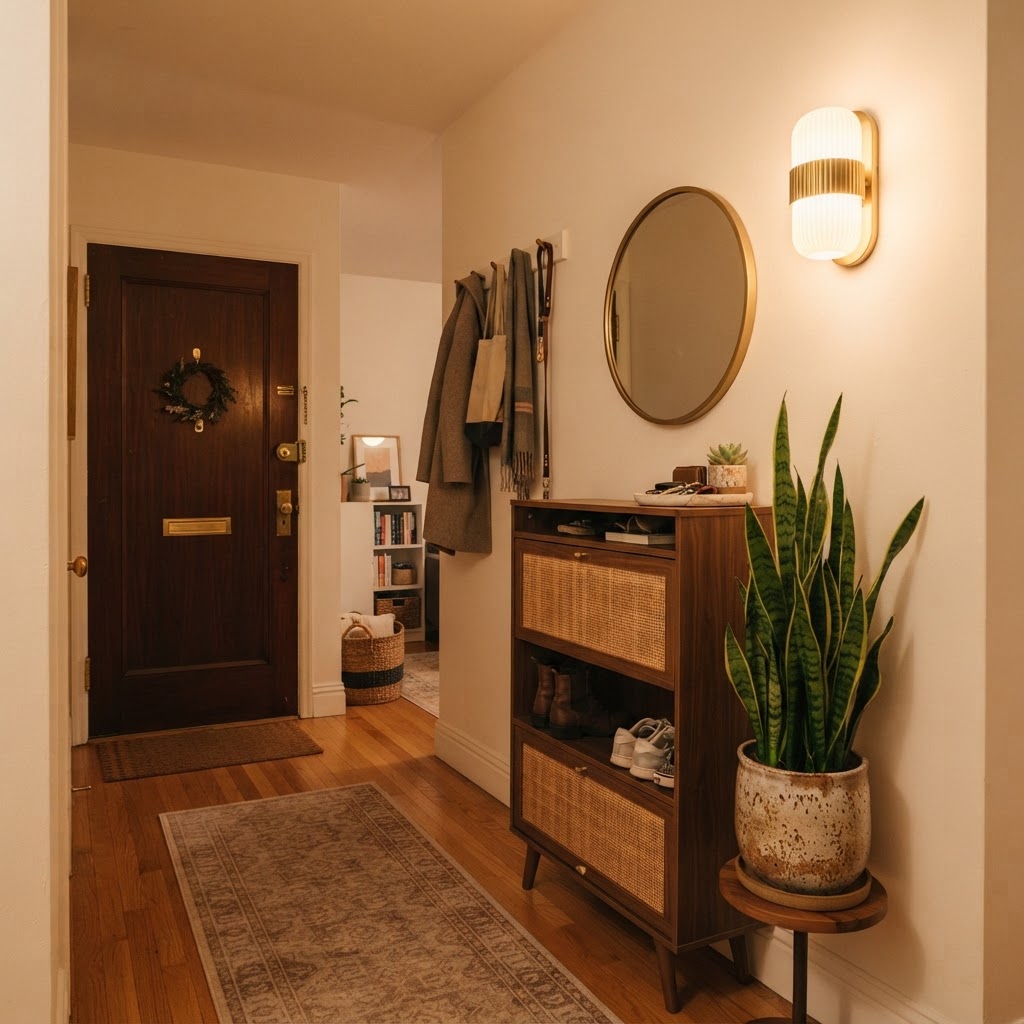
Minimalism in a small entryway focuses on dual-purpose furniture where every item serves at least two specific functions. A piece of furniture that cannot justify its presence through both utility and aesthetic contribution is typically unnecessary in a compact home. For instance, a wooden storage stool provides a place to sit while putting on shoes and acts as a pedestal for a plant or a seasonal decorative object.
Choose pieces with clean lines and a monochromatic palette to reduce visual “chatter.” When the furniture matches the tone of your walls, the entire entry feels like a cohesive, intentional design nook rather than a collection of scattered objects. This approach effectively lowers the psychological weight of the area, making your home entrance feel like a serene transition zone rather than a cluttered storage spot.
Creative Shoe Storage Solutions
Shoes are the primary culprits of entryway clutter and require specific, slim-profile storage solutions. To maintain a clean look, hide them away in slim, tilt-out shoe cabinets that feature depths as shallow as 6 to 9 inches. These specialized units fit perfectly behind doors or against narrow hallway walls where standard furniture would block the path.
- Utilize tilt-out cabinets to store 6-12 pairs of shoes in a 10-inch deep space.
- Incorporate a bench with integrated open-cubby shoe storage for easy access.
- Use woven baskets on low shelves to manage items like umbrellas and scarves.
- Rotate footwear seasonally; store off-season shoes in closets to clear entry floor space.
Incorporating Personal Style with Decor Accents
Small spaces should prioritize quality over quantity, especially when it comes to decorative accents. Injecting personality into a cramped entryway is best achieved by selecting one or two “hero” pieces rather than scattering small knick-knacks that create visual noise. A single oversized piece of abstract wall art or a sculptural, high-design table lamp can serve as a stunning focal point without making the area look busy or disorganized.
Integrate greenery to breathe life into the transition area; a low-maintenance plant like a Pothos or a Snake Plant can thrive in the typical lighting conditions of a hallway. A vibrant runner rug is another essential; choose a long, narrow carpet that directs the eye into the home, effectively elongating the space and making the entryway feel like an invitation rather than a sudden halt at the doorway.
The Role of Color and Texture
Color choices dictate the mood of your home from the moment the door opens, so pick shades that align with your desired aesthetic. Light, airy colors—such as soft whites, light greys, or muted sage greens—are proven to reflect more light, making a cramped hallway feel physically larger and more open. If you prefer a bolder aesthetic, apply a moody wallpaper to one accent wall; this adds high-end character and turns a “problem” area into an intentional design feature.
Texture acts as the bridge between modern minimalism and comfort. Even in a sleek, modern setup, incorporating natural materials like a rattan storage basket, a jute rug, or a live-edge wood shelf grounds the space. These tactile elements prevent a small, modern entry from feeling sterile or cold, ensuring that the space remains a cozy, lived-in part of the home.
Establishing a Drop Zone Routine
Efficiency in a small space relies on a strict organizational routine centered around your new storage solutions. Once you have installed hooks and shelves, create a daily habit of using them immediately upon entry. Dedicate a specific tray on your console solely for keys, wallets, and sunglasses to ensure these items never migrate to your kitchen counter or living room table.
Maintaining a “clear surface” policy is critical to preserving the serene aesthetic you have worked to build. Remember, the primary goal of these modern designs is to provide a smooth, stress-free transition between the chaotic outside world and the sanctuary of your home. By keeping the drop zone orderly, you reduce visual stress every time you walk through the door.
FAQ
How do you organize a very small entryway with no closet?
Use vertical wall space by installing a row of decorative hooks for coats and a slim, wall-mounted floating console for keys. Add a narrow, tilt-out shoe cabinet to hide footwear, which keeps the floor clear and prevents the visual clutter that makes small spaces feel smaller.
What is the best color for a small entryway?
Light and neutral colors like off-white, light gray, or soft beige are best because they reflect natural light and make a small space feel open. If you want a bold look, consider a dark, moody wallpaper on a single accent wall to create a sophisticated, high-end focal point.
How deep should an entryway console be for a small space?
For a very small entryway, choose a console that is between 8 and 12 inches deep to ensure it does not block the walking path. Floating consoles are specifically recommended because they occupy zero floor space, which keeps the area feeling light and uncluttered.
How can I make my narrow entryway look bigger?
Install a large mirror to reflect light and create the illusion of additional depth in the room. Pair this with bright, consistent lighting and keep the floor as clear as possible by using wall-mounted storage to draw the eye upward instead of toward the cramped floor area.

Leave a Reply