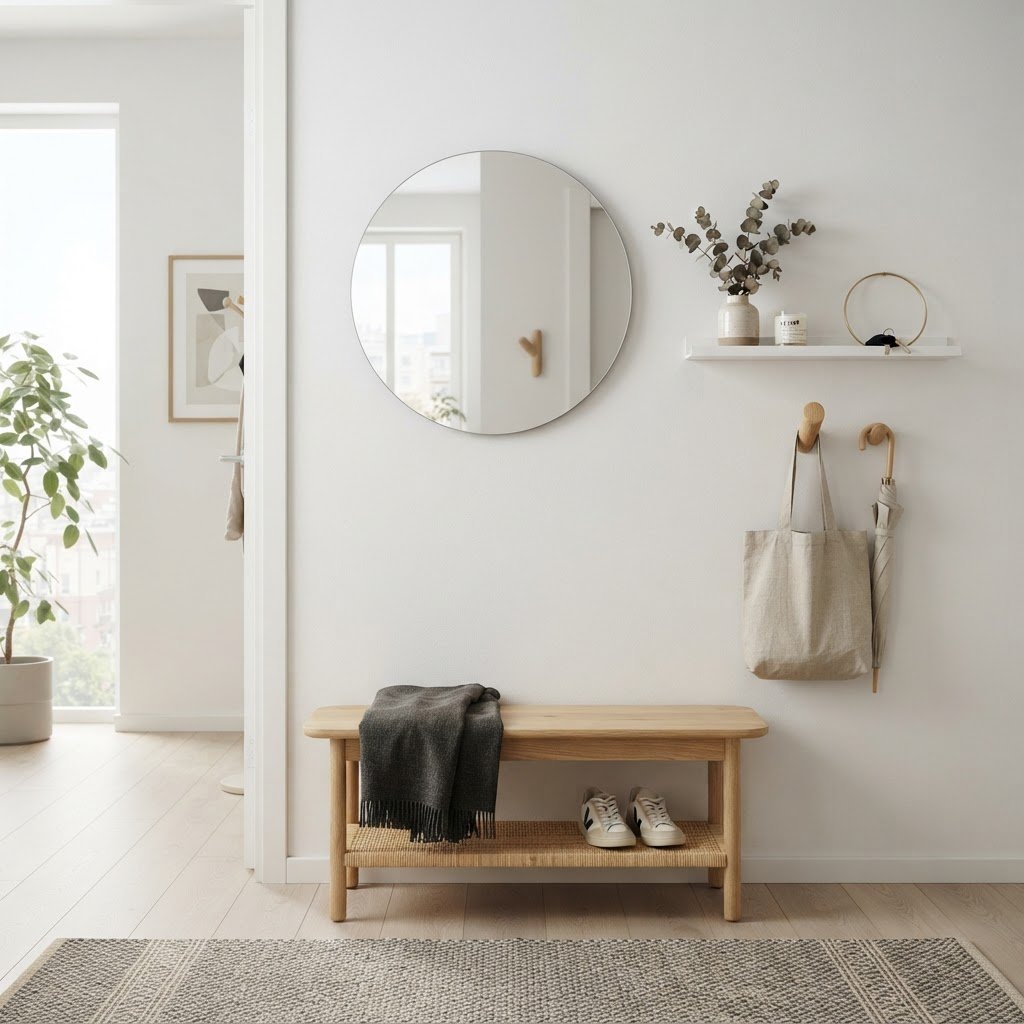
Modern Minimalist Entryway Ideas for Small Apartments involve maximizing vertical wall storage, utilizing multi-functional furniture, and implementing a strict ‘one-in, one-out’ decluttering policy. By focusing on reflective surfaces, neutral color palettes, and slim, leggy furniture silhouettes, you can transform even the smallest square footage into an organized, serene, and highly functional transition zone.
Understanding the Minimalist Aesthetic
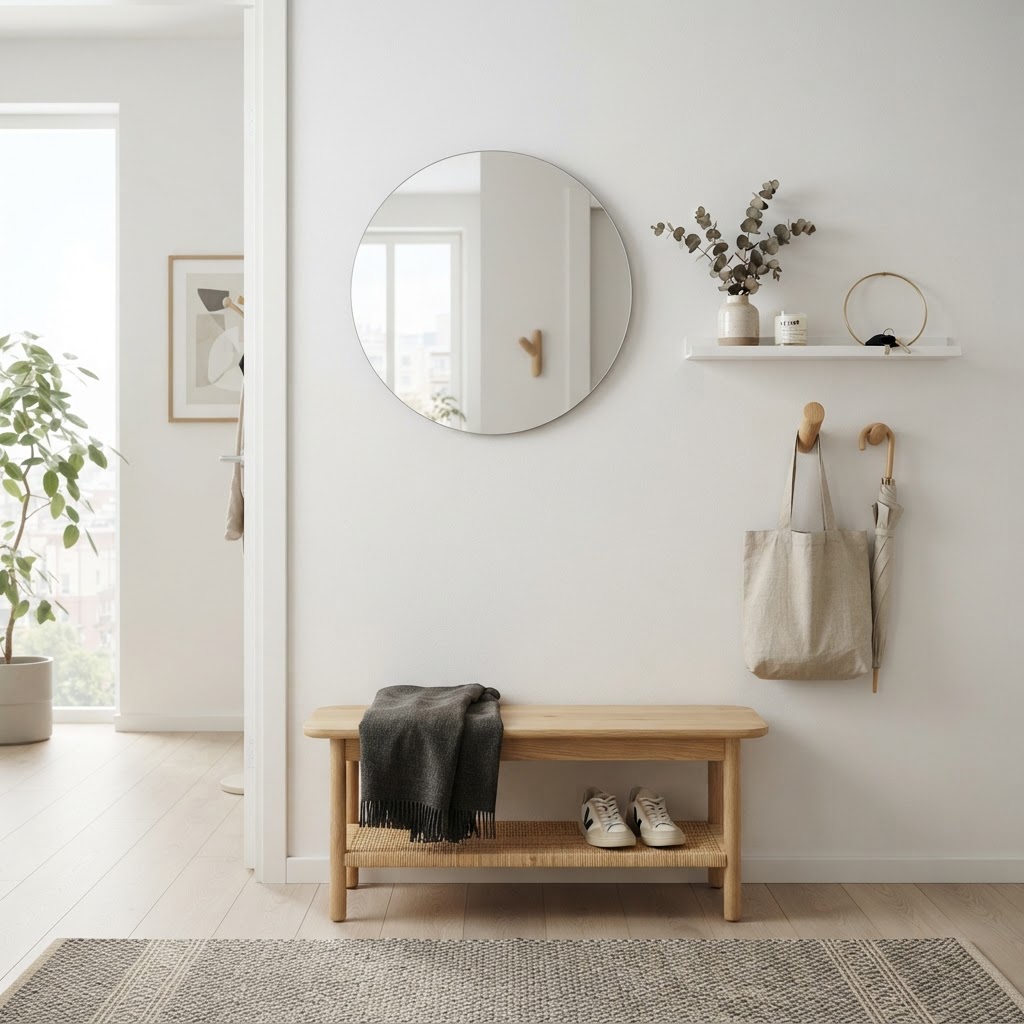
At its core, a modern minimalist entryway is defined by a ‘less is more’ philosophy that prioritizes open floor space and hidden storage to reduce visual noise. In a small apartment, this means removing non-essential items and selecting furniture pieces that serve a distinct, dual-purpose role. By embracing a neutral palette—think soft whites, warm greys, or muted beiges—and using streamlined silhouettes, you prevent the entryway from feeling cramped or overwhelming. Minimalism is ultimately about intentionality; every square inch should be curated to support your daily habits rather than cluttering your path. Research suggests that reducing visual complexity in high-traffic transition areas can lower cortisol levels, effectively turning your entrance into a calming threshold. When you strip away the non-essentials, you allow the room’s natural architecture to stand out, making the entire apartment feel more expansive and peaceful. Focus on high-quality materials, such as raw wood or metal, which add depth to the space without requiring additional decorative clutter.
Assessing Your Entryway Constraints
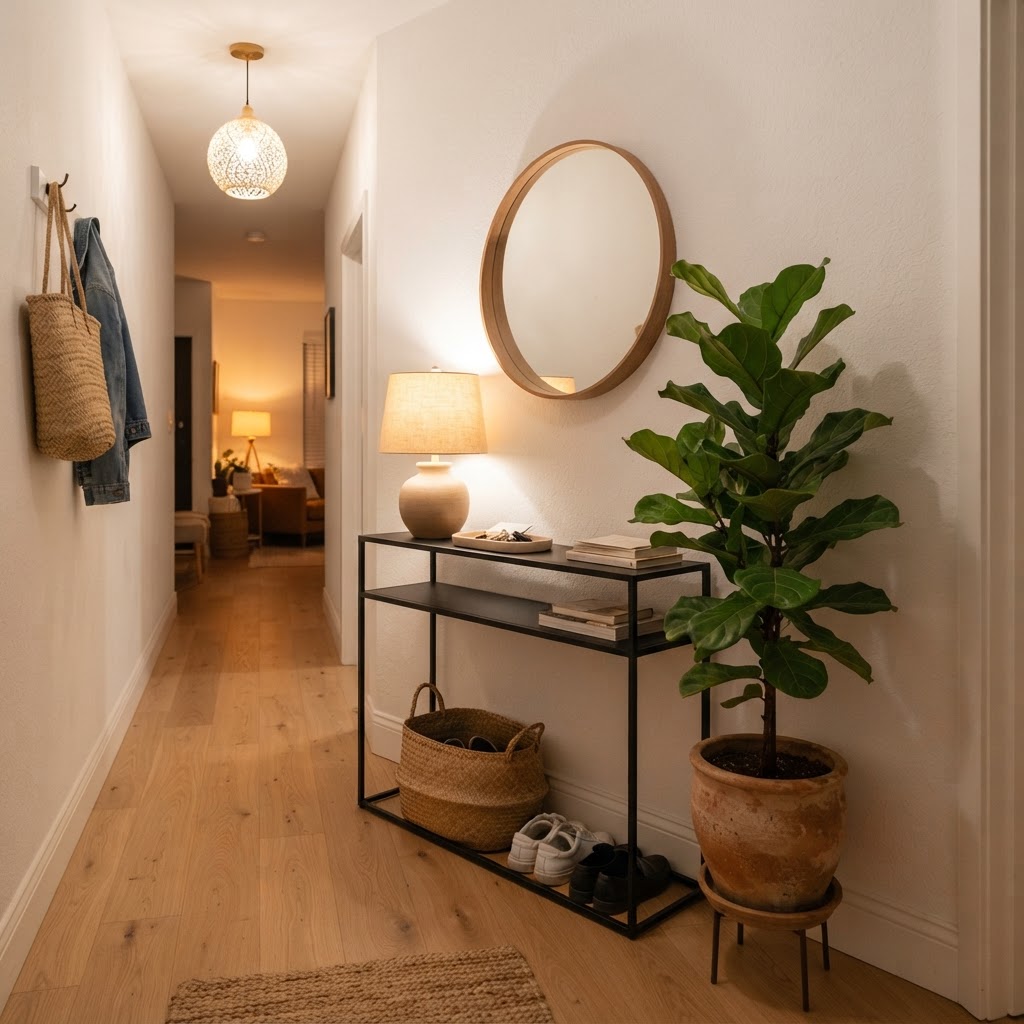
Before you purchase furniture, observe your specific micro-habits—such as where you habitually drop your keys or discard your shoes—to determine exactly how much storage space is required. Many small apartments suffer from a lack of natural light, so your design choices should incorporate reflective surfaces to bounce light around the room. Measure your entry path with precision, ensuring at least 30 to 36 inches of clearance for comfortable foot traffic. If your doorway opens directly into your living area, a visual divider like a slim floor-to-ceiling mirror or a low-profile bench effectively signals a transition in the floor plan. Consider the following comparison to determine which storage approach fits your specific spatial constraints:
The Power of Vertical Storage
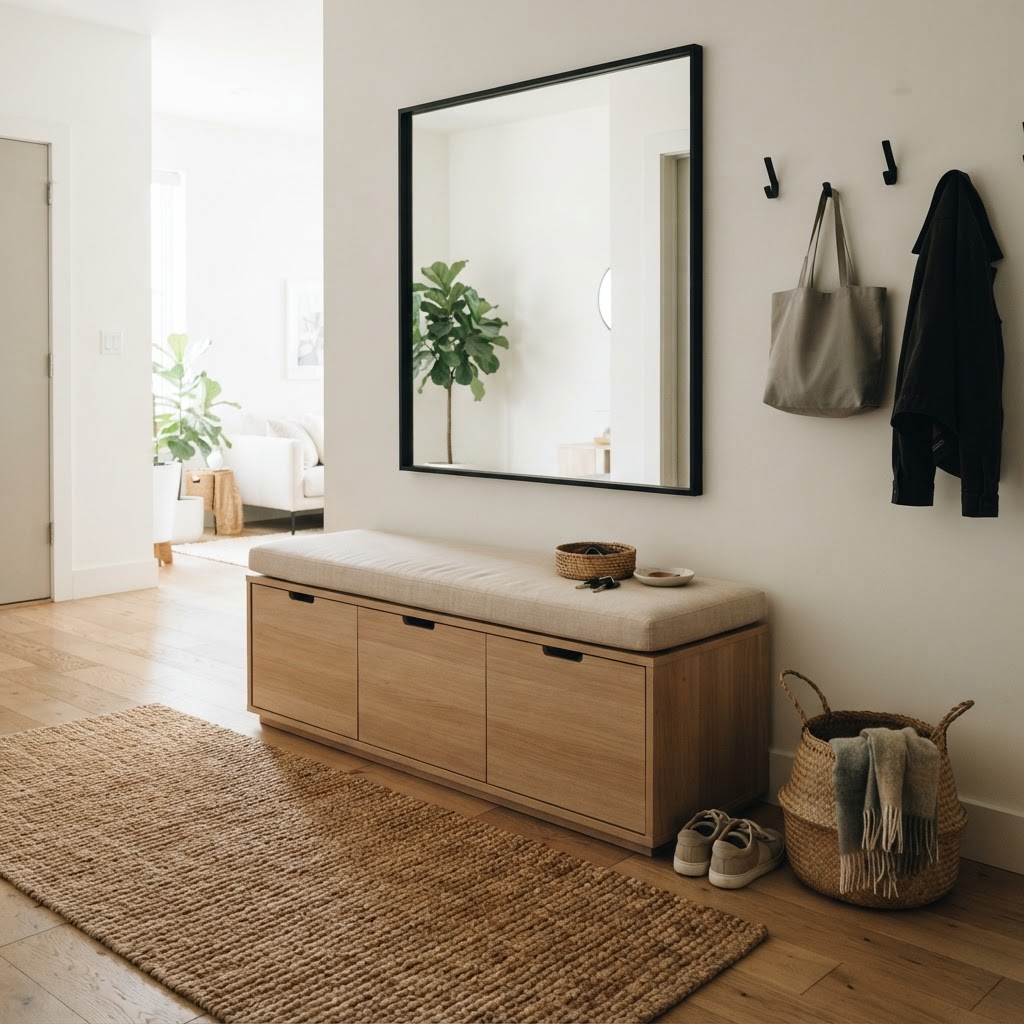
When your floor area is restricted, the walls become your greatest asset for organization and style. Utilizing vertical storage is one of the most effective modern minimalist entryway ideas for small apartments because it keeps the ground clear, creating an illusion of significantly more space. Floating shelves, tall hooks, and wall-mounted organizers allow you to reclaim floor area that would otherwise be wasted. For optimal results, install hardware at various heights to accommodate diverse items like bags, coats, and hats. By choosing finishes that match your wall color, you ensure that the hardware blends into the architecture when not in use, maintaining a seamless look. Another strategy involves wall-mounted baskets or mail slots, which serve to keep paper clutter off tables entirely. Keep these organizers uniform in color and texture to maintain the minimalist vibe. If you have the wall height, installing a tall, slender mirror will draw the eye upward, making the ceiling feel higher and the entire area feel significantly more intentional.
Designing with Wall-Mounted Solutions
Designers recommend placing primary hooks at eye level—roughly 60 inches from the floor—to ensure ease of access while maintaining visual symmetry. By using modular components, you can adjust your storage configuration as your needs evolve. A wall-mounted console table provides a dedicated landing spot for daily items without the bulk of legs touching the floor, which helps maintain the perception of wide-open floor space.
Selecting Minimalist Furniture
Choosing the right pieces for a small entry requires a rigid focus on versatility, scale, and material quality. A narrow console table with thin, metal legs is a staple in minimalist design because it provides functional surface area without adding heavy visual weight to the room. Avoid heavy, dark-stained wood or ornate carvings, as these features often make small rooms feel significantly more confined. Instead, consider a multifunctional bench that provides a place to sit while putting on shoes and offers concealed storage underneath for baskets or bins. When selecting this furniture, look for pieces with closed storage—like drawers or a secure lid—to ensure that the ‘messy shoe pile’ aesthetic is completely hidden from view. Ideally, the bench should be no wider than 36 inches to maintain proper traffic flow. By prioritizing pieces that serve two or more functions, you optimize the limited square footage of a small apartment entryway. Always check the depth of the furniture; in tight corridors, aim for a depth of 12 inches or less to prevent the furniture from becoming an obstacle. Selecting high-quality materials ensures the furniture lasts for years.
Lighting and Reflective Surfaces
Lighting is the most vital, yet often overlooked, component of entry design, particularly in foyers that lack windows. A minimalist pendant light or a sleek, wall-mounted sconce can act as a sophisticated piece of art while simultaneously illuminating the area effectively. If your apartment lacks hardwired lighting, a rechargeable, motion-activated battery-powered wall light is a perfect, wire-free solution that installs in minutes. Mirrors are non-negotiable in these tight spaces; a large, circular or rectangular mirror not only allows for a final check of your appearance but also reflects depth back into the room, creating an illusion of double the space. If you want to keep the aesthetic ultra-modern, choose a frameless design or one with a thin, matte black frame to coordinate with your home’s hardware. Aim for a mirror width that occupies at least 50% of the available wall space to maximize the reflective effect. By strategically placing these surfaces opposite a light source, you can increase the natural light perception by up to 30%, which is critical for making small, windowless entryways feel more inviting and less like a dark, cramped corridor.
Keeping the Space Clutter-Free
Maintaining a minimalist entryway requires a strict commitment to a ‘one in, one out’ policy. Because the space is small, it takes less than 60 seconds for a chaotic pile of mail or forgotten packages to accumulate and ruin the aesthetic. Implement a specific, small tray dedicated to keys and sunglasses to ensure they have a consistent home. Encourage yourself to sort mail immediately upon entering the apartment; discarding junk mail directly into a recycling bin located near the door prevents the entryway from becoming a collection point for paper waste. A truly minimalist entryway remains serene because it is functional, not just because it is empty. Perform a weekly ‘reset’—take five minutes on Sundays to return items to their designated spots and clear any dust or debris. This routine prevents clutter buildup and ensures that your entrance remains a calm transition point rather than a source of daily stress. When everything has a place, you spend less time searching for items before heading out the door, reclaiming valuable time in your daily routine.
Color Palettes and Textural Depth
To keep your entryway from feeling sterile, introduce texture rather than vibrant color. A high-quality jute or sisal rug, a smooth wooden bowl, or a linen-covered seat can add necessary warmth to a white-walled space without creating visual chaos. The goal is to create ‘tactile minimalism’ where materials feel rich, natural, and high-quality, even if the color palette is restricted to creams, beiges, or light grays. If you prefer a bolder approach, a monochromatic paint job—where the walls, trim, and door are painted the same hue—creates a seamless, immersive effect. This technique blurs the boundaries of the room, making a small entryway feel like an intentional design choice rather than a cramped corridor. Consider using paint finishes with subtle variations, such as an eggshell finish on walls and a satin finish on trim, to provide dimension without adding clutter. This is a bold, modern, and highly effective way to expand the perception of your small space while maintaining the clean lines essential to minimalist design.
FAQ
What is the most important feature for a small minimalist entryway?
The most important feature is vertical storage, such as wall-mounted hooks and floating shelves. By removing items from the floor, you create the illusion of more space, which is essential for making a tiny apartment entrance feel larger, organized, and intentional.
How can I make my entryway look bigger without renovating?
You can make your entryway appear larger by installing a large, oversized mirror and choosing furniture with thin, exposed legs. Reflective surfaces bounce light throughout the room, while leggy furniture prevents the floor from looking blocked, making the space feel airy instead of crowded.
Should I use closed or open storage in my entryway?
For a minimalist look, closed storage is preferred because it hides visual clutter like shoes and bags from view. Use drawers, lidded baskets, or cabinets to maintain a clean, serene environment, leaving only your most aesthetic, frequently used items on display.
How do I prevent mail and clutter from piling up?
Implement a ‘one-in, one-out’ rule and place a recycling bin immediately next to your entryway. Sort your mail the moment you walk through the door, discarding junk mail immediately so it never has a chance to accumulate on your surfaces.
What lighting works best in a windowless apartment foyer?
A sleek, wall-mounted sconce or a rechargeable battery-operated motion light is the best solution for windowless spaces. These fixtures provide necessary task lighting for finding keys or checking your look without requiring complex hardwiring or occupying valuable floor space.

Leave a Reply