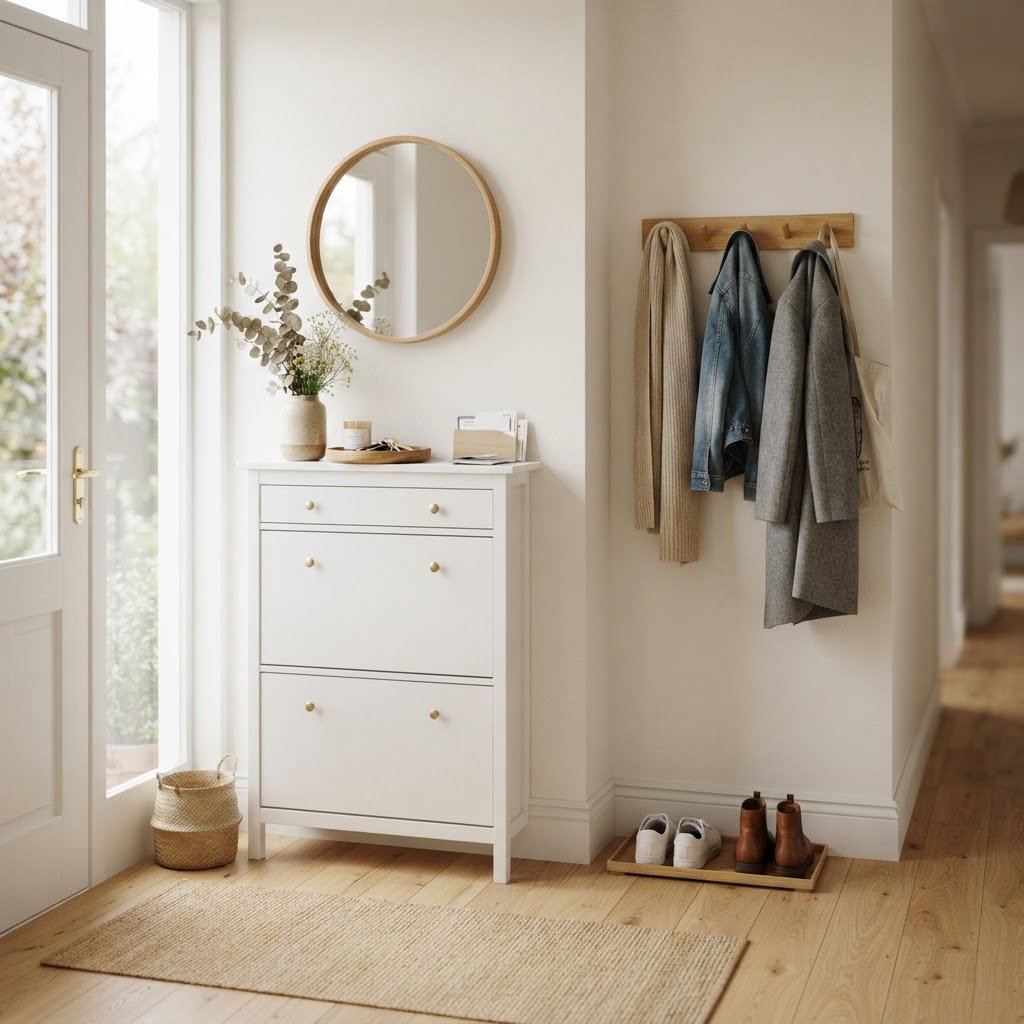
Small Space Entryway Organization Hacks for a Tidy Home
To organize a small entryway, prioritize vertical storage by installing wall-mounted hooks, utilize slim profile shoe cabinets under 10 inches deep, and implement a dedicated ‘landing zone’ for daily essentials. These strategies clear floor traffic and prevent clutter accumulation by maximizing unused wall real estate and hidden storage compartments.
The Psychology of an Organized Entryway
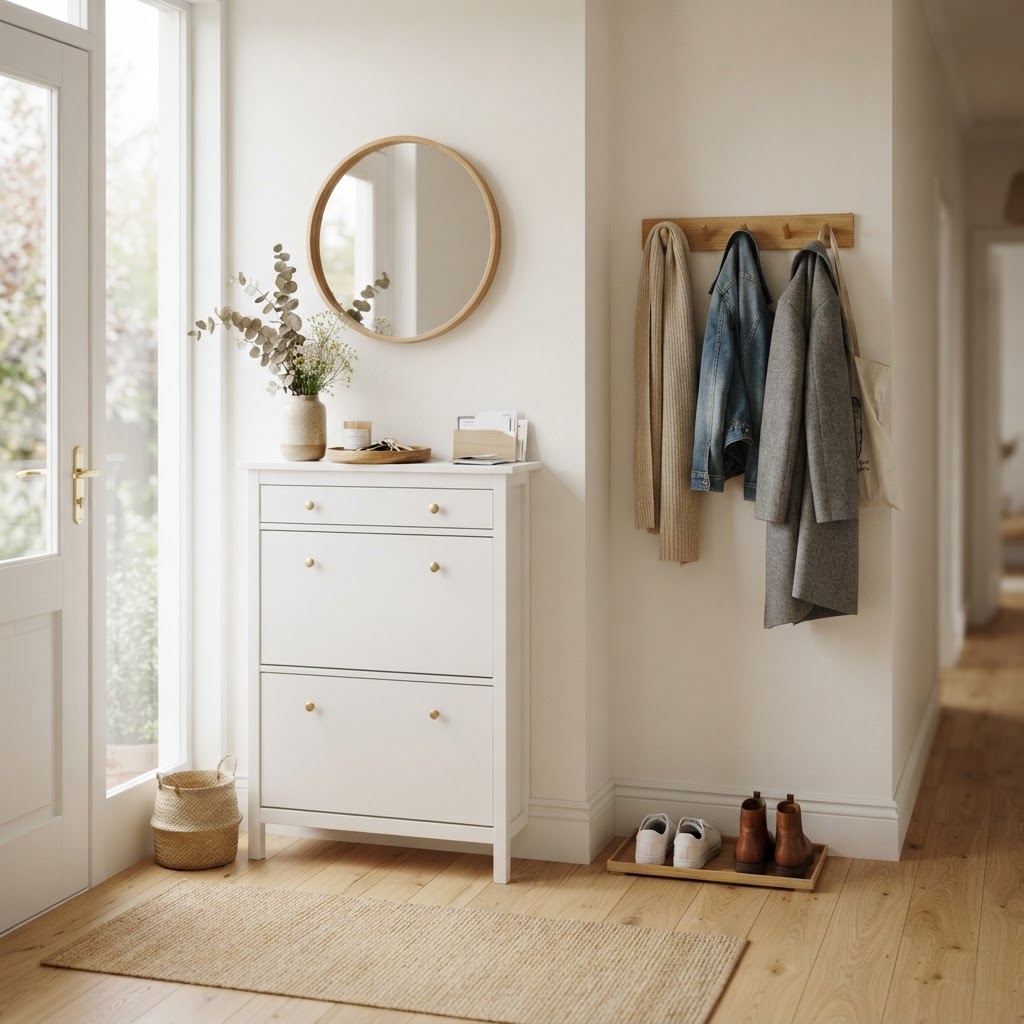
Your entryway acts as a critical transition zone between the hectic outside world and the peace of your living space. When this area is cluttered, it signals to your brain that the day’s chaos has followed you inside, which can increase cortisol levels. By shifting the focus to smart, low-maintenance storage routines, you actively lower the visual noise of your home entrance.
Why Floor Space Matters
Visual weight is a key concept in interior design that dictates how “cramped” a room feels. When floors are covered in footwear and bags, the brain perceives less usable square footage, making a room feel claustrophobic. Research shows that reducing floor-level items by 70% creates a psychological sense of expanded space. By utilizing small space entryway organization hacks that prioritize vertical storage, you clear the floor plane, which creates the physical and visual illusion of a larger, more breathable hallway. Implementing this transition requires a disciplined approach to furniture selection, choosing items that have a “leggy” aesthetic to reveal more flooring rather than solid blocks that consume visual space.
Utilize Vertical Wall Storage Effectively
Walls represent the most underutilized real estate in any small home, and maximizing them is the most effective way to clear the floor immediately. When you cannot expand your footprint outward, you must leverage the vertical axis to host high-frequency items like coats, hats, and umbrellas.
Pegboards and Floating Shelves
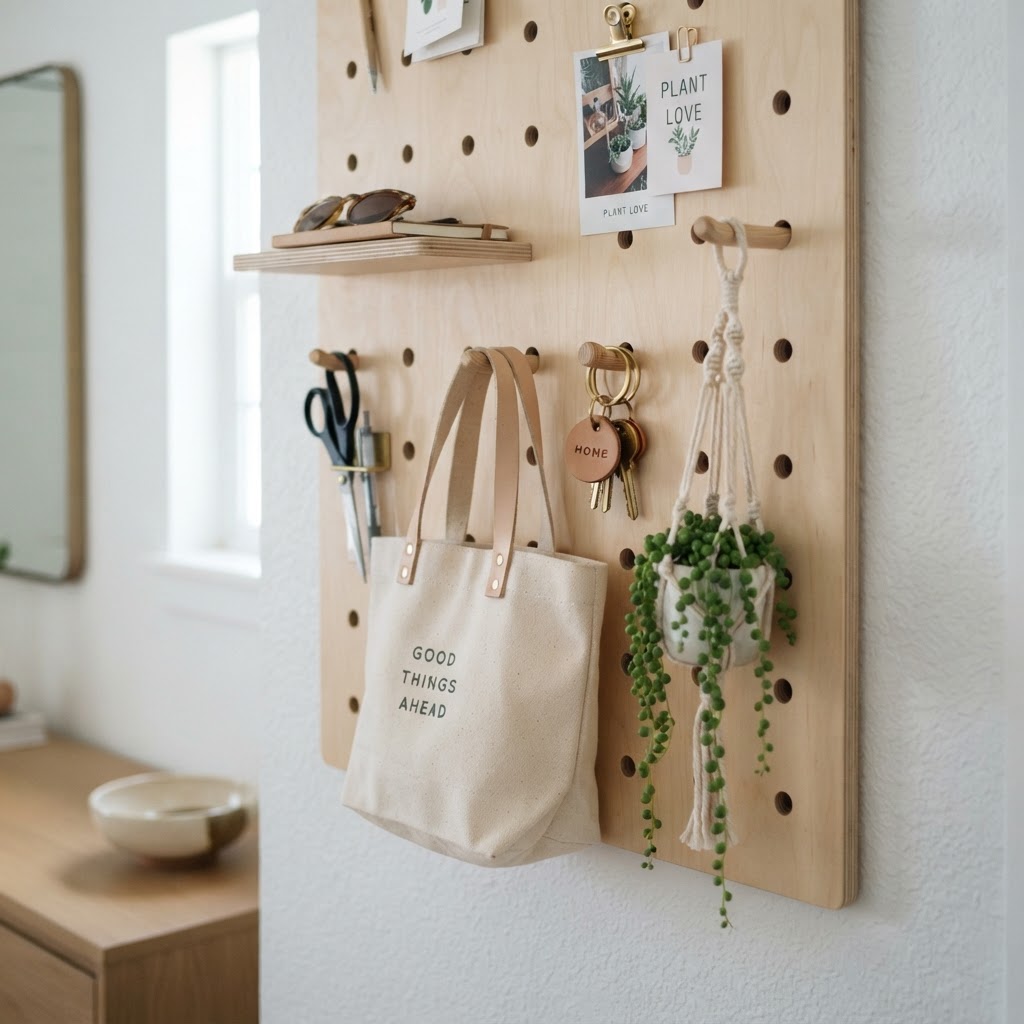
Pegboards are incredibly versatile for small entryways, offering a customizable grid that supports up to 20 pounds per square foot depending on the mounting hardware. You can adjust the pegs to accommodate bulky winter gear or light summer accessories as the seasons shift. Unlike bulky cabinets, floating shelves add storage depth of only 6 to 8 inches, providing a “display” area for keys and mail without encroaching on walking paths. This modularity allows your storage to evolve alongside your lifestyle requirements.
Over-the-Door Solutions
Never overlook the space behind your entry door, which often accounts for 6 to 10 square feet of ignored storage potential. Over-the-door hooks or pocket organizers are perfect for items that you reach for daily, such as scarves or reusable shopping bags. By utilizing this hidden vertical space, you ensure that bulky items are tucked away from view when the door is open, keeping the transition area looking clean and professional for guests.
Clever Shoe Storage Techniques
Shoes are usually the primary culprits behind floor clutter, often creating a tripping hazard that occupies 3 to 4 square feet of premium floor space. The secret to a clean entryway is selecting storage that hides footwear while maintaining a slim, unobtrusive profile.
Slim Shoe Cabinets
Many modern shoe cabinets are designed to be less than 10 inches deep, fitting perfectly behind doors or in narrow hallway gaps. These “tilt-out” mechanisms allow you to store 12 to 18 pairs of shoes vertically, consuming significantly less floor footprint than a traditional tiered rack. By keeping shoes behind a solid door, you eliminate visual chaos entirely.
Under-Bench Drawers
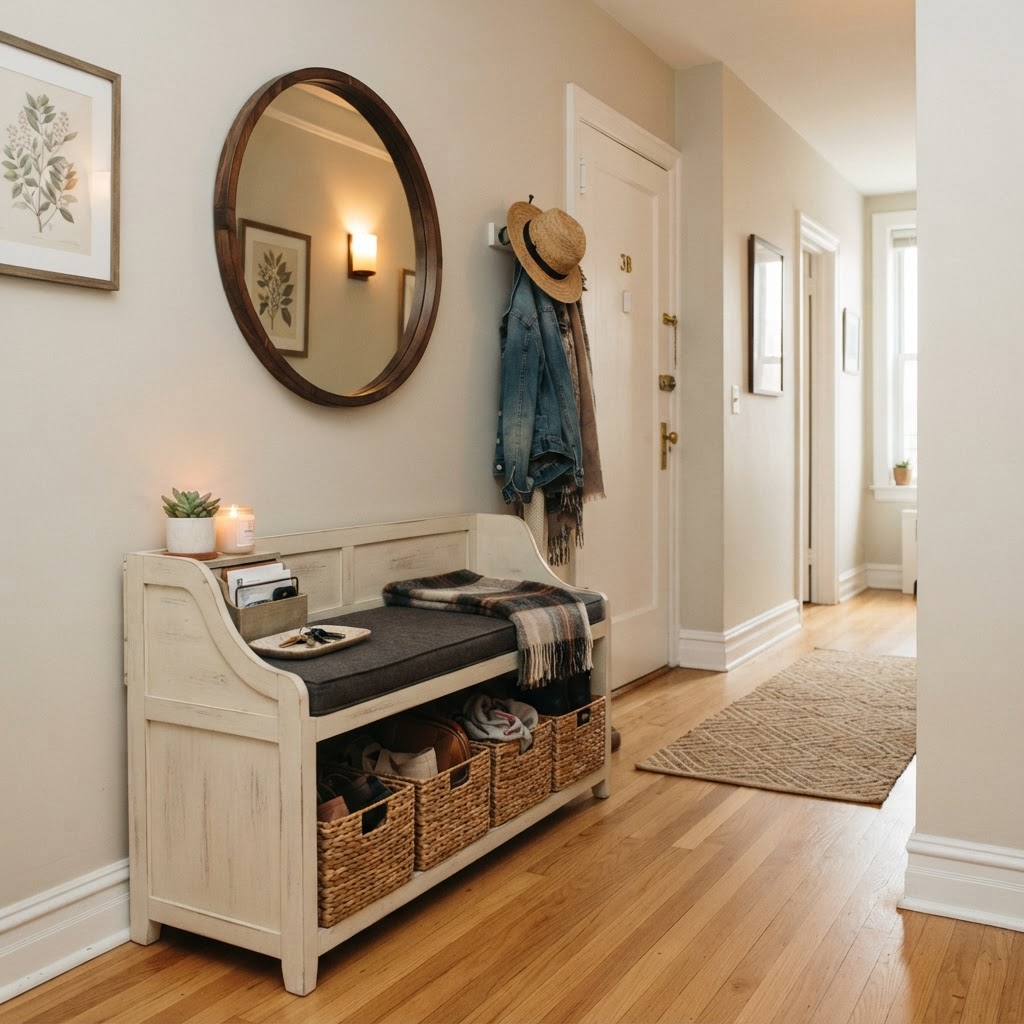
If you have room for a small bench, ensure it offers dedicated storage underneath, such as pull-out baskets or drawers. These storage units allow you to quickly toss shoes into a concealed spot, keeping the floor clear while providing a convenient place to sit. A standard 36-inch wide bench can house up to 6 pairs of shoes comfortably when organized with interior dividers, preventing the dreaded “pile-up” effect.
The Power of Multi-Functional Furniture
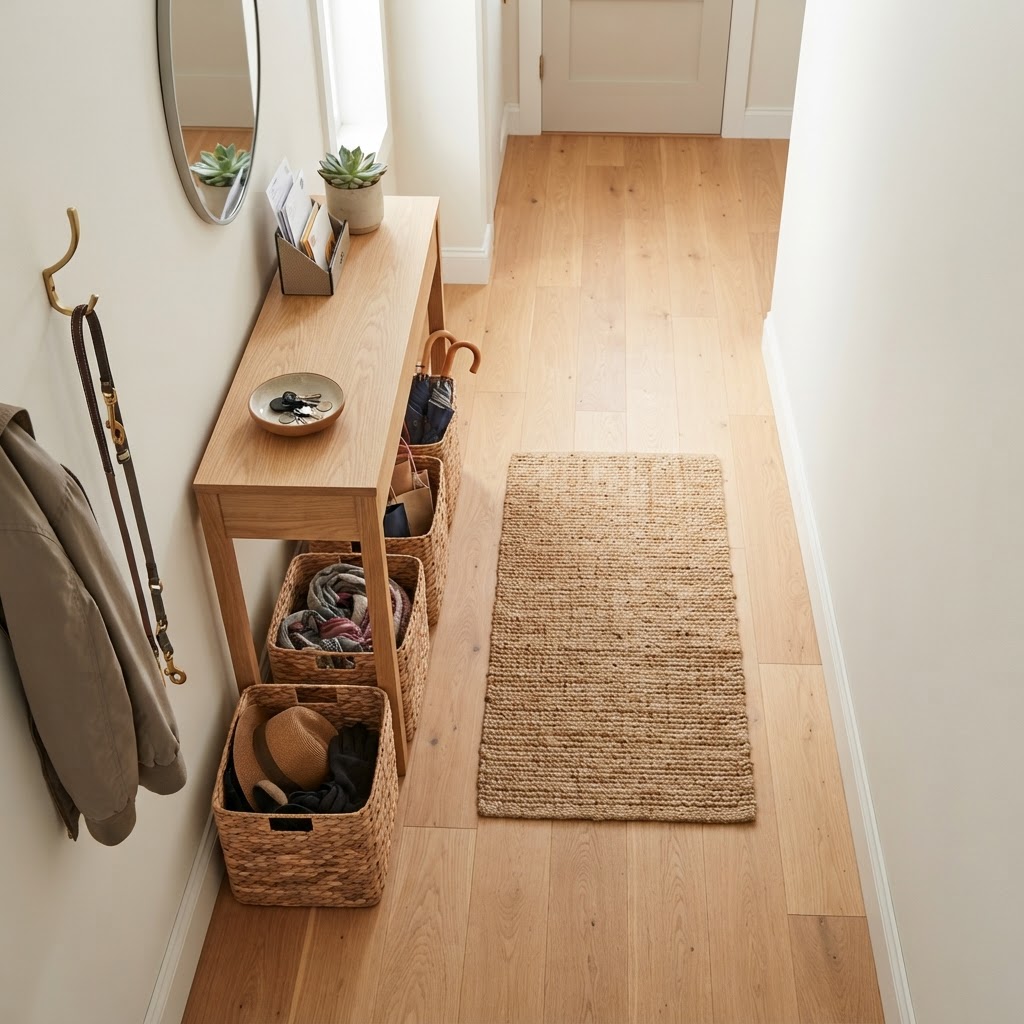
In tiny spaces, every piece of furniture must work twice as hard by providing storage alongside utility. Investing in dual-purpose items ensures that your entryway remains functional without the need for additional shelving that consumes valuable circulation space.
Storage Ottomans and Benches
A storage ottoman is a life-saver in a cramped hallway because it acts as a seat, a footrest, and a hidden container for items that lack a permanent home. Look for models with a sturdy hinged lid, as these can store up to 2 cubic feet of miscellaneous items like umbrellas, pet supplies, or cleaning gear. By opting for a fabric-covered ottoman, you also soften the visual lines of the room, making it feel warmer and more inviting.
Console Tables with Baskets
A narrow console table is ideal for slim hallways, providing a surface for essential daily items while leaving the wall clear above. By placing decorative bins or woven baskets on the lower shelf, you create organized “landing zones” for mail, keys, and accessories. This two-tier system separates items by frequency of use: high-use items go on top, while low-frequency items remain tucked in lower storage baskets. Maintaining this organization ensures that surfaces stay clear, preventing the “clutter creep” that happens when loose paper and keys accumulate.
Implementing Drop-Zone Habits
Storage hardware is only 50% of the equation; the remaining 50% depends on building daily maintenance habits. A successful drop zone must be intentional, requiring you to establish a designated ‘landing strip’ for mail and keys the very second you enter your home.
The One-In, One-Out Rule
For every new pair of shoes or winter coat you acquire, one item must be donated or moved to a secondary storage location like a bedroom closet. This prevents your entryway from becoming a museum of everything you have ever owned. Keeping a “donations bin” in your closet can make this process seamless, allowing you to cycle items out as soon as they are no longer in active use.
Weekly Reset Rituals
Dedicate exactly five minutes every Sunday evening to a full entryway reset. Move shoes back into their cabinets, empty the mail tray into a shredder or filing system, and hang up coats that have migrated to other rooms. This small investment of time ensures that your Monday morning starts without the frustration of searching for lost items, significantly reducing your morning stress levels.
Customizing Your Space for Seasonal Needs
Small space entryway organization hacks must be inherently adaptable to handle shifting gear requirements throughout the year. Your needs in winter, when you deal with heavy coats and boots, differ drastically from your summer needs, requiring a rotating storage system to stay organized.
The Rotating Storage System
Invest in a vacuum-seal storage bin kept in an off-season closet to manage your seasonal overflow. Swap out the contents of your entryway hooks and shelves every 6 months to ensure that only the items you currently use are present. During summer, store your heavy winter boots in that bin and replace them with lighter essentials like flip-flops, sun hats, or rain gear, ensuring you never waste space on dormant items.
Magnetic Boards for Small Items
Loose items like keys, receipts, and appointment reminders often land on the floor or a table, creating visual clutter that is difficult to manage. A small magnetic board or corkboard near the door keeps these items contained on the wall, removing them from flat surfaces. This technique is particularly effective for households with multiple people, as it centralizes information in a single, high-traffic location where it cannot be ignored.
Decorative Elements That Add Utility
Just because your space is small doesn’t mean it has to be purely utilitarian; you can incorporate decor that doubles as an organizer to maximize aesthetic appeal. These elements bridge the gap between form and function, ensuring your home feels designed rather than cramped.
Mirrors and Hooks
Mounting a mirror with integrated hooks creates a visual focal point that reflects light and makes your entry appear up to 20% larger. It also provides a final spot to check your appearance before leaving while giving you an immediate, designated place to hang your bag or keys.
Using Vertical Planters
If you want to add greenery, utilize wall-mounted planters to introduce life into your entryway without taking up any floor space. A touch of nature can make even the smallest space feel like an intentional design choice. Select low-maintenance indoor plants like Pothos or Snake plants, which thrive in low-light entryway conditions and help clean the indoor air as you enter from the outside.
FAQ
What is the best way to hide shoes in a tiny entryway?
Use a tilt-out shoe cabinet that is less than 10 inches deep to store shoes vertically against a wall. This method hides the mess behind a panel and saves valuable square footage compared to traditional horizontal racks.
How often should I reorganize my entryway?
A weekly five-minute reset is the most effective frequency to keep your entryway organized. Dedicate time each Sunday to clear mail, put shoes away, and rotate out any items that have drifted into the wrong room.
Are pegboards actually effective for small homes?
Yes, pegboards are highly effective because they allow for modular, customizable storage that can hold a variety of items including backpacks, umbrellas, and coats. They occupy zero floor space and can be adjusted as your organizational needs change.
How can I make a small entryway look larger?
Incorporate large mirrors, light-colored paint, and “leggy” furniture that shows floor underneath. By reducing visual clutter and reflecting light, you can create the illusion of a larger, more breathable entrance area.

Leave a Reply