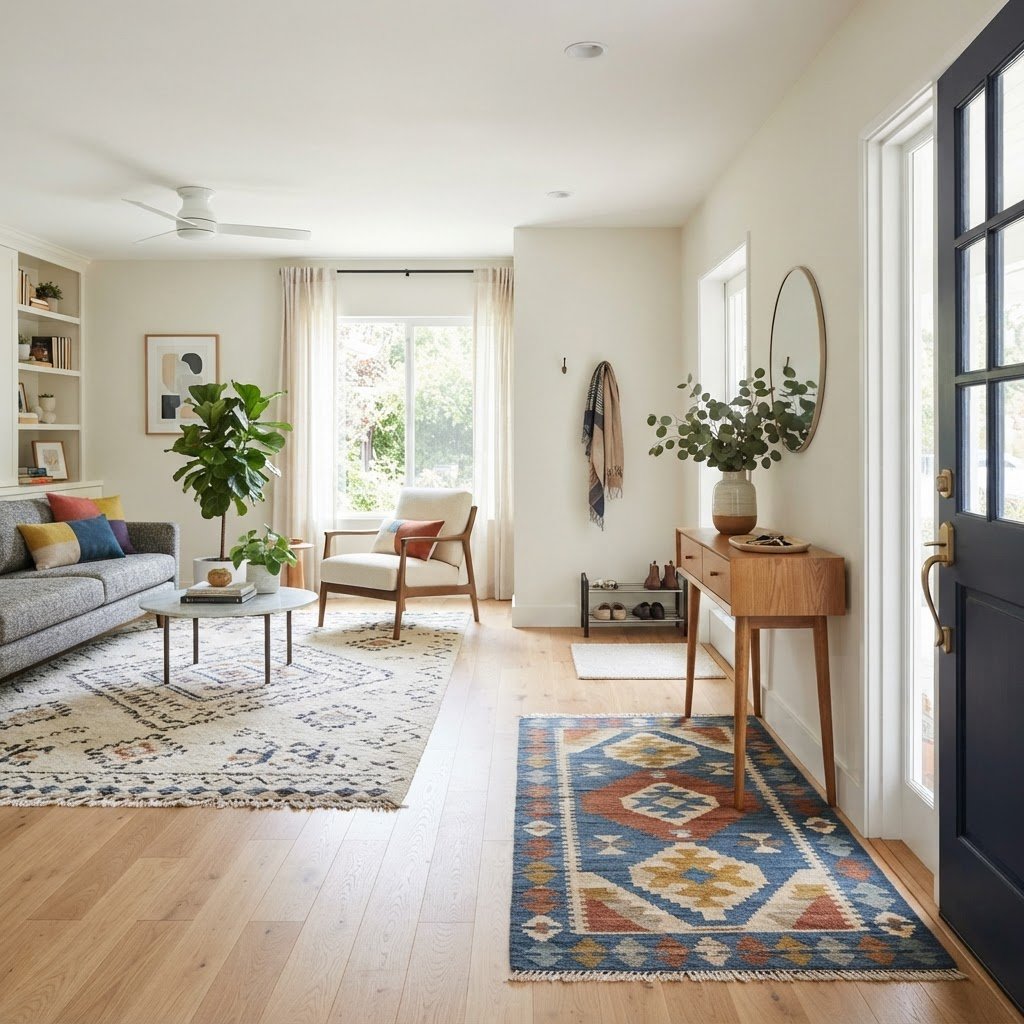
Walking through the front door directly into your living room can make your home feel exposed and disorganized. Many homeowners struggle with this architectural layout, wondering how to fake an entryway when there is no natural transition space. Without a dedicated foyer, your shoes, coats, and mail often end up cluttering the main living area, creating a chaotic first impression. The good news is that with a few strategic design adjustments, you can define a clear entry zone that separates your living space from the outside world.
Assess Your Existing Floor Plan
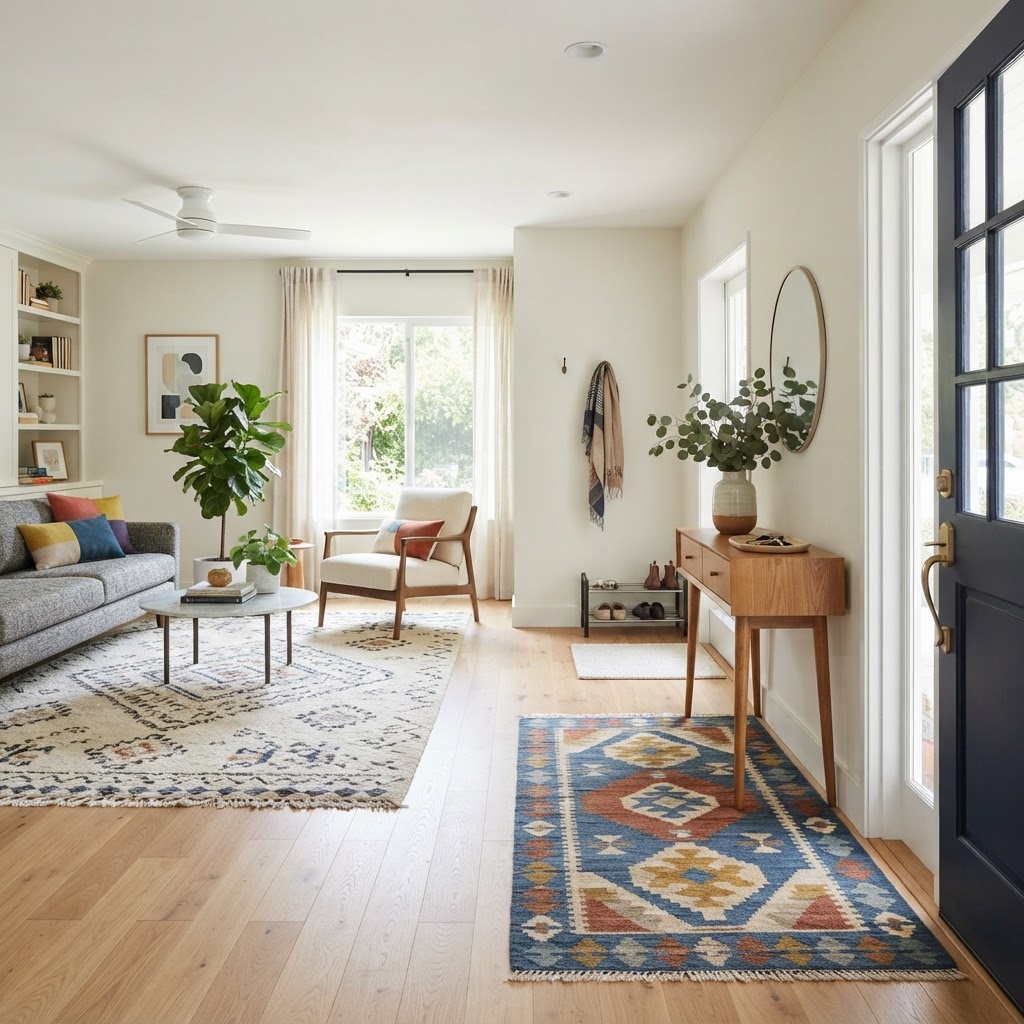
Before you start buying furniture, take a close look at your floor plan. Even the smallest nook can be transformed into a functional landing pad if you approach it with the right perspective. Start by identifying the ‘landing zone’—the area immediately inside the door where you naturally drop your keys and bags. This is the footprint you will work with to create your faux entryway.
Think about the flow of traffic. You do not want to block the path to the kitchen or stairs. Observe where people naturally walk and avoid placing large, permanent pieces in those high-traffic lanes. Instead, focus on defining the space visually using rugs, lighting, or furniture placements that act as a psychological barrier, signaling to guests that they have arrived in a transition area.
Use Rugs to Define the Space
A high-quality rug is one of the most effective tools for creating a visual separation between your entryway and living room. By choosing a distinct rug for the area just inside the door, you create a dedicated ‘zone’ that feels separate from the rest of the flooring. This is a classic designer trick to tell the eye that the entryway is a different space than the living room.
Consider a durable, low-pile rug or a natural fiber runner. These materials handle foot traffic well and are easy to clean. If your living room features carpet, a rug on top can add texture and color. Choose a pattern or color that complements your living room furniture but stands on its own as a unique anchor point for the entrance.
Create a Functional Storage Wall
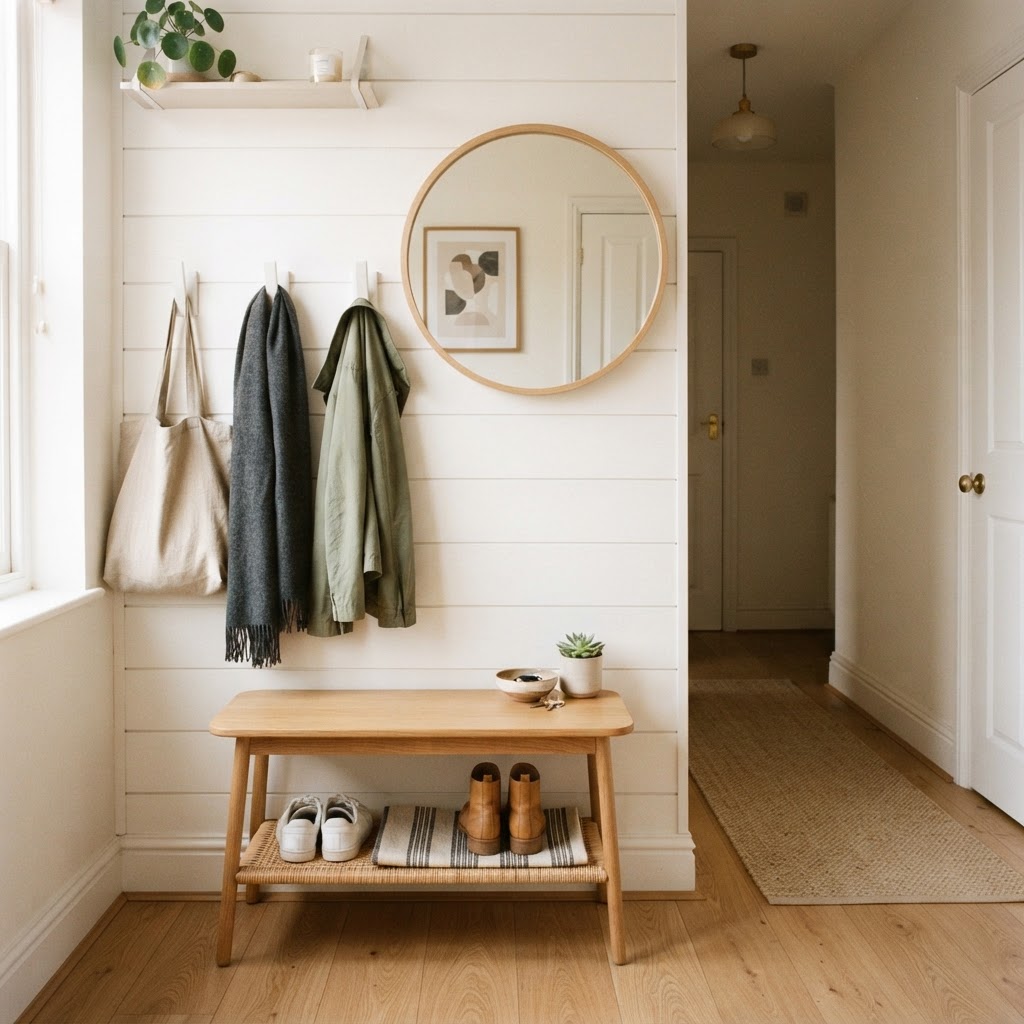
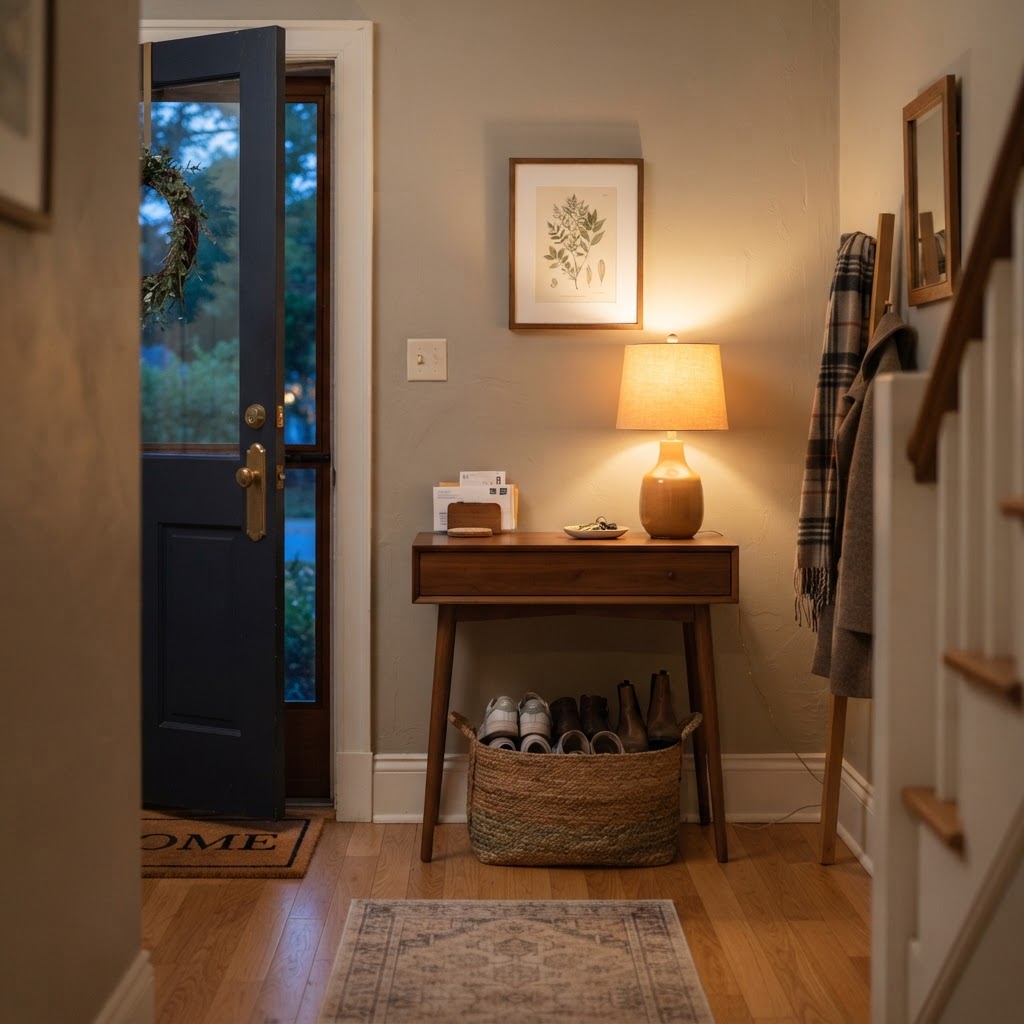
When your front door opens into the living room, storage becomes your biggest challenge. You need a place for coats, shoes, and umbrellas, but you don’t want these items visible from your sofa. A storage wall is the perfect solution. By installing a series of hooks, a slim bench, or a wall-mounted console, you can turn a bare wall into a fully functional mudroom.
Focus on vertical storage. If your floor space is limited, look up. Wall-mounted coat racks and floating shelves take up zero floor space while providing plenty of utility. You can add a decorative basket on the floor beneath a shelf for shoe storage. This helps keep the ‘entry’ tidy and prevents clutter from migrating into the main living room area.
Benefits of Wall-Mounted Storage
- Saves valuable square footage in tight layouts.
- Keeps everyday items like keys and bags organized and accessible.
- Allows you to customize the height for kids or adults.
- Creates a visual focus that draws the eye toward the door.
Add a Room Divider or Screen
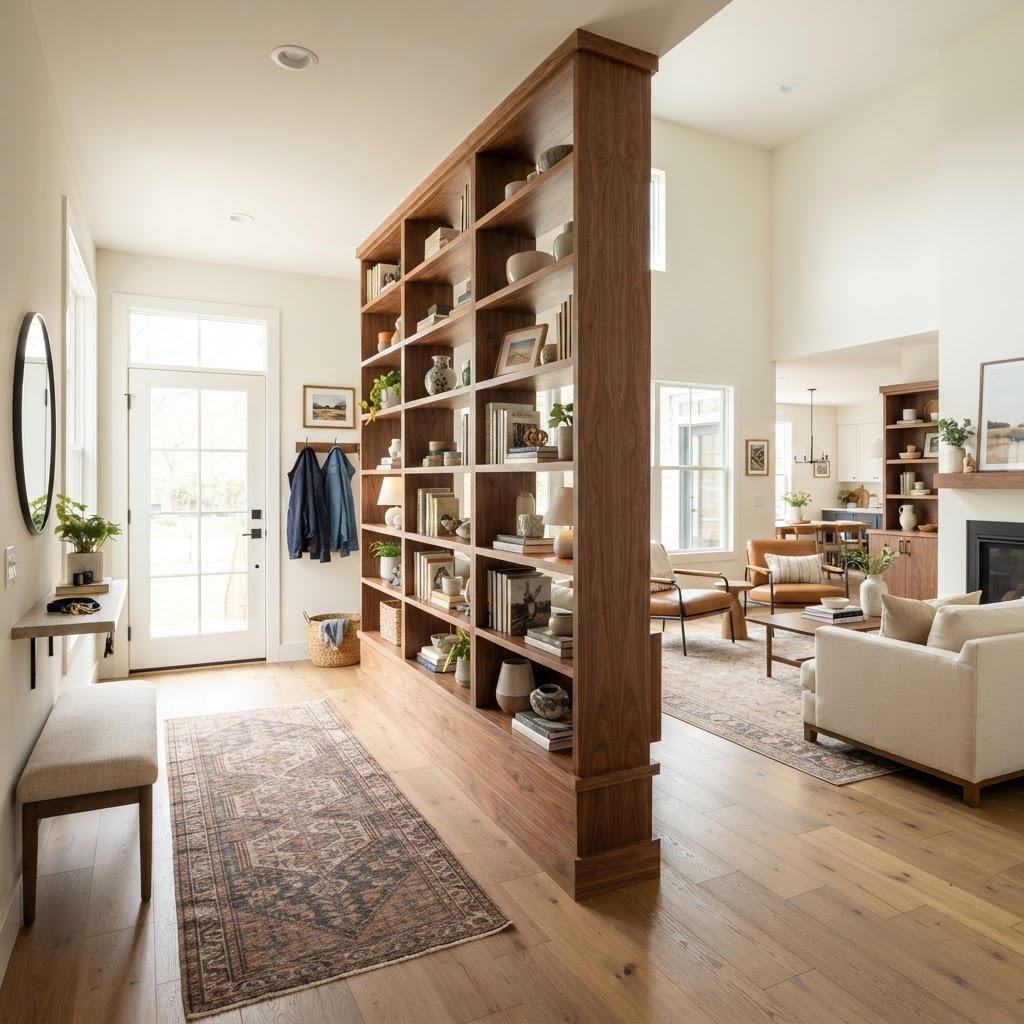
For a more dramatic transition, consider a physical barrier like a room divider or a folding screen. This is a brilliant way to fake an entryway because it creates an actual wall where none existed before. A decorative screen or a tall, open bookshelf can block the direct view of the sofa from the door, offering privacy to anyone sitting in the living room.
Adding Personal Touches and Decor
Finally, make your entryway feel like a deliberate design choice rather than an afterthought. Add decor that reflects your personality. This is the first thing guests see, so make it count. Place a small vase of flowers on the console, hang a piece of art that inspires you, or add a tray to collect daily essentials. These small details show that the space is well-loved and purposefully curated.
Don’t be afraid to experiment with color. Painting the ‘entry’ wall a different shade than the rest of the living room can effectively section off the space. You can also use wallpaper in the entry zone to define the area. Just ensure the colors and patterns complement the surrounding living room to maintain a cohesive flow throughout your home.
Conclusion
Learning how to fake an entryway when your front door opens into the living room is all about creating boundaries and maximizing functionality. By using rugs, strategic furniture placement, wall storage, and lighting, you can easily transform a problematic floor plan into a stylish and organized space. You don’t need a massive remodel to get the foyer you’ve always wanted. Start small with a single console table or a rug, and build your entryway as you discover what works best for your daily routine. Now that you have the tools to create a welcoming entrance, start by measuring your space today and see which of these ideas fits your home best!

Leave a Reply