10 Renter-Friendly Entryway Ideas (No Drilling Required)
You can create a stylish, functional entryway without drilling holes by utilizing vertical storage, adhesive-backed organizers, and portable lighting solutions. By focusing on freestanding furniture, over-the-door storage, and damage-free wall hooks, you can maximize small apartment footprints while staying fully compliant with your lease agreement.
The Power of Vertical Storage Solutions
Vertical storage is the most effective way to manage entryways when wall-mounted fixtures are prohibited, as it shifts the footprint upward rather than outward. Freestanding coat racks, for instance, utilize the “dead air” in corners, while over-the-door organizers turn the back of your entrance door into a high-capacity storage hub for up to 20-30 pounds of gear. These solutions are ideal for renters because they require zero hardware, preserve the condition of drywall, and can be moved instantly. To maximize effectiveness, choose vertical pieces with a footprint of less than 15 inches in depth to ensure high-traffic areas remain clear. For apartments with limited floor space, consider tension-rod shelving systems that wedge securely between the floor and ceiling without creating a single mounting hole.
Utilizing Over-the-Door Organizers
Over-the-door hooks and organizers are the gold standard for no-drill entryway storage, often featuring brushed metal or minimalist wood finishes that blend with modern decor. They allow you to hang heavy winter coats and bags without needing wall anchors. When shopping for these, look for options with padded contact points to prevent the metal from scratching the door finish over time.
Choosing the Right Height and Weight
Be mindful of the weight limit on your over-the-door rack, which typically ranges from 5 to 15 pounds per hook depending on construction. Ensure your door hinges are secure, as the extra weight can sometimes cause sagging over time if the door is older. Always measure the clearance of your door frame to ensure the organizer doesn’t prevent the door from closing properly; generally, you need at least 1/8th of an inch of clearance for standard brackets.
Furniture Choices That Maximize Space
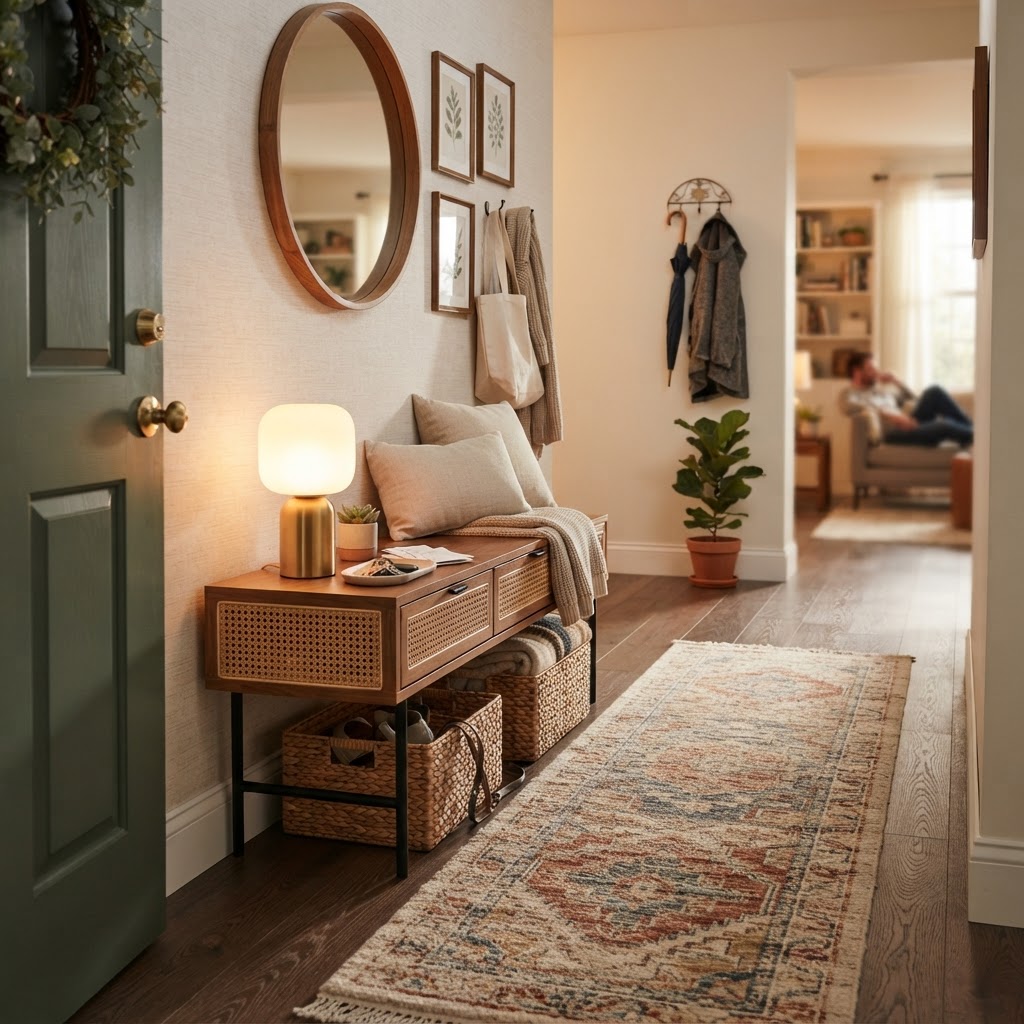
Selecting the right furniture is critical when you cannot mount floating shelves, as your consoles and benches must perform heavy lifting while maintaining a compact profile. A slim console table (ideally 8-12 inches deep) provides a necessary “drop zone” for keys, mail, and wallets, while anchoring the visual interest of the room. You should prioritize pieces with built-in storage or open shelving to keep the entryway feeling airy rather than cluttered. When selecting pieces, look for materials like bamboo or powder-coated steel, which are durable enough to handle the daily abuse of outdoor gear but light enough to move during a move-out. Always measure your hallway width before purchasing; maintain a minimum 36-inch clearance path to comply with basic apartment safety standards.
Multifunctional Benches
Storage benches serve double duty by offering both a place to sit while putting on shoes and a hidden compartment for seasonal gear. Look for benches with lift-up lids or cubbies underneath. By choosing a bench with a closed-front design, you keep the entryway looking tidy even when the storage inside is slightly chaotic.
Mastering Adhesive Technology
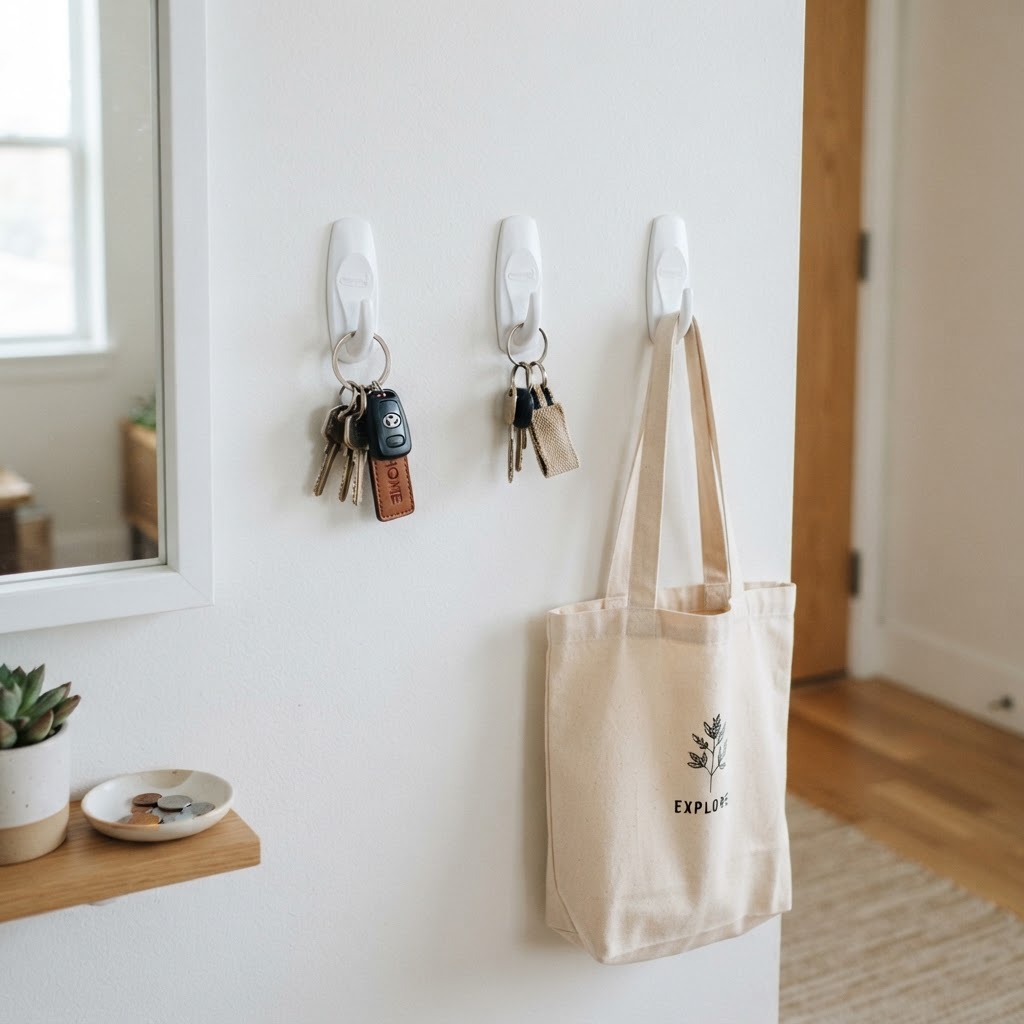
Adhesive hooks are a renter’s best friend, specifically those using stretch-release technology which leaves zero residue on painted surfaces. Brands like Command have revolutionized the way we decorate, allowing us to hang artwork, calendars, and even lightweight mirrors without leaving a trace. The secret to success lies entirely in surface preparation: rubbing the wall with a 70% isopropyl alcohol solution removes microscopic oils and dust that prevent the adhesive from bonding fully. For best results, wait at least one hour after cleaning before applying the strip, and wait a full 24 hours before hanging any weight on the hook. When it comes time to move, pulling the tab slowly at a 45-degree angle parallel to the wall is the proven method to ensure the paint remains completely intact.
Adding Personality with Rugs and Runners
An entryway floor is often neglected, but a beautiful rug or runner can define the space and add a layer of warmth. Since rental apartments often have dated flooring, a stylish runner serves as a focal point that draws the eye downward. Choose a durable, low-pile rug that can withstand high foot traffic while protecting the existing flooring underneath. Aim for a material like wool or high-quality polypropylene, which resists stains and vacuuming damage. Always pair your runner with a rubberized rug pad to prevent slipping, which is particularly important in high-traffic transition zones like an entranceway.
Decorative Mirrors Without the Hardware
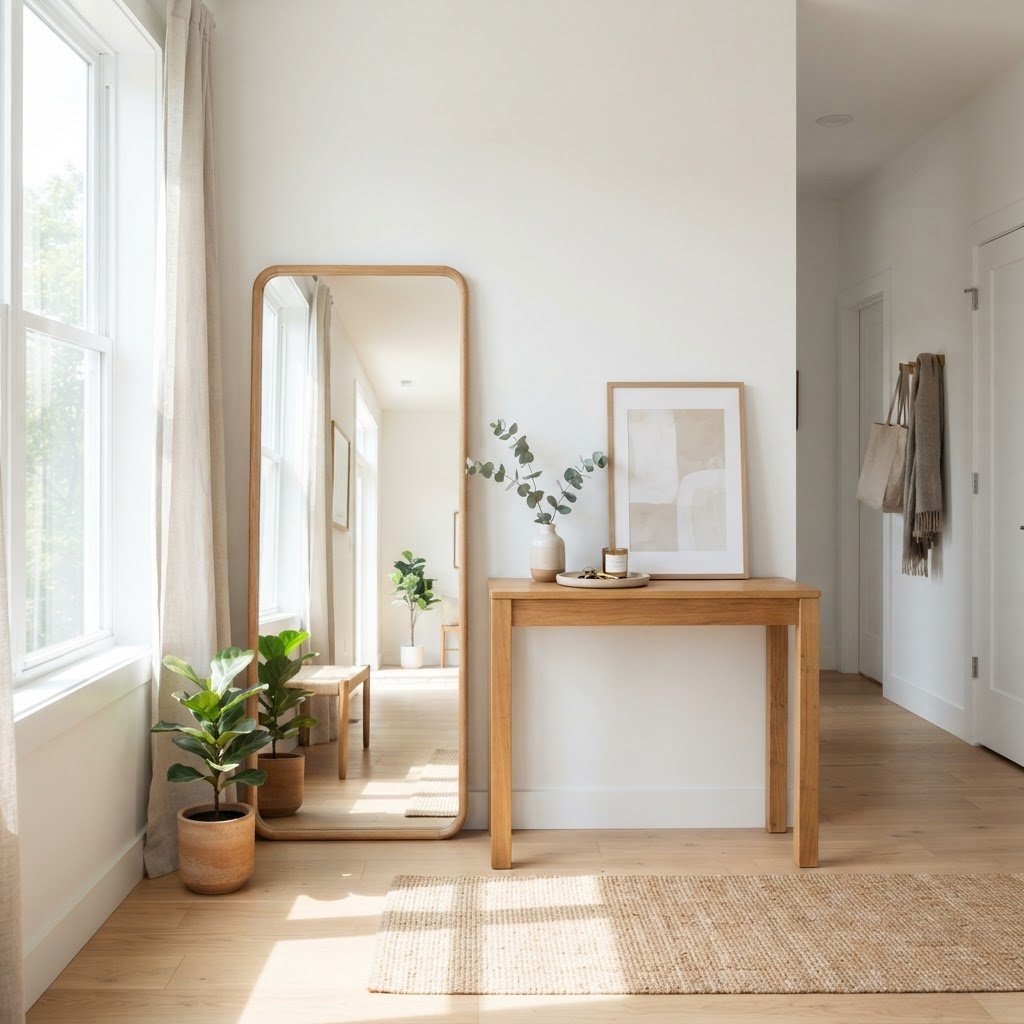
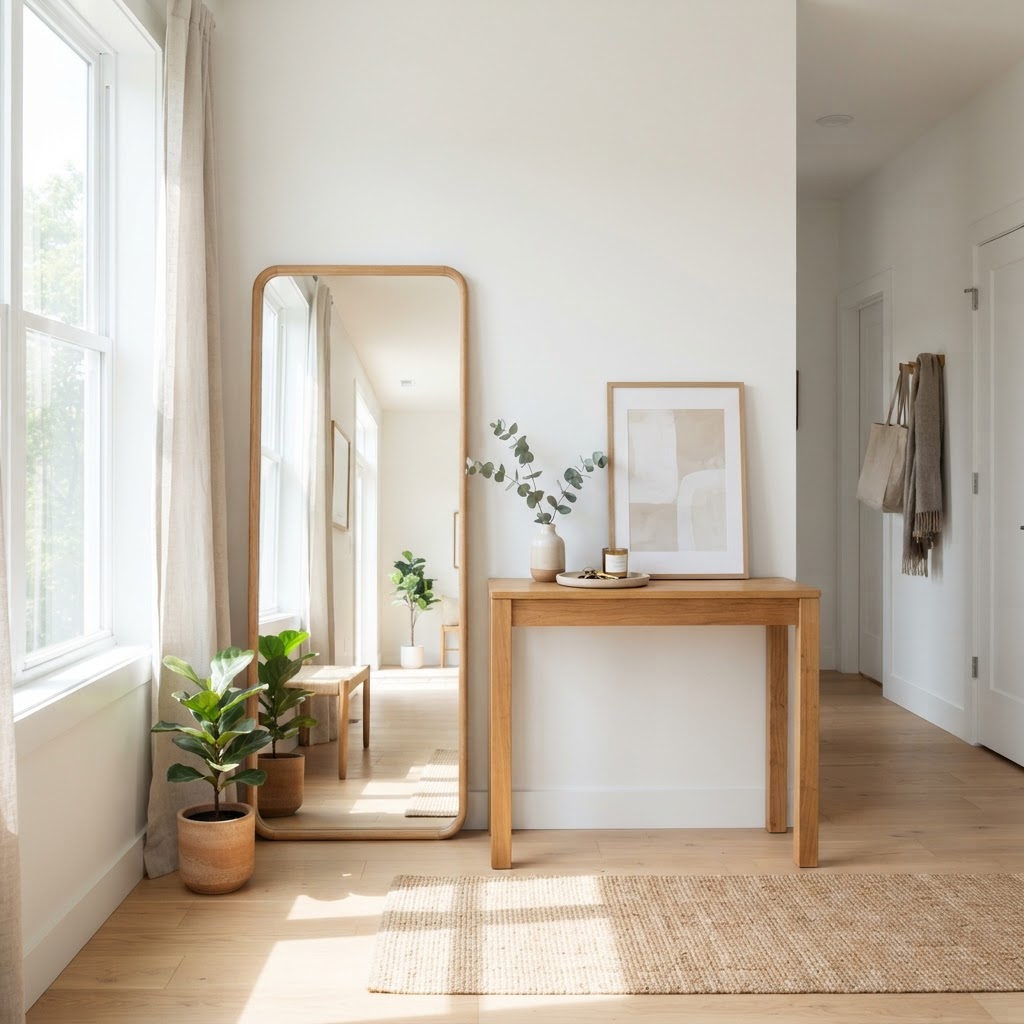
Mirrors are essential in small entryways to reflect light and create the illusion of extra space, but you must avoid drilling into the studs. Instead, consider leaning a large, floor-length mirror against the wall, which offers an effortless, high-end look. To ensure safety in rental homes, you can secure the mirror using specialized anti-tip furniture straps that anchor to the baseboard rather than the wall, or use heavy-duty command-style adhesives designed for frames. If you lean a mirror, ensure the base has a rubber grip to prevent sliding on hardwood floors. A mirror positioned directly opposite a window will double the natural light in your entry, significantly brightening dark, interior-facing apartments.
Leaning Mirrors for Dramatic Effect
Leaning a mirror adds a relaxed, boutique feel to an entryway. This approach is not only renter-friendly but also flexible; you can move the mirror to a different room whenever you get the urge to refresh your layout. Ensure the frame is sturdy and check that it doesn’t wobble on your flooring type.
Lighting Without Permanent Fixtures
Lighting can make or break the atmosphere of your entryway, and you can achieve a professional glow without replacing hardwired fixtures. If your apartment lacks a dedicated foyer light, use a slim table lamp on a console table or a floor lamp in the corner to create a warm, inviting focal point. For maximum impact, choose warm-toned bulbs (2700K-3000K) to enhance the comfort of the space. If your entrance lacks an outlet, modern rechargeable LED lamps are a major innovation, often providing up to 8-12 hours of light on a single charge.
Choosing Battery-Operated Options
If you don’t have an outlet near your entryway, look for modern, rechargeable LED lamps. Many of these designs look high-end and can provide hours of light on a single charge. This is a game-changer for dim entryways that lack electrical access.
Bringing in Texture and Greenery
No entryway is complete without a bit of life. Adding a houseplant or a decorative basket for scarves and hats adds texture and visual interest. A tall, floor-standing plant can act as a natural room divider, separating your entrance from the rest of your living area without needing any hardware. Snake plants or ZZ plants are excellent choices for entryways because they thrive in low-light conditions and require minimal maintenance.
FAQ
Q: Can I hang heavy items without drilling?
Yes, you can use over-the-door organizers or heavy-duty adhesive hooks designed for weights up to 15-20 pounds. For heavier items like large mirrors, leaning them against the wall and securing them with non-damaging anti-tip straps is the safest, renter-friendly alternative.
Q: What is the best way to clean walls before using adhesive hooks?
Always clean the surface with a lint-free cloth dampened with 70% isopropyl alcohol to remove dust and oils. Let the area dry completely before applying the adhesive, as any remaining moisture or residue will significantly weaken the bond and risk paint damage.
Q: How do I choose the right size rug for a small entryway?
Select a runner that is at least 24 to 36 inches wide to ensure it covers the high-traffic path comfortably. The length should ideally extend past the door swing, covering the primary zone where you stand to remove your shoes.
Q: Are rechargeable lamps bright enough for daily use?
Modern LED rechargeable lamps typically offer 300 to 500 lumens, which is more than enough to act as an effective accent or task light for an entryway. They eliminate the need for electrical proximity while providing a sophisticated, cordless aesthetic.
Q: Will over-the-door hooks damage my door frame?
Most over-the-door hooks are designed to fit standard 1 3/8-inch thick doors without causing damage. To prevent minor scuffs, apply a small piece of felt or thin foam tape to the underside of the bracket before hanging it over the top of the door.

Leave a Reply