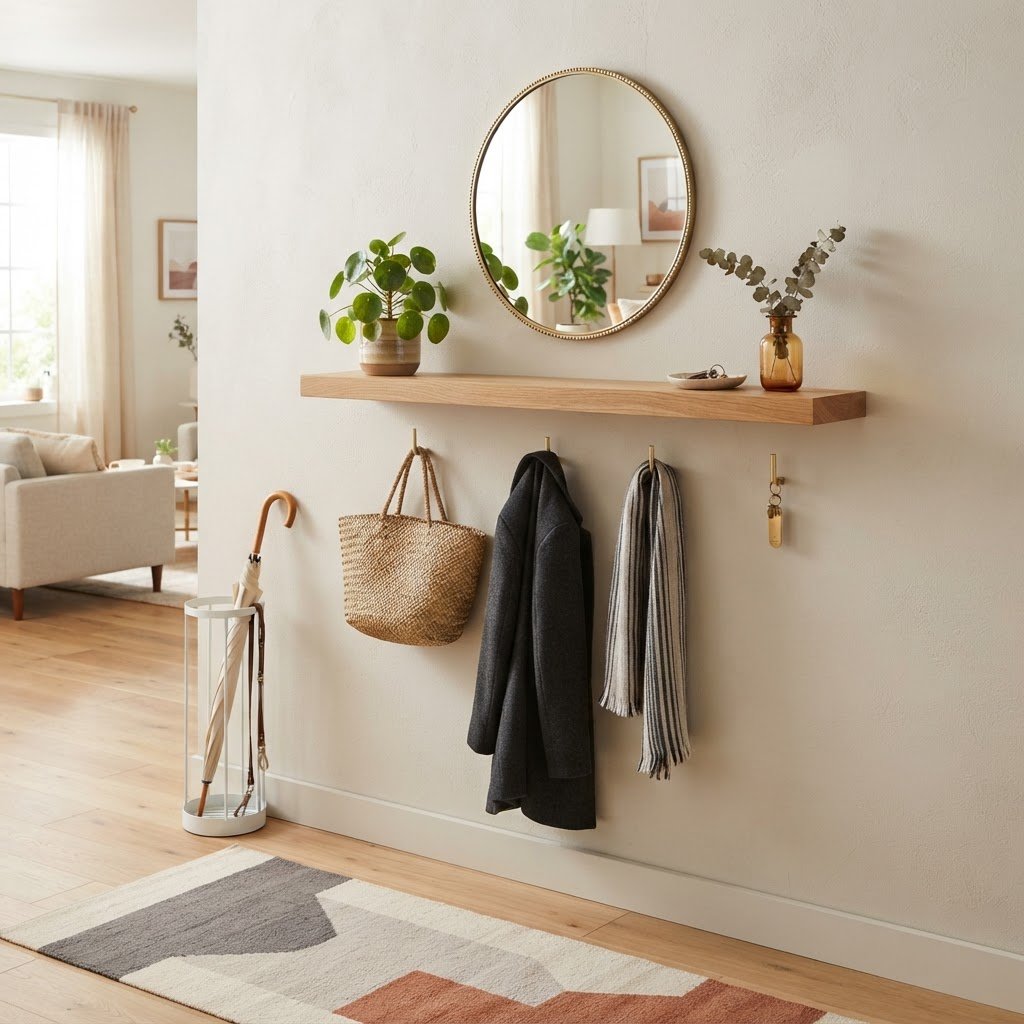
Best Wall-Mounted Entryway Organizers for Renters
The best wall-mounted entryway organizers for renters are damage-free adhesive hooks, modular pegboard systems, and tension-pole units that require no drilling. These solutions maximize vertical storage by utilizing industrial-grade mounting adhesives or pressure-fit mechanisms, ensuring your security deposit remains protected while keeping daily essentials organized and accessible.
Understanding Renter-Friendly Constraints
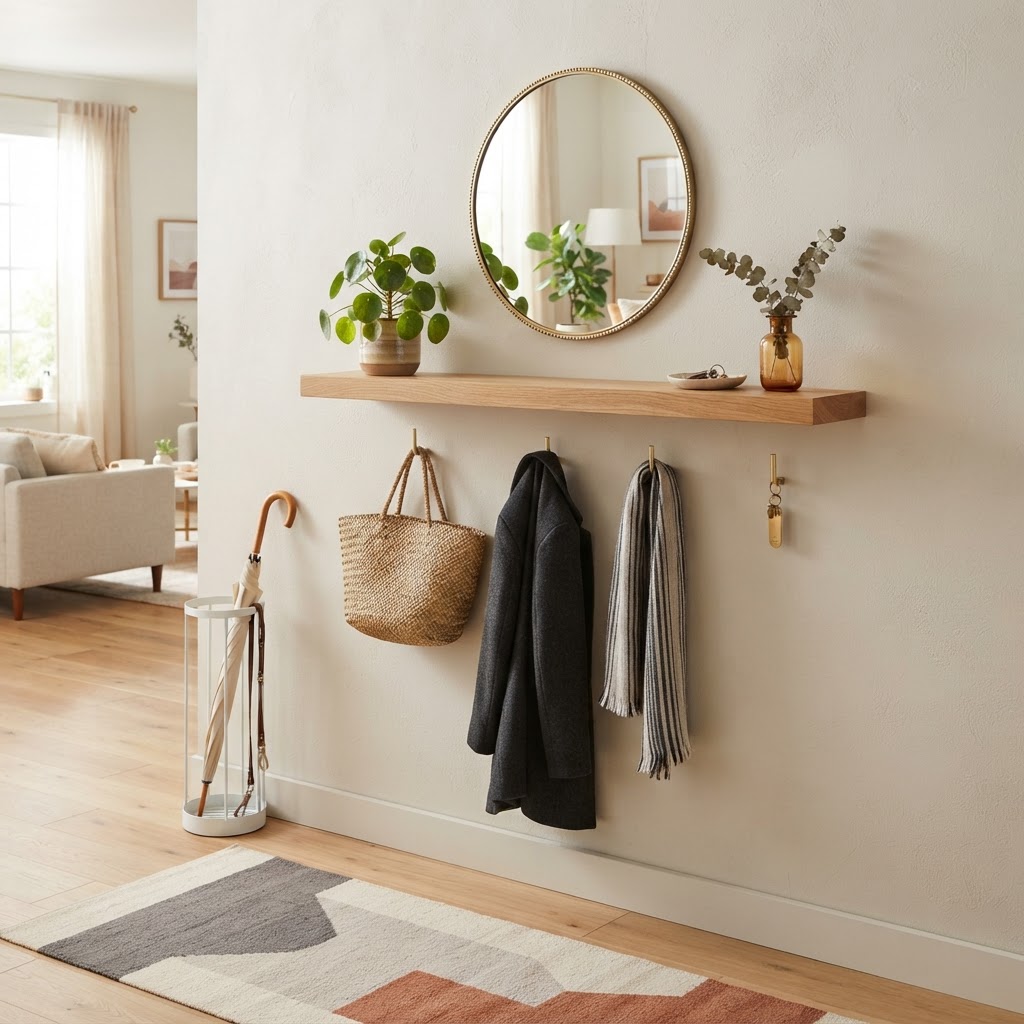
When you are renting, the golden rule of home organization is to leave the walls exactly as you found them to avoid costly deductions from your security deposit. Most landlords prohibit large screws or heavy-duty anchors because they cause permanent damage to drywall, wood paneling, or plaster. Without proper organization, the floor becomes a magnet for shoes, mail, and bags, creating a disorganized environment. Fortunately, modern engineering has introduced temporary solutions that offer the stability of permanent fixtures without the need for tools. By prioritizing reversible installation methods, you can achieve a functional entryway that complies with strict lease agreements. Understanding the weight limits of your chosen system is critical; most adhesive solutions are rated for 5 to 15 pounds, meaning you should weigh your items before mounting them. Using a simple hanging scale allows you to verify that your organizer can support your winter coat or heavy handbag safely, preventing accidental falls or surface peeling. Proper planning before the first adhesive strip is applied ensures a long-term, stress-free storage setup.
The Power of Adhesive Technology
Command hooks and specialized heavy-duty adhesive strips have revolutionized how we think about home storage. You can now purchase sturdy shelves and coat racks that mount to the wall using industrial-grade adhesives. These products are designed to hold significant weight while being easily removable with a quick pull of a tab, leaving no trace behind when you decide to move out. When using these strips, temperature plays a vital role in the bond strength; ensure your wall is between 50°F and 105°F during application for the best results. Always follow the manufacturer’s “wait time” instructions, which typically range from 1 to 24 hours, before hanging any items to ensure the adhesive has fully cured.
Choosing the Right Surface
Before applying any wall-mounted entryway organizers for renters, it is crucial to test your wall surface. While most adhesive organizers work perfectly on painted drywall, they may struggle with textured walls or wallpaper. Always clean the surface with rubbing alcohol before installation to ensure the adhesive bond is as strong as possible, and wait the recommended amount of time before hanging heavy items like winter coats. If your wall is heavily textured, consider using a mounting board that attaches to the wall with low-tack adhesive, providing a smooth base for your hooks. Testing a small, hidden corner of the wall with the adhesive first can prevent accidental paint peeling upon removal.
Modular Storage Systems for Small Spaces
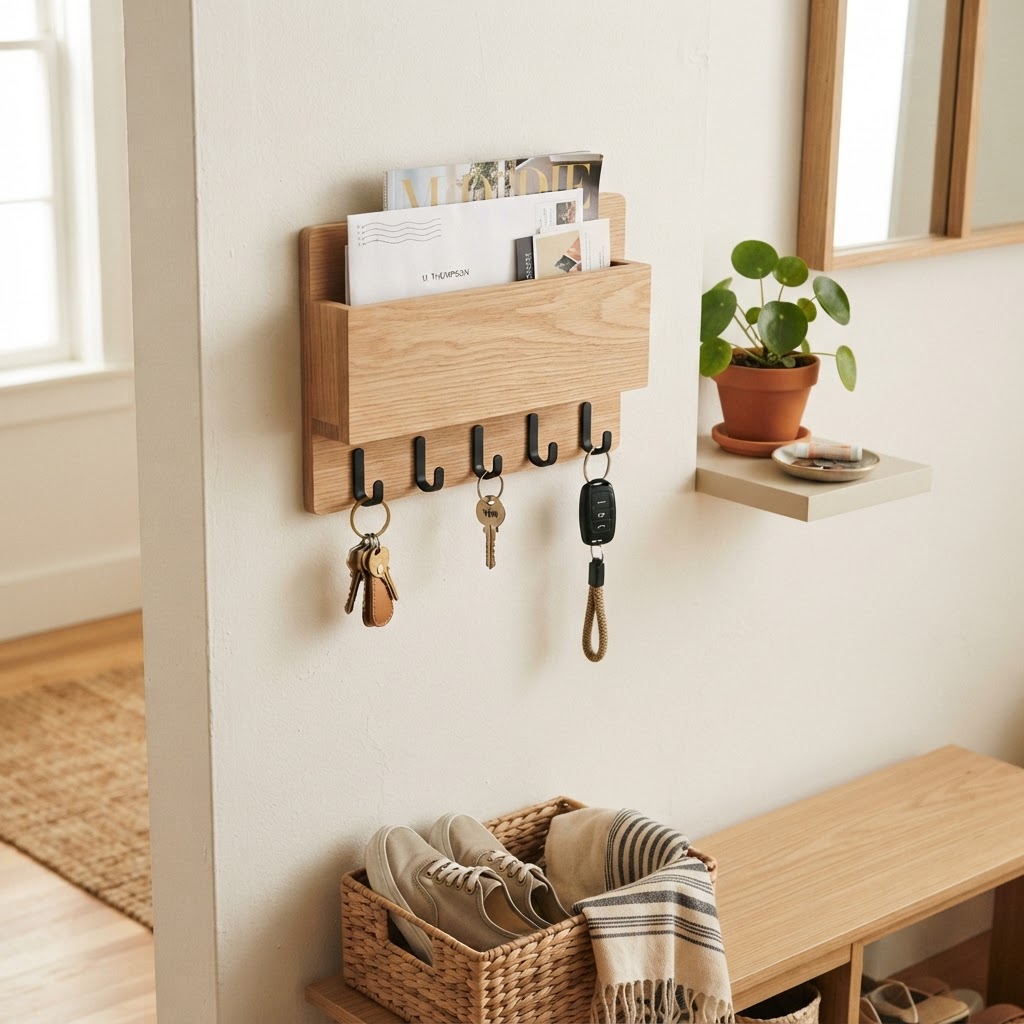
Modular organizers provide the ultimate flexibility by allowing you to grow your storage system as your inventory of gear changes. Many brands now offer interchangeable pegboards and shelving units that you can configure to suit your specific foyer dimensions. By mixing and matching hooks, bins, and shelves, you can create a customized wall station that manages everything from dog leashes to outgoing mail. The advantage of a modular approach is the ability to swap components; for example, you might add extra shelf space during the winter months for scarves and hats, then swap them for more hook capacity during the summer. Brands often provide starter kits priced between $30 and $70, which include a baseboard and 5-8 accessories. This creates a professional, built-in look that feels custom-designed for your space. Furthermore, organizing your space vertically prevents the “visual clutter” that often makes small apartments feel smaller. By lifting items off the floor and placing them at eye level, you create a cleaner, more organized aesthetic that helps you find your essentials in seconds. Always ensure your modular system is centered at roughly 60 inches from the floor, which is the standard height for user-friendly access and visual balance.
Creating a Personalized Drop Zone
A “drop zone” is the ultimate tool for maintaining an organized home. By placing a small, wall-mounted bin near the door, you create a dedicated landing spot for your daily clutter. Consider incorporating a small mirror above your organizer to give the entryway a more open, airy feel, which is especially effective in narrow hallways.
Tension-Based Entryway Solutions
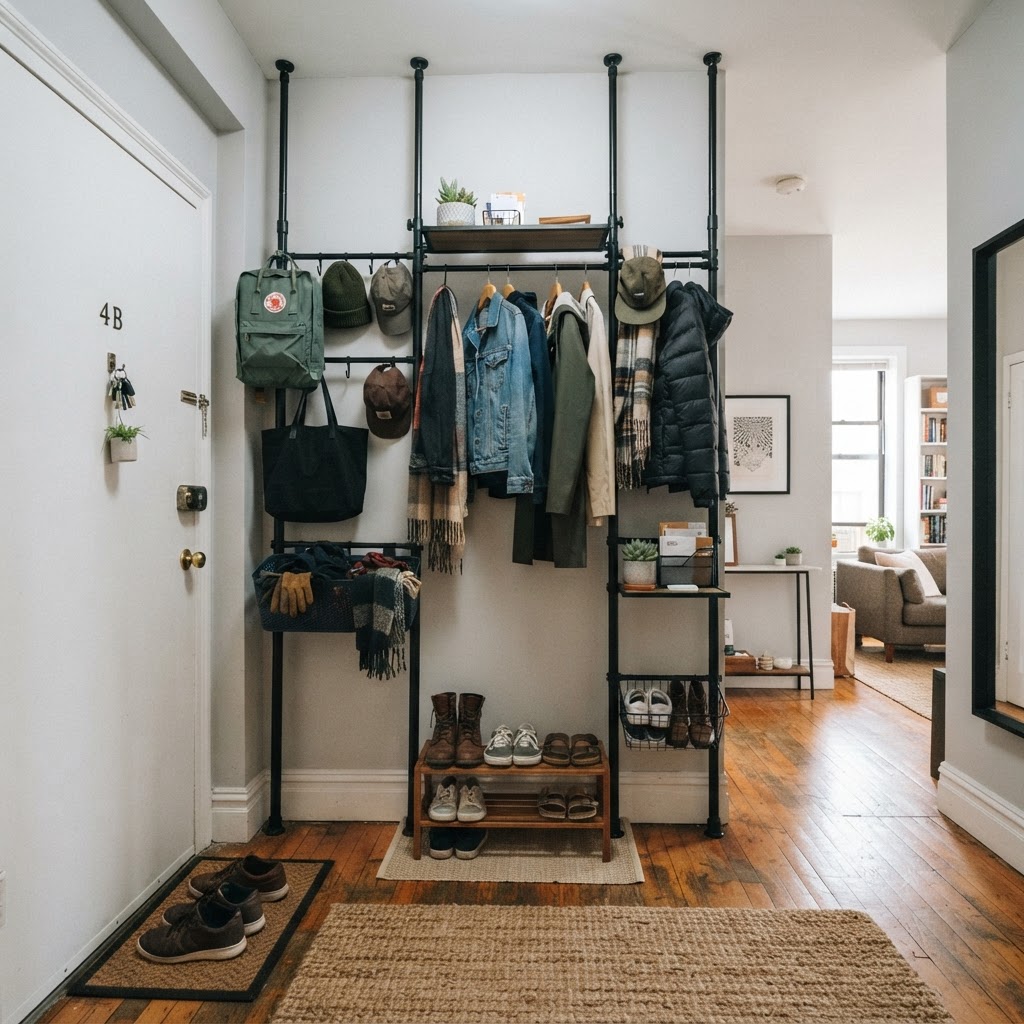
Tension-based organizers are the ideal choice for renters who live in spaces with delicate, non-stickable surfaces or who require heavy-duty storage without using adhesives. These systems span from the floor to the ceiling or wall-to-wall, utilizing internal springs and high-friction pads to stay in place. While they are slightly larger than traditional wall-mounted units, they offer a sturdy, non-destructive way to store a significant amount of gear, often supporting up to 50 pounds or more. Since they require no hardware, tools, or drilling, they are the most stress-free option for frequent movers. Many of these systems feature integrated hooks, shoe racks, and benches, allowing you to create a full “mudroom” effect in a rental apartment. In an open-concept studio, a tension-pole system acts as a functional room divider, clearly separating the entryway from your living space while providing essential storage. To maintain these systems, check the tension screws once every six months to ensure the pressure remains consistent. If you live in an apartment with high humidity, periodically wipe the tension pads with a damp cloth to remove dust buildup, which can cause the system to lose its grip over time.
Functional Decor: Combining Style and Utility
Just because an item is functional doesn’t mean it should lack aesthetic appeal. Today’s market is flooded with wall-mounted entryway organizers for renters that prioritize design. Think sleek matte black hooks, warm bamboo shelving, or rustic floating racks that double as art pieces. You don’t have to settle for cheap-looking plastic; choose materials that match your existing furniture to create a cohesive look. When selecting materials, consider that bamboo and finished woods add warmth to cool-toned rental apartments, while metallic finishes provide a modern, industrial touch. By selecting high-quality finishes, you transform a utility item into a piece of home decor. You can easily elevate a plain organizer by adding decorative contact paper or painting the shelves to match your apartment’s trim. This level of customization makes the space feel like your own, despite the limitations of a rental unit. Consistency is key here; if your entryway decor mirrors the color palette of your adjacent living room, the space will feel significantly larger and better designed.
Incorporating Greenery and Lighting
Add a touch of life to your entryway by incorporating small, wall-mounted planters. Pairing these with your storage hooks helps break up the utility of the space and adds a fresh, welcoming scent to the home. If your foyer is dark, consider adding a wireless, motion-sensor LED bar under one of your shelves. This provides task lighting without the need for an electrician or complex wiring.
Maintenance Tips for Long-Term Organization
Installation is only half the battle; maintaining your entryway is what ensures long-term success. It is easy to let mail and bags accumulate over the week. Try to perform a “five-minute reset” every Sunday night to clear out your bins, recycle junk mail, and put away seasonal items that don’t need to be right at the front door. Creating a habit of clearing surfaces weekly keeps the entryway functional and prevents the “catch-all” clutter trap from forming. Use a small bin specifically for items that need to leave the house, such as outgoing packages or library books, to ensure they don’t get lost in the shuffle. Furthermore, use a lint roller or brush on your storage shelves once a month to prevent dust from settling on your gear. By keeping the organizer clean, you maintain the aesthetic appeal of the space and extend the life of your mounting hardware. Remember that consistency is the key to keeping any organizational system effective for more than a few days.
- Use a designated bin for outgoing mail.
- Dedicate one hook specifically for your keys to prevent losing them.
- Keep a small brush or lint roller in your organizer for a quick clean-up.
- Rotate seasonal items like heavy scarves or umbrellas as the weather changes.
Maximizing Vertical Real Estate
When square footage is at a premium, looking up is the best strategy. Most renters focus too much on what they can place on the floor, ignoring the potential of the wall space above eye level. By installing a high shelf above your door, you can store items that you use only occasionally, such as travel bags or seasonal decor, keeping them out of the way while maintaining easy access. Utilize the space 7 feet off the ground for deep storage, ensuring that the items you use daily are kept between 40 and 60 inches from the floor for ergonomic convenience. This tiered approach to storage prevents the entryway from feeling cramped. If you cannot mount to the wall, use an over-the-door rack with adjustable tiers. These racks can provide up to 24 slots for shoes or accessories without requiring any wall space at all. Combining high-level shelves with lower hooks maximizes your total storage surface area by 30-40% in a typical foyer. The “rule of three” for balanced composition applies here: group your hooks, shelf, and a mirror in a triangular pattern to make the arrangement feel intentional rather than haphazard. Always ensure that the highest items are the lightest, reducing the risk of a heavy object falling while you are entering or leaving the home.
Overcoming Rental Challenges
Sometimes, the biggest challenge to installing organizers is a lack of wall space altogether. If you live in an apartment where your door opens directly into a wall, you might benefit from over-the-door organizers. These hooks and baskets use the door itself as a foundation, providing a sturdy, reliable storage solution that is completely invisible from the outside of your apartment. Another effective strategy is using freestanding, narrow-profile console tables. These provide a surface for mail and keys while leaving the wall completely untouched. If your budget is tight, look for multi-purpose items, such as a coat rack that features an umbrella stand at the base. This minimizes the footprint while maximizing utility. When shopping, prioritize items with metal or heavy-duty plastic construction; these materials are easier to wipe clean and stand up better to the daily abuse of keys and bags. Budgeting $50 to $100 for your setup can secure high-quality, durable pieces that will last through multiple moves. Remember to verify the depth of your items against the clearance of your door frame, ensuring you have at least 2 inches of space for the hooks to clear the door header when it opens.
Budgeting for Your Entryway
You do not need to spend a fortune to get organized. Many of the most effective wall-mounted systems are affordable and available at big-box retailers. Focus your budget on the pieces that get the most daily wear and tear—like high-quality metal hooks—and save money on decorative elements like baskets or small knick-knacks.
FAQ
Q: How do I remove adhesive organizers without damaging my paint?
To remove adhesive organizers without damage, use a hair dryer to heat the strip for 30 seconds to soften the bond. Once warm, pull the adhesive tab slowly and straight down against the wall, rather than pulling outward, to release the adhesive cleanly.
Q: Are tension-based organizers stable enough for heavy winter coats?
Yes, tension-based systems are highly stable and can often support 30 to 50 pounds when correctly tightened between the floor and ceiling. Ensure the tension pads are placed on a level, solid surface and check the tension tightness every few months to maintain optimal stability.
Q: Can I use adhesive organizers on textured or wallpapered walls?
Adhesive organizers are not recommended for textured walls or wallpaper because they may peel the finish upon removal. For these surfaces, consider using a tension-pole system or an over-the-door organizer that does not rely on wall adhesion for support.
Q: What is the best way to clean adhesive residue left behind?
If any light residue remains after removing an adhesive strip, rub the area gently with a small amount of isopropyl alcohol or a specialized adhesive remover. Wipe with a clean cloth immediately afterward to ensure the finish of your paint remains intact.
Q: How do I maximize space in an entryway with no walls?
In entryways without wall space, utilize over-the-door organizers or narrow, vertical freestanding coat racks to store your essentials. These solutions provide storage without requiring any structural mounting, making them ideal for small, open-concept apartments where wall space is already occupied by furniture or doorways.

Leave a Reply