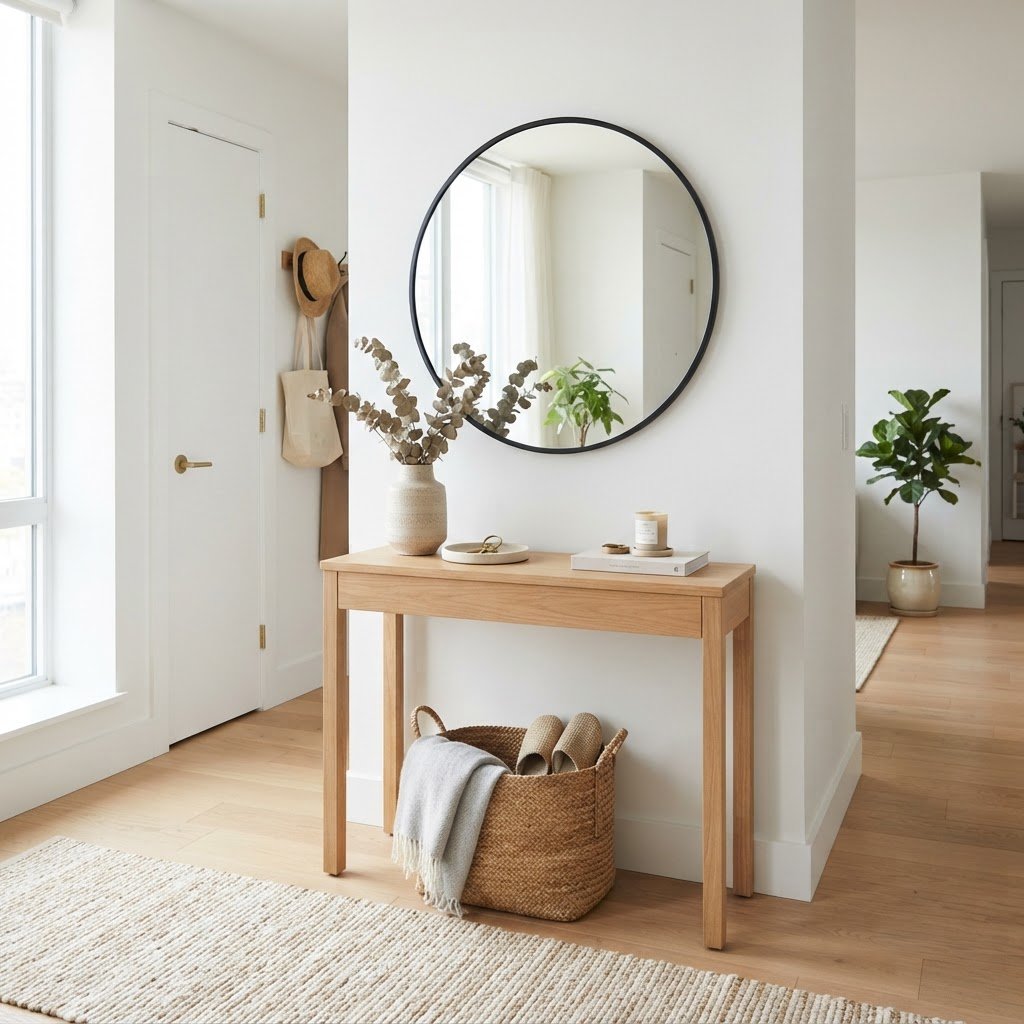
Temporary entryway solutions for apartments focus on creating a defined “landing zone” using vertical storage, multi-functional furniture, and adhesive-mounted decor. By leveraging floor-to-ceiling space and modular, non-damaging organizational tools, renters can transform a tight, awkward doorway into a functional, stylish foyer without violating lease agreements or damaging walls.
Rethinking Your Apartment Layout
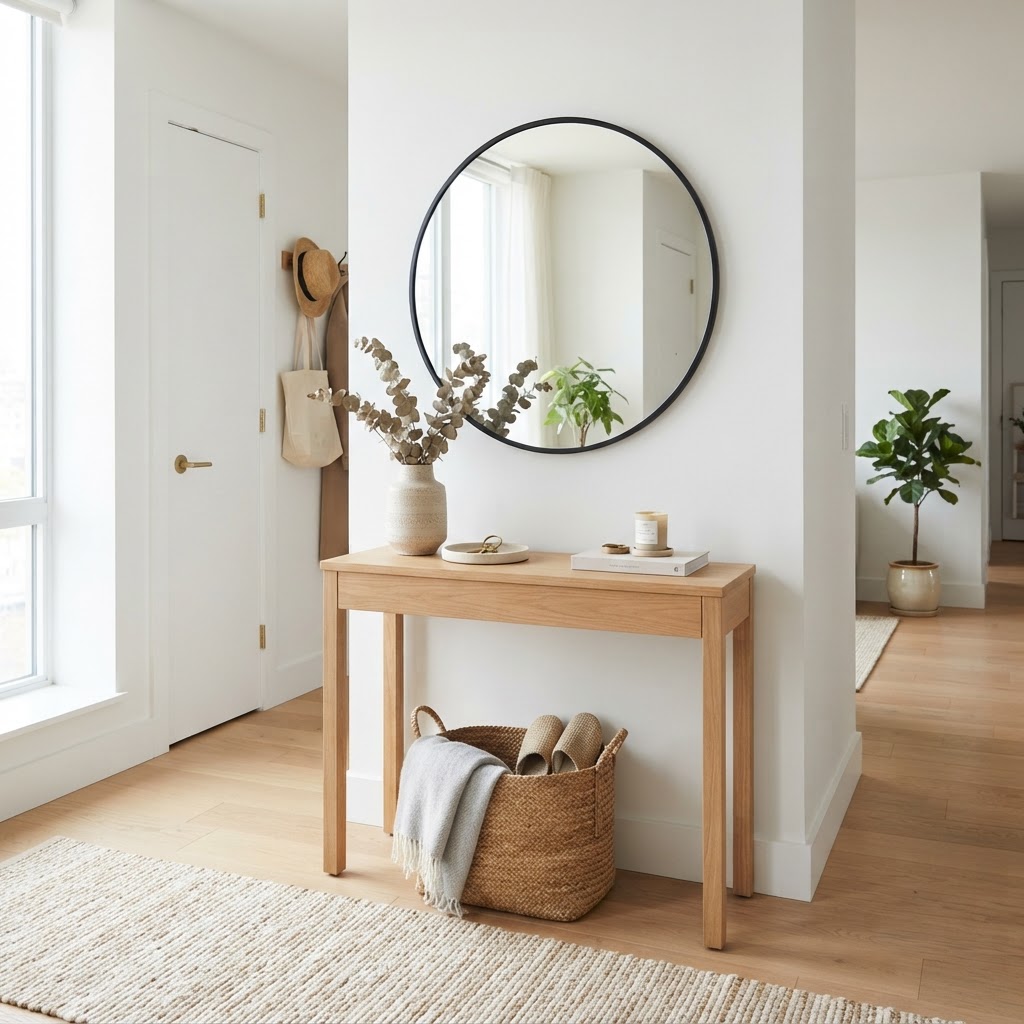
Establishing a visual “zone” is the most effective way to separate your entryway from the rest of your living space. When you lack a formal hall, you must anchor the area; placing a high-traffic runner rug (typically 2×6 or 2×8 feet) creates a psychological boundary that signals the transition from the exterior world to your home.
Traffic flow is paramount in constrained footprints. Avoid depth-heavy furniture that obstructs egress; instead, prioritize slim, wall-leaning consoles with a maximum depth of 10 to 12 inches. If your door opens into the living room, position your furniture perpendicular to the wall to create a physical partition, effectively “building” a hallway wall where none existed. This spatial strategy prevents the clutter of keys and mail from bleeding into your primary relaxation area, maintaining a clean visual aesthetic.
Vertical Storage for Small Spaces
Maximizing vertical storage is the only way to effectively manage gear in apartments that lack dedicated coat closets. By utilizing the 6 to 8 feet of wall height available, you move daily items off the floor, which immediately makes the room feel twice as large.
Utilizing Command Hooks and Adhesive Shelves
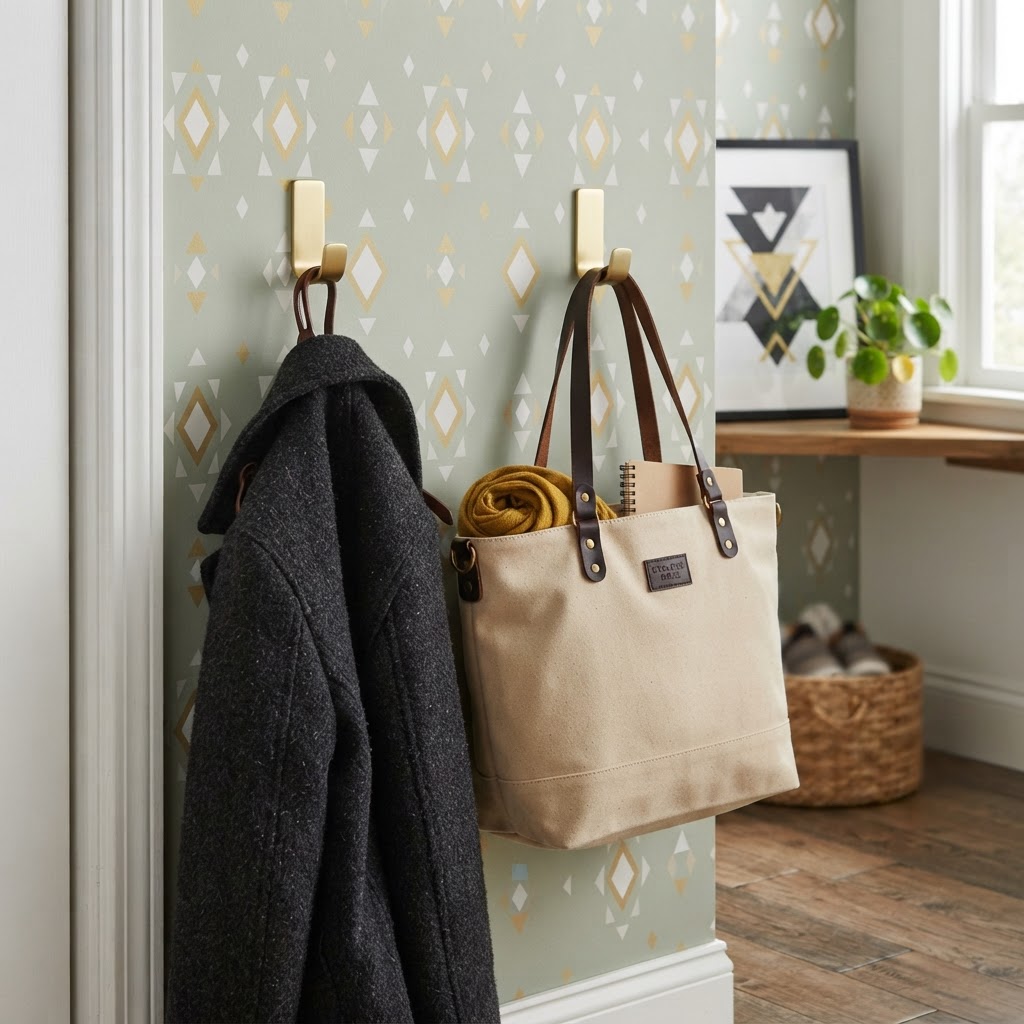
Adhesive mounting technology now supports significant weight, with some heavy-duty strips capable of holding up to 15 pounds per hook. To create a professional “mudroom” aesthetic, arrange hooks in a staggered pattern: place hooks for long coats at 60 inches high, and hooks for bags or dog leashes at 40 inches. This layered approach prevents coats from overlapping, which keeps the entryway looking organized rather than chaotic.
Floating adhesive shelves are equally critical for managing a “drop zone.” Install a 12-inch wide shelf at standard elbow height (approx. 36-40 inches from the floor) to serve as a designated landing pad for phones, wallets, and keys. Always clean the wall surface with isopropyl alcohol before applying adhesive strips to ensure the maximum 10-12 pound bond strength is achieved. Never exceed the manufacturer’s weight rating, as failures in these systems can damage paint when they peel away unexpectedly.
Multi-Functional Furniture Choices
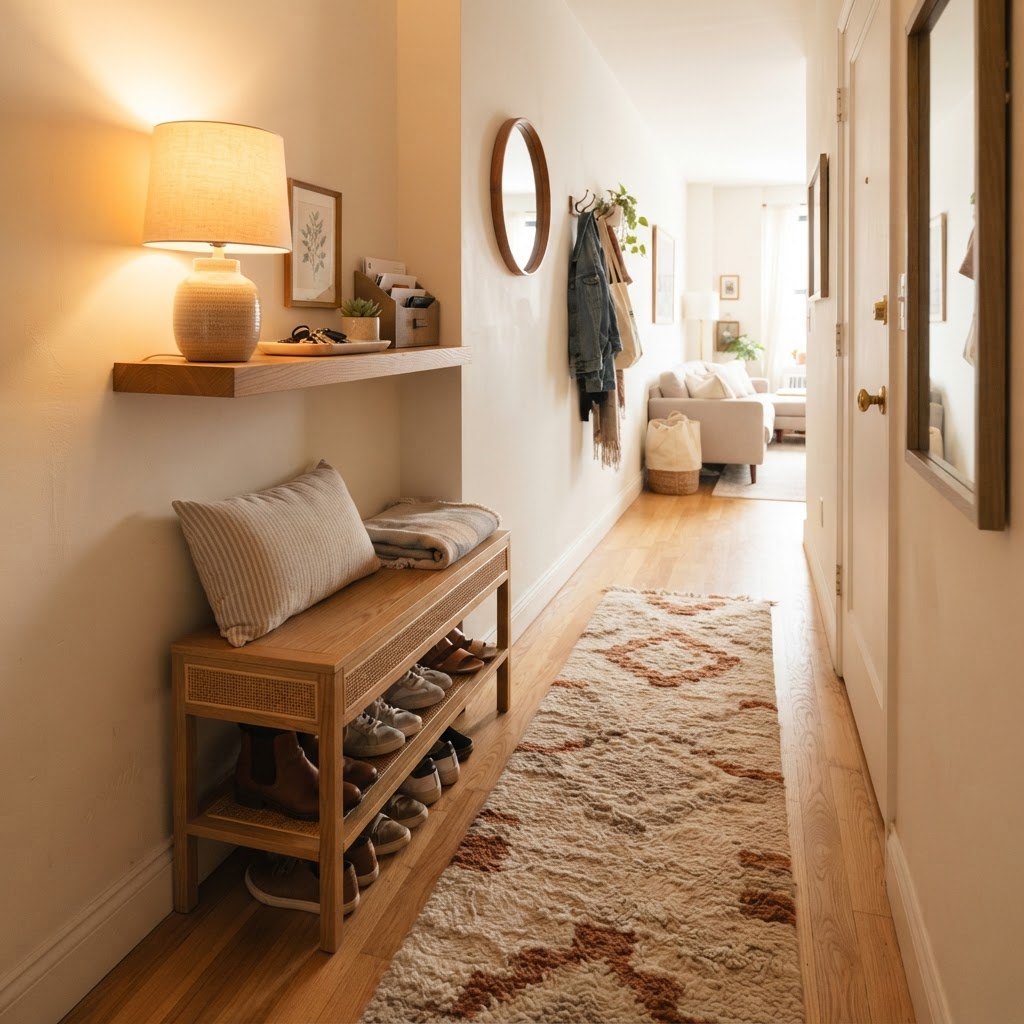
Selecting furniture that performs dual roles is the secret to scaling up functionality without expanding your square footage. A storage bench, typically measuring 18 inches high, serves as both a comfortable seating area for shoe removal and an enclosed bin for seasonal items, hiding up to 3-4 pairs of bulky winter boots out of sight.
Modular units are essential because they allow your storage to evolve with your needs. If you live in a studio apartment, look for console tables that feature integrated shelves; this allows you to stack decorative storage baskets on the bottom for bulky items while keeping the top surface clear for daily essentials. If floor space is entirely non-existent, a wall-mounted drop-leaf table provides a 12-inch deep workspace when needed and retracts to a nearly flat profile, ensuring your floor space remains unobstructed for daily movement.
Personalizing with Non-Permanent Decor
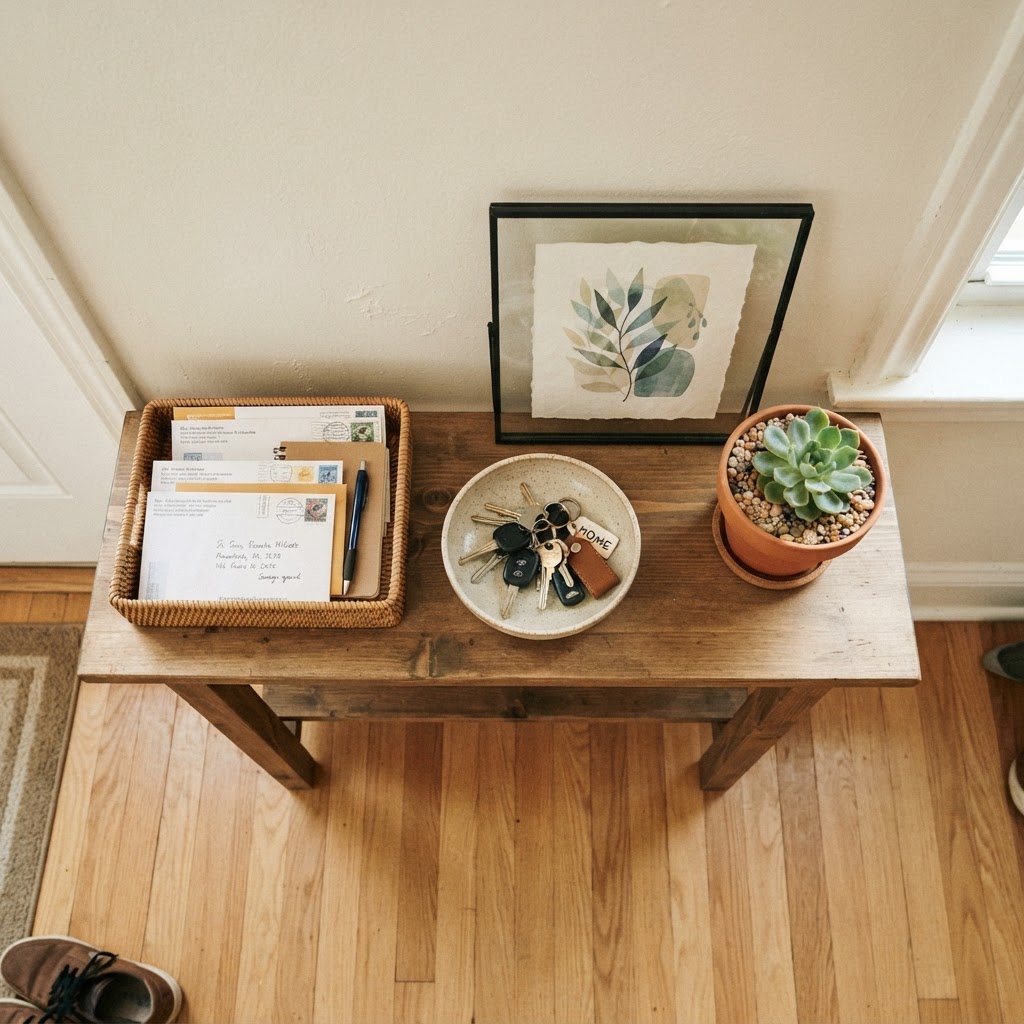
Strategic decor is the bridge between a storage area and a functional foyer, and it can be achieved entirely through non-permanent means. Peel-and-stick wallpaper allows you to define the entryway “zone” with color or texture; a 24-inch wide strip applied vertically behind a console table creates a visual frame that separates the entrance from the living room background.
Mirrors are a functional necessity in small entryways, providing a final outfit check while serving an optical trick. A leaning floor mirror (typically 60 inches or taller) reflects incoming natural light, which can increase the perceived “brightness” of a cramped space by up to 20%. To keep the look professional and damage-free, use heavy-duty removable adhesive strips to secure gallery art frames. By grouping at least three frames in a tight cluster, you create a “high-design” gallery wall that draws the eye upward, effectively making low-ceiling apartments feel more spacious and intentional.
Lighting and Atmosphere
Lighting is the most impactful, yet underutilized, tool for turning a pass-through space into an official entryway. If your apartment lacks overhead wiring for a sconce, use plug-in wall sconces with cord covers painted to match your wall color, which creates the illusion of hardwired professional lighting for less than $40.
Motion-sensor LED technology provides high-end convenience without the need for an electrician. Placing a motion-activated strip light underneath your console table or inside an open shoe cubby serves two purposes: it makes navigation easier at night and provides a high-tech “welcome” effect when you enter. For a warm, inviting atmosphere, prioritize bulbs with a color temperature between 2700K and 3000K. This warm spectrum creates a distinct difference between the “entry” lighting and the cooler, clinical lighting often found in kitchens or laundry areas, effectively signaling to your brain that you are officially home.
Maintenance and Organization Habits
Maintaining an entryway requires a disciplined system to prevent the rapid buildup of clutter that plagues small spaces. A strict “one-in, one-out” policy for footwear is mandatory; for every new pair of shoes placed in the entryway, an older pair must be moved to off-season storage (such as under-bed bins).
The Power of Trays and Baskets
Organizational trays are the primary defense against “surface creep,” where mail and keys clutter your tabletops. Assign one dedicated tray for incoming mail and a separate, smaller dish for keys and sunglasses to ensure you never spend time searching for essentials. Using baskets underneath your console table allows you to conceal items like umbrellas or heavy winter scarves, keeping the visual “noise” to a minimum. Aim to clear these baskets once every seven days. If the baskets are full, it is a clear indicator that it is time to rotate your seasonal gear into long-term storage, keeping your transition zone efficient and clear of non-essential items.
FAQ
Can I add a coat rack in a rental without drilling holes?
Yes, you can use heavy-duty adhesive hooks or an over-the-door rack to store coats without damaging walls. Ensure the surface is cleaned with rubbing alcohol first to maximize the bond strength, and always verify the hook’s weight capacity to prevent paint from peeling when you eventually remove them.
How can I define an entryway in a studio apartment?
Use an area runner rug to physically mark the entry space and place a slim console table or partition to create a clear separation. By establishing a distinct floor boundary and a dedicated “drop zone” for keys and bags, you create a functional foyer within your open-concept living area.
What are the best lights for an apartment with no overhead entry light?
Plug-in wall sconces or motion-sensor LED strips are the most effective solutions for brightening an entryway without electrical work. These options can be mounted using non-damaging command strips and provide immediate, ambient lighting that signals a welcoming transition space the moment you step through the door.
How often should I clean my small entryway?
You should sweep or vacuum the landing area at least once a week to prevent dirt tracked from outside from spreading into your living room. Additionally, clearing out junk mail and rotating seasonal accessories every Friday will prevent clutter from accumulating in your small footprint.

Leave a Reply