Tiny Apartment Entryway Ideas: Maximize Style and Space
To maximize a tiny apartment entryway, focus on vertical storage, floating furniture, and strategic mirror placement to create the illusion of space. Implement a dedicated “drop zone” system to eliminate clutter, utilizing wall-mounted hooks and slim, tilt-out shoe cabinets that keep the floor clear and the visual field open.
Rethinking Your Vertical Space
When floor space is limited, your walls become your most valuable real estate for storage and visual design. Installing floor-to-ceiling shelving or heavy-duty hooks allows you to utilize the top 7 feet of wall space, which is often neglected in small apartments. By drawing the eye upward, these vertical elements effectively “lift” the room, creating an optical illusion that makes a cramped foyer feel significantly taller and more spacious than its actual square footage suggests.
The Power of Wall-Mounted Furniture
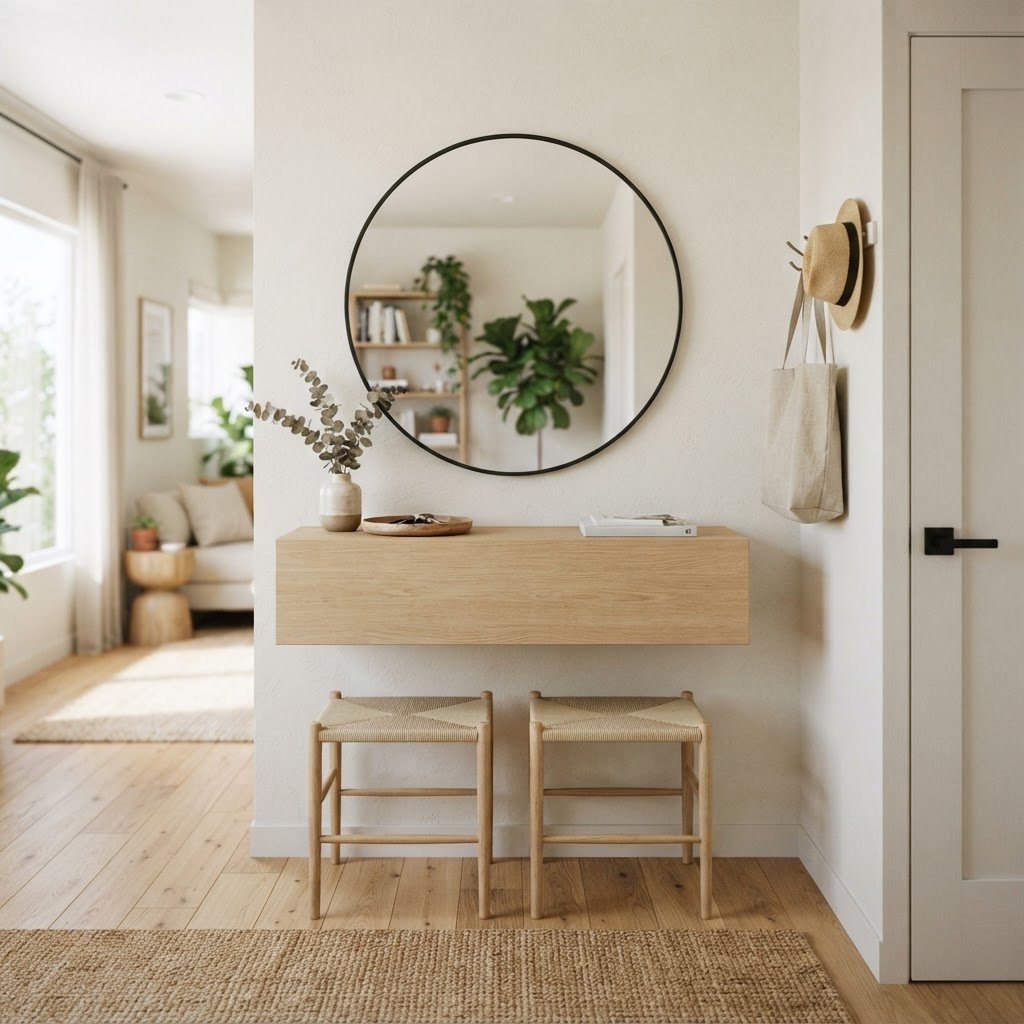
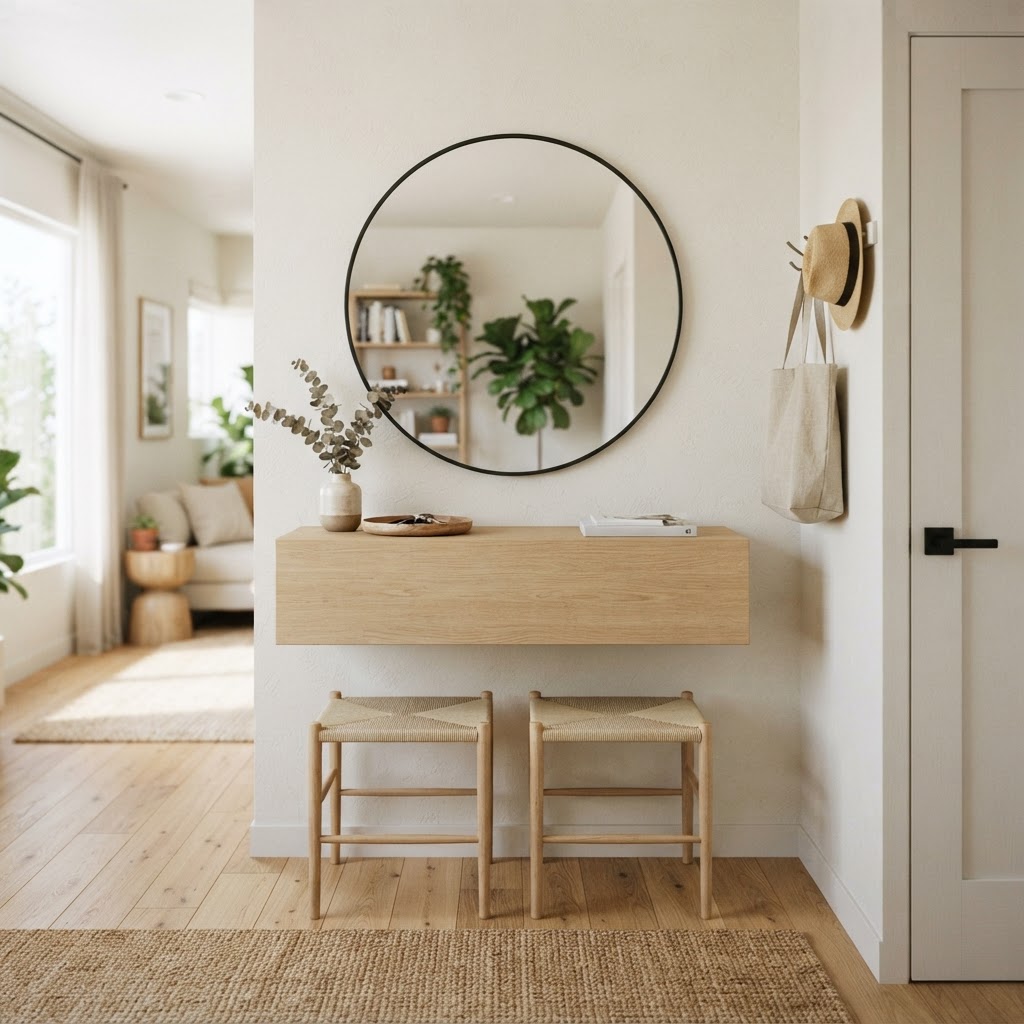
Wall-mounted console tables are a game-changer for those seeking tiny apartment entryway ideas that save floor space. Unlike traditional tables with four legs that create visual clutter, a floating piece keeps the floor clear, allowing the eye to see more surface area and making the entryway feel larger. You can opt for a slim design with a drawer to tuck away keys, wallets, and mail, keeping the surface free of daily debris.
Why Floating Solutions Win
Floating shelves or cabinets are superior in small spaces because they avoid the bulky look of traditional furniture. They provide just enough surface area to hold a decorative vase or a bowl for essentials without dominating the room. Furthermore, their minimalist aesthetic complements a modern, airy interior design perfectly, ensuring that your home feels curated and intentionally styled. By keeping the floor clear, you reduce visual noise, which is essential for maintaining a sense of order in homes under 500 square feet.
Mirrors as Architectural Tools
Mirrors function as essential architectural tools in small entryways by reflecting light and depth, effectively doubling the visual size of a restricted hallway. A mirror placed strategically opposite your front door or a nearby window captures natural light, bouncing it back into darker corners to eliminate shadows. For the best result, consider an oversized mirror that covers at least 60% of a central wall, as this creates a “portal” effect that makes the space feel like an extension of the living room rather than a closed-off transition area.
Choosing the Right Mirror Shape
For a narrow hallway, a tall, rectangular mirror can emphasize height. If you want to soften the harsh edges of a square or rectangular apartment, choose an oversized circular mirror. The curvature breaks up the monotony of straight, boxy walls and adds a touch of elegance that makes the space feel more luxurious. Integrating a mirror with an integrated shelf can also provide a “two-in-one” benefit for checking your appearance and holding your keys.
Smart Storage for Shoes and Accessories
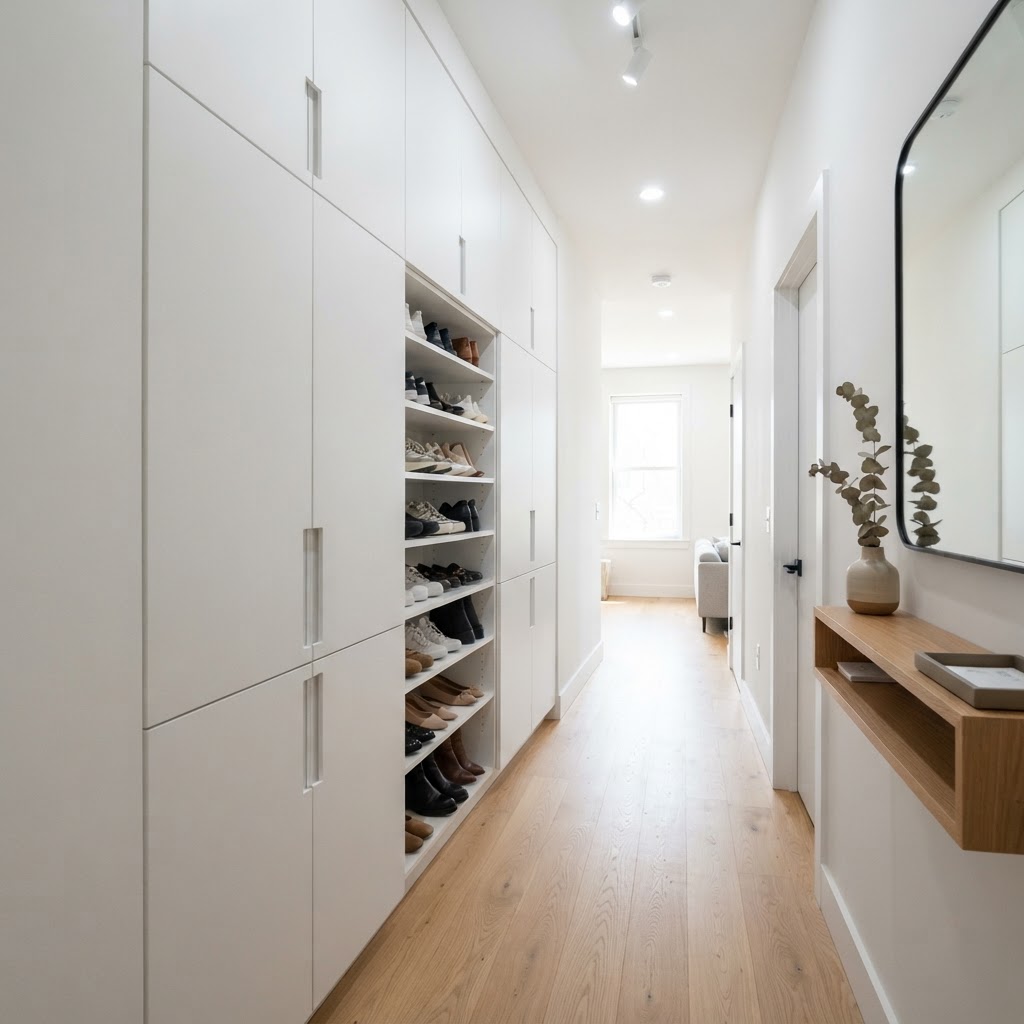
Shoes are the primary culprits behind entryway mess, but you do not need a massive closet to keep them under control if you use specialized slim storage furniture. Look for “shoe cabinets” that feature a tilt-out mechanism; these units are often less than 10 inches deep but can hold 12 to 24 pairs of shoes depending on the width. By concealing the clutter behind a clean facade, you maintain a polished entrance that doesn’t scream “messy apartment” to your guests.
Multi-Functional Seating
If you have even a tiny bit of room, a small stool or ottoman can serve a dual purpose. Look for ottomans with removable lids that offer hidden storage space inside. This gives you a place to sit while putting on your shoes while simultaneously housing items like scarves, umbrellas, or reusable shopping bags that often clutter up a small entryway. Choosing furniture on wheels can also offer the flexibility to slide your seat under a console when not in use.
Lighting and Color Schemes
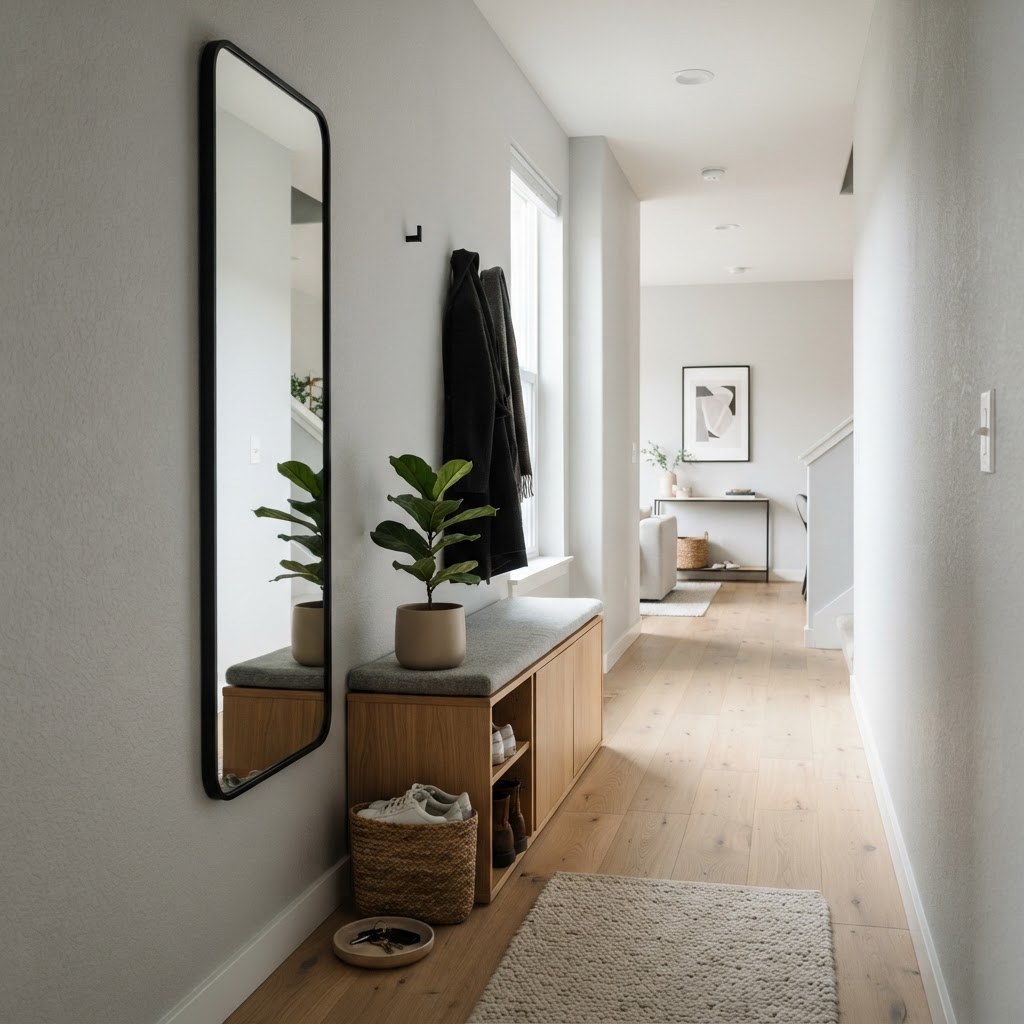
Lighting is the most impactful factor in altering the mood and perceived scale of a tiny entrance. Avoid heavy, dark fixtures; instead, aim for layered lighting using 3000K-3500K warm LED bulbs, which provide a welcoming glow without the clinical feel of cooler lights. Installing a sleek wall sconce is a strategic move when ceiling height is limited, as it keeps the visual field clear while providing adequate illumination for finding items in your bag or checking your look before heading out.
The Impact of Paint and Color
When it comes to paint, lighter shades like alabaster, soft gray, or off-white are generally better for small, windowless entryways. These colors reflect light beautifully and prevent the walls from feeling like they are “closing in” on you. However, do not be afraid of a bold wallpaper or a deep accent color if used correctly. Sometimes, adding a vibrant piece of art or a painted archway can create a defined ‘zone’ for your entrance, giving it a personality that makes it feel like its own distinct room.
Organizing the Daily ‘Drop Zone’
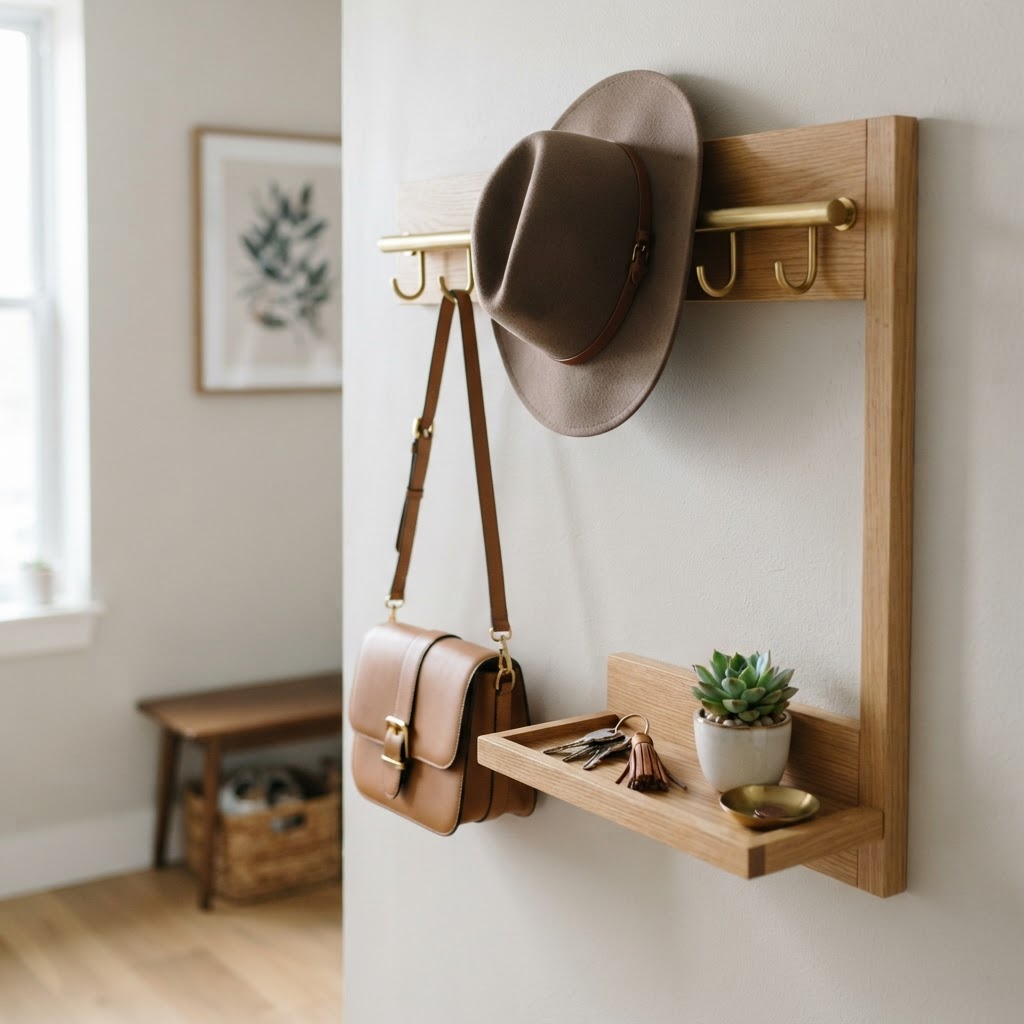
One of the most effective tiny apartment entryway ideas involves establishing a strict ‘drop zone’ to prevent clutter migration. Human beings are creatures of habit; by assigning a permanent home for keys, mail, and bags within reach of the door, you create a psychological “off-switch” for the workday. A wall-mounted organizer at a height of 48-52 inches works best for most people, ensuring that items are accessible but tucked away to maintain a clean aesthetic.
The Three-Tiered Approach
- Upper level (60″+): Hooks for hats, bags, and coats.
- Mid-level (36″-48″): A small shelf or tray for keys and daily essentials.
- Lower level (below 24″): A tidy bin or slim rack for footwear.
Keeping it Minimal and Functional
Maintaining a tiny entryway requires a regular maintenance routine rather than just a one-time setup. Perform a monthly 5-minute audit of your space: rotate seasonal footwear to a closet, remove junk mail immediately, and ensure every item currently in your foyer has a functional purpose for your daily routine. Minimalism is about intentionality; if an item doesn’t serve you, it shouldn’t occupy your precious, limited entryway square footage.
The Power of Minimalism
Minimalism is not about having nothing; it is about having items that serve a purpose. In a tiny apartment, every single item in your entryway should have a job. If a piece of decor is just taking up space without adding visual joy, consider moving it or donating it. A clean, uncluttered surface sends a signal of peace to your brain the moment you walk through the door.
FAQ
How do I organize a tiny entryway without a closet?
Use vertical wall space by installing heavy-duty hooks for coats and slim, wall-mounted shoe cabinets that provide hidden storage. These solutions keep floor space clear and use height instead of width to manage your daily essentials effectively.
What are the best colors for a small entryway?
Light, reflective colors like off-white, cream, or light grey are ideal because they maximize natural light and make walls feel more distant. If you prefer color, use a high-gloss finish or bold artwork to create a focused “zone” without shrinking the room.
How can I make a narrow hallway look wider?
Install a large mirror opposite an entryway light source to reflect light and create a sense of depth. Additionally, keep the floor clear by using floating furniture, as seeing the full length of the floor helps the eye perceive the space as larger.
What is a good ‘drop zone’ for a small apartment?
A ‘drop zone’ is a dedicated area, such as a wall-mounted console or a series of hooks, where you place keys, mail, and bags immediately upon entering. By grouping these items in one spot, you prevent clutter from spreading into the rest of your apartment.

Leave a Reply