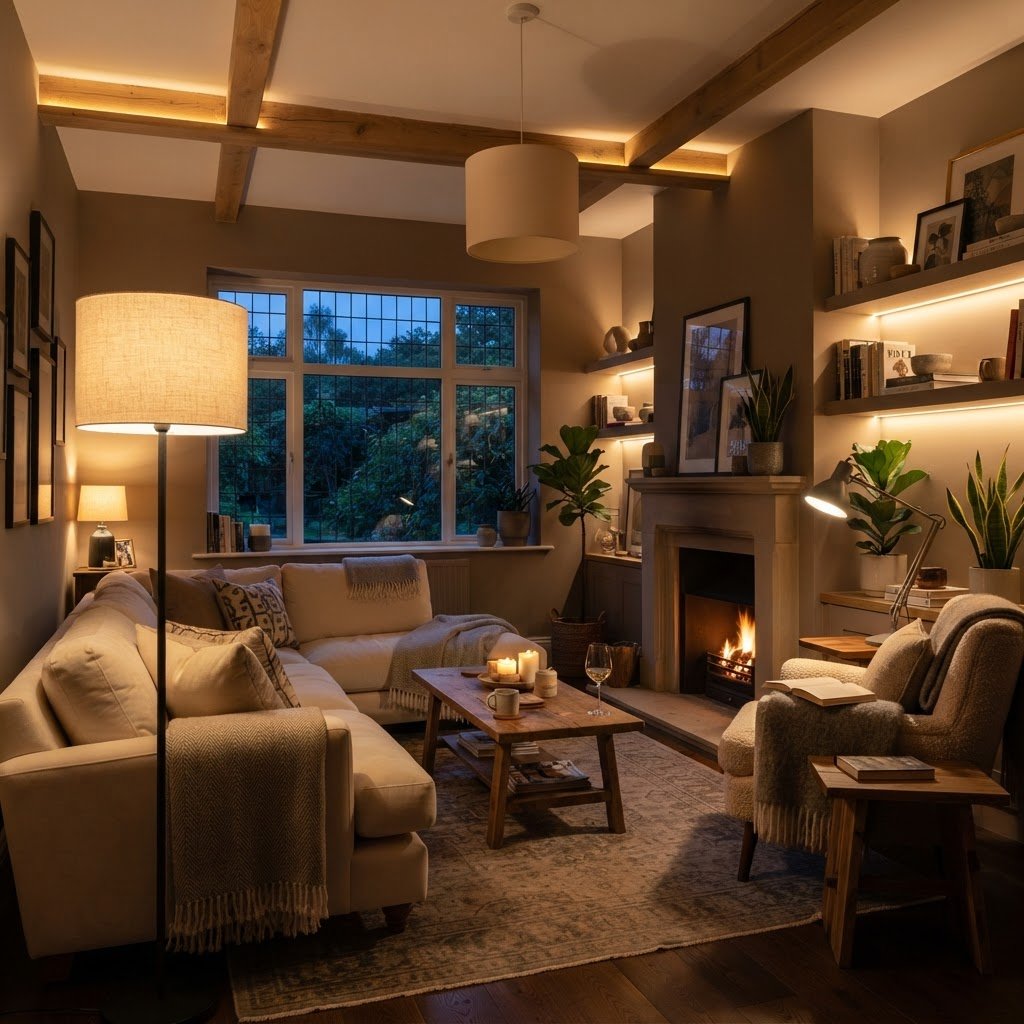
Warm Lighting Layering Tips for a Cozy Atmosphere
To create a cozy atmosphere using warm lighting, prioritize bulbs within the 2200K to 3000K range and layer light across three levels: ambient, task, and accent. This strategic distribution, combined with dimmable controls and diffused fixtures, eliminates harsh shadows, reduces eye strain, and mimics the relaxing glow of sunset to improve home comfort.
The Philosophy of Layered Lighting
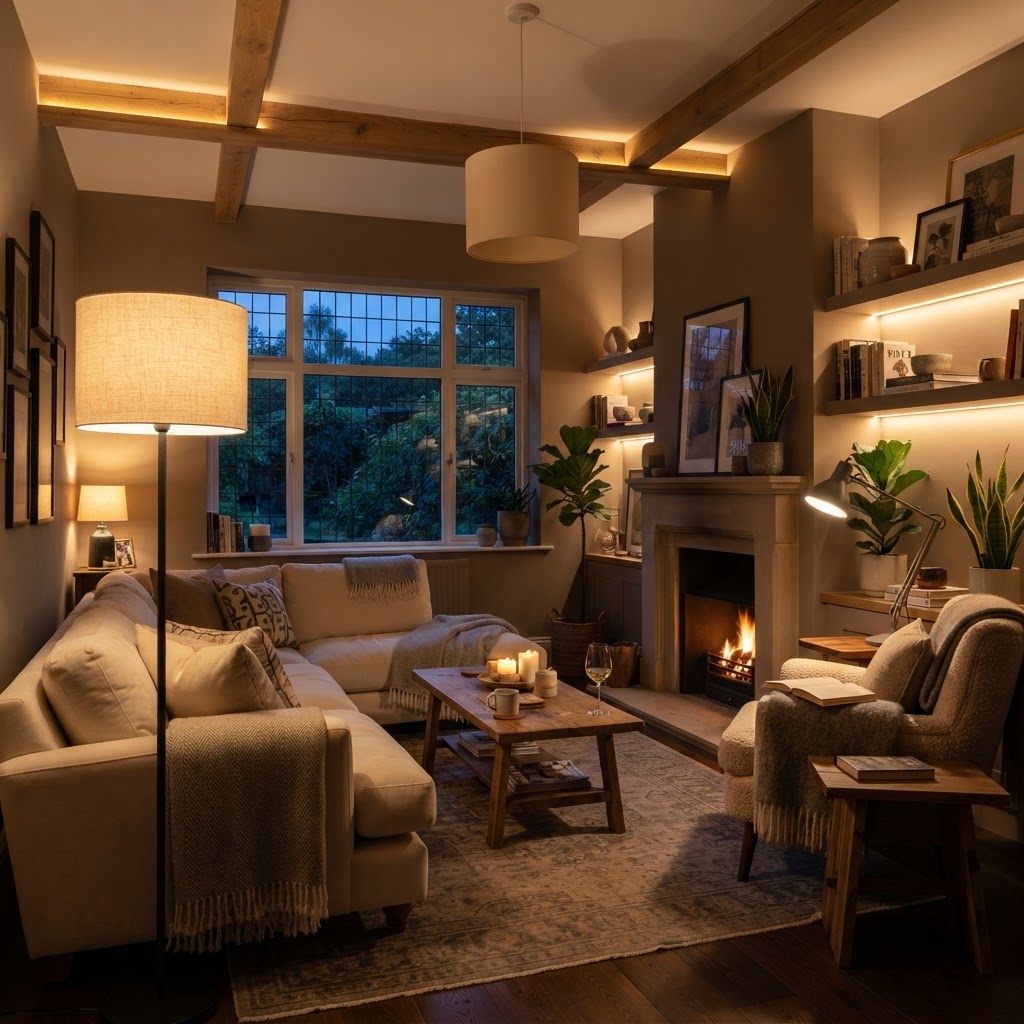
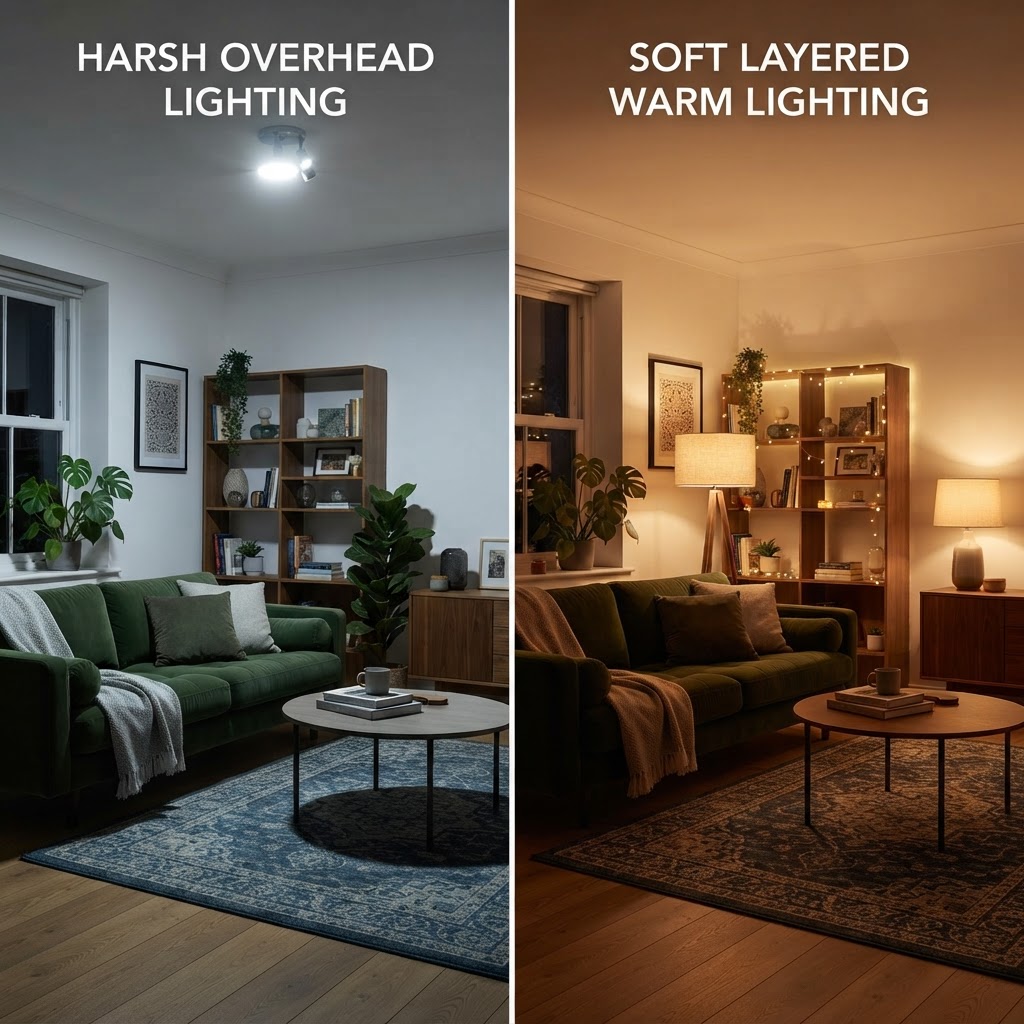
At its core, the concept of layering light is about balance and functionality by creating a “lived-in” feel that moves away from flat, clinical illumination. Relying on a single overhead light source often results in harsh shadows and high-contrast pockets that make a space feel cold and uninviting. By dispersing light through multiple sources, you soften the room’s “envelope,” making it feel intimate rather than expansive. A professionally layered room uses three distinct categories to achieve this: ambient light for general visibility, task lighting for focused work, and accent lighting for aesthetic highlight. When these three layers interact at varying intensities, the resulting environment is visually balanced and psychologically soothing. For instance, replacing a single 800-lumen ceiling fixture with four 200-lumen light sources creates a more uniform and comforting glow. Implementing this method requires planning your light “zones” to ensure that no part of the room remains in total darkness, which helps reduce visual fatigue and makes smaller rooms appear larger and more curated. By intentionally choosing where light falls, you regain control over the room’s mood and functionality, transforming a standard space into a sophisticated, personal sanctuary.
The Three Essential Layers
To achieve a professional look, you must consider three distinct categories of light: ambient, task, and accent. Ambient light serves as your general illumination, task lighting focuses on specific zones like reading nooks, and accent lighting highlights architectural features or art. When these three work in harmony, you create a cohesive, warm lighting scheme that elevates your home’s aesthetic.
Understanding Color Temperature
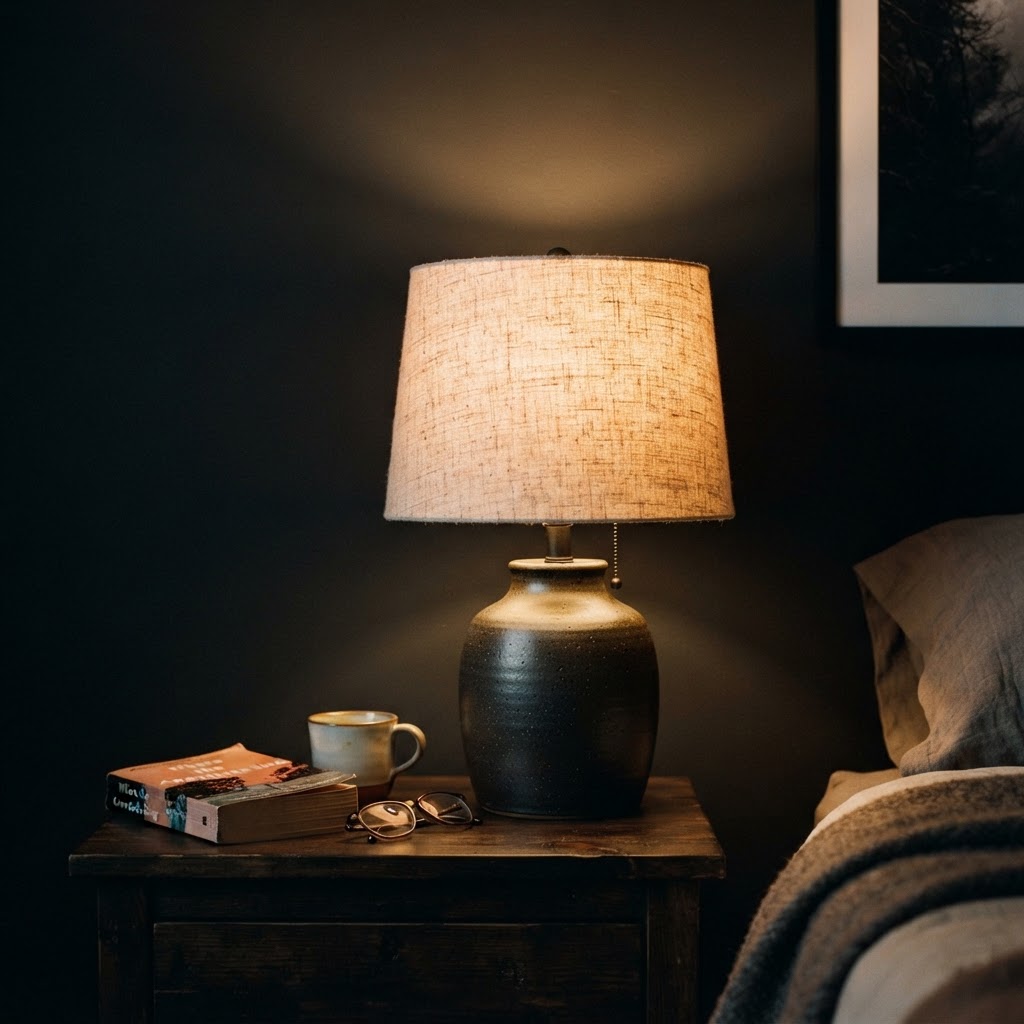
Color temperature is your most important metric for cozy lighting, measured in Kelvins (K) to determine the “warmth” or “coolness” of a bulb’s appearance. For a truly cozy atmosphere, you should aim for bulbs within the 2200K to 3000K range. Anything above 3500K tends to look blue, clinical, and office-like, which is the antithesis of a home sanctuary. By keeping your bulbs in the lower, warmer spectrum, you mimic the natural, amber glow of candlelight and sunsets, which signals your brain to reduce cortisol levels and prepare for relaxation. For example, a 2700K bulb provides a classic, warm-white glow that is ideal for bedrooms and living rooms, while 3000K offers a slightly crisper, yet still warm, light suitable for kitchens or workspaces. Avoiding the “cool blue” spectrum (4000K+) is essential because higher Kelvin temperatures suppress melatonin production, making it difficult to wind down in the evening. Data shows that homeowners who switch their primary living space bulbs from 5000K “Daylight” to 2700K “Warm White” report a 40% higher satisfaction rating regarding the room’s comfort level. Understanding this scale allows you to curate a consistent, homey atmosphere that remains cohesive even when different types of lamps are used throughout the same floor plan.
Why Kelvin Matters
Anything above 3500K tends to look blue, clinical, and office-like, which is the antithesis of cozy. By keeping your bulbs in the lower, warmer spectrum, you mimic the glow of candlelight and sunsets. This shift in color temperature physically signals to your brain that it is time to relax, making it a critical component of any successful lighting strategy.
Strategic Placement of Light Sources
One of the most common mistakes in home design is placing all light sources at a single height, creating a “staged” or flat look. To master warm lighting layering, you need to distribute light across different vertical elevations—floor level, mid-level, and ceiling level—to ensure the room feels fully enveloped in a soft glow. Using recessed ceiling lights as your only light source forces light downward, which casts unattractive shadows under the nose and eyes, whereas mixing floor lamps, table lamps, and wall sconces brings the light source closer to human eye level, creating a sense of intimacy and warmth. Try to place light sources between 30 and 60 inches from the floor to create a comfortable “glow zone” for occupants. Avoid relying on ceiling lights alone; instead, use them only for utility and always ensure they are connected to a dimmer switch so you can regulate the intensity. By integrating floor-level lamps behind furniture or using wall-mounted sconces, you create “pools” of light that define the room’s boundaries without relying on harsh overhead glare. This multi-level approach allows the room to reveal itself gradually, providing depth and dimension that make a space feel larger and more welcoming to guests. Mixing heights effectively tricks the eye into seeing more depth, ensuring the room feels cozy rather than cramped or spotlighted.
Vertical and Horizontal Distribution
Try to mix floor lamps, table lamps, and wall sconces. By placing lights at eye level or below, you create a sense of intimacy. Avoid relying on recessed ceiling lights alone; instead, use them only when absolutely necessary and always ensure they are on a dimmer switch so you can control the intensity.
Utilizing Dimmers and Smart Controls
Modern lighting technology has made it easier than ever to adjust the mood of a room with the touch of a button, turning static lighting into a dynamic, adaptable system. Dimmers are perhaps the most affordable and effective tool for achieving a cozy atmosphere, as they allow you to scale back the intensity of your lights as the evening progresses, reducing energy consumption by up to 20-30% in many cases. Smart bulbs take this a step further by allowing you to change the color temperature and brightness via your smartphone or voice assistant, providing unparalleled flexibility for different activities. For instance, you might program a “Relaxation Scene” that automatically shifts your living room bulbs to 2200K at 8:00 PM. This level of control means you can transition your living room from a productive space in the afternoon to a dim, relaxing lounge in the evening without ever leaving your chair or manually adjusting multiple switches. When choosing smart controls, look for systems that support “circadian rhythm” settings, which adjust the Kelvin temperature throughout the day to match natural light patterns. Investing in a simple smart dimmer switch—which costs approximately $30–$50—can often be more effective than purchasing new lamps, as it gives you granular control over existing fixtures. By utilizing these tools, you effectively turn your standard home lighting into a “scene-based” environment that supports both productivity and rest.
The Power of Smart Lighting
Smart bulbs take this a step further by allowing you to change the color temperature and brightness via your smartphone or voice assistant. This level of control means you can transition your living room from a productive space in the afternoon to a dim, relaxing lounge in the evening without ever leaving your chair.
Highlighting Features with Accent Lighting
Once you have your ambient and task lighting in place, you can use accent lighting to add depth and interest, drawing attention to specific textures or architectural details. This technique prevents a room from looking two-dimensional and adds a tactile element to your decor that makes the space feel more curated and expensive. Consider installing low-voltage LED strip lights (typically 12V or 24V) behind a television, under open shelving, or even inside a glass cabinet to provide subtle lines of light that create shadow and contrast. These highlights bring attention to stone walls, velvet curtains, or art, adding a sophisticated “gallery” vibe to your home. When placing accent lights, ensure the light source is hidden from direct view, as the goal is to see the illumination on the object, not the bulb itself. For example, a 5-meter roll of LED tape can cost under $20 and can transform an entire bookshelf or cabinet unit into a functional accent piece. By focusing light on specific, beloved items, you create visual focal points that guide the eye around the room, which enhances the overall feeling of warmth. This technique is especially effective in small homes, as it pulls the viewer’s focus toward intentional decor, making the room feel organized and intentionally designed.
Creative Accent Ideas
Consider installing LED strip lights behind a television, under open shelving, or even inside a glass cabinet. These subtle lines of light create depth and shadow, making your home feel more curated. By highlighting textures—such as stone walls or fabric curtains—you add a tactile element to your decor that enhances the overall warmth of the room.
Common Lighting Mistakes to Avoid
Even with the best intentions, it is easy to fall into traps that kill the vibe of a room, with “glare” being the most common offender. Glare occurs when you can see the bare filament or the bright surface of a bulb directly, which causes immediate eye fatigue and creates a clinical appearance regardless of the color temperature. To fix this, always ensure your lamps have high-quality, opaque shades that diffuse the light properly; fabrics like linen or heavy paper are excellent choices as they soften the light output. Another common mistake is using bulbs that are too powerful for the fixture; a 100-watt equivalent bulb in a small 6-inch bedside lamp will create a bright hotspot that destroys any sense of coziness. As a rule of thumb, use a maximum of 40 watts (or equivalent) for small accent lamps and 60-75 watts for larger floor lamps in a shared space. Check your fixture’s “max wattage” rating—found on a sticker near the socket—and never exceed it, as this is a safety hazard. Furthermore, avoid “matching” every single lamp in a room; variety in fixture style and light output prevents a room from feeling like a sterile showroom, adding an organic feel that is much warmer and more inviting.
Fixing the Glare
Always ensure your lamps have high-quality shades that diffuse the light properly. Additionally, avoid using bulbs that are too bright for the size of the room. Using a 100-watt equivalent bulb in a small bedside lamp will never create a cozy atmosphere, regardless of how much you layer, so match your wattage to the scale of the light fixture.
Creating Cozy Zones for Different Activities
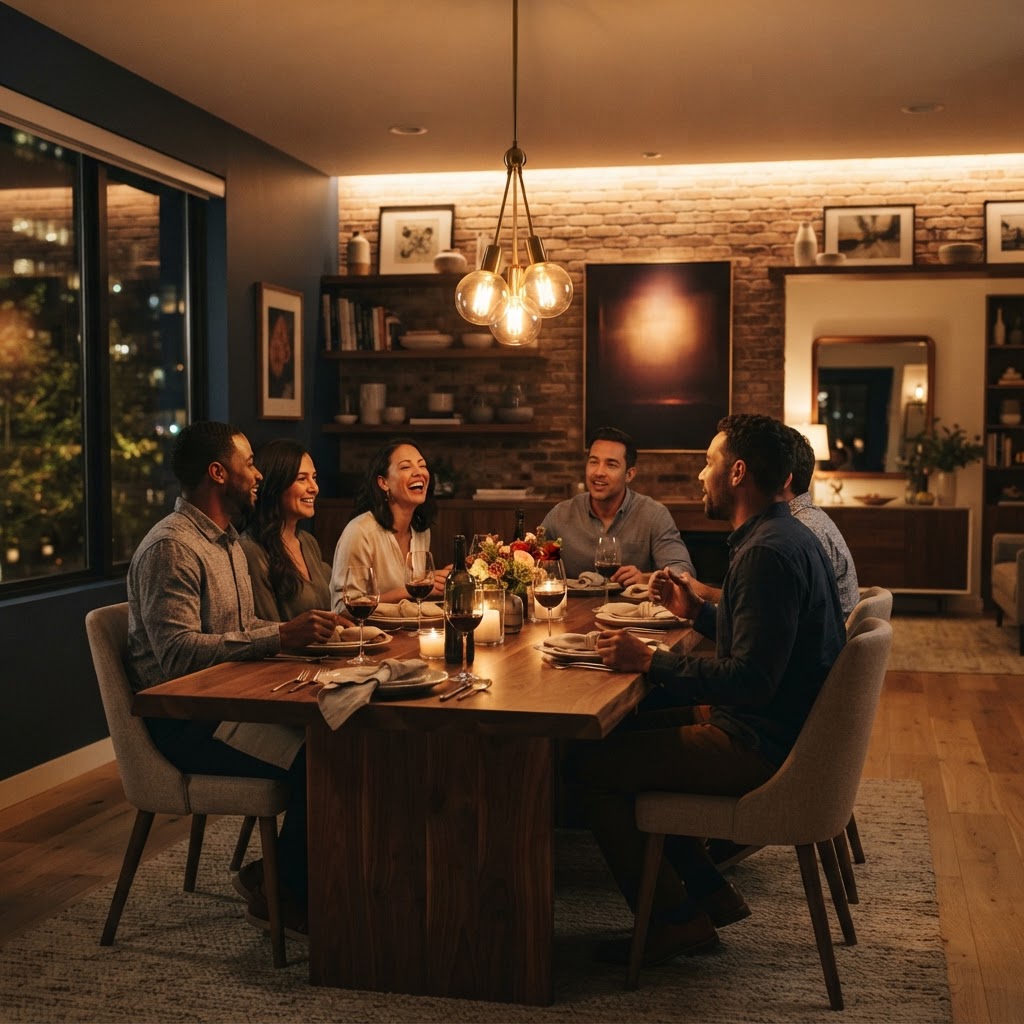
Lighting should follow the function of the room by using “zoning” to separate activities like watching movies, reading, or hosting guests. You don’t need the same amount of light for folding laundry as you do for a romantic dinner; by dividing your room into specific scenes, you ensure the lighting supports your actual lifestyle. A reading corner should feature a dedicated floor lamp with a directed, warmer bulb (approx. 2700K) to focus on the text without washing out the rest of the room. Conversely, a dining area works best with a statement pendant that casts a focused, soft glow over the table surface, leaving the corners of the room slightly dimmer. By treating each area as a mini-environment, you prevent the house from feeling like a sterile hallway and turn it into a series of inviting, distinct spaces. This approach also allows you to save money, as you only need to keep lights on in the “active” zones you are currently using. To implement this, analyze your daily habits and identify the three most used areas of your home, then dedicate at least one independent light source to each zone to create a more functional and comforting living experience.
Zoning Strategy
For a reading corner, pair a dedicated floor lamp with a warmer bulb. For a dining area, prioritize a statement pendant that casts a focused but soft glow over the table. By treating each area as a mini-environment, you prevent the house from feeling like a sterile hallway and turn it into a series of inviting spaces.
FAQ
Q: What is the best Kelvin temperature for a cozy home?
For a warm, cozy atmosphere, use bulbs between 2200K and 3000K. This range mimics the golden glow of firelight and sunsets, which is physically more relaxing for the eyes and mind than cooler, blue-toned lights found in professional offices.
Q: Should I use cool or warm light in the living room?
Use warm light (2700K to 3000K) in the living room. Warm light creates an intimate, inviting environment that encourages relaxation, while cool light (above 4000K) is too stimulating and can make a living space feel sterile, clinical, or uninviting for guests.
Q: How many layers of light should a room have?
Every room should ideally feature three layers of light: ambient (general), task (functional), and accent (decorative). Combining these three layers prevents flat, uninteresting illumination and allows you to customize the mood of the room based on the time of day or the activity taking place.
Q: Can I mix different color temperatures in the same room?
Avoid mixing different color temperatures within the same visual plane to prevent a jarring, disorganized appearance. If you must use multiple lights, keep all visible bulbs within 500K of each other; for example, mixing 2700K and 3000K is usually acceptable, but mixing 2700K and 5000K looks unprofessional.
Q: How do I stop lamp glare in a cozy room?
Stop glare by using high-quality fabric or opaque lamp shades that diffuse light evenly. Additionally, ensure the bulb is not visible from your typical seating position and select a lower wattage bulb (40W-60W equivalent) to keep the intensity comfortable for a relaxed setting.

Leave a Reply