10 Clever Hidden Shoe Storage Ideas for Small Entryways
To effectively hide shoes in a small entryway, use vertical wall-mounted cabinets, tip-out drawers, or under-console baskets that match your interior decor. These solutions maximize minimal square footage while keeping high-traffic areas clear of clutter, creating a sophisticated and functional transition zone for your home.
The Psychology of a Cluttered Entryway
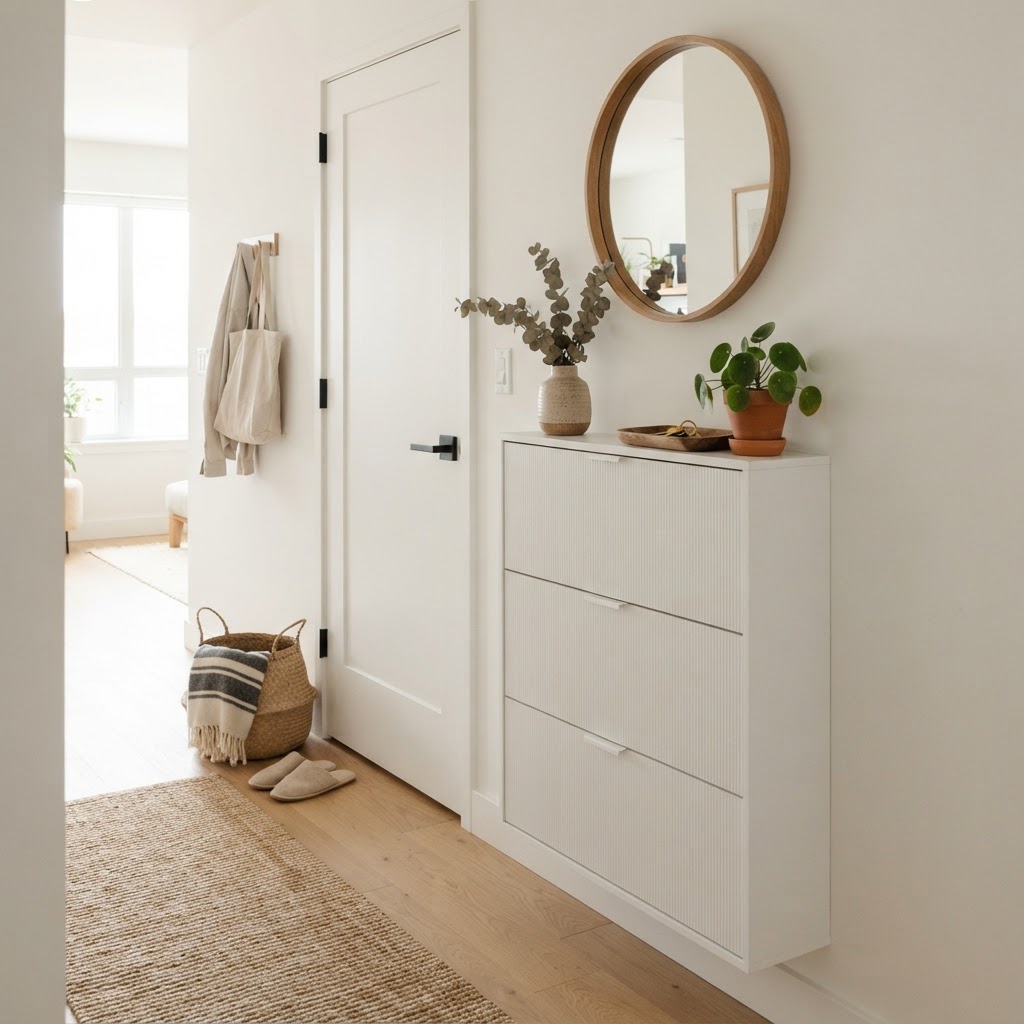
Your entryway acts as the psychological transition zone between the external world and your personal sanctuary, where visual order directly influences your stress levels. Research in environmental psychology suggests that ‘visual noise’—such as piles of footwear—can spike cortisol levels upon entry, whereas a clear floor promotes immediate relaxation. By utilizing hidden shoe storage ideas for small entryways, you eliminate the visual friction that often makes a small apartment feel claustrophobic. Professionals often recommend keeping the floor completely clear to trick the eye into perceiving more square footage, effectively expanding your space by 10% to 15% simply by removing clutter. Transforming this threshold into a clean, minimalist space doesn’t just improve aesthetics; it establishes a daily routine of order that carries over into the rest of your home. A clear entrance acts as a mental reset button, ensuring that your arrival home feels intentional and calm rather than chaotic.
The Importance of Vertical Thinking
When floor space reaches its limit, vertical storage is the most efficient way to reclaim utility in your home. Wall-mounted racks or slim vertical cabinets allow you to store up to 10-12 pairs of shoes in a footprint as small as 12 inches wide, making them ideal for urban apartments. Professional organizers frequently utilize the space behind the door or the upper third of a wall to keep everyday footwear out of sight. By elevating your storage, you capitalize on the often-neglected “dead space” above the floor level. This method is the secret weapon of professional organizers who specialize in urban living environments, where floor real estate can cost upwards of $1,000 per square foot in major cities. Implementing vertical solutions ensures that every inch of wall space contributes to your home’s organizational capacity.
Transforming Furniture into Secret Storage
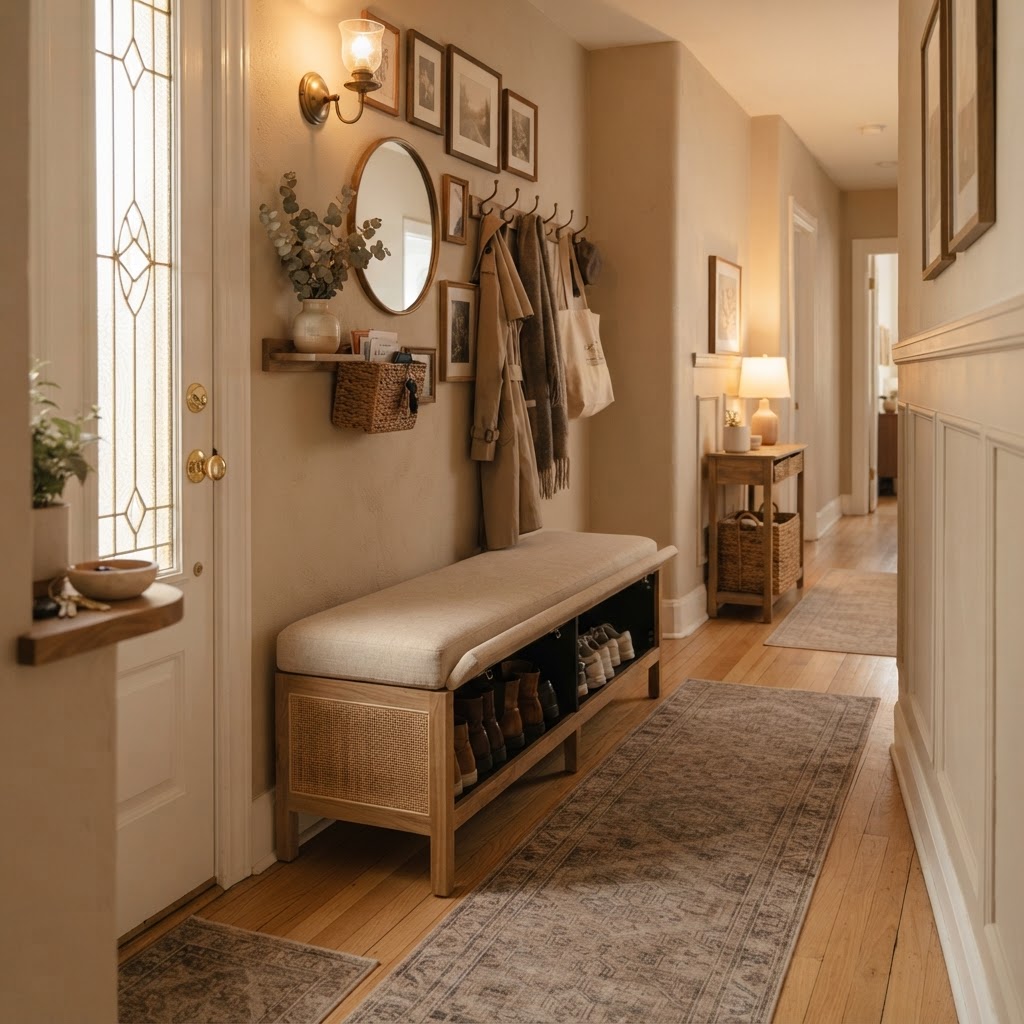
Furniture that serves two purposes—like a storage bench with hidden compartments—is the gold standard for maximizing small-space efficiency. These benches typically offer internal dimensions of 30 to 40 inches in width, providing enough room for six to eight pairs of shoes while offering a dedicated spot to sit and tie laces. When choosing a bench, look for models with deep, internal dividers; these prevent shoes from becoming a disorganized pile, which can speed up your morning routine by ensuring you aren’t hunting for a missing match. A neutral-toned bench made of light oak or linen upholstery helps the piece blend into the existing decor, preventing the storage area from appearing like a bulky addition to your hallway. These pieces are often slim enough to fit in narrow hallways without obstructing traffic, ensuring that your furniture choice actively solves your space constraints rather than adding to them. By integrating storage directly into your seating, you create a streamlined look that feels intentional and high-end.
Choosing the Right Bench
Utilizing Dead Space Behind Doors
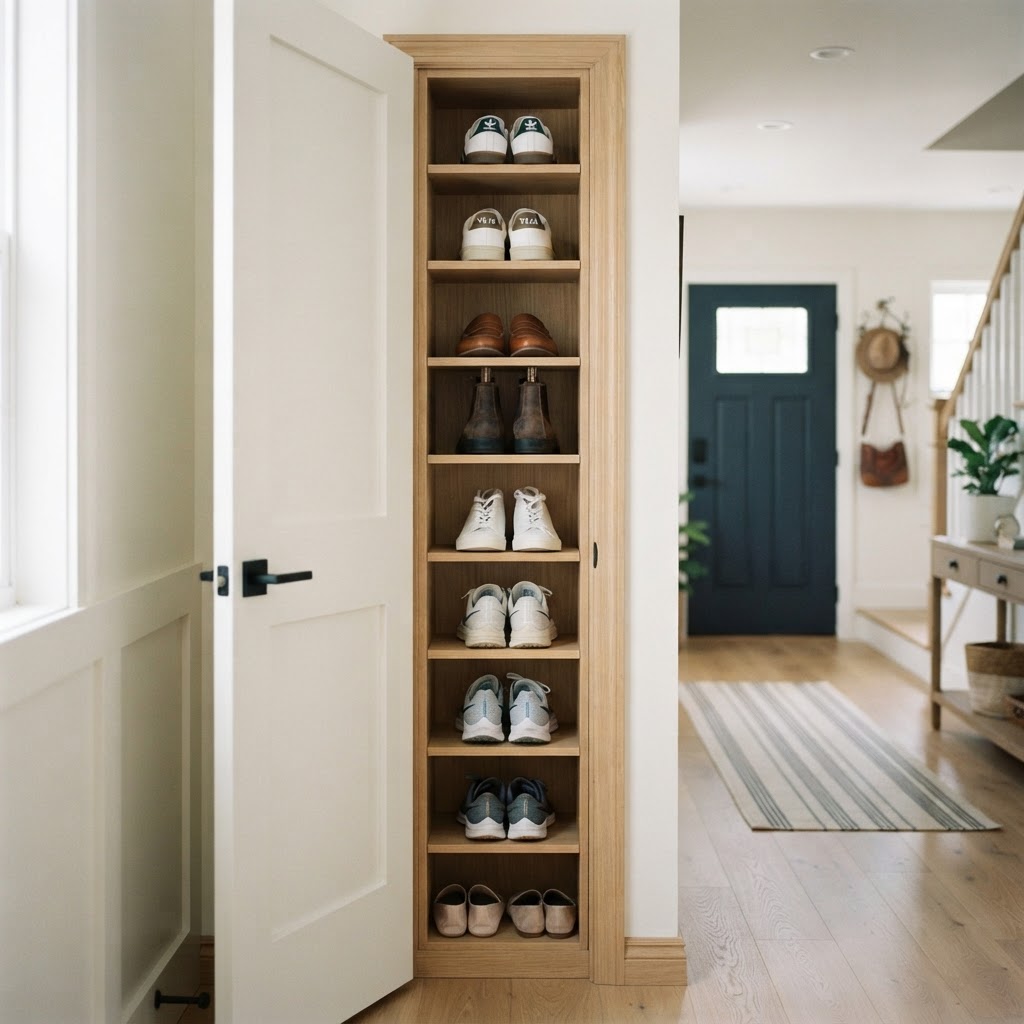
Every apartment contains “dead space” behind the entry door that remains unused, representing a prime opportunity to install discreet, vertical storage. While basic over-the-door fabric organizers are affordable, installing a custom, shallow shelving unit only 6 inches deep can store dozens of pairs of shoes and remain completely invisible when the door is open. For a more modern aesthetic, choose white shelving that matches your wall color to make the storage virtually disappear. If custom shelving is not an option, use a series of decorative hooks installed at staggered heights, which allows you to hang flats and sandals using clips. This approach is highly cost-effective, often requiring less than $50 in materials, and provides a customized solution that takes advantage of underutilized vertical surfaces. By utilizing this hidden area, you effectively increase your storage capacity without sacrificing any of your main living space.
Customizing Your Hidden Hooks
For a minimalist look, install hooks behind the door specifically designed to hold lightweight footwear like canvas sneakers or slides. Using S-hooks or specialty clips allows you to keep shoes off the floor and out of your visual path with minimal installation effort. This method is exceptionally cost-effective and requires only basic tools, making it a favorite for renters. Simply ensure the hooks are spaced at least 8 inches apart to prevent overcrowding. This technique turns the back of your door into a functional storage wall that requires no permanent construction.
Slimline Cabinetry for Narrow Hallways
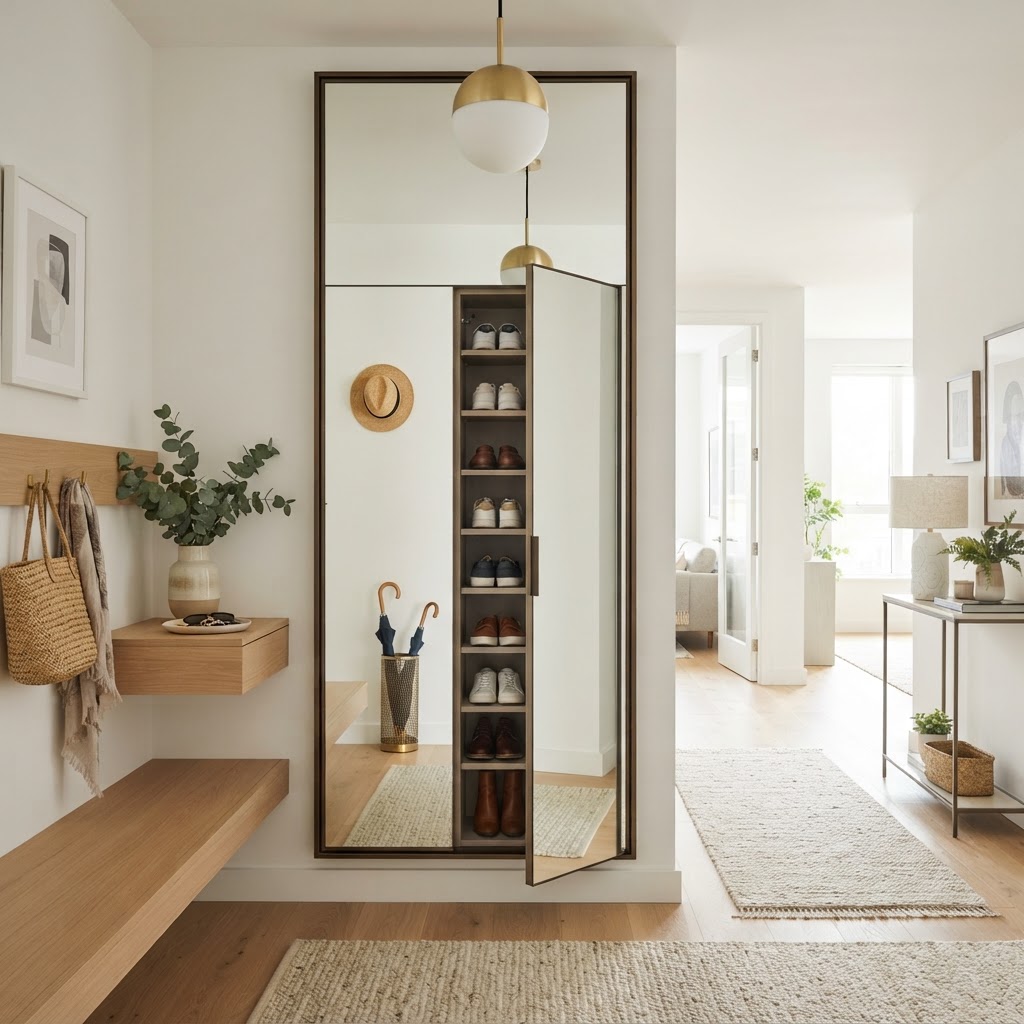
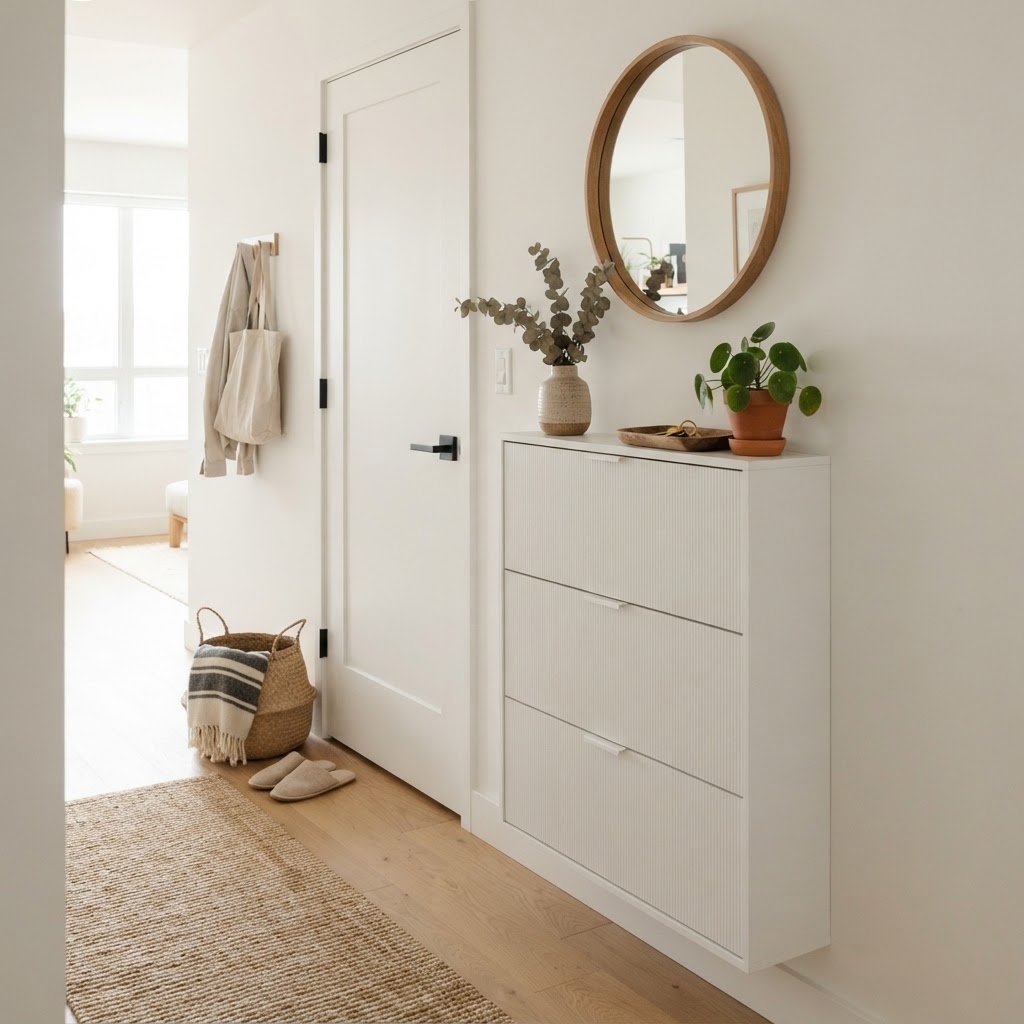
Slimline tip-out cabinets are a revolutionary solution for extremely narrow entryways, as they are typically less than 10 inches deep. These units utilize a clever pivoting mechanism that stores shoes in a vertical orientation, allowing you to fit 12-18 pairs of shoes in a footprint that would normally only accommodate a small wall mirror. Because these cabinets are exceptionally thin, they fit flush against the wall, maintaining traffic flow in even the smallest apartment hallways. Mounting one of these near your front door creates a designated “landing zone” that disappears into your wall profile, keeping the hallway looking clean and uncluttered. If you have an exceptionally long wall, consider mounting multiple cabinets side-by-side to create a continuous, built-in look that maximizes your storage potential across the entire entryway wall.
Styling Your Tip-Out Cabinet
Since the top surface of a tip-out cabinet sits at waist height, it functions perfectly as a console table. Style this surface with a decorative tray to catch your keys, a sculptural vase, or a small lamp to create a warm, inviting entrance. Choosing a cabinet in a color that matches your walls helps the unit blend into the background, ensuring it serves as a storage workhorse while acting as a beautiful, subtle design element in your apartment.
Under-Console Baskets and Bins
If your entryway already features a console table, the space underneath is a hidden storage goldmine. By utilizing uniform, woven seagrass baskets or chic fabric bins, you can tuck away daily footwear in a way that looks intentional rather than chaotic. To achieve a professional, styled look, choose containers that fit within 1-2 inches of the table’s width and depth; this ensures the items look like part of a curated design. Using matching containers creates visual cohesion, masking your footwear behind structured, textured surfaces that add warmth to your entryway. This solution is ideal for those who want a flexible storage system, as the bins can be easily moved or swapped out as your footwear collection evolves throughout the seasons.
The Magic of Mirrored Storage
Combining functionality with visual expansion is the hallmark of effective small-space design. A floor-to-ceiling mirror with an integrated shoe cabinet behind it is a high-impact solution that makes a small, dark foyer feel twice as large by reflecting light. While a custom piece may require a higher investment (typically $300-$600), the return on value is significant because it serves three roles: a full-length mirror, a hidden storage unit, and a space-enlarger. Guests will never suspect that your sleek, reflective surface is hiding your entire shoe collection. This solution is particularly effective in windowless entryways where artificial light is scarce, as the reflective surface bounces light deeper into the room, creating an airy and sophisticated feeling even in the tightest of apartments.
Maintenance and Purging Strategies
Even with the best storage systems, small spaces quickly become overwhelmed if you do not actively manage your inventory. The “one-in, one-out” policy is the most effective way to prevent clutter, requiring that for every new pair of shoes purchased, one must be donated or recycled. Regularly assess your footwear collection every three months to ensure you are only storing items that are seasonally appropriate and frequently worn. This habit keeps your high-value storage areas reserved for your “daily drivers” rather than neglected items. By keeping only current-season footwear in the entryway, you maintain an organized and efficient environment. Keep off-season items in under-bed storage containers or high closet shelves to free up your entryway for the items you actually use.
Comparing Storage Solutions
FAQ
Q: What is the best way to hide shoes in a tiny entryway?
A: The best approach is to use vertical storage solutions like wall-mounted tip-out cabinets or over-the-door shelving. These maximize your vertical real estate without taking up any precious floor space, which is essential for keeping a small entryway feeling open and inviting.
Q: Can I use furniture to hide shoes in a small apartment?
A: Yes, multi-functional furniture such as storage benches with hinged lids or console tables with matching under-table baskets are excellent options. They allow you to tuck shoes away while providing extra seating or a surface for keys and decor.
Q: How many pairs of shoes should I keep in my entryway?
A: Ideally, you should only keep your ‘daily drivers’ in your entryway—typically 3-5 pairs that you wear most frequently. Everything else should be stored in secondary locations like under-bed bins or high-shelf closet storage to maintain a clean environment.
Q: What are the most space-efficient shoe storage materials?
A: Woven seagrass baskets, slim metal racks, and wood-composite tip-out cabinets are the most space-efficient materials. They are durable, lightweight, and can be customized or selected to match your apartment’s specific interior design style.

Leave a Reply