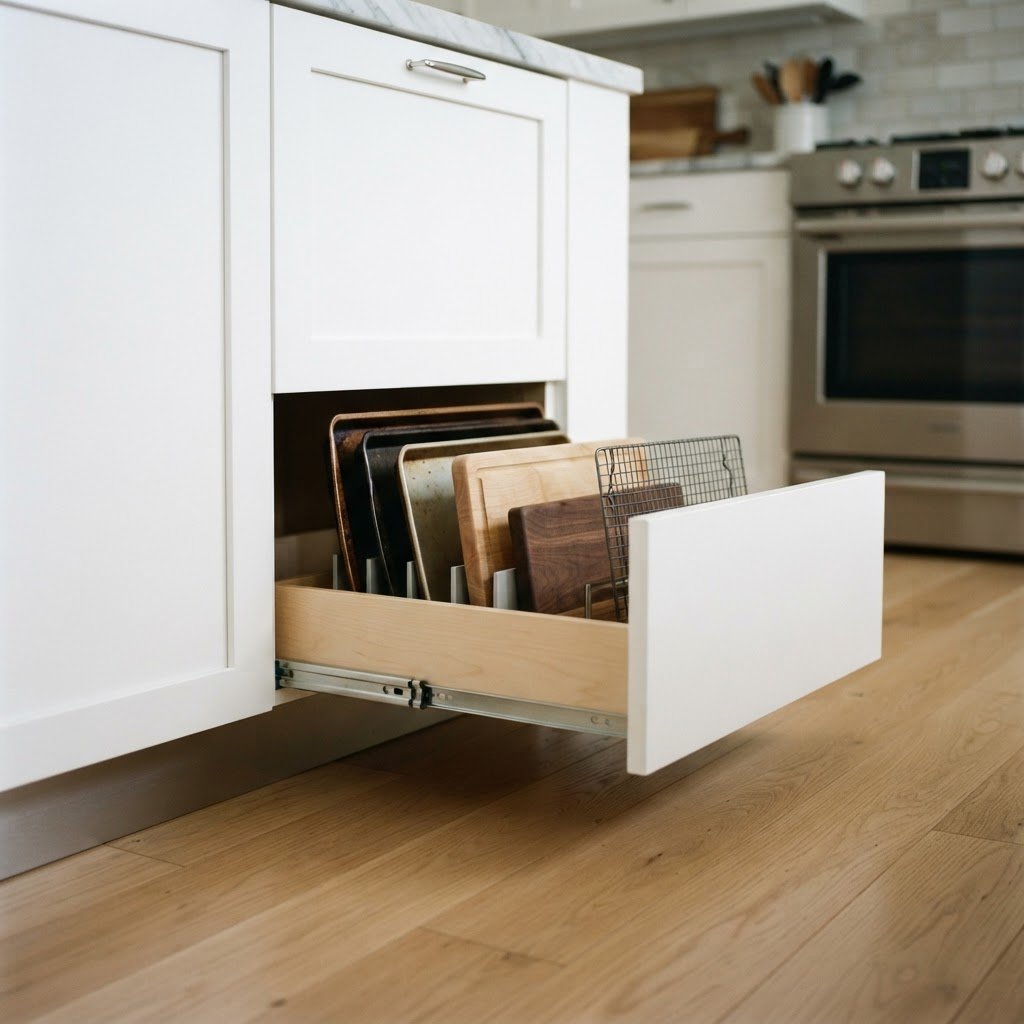
Living in a home with a compact kitchen often feels like a constant battle for square footage. Every inch counts when you are trying to find a home for your blender, extra platters, or seasonal baking supplies. One of the most overlooked areas for increasing your capacity is the space directly beneath your base cabinets. Implementing a kickboard drawer or other hidden storage hacks for compact kitchens can reveal an entirely new storage layer that you never knew you had. By utilizing the empty space between the floor and the base cabinet carcass, you can create a sleek, functional solution that remains invisible until you need it.
Understanding the Potential of Toe Kick Spaces
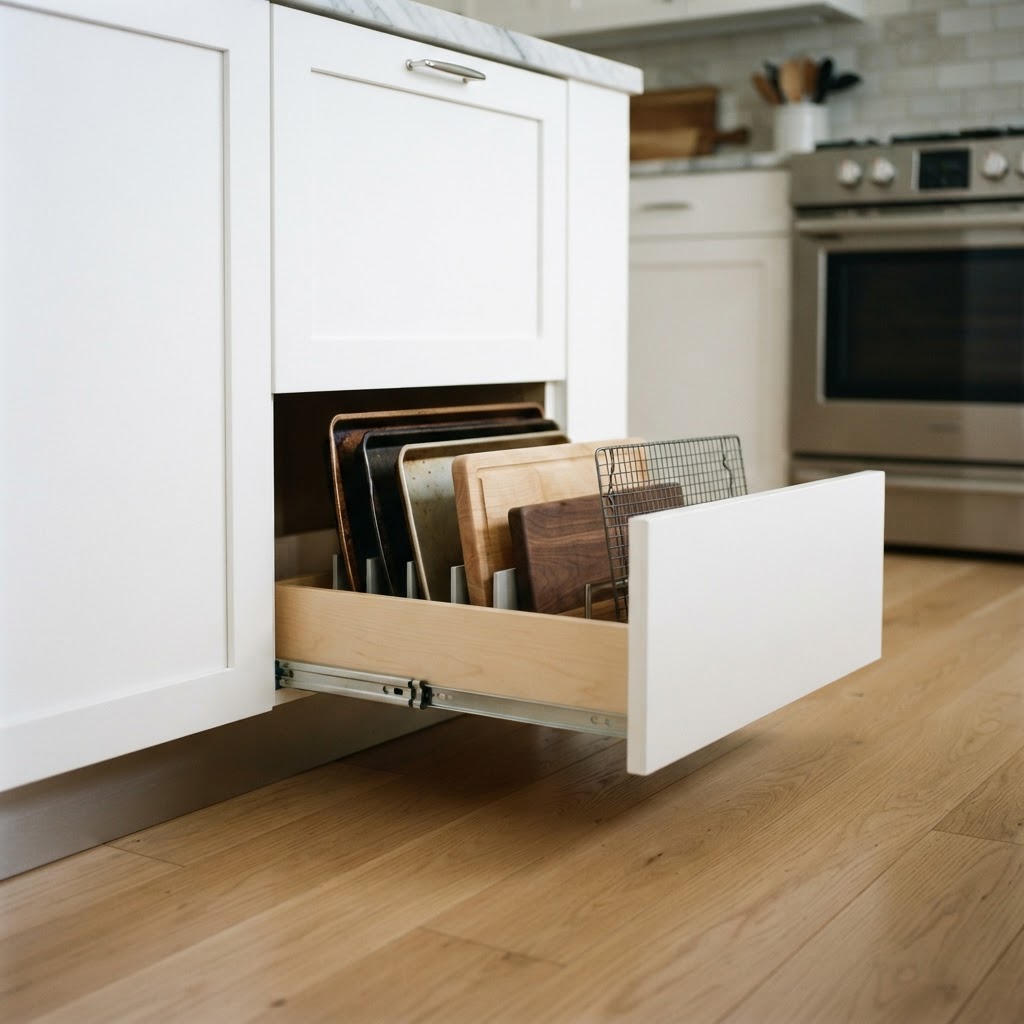
Most people view the toe kick as a purely structural necessity. It provides the recessed space required to stand comfortably at your counter without your feet hitting the cabinets. However, this void, typically measuring three to four inches in height, is a goldmine for hidden storage hacks. Because it is located at the lowest point of your kitchen, it is perfect for items that you do not need every single day.
Why Utilize the Kickboard Area?
Maximizing small kitchen organization requires thinking vertically and horizontally in ways that defy standard design. When you install a custom drawer in this space, you are essentially creating “bonus” square footage. This area is ideal for flat items that are notoriously difficult to store elsewhere. Think about thin baking sheets, cutting boards, shallow pans, or even pet food bowls that can slide out on a rail. By shifting these bulky, flat items into a kickboard drawer, you free up valuable real estate in your primary cabinets for frequently used tools.
Designing Your Custom Kickboard Drawers
When planning your renovation, you should consider the structural integrity of your base cabinets. Most base cabinets have a recessed area, but it is not always a void; sometimes it is filled with heavy support framing. Before you commit to this project, pull off a piece of your existing kickboard to see what is behind it. If you have an open void, you have a blank canvas to work with. If you have solid support blocking, you may need a carpenter to modify the cabinet structure slightly without compromising the weight capacity of your countertops.
Material Selection and Finish
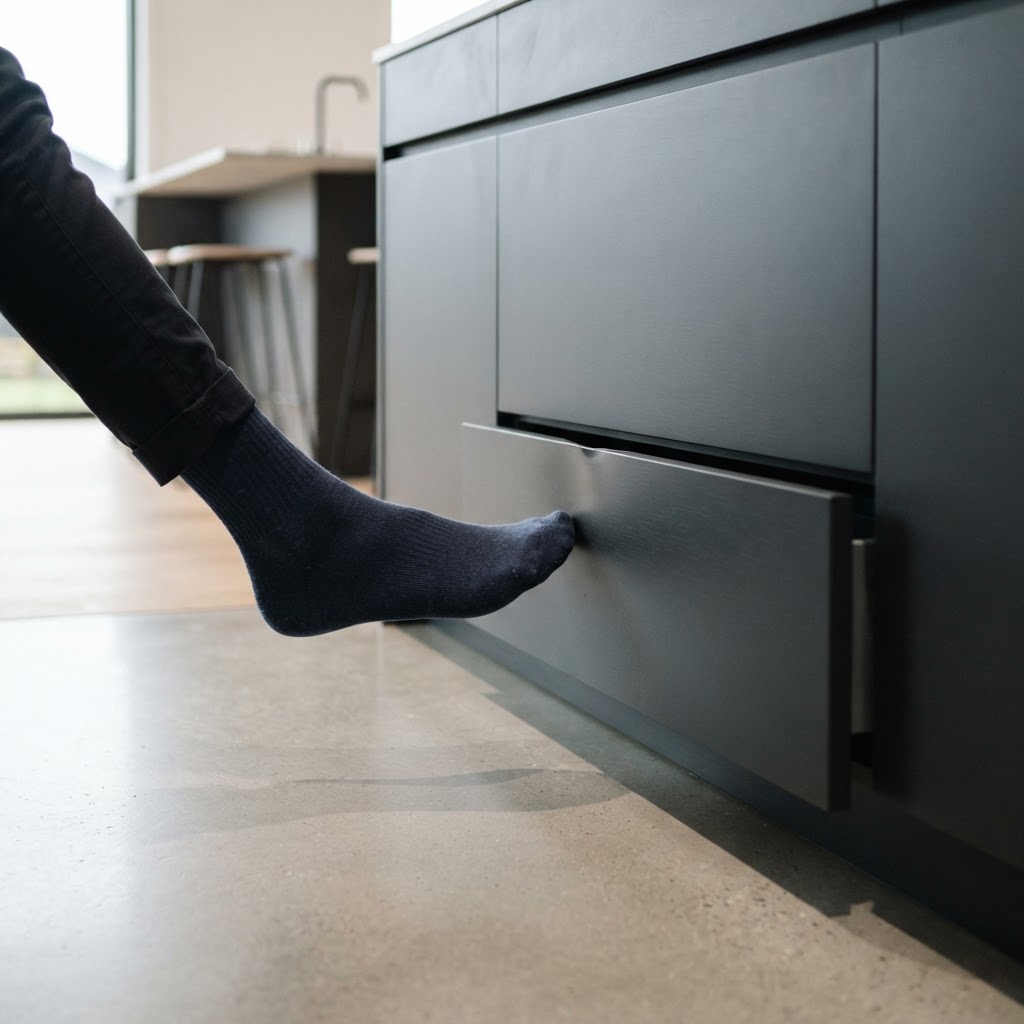
To ensure your hidden storage looks like an intentional design choice rather than an afterthought, you must match the finish of your kickboard drawer face to your existing cabinetry. Using the same material creates a seamless, built-in aesthetic. If your kitchen features a contemporary style, a push-to-open mechanism works beautifully. This allows you to nudge the drawer with your toe to release it, keeping the kitchen profile clean and handle-free.
Strategic Uses for Your Hidden Storage
Once your storage is installed, the key to success is organization. Since the drawers are low to the ground, they are naturally suited for specific types of inventory. Focus on items that have a low profile but a large footprint. Here is a quick list of what works best in these narrow, horizontal spaces:
- Baking sheets, pizza stones, and large flat serving platters.
- Heavy cutting boards that are otherwise difficult to stack.
- A shallow pull-out platform for a portable step stool, perfect for accessing higher cabinets.
- Trays or mats that you only use for seasonal entertaining.
- Thin, long items like rolling pins or even a collection of table linens.
Integrating Hidden Storage Hacks for Compact Kitchens
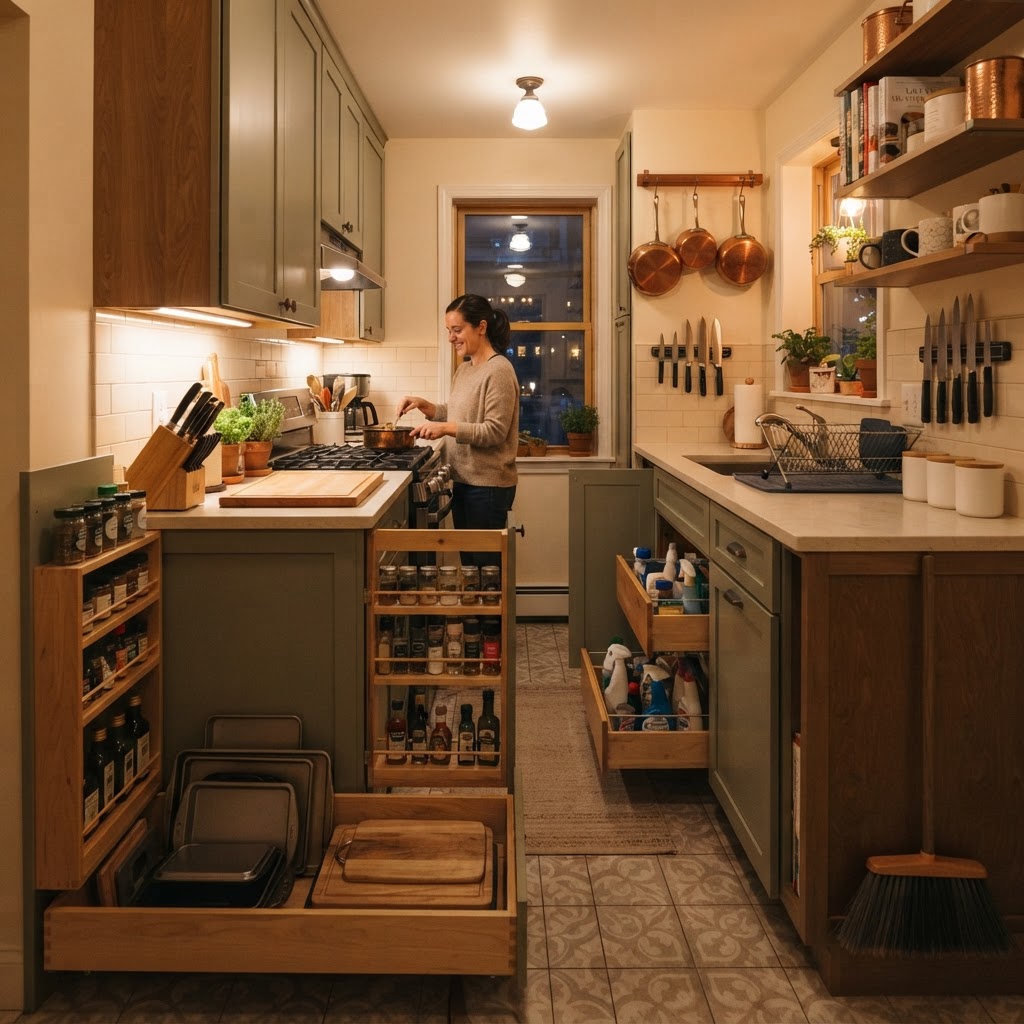
Beyond just the kickboard, there are several other hidden storage hacks for compact kitchens that can work in harmony with your new toe-kick drawers. The goal is to maximize the “hidden” utility of the entire room. For instance, consider using the very narrow gaps between appliances and cabinets. These gaps are often filled with filler strips, but they can be replaced with pull-out spice racks or broom closets.
The Power of Vertical Dividers
Often, deep cabinets lead to chaos. By installing vertical dividers, you can turn a cavernous, messy cupboard into a highly efficient filing system for your cookware. When combined with the low-profile storage of a kickboard drawer, you start to create a tiered system where everything has a designated place. This multi-layered approach is the secret weapon for professional organizers who manage tiny city apartments.
Troubleshooting Common Installation Hurdles
While adding storage to the kickboard seems straightforward, you might run into obstacles. The most common issue is the presence of electrical wiring or plumbing that sometimes runs through the toe-kick void of a sink cabinet. Always inspect the area for utilities before you begin cutting into the floor or frame.
Avoiding Moisture Damage
Kitchens are wet environments, and the floor level is the most vulnerable area for spills and mopping water. Ensure your kickboard drawers are built with water-resistant materials or are slightly elevated. Using high-quality drawer slides that are rated for the environment will also prevent sticking or rust, ensuring your hidden storage remains functional for years to come.
Maintenance and Long-Term Organization
Any storage system is only as good as your commitment to maintaining it. Because these drawers are tucked away, they can easily become a “junk drawer” where miscellaneous items get tossed. Periodically clear them out and re-evaluate what you are storing. If you find yourself rarely using the items in your kickboard drawer, it might be time to donate them or move them to long-term storage, keeping the space reserved for items that truly deserve the convenience.
Enhancing Functionality with Smart Accessories
If you want to take your organization to the next level, incorporate drawer inserts specifically designed for flat storage. Non-slip mats are essential inside a kickboard drawer so that your pans and trays do not slide around every time you open or close the drawer. You might also consider using magnetic strips or custom peg systems if you plan to store small, awkward items like specialized cutlery or gadgets. The goal is to minimize “rattle” and maximize stability.
Conclusion: Elevating Your Compact Kitchen
Mastering the art of storage in a small space requires creativity and a willingness to look in places others ignore. By implementing a kickboard drawer and other hidden storage hacks, you are not just organizing your items; you are fundamentally improving the flow and functionality of your kitchen. Don’t let your square footage limitations dictate your cooking experience—start by reclaiming the space beneath your feet today. Begin by inspecting your current base cabinets and identifying which sections have the most potential for a low-profile upgrade. Whether you choose to tackle a DIY project or bring in a professional carpenter, the investment in hidden storage will pay dividends in peace of mind and convenience every single time you cook.

Leave a Reply