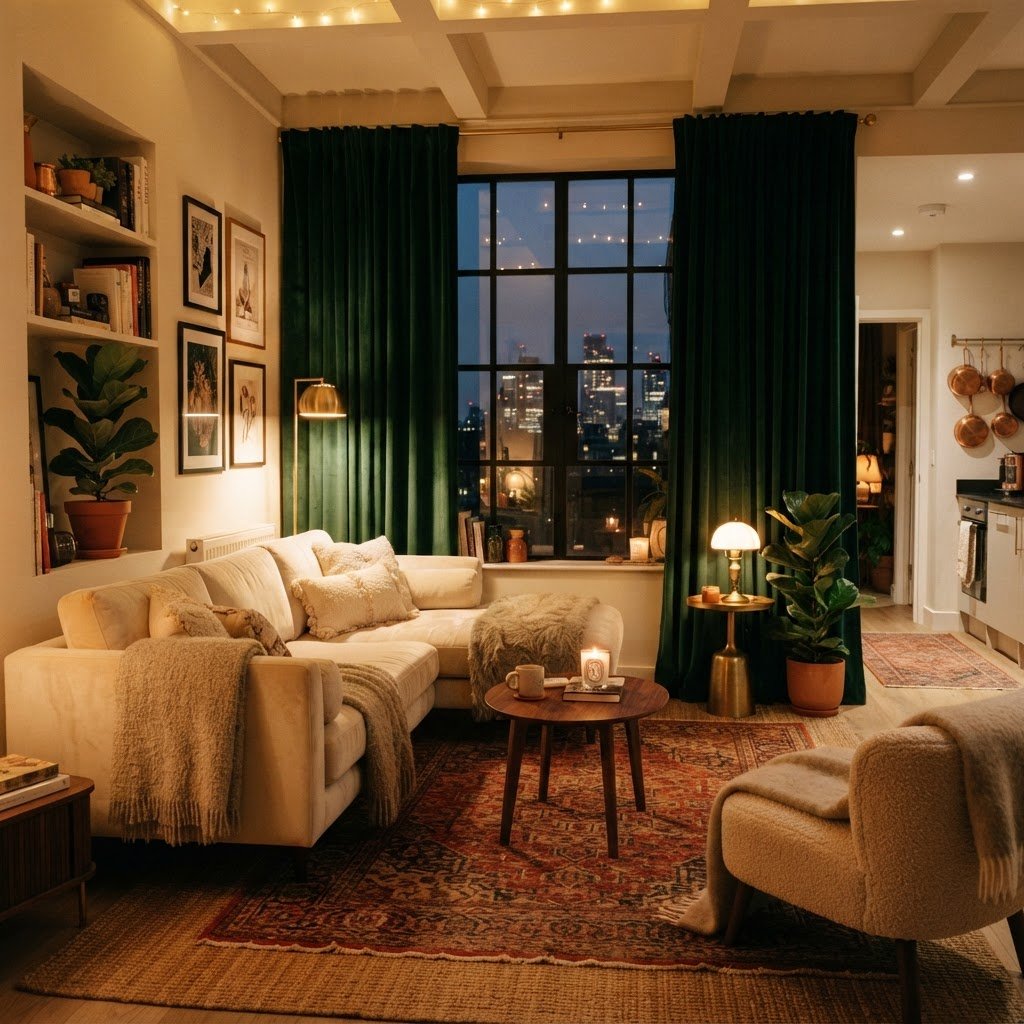
Fastest No-Drill Ways to Make a Tiny Apartment Look Expensive
To make a tiny apartment look expensive without drilling holes, focus on high-impact, non-damaging upgrades like floor-to-ceiling drapery, layered warm-toned lighting, and oversized area rugs. These strategies create visual depth and a sense of architectural intention that masks generic builder-grade finishes while staying entirely within typical rental lease agreements.
The Power of Statement Lighting and Ambiance
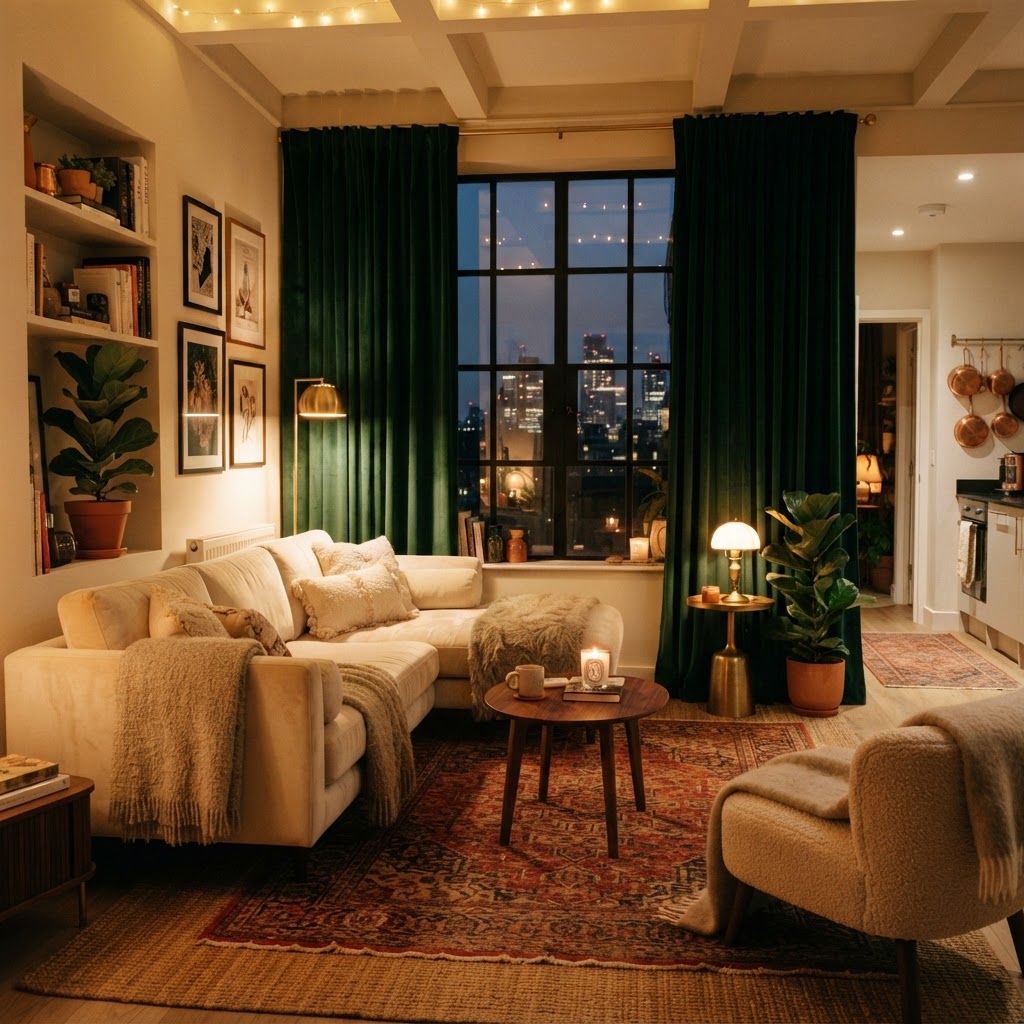
One of the most effective ways to elevate a space is through lighting, as the standard overhead fixture in most rentals is notoriously unflattering. Since you cannot replace the electrical hardwiring without a landlord’s approval, focus on layering independent light sources to create a warm, golden glow that hides imperfections and adds architectural interest. Invest in sculptural floor lamps or oversized table lamps with fabric shades that act as pieces of art themselves. Studies show that using warm-toned lighting (between 2700K and 3000K) can make a small room feel significantly more inviting and high-end than harsh 5000K daylight bulbs.
Creating Depth Through Layered Lighting
Avoid relying on that single central light bulb. Instead, place lamps at three different heights around the room: one on a side table, one on a console, and one tall floor lamp near a dark corner. This technique mimics professional lighting design found in luxury hotels, drawing the eyes away from the floor and toward curated decor pieces.
Utilizing smart bulbs with warm-toned settings can further simulate the appearance of custom-installed recessed lighting. When the lighting is soft and ambient, the mind perceives the space as larger and more expensive than it truly is, masking the generic nature of standard apartment finishes.
Elevating Walls Without Permanent Hardware
Walls are the largest surface area in your home, and they are usually the biggest culprit in making a space feel cheap. Since you cannot hang heavy shelves or paint without permission, turn to command strips and tension systems to create a custom gallery wall that adds personality and height. The trick is to use uniform, high-quality frames in a single finish, such as matte gold or black, to create a cohesive ‘built-in’ look that feels curated rather than cluttered. According to interior design standards, keeping gallery frames spaced exactly 2 to 3 inches apart provides the most professional aesthetic.
The Art of Command Strips and Removable Wallpaper
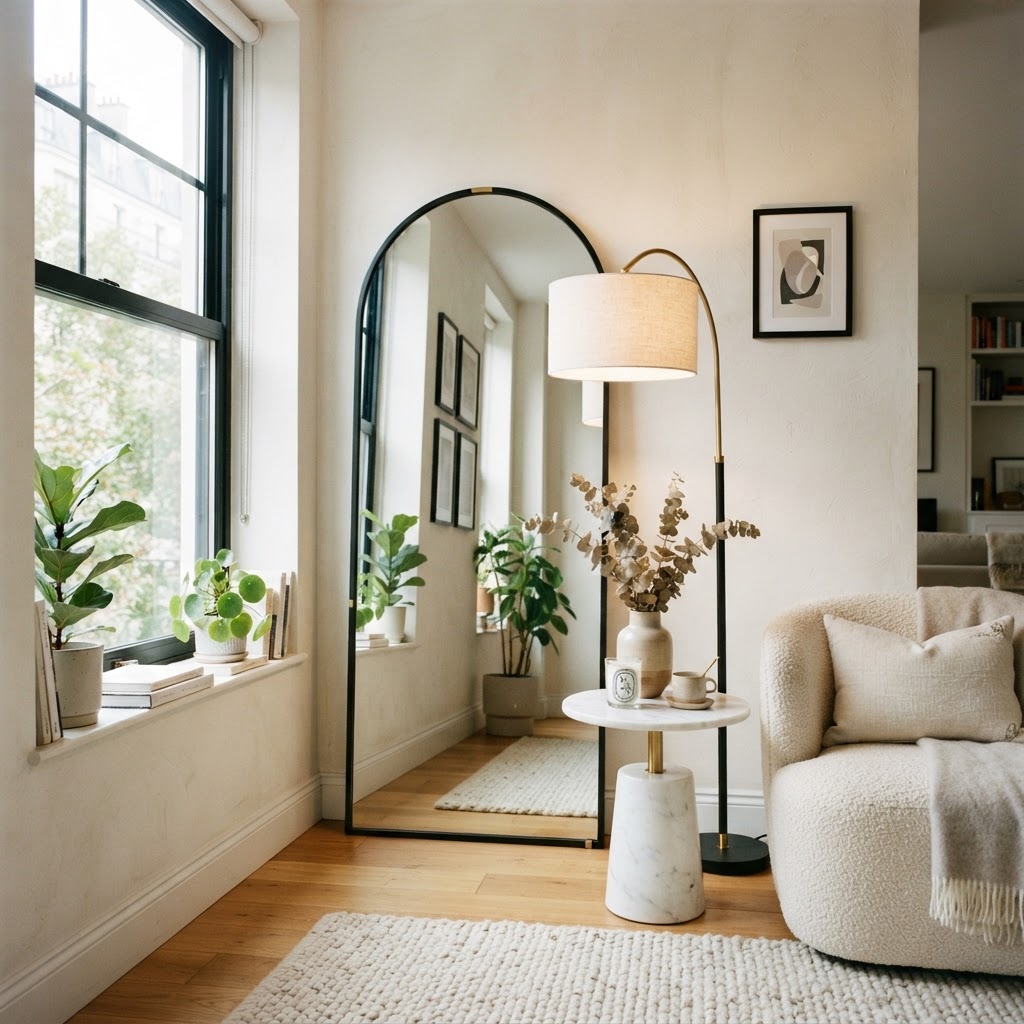
If your apartment feels sterile, consider removable wallpaper or large-scale wall decals. These options provide the drama of a designer accent wall without the need for glue or paint. Pair these with large mirrors that reach near the ceiling; this trick maximizes natural light and creates the illusion of additional depth, which is the hallmark of a luxury small-space design.
Textile Mastery and High-End Fabrics
Nothing screams ‘budget’ like cheap, thin curtains or generic polyester throw pillows. To make your apartment feel expensive, you must curate a palette of rich textures like linen, velvet, faux mohair, and silk. Replace standard window blinds with long, floor-to-ceiling drapery panels that use tension rods installed inside the window frame or higher up on the wall using heavy-duty adhesive hooks. By hanging curtains at the ceiling line rather than the window frame, you can visually increase room height by up to 12 inches.
When choosing curtains, go for a floor-grazing length, as short curtains break up the vertical lines of a room and make it look smaller. The goal is to create a seamless column of fabric that adds drama and softness. Pair these with heavy throw blankets tossed casually over the sofa arm, which signals comfort and curated luxury to anyone entering the space.
The Illusion of Built-in Furniture
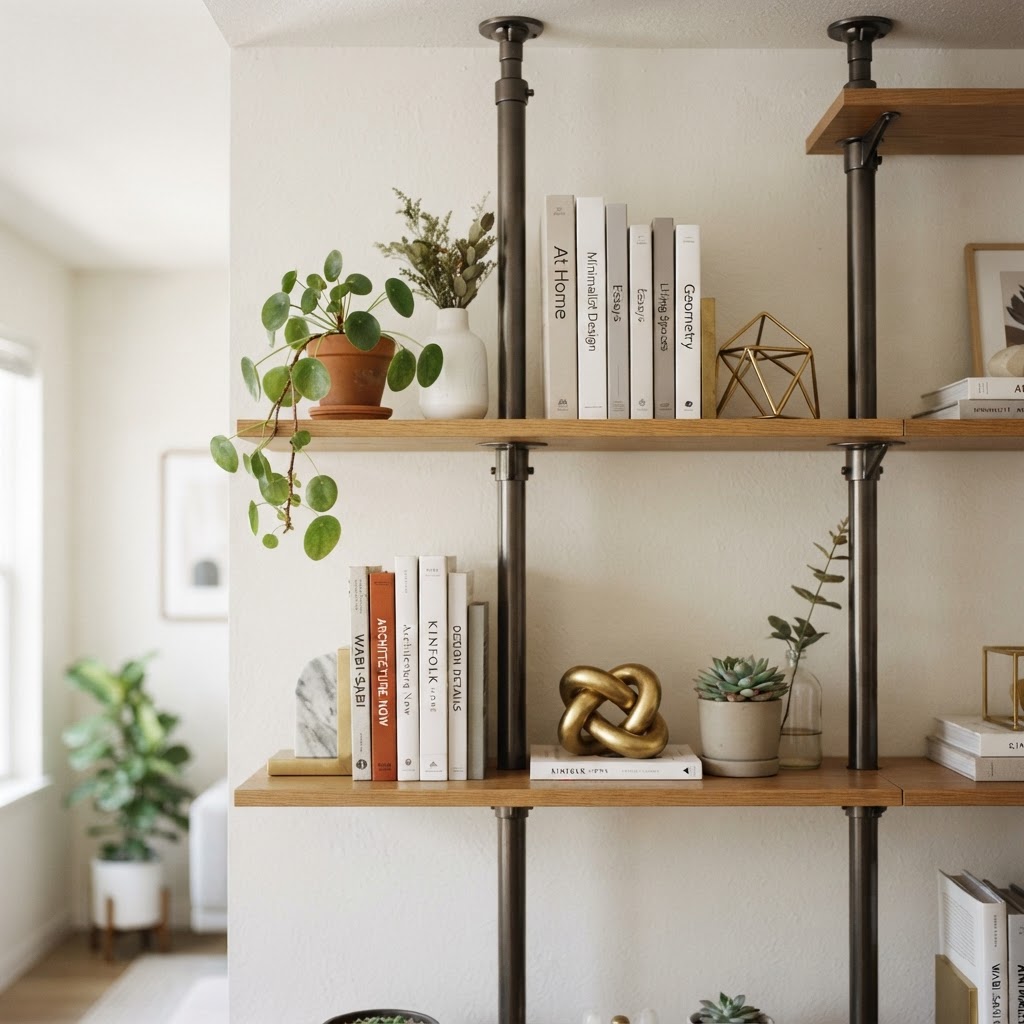
In tiny apartments, furniture that looks like it belongs to the house feels more expensive than pieces that look like they were dragged in from a big-box store. Look for ‘no-drill’ shelving units that use tension to stay in place, such as floor-to-ceiling pole systems that provide an instant library look. These pieces create the impression of custom carpentry, which is a classic high-end interior design feature. Aim for furniture with elevated legs; seeing the floor underneath the sofa or cabinet creates an open, airy feeling that is statistically proven to make tight spaces feel more expensive.
Styling Open Shelving for a Boutique Look
If you use a tension-mounted shelf, do not just fill it with books. Treat the shelves like a boutique display by alternating stacks of books with single sculptural objects, plants, and minimal glassware. Negative space is your best friend here; leaving parts of the shelf empty makes the entire arrangement look intentional and high-end rather than just a storage solution.
Floor Covering Strategies for Small Spaces
Rental flooring is often the most dated part of an apartment, and you can easily hide it with oversized rugs. Do not settle for small, postage-stamp-sized rugs that float in the middle of a room; instead, choose one large rug that anchors the entire seating area, ideally tucking under the front legs of your sofa and chairs. This creates a cohesive ‘island’ effect that defines the living zone and makes the room feel much larger than it actually is. Rugs covering at least 70% of the floor area in a room are standard for luxury interior design layouts.
For a truly expensive feel, consider layering rugs. Place a large, neutral jute or sisal rug down first for texture, then layer a smaller, patterned vintage-style rug on top. This depth of layering adds a level of sophistication typically seen in luxury homes and provides a cozy, sound-dampened feeling that standard vinyl or laminate flooring lacks.
Small Details That Create Big Impact
Sometimes the fastest no-drill ways to make a tiny apartment look expensive involve the smallest changes. Swap out standard, builder-grade outlet covers with sleek, modern versions in metal or matte black, which is a five-minute task that immediately upgrades the finish of the room. Additionally, curate your coffee table with a decorative tray that holds a candle, a stack of design books, and a small vase of fresh flowers.
Curating Your Sensory Experience
Luxury is not just visual; it is also about the scent and atmosphere of your home. Using a high-quality reed diffuser or a signature candle elevates the space as soon as someone walks through the door. Keeping your surfaces clear of clutter and your tech cables hidden using cable management clips (which use non-damaging adhesives) will ensure the ‘expensive’ vibe remains intact throughout the day.
FAQ
Q: What is the cheapest way to make a rental look high-end?
Installing floor-to-ceiling curtains and upgrading your lighting to warm, layered sources are the most cost-effective methods. These two changes drastically shift the atmosphere and perception of scale in a room for under $150 total.
Q: Can I hang things without a drill in a rental?
Yes, high-strength command adhesive strips, tension rods, and over-the-door hooks are excellent, non-damaging alternatives. Always verify weight limits on adhesive products before hanging heavy mirrors or gallery frames.
Q: How do I hide ugly rental floors?
Use large area rugs that cover the majority of the visible flooring to anchor your furniture. Layering a smaller vintage rug over a larger jute or sisal base adds significant visual depth and texture.
Q: Does lighting actually make a small space look more expensive?
Absolutely, lighting is the primary tool interior designers use to define mood and architectural style. By replacing cold, builder-grade bulbs with warm options and utilizing multiple lamps, you create a sense of professional design.
Q: How do I store items without drilling shelves?
Invest in floor-to-ceiling tension-pole shelving systems or modular, freestanding furniture units. These options provide the look of custom built-ins without any structural impact on the walls or ceiling.

Leave a Reply