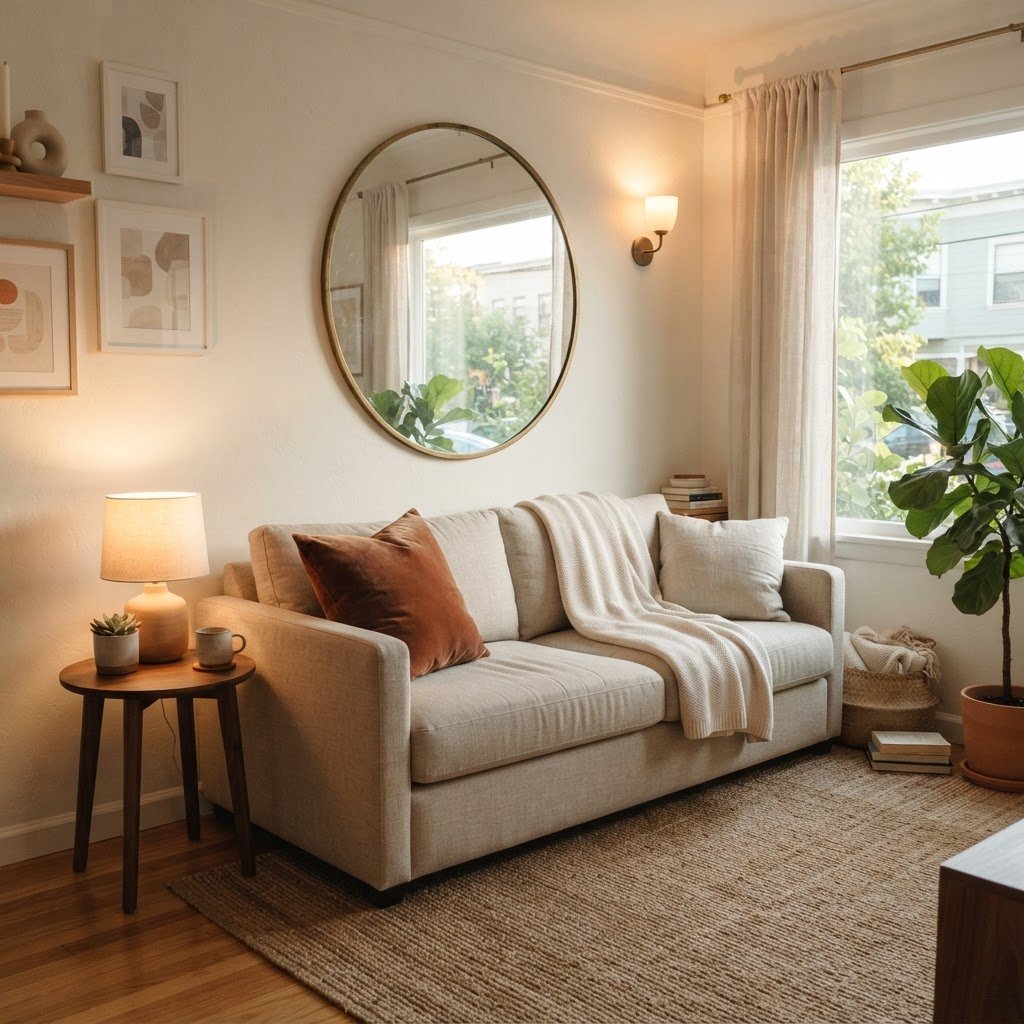
You can transform a tiny space without power tools or high costs by focusing on lighting, vertical storage, and reflective surfaces to maximize perceived square footage. Effective upgrades under $25 include switching to warm-toned LED bulbs, using adhesive cord management clips, incorporating peel-and-stick mirrors, and layering textiles to create depth and luxury.
Rethink Your Lighting Atmosphere
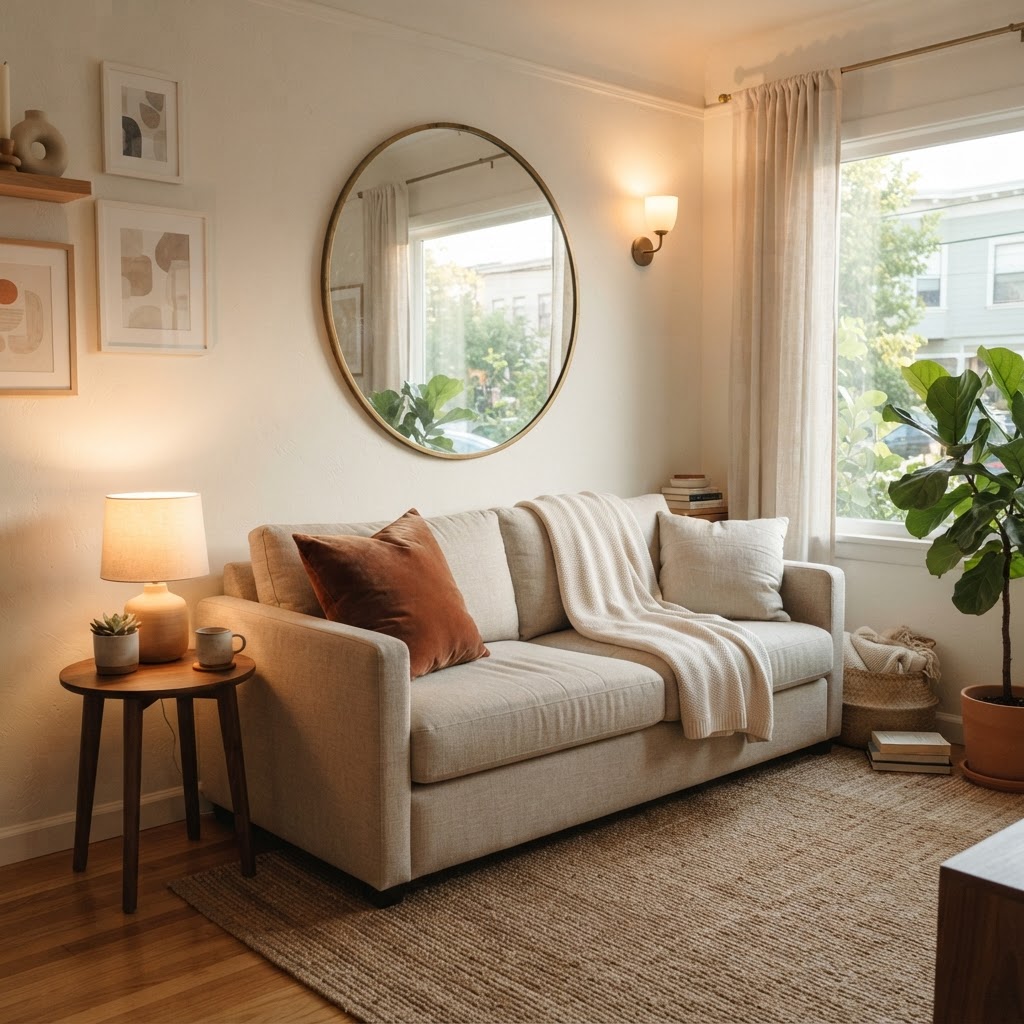
Lighting is the most significant factor in interior design, especially in small rooms where natural light is limited. You can bypass expensive electrical work by replacing standard, harsh light bulbs with warm-toned 2700K-3000K LED bulbs, which cost roughly $3 to $5 each and instantly create a soft, inviting atmosphere. These bulbs are energy efficient, lasting up to 25,000 hours, which adds long-term value beyond the initial $25 budget.
Adding battery-operated puck lights under kitchen cabinets or inside bookshelves serves as a professional-grade hack for illuminating dark corners. These adhesive-backed lights typically retail for $15-$20 for a multi-pack and require zero hardware. By highlighting these deep zones, you visually push walls back, increasing the perceived depth of your room. Properly illuminated surfaces prevent the “cramped” feeling often associated with shadows in small footprints.
The Power of Cord Management
Clutter acts as the primary antagonist to a designer-curated aesthetic, and visual noise from tangled power cords makes small rooms feel chaotic. You can utilize adhesive cable clips, typically sold for under $8 for a pack of 20, to route wires along baseboards or behind furniture legs. This specific organization technique clears the floor plane, allowing the eye to travel across the entire space uninterrupted. Maintaining clear floor lines is a fundamental architectural principle that makes rooms appear larger than their actual square footage.
Elevate Your Hardware and Accents
Refreshing dated hardware is a high-impact, low-cost upgrade that requires only a screwdriver or, in some cases, nothing but adhesive. If you have cabinet pulls, you can replace them with gold, matte black, or brushed nickel options found on marketplaces for roughly $2 to $4 per handle. This simple swap updates a kitchen or bathroom style instantly without the need for a professional renovation budget.
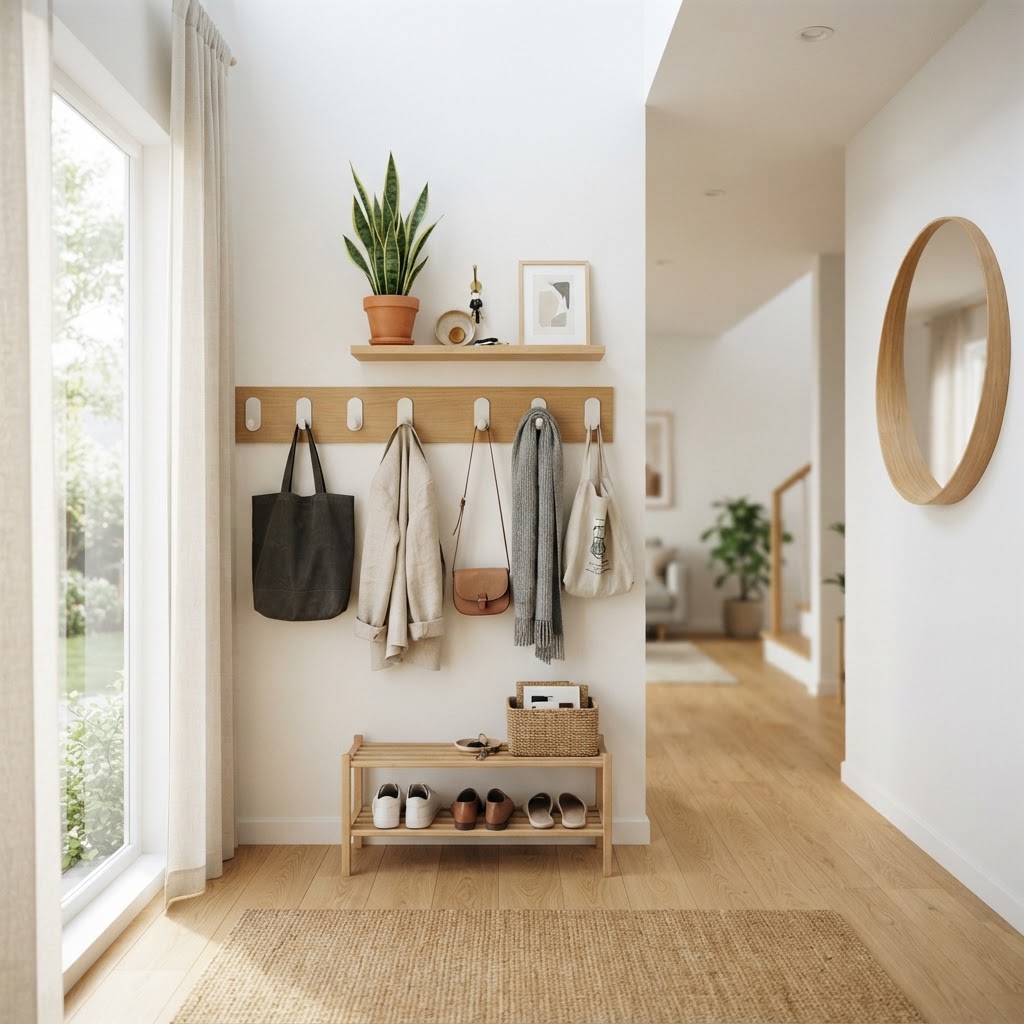
For rental-friendly spaces, utilize peel-and-stick hooks, which support up to 5-10 pounds each, to clear floor space and organize belongings. Installing a row of uniform hooks near an entryway provides a dedicated landing zone for bags and coats, which prevents surface clutter. Choosing a consistent finish—such as matte black or polished chrome—creates a high-end, “built-in” aesthetic that feels intentional. By keeping surfaces clear of everyday items, you reinforce the feeling of a curated, rather than cramped, environment.
Create Illusions with Reflective Surfaces
Designers have utilized mirrors for centuries to expand spatial perception by doubling available light and depth. You do not need to mount heavy, permanent hardware; lightweight, frameless adhesive mirrors are available in various shapes for under $25 and can be applied directly to drywall or door surfaces.
Strategic placement is the secret to success: mounting a mirror directly across from a window allows it to catch natural light and bounce it deep into the center of the room. This technique effectively mimics the effect of an extra window, significantly brightening dark corners. For a bolder, artistic approach, use adhesive mirror tiles to construct a geometric pattern on a focal wall. This creates a striking, modern focal point that reflects light while remaining entirely removable, making it an ideal choice for tenants looking to enhance their living area without violating lease agreements.
Refresh Your Textiles and Soft Furnishings
Textiles serve as the most effective tool for injecting high-end luxury into a compact living space through layered textures. Purchasing pillow covers in rich fabrics like velvet, heavy cotton, or linen for $10 to $15 each allows you to upgrade existing cushions without buying new inserts. By adhering to a tight, neutral color palette, you foster visual harmony that makes a small room feel cohesive and professional.
Consider adding a decorative throw blanket, such as a chunky knit or faux fur, which adds essential tactile contrast. These blankets are widely available at discount retailers for $15 to $25 and can be draped over an armchair to soften hard, boxy room lines. Layering these soft textures adds depth to a room’s composition, moving the overall aesthetic from basic, builder-grade housing to a boutique-style sanctuary.
Curate Your Display Surfaces
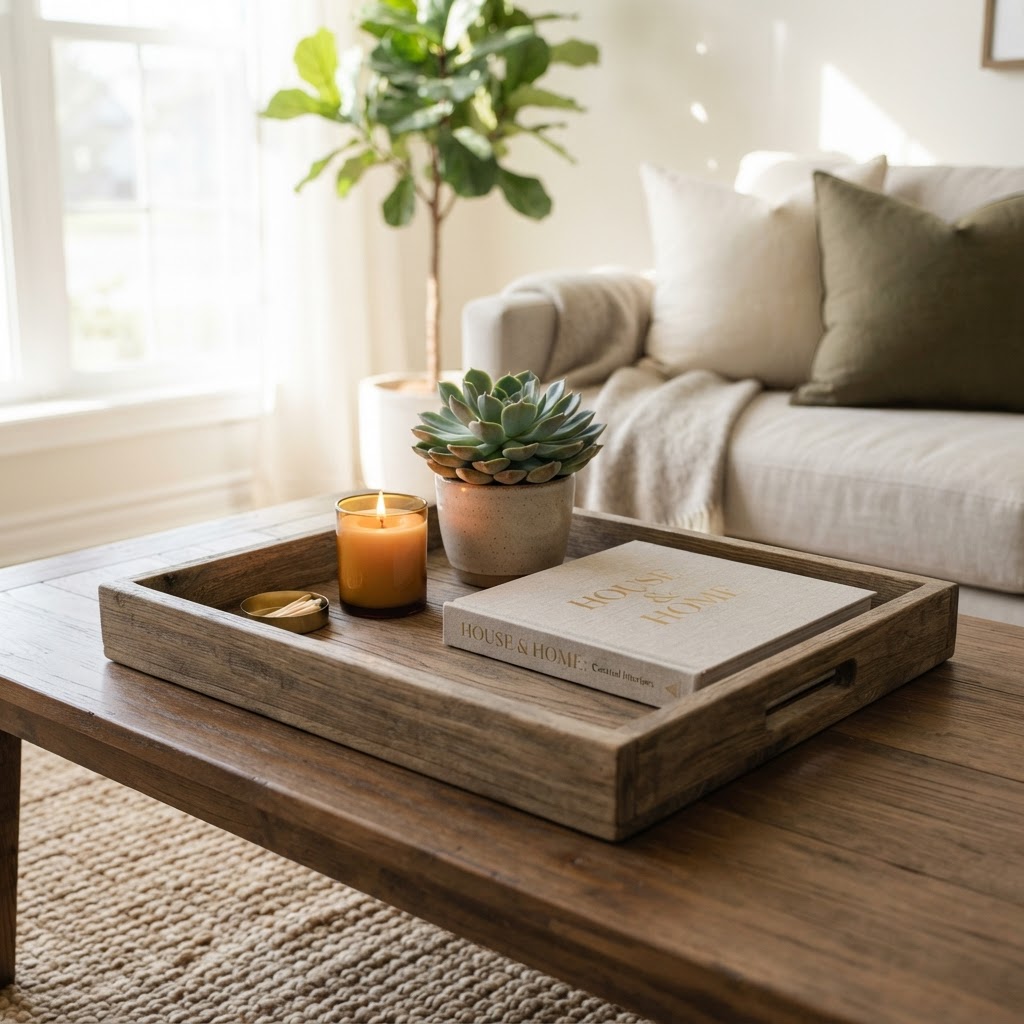
In a tiny home, surfaces like coffee tables and nightstands must be styled with intention to avoid creating a sense of clutter. Use a decorative tray—often found for $5 to $15 at thrift stores—to act as a boundary for your items, transforming a pile of objects into a styled “vignette.”
Success in curation relies on the “rule of three,” which involves grouping items in odd numbers to create visual interest. For instance, pair a 6-inch candle with a 3-inch succulent and a book to achieve a balanced, professional arrangement. You should always prioritize varying the heights and textures of your chosen objects to keep the display dynamic. By treating your surfaces as gallery spaces rather than storage areas, you significantly elevate the sophistication of your home.
Utilize Vertical Space for Decor
Vertical space is an underutilized asset in small apartments that, when addressed, draws the eye upward and heightens the perception of ceiling reach. Adhesive wall strips or command-style floating ledges can hold lightweight art and decor without requiring a drill. Creating a gallery wall of art using 8×10 or 11×14 prints is an affordable way to add personality; public domain art printed locally and framed in thrifted frames costs less than $20 per piece.
When hanging art, choose a larger, single-statement piece rather than numerous small frames to keep the space looking clean and organized. A large-scale piece provides a focal point that anchors the room, whereas too many small items can make a wall feel messy. This “less is more” strategy is a hallmark of designer homes and remains one of the most cost-effective ways to change the mood of a room.
Introduce Indoor Greenery
Plants introduce organic, irregular shapes that soften the rigid, geometric lines of small, modern rooms. Low-maintenance varieties like Pothos, Snake Plants, or Spider Plants thrive in varied indoor light and typically cost between $8 and $15 at local garden centers. These plants offer a pop of natural color that breathes life into the square footage.
For elevated styling, use a suction-cup wall mount or an adhesive hook to hang a planter, keeping your valuable floor space open. Using woven baskets or clean ceramic pots further enhances the design by adding a layer of texture that harmonizes with your existing decor. A single, well-placed plant can act as a natural centerpiece, making the room feel lush, vibrant, and well-cared for.
FAQ
Q: How can I make a tiny apartment look expensive on a budget?
Focus on consistency in color and material. Use high-quality covers for existing pillows, stick to a unified metallic finish for hardware, and keep all surfaces clear of clutter to create an intentional, designer-curated aesthetic.
Q: Are adhesive hooks safe for rental wall paint?
Yes, if you choose high-quality “command-style” strips, they are designed to be removable without damaging paint or drywall. Always clean the wall surface with rubbing alcohol before application to ensure the adhesive bond is secure.
Q: What is the best way to light a small room without tools?
Replace standard light bulbs with warm-toned LEDs and add battery-operated adhesive puck lights to dim areas like bookshelves or under cabinets. This combination creates a layered lighting effect that makes the space feel larger and more sophisticated.
Q: How do I arrange decor without it looking like clutter?
Use the rule of three by grouping items in odd-numbered sets and placing them on a tray. This defines the display area, separates it from other clutter, and allows you to create a cohesive vignette that looks intentional.
Q: Where should I place a mirror in a small room?
Mount or lean your mirror directly across from a natural light source, such as a window. This placement reflects light back into the space and creates the optical illusion of added depth and room volume.

Leave a Reply