Overnight Renter-Friendly Ideas to Make Tiny Spaces Expensive
You can make a tiny rental look expensive by maximizing vertical space, replacing standard lighting with warm-tone fixtures, and layering high-quality textures. Implementing these strategic visual illusions—such as floor-to-ceiling curtains and oversized mirrors—instantly elevates the room’s perceived value while remaining fully compliant with your security deposit terms.
Rethinking Your Lighting Strategy
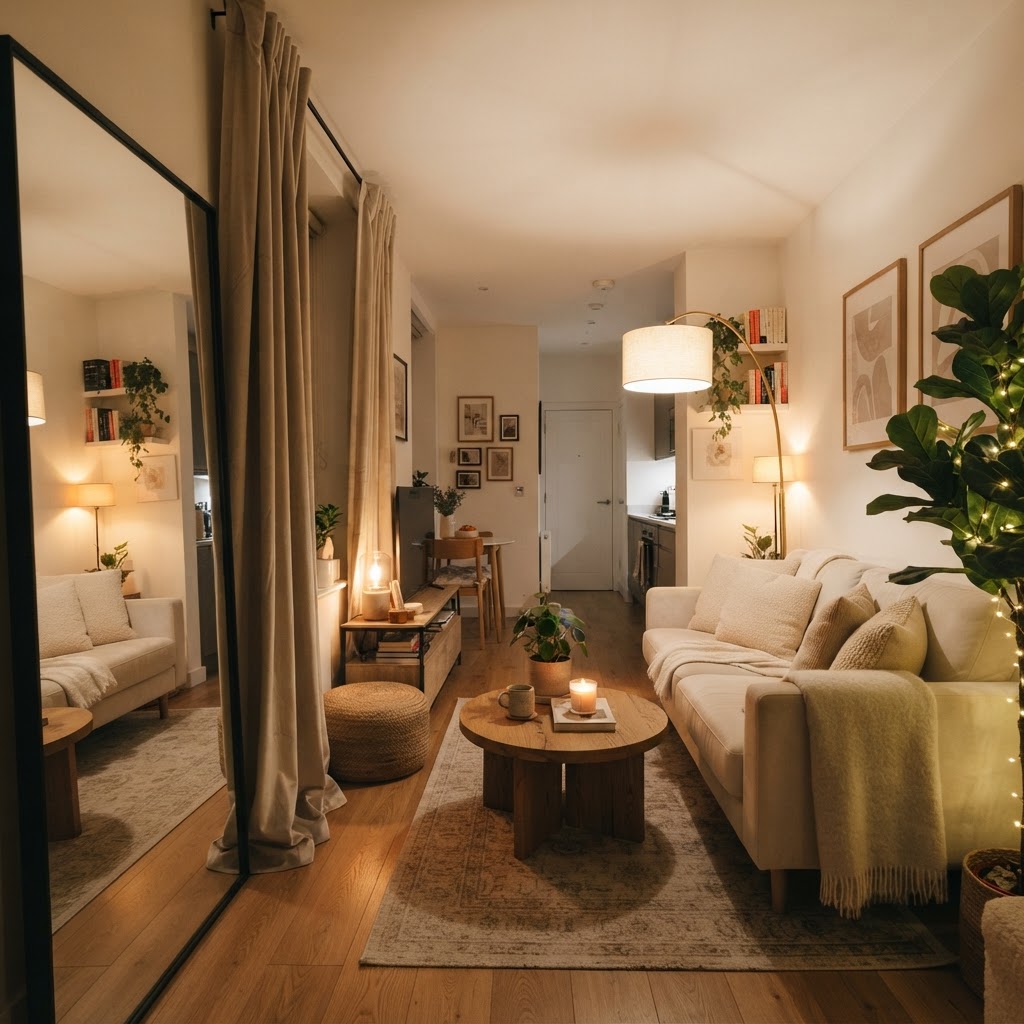
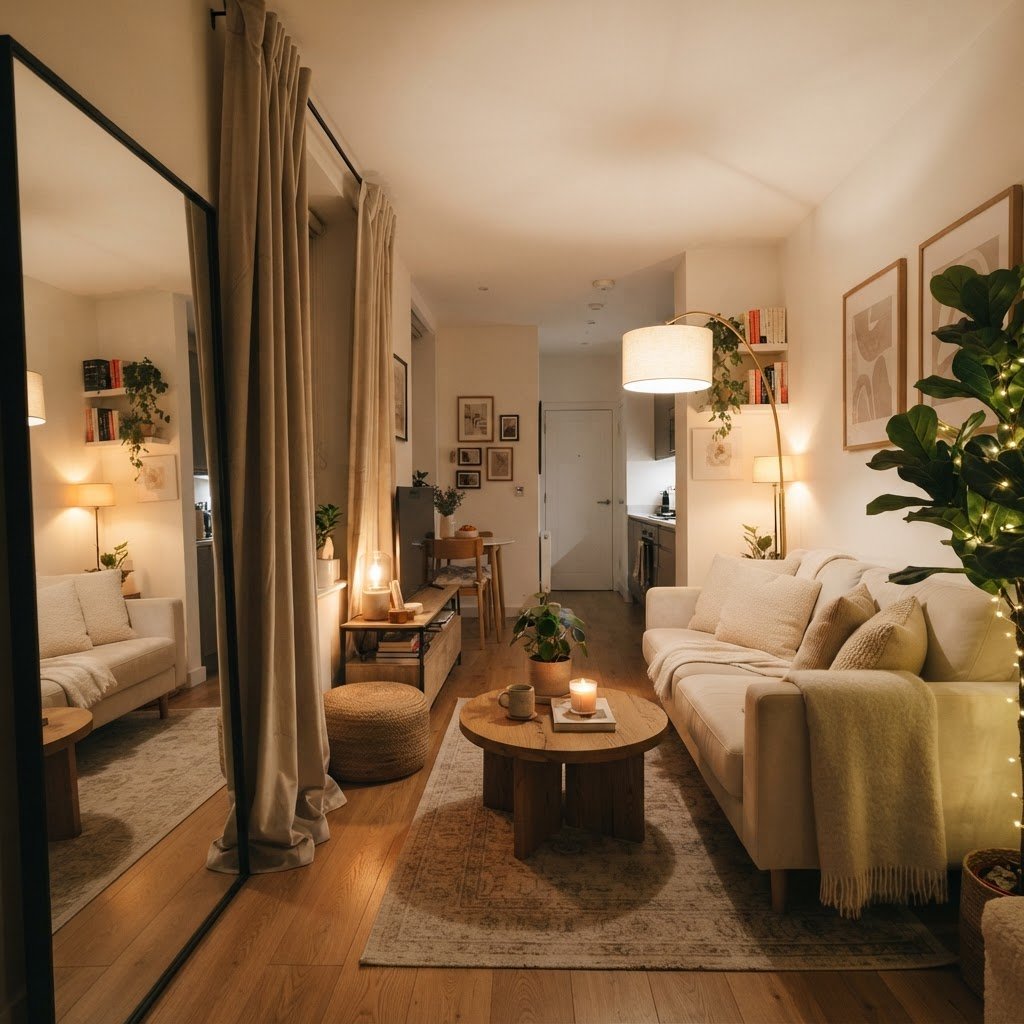
Lighting is the most underrated element of interior design, and builders often install harsh ‘boob lights’ that flatten a room’s aesthetic. To create a luxury hotel atmosphere, you must prioritize ‘warm white’ bulbs (2700K to 3000K) to eliminate the clinical, blue-tinted shadows cast by standard builder-grade lighting. Replacing basic fixtures with statement pieces is ideal, but layering portable light sources provides the most immediate impact without needing an electrician.
The Power of Floor and Table Lamps
To achieve a high-end look, incorporate at least three distinct light sources per room to create depth. Place floor lamps with sculptural, metallic silhouettes in dark corners to eliminate dead zones, and use table lamps on sideboards to create cozy pockets of light. By integrating smart plugs with dimmers, you gain precise control over your environment, mimicking the ambient control found in high-end hospitality design. Varying the height of your lighting is a professional trick that draws the eye upward, tricking the brain into perceiving higher ceilings and a more expansive floor plan. For optimal results, aim for a mix of floor, table, and task lighting, ensuring no area of the room is left in shadow. This multi-layered approach transforms a boxy apartment into a sophisticated, curated sanctuary.
Investing in Curated Window Treatments
Rental blinds are notoriously flimsy, so the fastest way to add instant architectural weight to your space is by installing high-quality, floor-length window treatments. If your rental agreement forbids removing existing blinds, mount a curtain rod just one to two inches below the ceiling line, far above the window frame. This creates a vertical line that extends the entire height of the wall, making your windows feel significantly larger and your ceilings appear taller than their actual measurement.
Selecting the Right Fabric
Choose heavy-weight fabrics like velvet, heavy linen, or thermal-backed cotton in neutral, matte tones. These materials provide a rich texture that absorbs sound and feels physically more ‘expensive’ to the touch than thin synthetic curtains. Ensure your curtains are at least 1.5 to 2 times the width of your window to allow for proper bunching, and always extend the rod 6-10 inches beyond the window frame on each side. This allows the curtains to sit against the wall rather than covering the glass, maximizing natural light intake during the day. By choosing floor-length panels that gently ‘kiss’ the floor, you avoid the cheap look of curtains that hang short, ensuring a clean, polished finish that anchors the room’s design scheme. This minor architectural update provides one of the highest returns on investment for rental aesthetics.
The Magic of Oversized Mirrors
Designers have utilized mirrors for centuries to double the perceived square footage of cramped interiors, making an oversized mirror an essential tool for any small apartment. Instead of opting for several small, cluttered wall art pieces, choose one massive, floor-length mirror with a thin, minimalist metal or brass frame. A large mirror acts as a powerful focal point that bounces light deep into the room, effectively eliminating the dark ‘boxy’ feel common in urban rental units.
Leaning a heavy, floor-length mirror against a wall adds an effortless, ‘designer loft’ aesthetic that feels curated rather than staged. If floor space is at a premium, mount a wide, landscape-oriented mirror above your sofa or console table. When placing your mirror, always angle it to reflect a window or an open doorway; this reflects light and view, effectively tricking the human brain into perceiving the space as twice as large as it actually is. For the best result, stick to metal frames in matte black, unlacquered brass, or champagne gold to maintain a high-end, contemporary look that fits most decor styles. Avoid plastic or overly intricate wooden frames, which can quickly look dated in a small setting.
Elevating Walls with Removable Finishes
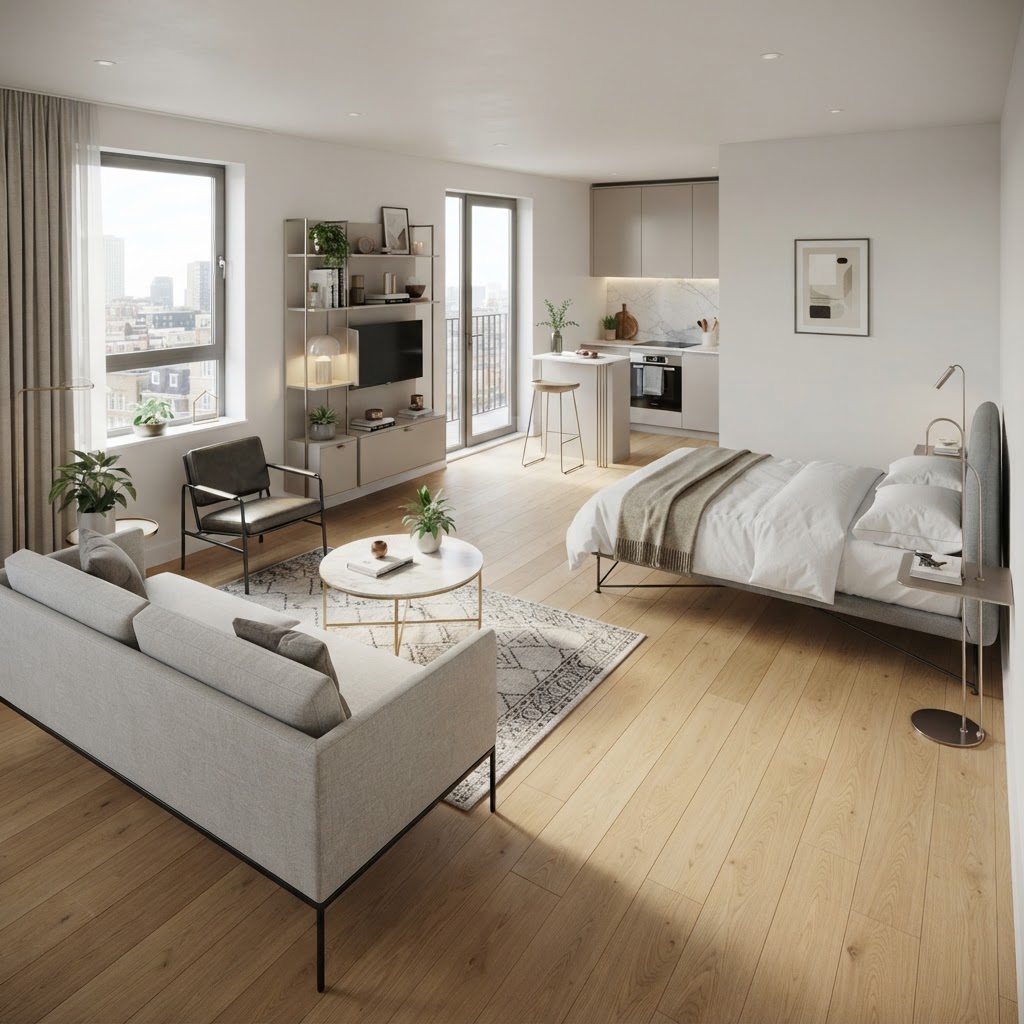
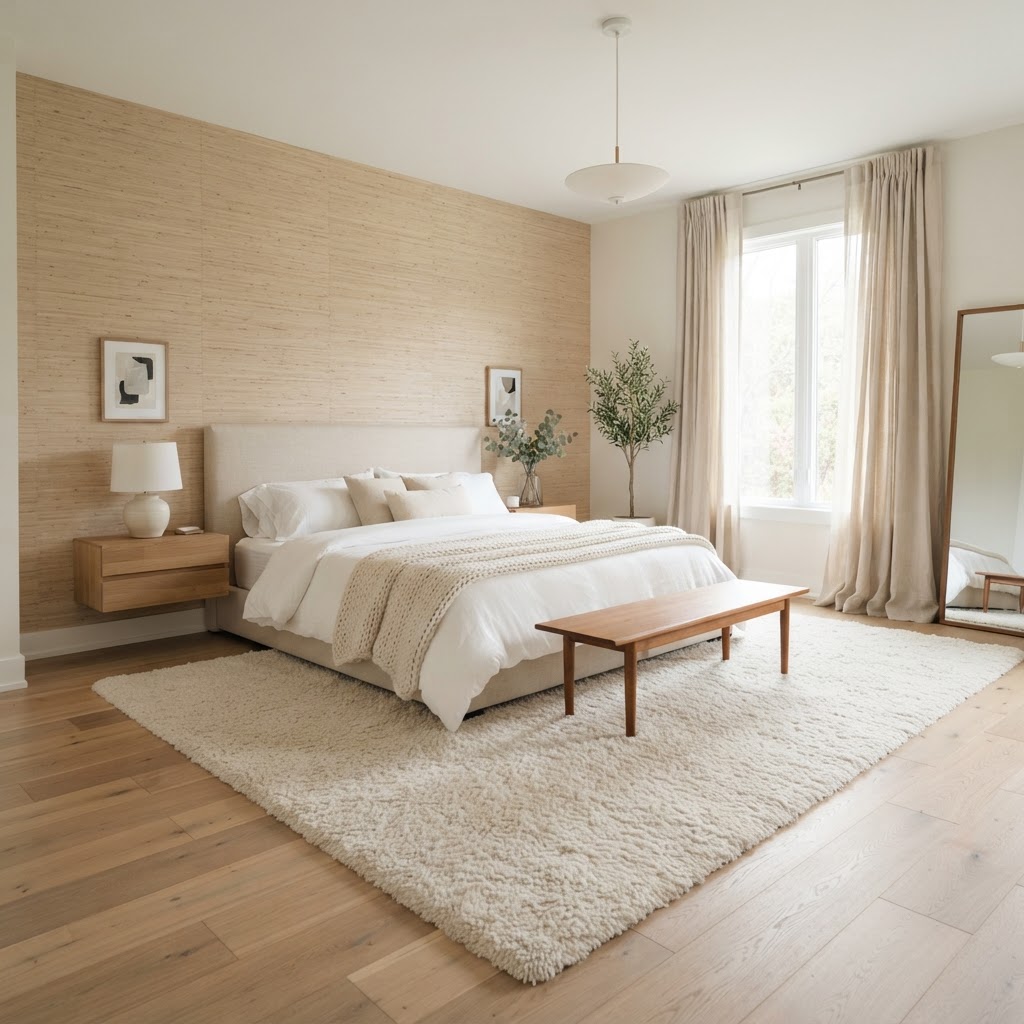
Plain white rental walls often feel sterile, but high-quality peel-and-stick wallpaper offers a non-permanent way to inject depth and personality. Modern adhesive wallpapers have evolved significantly; today’s options include textures that mimic grasscloth, raw silk, or high-end limewash finishes that are perfectly safe for standard lease agreements. Because these products are removable and leave no adhesive residue, they are the gold standard for renters who want a custom-designed look without the risk of losing a security deposit.
Strategic Accent Walls
To keep the space feeling expensive rather than cluttered, focus your efforts on a single feature wall—such as the wall behind your bed or the area behind your sofa. This creates a clearly defined ‘zone’ within your home, which is vital for studio layouts or cramped living rooms. When applying wallpaper, ensure your seams are perfectly aligned to maintain the illusion of a continuous, high-end installation. For an added touch of luxury, use large-scale, thin-profile art frames secured with damage-free command strips to add layers of interest. This technique allows you to create a gallery wall that feels intentional and custom. By avoiding ‘cookie-cutter’ wall treatments and choosing textures with depth, you transform the rental’s base architecture into a boutique, personalized space that reflects your unique style.
Styling Surfaces for a Luxe Look
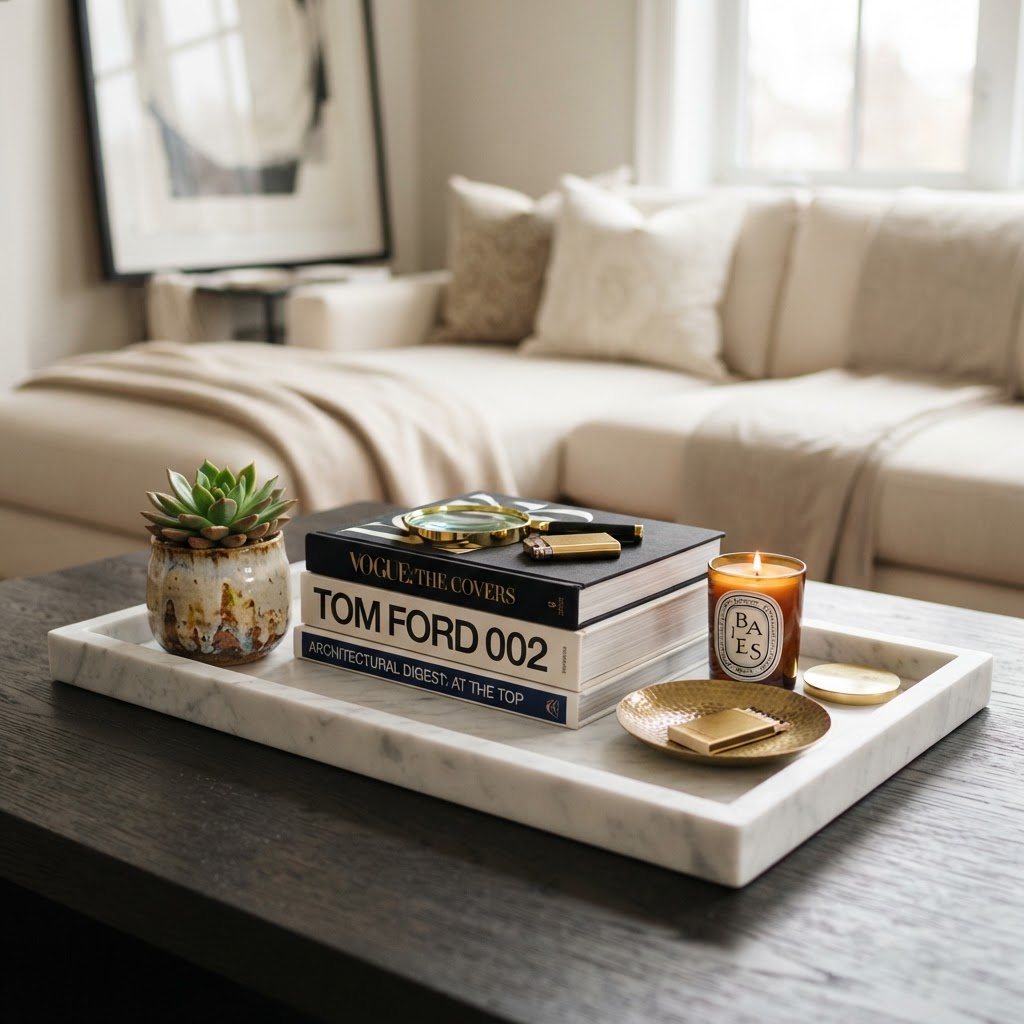
Clutter is the primary enemy of a high-end look, especially in small homes where every inch of surface space counts. To achieve a luxury aesthetic, you must edit your surfaces, removing daily items like remotes, chargers, or excess paper to ensure only curated items remain. Use heavy-duty trays made of marble, brass, or lacquered wood to corral your belongings, which instantly makes a collection of miscellaneous items look like a deliberate, professional display.
Curation Over Collection
- Books as Risers: Use hardback coffee table books to stack decorative items at varying heights for visual interest.
- Rule of Three: Group objects in odd numbers (1, 3, or 5) to create a more natural, balanced arrangement that feels sophisticated.
- Greenery: Incorporate at least one high-quality, oversized plant in a ceramic or stone pot to add organic texture.
- Hidden Storage: Use baskets or decorative lidded boxes to hide cords and miscellaneous paperwork that create visual noise.
By following the ‘Rule of Three’ and prioritizing empty space, you allow the eye to rest, which is a hallmark of luxury minimalism. If a surface looks too busy, remove 50% of the items and re-evaluate. The goal is to highlight items that bring you joy while keeping the overall footprint clean and airy.
Introducing Textile Layers
Luxury is defined as much by touch as it is by sight, so layering high-quality textiles is essential to making a rental feel indulgent. In many rentals, you are stuck with cheap carpet or scratched linoleum; covering these with a large, plush area rug is the single most effective way to change the entire mood of the room. A high-quality wool or high-density synthetic rug creates a foundation for the space, dictating the color palette and adding sound-dampening warmth.
When selecting a rug, ensure it is large enough so that the front legs of your furniture sit at least 6-12 inches onto the material. This connects your furniture pieces, making the arrangement feel cohesive rather than scattered. Beyond rugs, introduce tactile luxury through silk, velvet, or chunky-knit throws and oversized cushions. These elements add softness to a small space, counteracting the hard, clinical lines of standard apartment walls and floors. By opting for natural, high-touch fabrics like sheepskin or linen, you elevate the sensory experience of your home, making it feel more like a bespoke hotel room and less like a temporary rental apartment.
Selecting Furniture with Legs
When furnishing a tiny apartment, choose pieces with visible legs rather than ‘skirted’ or boxy, floor-touching bases. When the human eye can see the floor continuing underneath a sofa or chair, the room feels significantly more airy and open, which prevents the ‘heavy’ visual weight that often makes small rooms feel cramped. Light circulation under furniture is a classic designer technique to maintain an open, uncluttered flow in limited square footage.
Prioritizing Multi-Functional Pieces
Focus on furniture that offers built-in utility, such as ottomans with internal storage or coffee tables with lower shelves for books. By keeping surfaces clear of excess clutter, you maintain the ‘expensive’ look of intentional minimalism. Always double-check your scale; a common mistake in small apartments is using furniture that is too large or too small for the room. Aim for pieces that anchor the space without dominating the walking path. For example, a sleek, mid-century modern sofa with tapered legs will always look more ‘expensive’ and ‘spacious’ than a bulky sectional in a small studio. If you must have large pieces, keep the upholstery in a light, neutral tone to prevent the item from overwhelming the room’s visual balance.
FAQ
How can I make a rental look expensive on a budget?
Focus on lighting, textures, and height. By swapping harsh bulbs for warm white ones, adding floor-to-ceiling curtains, and using large mirrors to reflect light, you can mimic high-end design principles for a fraction of the cost.
Can I put wallpaper in a rental apartment?
Yes, use high-quality, peel-and-stick wallpaper specifically designed for renters. These are easily removable, leave no residue, and provide a high-end textured look that is perfect for creating an accent wall without damaging the existing paint.
What is the ‘Rule of Three’ in interior design?
It is the principle of grouping objects in odd numbers, such as three, to create a balanced, visually pleasing display. This technique prevents surfaces from looking cluttered and makes your styling appear intentional and professional.
How do I make my small apartment feel bigger?
To expand your space, use large mirrors to double your room’s depth and choose furniture with exposed legs to maintain an open, airy feeling. Keeping the floor visible underneath furniture tricks the brain into perceiving more square footage.
Where should I hang curtain rods in a rental?
Always mount your curtain rods as close to the ceiling as possible, rather than directly above the window frame. This creates a vertical line that draws the eye upward, making your ceilings feel taller and your room more grand.

Leave a Reply