21 Small Entryway Ideas That Maximize Every Inch
Maximize a small entryway by utilizing vertical wall space for storage, incorporating multifunctional furniture with slim profiles, and using mirrors to create an illusion of depth. Implementing these design strategies can transform a cramped foyer into a highly organized, stylish transition zone while maintaining clear foot traffic flow.
Rethink Your Vertical Storage Potential
When floor space is limited, the most effective strategy is to leverage vertical wall surfaces to keep essential items off the ground. Floor-to-ceiling shelving units, typically ranging from 10 to 14 inches in depth, provide massive storage capacity for seasonal gear while drawing the eye upward, which visually increases ceiling height by 10-15%.
Utilizing Wall Hooks and Peg Rails
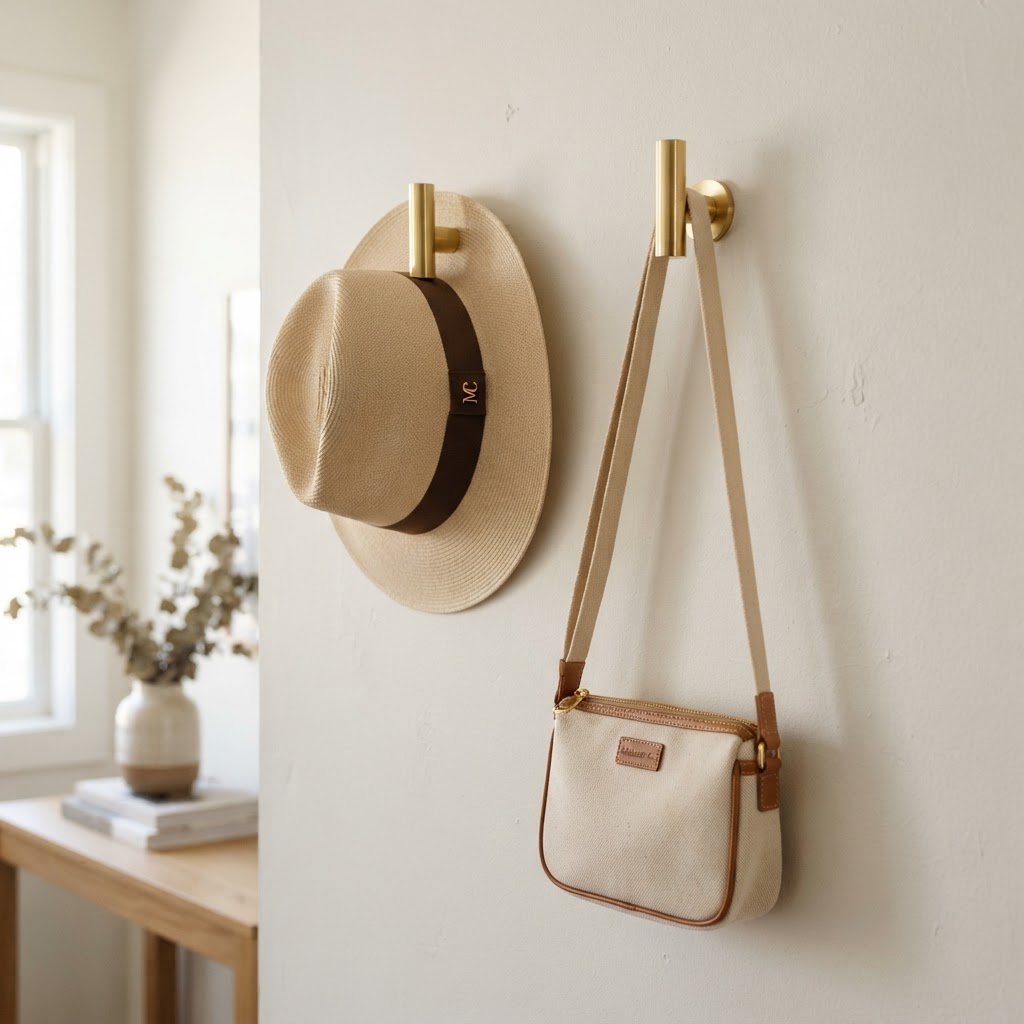
Instead of bulky coat racks that consume precious floor footage, opt for sleek wall-mounted hook systems. A continuous peg rail running the length of your wall allows you to hang bags, coats, and hats exactly where you need them. This simple installation is inexpensive—often costing less than $40 for a DIY set—and can be painted to match your walls for a seamless, built-in appearance that blends perfectly into your decor.
Floating Shelves for Decor and Essentials
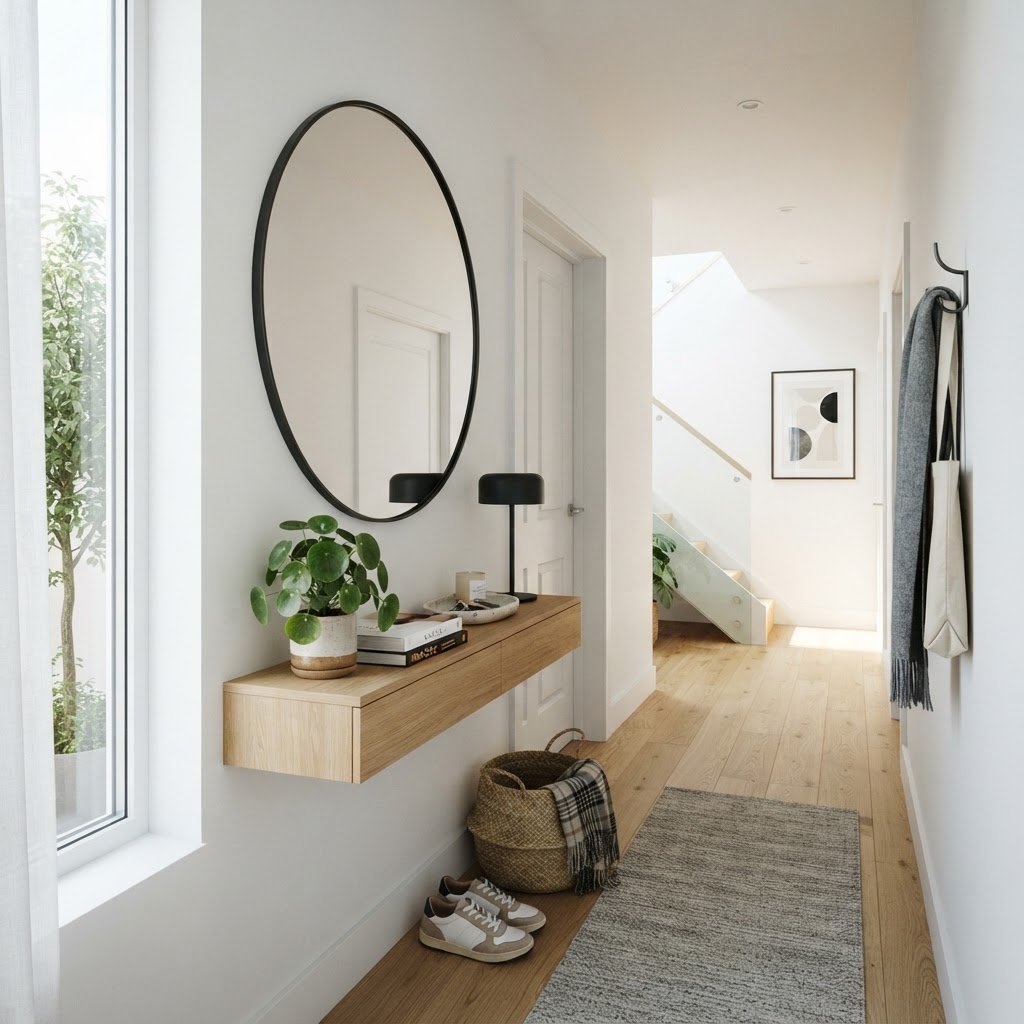
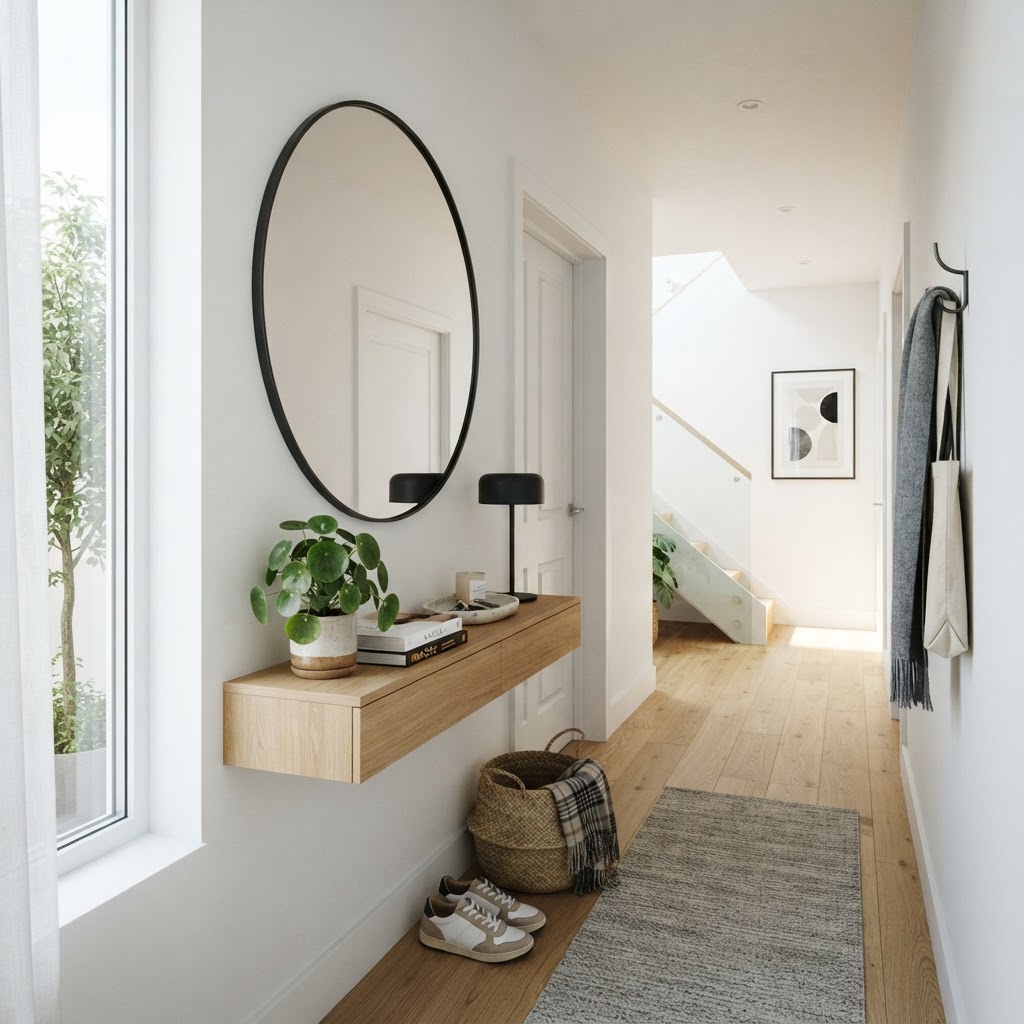
Floating shelves are life-savers in narrow spaces, offering a place to drop keys and mail without the bulk of a traditional console table. By keeping the floor clear underneath the shelf, you maintain an open, airy feeling that is critical in small-scale interior design. Use these surfaces to display small decorative items or to hold a shallow tray dedicated to the small items that usually cause clutter.
The Power of Multifunctional Furniture
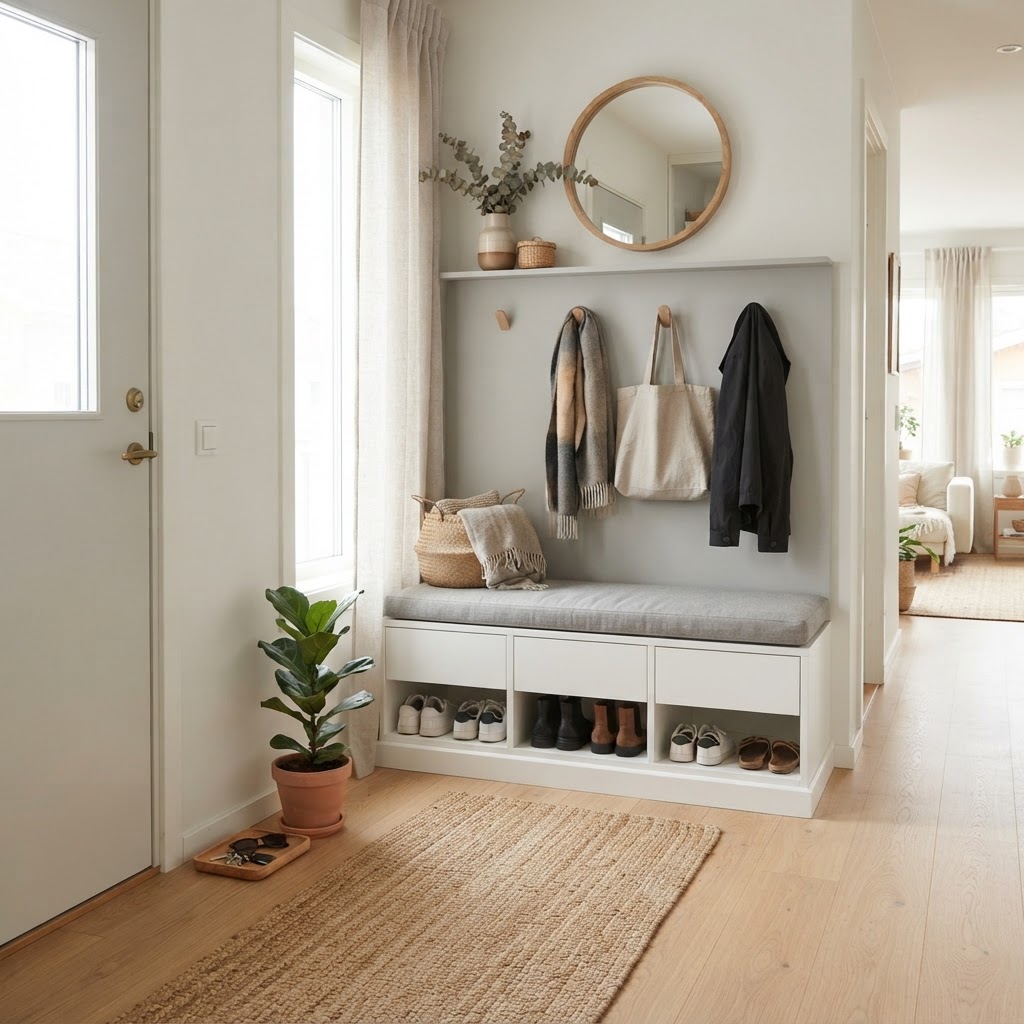
In a small space, every piece of furniture must earn its keep by providing at least two distinct functions, such as a bench that hides a shoe rack underneath. This approach keeps your hallway tidy while providing a convenient spot to sit while you put on your boots. Selecting a bench with a slim profile—ideally under 15 inches deep—ensures that it doesn’t obstruct the path, maintaining clear traffic flow through your main entrance.
For tight spaces, choose furniture pieces that feature hidden compartments or lift-top lids, which allow you to store umbrellas, dog leashes, or cleaning supplies out of sight. A bench should support at least 250 pounds if intended for seating, and utilizing materials like wood or durable rattan can add texture without visual weight. By consolidating your furniture footprint, you can often save up to 3 square feet of floor space in a standard 4-foot by 4-foot foyer.
Creating Illusions with Mirrors and Lighting
One of the oldest tricks in the design book is the use of large-scale mirrors to expand a room, as a floor-length mirror can effectively double the perceived depth of a cramped foyer. Furthermore, mirrors reflect natural light, which is essential for creating a bright, welcoming atmosphere in areas that often lack windows.
Choosing the Right Lighting Fixtures
Good lighting is non-negotiable for a functional entryway. If you have a low ceiling, avoid long, hanging chandeliers that make the space feel compressed. Instead, look for flush-mount fixtures or sleek wall sconces that provide ambient light without taking up visual volume. Task lighting near your door can also ensure you never fumble for your keys in the dark.
Strategic Color Palettes for Expansion
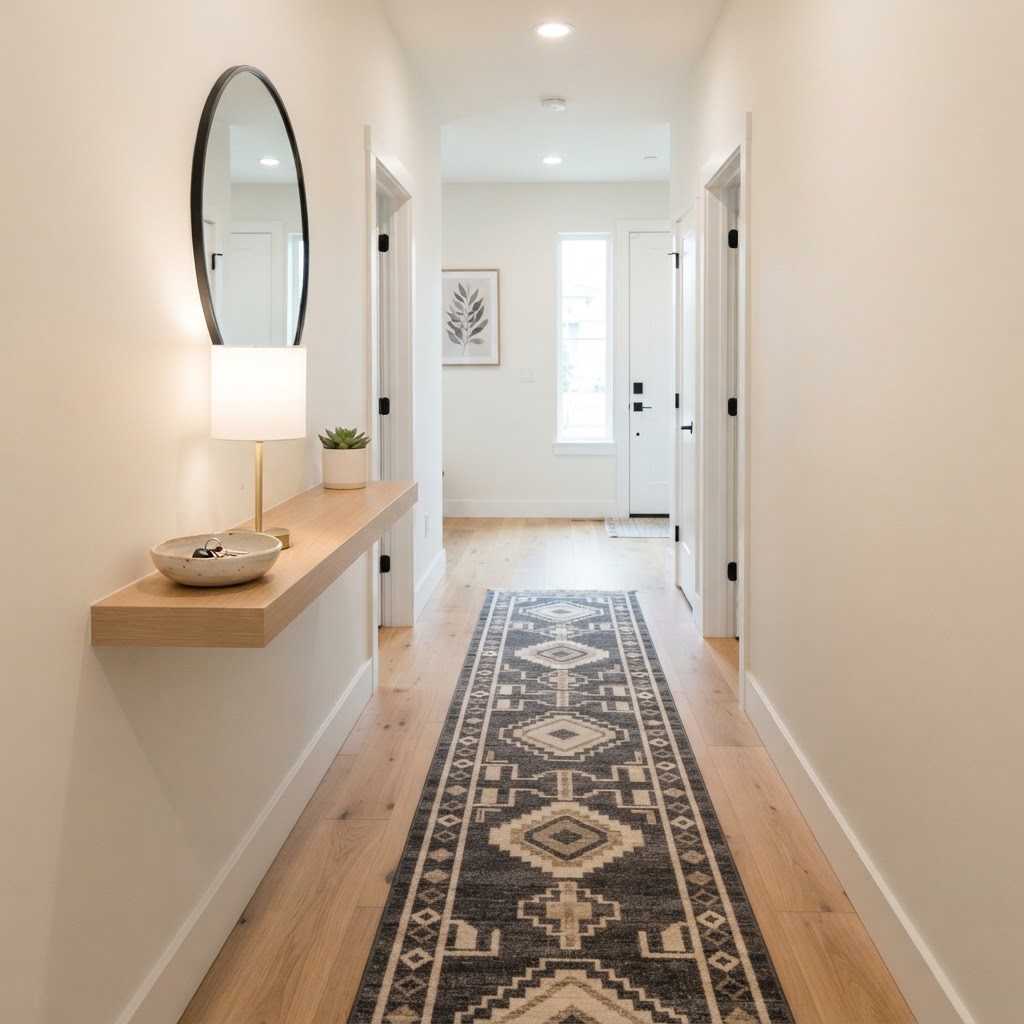
Choosing the right paint color can significantly impact how your entryway feels, as light, neutral tones like off-white, soft gray, or pale sage make walls seem to recede. If you prefer bolder designs, consider painting the trim and doors the same color as the walls to minimize visual interruptions and keep the focus on the architecture rather than the size of the room.
Experts often suggest using a monochromatic palette to remove hard visual lines, which can make a small room feel up to 20% larger. For higher-traffic areas, select paint with a semi-gloss or satin finish; these are not only easier to clean but also reflect more light than flat finishes. If you must use dark colors, apply them sparingly to an accent wall or the ceiling to create a “jewel box” effect, which adds personality without making the space feel closed in.
Selecting Slim-Profile Storage Solutions
Standard furniture is often too deep for narrow hallways, so look for consoles specifically designed for tight spaces that are only 10-12 inches deep. These pieces are often sufficient to hold a decorative bowl or a lamp without blocking the walkway. You can also look for “shoe cabinets” which feature tilt-out drawers that hide bulky shoes behind a flat, elegant front, saving you from the “piles of sneakers” syndrome.
Many modern slim cabinets are designed to be wall-mounted, which further increases the “floor clearance” and makes the entire room feel more spacious. A standard tilt-out cabinet can typically store 8-12 pairs of shoes while protruding less than 8 inches from the wall. This is a massive improvement over traditional shoe racks, which often require 15-20 inches of depth and constantly leave footwear exposed to view.
Incorporating Rugs for Zonal Definition
Even in a tiny entrance, a rug can serve an important purpose by defining the entryway as a distinct “room” even when it is physically open to your living area. Choose a durable, low-pile rug that can handle high foot traffic and is easy to clean. A runner with long horizontal stripes can help guide the eye along the length of the hall, making a narrow space feel significantly longer and more inviting.
When choosing a rug, look for materials like wool or high-quality synthetic fibers that have a low pile height (usually under 0.5 inches). This ensures the door can swing freely without catching on the rug edge. A rule of thumb is to allow for 2-3 inches of hardwood floor to show around the edges of the rug; this creates a border that prevents the room from feeling completely carpeted and helps keep the space looking larger.
Keeping It Decluttered with Daily Habits
No matter how brilliant your design, an entryway will fail if you don’t maintain it. The most successful spaces rely on a ‘one-in, one-out’ policy for footwear and outerwear. By keeping only the items you currently use in your entryway, you prevent the accumulation of out-of-season items that create chaos. Consider a secondary storage spot, such as a closet in another room, for items that don’t belong in the immediate entrance.
Establishing a daily 30-second reset habit—where you verify that only active items are present—can prevent the gradual buildup of clutter that plagues 70% of small households. If you do not have a secondary closet, use labeled bins stored under a bench to rotate items seasonally. This systematic approach ensures your entryway stays functional throughout the year, regardless of the weather outside.
Creative Hidden Storage Hacks
Sometimes, the best storage is hidden in plain sight by using the back of your front door as an anchor for an over-the-door organizer. This is perfect for light items like scarves, umbrellas, or dog leashes. You can also install a small basket under a floating console to hold seasonal items, effectively turning a dead space into a functional storage hub without sacrificing style.
Consider utilizing magnetic strips on the inside of cabinet doors to hold keys or small metal tools, or using wall-mounted adhesive hooks that require no drilling. These “hidden” solutions are excellent for renters who need non-permanent upgrades. Adding a small, decorative basket under a console table can hide up to 5 pounds of small accessories, effectively moving visual clutter off the main surface and into a contained, tidy unit.
Incorporating Personalized Decor
Just because a space is small doesn’t mean it should lack personality. Incorporate art, a small indoor plant, or a scented candle to make the entrance feel like a reflection of your home’s style. Small touches act as a signal that you have arrived home, turning a utilitarian storage area into a space that greets you with warmth and character. Remember, the goal of these 21 small entryway ideas is not just organization, but creating an entry experience that you actually enjoy.
Select decor pieces that serve a secondary function, such as a decorative bowl for keys or a piece of wall art that doubles as a hat hook. Keeping the decor minimal—limiting it to 3 main focal items—ensures that the space remains functional while showcasing your personal taste. By curating your items carefully, you avoid visual noise and ensure that every decorative element contributes to a welcoming and efficient atmosphere.
FAQ
Q: How can I make a narrow entryway look bigger?
Make a narrow entryway look bigger by using light, neutral paint colors and placing a large mirror on the wall. These elements reflect light and create a sense of depth, preventing the area from feeling like a claustrophobic hallway.
Q: What is the best way to store shoes in a small entry?
Use a slim-profile, wall-mounted shoe cabinet with tilt-out drawers to store footwear. These units usually protrude less than 8 inches from the wall, keeping the floor clear while hiding messy shoes behind a clean, decorative facade.
Q: Are floating shelves good for small entryways?
Floating shelves are excellent for small entryways because they utilize vertical wall space without the visual bulk of traditional console legs. This keeps the floor area visible, which helps maintain an airy, open feeling in tight transition zones.
Q: How do I organize a tiny apartment entryway?
Organize a tiny entryway by installing a vertical peg rail for bags and a small, multipurpose bench for hidden shoe storage. Focus on wall-mounted solutions to keep the floor clear, as floor space is the most valuable commodity in a compact home.
Q: What colors make a small hallway feel brighter?
Use off-white, light gray, or pale sage paint to make a small hallway feel brighter. Light-reflective colors bounce light around the room, making it appear more spacious and inviting compared to dark, heavy tones that absorb light.

Leave a Reply