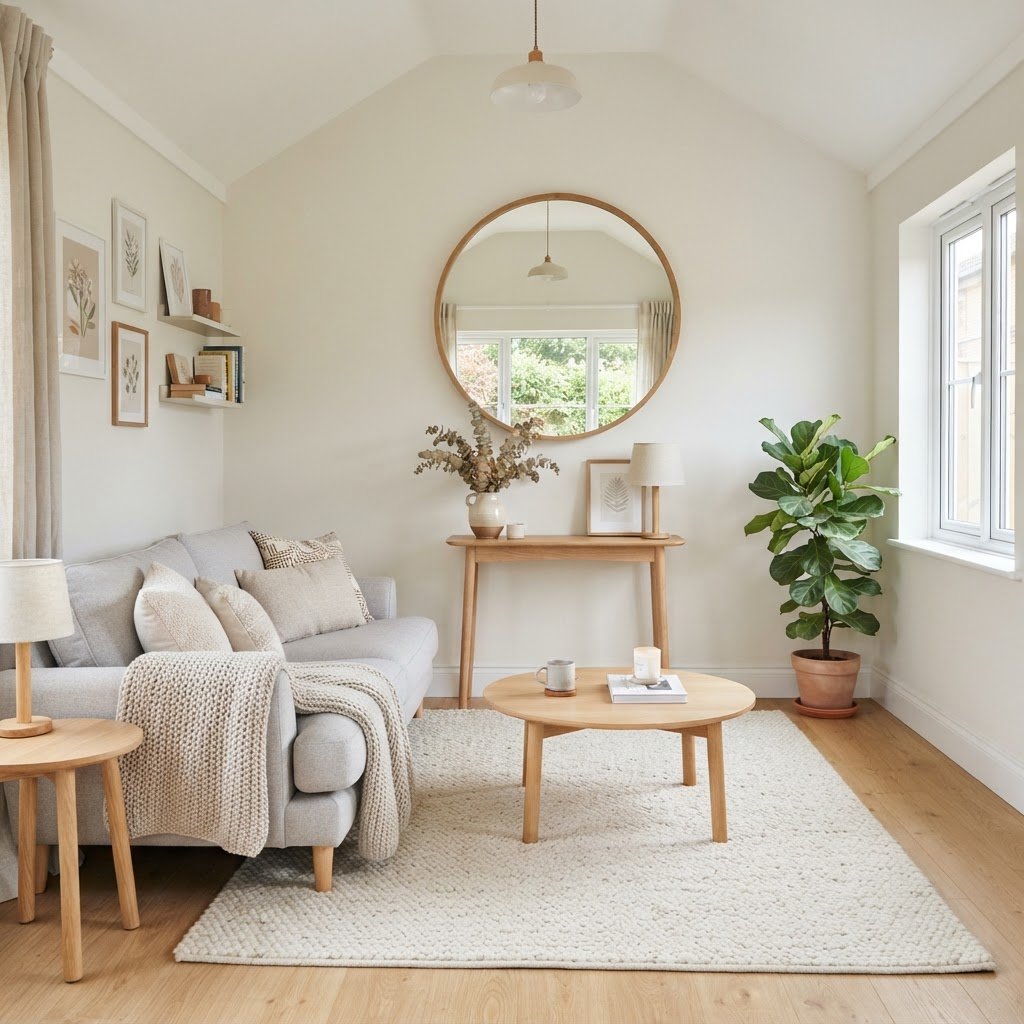
Living in a compact apartment or a home with a tiny footprint does not mean you have to sacrifice style or comfort. In fact, many professional interior designers find that working with restricted square footage sparks the most creativity. By implementing strategic small living room ideas, you can turn a cramped area into a welcoming sanctuary. The secret lies not in how much space you have, but in how you manipulate the visual flow and furniture placement to create an illusion of openness while maintaining a cozy, intimate vibe.
The Power of Strategic Furniture Placement
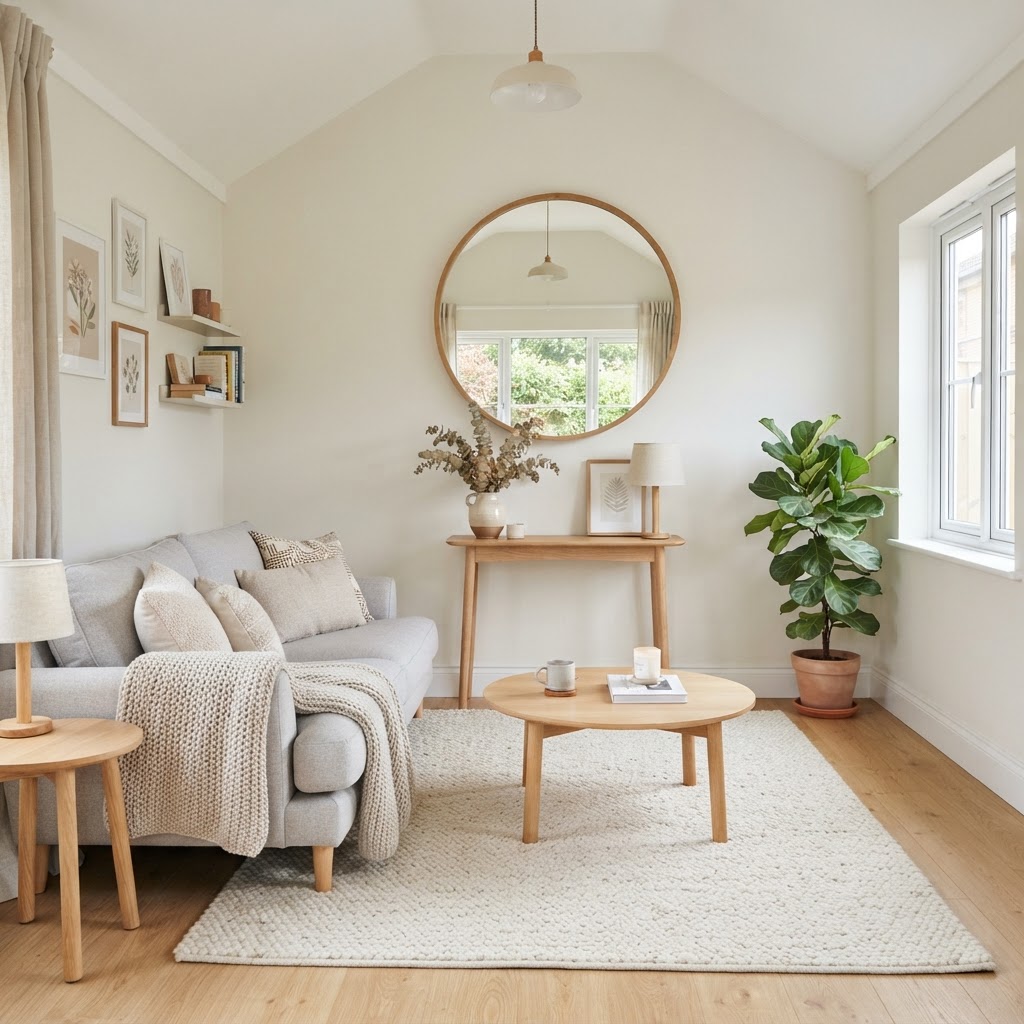
The foundation of any functional room is its layout. When working with limited space, the goal is to maximize seating without creating a bottleneck that makes the room feel cluttered. Start by pulling your furniture away from the walls. While it may seem counterintuitive to leave space behind your sofa, a “floating” layout allows air to circulate around pieces, making the room feel larger. If you are struggling to find the perfect configuration, checking out these best small living room layouts can help you visualize how to arrange your pieces for maximum efficiency.
Select furniture with exposed legs. Sofas, armchairs, and coffee tables that sit on thin, tapered legs create the appearance of more floor space beneath them. This visual lightness prevents the furniture from looking heavy or anchored to the floor, which is a common mistake that makes rooms feel claustrophobic.
Prioritize Multi-Functional Pieces
Every piece of furniture in a small living room needs to earn its keep. Look for ottomans that double as extra seating or storage containers, or coffee tables with hidden drawers. These multi-functional items reduce the need for bulky sideboards or extra chairs, keeping the floor area clear for traffic flow.
Harnessing Natural Light and Mirrors
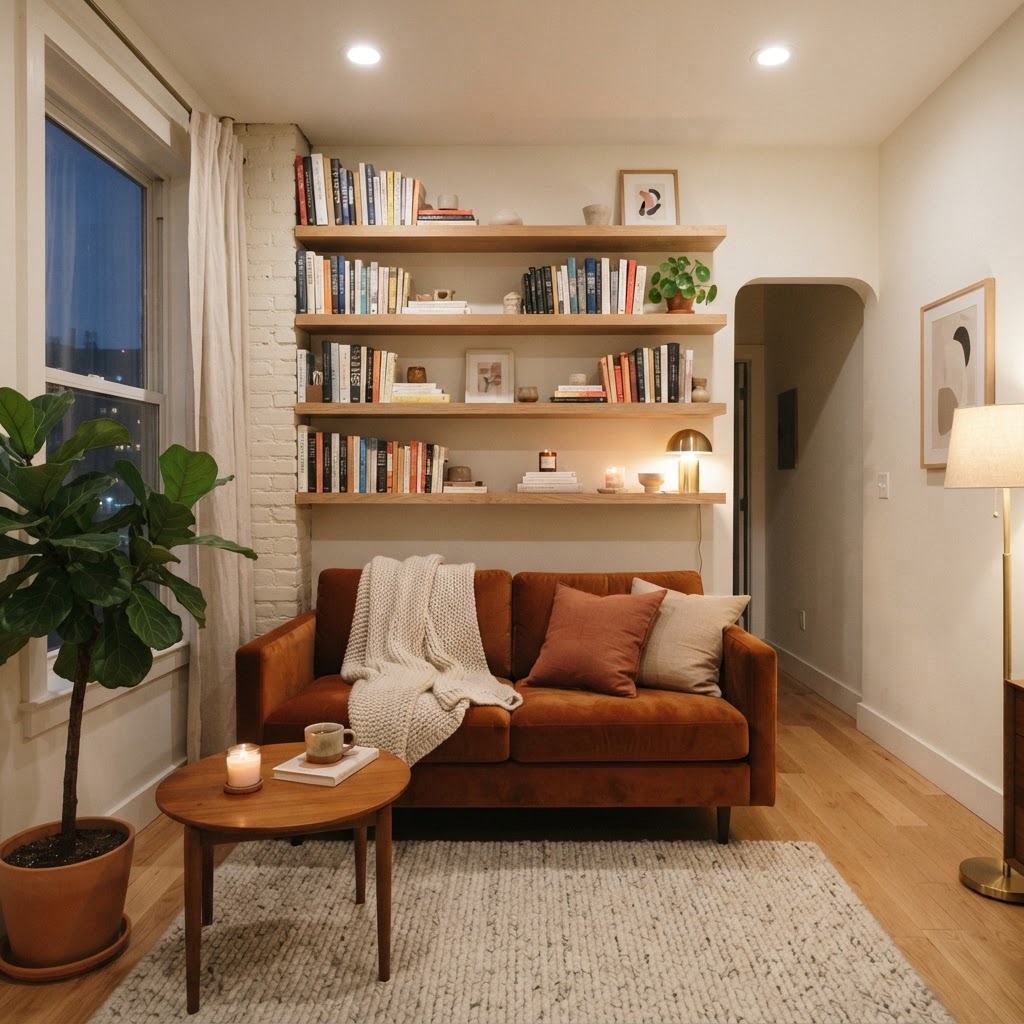
Light is the most effective tool in your design arsenal for expanding a room. Natural light bounces off surfaces, blurring the edges of the walls and making the space feel infinite. Keep window treatments simple; floor-to-ceiling sheer curtains are an excellent choice because they draw the eye upward and let in maximum daylight while providing privacy.
Mirrors are the oldest trick in the book for doubling a space visually. Place a large, oversized mirror opposite a window to reflect the outdoor view back into the room. If you do not have a great view, place the mirror behind a lamp to amplify the glow and create depth. A strategically placed gallery wall of mirrors can also add a decorative touch while making the walls feel like they are receding.
Vertical Space is Your Best Friend
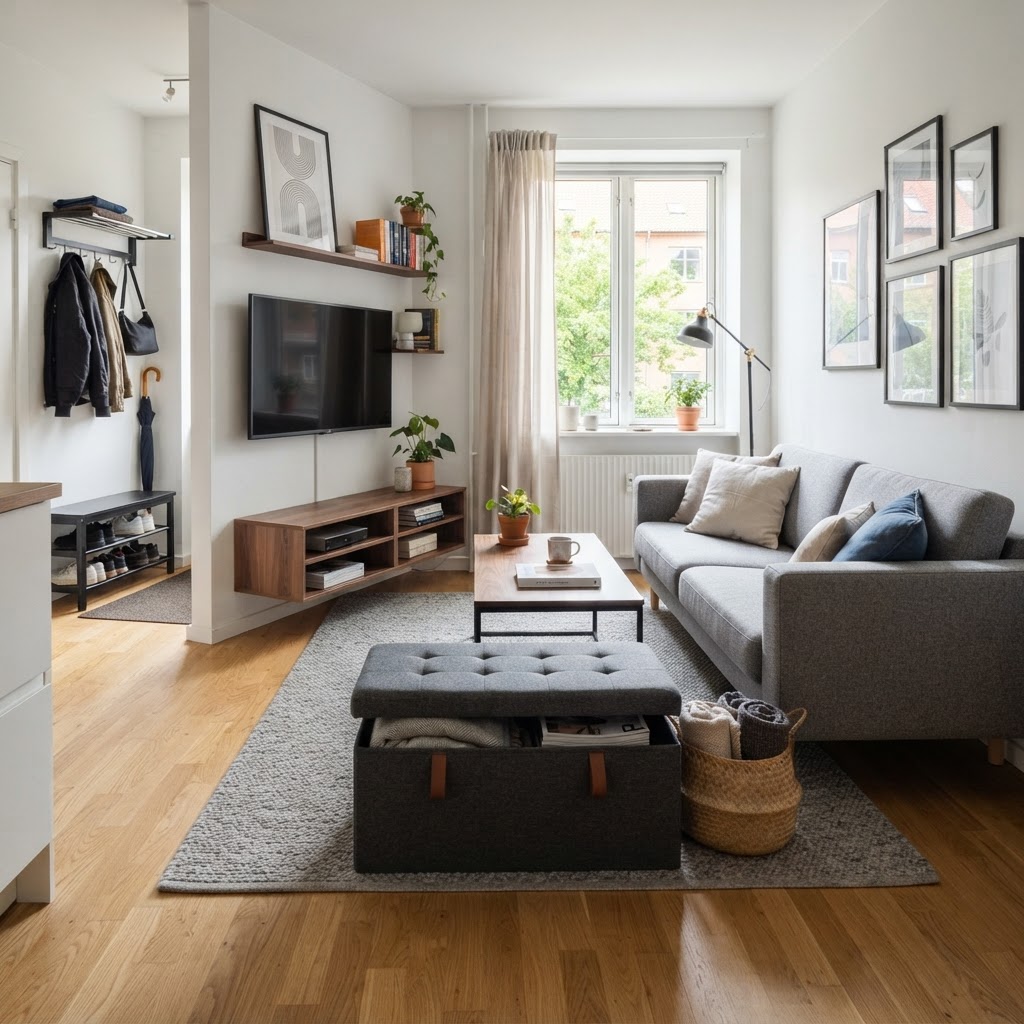
When floor space is at a premium, look to your walls. Utilizing vertical height is one of the most effective small living room ideas to draw the eye upward and keep the floor clean. Consider installing floating shelves that reach toward the ceiling. This provides plenty of storage for books and decor without consuming valuable square footage on the ground.
Creative Storage Solutions
- Install floor-to-ceiling bookshelves to create a focal point.
- Use wall-mounted sconces instead of bulky floor lamps.
- Hang floating media consoles to free up space beneath the TV.
- Mount curtain rods as high as possible to heighten the room.
By keeping the eyes moving vertically, you minimize the feeling of being closed in. This technique is especially useful in rooms with low ceilings, as it tricks the eye into perceiving more height than actually exists.
Mastering the Art of Color and Texture
While white is the traditional choice for small rooms, you do not have to stick to a monochromatic palette. A lighter color scheme certainly helps with light reflection, but adding layers of texture is what keeps the room from feeling flat or sterile. Incorporate cozy elements like a plush wool rug, velvet throw pillows, or a chunky knit blanket to add depth and interest.
If you prefer a bolder aesthetic, consider painting the trim and the ceiling the same color as your walls. This erases the lines between surfaces, which makes the room feel like a continuous, expansive box rather than a small cube. Darker colors can also create a cozy, moody “jewel box” effect, which is perfect for small dens where you want to emphasize comfort over airiness.
Creating Defined Zones with Rugs
Even in a single, small room, you might need to accommodate a reading corner or a home office. Using area rugs is a brilliant way to define these zones without needing physical barriers like partitions or bookshelves. A well-placed rug acts as a visual anchor that tells the brain exactly where one area ends and another begins.
Choose an area rug that is large enough to accommodate the front legs of your furniture. If a rug is too small, it can actually make a room look chopped up and even tinier. By selecting a properly sized piece, you tie the furniture arrangement together into one cohesive “island” of design.
The Psychology of Open Pathways
One of the most common mistakes in small living room design is blocking the main pathway. You should be able to walk from the entrance of the room to the window or seating area without dodging a side table or tripping over a rug corner. Clear pathways are essential for making a space feel larger and more inviting.
Think about the “flow” of your home. If your living room is also a thoroughfare to the kitchen or bedroom, keep the center of the room as open as possible. Using rounded furniture shapes can also help navigate tight corners and create a more organic flow of movement compared to sharp, rectangular pieces.
Minimizing Clutter for Maximum Impact
Clutter is the enemy of small spaces. Because there is less room for the eye to wander, every object counts. Adopting a “one-in, one-out” policy for decor items can keep your space feeling organized and intentional. Invest in closed storage solutions to hide away the visual noise of remotes, charging cables, and miscellaneous paperwork.
Consider the “less is more” philosophy. Instead of decorating with ten small accessories, choose one or two large-scale items. A single large piece of artwork or a large statement plant can feel more sophisticated and less crowded than a collection of smaller knick-knacks that break up the visual space.
Conclusion
Designing a small living room is all about making smart choices that prioritize both form and function. By focusing on vertical storage, choosing multi-purpose furniture, and using lighting to your advantage, you can create a home that feels open, airy, and incredibly cozy. Remember that a room’s size does not dictate its impact; your creativity and organization are what define the space. Which of these small living room ideas will you try first? Start with your furniture layout today and watch how your small space transforms into a stylish, comfortable retreat.

Leave a Reply