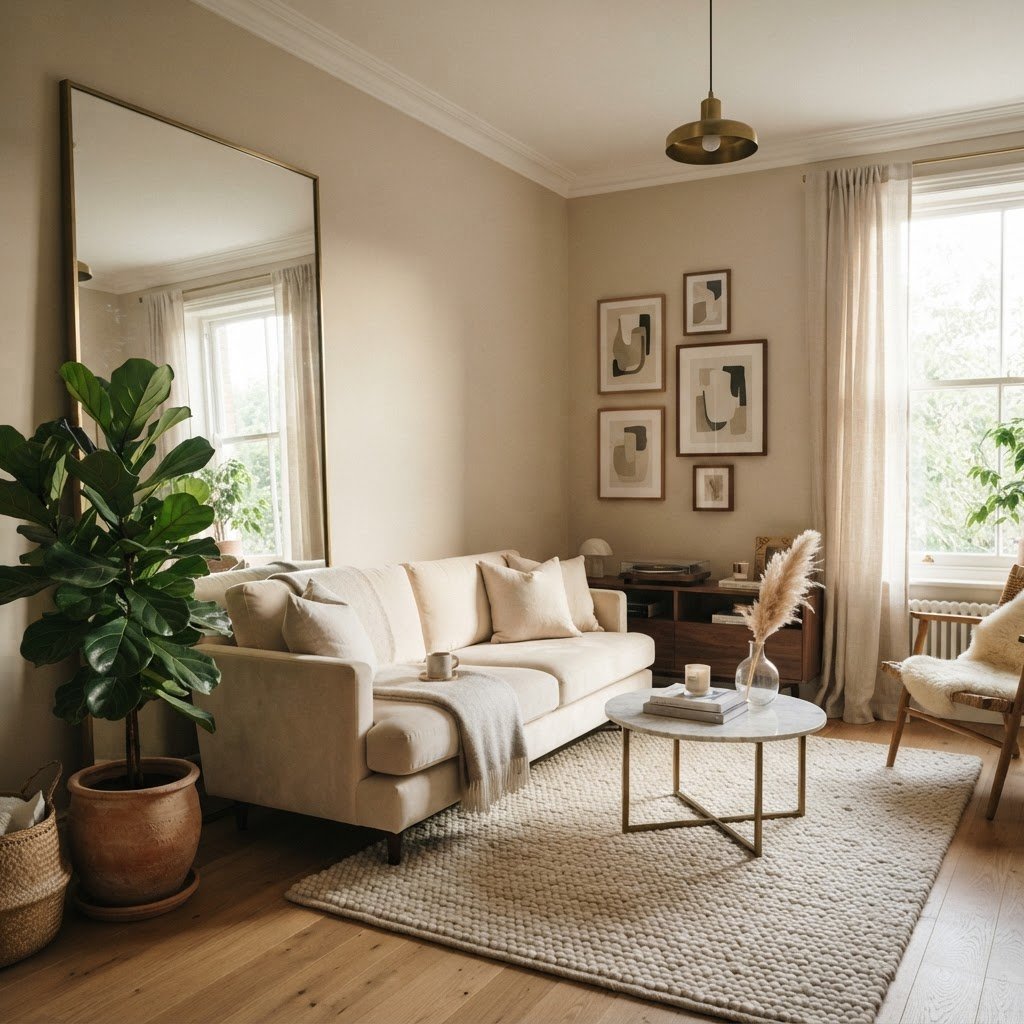
15 Small Living Room Ideas That Look Expensive (But Aren’t)
You can make a small living room look expensive on a budget by prioritizing scale, utilizing floor-to-ceiling drapery, layering warm lighting, and choosing a cohesive neutral color palette. These design strategies create an intentional, high-end atmosphere by reducing visual clutter and maximizing the perceived height and depth of your space.
The Power of a Cohesive Color Palette
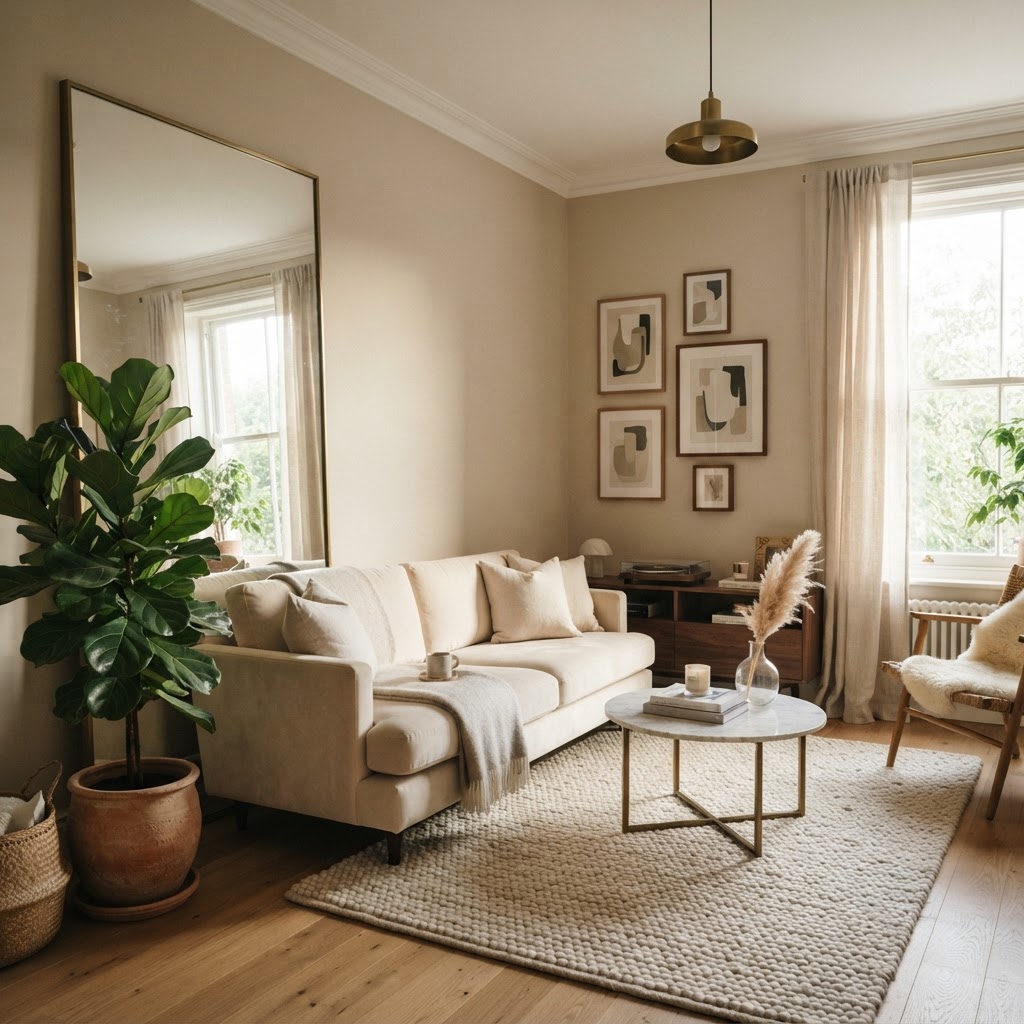
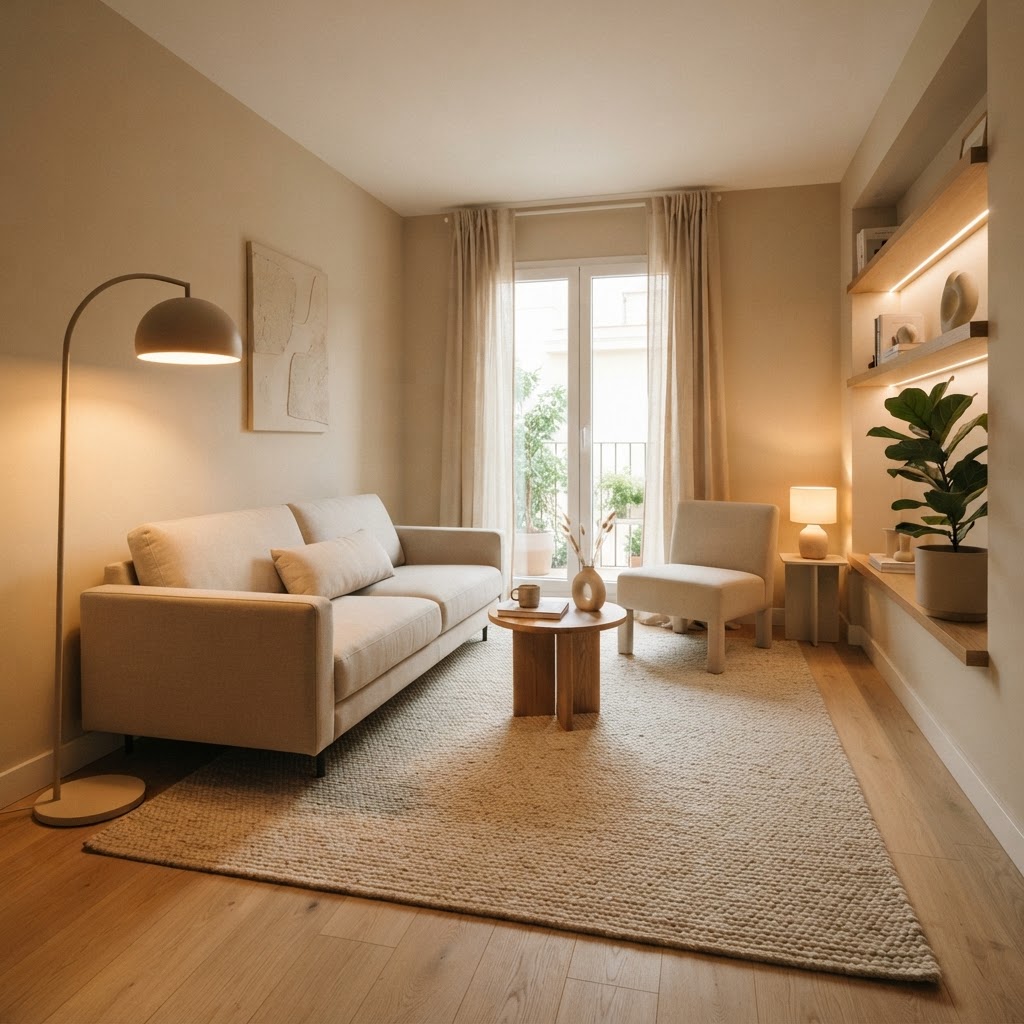
Committing to a cohesive, monochromatic color palette is the most effective way to eliminate visual clutter and make a compact room feel significantly more sophisticated. When you restrict your palette to two or three neutral tones—such as cream, taupe, and soft grey—you create a seamless flow that tricks the eye into perceiving the room as one unified, larger space. Avoiding high-contrast color pops keeps the focus on texture rather than chaotic hues.
Why Neutrals Reign Supreme
Neutrals act as the backbone of luxury design by creating a serene, gallery-like environment. By layering different fabric weights—such as a chunky wool rug, linen curtains, and a boucle armchair—you build depth without the need for bright colors. This “monotone luxury” approach is a professional trade secret used in high-end staging to make small rooms feel curated and calm rather than busy and cramped.
Lighting Choices That Define Elegance
Lighting is the single most transformative element in small space design, and upgrading standard fixtures is the easiest way to achieve a high-end look. Standard “boob lights” or builder-grade overhead fixtures flatten a room, whereas sculptural lamps and warm, layered lighting fixtures add personality, dimension, and a sense of architectural importance to the space.
The Rule of Three
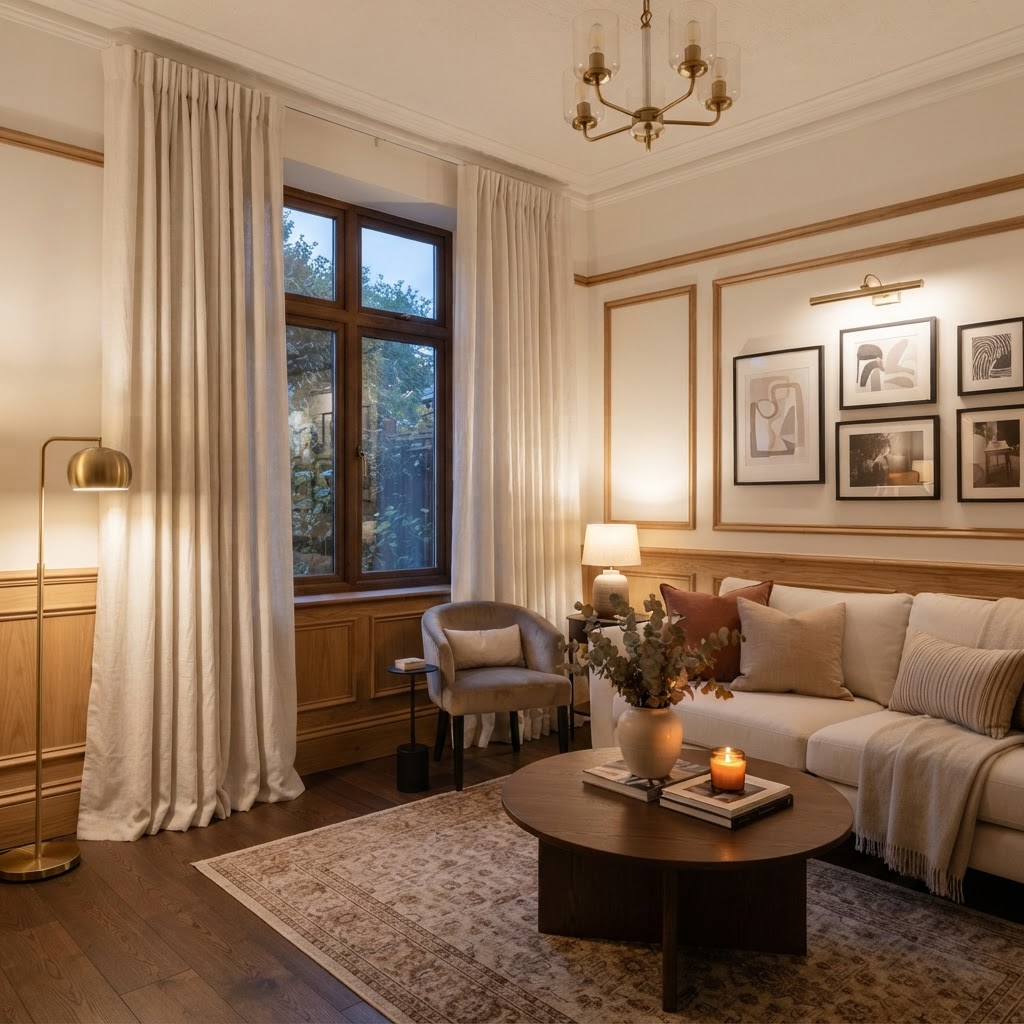
Never rely on a single central light source; instead, use a minimum of three sources of light to illuminate different levels of the room. By combining a floor lamp for height, a table lamp for task lighting, and a dimmable wall sconce for ambiance, you create depth. For the best results, use warm white bulbs at 2700K to mimic the golden hour, which softens edges and hides minor imperfections in smaller living areas.
Investing in Oversized Statement Pieces
Contrary to popular belief, filling a small room with many small, spindly items creates a “dollhouse” effect that feels cluttered rather than spacious. Instead, anchor your room with one or two oversized, high-impact pieces—such as a single large-scale sectional or an extra-large framed art print. This bold choice makes the space feel grander by reducing the number of small objects that the eye must process, effectively calming the room’s visual energy.
Elevating Your Textiles and Fabrics
High-quality textiles are the most cost-effective way to signal luxury, as the tactile feel of a space is just as important as its look. Swapping mass-produced polyester throw pillows for covers made from natural materials like heavy-weight linen, velvet, or wool provides an immediate tactile upgrade. These natural fabrics drape better, reflect light more naturally, and offer a richness that synthetic alternatives simply cannot replicate.
The Importance of Drapery
Curtain placement is the ultimate secret weapon for increasing verticality in a living room. By mounting your curtain rod just one or two inches below the ceiling—rather than directly above the window frame—you draw the eye upward, making ceilings appear taller and windows significantly larger. For a high-end finish, ensure the drapes are long enough to just touch the floor, creating a clean, crisp line.
Smart Storage That Stays Hidden
Clutter is the primary enemy of a luxury aesthetic, and keeping surfaces clear is non-negotiable for high-end small living spaces. You should implement clever living room storage ideas such as ottomans with internal storage or sleek, door-fronted cabinets to hide away cables, remotes, and magazines. By removing “visual noise” from view, you allow the high-quality elements of your design, such as your furniture and lighting, to take center stage.
Incorporating Natural Elements
Bringing the outdoors in adds life and vibrancy to your home while serving as a natural, sculptural element. Rather than cluttering your shelves with several tiny, artificial plants, invest in one large, healthy potted tree, such as a fiddle leaf fig or a tall palm. A single, well-maintained statement plant provides a sense of scale and organic freshness that makes the room feel lived-in and professionally designed.
The Art of Curated Surfaces
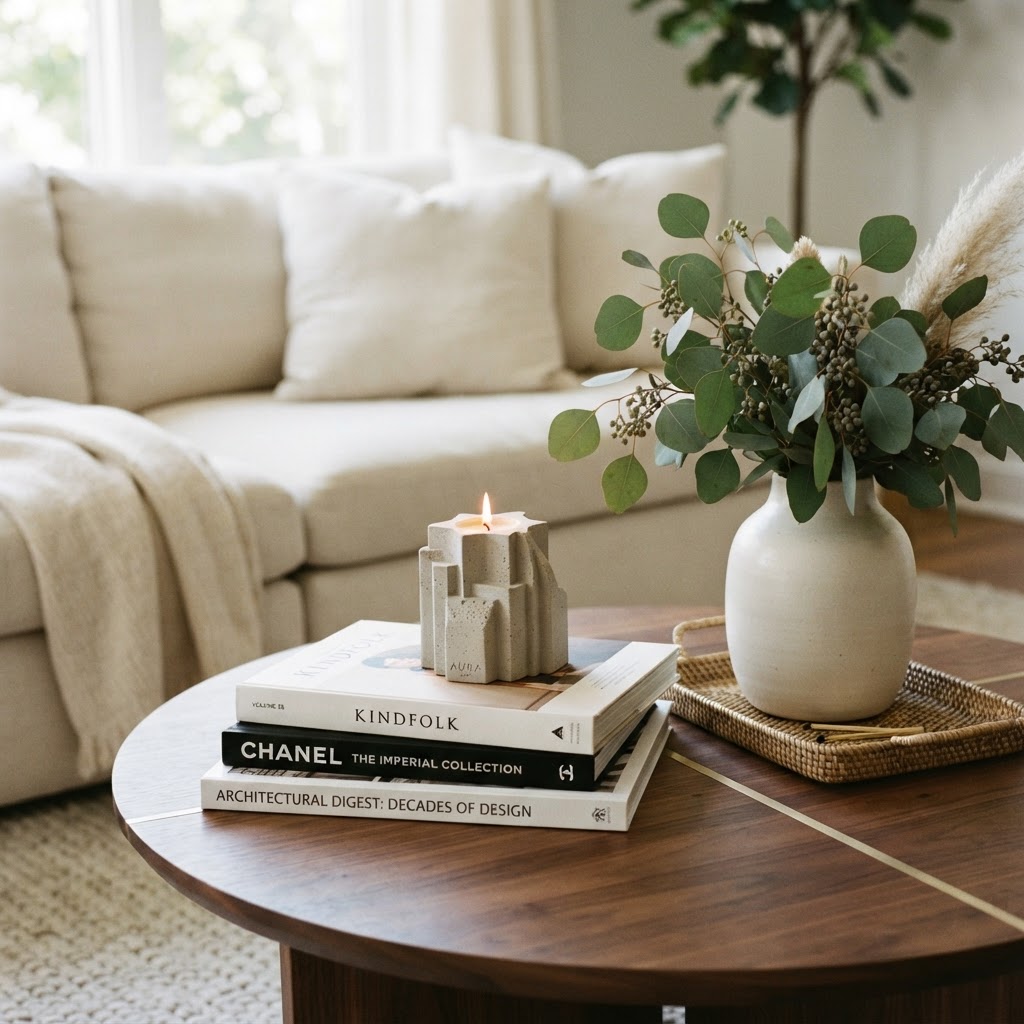
Your coffee table and shelving units should be treated as curated galleries rather than dumping grounds for daily items. Apply the “Rule of Three” to your surface styling: group objects in odd numbers—three or five—and vary the heights of these items to create a dynamic visual path for the eye. A small stack of coffee table books, a ceramic vessel, and a single candle create a polished, expensive appearance.
Mirrors as Architectural Features
Mirrors are more than just reflective surfaces; when used correctly, they function as architectural features that double the visual footprint of a room. For a high-end look, lean a large, floor-length mirror against a wall or mount an oversized mirror with a thin metallic frame above the fireplace. This technique mimics the look of a large window, bringing in extra light and depth to tight corners.
Rug Sizing Matters
Choosing the correct rug size is critical because a small rug makes a room feel fractured and tiny. To expand your space, select an area rug large enough so that at least the front legs of your sofa and chairs sit on it, which effectively defines the seating area as a cohesive “zone.” This simple adjustment anchors the furniture and grounds the room, preventing the pieces from appearing as if they are floating aimlessly in the space.
Addressing Wall Treatments
Architectural character can be added to any apartment through low-cost wall treatments like picture frame molding or board and batten. Using basic wood trim from a hardware store, you can build custom-looking wainscoting for under $100. These details add historical charm and depth to blank walls, transforming a standard boxy apartment into a home that feels intentionally built and expensive.
Focus on “The Look for Less”
Thrifting is an essential strategy for sourcing high-end items that provide the “soul” of a room for a fraction of retail prices. Look for vintage brass candlesticks, heavy solid wood side tables, or unique ceramic vases at second-hand shops. Mixing these one-of-a-kind vintage pieces with modern, clean-lined staples creates an eclectic, designer-curated look that cannot be replicated by buying full-set furniture suites. If you are looking for additional ways to maximize your space, you can learn how to decorate a small apartment on a budget with our comprehensive DIY guide.
The Finishing Touches
Luxury is a sensory experience, so do not overlook the power of scent and touch to complete your living room. Use high-quality scented candles or reed diffusers with subtle, earthy notes like sandalwood or bergamot. Layering soft, high-quality blankets on your sofa adds that final “expensive” element, ensuring the space is just as comfortable as it is aesthetically pleasing.
FAQ
How do I make a small living room look expensive on a $200 budget?
Focus your budget on high-impact items: buy one large statement mirror, replace basic light bulbs with 2700K warm LEDs, and purchase a large area rug. These three changes collectively redefine the light, space, and anchor of your room for minimal investment.
Should I avoid using dark colors in a small living room?
Not necessarily, as dark colors can add significant depth and a moody, high-end “cocoon” effect to a small space. The key is to ensure you have excellent lighting and to use consistent, deep monochromatic tones across the walls and furniture to avoid choppy color breaks.
What is the secret to placing curtains in a small room?
Mount your curtain rod as close to the ceiling as possible, rather than directly above the window casing. This technique creates the illusion of floor-to-ceiling windows, which adds significant vertical height and makes the entire room feel more spacious and luxurious.
How many items should I have on my coffee table?
For a curated look, use the rule of three to group items by varying heights and textures. Place a small stack of books, a decorative bowl, and a single sculptural candle to provide balance without creating visual clutter.
Why do my small living room furniture pieces look cheap?
Often, it is because the pieces are too small or numerous, which creates a “dollhouse” effect and clutter. To fix this, remove smaller, non-functional decor and replace it with fewer, larger, more comfortable pieces that command presence.

Leave a Reply