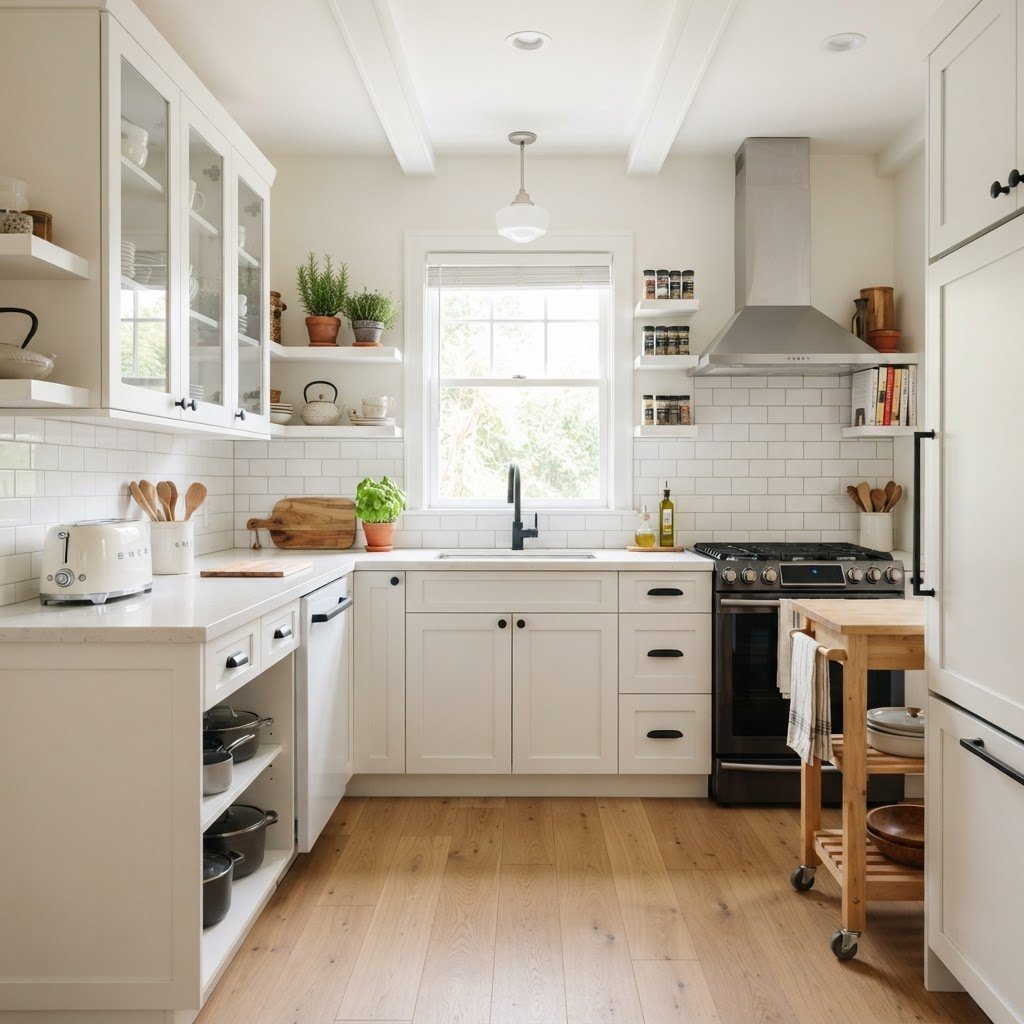
16 Very Small Kitchen Ideas on a Budget That Look Expensive
You can make a small kitchen look expensive on a budget by prioritizing high-impact, low-cost upgrades such as replacing cabinet hardware, installing under-cabinet lighting, and adopting a monochromatic color palette. These strategic design choices minimize visual clutter and create a cohesive, custom-built appearance without requiring a full-scale renovation or high-end materials.
Rethinking Your Cabinetry Strategy
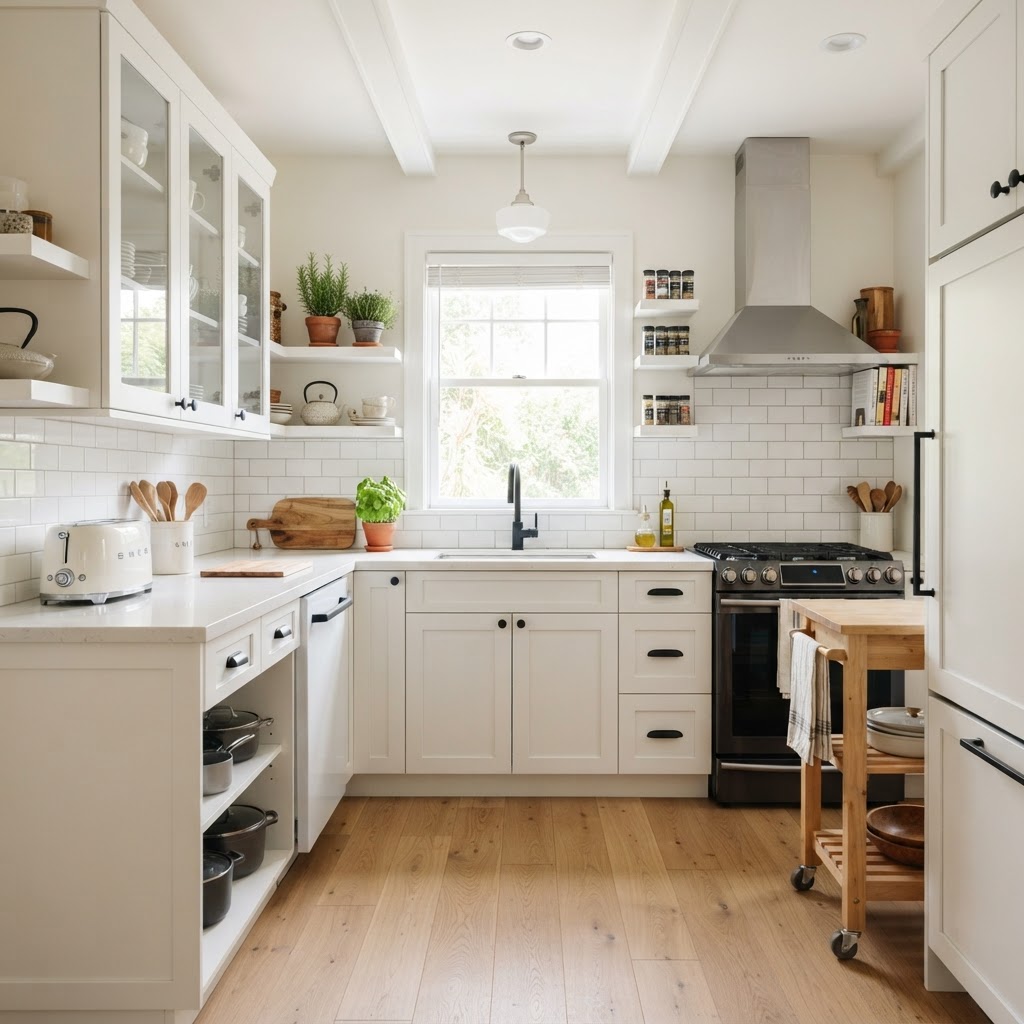
One of the most effective ways to upgrade a tiny kitchen is to focus on your cabinets, as they occupy the majority of your visual space. Replacing them entirely can cost upwards of $10,000, but a professional-grade paint job using high-gloss or deep matte finishes typically costs under $500 if done as a DIY project. High-gloss finishes are particularly effective in small spaces because they reflect light, creating a perception of greater depth. Alternatively, moody, dark matte colors provide a sophisticated, high-end design aesthetic that anchors the room. To achieve a professional finish, always use a high-adhesion primer and a durable enamel paint, which prevents chipping and keeps the surfaces looking new for years. This transformation creates a custom-built appearance that hides builder-grade imperfections.
Hardware Upgrades That Shine
Replacing generic cabinet handles and knobs is one of the easiest small kitchen ideas on a budget. Opt for high-quality, substantial hardware in brass, matte black, or brushed nickel. These tactile touches make a space feel significantly more expensive and custom-built.
Why Hardware Matters
Think of hardware as the jewelry of your kitchen. By selecting cohesive pieces that match your faucet or lighting fixtures, you create a sense of intentionality that suggests high design. Even the most basic white cabinets transform with the right metal accents.
Maximizing Vertical Storage Space
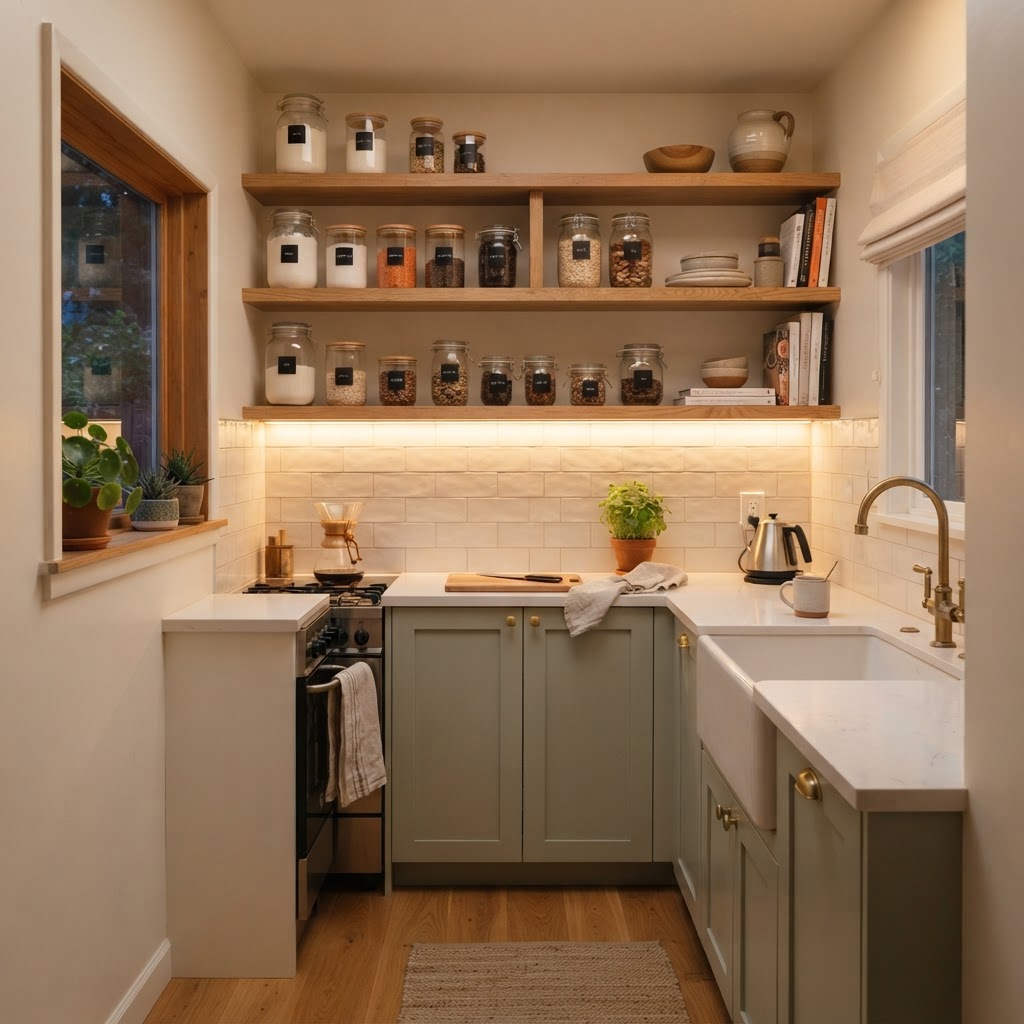
When you cannot grow outward, grow upward by utilizing every inch of vertical real estate. Installing floor-to-ceiling cabinetry or extending current units to the ceiling using crown molding creates a seamless, built-in appearance that draws the eye upward, making ceilings feel higher. According to design experts, utilizing the top 12 to 18 inches of wall space often wasted above standard cabinets can increase your kitchen’s storage capacity by up to 25%. If full-scale cabinetry is outside your budget, consider installing floating shelves made from reclaimed wood or sturdy white melamine that matches your wall color. Open shelving is a fantastic, cost-effective option, but it must be kept tidy; use these spaces exclusively to display high-quality ceramics or glass canisters that double as decor. Keeping clutter off the counters is vital, as a minimalist look is synonymous with a more expensive, high-end finish. By keeping functional items tucked away and only displaying “curated” pieces, you prevent the kitchen from feeling crowded.
Choosing the Right Lighting Fixtures
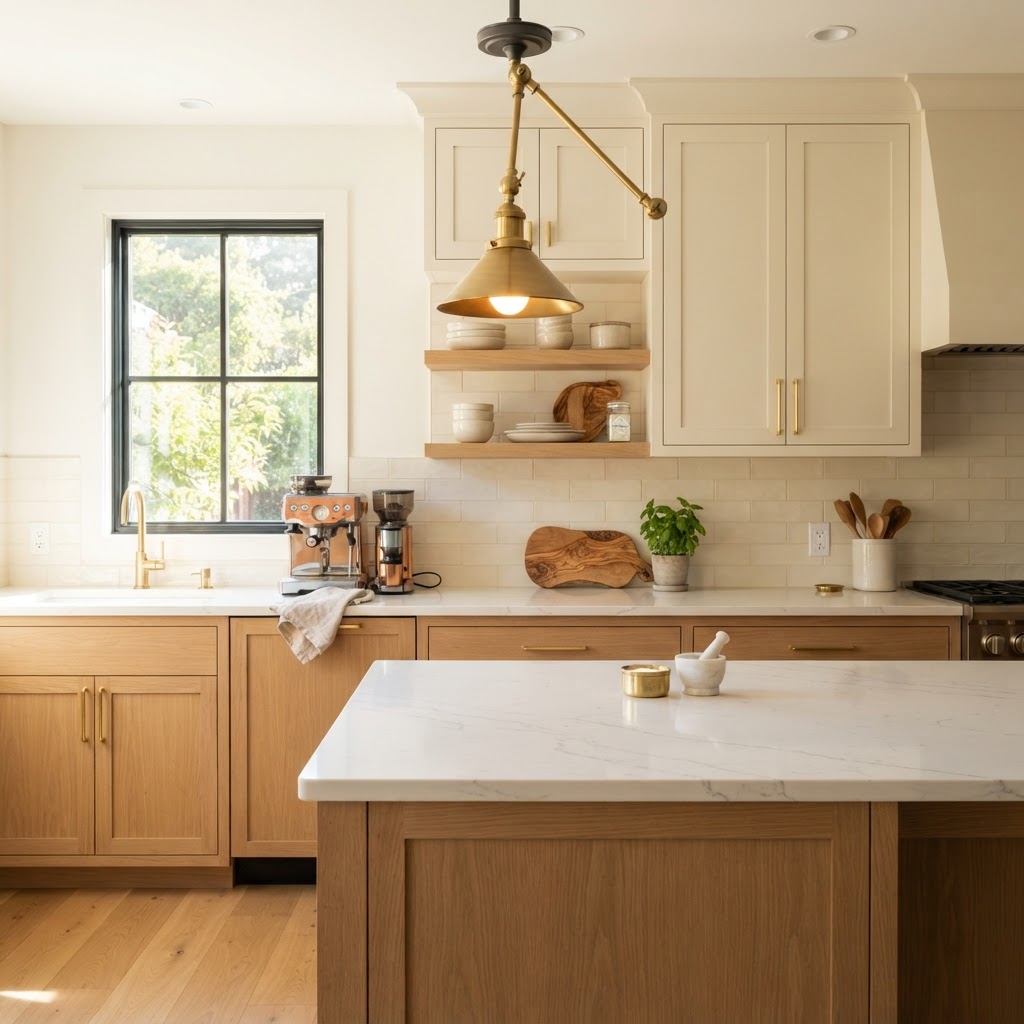
Lighting is the most crucial, yet often overlooked, element for changing the mood of your kitchen. Standard builder-grade flush mounts frequently emit a cold, blue-toned light that makes spaces feel flat and institutional. Replacing these with statement lighting, such as a sculptural pendant or a brass-accented semi-flush mount, can change the entire personality of the room for less than $150. Beyond the primary fixture, under-cabinet LED strips are a non-negotiable upgrade; they provide necessary task lighting and highlight your backsplash, which makes the space feel luxurious. Aim for a warm color temperature between 2700K and 3000K, which is widely considered the “sweet spot” for residential comfort. By layering light—combining a statement pendant with task-specific LED lighting—you create a sophisticated atmosphere that feels far more expensive than a single overhead source. The goal is to eliminate dark, shadowed corners that visually shrink your floor plan.
The Power of a Statement Backsplash
In a tiny kitchen, the backsplash is a focal point because the surface area is limited, allowing you to splurge on premium materials without breaking the bank. Since you may only need 10 to 15 square feet of tile, you can afford high-end finishes like marble subway tiles, mosaic glass, or bold encaustic patterns that would be cost-prohibitive in a larger kitchen. If labor costs for professional installation are too high, consider high-quality peel-and-stick tiles. Modern advancements have made these options highly durable and water-resistant, often mimicking the look of real stone or ceramic grout lines with impressive accuracy for under $10 per square foot. The key to making a budget backsplash look expensive is precision: ensure your grout color matches the tile to create a seamless, monolithic look, or use a high-contrast grout to highlight a classic pattern. A well-executed backsplash adds immediate character and serves as the visual centerpiece that defines the “luxury” feel of your compact cooking space.
Investing in High-End Countertop Finishes
Countertops represent the most significant visual weight in a kitchen, making their material choice paramount to a high-end aesthetic. While granite and quartz are the gold standards, their cost can be excessive for a small renovation. Butcher block remains an excellent, budget-friendly alternative, priced at roughly $30-$50 per linear foot, providing warmth and texture that ages beautifully with proper maintenance. For those craving the stone look, consider concrete resurfacing kits that allow you to cover existing worn laminate with a modern, industrial grey finish. Alternatively, high-quality laminate sheets that mimic natural stone are available for a fraction of the cost of real slab quartz. The secret to a premium appearance is selecting a design that minimizes visual “noise”—a uniform, solid surface without a chaotic pattern makes the room appear larger than it actually is. Always ensure the edges are finished with a clean, squared-off profile rather than a rounded “bullnose,” which immediately signals a lower-budget construction.
The Art of Decluttering and Minimalism
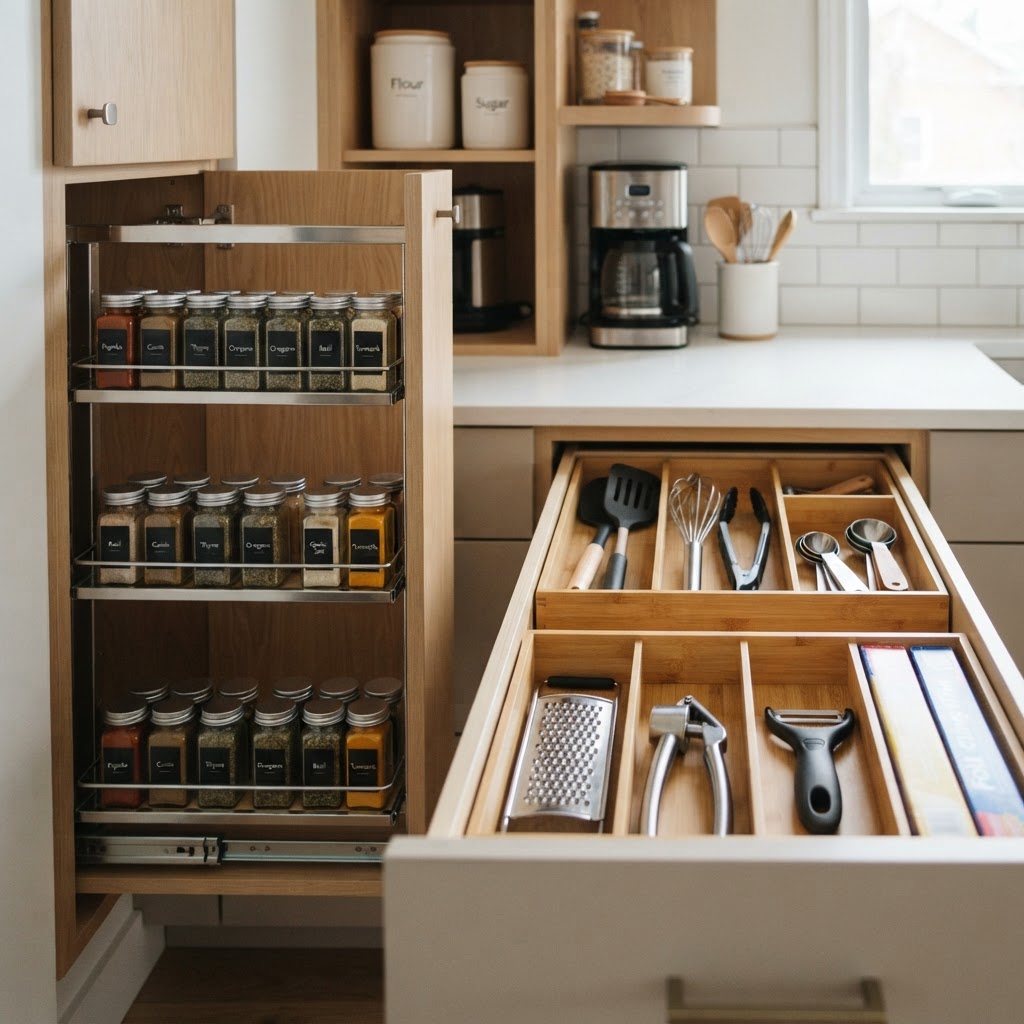
Nothing makes a kitchen look cheaper than excessive clutter, as countertops act as visual anchors in small spaces. To achieve a luxury look, commit to a strict “everything off the counter” policy, which forces you to be intentional about storage. Store bulky appliances like mixers and blenders out of sight in cabinets, or use mounting brackets to tuck them under cupboards.
Essential Organization Tips
- Use drawer dividers to keep utensils organized and hidden.
- Install magnetic strips on walls to hold knives securely.
- Utilize the insides of cabinet doors for spice racks or pan lid holders.
- Opt for uniform storage containers to keep dry goods looking orderly.
Incorporating Texture and Color
Monochromatic palettes are the primary tool for making small spaces feel expansive rather than cramped. Consider painting your cabinets the same hue as your walls, which helps the cabinetry recede and creates the illusion of infinite space. If you prefer color, pick one rich, deep hue—such as navy, forest green, or charcoal—and commit to it across all surfaces. The secret to avoiding a “flat” feeling is layering textures: introduce a raw wood cutting board, a woven basket for fruit, a polished marble surface, and matte black hardware. Texture provides depth, which is the hallmark of professional interior design. By varying the materials within a unified color scheme, you create a sophisticated, layered look that feels intentionally curated rather than haphazardly assembled.
Smart Appliances and Layout Hacks
If your appliances are outdated, replacing them all is rarely a budget-friendly option. Instead, focus on small, high-impact replacements or creative maintenance to blend them into your cabinetry. A sleek, portable induction cooktop can replace an outdated range, offering a minimalist, modern aesthetic for a small fraction of the cost of a full oven upgrade. For those with a very small footprint, mobile kitchen islands on wheels provide a “pop-up” workspace that can be tucked away when not in use. Always look for multi-functional items; for example, a sturdy butcher block cutting board that sits over the sink effectively creates an extra two square feet of prep surface. By focusing on multi-use, flexible items, you maximize your functionality without sacrificing the clean lines that make a tiny space feel like a high-end galley.
FAQ
Q: What is the cheapest way to make cabinets look high-end?
Paint is the most effective and affordable way to update cabinets, specifically using a high-gloss enamel or a deep, moody matte finish. Complement this with modern, heavy-weight hardware in brass or matte black to complete the high-end look on a budget.
Q: Does painting cabinets make a small kitchen look bigger?
Yes, painting cabinets the same color as the walls creates a seamless, monochromatic effect that prevents the kitchen from feeling visually “broken up.” This trick helps cabinets recede into the wall, significantly increasing the perceived depth and size of the room.
Q: Are peel-and-stick backsplashes worth it for resale value?
High-quality peel-and-stick backsplashes can improve the aesthetic appeal of a home for a relatively low investment, though they may not add significant equity. They are an excellent solution for renters or homeowners looking to refresh a space quickly and cost-effectively without a professional contractor.
Q: What lighting temperature is best for small kitchens?
Warm white light, specifically between 2700K and 3000K, is the best choice for kitchens. This temperature creates an inviting, upscale ambiance, whereas cooler, bluer light can make a kitchen feel sterile, clinical, and cheap, especially in smaller, darker spaces.

Leave a Reply