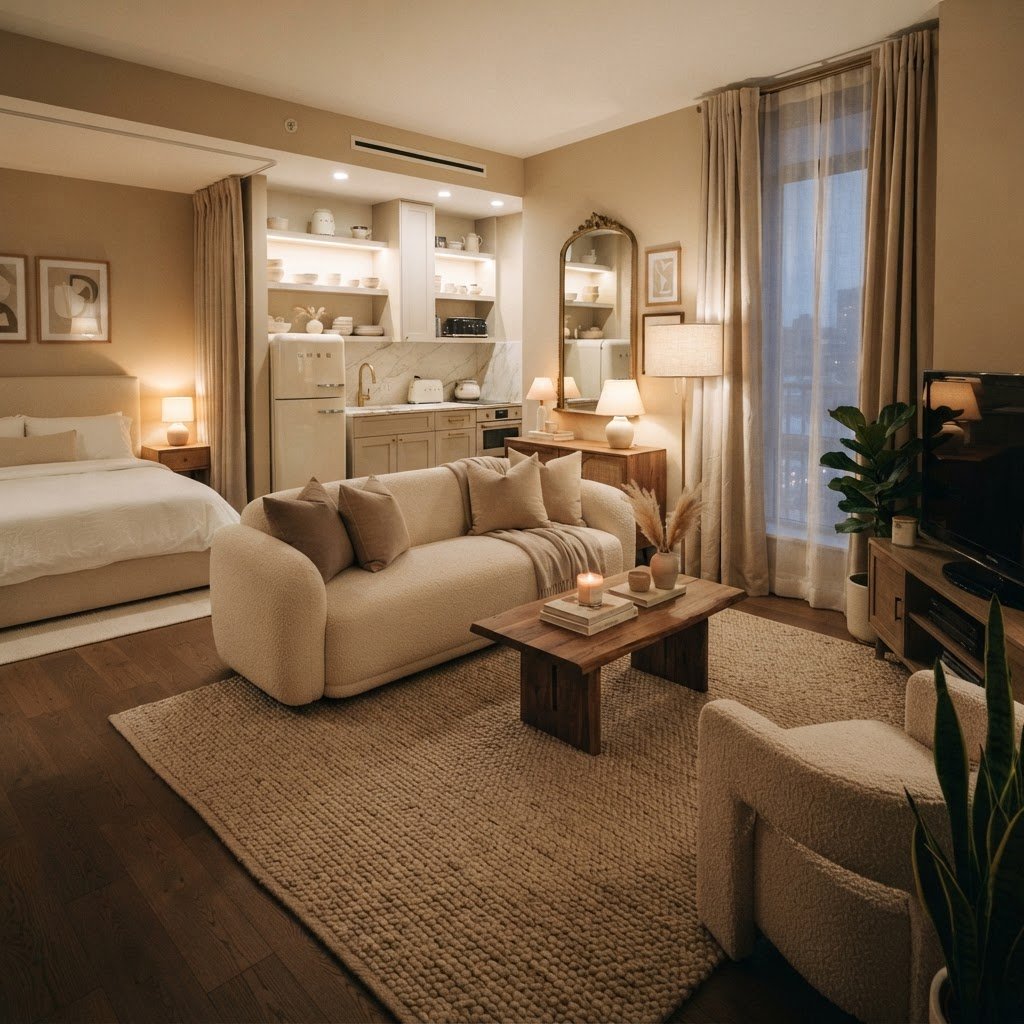
Small Apartment Ideas on a Budget That Look Expensive
You can make a small apartment look expensive on a budget by implementing high-impact design choices such as monochromatic color schemes, layered warm lighting, and elevated textile selections. By focusing on intentional spatial organization and scaling your decor to emphasize verticality, you create a sophisticated environment that feels luxurious regardless of the square footage.
The Foundation of High-End Design
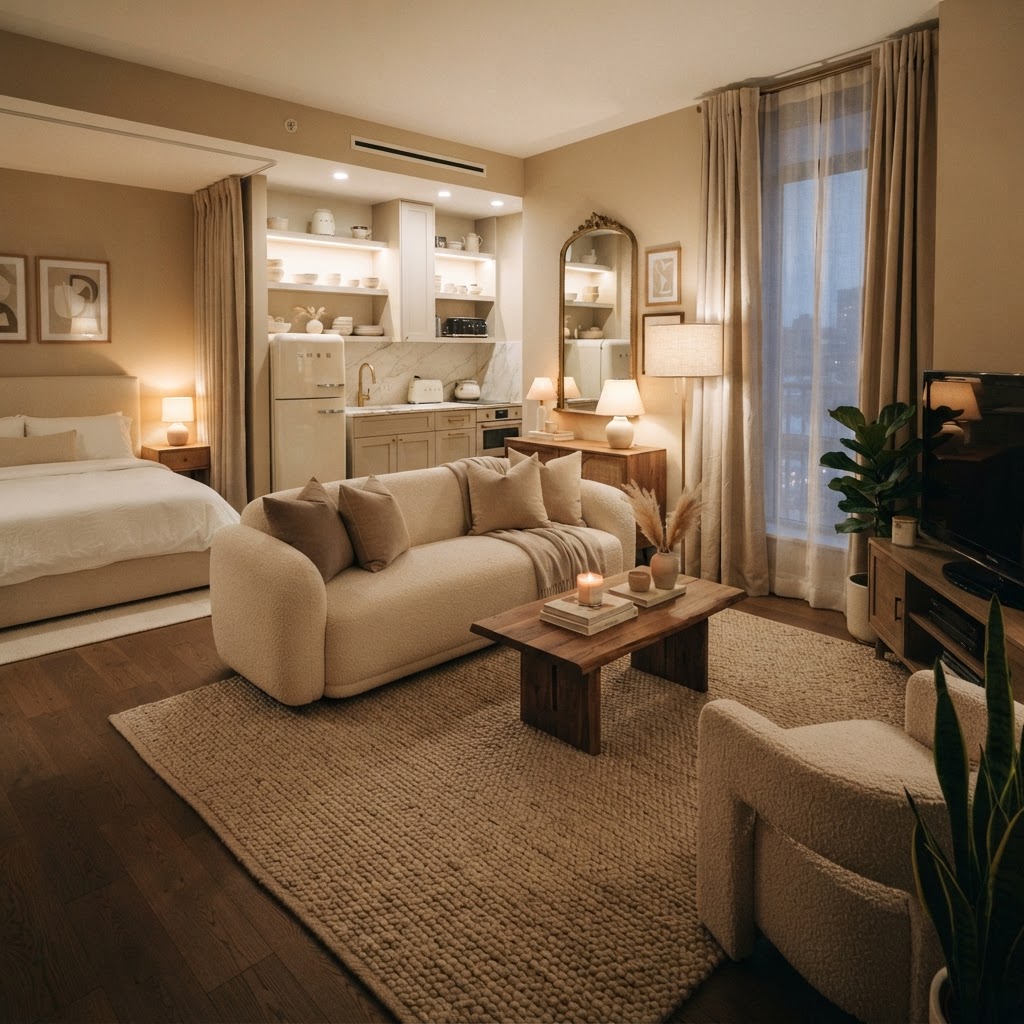
To achieve an expensive look, you must first master the art of editing to remove visual noise. A crowded home feels smaller and less curated, regardless of how much you spend, so start by removing unnecessary clutter that obscures your best architectural features. Minimalism in a luxury context is not about bare walls; it is about choosing items that serve a specific purpose or bring genuine, high-quality character to your space.
Color palettes are your secret weapon in this endeavor, with monochromatic schemes offering the highest ROI. By using variations of creams, beiges, and soft greys, you create a sense of cohesion and airiness. When your walls, curtains, and furniture share a similar undertone, the eye perceives a larger, more unified room. This is one of the most effective small apartment ideas on a budget, as paint costs roughly $40 to $60 per gallon and provides an immediate, transformative impact on the perceived value of your home.
Maximizing Your Layout and Flow
When working with a small space, the strategic placement of your furniture dictates the entire mood of the room rather than the physical size of the pieces. Resist the urge to push every piece against a wall; this often creates a ‘waiting room’ effect that feels stark and impersonal. Instead, float your furniture toward the center of the room to create a more intimate conversation area, even if it only leaves a 12-inch walkway behind the sofa.
Your sofa is arguably the most important investment piece in your apartment, but you can achieve a luxury aesthetic for less by reupholstering a vintage find or using high-quality, oversized throw pillows that mimic designer fabrics like Belgian linen or velvet. A well-placed rug serves as an anchor, defining the living zone and adding essential texture to the hardwood or carpet underneath. Aim for a rug size that allows at least the front legs of your seating to sit on it; a rug that is too small will make the entire room feel chopped up and less expensive.
Lighting as a Design Statement
The secret to an expensive look is rarely the furniture itself; it is the lighting scheme, which is frequently overlooked. Builder-grade overhead lighting is often harsh and flat, which immediately cheapens the appearance of any interior by casting unforgiving shadows. Swap out generic fixtures for statement pieces that reflect your personal style, such as a sculptural pendant or a modern chandelier, which can be sourced for under $150 from reputable online retailers.
In addition to the main fixture, layering your lighting is essential for creating warmth and professional depth. Place lamps at different heights—table lamps on end tables, floor lamps near reading nooks, and wall-mounted sconces—to ensure you never rely on a single light source. Warm-toned bulbs in the 2700K to 3000K range are mandatory, as cool-toned lighting above 4000K tends to look clinical. When you use multiple sources of light, you create soft shadows that add depth and dimension, effectively masking budget finishes.
Mastering Textile Choices
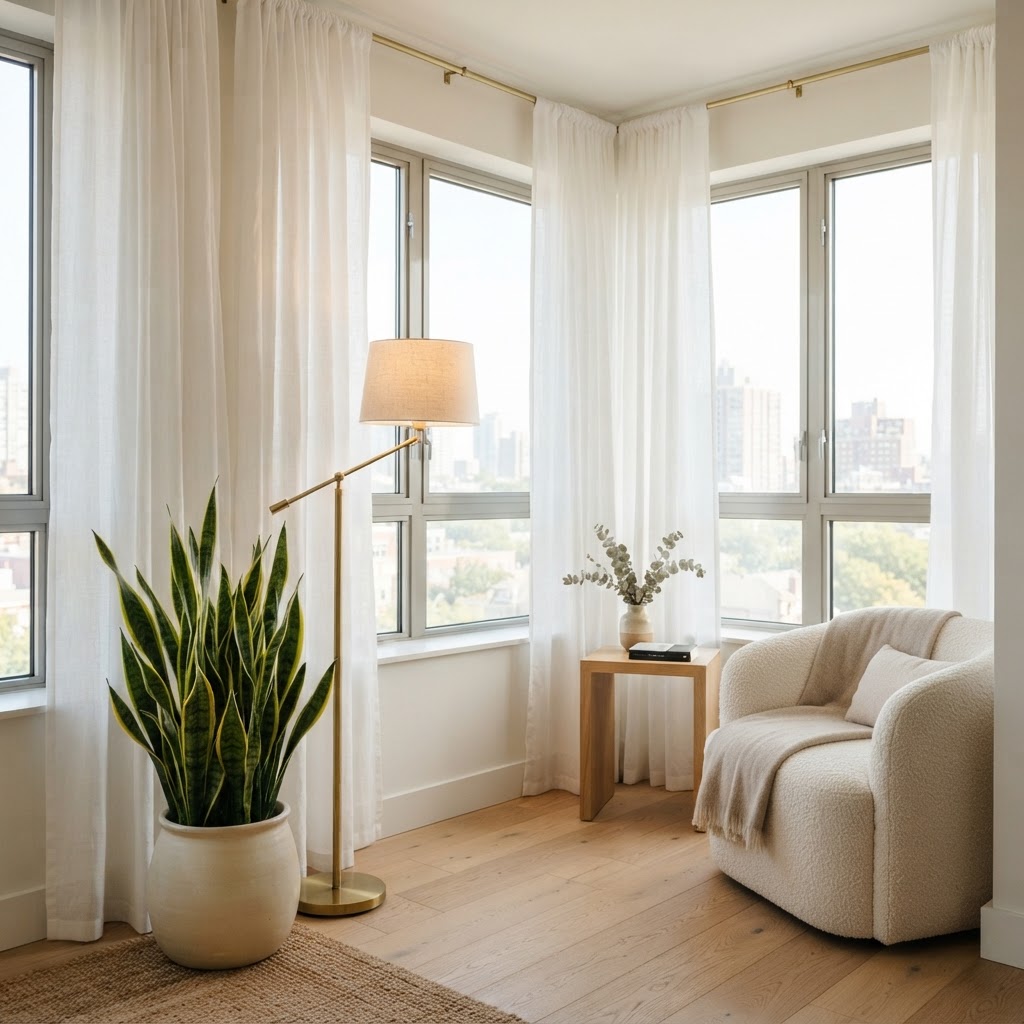
Fabric choices can instantly make a room look high-end or budget-friendly, so prioritize natural fibers over synthetic materials. Gravitate toward linens, cottons, velvets, and wools, as these materials age beautifully and provide a tactile, premium feel. Avoid shiny, cheap synthetics that look reflective under bright overhead lights. A thick, textured wool rug can transform a plain room into an inviting retreat, while linen curtains hung high and wide—ideally 6 inches above the window frame—can make your ceilings feel significantly taller.
Don’t forget the power of window treatments to elevate the architectural value of a room. Most apartments come with basic plastic blinds, but you can hide these by installing curtain rods several inches above the frame and letting the fabric touch the floor. This draws the eye upward and gives the illusion of grander windows. Adding subtle patterns through throw blankets or pillow covers provides a designer touch without the commitment or price tag of permanent decor changes.
Styling Surfaces and Shelving
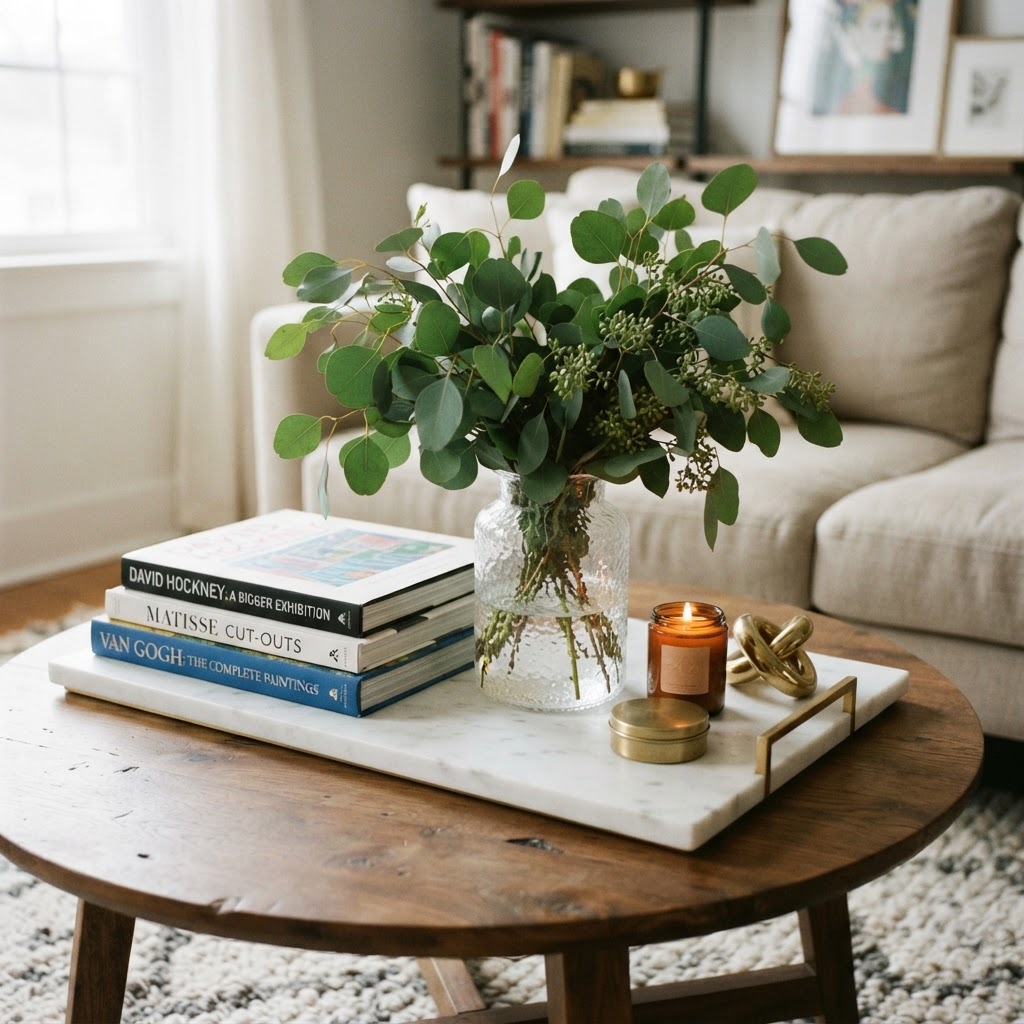
How you style your flat surfaces reflects your attention to detail and indicates a curated lifestyle. A coffee table should not be a catch-all for mail and keys; it should be a focal point styled with a 3-item arrangement: art books, a decorative tray, and a sculptural object or fresh flowers. This intentional curation makes a massive difference in how the entire room is perceived by visitors and residents alike.
Use vertical space to draw the eye up, especially in units with limited floor space. Floating shelves are perfect for apartment decorating ideas because they do not take up floor space but offer plenty of room for displaying curated items. Keep your shelves organized by grouping items in odd numbers, which is a classic design rule that makes arrangements feel more balanced and pleasing to the human eye. Aim for 60% decor and 40% empty space to ensure the area feels curated rather than cluttered.
Incorporating Art and Personal Touches
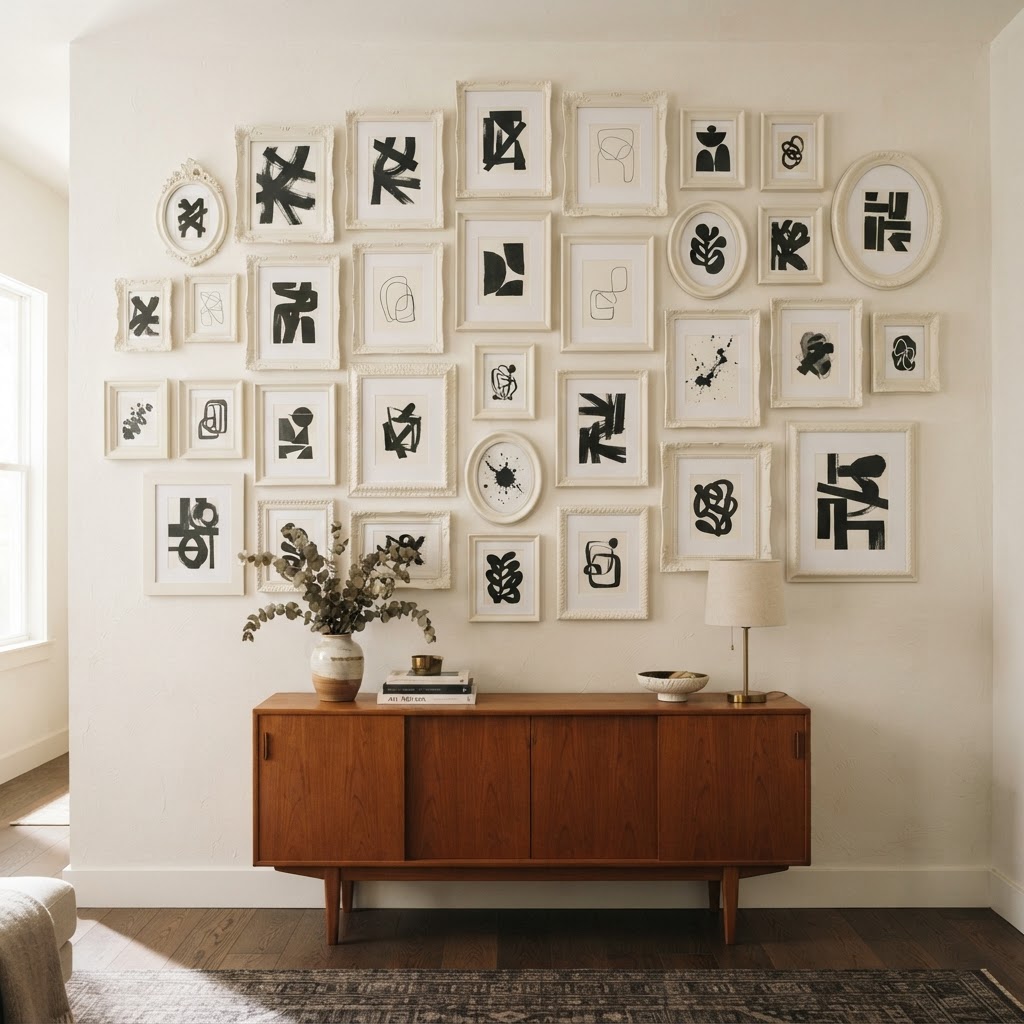
Empty walls are a missed opportunity that can leave a space feeling sterile and temporary. Large-scale art can make a small room feel grand, but high-end gallery pieces are often out of reach. Look for digital prints online that you can frame yourself, or visit local thrift stores to find interesting vintage frames. Oversized frames with wide white mats always look more expensive, even if the artwork inside is simple, because they provide a “gallery” look that signals intentionality.
Art is subjective, so use it to tell your story while maintaining a consistent framing style. Whether it is photography you have taken yourself or a collection of botanical prints, your wall decor should reflect your personality. By framing these items with care, you bridge the gap between ‘homemade’ and ‘high-end’ design. Remember that the consistency of your framing style will do more to unify your decor than the actual artwork itself; choose a single finish, such as matte black or warm wood, for all frames in a single sightline.
Bringing in Nature for Vitality
No luxury home is complete without greenery, as plants breathe life into an apartment and help bridge the gap between indoor and outdoor spaces. If you lack natural light, consider low-maintenance, sculptural options like Snake plants or ZZ plants, which thrive in ambient light and look modern. Adding a living element adds a texture that is impossible to replicate with manufactured decor.
Potting your plants in cohesive containers—such as ceramic, terracotta, or woven baskets—adds a layer of sophistication that standard nursery pots cannot provide. Avoid the cheap plastic pots that plants come in, as they break the aesthetic flow of a room. By spending an extra $10 to $20 per plant on a quality pot, you ensure the greenery acts as the final layer in your design, softening corners and providing a natural focal point that feels expensive and intentional.
FAQ
How can I make a small apartment feel bigger on a budget?
Use monochromatic color palettes and light-reflecting surfaces to trick the eye into seeing more space. Keeping walls and curtains in similar, light tones removes visual barriers, while floating furniture away from walls creates better flow and makes the floor area feel more open and purposeful.
What is the best way to upgrade builder-grade apartment lighting?
Swap generic overhead fixtures for stylish pendants or chandeliers and add layered floor and table lamps for soft, ambient light. Use warm-toned bulbs between 2700K and 3000K, as these colors feel more expensive and inviting than the harsh, clinical light produced by standard cool-toned bulbs.
Are floating shelves good for small apartments?
Yes, floating shelves utilize vertical wall space without consuming valuable floor area, allowing you to display decor effectively. They are excellent for keeping surfaces like coffee tables clear, which reduces visual clutter and contributes to a more sophisticated, high-end appearance in any compact living space.
How do I choose art that makes my home look expensive?
Prioritize oversized frames with wide white matting, which creates a custom-gallery aesthetic regardless of the print inside. Maintain a consistent framing style throughout the room, such as using all black or all wood frames, as this color and style uniformity is what truly makes a collection feel curated.
What are the best plants for a low-light apartment?
Snake plants and ZZ plants are the best choices for low-light apartments because they are highly durable and possess a sculptural, architectural silhouette. Placing them in premium ceramic or woven basket planters immediately elevates their visual impact, making your greenery look like a deliberate design choice.

Leave a Reply