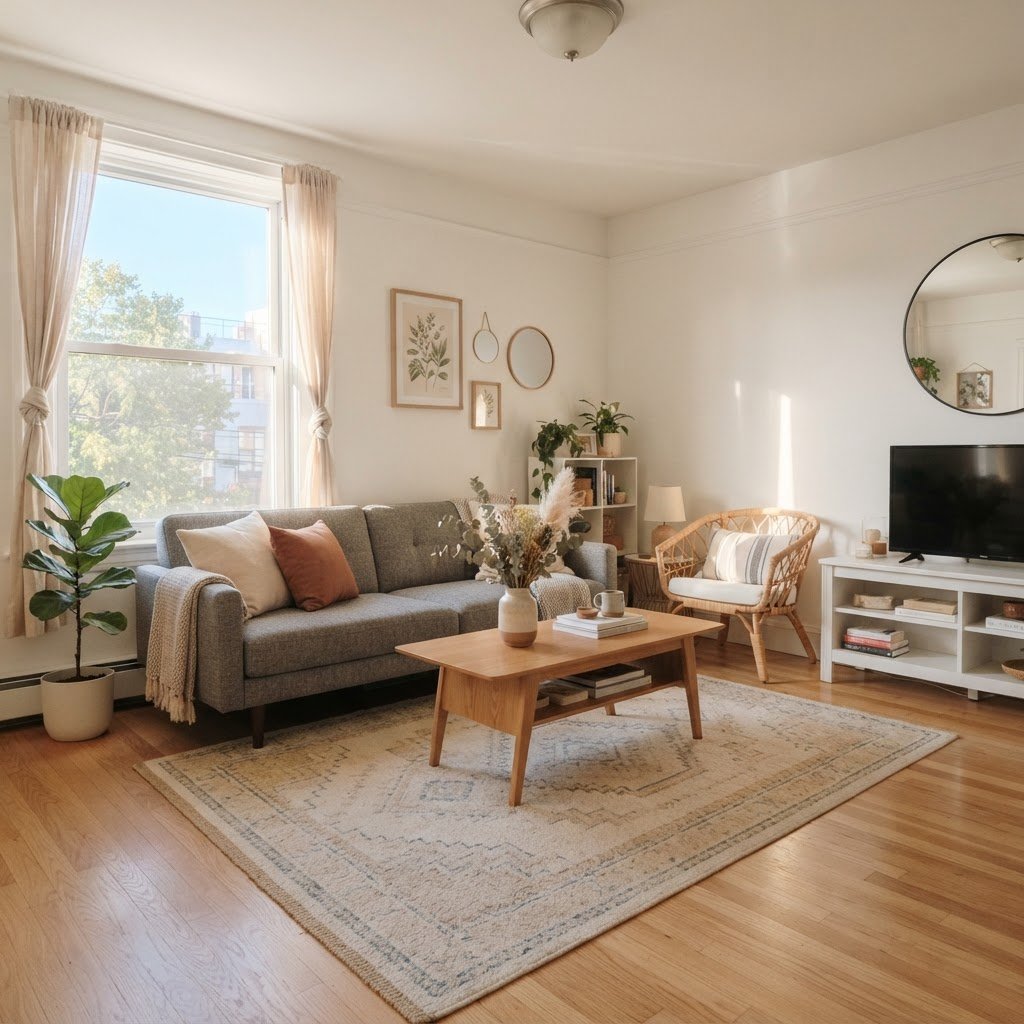
10 Budget Small Apartment Decorating Ideas for Your Space
To decorate a small apartment on a budget, prioritize multi-functional furniture, utilize vertical wall space for storage, and implement a neutral color palette to maximize natural light. By choosing slim-profile furniture and defining zones with rugs, you can create a spacious, functional sanctuary without exceeding your budget.
Rethink Your Furniture Layout
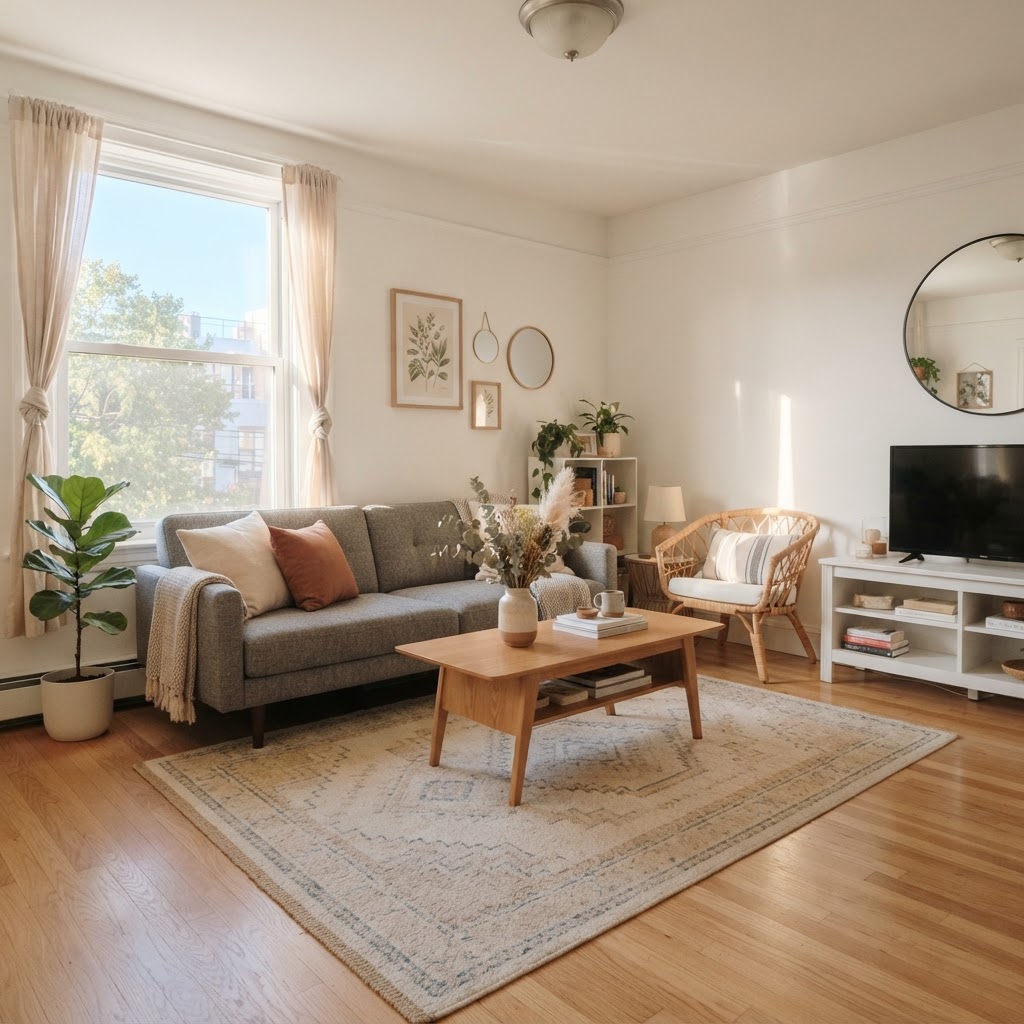
Optimizing your floor plan is the most effective way to make a small apartment feel larger by creating clear pathways and open sightlines. Pulling furniture at least 3 inches away from walls creates a “floating” effect that adds perceived depth, while choosing pieces with exposed legs—like a sofa with tapered wooden feet—allows the eye to see more floor area. When selecting furniture, prioritize a “scale-down” strategy. A standard 90-inch sofa often overwhelms a studio, whereas a 70-inch apartment-sized loveseat provides the same utility with a significantly smaller footprint. Aim for pieces that do not block windows or natural entryways, as unobstructed light is crucial for maintaining an airy atmosphere.
The Importance of Multi-Functional Items
In tiny homes, every square inch must provide value, making multi-functional furniture essential for reducing clutter. A storage ottoman priced around $50 to $100 can serve as a coffee table, extra guest seating, and a hidden bin for blankets or electronics. Similarly, drop-leaf dining tables are perfect for small spaces; they expand when hosting guests and collapse into a slim console table when not in use. By selecting furniture that serves at least two purposes, you eliminate the need for secondary storage units, freeing up precious square footage for movement.
Lighting Techniques to Expand Space
Layering lighting is the most effective way to eliminate “dead zones” in a small apartment that make the space feel smaller than it is. Avoid relying solely on a harsh central overhead fixture, which casts shadows that emphasize room boundaries; instead, use at least three light sources per room to create an even, expansive glow. Use floor lamps in corners to brighten dark pockets, task lamps on desks for functional lighting, and LED strip lighting under cabinets to draw the eye outward. Strategically placing mirrors opposite light sources can also amplify natural light by up to 50%, making even a windowless bathroom feel bright and open.
Using Textiles to Define Zones
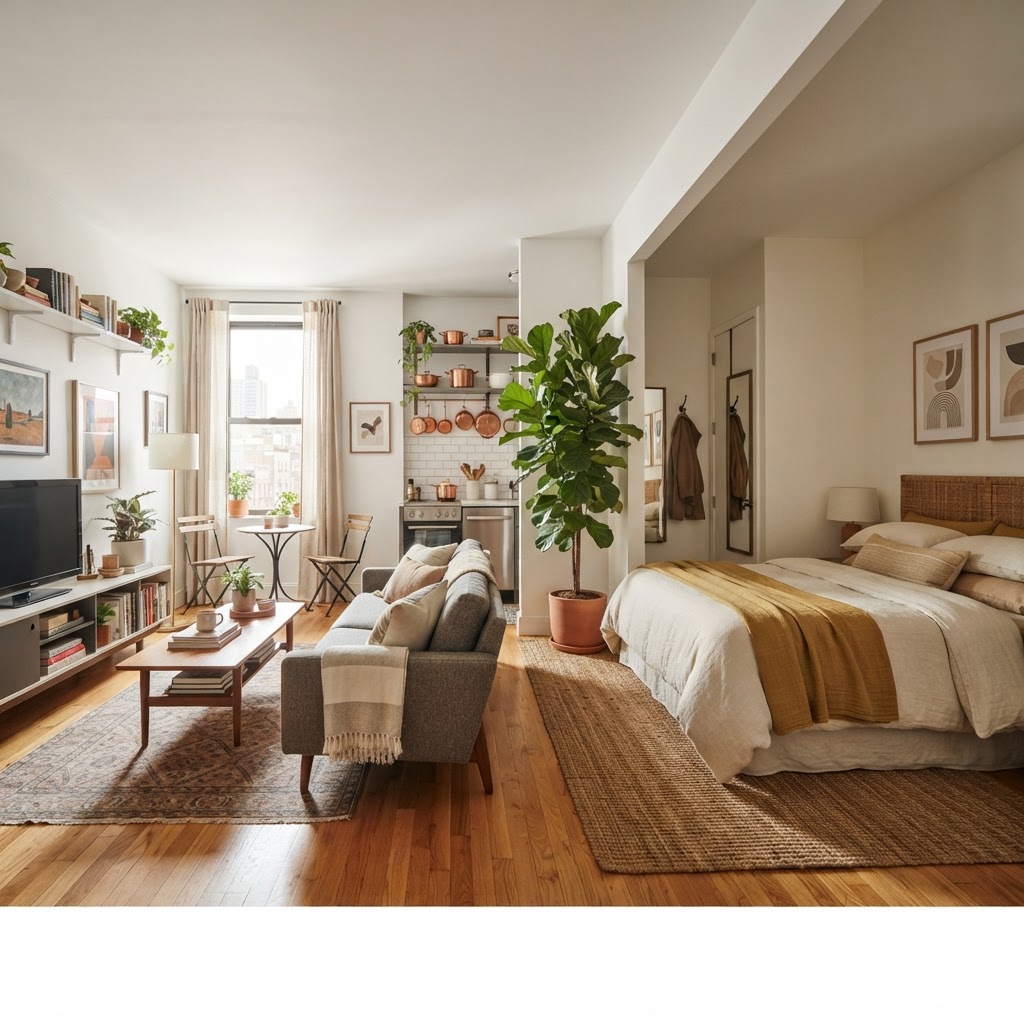
Textiles provide the most affordable way to create visual boundaries in an open-concept layout without the need for permanent walls or bulky room dividers. A large area rug acts as the “anchor” for your living area; ensure that at least the front legs of your sofa and chairs sit on the rug to unify the zone. For curtains, hanging rods at the ceiling line—often 8 to 12 inches above the window frame—draws the eye upward and creates an illusion of taller, more grand walls. This simple vertical adjustment makes the entire room feel more intentional and sophisticated.
DIY Upgrades for a Custom Look
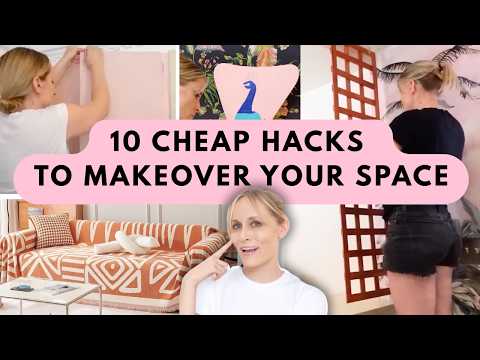
DIY projects are the best way to add personality to a rental while keeping costs under $200 for an entire room refresh. Simple modifications, such as swapping out standard contractor-grade cabinet pulls for brushed gold or matte black handles, provide an instant luxury aesthetic that costs as little as $3 per handle. Removable, peel-and-stick wallpaper is another renter-friendly miracle; applying it to just one “accent wall” can drastically change the mood of a room without risking your security deposit. When creating gallery walls, use thrifted, mismatched frames painted in a single color (like uniform white or black) to create a cohesive, high-end display for less than $50.
Vertical Storage Solutions
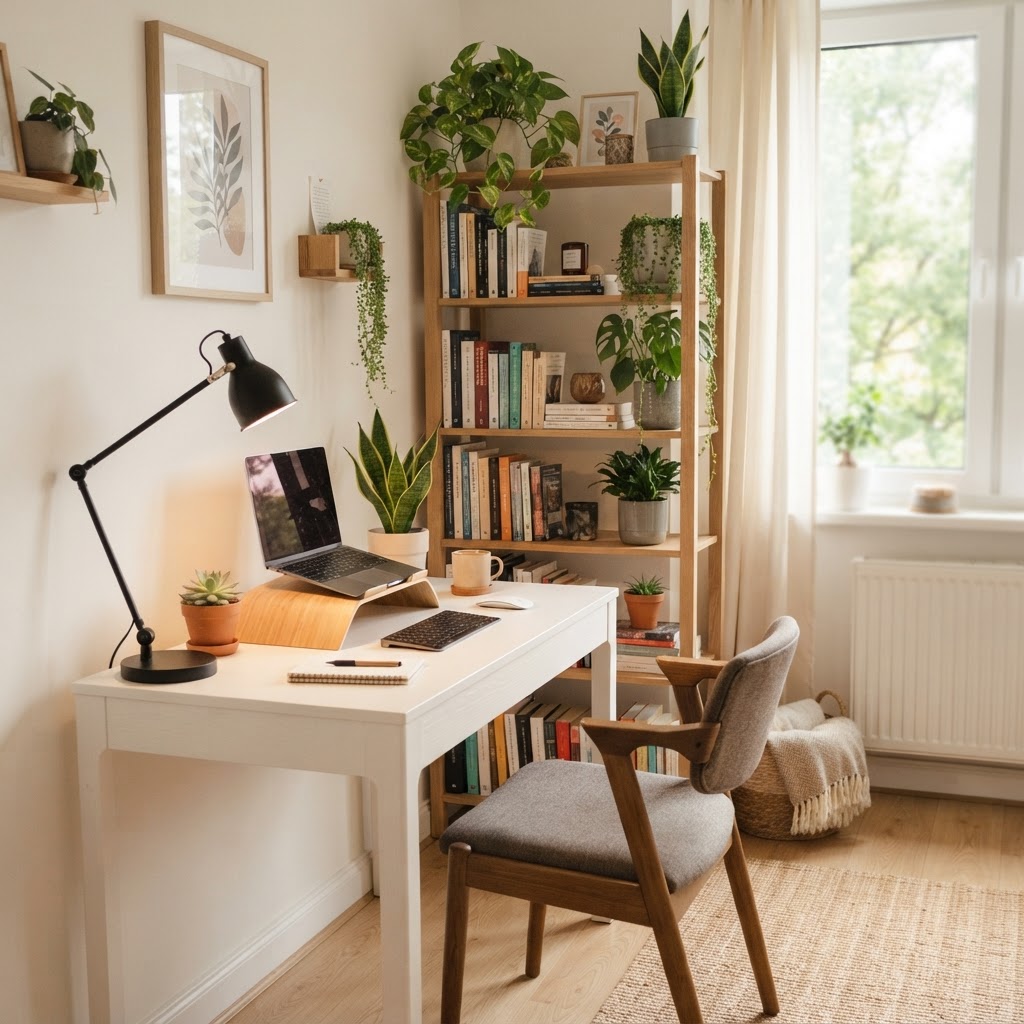
Vertical storage is the ultimate hack for small-space living because it utilizes under-used space above your line of sight. Installing floating shelves 12 to 18 inches below the ceiling draws the eye up, making the apartment feel taller while providing functional storage for books, plants, or seasonal items. In areas like entryways or kitchens, use “over-the-door” organizers or wall-mounted pegboards to reclaim valuable floor space. By keeping the floor clear of “stuff,” you maintain a clean, minimalist aesthetic that makes even a 300-square-foot studio feel organized and intentional.
Choosing a Cohesive Color Palette
Adhering to a strict color palette prevents visual clutter and allows your small apartment to feel larger and more serene. Aim for the 60-30-10 rule: 60% of the room should be a neutral base color (like cream, soft grey, or white), 30% should be a secondary color (like wood tones or muted blues), and 10% should be an accent color (like vibrant pillows or art). When the eye can travel around a room without being jolted by clashing patterns, the subconscious registers the space as being more orderly and expansive. Keep large items, such as bedding and curtains, in your neutral base category to avoid overwhelming the limited footprint.
Incorporating Nature into Your Interior
Plants act as organic sculptures that bring life into a small apartment without consuming precious floor space. Utilizing hanging planters or “tiered” plant stands allows you to layer greenery vertically, creating a lush look that draws the eye upward. For low-light apartments, choose hardy varieties like Snake Plants or Pothos, which can thrive in corners with minimal natural exposure. These plants are cost-effective at around $10 to $20 and significantly improve indoor air quality, making your small apartment feel like a vibrant, breathing ecosystem rather than a cramped living quarters.
FAQ
Q: How can I make a dark apartment look brighter?
Use a combination of layered lighting and strategically placed mirrors to bounce light throughout the room. Placing a large mirror directly across from your main light source or window effectively doubles the perceived light and depth of the space.
Q: What is the best way to store clothes in a small apartment?
Utilize vertical space by adding high-reaching shelving units or over-the-door hooks to keep items off the floor. Under-bed storage bins are also essential for housing seasonal clothing, effectively using “dead” space underneath your primary furniture.
Q: Can I decorate a rental without damaging walls?
Use peel-and-stick wallpaper, command strips, and tension rods to add decor without permanent drilling. These products are designed for easy removal, ensuring you can customize your space while maintaining your security deposit in full.
Q: How do I choose furniture for a small living room?
Prioritize furniture with slim profiles and exposed legs to minimize visual weight. Look for multi-functional pieces, such as ottomans with built-in storage or nested coffee tables, to ensure every item provides maximum utility for the space it occupies.
Q: What colors make a small room look bigger?
Light, monochromatic color schemes including whites, creams, and soft greys create a seamless look that expands the space. By painting your baseboards and walls the same light color, you blur the edges of the room, making the walls feel further apart.

Leave a Reply