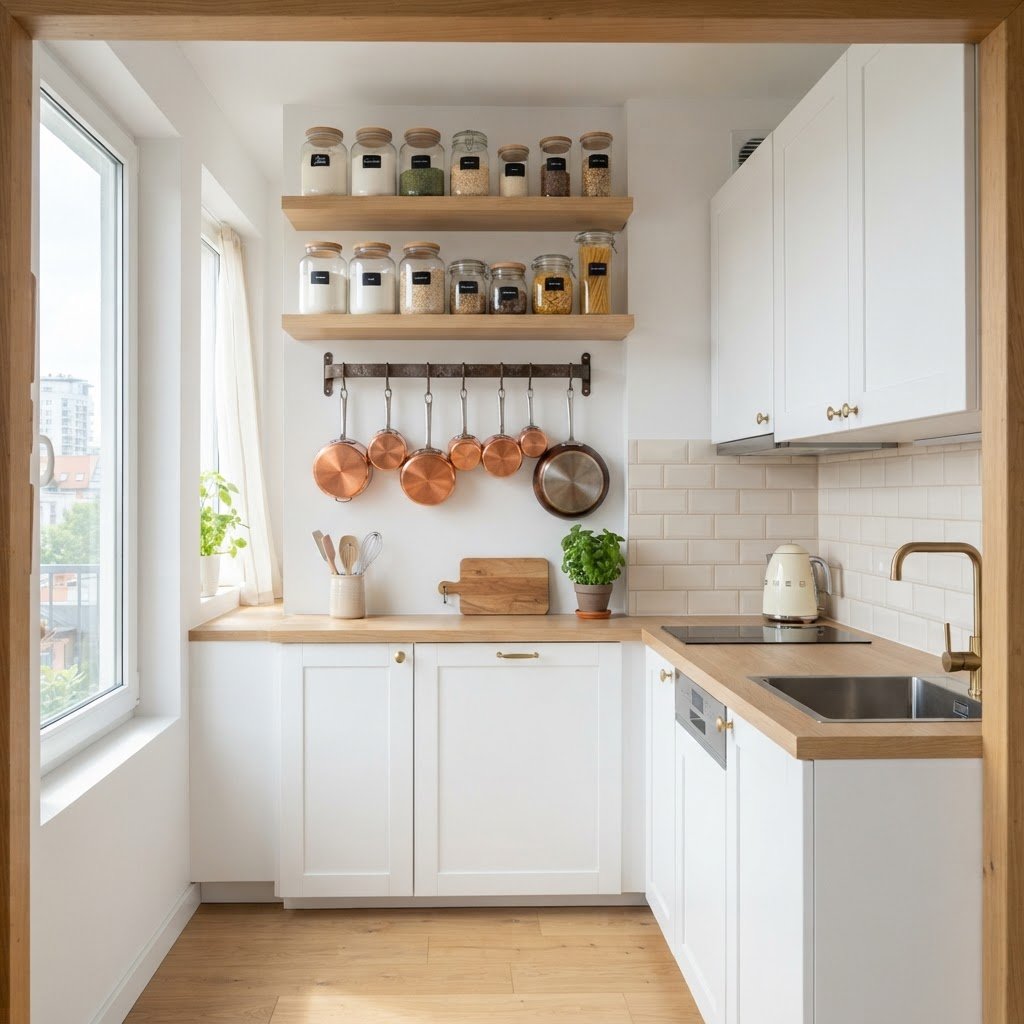
Discover creative storage solutions to maximize your small apartment kitchen, ensuring every inch of your space is functional, organized, and clutter-free.
Maximize tiny apartment kitchen storage by utilizing vertical wall space, installing cabinet organizers, and adopting a ruthless decluttering policy. By moving bulky items off counters onto wall-mounted racks and using stackable, transparent containers, you can increase your usable storage capacity by up to 40% while maintaining an efficient, functional workspace.
Maximizing Vertical Space
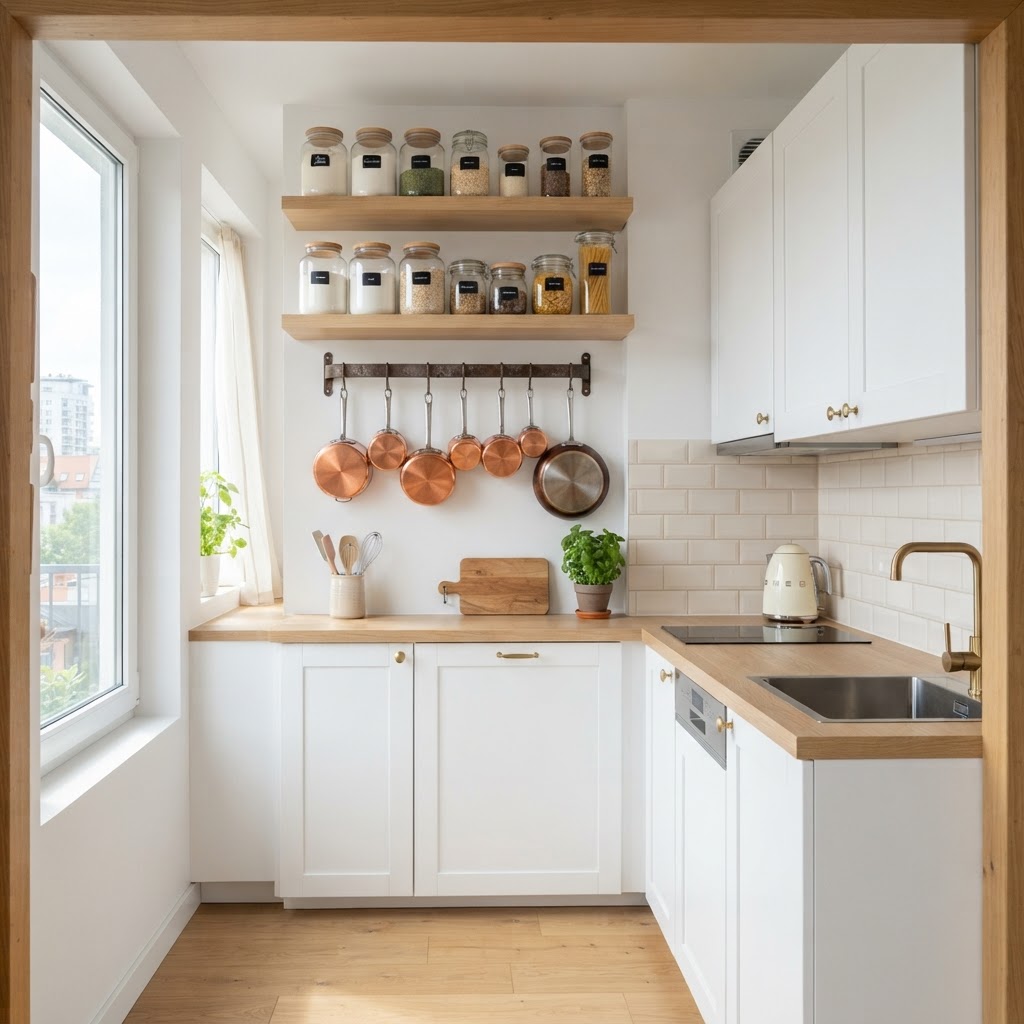
When horizontal surface area is limited, you must look up to leverage your walls as an underutilized storage goldmine. Installing a sturdy pegboard or a series of stainless steel rails allows you to move heavy pots, pans, and daily utensils off your countertops entirely. According to interior design standards, keeping frequently used items at eye level reduces meal preparation time by approximately 15% because tools remain within immediate arm’s reach. For renters, tension rods or adhesive-backed Command hooks offer a non-damaging way to suspend mugs, strainers, and measuring cups, effectively freeing up deep drawer space for bulkier bakeware. Utilizing vertical space allows you to keep your essential kitchen tools organized while maintaining a clean, open aesthetic in even the smallest studio apartments.
Optimizing Your Cabinet and Drawer Potential
Inside your cabinets and drawers, success relies on using high-functioning organizers that prevent the common chaos of loose items. Drawer dividers are non-negotiable for keeping cutlery separated, while expandable inserts can accommodate odd-sized drawers found in older apartment buildings. For deep corner cabinets, a lazy susan is a game-changer that increases usable surface area by 50% by allowing you to rotate hidden items to the front. We recommend measuring your cabinet interiors to the exact millimeter before purchasing plastic or bamboo bins; products like the IKEA Variera line are specifically engineered to fit standard European and American cabinetry dimensions, ensuring zero wasted space. By compartmentalizing your storage, you eliminate the “junk drawer” effect, ensuring every item has a dedicated, accessible home.
Mastering the Cabinet Door
The back of your cabinet door is prime real estate that is often overlooked in apartment living. You can attach a slim, adhesive-backed metal rack to hold your cutting boards, aluminum foil boxes, or even use a series of adhesive hooks for your measuring spoons and whisks. These small, low-cost modifications ensure that you maximize every square inch, turning a plain wooden door into a highly effective tool-storage solution. Always use waterproof adhesive strips to withstand the humidity common in kitchen environments.
Implementing Smart Pantry Hacks
Even without a dedicated walk-in pantry, you can create a highly efficient system using a slim rolling utility cart or a designated cupboard zone. Consistency is key when managing limited pantry area; decanting dry goods like pasta, flour, and grains into uniform, stackable square containers minimizes wasted air space. Square containers are 25% more space-efficient than round ones because they fit flush against each other. If your shelves are fixed, consider adding adjustable shelf inserts to split vertical gaps, allowing you to store shorter cans below and taller oil bottles above. This strategy keeps your inventory visible at a glance, preventing the purchase of duplicate items and saving you money on your grocery budget throughout the year.
The Power of Baskets and Bins
Using a basket to group similar items is a simple kitchen organization strategy that prevents small packets and bottles from toppling over. Placing a labeled bin inside your cupboard to hold cleaning supplies or extra snacks keeps your kitchen tidy and makes it easy to pull out a single unit. Labels provide a 90% higher success rate in maintaining organization over time because they provide a clear visual cue for where items belong, preventing “misplacement drift” where objects end up in the wrong zone.
Rethinking Countertop and Under-Sink Areas
Your kitchen counter should be reserved exclusively for items you use daily to maintain a clear workspace. If your countertop is currently covered in appliances, relocate them to high shelving or mount them on wall-mounted racks to regain 100% of your prep area. Similarly, the area under your sink is often a dark, cluttered mess that can be reclaimed using clear, stackable plastic bins. Stacking bins vertically allows you to store heavy cleaning supplies on the bottom and lighter sponges or microfiber cloths on top. Utilizing clear bins is essential here, as it allows you to immediately see what you have in stock, preventing the common mistake of overbuying supplies that end up expiring before you can use them.
Choosing Multifunctional Tools
When purchasing new kitchen tools, always prioritize items that serve at least two purposes to minimize drawer clutter. An adjustable, over-the-sink colander or a cutting board that features built-in storage compartments can save significant space. Brands like OXO or Joseph Joseph offer ergonomic, collapsible tools that shrink to a fraction of their size when stored. Opting for multifunctional items reduces your total gadget count, keeping your kitchen lean and efficient.
Decluttering and Maintaining Your Small Kitchen
Storage solutions only function when your belongings are properly curated to fit your available capacity. If your cupboards are bursting, perform a ruthless decluttering session by applying the “one-in, one-out” rule: for every new item you bring into the kitchen, an old item must be donated or recycled. Evaluate your cookware and bakeware inventory—most households only require one chef’s knife, one paring knife, and two core sets of pans. By keeping only what you use at least once a month, you naturally free up space for items that matter. Setting a quarterly audit schedule to wipe down shelves and check expiration dates ensures your tiny kitchen stays functional. Using modular systems from stores like IKEA allows you to adapt your layout as your cooking needs evolve, turning a static space into a dynamic, well-organized home.
FAQ
How do I maximize storage in a very small kitchen?
Focus on verticality by installing wall-mounted racks, floating shelves, and over-the-door organizers to move items off your counters. Use clear, stackable containers in your pantry and cabinets to maximize every cubic inch of shelf height.
What are the best organizers for deep cabinets?
Lazy susans and pull-out sliding drawers are the most effective tools for deep cabinets. They allow you to access items stored in the back without needing to remove the front items, preventing clutter and hidden expired goods.
How often should I declutter my kitchen cabinets?
A quarterly decluttering session is recommended to maintain optimal storage capacity. Audit your pantry for expired goods and evaluate your cookware usage, removing any items you have not used in the past six months to keep your space functional.
Can I add storage to a rental kitchen without damaging walls?
Yes, use tension rods, adhesive hooks, and freestanding rolling carts to add storage without drilling. These options provide temporary, renter-friendly solutions that can be removed without leaving any permanent damage to your cabinets or wall surfaces.
What is the “one-in, one-out” rule?
The “one-in, one-out” rule is an organization habit where you must remove or donate one existing kitchen item for every new item you purchase. This keeps your inventory from exceeding your cabinet capacity and prevents overcrowding.
Leave a Reply