Archives 2026

Small Living Room Ideas for Narrow Rooms and Awkward Layouts

<p>Living in a home with limited square footage often feels like a puzzle, especially when you are trying to implement small living room ideas for narrow rooms and awkward layouts. Many urban apartments and older houses feature non-traditional shapes that can leave homeowners feeling frustrated about how to arrange furniture or maximize flow. However, what you initially perceive as a design limitation can actually be a unique opportunity to create a cozy, curated sanctuary that feels larger than its physical dimensions.</p>

<p>## Understanding Your Space Constraints</p>

<p><img decoding=”async” alt=”A sleek, light-gray sofa helps maximize space in this narrow living room.” src=”https://media.base44.com/images/public/6a748232e4d18e0a622ab665/4631c4f0d_generated_image.png” style=”display:block; margin:2.5em auto; max-width:100%; height:auto;” /></p>

<p>Before you start moving furniture, take a moment to analyze your room and consider the <a href=”https://smallapartmentdecorating.com/best-small-living-room-layouts/” style=”color: #2563eb; text-decoration: underline;”>best small living room layouts</a> that can help you overcome the &#8220;bowling alley&#8221; effect. Most narrow living room layouts suffer from a &#8220;bowling alley&#8221; effect, where the room is excessively long and thin. Conversely, awkward layouts often involve doorways that interrupt traffic paths or oddly placed windows that prevent wall-to-wall storage. Acknowledging these constraints is the first step toward effective interior design.</p>

<p><a href=”https://www.youtube.com/watch?v=GUPshihe3Wo” style=”color: #2563eb; text-decoration: underline;”><img decoding=”async” alt=”How to Decorate a Long Narrow Living Room (Like a Designer)” src=”https://img.youtube.com/vi/GUPshihe3Wo/hqdefault.jpg” style=”display:block; margin:2.5em auto; max-width:100%; height:auto;” /></a></p>

<p>### Identifying Key Traffic Lanes</p>

<p>The most common mistake in small living room design is blocking the natural pathways through the room. If your room is narrow, you must prioritize a clear path from the entry to the windows. Map out your walking route; if your sofa encroaches on this path, it will make the room feel cluttered and cramped regardless of how much floor space you actually have.</p>

<p>#### The Rule of Thumb for Flow</p>

<p>Always aim for at least 30 inches of space for major walkways. In a very narrow room, this might mean sacrificing a bulky coffee table in favor of slim side tables. Keeping the center of the room open creates a sense of airiness that prevents the walls from feeling like they are closing in on you.</p>

<p>## Strategic Furniture Selection</p>

<p><img decoding=”async” alt=”Built-in shelving helps organize awkward nooks and creates a seamless look.” src=”https://media.base44.com/images/public/6a748232e4d18e0a622ab665/ad09ce7d9_generated_image.png” style=”display:block; margin:2.5em auto; max-width:100%; height:auto;” /></p>

<p>When dealing with tight quarters, every piece of furniture must serve a purpose. Avoid the temptation to buy a massive sectional that fills the entire room. Instead, look for apartment-sized sofas with exposed legs. Seeing the floor underneath the furniture tricks the eye into perceiving more space, which is a classic trick for small living room ideas.</p>

<p>### Multi-Functional Pieces</p>

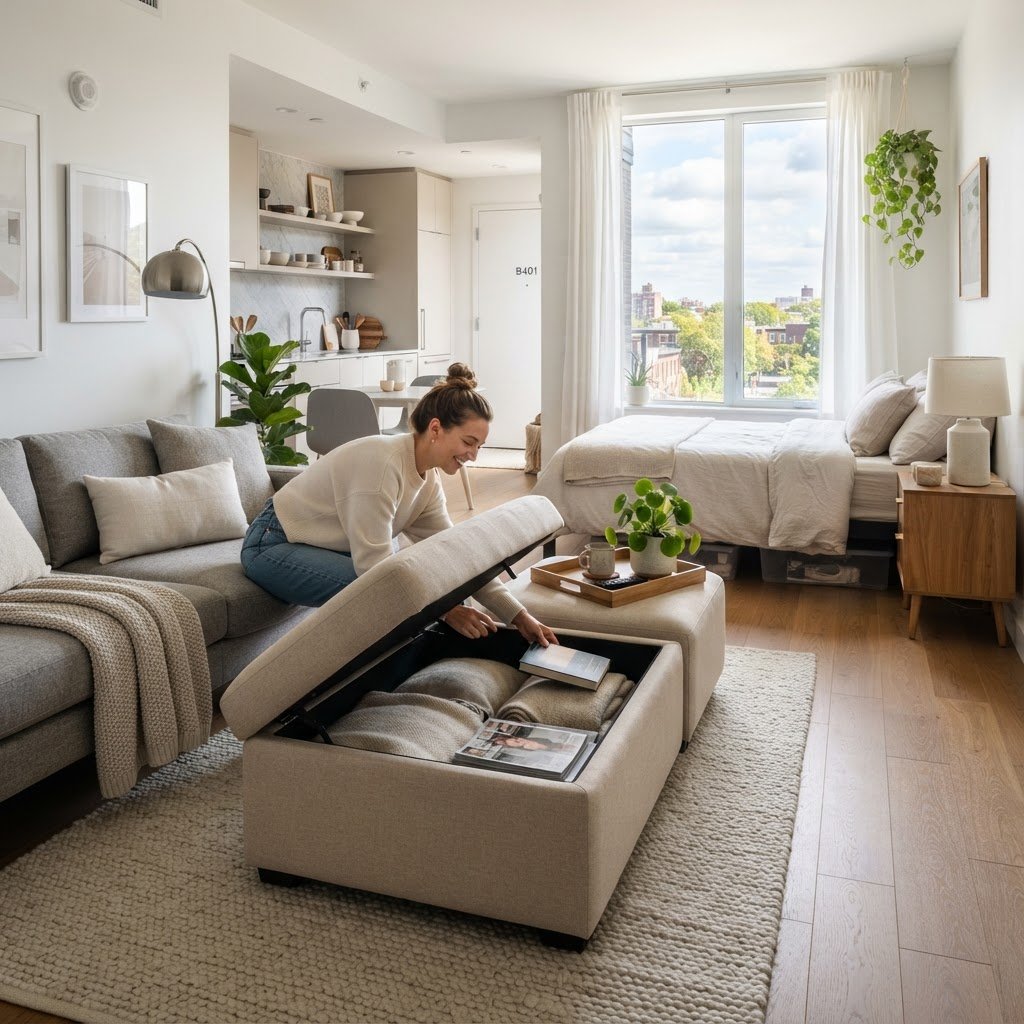
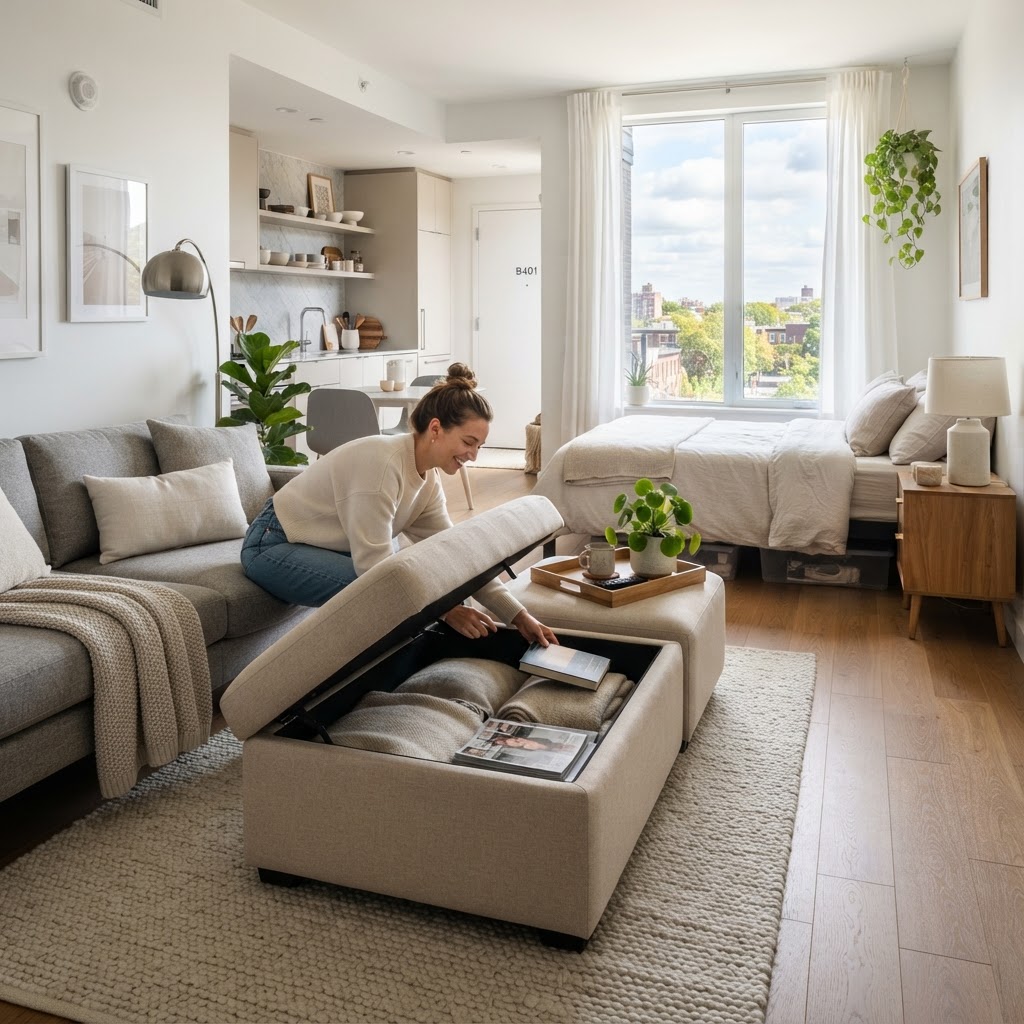
<p>Invest in items that offer hidden storage or double as work surfaces. An ottoman with interior storage can replace a coffee table while providing a place for blankets and remote controls. Similarly, nesting tables are perfect for narrow rooms because they can be tucked away when not in use.</p>

<p><a href=”https://www.youtube.com/watch?v=7gVFwEIrBYw” style=”color: #2563eb; text-decoration: underline;”><img decoding=”async” alt=”Decorating Tips For Narrow Or Odd Shaped Living Rooms” src=”https://img.youtube.com/vi/7gVFwEIrBYw/hqdefault.jpg” style=”display:block; margin:2.5em auto; max-width:100%; height:auto;” /></a></p>

<p>## Lighting and Color Psychology</p>

<p><img decoding=”async” alt=”Smart furniture choices and mirrors make this small room feel significantly larger.” src=”https://media.base44.com/images/public/6a748232e4d18e0a622ab665/b7065e1df_generated_image.png” style=”display:block; margin:2.5em auto; max-width:100%; height:auto;” /></p>

<p>Light is your best friend when attempting to open up an awkward living room layout. Dark colors can make a space feel moody and intimate, but if the room is naturally dark or cramped, stick to a monochromatic color palette. Painting walls, baseboards, and trim the same color can blur the edges of the room, making it harder for the eye to track where the wall ends.</p>

<p>### Maximizing Natural Light</p>

<p>If you have a window, keep treatments minimal. Sheer curtains allow light to filter in while maintaining privacy. If you must use blinds, ensure they can pull up completely above the window frame to maximize the view. Mirrors are also essential; placing a large mirror opposite a window will reflect natural light and create the illusion of depth.</p>

<p>## Zoning for Awkward Layouts</p>

<p>When your room has multiple &#8220;dead zones&#8221; or odd nooks, zoning becomes critical. Use area rugs to define the living space, separating it from an entry or dining area. Even in a narrow room, a rug serves as a visual anchor that keeps your furniture groupings feeling intentional rather than scattered.</p>

<p>### The Vertical Advantage</p>

<p>If floor space is limited, look up. Installing wall-mounted shelving or floor-to-ceiling bookcases draws the eye upward, emphasizing the height of the room rather than its limited width. This is a brilliant way to incorporate storage without sacrificing valuable square footage, especially when managing awkward living room designs.</p>

<p>## Tackling Specific Challenges</p>

<p>Sometimes, the challenge is a fireplace that takes up half the wall or a room that is essentially a long hallway. In these cases, break the room into smaller, distinct vignettes. You might place a main seating group near the fireplace and a small, secondary reading nook at the other end of the room.</p>

<p><a href=”https://www.youtube.com/watch?v=Q5OQCaJxoaM” style=”color: #2563eb; text-decoration: underline;”><img decoding=”async” alt=”Fixing Awkward Living Room Layouts” src=”https://img.youtube.com/vi/Q5OQCaJxoaM/hqdefault.jpg” style=”display:block; margin:2.5em auto; max-width:100%; height:auto;” /></a></p>

<p>#### Dealing with Protruding Elements</p>

<p>If a fireplace or column cuts into your space, don&#8217;t try to hide it. Lean into it by building custom shelving around it to create a seamless wall of storage. By making the obstruction part of a larger, integrated piece of furniture, you minimize the &#8220;bump-out&#8221; effect and regain functionality.</p>

<p>## Essential Decorating Tactics</p>

<p>Beyond furniture and lighting, the way you style your space significantly impacts how large it feels. Avoid clutter on every surface. A few well-chosen, oversized decorative objects are much more effective at making a room feel expansive than dozens of tiny knick-knacks that create visual noise.</p>

<p>### The Power of Scale</p>

<p>Don&#8217;t be afraid to use large art pieces. A single, oversized canvas can make a wall feel more expansive than a &#8220;gallery wall&#8221; composed of many small, busy frames. Scale is key when applying these small living room ideas for narrow rooms and awkward layouts effectively.</p>

<p>## Conclusion</p>

<p>Designing a small or awkwardly shaped living room does not have to be an exercise in frustration. By focusing on smart traffic flow, selecting multi-functional furniture, and utilizing light and vertical space, you can transform even the most challenging layout into a beautiful, functional home. Remember that the goal is not to force the room to be something it is not, but to highlight its unique charm through intentional design choices.</p>

<p>Are you ready to redesign your space? Start by clearing out one corner today and see how much potential is hidden under the clutter. For more design tips and home transformation guides, subscribe to our newsletter and join our community of home styling enthusiasts!</p>
17 Small Space Organization Tips That Instantly Reduce Overwhelm

<p>Living in a compact environment often feels like a daily battle against clutter. When your square footage is limited, even a few misplaced items can lead to significant mental and visual noise. Implementing effective small space organization tips is the first step toward reclaiming your sanctuary and reducing the stress of a cramped home. By rethinking how we utilize vertical areas, furniture, and hidden nooks, you can transform your apartment into an oasis of efficiency. This guide covers actionable strategies to help you master small apartment storage and regain control over your living space.</p>

<p>## The Psychology of Less in Small Apartments</p>

<p><img decoding=”async” alt=”Utilize furniture with hidden storage to keep living areas clear.” src=”https://media.base44.com/images/public/6a748232e4d18e0a622ab665/c447eb959_generated_image.png” style=”display:block; margin:2.5em auto; max-width:100%; height:auto;” /></p>

<p>Clutter in a small room is magnified compared to larger homes. Every stray book or pile of laundry commands disproportionate attention, leading to a constant sense of unease. Before you start organizing, you must accept the reality that you cannot store everything. Decluttering is the foundation of successful small space organization tips, and implementing these <a href=”https://smallapartmentdecorating.com/small-apartment-decluttering-storage-tips/” style=”color: #2563eb; text-decoration: underline;”>small apartment decluttering and storage tips</a> can streamline your process significantly. If an item doesn&#8217;t serve a specific purpose or bring you genuine joy, it is taking up premium real estate that you can no longer afford to give away.</p>

<p>Focusing on minimalism allows your space to breathe. By reducing the volume of belongings, you automatically increase the capacity of your existing storage solutions. Start by evaluating one room at a time, categorizing items into keep, donate, and discard piles. Once the excess is gone, the remaining items become much easier to manage, store, and access, laying the groundwork for a more functional lifestyle.</p>

<p>## Maximizing Vertical Storage Potential</p>

<p><img decoding=”async” alt=”Modular drawer dividers are essential for small apartment storage.” src=”https://media.base44.com/images/public/6a748232e4d18e0a622ab665/add0e0061_generated_image.png” style=”display:block; margin:2.5em auto; max-width:100%; height:auto;” /></p>

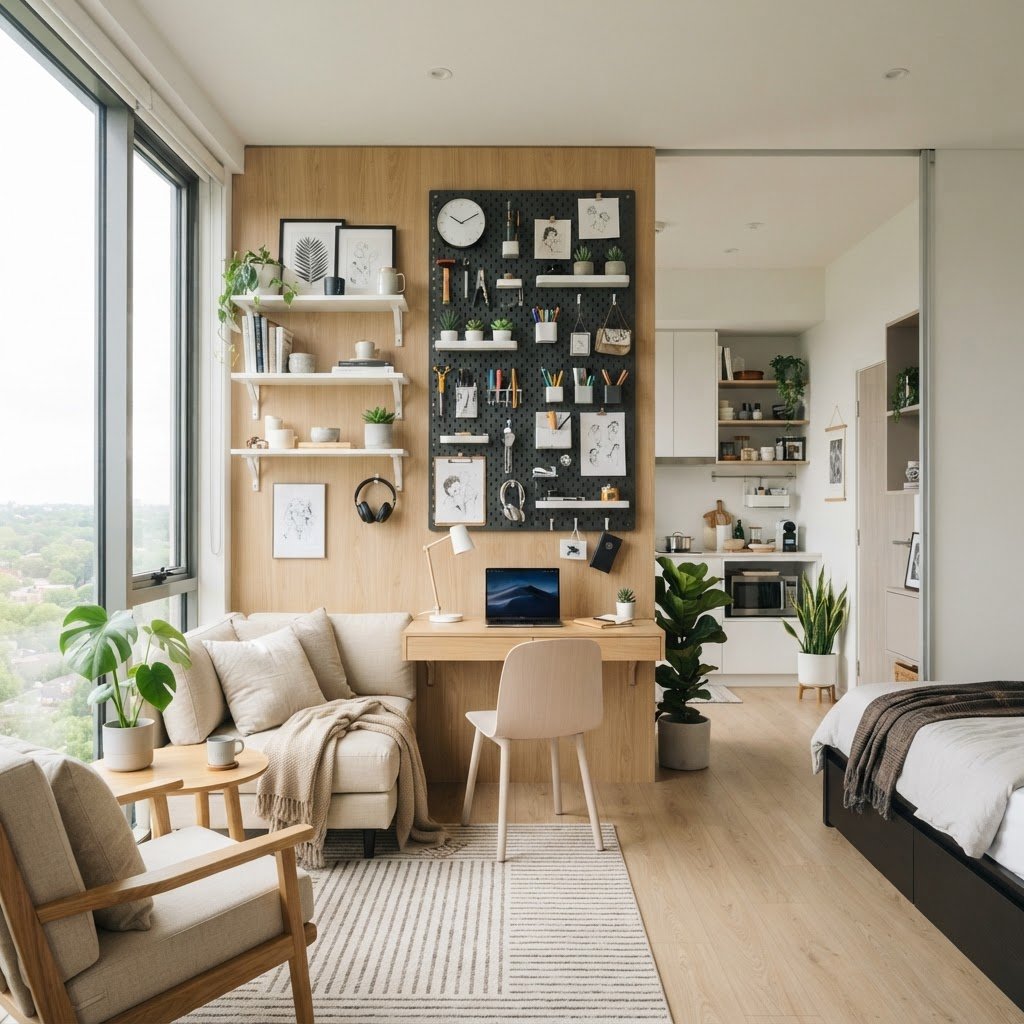
<p>When floor space is at a premium, the only way to go is up. Walls are an untapped resource that most people ignore, yet they provide the most effective storage in tight quarters. Installing floating shelves is one of the most popular small space organization tips because it moves items from your floor to the wall without bulky furniture footprints.</p>

<p><a href=”https://www.youtube.com/watch?v=HeI9NcVgeb0″ style=”color: #2563eb; text-decoration: underline;”><img decoding=”async” alt=”Small Space Organization and Makeover!” src=”https://img.youtube.com/vi/HeI9NcVgeb0/hqdefault.jpg” style=”display:block; margin:2.5em auto; max-width:100%; height:auto;” /></a></p>

<p>### Utilizing High-Reach Areas</p>

<p>Don&#8217;t stop at eye level. The space above door frames, windows, and cabinets is prime real estate for items you don&#8217;t use daily. Consider installing long, narrow shelves above your doorways to store books, seasonal decorations, or extra linens. By keeping these areas tidy, you draw the eye upward, which actually creates the illusion of higher ceilings and a more spacious room.</p>

<p>#### The Power of Pegboards</p>

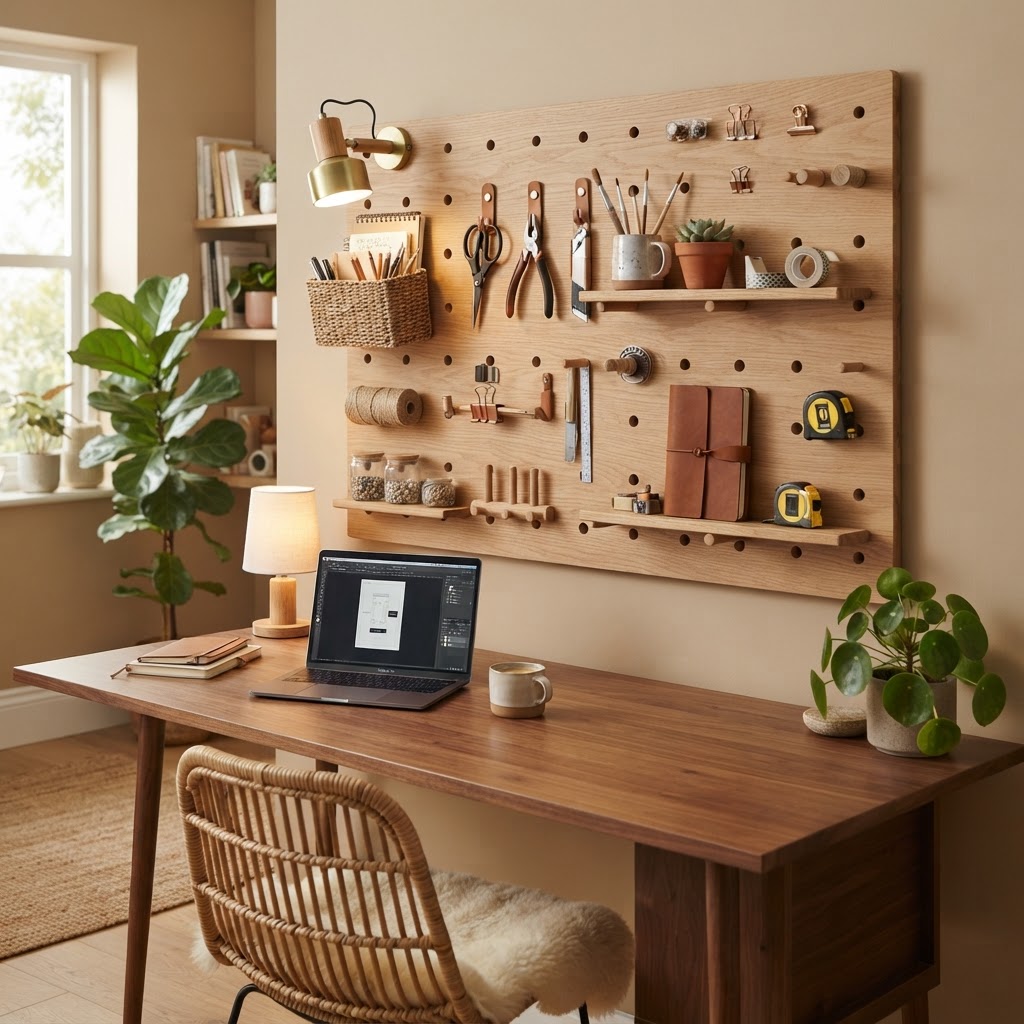
<p>Pegboards are a versatile solution for kitchens, home offices, and craft rooms. They allow for complete customization, enabling you to rearrange hooks and bins as your needs change. By hanging pots, pans, utensils, or office supplies, you keep your surfaces clear, which is critical for making a small kitchen or workspace feel organized.</p>

<p>## Furniture Choices That Work Overtime</p>

<p><img decoding=”async” alt=”Maximize bedroom storage by utilizing the space under your bed.” src=”https://media.base44.com/images/public/6a748232e4d18e0a622ab665/6c45f7fcc_generated_image.png” style=”display:block; margin:2.5em auto; max-width:100%; height:auto;” /></p>

<p>Every piece of furniture in a small home must pull double duty. If you have a coffee table, it shouldn&#8217;t just hold your mug; it should hide your blankets, magazines, or remote controls. When shopping for furniture, prioritize items that offer hidden storage, such as ottomans with lift-tops, beds with drawers, or entry benches with cubbies.</p>

<p><a href=”https://www.youtube.com/watch?v=rInYLjM1CTY” style=”color: #2563eb; text-decoration: underline;”><img decoding=”async” alt=”10 small space organization ideas” src=”https://img.youtube.com/vi/rInYLjM1CTY/hqdefault.jpg” style=”display:block; margin:2.5em auto; max-width:100%; height:auto;” /></a></p>

<p>### Multi-Functional Beds</p>

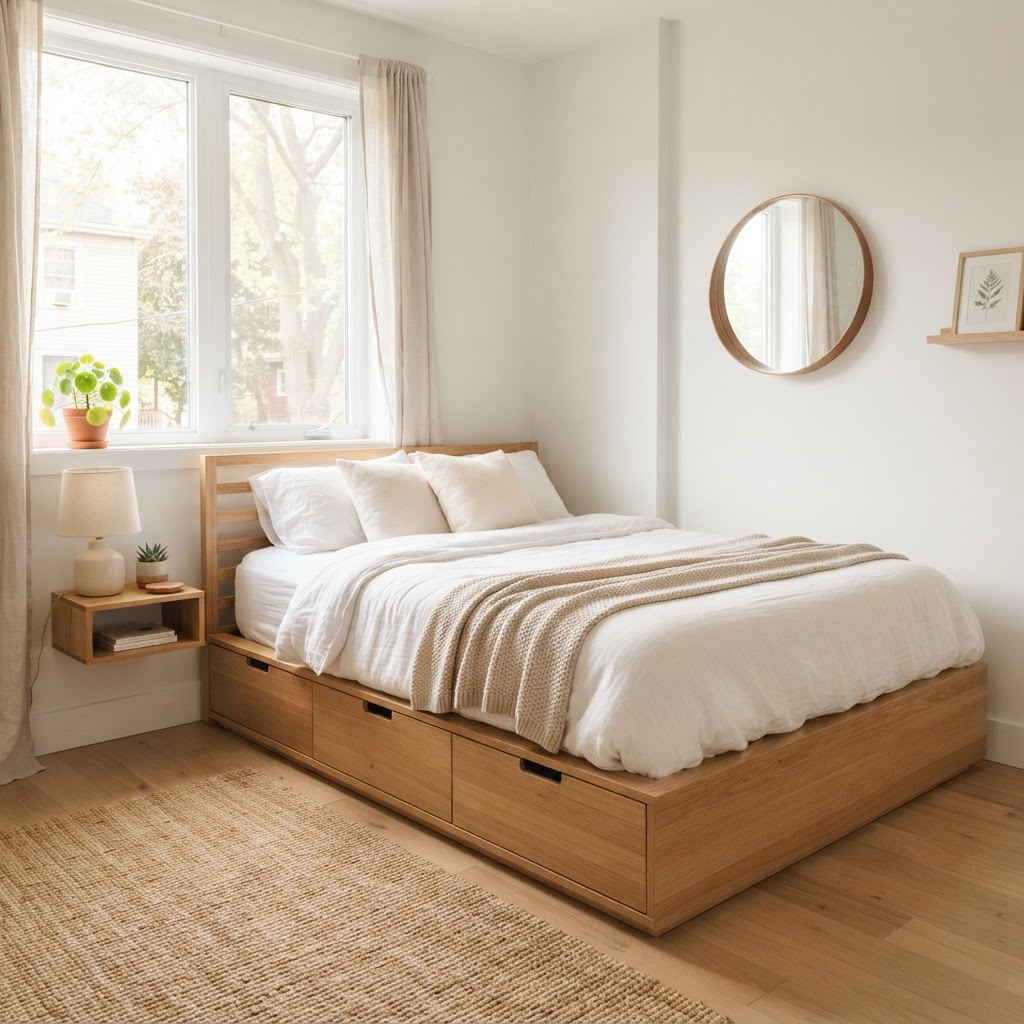
<p>Your bedroom is likely the largest piece of furniture in your home. Instead of allowing the space under your bed to become a graveyard for dust, utilize it for seasonal clothing storage. Investing in shallow rolling bins or vacuum-sealed bags allows you to reclaim this massive area for items that aren&#8217;t currently in rotation, drastically clearing out your primary closets.</p>

<p>## Clever Closet and Drawer Management</p>

<p>Closets are often the first casualty in a small apartment. Because they are enclosed, it is tempting to shove things inside and close the door, but this leads to long-term clutter buildup. Using vertical dividers and tiered hangers can double your effective storage capacity instantly. Slim velvet hangers are a must-have, as they save space while keeping clothes from slipping, allowing you to fit more items into a single rod.</p>

<p>### Drawer Dividers and Micro-Organization</p>

<p>Drawers are notorious for becoming junk catchers. By using modular dividers, you can create a specific home for every item, from socks to cutlery. When everything has a designated place, the time required to clean up is significantly reduced. Small apartment storage relies on this level of granularity to ensure that &#8220;clutter creep&#8221; does not set in.</p>

<p>## Organizing the Kitchen and Bathroom</p>

<p>Small kitchens suffer most from overcrowding. Since these areas are used daily, they require high-traffic efficiency. Use over-the-door organizers for spices, pantry staples, or cleaning supplies. By clearing your counters, you make the room appear twice as large and significantly more hygienic.</p>

<p><a href=”https://www.youtube.com/watch?v=jdSF11pw4dE” style=”color: #2563eb; text-decoration: underline;”><img decoding=”async” alt=”How to Make Your Home Feel Twice as Big… Designer’s Space-Saving Hacks” src=”https://img.youtube.com/vi/jdSF11pw4dE/hqdefault.jpg” style=”display:block; margin:2.5em auto; max-width:100%; height:auto;” /></a></p>

<p>### Bathroom Vanity Upgrades</p>

<p>Bathrooms are usually the smallest rooms with the highest density of small items. Use stackable acrylic containers to utilize vertical space within cabinets. For the shower, a tension-rod caddy or a hanging shower organizer keeps your products off the floor and tub edge. This creates a clean, spa-like atmosphere that makes a tiny bathroom feel more manageable.</p>

<p>## Maintaining Order Through Routine</p>

<p>Organization is not a one-time event; it is a lifestyle. The best small space organization tips in the world will fail if you don&#8217;t develop daily habits to maintain your systems. Implement the &#8220;one-in, one-out&#8221; rule: for every new item you bring into your apartment, one must leave. This keeps your inventory stable and prevents your storage systems from reaching a breaking point.</p>

<p>### The Ten-Minute Reset</p>

<p>Spend ten minutes every evening returning items to their designated homes. When you start the next day with a clear space, your mindset is immediately calmer and more productive. This small act of discipline prevents the slow accumulation of mess that eventually leads to the overwhelming feelings many people experience in small homes.</p>

<p>## Why Small Living is a Superpower</p>

<p>Living in a small apartment forces you to be intentional about what you keep. This is a powerful tool for personal growth. When you strip away the excess, you find that your home becomes easier to clean, less expensive to maintain, and more aligned with your actual needs. By applying these strategies, you are not just organizing a room; you are curating a life where your environment supports your goals rather than draining your energy.</p>

<p>## Conclusion</p>

<p>Reducing overwhelm in a small home is entirely possible when you stop viewing your limited space as a constraint and start seeing it as an opportunity for design innovation. By choosing the right furniture, utilizing vertical space, and committing to simple daily habits, you can transform your apartment into a functional, beautiful home. Ready to take the first step? Pick one drawer or one shelf today and reorganize it using these tips. You will be amazed at how much lighter you feel once that small area is under control.</p>

Small Living Room Furniture Ideas That Maximize Seating

<p>Designing a cozy apartment or a compact home often feels like a high-stakes game of Tetris, especially when you want to host guests comfortably. Many homeowners struggle with small living room furniture ideas that maximize seating while keeping the room breathable and open. The key isn&#8217;t just buying smaller pieces; it is about choosing smarter, more versatile items that earn their place in your layout. By shifting your perspective from &#8216;more furniture&#8217; to &#8216;more functional furniture,&#8217; you can create a seating arrangement that feels both expansive and inviting. ## The Philosophy of Smart Seating <img decoding=”async” alt=”Slim furniture and transparent tables make small rooms feel larger.” src=”https://media.base44.com/images/public/6a748232e4d18e0a622ab665/6e11230c9_generated_image.png” style=”display:block; margin:2.5em auto; max-width:100%; height:auto;” /> When working with limited square footage, every inch counts. Maximizing seating in small rooms starts with understanding the flow of traffic. You want to provide enough places to sit without creating a maze that makes the room feel smaller than it actually is. It is about balancing the visual weight of your furniture with the practical needs of your daily life. ### Prioritize Multifunctionality Multifunctional furniture is the backbone of any compact living area. Think beyond the traditional sofa and coffee table. Look for pieces that perform double duty, like ottomans that store blankets or serve as extra chairs when visitors arrive. These items effectively disappear when not in use, leaving your floor space free for movement. #### The Power of Ottomans An upholstered ottoman is perhaps the most underrated piece of furniture in a small home. It can serve as a footrest, a coffee table with a tray on top, or a hidden seat for a guest. Choose nesting ottomans that can be tucked away under a console table when you need more room to breathe. For more inspiration on versatile furniture, check out these <a href=”https://smallapartmentdecorating.com/multifunctional-storage-benches-ottomans-apartments/” style=”color: #2563eb; text-decoration: underline;”>12 multifunctional storage benches and ottomans for apartments</a> to keep your living room organized while adding extra guest seating. <a href=”https://www.youtube.com/watch?v=_BijqZRfdN0″ style=”color: #2563eb; text-decoration: underline;”><img decoding=”async” alt=”Space-Saving Furniture Hacks for Small Living Rooms: Maximize Space” src=”https://img.youtube.com/vi/_BijqZRfdN0/hqdefault.jpg” style=”display:block; margin:2.5em auto; max-width:100%; height:auto;” /></a> ## Choosing the Right Sofa Silhouette <img decoding=”async” alt=”Multifunctional ottomans are perfect for extra guest seating.” src=”https://media.base44.com/images/public/6a748232e4d18e0a622ab665/8c237626b_generated_image.png” style=”display:block; margin:2.5em auto; max-width:100%; height:auto;” /> The sofa is the anchor of your living room, but a massive, overstuffed sectional can suffocate a small space. Instead, look for sofas with slim arms, exposed legs, and lower profiles. These design elements keep the floor visible underneath, which tricks the eye into thinking the room is larger and more spacious. ### Sectionals vs. Loveseats Many people assume that small living rooms require tiny loveseats, but a well-proportioned sectional can actually provide more corner seating than multiple disjointed chairs. Look for modular sectionals that allow you to customize the configuration to fit your unique wall layout. By utilizing the corners of your room, you free up the center space for better traffic flow. ## Integrating Flexible Floor Seating <img decoding=”async” alt=”Built-in benches utilize awkward wall space for seating.” src=”https://media.base44.com/images/public/6a748232e4d18e0a622ab665/a8d10e8ef_generated_image.png” style=”display:block; margin:2.5em auto; max-width:100%; height:auto;” /> Sometimes the best way to add extra seats is to move away from heavy, stationary furniture. Floor cushions, poufs, and oversized pillows are excellent additions that can be stored in a closet or stacked in a corner. These pieces feel casual and bohemian, instantly making your home feel more welcoming to friends and family. ### Creating a &#8216;Mobile&#8217; Seating Collection Develop a collection of seating items that can be rearranged in seconds. A couple of lightweight wooden stools, for instance, can double as side tables and then shift into permanent seating during a party. When you treat your furniture as mobile units, you effectively double the capacity of your living room without adding permanent bulk. <a href=”https://www.youtube.com/watch?v=ZvnkAm712dk” style=”color: #2563eb; text-decoration: underline;”><img decoding=”async” alt=”Best Small Living Room Couch Ideas That Maximize Space” src=”https://img.youtube.com/vi/ZvnkAm712dk/hqdefault.jpg” style=”display:block; margin:2.5em auto; max-width:100%; height:auto;” /></a> ## Utilizing Vertical and Wall Space <img decoding=”async” alt=”Modular seating allows for flexible arrangements in compact homes.” src=”https://media.base44.com/images/public/6a748232e4d18e0a622ab665/1e8dd3b92_generated_image.png” style=”display:block; margin:2.5em auto; max-width:100%; height:auto;” /> Don&#8217;t let your walls go to waste. Floating shelves, wall-mounted consoles, and built-in benches can help keep your floor clear, which is essential for making a room feel larger. By moving items off the floor, you create a sense of openness that allows for more flexible seating arrangements elsewhere in the room. ### Built-in Bench Seating If you have a window nook, consider installing a built-in bench with storage underneath. This is one of the most effective small living room furniture ideas because it creates a dedicated seating area that doesn&#8217;t feel like an intrusion into your main living zone. Add cushions, and you have comfortable seating for at least two people without taking up a single square foot of floor space. ## The Role of Visual Transparency Designers often use transparent materials to maintain the visual flow of a space. Acrylic or glass coffee tables and side tables are brilliant choices for small homes. Because you can see through them, they occupy space in the room without &#8216;taking up&#8217; visual territory, making the space feel less cluttered. ### Mirrors and Lighting Pair your transparent furniture with strategically placed mirrors to bounce light around the room. A brighter, more reflective space naturally feels larger, which allows you to place furniture closer together without the room feeling claustrophobic. Proper lighting—especially floor lamps with slim profiles—will ensure that every seating spot is functional and well-lit. ## Common Mistakes to Avoid One of the biggest mistakes in small-space design is pushing all furniture against the walls. While it might seem like it opens up the center of the room, it can actually make the space feel like a waiting room. Try floating your sofa a few inches away from the wall to create a more intimate and cozy arrangement. ### Don&#8217;t Over-Furnish It is tempting to try and fit everything into a small room, but restraint is your best friend. A few well-chosen, high-quality pieces will always look better than a room packed with small, cheap items. Focus on quality over quantity and prioritize pieces that offer comfort as much as they offer seating. <a href=”https://www.youtube.com/watch?v=TZcXP9XYX3Y” style=”color: #2563eb; text-decoration: underline;”><img decoding=”async” alt=”BEST Small Living Room Layout Ideas | Space-Saving Design Tips!” src=”https://img.youtube.com/vi/TZcXP9XYX3Y/hqdefault.jpg” style=”display:block; margin:2.5em auto; max-width:100%; height:auto;” /></a> ## Maximizing Comfort for Every Guest Ultimately, your living room should be a place of comfort. Once you have identified the right furniture layout, focus on the details that make seating inviting. Quality textiles, such as soft throws and plush throw pillows, can make even a small stool feel like the best seat in the house. Ensure that your seating layout allows for natural conversation, keeping people close enough to chat but with enough space to stretch their legs. ### The Final Touch: Layering Layering rugs can help define your seating zone in an open-concept layout. By using a rug to anchor your sofa, chairs, and ottomans, you visually group the seating together, making the arrangement look intentional rather than haphazard. This technique is especially useful for renters who want to create a sense of cohesion in a small room without making permanent changes. ## Conclusion Maximizing seating in a small living room is entirely possible with the right approach to design and furniture selection. By embracing multifunctional pieces, utilizing vertical space, and keeping your furniture silhouettes slim, you can transform your tiny space into a hub for social gatherings. Start by evaluating your current layout and identifying one area where you can swap a bulky piece for a smarter, more flexible alternative. Your living room is about to become your favorite place to entertain. Do you have a favorite space-saving trick? Share your experiences in the comments below and start redesigning your home today!</p>

11 Clever Floating Shelf Ideas for Small Apartment Storage

<p>Living in a small apartment often feels like a constant battle against clutter. When every square inch of your floor is accounted for, the only direction left to grow is up. Integrating floating shelf ideas into your home design is one of the most effective ways to master small apartment storage while maintaining a clean, minimalist aesthetic. By utilizing vertical wall space, you can clear off your surfaces, lift items off the ground, and create a visually appealing display that makes your home feel significantly larger.</p>

<p>## The Psychology of Vertical Space</p>

<p><img decoding=”async” alt=”Long, oak floating shelves create an airy, organized library.” src=”https://media.base44.com/images/public/6a748232e4d18e0a622ab665/206abfecf_generated_image.png” style=”display:block; margin:2.5em auto; max-width:100%; height:auto;” /></p>

<p>When we look at a room, our eyes are naturally drawn to the floor and the immediate sightlines. If your floor is covered with bulky storage bins, bookcases, and baskets, the room feels inherently cramped. Floating shelves change this dynamic entirely. Integrating these into your home design alongside other <a href=”https://smallapartmentdecorating.com/hidden-vertical-storage-ideas-renters/” style=”color: #2563eb; text-decoration: underline;”>hidden and vertical storage ideas</a> can further help you reclaim lost square footage. By mounting storage at eye level or higher, you draw the gaze upward, which creates an illusion of higher ceilings and a more open atmosphere.</p>

<p>This design strategy is essential for small apartment storage success. Unlike traditional heavy bookcases, floating shelves often lack visible brackets, giving them an ethereal, weightless appearance. This &#8216;floating&#8217; effect keeps the room feeling airy, even when you have stored a substantial amount of books, plants, or kitchen supplies on them.</p>

<p>## 1. The Living Room Library</p>

<p><img decoding=”async” alt=”Utilize corner space for accessible kitchen storage.” src=”https://media.base44.com/images/public/6a748232e4d18e0a622ab665/9ddedeb70_generated_image.png” style=”display:block; margin:2.5em auto; max-width:100%; height:auto;” /></p>

<p>If you are a book lover living in a tiny studio, you might think you have to sacrifice your collection. You don&#8217;t. A series of long, reclaimed wood shelves spanning the width of a living room wall can house dozens of books. To keep the look intentional rather than chaotic, group your books by size or color. This transforms your reading collection into a curated piece of wall art.</p>

<p><a href=”https://www.youtube.com/watch?v=W3NN5IQC9X8″ style=”color: #2563eb; text-decoration: underline;”><img decoding=”async” alt=”How to Build a Floating Shelf” src=”https://img.youtube.com/vi/W3NN5IQC9X8/hqdefault.jpg” style=”display:block; margin:2.5em auto; max-width:100%; height:auto;” /></a></p>

<p>## 2. Kitchen Corner Shelves</p>

<p><img decoding=”async” alt=”A floating nightstand saves floor space in small bedrooms.” src=”https://media.base44.com/images/public/6a748232e4d18e0a622ab665/a36336e38_generated_image.png” style=”display:block; margin:2.5em auto; max-width:100%; height:auto;” /></p>

<p>Small kitchens are notorious for limited counter space. Corner floating shelves are a genius hack for awkward, underutilized spaces. Install these in that dead corner by your stove or near the window. They are perfect for storing spices, oils, or your favorite everyday mugs. Because they occupy corners that would otherwise remain empty, you gain storage without losing any workspace.</p>

<p>### Maximize Verticality</p>

<p>When installing these, consider the height of your items. If you are storing spices, the shelves can be closer together. If you are storing larger canisters or a blender, leave more clearance. This customized approach ensures you are using every vertical inch effectively.</p>

<p>## 3. The Bedside &#8220;Floating&#8221; Table</p>

<p><img decoding=”async” alt=”Vertical organization keeps your desk clutter-free.” src=”https://media.base44.com/images/public/6a748232e4d18e0a622ab665/ee861b370_generated_image.png” style=”display:block; margin:2.5em auto; max-width:100%; height:auto;” /></p>

<p>Nightstands take up valuable floor space in small bedrooms. Replacing a traditional table with a single, sturdy floating shelf mounted at bed height is a game-changer. It provides the exact same utility—a spot for your phone, lamp, and water glass—but keeps the floor clear underneath. This makes the room easier to vacuum and visually lighter.</p>

<p>## 4. Above the Doorway Displays</p>

<p>Many of us ignore the dead space above our doorways. It is a prime piece of real estate for storage. A single, long floating shelf placed about six inches above a bedroom or office door is the perfect place for items you don&#8217;t need daily. Think seasonal decor, extra linens in a box, or a collection of vintage items you want to showcase. It stays out of the way but provides valuable overflow space.</p>

<p>## 5. Bathroom Vanity Extensions</p>

<p>Bathrooms are often the most cramped rooms in an apartment. Floating shelves installed above the toilet or beside the vanity provide a convenient home for toiletries, towels, and apothecary jars. To keep the look professional and clean, use matching containers. This minimizes visual noise and makes your bathroom feel like a high-end hotel spa.</p>

<p><a href=”https://www.youtube.com/watch?v=-7cWw2oJaVk” style=”color: #2563eb; text-decoration: underline;”><img decoding=”async” alt=”10 Stylish Kitchen Floating Shelves” src=”https://img.youtube.com/vi/-7cWw2oJaVk/hqdefault.jpg” style=”display:block; margin:2.5em auto; max-width:100%; height:auto;” /></a></p>

<p>## 6. Entryway Drop Zones</p>

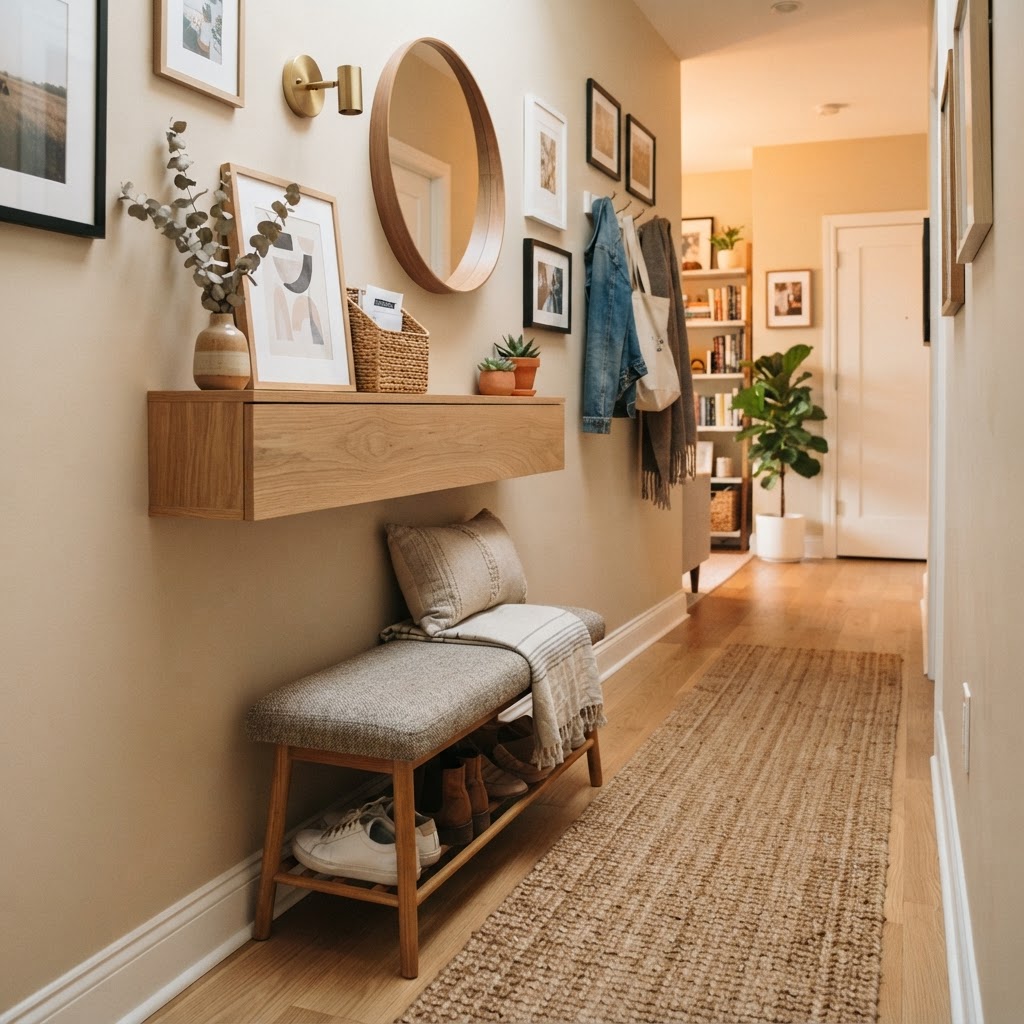
<p>Without a dedicated mudroom, mail and keys often end up on the kitchen counter. A slim floating shelf placed near the entryway serves as an instant drop zone. Add a small basket for mail and a few hooks underneath for keys. This simple addition organizes the chaos of daily life the moment you walk through the door.</p>

<p>## 7. The Media Console Alternative</p>

<p>Large media consoles are bulky and take up significant floor space. If you have your TV mounted on the wall, install a sleek, long floating shelf directly beneath it. This provides a home for your gaming consoles, remotes, and streaming devices. It keeps the area beneath the TV open, which allows you to place a small chair or floor lamp there if needed.</p>

<p>## 8. Indoor Jungle Vertical Garden</p>

<p>Plants bring life to small spaces, but they can quickly take over your floor. Floating shelves are the ideal solution for apartment dwellers with green thumbs. By varying the heights of your shelves, you can create a dynamic wall of greenery. Use trailing plants like Pothos or Philodendrons to soften the sharp edges of the shelves and add texture to your walls.</p>

<p>## 9. Home Office Wall Organization</p>

<p>For those working from home, desk space is at a premium. Move your reference books, office supplies, and hardware to a system of floating shelves above your desk. Keeping your desk surface clear of clutter helps improve focus and productivity. It also makes your workspace feel much more expansive than a cramped desk corner.</p>

<p>## 10. The Art Gallery Shelf</p>

<p>Sometimes storage is about display. A narrow ledge shelf is perfect for rotating artwork, framed photos, and mementos. Because they aren&#8217;t fully enclosed, you can change your decor weekly without needing to put new holes in the wall. This keeps your apartment feeling fresh and personal without adding bulk.</p>

<p>## 11. Laundry Room Utility</p>

<p>If your apartment has a small laundry closet, add shelves above the machines. This is the perfect spot for detergent, dryer sheets, and hampers. By moving these essentials upward, you free up the floor in the closet for a larger laundry basket or even a vacuum cleaner. It creates a highly functional, organized zone in what is usually a neglected area.</p>

<p>## Choosing the Right Hardware and Installation</p>

<p>When working with floating shelf ideas, the installation is just as important as the design. Always ensure you are mounting your shelves into wall studs whenever possible. In apartments where you cannot drill deep into the wall, use heavy-duty toggle bolts designed for drywall to support the weight of your items.</p>

<p><a href=”https://www.youtube.com/watch?v=6clJWTTRWTE” style=”color: #2563eb; text-decoration: underline;”><img decoding=”async” alt=”3 Ways to Build Floating Shelves” src=”https://img.youtube.com/vi/6clJWTTRWTE/hqdefault.jpg” style=”display:block; margin:2.5em auto; max-width:100%; height:auto;” /></a></p>

<p>### Key Considerations for Renters</p>

<p>If you are renting, always check your lease agreement regarding wall alterations. If drilling is restricted, consider &#8216;tension-pole&#8217; shelving units that mimic the look of floating shelves. These provide the same vertical benefits without requiring permanent hardware. However, if drilling is allowed, remember that a little wood filler and paint go a long way when you move out.</p>

<p>## Designing Your Shelving Layout</p>

<p>Before you drill, map your wall with painter&#8217;s tape. This helps you visualize the placement, spacing, and overall impact of the shelves. Aim for variety. You don&#8217;t want all your shelves to be identical lengths; mixing long and short shelves creates a more professional, intentional design. Balance is key. If you have heavy items on one side, try to offset the visual weight on the other side with a plant or a decorative object.</p>

<p>## Conclusion</p>

<p>Implementing floating shelf ideas is one of the most transformative changes you can make in a small home. They turn blank walls into high-functioning storage zones, proving that you don&#8217;t need a large floor plan to have a well-organized and stylish space. Start with one shelf in a high-traffic area, see how it changes your room, and then expand from there. Ready to reclaim your floor space? Start by identifying the most cluttered wall in your apartment today and plan your first installation!</p>

20 Small Space Storage Hacks to Instantly Double Your Room

20 Small Space Storage Hacks to Instantly Double Your Room

You can double your usable small-space storage by utilizing vertical wall systems, opting for multi-functional furniture with hidden compartments, and implementing seasonal item rotation. These strategies transform cramped studios into organized sanctuaries by reclaiming “dead” floor space and optimizing storage capacity by up to 30% through modular vertical planning.

Rethink Your Vertical Wall Space

Utilize vertical wall space with pegboards and floating shelves.

When floor space is at a premium, the most efficient strategy is to utilize vertical wall space to move items off the floor and out of sight. Walls serve as a blank canvas for high-density storage systems, such as floor-to-ceiling shelving units that draw the eye upward, effectively making ceilings appear higher. By installing shelves that reach the ceiling, you gain 50% more storage volume compared to traditional waist-high units. For those who are unable to install permanent fixtures, there are plenty of renter-approved storage hacks that don’t require drilling that utilize tension-based systems or high-strength adhesive hooks to maximize your vertical wall area without damaging surfaces.

Utilizing Pegboards

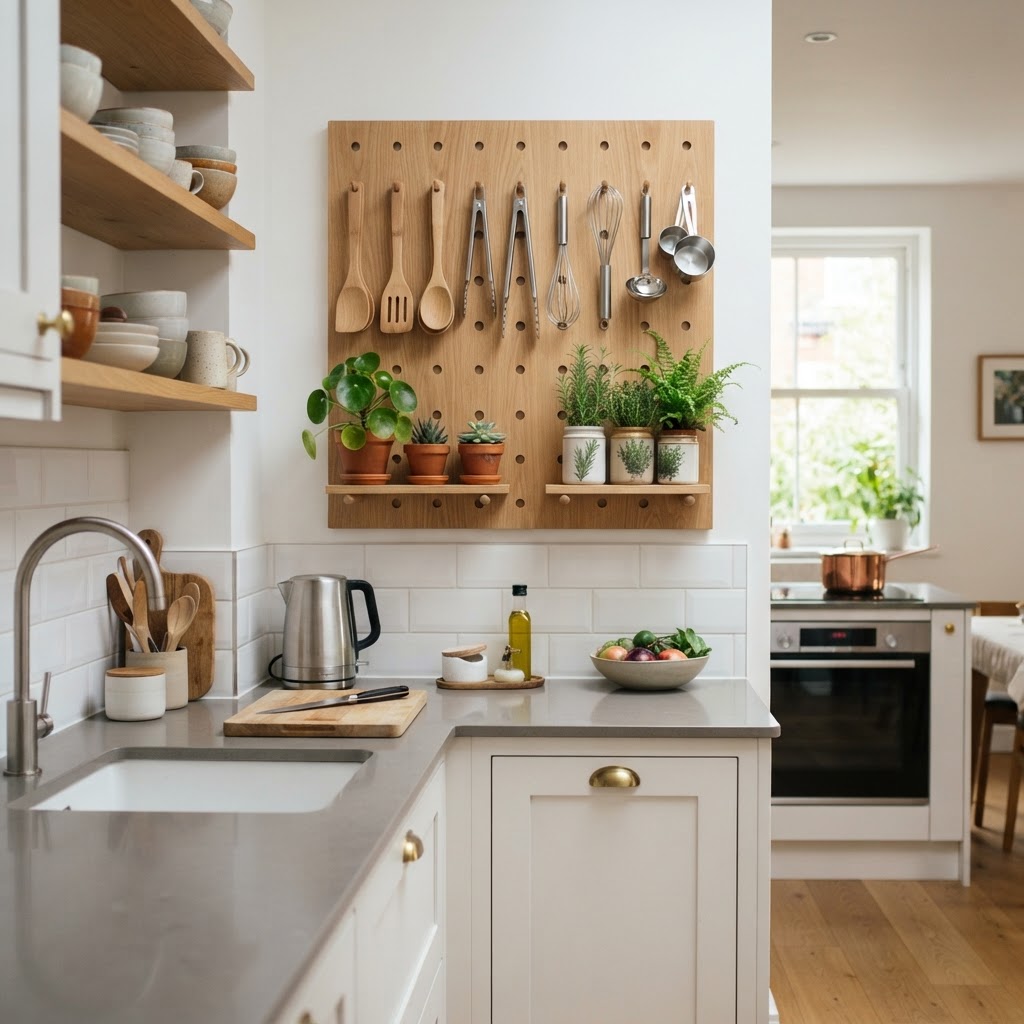
Pegboards are a versatile staple for any home, but they are particularly effective in small spaces. By mounting a pegboard in your kitchen, you can hang pots, pans, and utensils, freeing up approximately 4 to 6 square feet of precious cabinet room. In an office setting, a pegboard keeps your desk clear by holding scissors, tape, and charging cables within easy reach, reducing visual clutter on your workspace surface by up to 80%.

Floating Shelves and Hooks

Floating shelves are another minimalist way to add storage without bulky hardware. Use them above your doorway or over your desk to store items you don’t use daily. Adding hooks underneath the shelves provides a secondary tier for hanging scarves, handbags, or mugs, further optimizing your vertical surface area. Installing a row of hooks 6 inches below a shelf effectively doubles the utility of a single wall mounting point.

The Magic of Multi-Functional Furniture

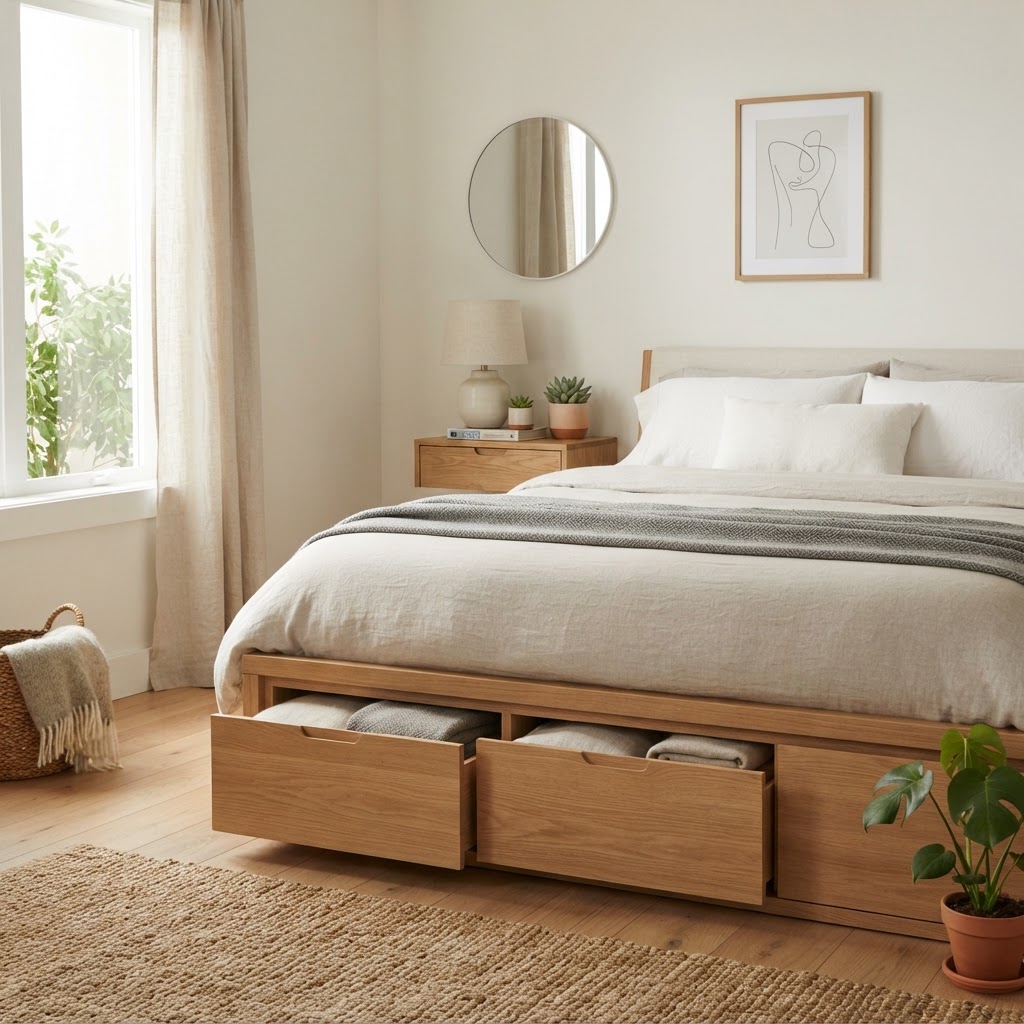
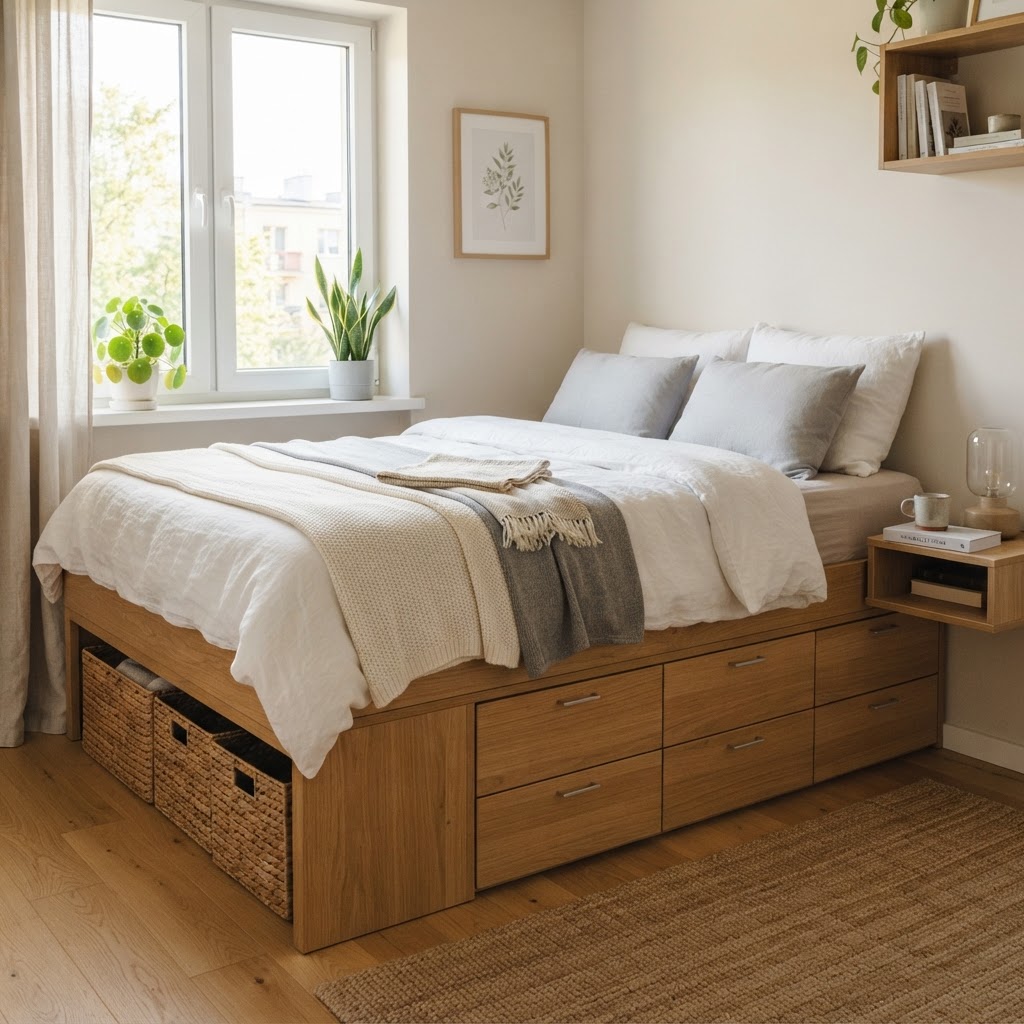
Multi-functional furniture like drawer-base beds hides clutter perfectly.

Investing in pieces that do double duty is essential for maintaining a clean home, as furniture that serves two purposes saves roughly 15 square feet of floor space in an average studio. A coffee table with hidden storage, or an ottoman that opens up to reveal a blanket stash, are classic examples of furniture that pays for itself in utility. When you buy a piece, always ask yourself if it offers more than one function, such as seating that doubles as a file cabinet. If you are looking to elevate your seating area without overspending, these cheap and chic small apartment decorating ideas can help you create a retreat-like atmosphere while keeping the space functional. If you are looking to elevate your seating area, these cozy tiny living room ideas can help you create a retreat-like atmosphere while keeping the space functional. If you are looking for more ways to make your home look beautiful without breaking the bank, our guide on how to decorate a small apartment on a budget offers plenty of easy DIY tips.

Furniture Type Traditional Use Hidden Storage Utility
Storage Bed Sleep 10-15 cu. ft. for linens/clothing
Ottoman Footrest 2-4 cu. ft. for throws/remotes
Lift-top Table Dining/Work 3-5 cu. ft. for office supplies

Consider a bed frame with built-in drawers. This effectively transforms your “dead” floor space underneath the bed into a massive closet for seasonal clothing, linens, or shoes. It is one of the most effective small space storage hacks for anyone living in a studio, as it keeps your bedroom floor free of bulky storage bins.

Mastering Kitchen Efficiency

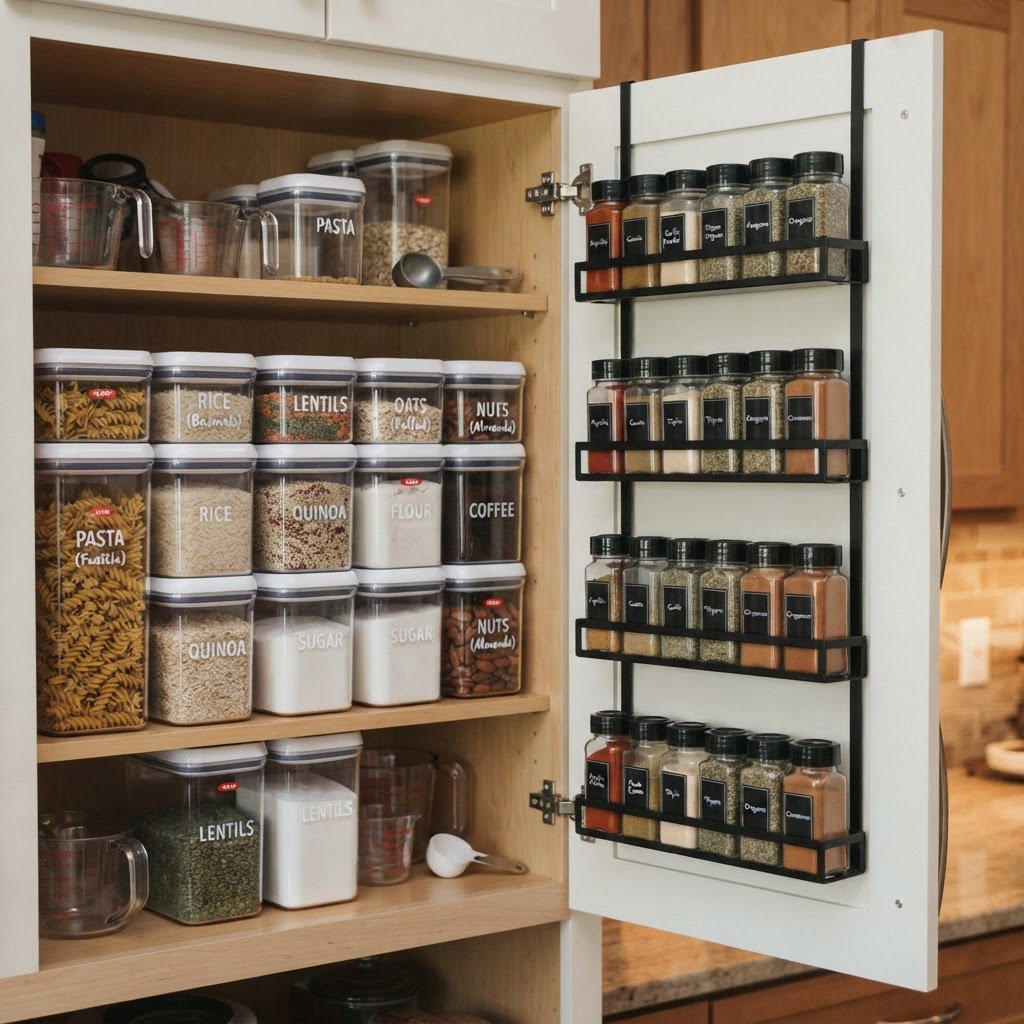
Clear containers and door racks maximize kitchen cabinet efficiency.

Small kitchens often suffer from a lack of counter space and cabinet overcrowding, which can be mitigated by reclaiming under-utilized zones. You can fix this by using over-the-sink cutting boards or magnetic knife strips that remove the need for a bulky block, saving about 12 inches of counter width. Additionally, utilize the inside of your cabinet doors to mount racks for spices or lids. By using the cabinet door interior, you increase your storage capacity by roughly 20% without losing depth in the main cabinet area.

Organizing your pantry with stackable, clear containers saves visual clutter and allows you to see exactly what you have. When items are uniform in size and shape, they pack together more tightly. This simple change can increase your shelf capacity by up to thirty percent, ensuring you never buy duplicates again. Using square containers instead of round ones also eliminates wasted gaps between containers, maximizing shelf footprint.

Creative Bathroom Storage Solutions

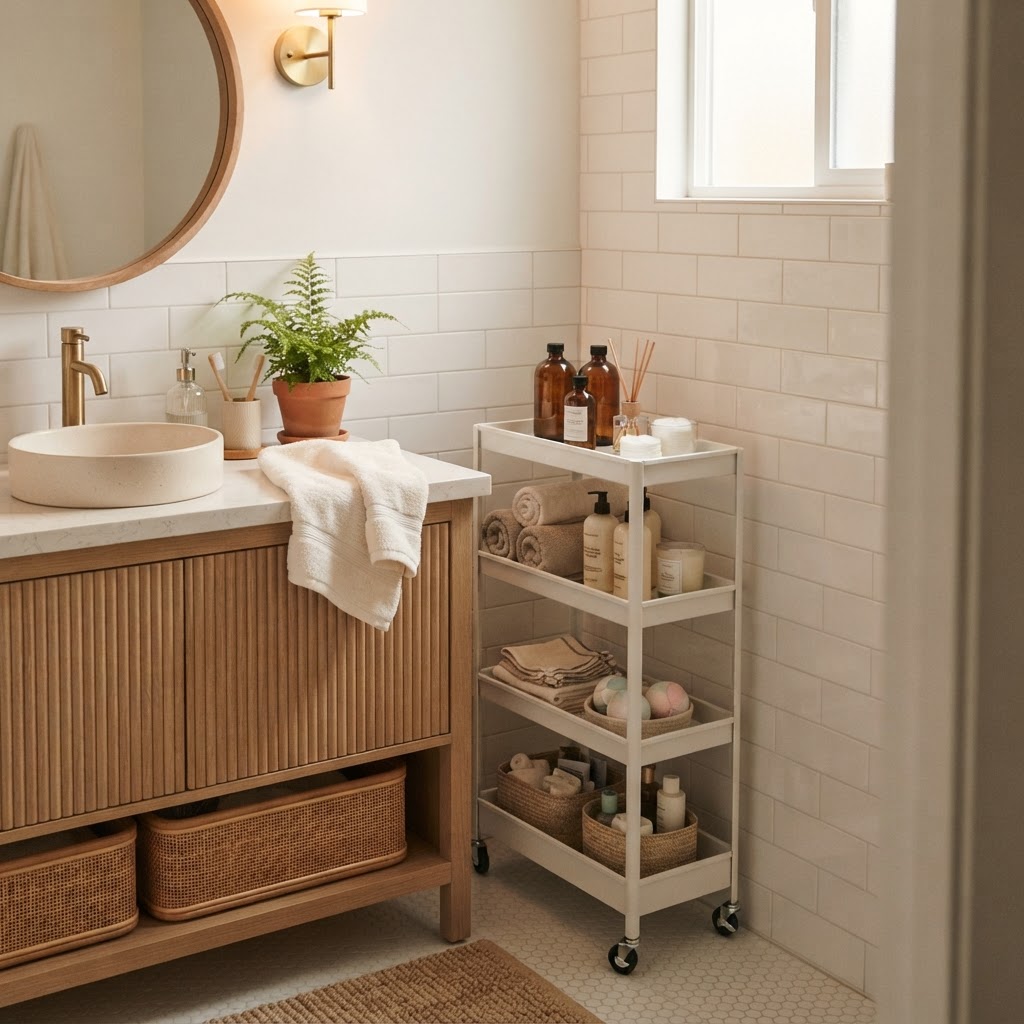
A rolling cart is a flexible storage solution for small bathrooms.

Bathrooms are notoriously small, but they are also packed with tiny items that create a sense of chaos. Use a tiered rolling cart to store your toiletries, towels, and cleaning supplies, which provides 3 levels of vertical storage in less than 2 square feet of floor space. Because it is on wheels, you can tuck it away under the vanity or pull it out when you need access to your products. This is especially helpful in bathrooms lacking built-in drawers.

Another genius hack is using a tension rod under the bathroom sink. It provides the perfect place to hang spray bottles, allowing you to utilize the vertical space typically wasted between the pipes. You can also mount small baskets to the inside of your cabinet doors to hold hair dryers and straighteners, effectively clearing the vanity top of bulky cords and devices.

Making the Most of Closet Space

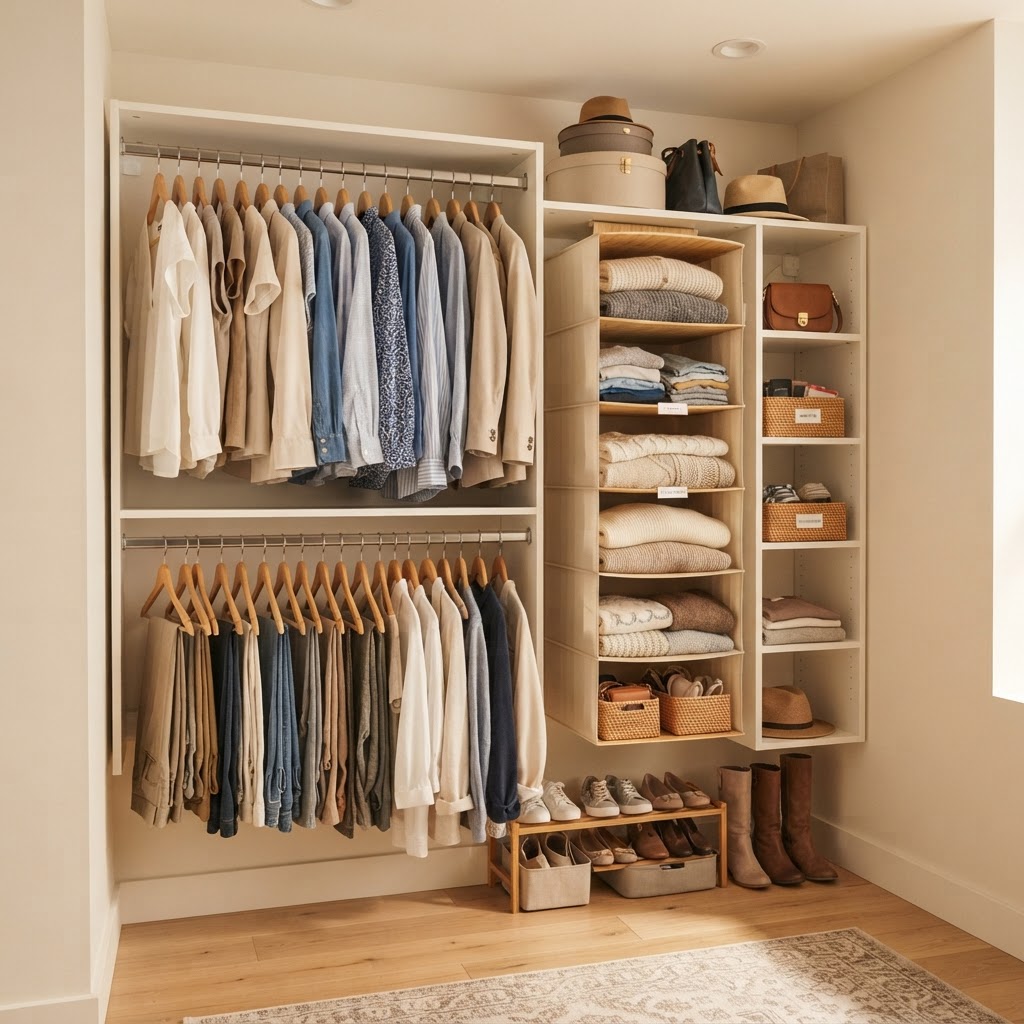
If your closet is overflowing, you are likely not using the available space efficiently. Use cascading hangers to hang multiple shirts on a single hook, instantly multiplying your hanging capacity by 3x. Don’t forget the back of the closet door; an over-the-door shoe organizer can hold far more than just shoes, including cleaning supplies, scarves, or small accessories. This simple door-back addition creates approximately 10-12 cubic feet of additional storage room.

Seasonal Rotation Strategy

Keep only the current season’s clothing in your primary closet space to maintain accessibility. Store off-season items in vacuum-sealed bags under your bed or on a high shelf. This keeps your daily routine efficient and prevents your closet from feeling suffocatingly packed during the summer or winter months. Vacuum sealing reduces the volume of soft goods like coats and sweaters by up to 70%, making them significantly easier to store in tight under-bed voids.

Hidden Nooks and Dead Space

Every apartment has “dead space” that we often ignore. Look at the space behind doors, the corners of rooms, and the gaps between appliances. These areas are perfect for narrow slim-profile storage towers or corner shelving units. Even a two-inch gap can hold a pull-out spice rack or a thin shelf for cleaning supplies. Finding and utilizing these 2-inch to 6-inch gaps can reveal up to 5 square feet of “hidden” storage space in a standard apartment.

Think about the doors themselves. Installing hooks or a garment rack on the back of your bedroom or closet door provides an instant spot for coats and bags. These small adjustments cumulatively create a sense of calm and order, which is the ultimate goal of effective small apartment organization.

Decluttering as a Lifestyle

No storage hack will solve your problem if you are holding onto items you never use. Decluttering is the foundation of all organization. Before you buy bins or shelves, go through your belongings with a critical eye. If you haven’t touched an item in a year, it is time to donate or recycle it. Research suggests that the average household keeps 25% of its possessions unused; removing these items creates instant room without the need for additional furniture.

Once you have pared down your belongings, you will find that your storage solutions work much better. You will spend less time shuffling items around and more time enjoying your living space. Always prioritize items that add value or joy to your daily life. Remember that the goal is not to fill every corner with “stuff” but to create a breathing, functional home.

FAQ

Q: What is the most effective way to start organizing a small space?

Start by decluttering non-essential items to reduce the total volume of your belongings. Once you have pared down, prioritize vertical storage solutions like shelves and wall-mounted hooks to clear floor space, which makes the room feel significantly larger and more open.

Q: How do I store items in a rental without drilling holes?

Utilize tension rods, adhesive command hooks, and over-the-door storage organizers that require zero hardware. These renter-friendly solutions provide the same organizational benefits as fixed shelving while keeping your walls and woodwork pristine for when you move out.

Q: Can multi-functional furniture actually save space?

Yes, furniture that serves dual purposes, such as an ottoman with storage or a bed with drawers, eliminates the need for standalone storage pieces. By consolidating two functions into one footprint, you reclaim valuable square footage that would otherwise be consumed by bulky secondary furniture.

Q: How can I double my kitchen cabinet storage capacity?

Maximize your kitchen by using stackable clear containers, under-shelf baskets, and door-mounted racks. These tools utilize the empty air space between shelves and the unused inner surface of cabinet doors, allowing you to fit roughly 30% more items into the same cabinet volume.

11 Hidden and Vertical Storage Ideas for Small Apartments

11 Hidden and Vertical Storage Ideas for Small Apartments

To maximize storage in a small apartment, prioritize vertical real estate and hidden compartments by utilizing wall-mounted systems, over-the-door organizers, and multi-functional furniture. These strategic adjustments convert wasted air space and overlooked crevices into high-capacity storage zones, allowing you to clear floor clutter without requiring permanent renovations.

The Psychology of Vertical Space

Maximize your bedroom space with under-bed storage solutions.

When floor space is limited, the most efficient strategy is to shift your focus upward toward the walls and ceiling. Professional organizers emphasize vertical storage because it draws the eye toward the ceiling, creating an optical illusion of increased room height while freeing up valuable square footage for cozy tiny living room ideas. By clearing surfaces, you also create opportunities for cheap and chic small apartment decorating ideas that maintain an airy, curated aesthetic. This approach isn’t merely about stacking items; it is a systematic method of curating a functional environment where daily essentials remain accessible. For example, by moving infrequently used items to the highest shelves and keeping work tools at eye level, you balance utility with a clean, professional look. Research shows that reducing visual noise on horizontal surfaces can decrease stress levels by up to 20%, making the investment in shelves or tension systems a health benefit as well as a storage hack. Implementing these systems is cost-effective, with most basic tension-based hardware costing under $25 for a full-room setup, which is a great way to decorate a small apartment on a budget while maximizing your utility.

Why Going Vertical Matters

By installing floating shelves, tension rod systems, or over-the-door organizers, you effectively remove physical clutter from your high-traffic floor areas. This reduction in visual noise allows for easier cleaning and better air circulation throughout the apartment. Grouping items by frequency of use is the professional standard: items used daily stay between 3 to 5 feet off the ground, while seasonal goods are relegated to the vertical space near the ceiling. Implementing these systems is cost-effective, with most basic tension-based hardware costing under $25 for a full-room setup.

Feature Horizontal Storage Vertical Storage
Floor Impact Decreases floor space Increases open floor area
Installation Often permanent Often renter-friendly
Visibility Cluttered/Hidden Organized/Curated
Best For Bulky items Daily essentials

Maximizing Door Potential

To keep your entryway or bedroom looking pristine, consider integrating these over-the-door storage organization systems to maximize every square inch of your vertical surface area.

Pegboards are perfect for keeping kitchen tools off your counters.

The back of every door in your apartment acts as a hidden, high-capacity storage zone that is often completely ignored by renters. Because these areas are out of sight when the door is open, they are ideal for items that are functional but not necessarily decorative, such as cleaning supplies, pantry staples, or shoe collections. Utilizing this space is a zero-damage strategy, as many organizers use simple clips that hook over the top of a standard 1.5-inch thick door. By utilizing the 6-foot vertical drop on the back of a standard door, you can add up to 10 square feet of storage space without adding a single piece of furniture to your floor plan. For a seamless look, choose mesh or canvas organizers that match the paint color of your door, effectively camouflaging your stored items and keeping the visual focus on your living space rather than your supplies.

Over-the-Door Organizers

Invest in high-quality over-the-door hanging racks to streamline your organization. These racks are ideal for shoes, cleaning supplies, or pantry dry goods. Using canvas pockets that match your wall color creates a cleaner look, successfully hiding clutter while keeping it accessible.

Adhesive Hooks and Bars

Command strips and non-damaging adhesive solutions allow you to attach bars to the inside of cabinet doors. You can hang pot lids, measuring cups, or even hair tools, creating hidden storage compartments within your existing kitchen cabinetry for less than $15 in materials.

Furniture with Secret Storage Capabilities

Double your closet capacity with simple hanging organizational systems.

Choosing furniture that serves dual purposes is the most effective way to maximize storage capacity in a studio or one-bedroom apartment. Instead of standard pieces, prioritize items designed with integrated hidden storage, such as lift-top coffee tables that store laptops and peripherals or ottomans with internal hollow spaces for blankets and board games. By selecting a bed frame with built-in drawers or a high-clearance design, you can gain an additional 20 to 30 cubic feet of storage, which is equivalent to adding a small extra closet to your home. This approach requires zero drilling or wall damage, making it the premier choice for renters. To ensure your furniture investment provides long-term value, look for pieces made from durable materials like solid wood or heavy-duty synthetic blends that can withstand the weight of heavy storage while maintaining a sleek, modern silhouette that blends into your decor.

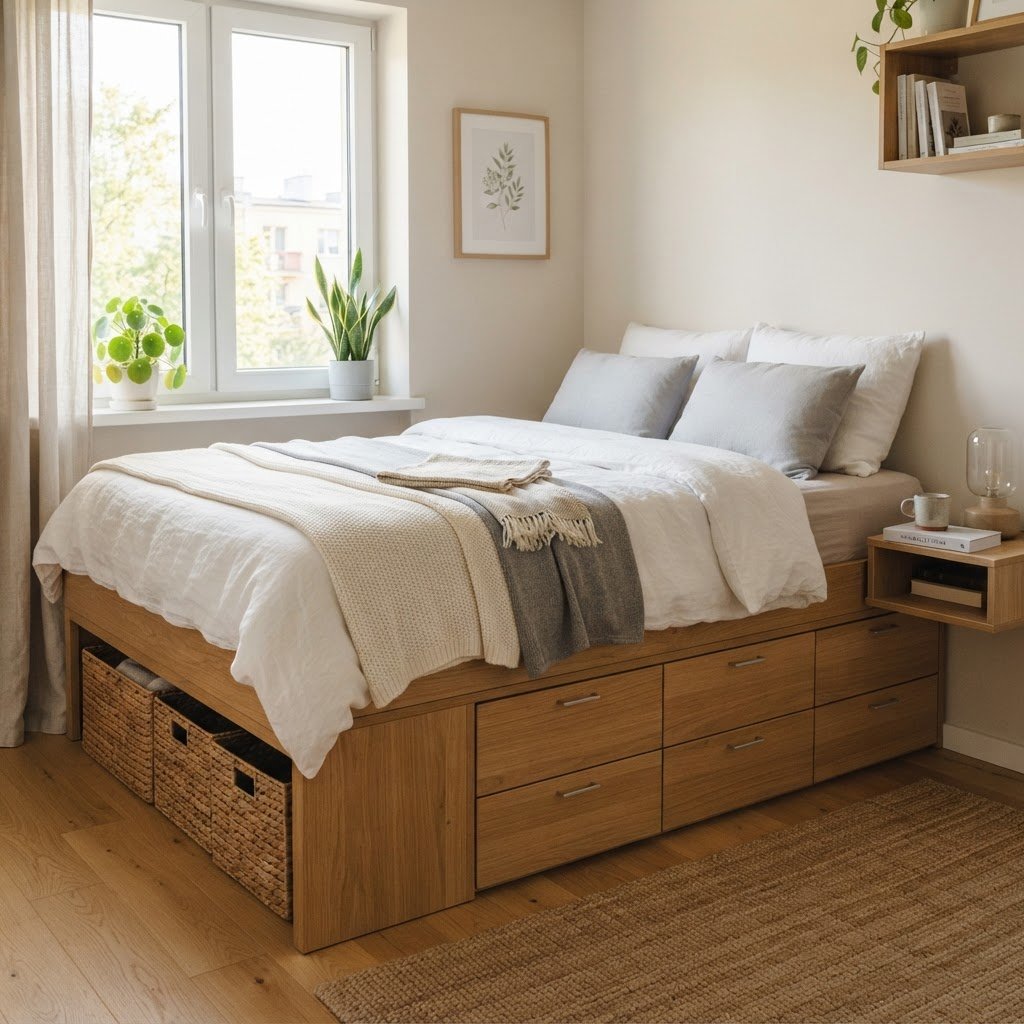
The Bed Frame Transformation

Your bed is likely the largest piece of furniture in your home. If your current frame is low, purchase 4-inch to 6-inch risers to create enough clearance for rolling bins. Alternatively, upgrading to a frame with built-in drawers provides a permanent, stylish way to organize linens that you don’t need access to on a daily basis.

Tension Rod Wonders

Tension rods are a renter’s best friend because they provide structural organization without requiring any hardware or permanent installation. These simple, spring-loaded bars can be wedged between two vertical walls or inside cabinetry to create instant shelving or hanging space. A common professional trick is to install a tension rod inside the space under the kitchen sink to hang spray bottles, which clears the floor for bulkier items like recycling bins. In closet spaces, you can use a tension rod to create a secondary hanging row for shorter items like scarves, belts, or hats. Because these rods are adjustable, they can be moved from apartment to apartment, making them one of the most cost-efficient storage investments you can make. With prices typically ranging between $5 and $12 per rod, they offer an incredibly high return on investment for any apartment dweller struggling with limited space and strict landlord regulations.

Creative Uses for Tension Rods

Beyond the kitchen, place a tension rod inside a deep closet to hang extra scarves or accessories. You can even use them inside a bookshelf to create a “hidden” ledge for thinner items. Their versatility as a vertical storage idea makes them a must-have for every apartment dweller.

Wall-Mounted Systems and Pegboards

Pegboards offer a customizable and modular storage solution that is perfect for small apartment living. By installing a pegboard in your office or kitchen, you transform a flat wall into a highly efficient, vertical organizational system. You can hang almost anything—from kitchen scissors and tape to mugs and houseplants—by simply rearranging the hooks and shelves to suit your current needs. This is particularly effective in kitchens where counter space is limited, as it keeps essential tools within arm’s reach while ensuring they are perfectly spaced and not cluttered. For the best result, arrange items by function, keeping heavy items lower and light tools higher. Painting your pegboard the same color as your wall will make the board disappear, leaving only your tools floating, which provides a clean, minimalist aesthetic that works well in any modern home. This solution usually costs under $50 and provides up to 10 square feet of usable, high-visibility storage.

Designing Your Vertical Wall

Arrange items with intention by creating zones on your pegboard so related tools are grouped together. This turns your storage solutions into a piece of functional wall art while keeping your small apartment workspace highly efficient.

Utilizing Dead Space Above Cabinets

The area between your kitchen cabinets and the ceiling is frequently underutilized, creating a collecting point for dust. By placing uniform baskets or lidded bins in this space, you can create a hidden storage zone for seasonal items like holiday decor, spare kitchen appliances, or pantry overflow. This area is ideal for items you only need to access once or twice a year, as it requires a step stool to reach. To ensure the space looks intentional rather than cluttered, select baskets in consistent materials like natural seagrass, rattan, or opaque fabric. This creates a visually cohesive look that hides the contents completely. If your cabinets have a gap of 12 inches or more, this simple storage addition can effectively double your kitchen’s off-counter storage capacity, allowing you to maintain a clean workspace even in the smallest studio apartments.

Aesthetic Integration

To ensure this doesn’t look cluttered, use matching baskets made from a natural material like seagrass or rattan. These provide a warm, uniform look that hides your stored items completely. Make sure to use a step stool for safe access to these upper reaches.

Clever Closet Hacks

Closets are usually the first place to become chaotic, but they are also the easiest to optimize with vertical storage ideas. You can double your hanging capacity by using a secondary hanging rod or adding a cascading hanger to your existing rod to hold multiple shirts in the vertical space of one. For sweaters and jeans, shelf dividers are essential to maintain order and prevent stacks from tipping over. Hanging tiered organizers that attach to your closet rod are also a game-changer, as they create multiple shelves for shoes or folded clothing, effectively multiplying your usable closet space without requiring permanent shelving installations. By utilizing these hacks, you can realistically fit 30% more items into the same physical footprint. Focus on keeping your most-worn items at shoulder height to ensure that your vertical optimization remains functional for your daily routine.

Vertical Tiered Organizers

Use hanging tiered organizers that attach to your closet rod. These create “shelves” for shoes or folded clothing, effectively multiplying your usable closet space without requiring permanent shelving installations.

FAQ

Q: What is the best way to add storage to a rental without damaging walls?

Use tension rods, adhesive hooks like Command strips, and over-the-door organizers to create storage without drilling holes. These methods provide significant organizational space while remaining 100% reversible for your move-out inspection.

Q: How can I make a small room feel larger while adding storage?

Focus on vertical storage that draws the eye upward to the ceiling, which creates an illusion of height. Keeping floor surfaces clear of clutter is equally important, as it increases the perceived amount of open space in the room.

Q: What should I store in under-bed bins?

Use under-bed storage for seasonal clothing, bulky winter bedding, or shoes you don’t wear daily. Because these items are tucked away, they stay clean and protected while freeing up prime closet and drawer space for your everyday essentials.

Q: How do I choose the right color for my storage organizers?

Opt for colors that match your walls or doors to create a “hidden” effect, or choose natural textures like rattan for a cohesive, intentional look. Matching the color of your organizers to the background helps reduce visual clutter, making the space feel more open.

Q: Are pegboards worth the effort for small kitchens?

Yes, pegboards provide significant, flexible storage that keeps kitchen tools off your counters, effectively giving you more room to cook. They can hold heavy pots and pans when installed correctly, making them one of the most versatile additions to any small apartment kitchen.

Maximize Cabinet Space in a Small Kitchen: Expert Tips

Living in a small apartment often means facing the daily challenge of a cramped cooking area where every square inch counts. Learning how to maximize cabinet space in a small kitchen is not just about aesthetics; it is about reclaiming your sanity and creating a functional environment where you can actually enjoy preparing meals. When your counters are cluttered and your cupboards are overflowing, the joy of cooking quickly fades into frustration. By implementing strategic organization techniques, you can effectively double your storage capacity without needing a renovation.

Assess and Declutter Your Kitchen Inventory

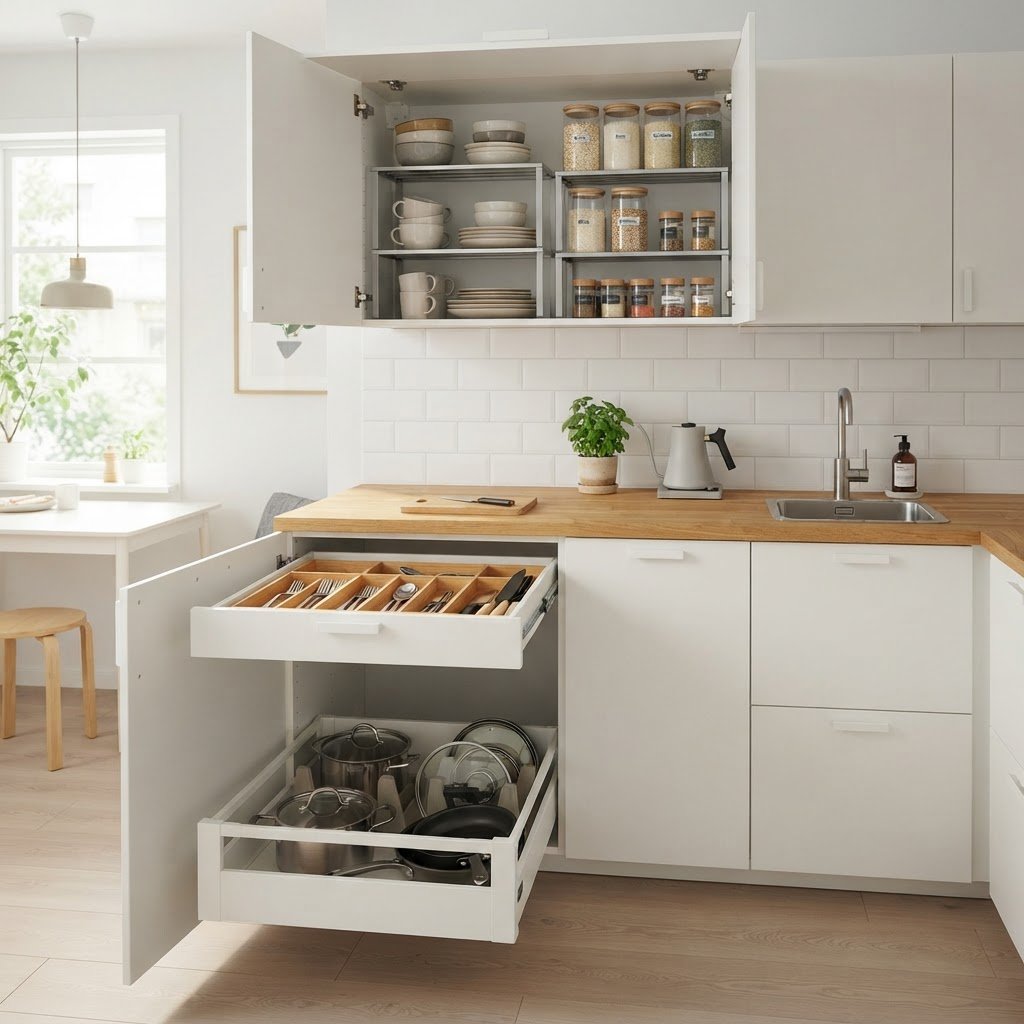
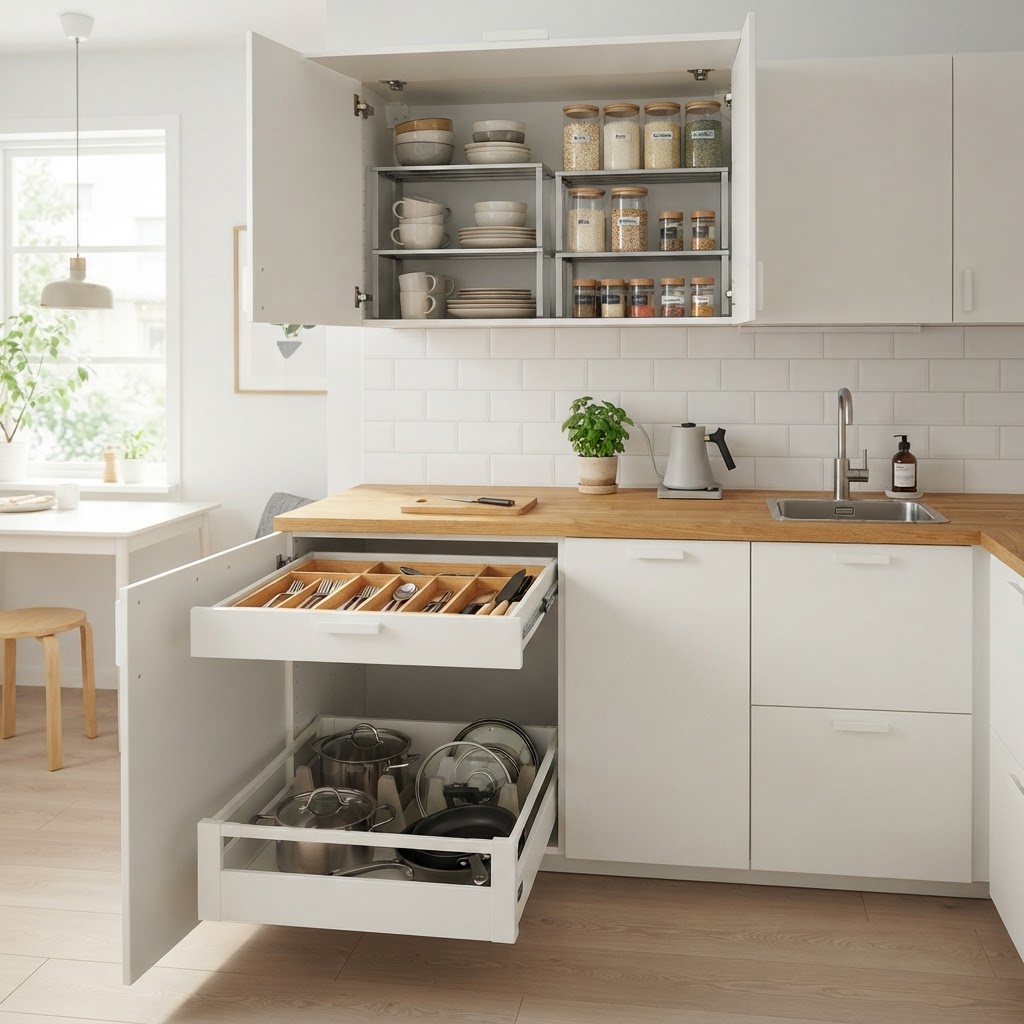
Maximize your vertical storage with shelf risers and pull-out trays.

The first step in transforming your kitchen is a ruthless assessment of what you actually need. Most small apartment storage issues are exacerbated by keeping duplicate items or tools that have not been touched in years. Pull every item out of your cabinets and sort them into categories like keep, donate, and discard. Be honest about your cooking habits; if you rarely bake, you probably do not need four different types of mixing bowls.

Once you have narrowed down your inventory, you will find that you have more physical room to work with. Decluttering is the foundation of any successful organizational project because you cannot organize clutter. Only keep the essentials that are used on a weekly basis, and store secondary items in a less accessible area like the top shelf or a storage bin in the closet.

Utilize Vertical Storage Solutions

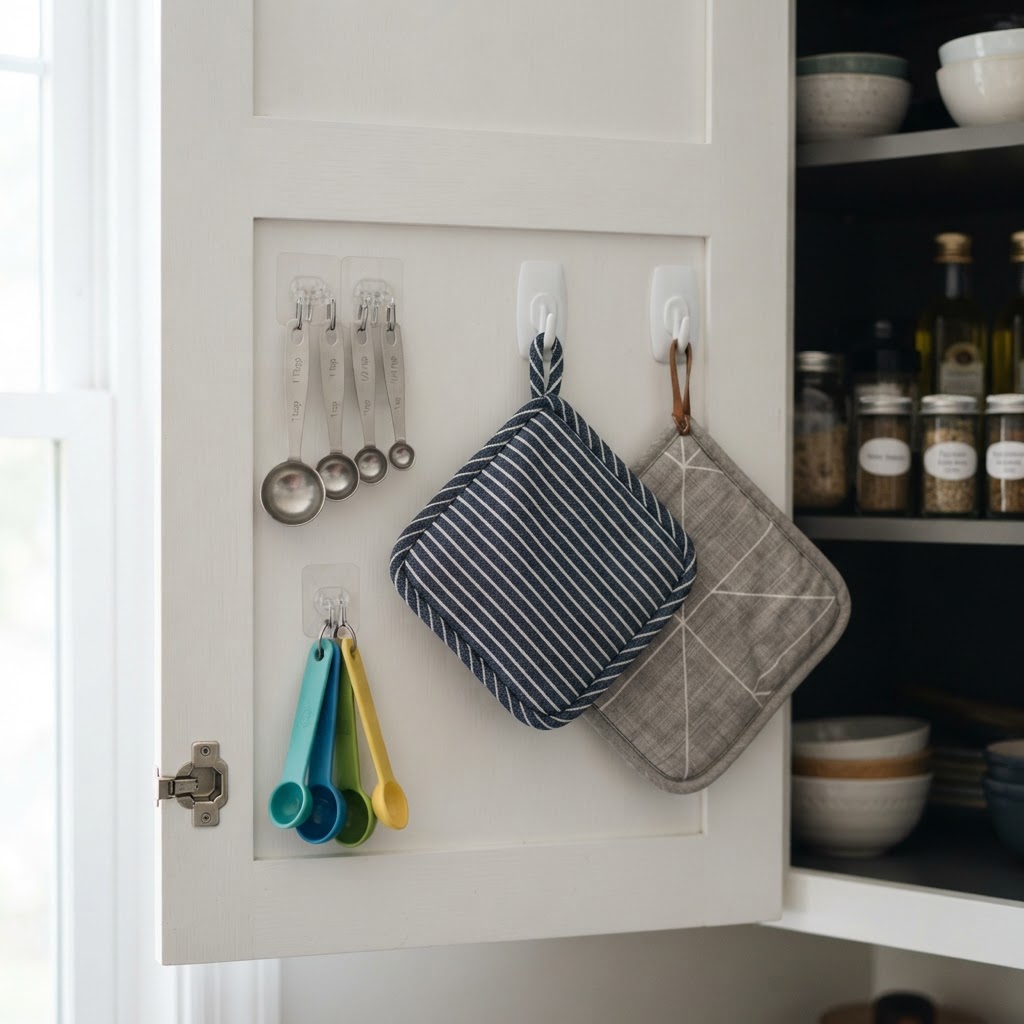
Utilize the back of cabinet doors for additional storage.

One of the most underutilized assets in any kitchen is the vertical height of your cabinets. Most people leave significant gaps between the top of their stacked plates and the shelf above, which is wasted square footage. To maximize cabinet space in a small kitchen, you must think in three dimensions. Using shelf risers allows you to stack items safely without creating a precarious pile that topples over every time you reach for a mug.

Installing tension rods or vertical dividers can also revolutionize how you store flat items. Instead of stacking baking sheets and cutting boards horizontally, store them vertically like books on a shelf. This prevents the annoyance of having to lift a heavy stack just to retrieve the one item at the bottom. Adding hooks to the inside of cabinet doors or the underside of shelves can also free up significant surface area for smaller items.

The Power of Shelf Risers and Dividers

Shelf risers are inexpensive and highly effective at creating a second layer of storage. When shopping for these, look for wire or clear acrylic versions that blend into your existing aesthetic. Cabinet dividers, on the other hand, are perfect for deep cupboards where items tend to get lost in the back. By segmenting your space, you create dedicated “homes” for specific tools, which helps maintain order over the long term.

Optimizing Dead Space Inside Cabinets

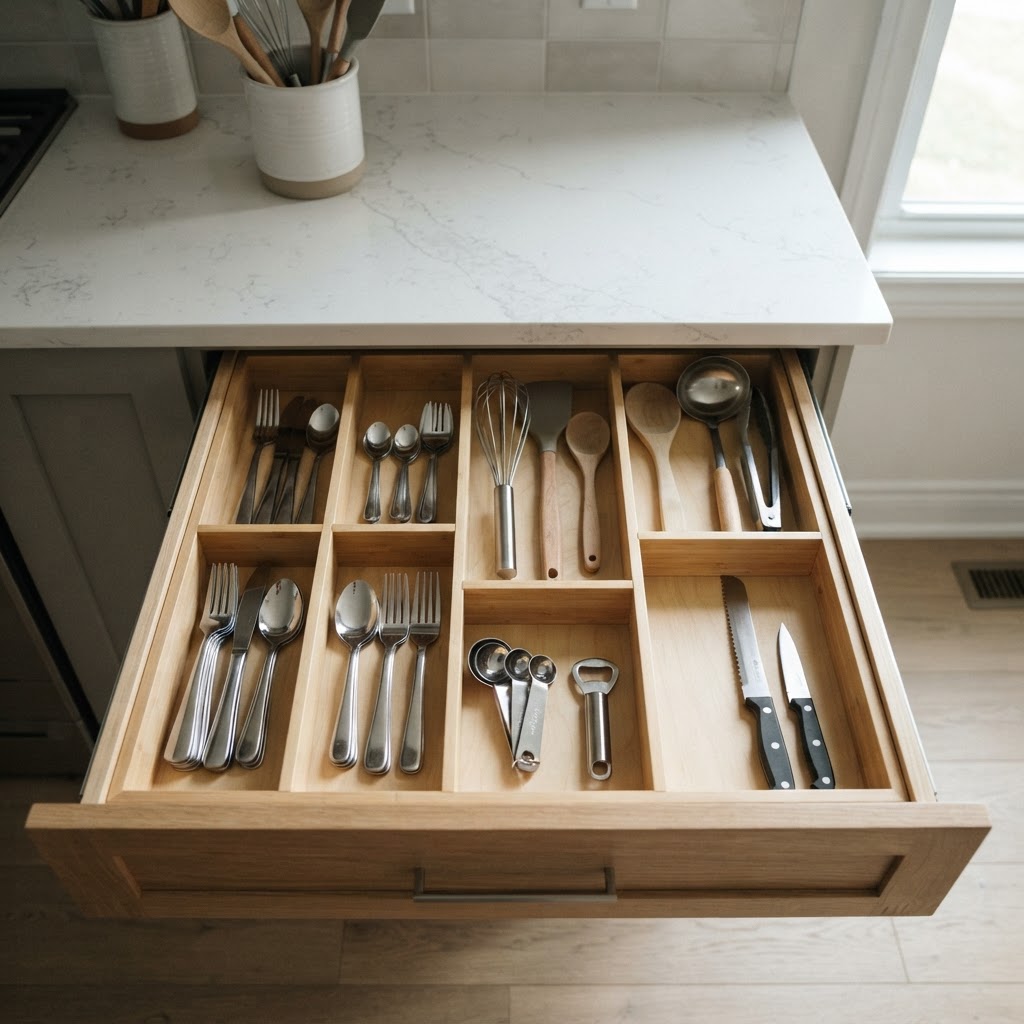
Drawer organizers keep utensils and flatware perfectly sorted.

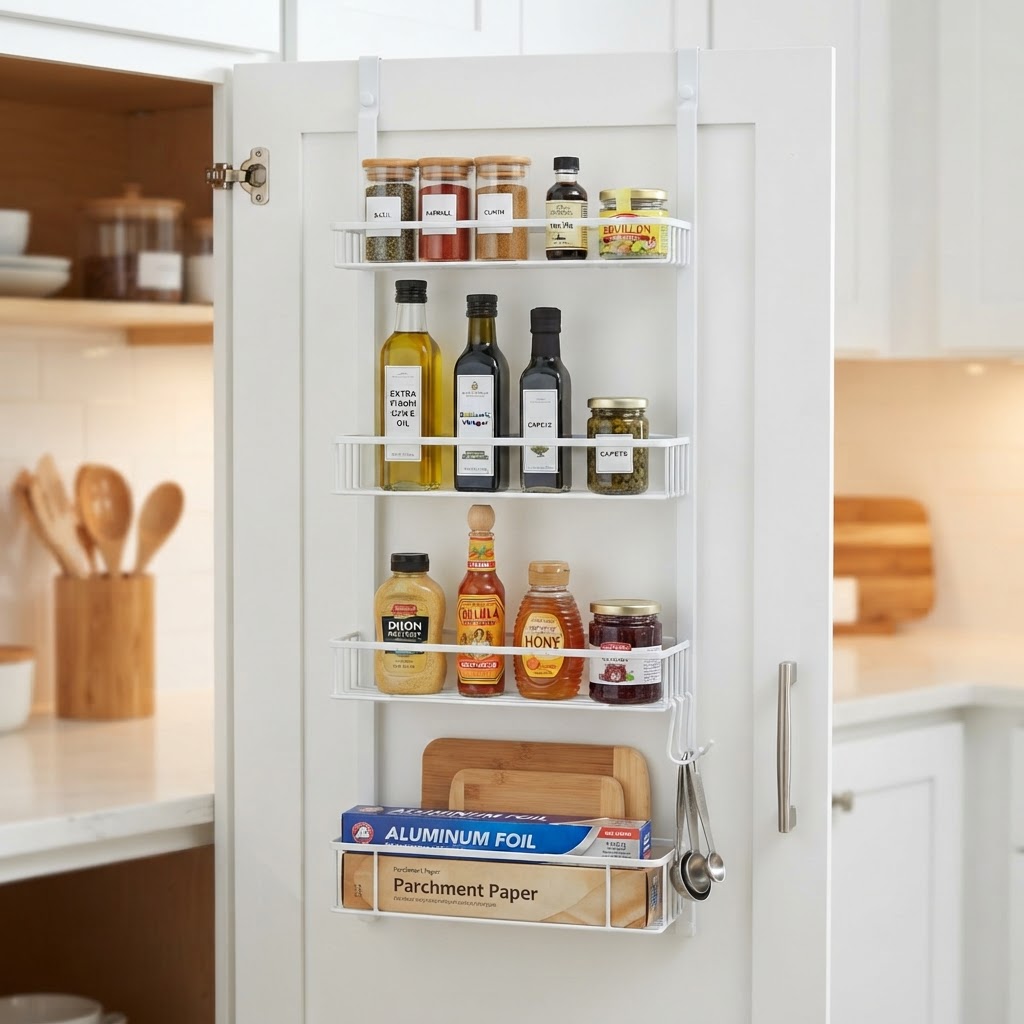
The backs of cabinet doors are prime real estate that is often completely ignored. You can attach adhesive hooks or small wire baskets to these doors to hold lightweight items like measuring cups, pot holders, or plastic wrap and foil boxes. This simple hack moves items off your limited shelves and into a space that was previously doing nothing for you.

For an even more streamlined approach, you can install specialized pull-out organizers to double your kitchen cabinet space and keep everything within reach.

Another trick for small apartment storage involves using the interior walls of your cabinets. Magnetic strips can be mounted to hold knives, spice tins, or even small metal kitchen tools. If you have deep corner cabinets, invest in pull-out trays or lazy Susans to ensure you can reach everything without performing gymnastics. Preventing the dreaded “dead zone” in the corner of your cabinet will make your entire kitchen experience much smoother.

Strategic Placement of Frequently Used Items

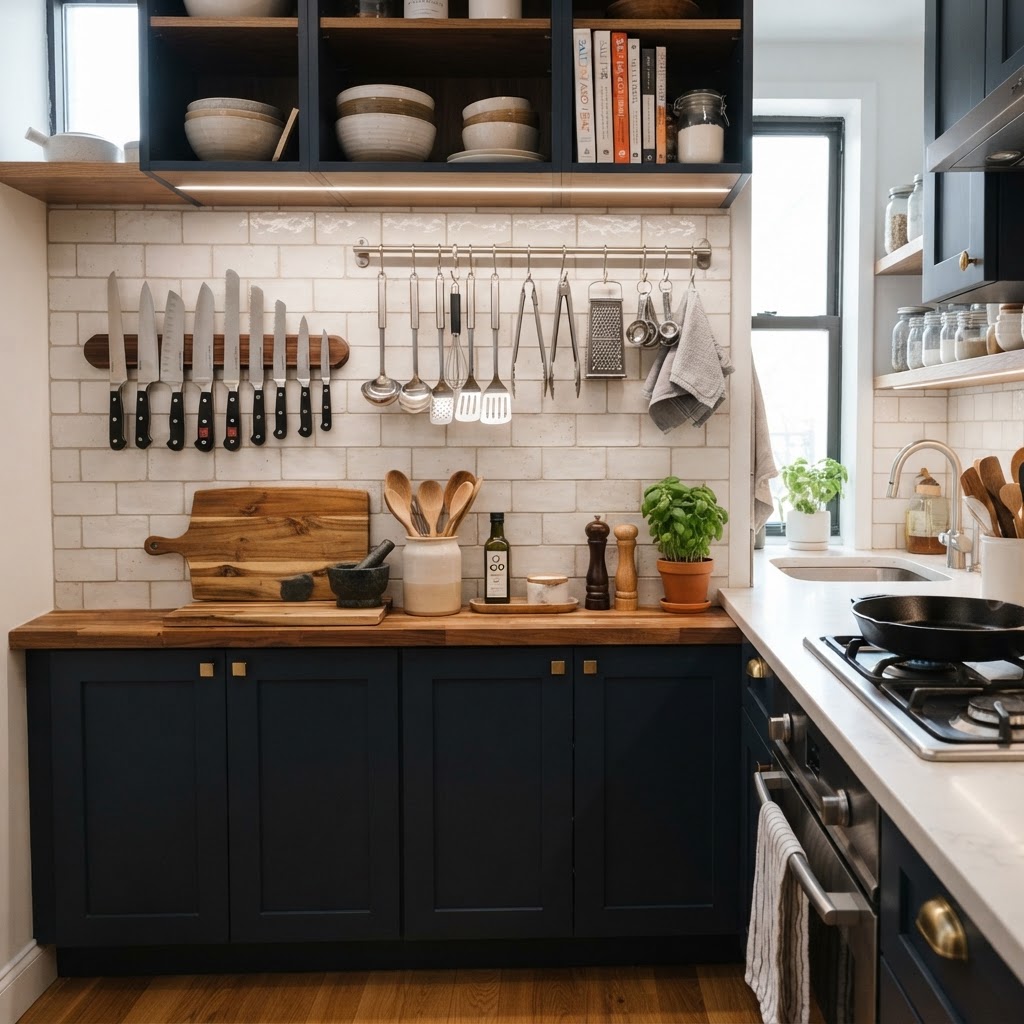
Wall-mounted storage can clear up valuable counter space.

To make your kitchen truly efficient, you need to apply the logic of zones. Items that you use every single day should be placed in the “prime zone,” which refers to the space between your waist and shoulder height. Your most frequently used pots, pans, and plates should never be stored on the floor or on the highest shelf where you need a stool to reach them. If you are struggling with a compact home, checking out these cozy tiny living room ideas can help you create a cohesive, relaxing retreat throughout your entire apartment. If you are interested in more ways to elevate your space on a budget, you might want to explore some cheap and chic small apartment decorating ideas to complement your organized kitchen.

Keep your coffee supplies near the coffee maker and your cooking oils near the stove. This reduction in unnecessary movement saves time and keeps your countertops clearer, as you will not be dragging items across the room while you are trying to cook. By keeping your counters clear of appliances and tools, you maximize your prep surface, which is the most valuable asset in any compact kitchen.

Integrating Smart Storage Accessories

If you are looking to revitalize your entire home, learning how to decorate a small apartment on a budget can provide you with cost-effective strategies that complement your newly organized kitchen. There is a massive market for kitchen organization products, but you should choose ones that serve multiple purposes. Stackable clear containers are a game-changer for pantry organization, as they allow you to see exactly how much of an ingredient you have left while maximizing height. Avoid bulky containers that do not stack well, as they create inefficient gaps that waste precious space.

Drawer organizers are also essential for keeping flatware and utensils from becoming a jumbled mess. When you can easily find your tools, you spend less time digging and more time cooking. Consider modular organizers that can be adjusted to fit your specific drawer dimensions, ensuring that no millimeter of space is left wasted.

Creative External Storage Ideas

When the cabinets are officially full, it is time to look at the walls and ceiling. A magnetic knife rack mounted on the backsplash clears up drawer space, while a ceiling-mounted pot rack can hold your most-used pans. This not only frees up cupboard space but also adds a professional, culinary aesthetic to your kitchen.

Utilize Door-Mounted Storage Solutions

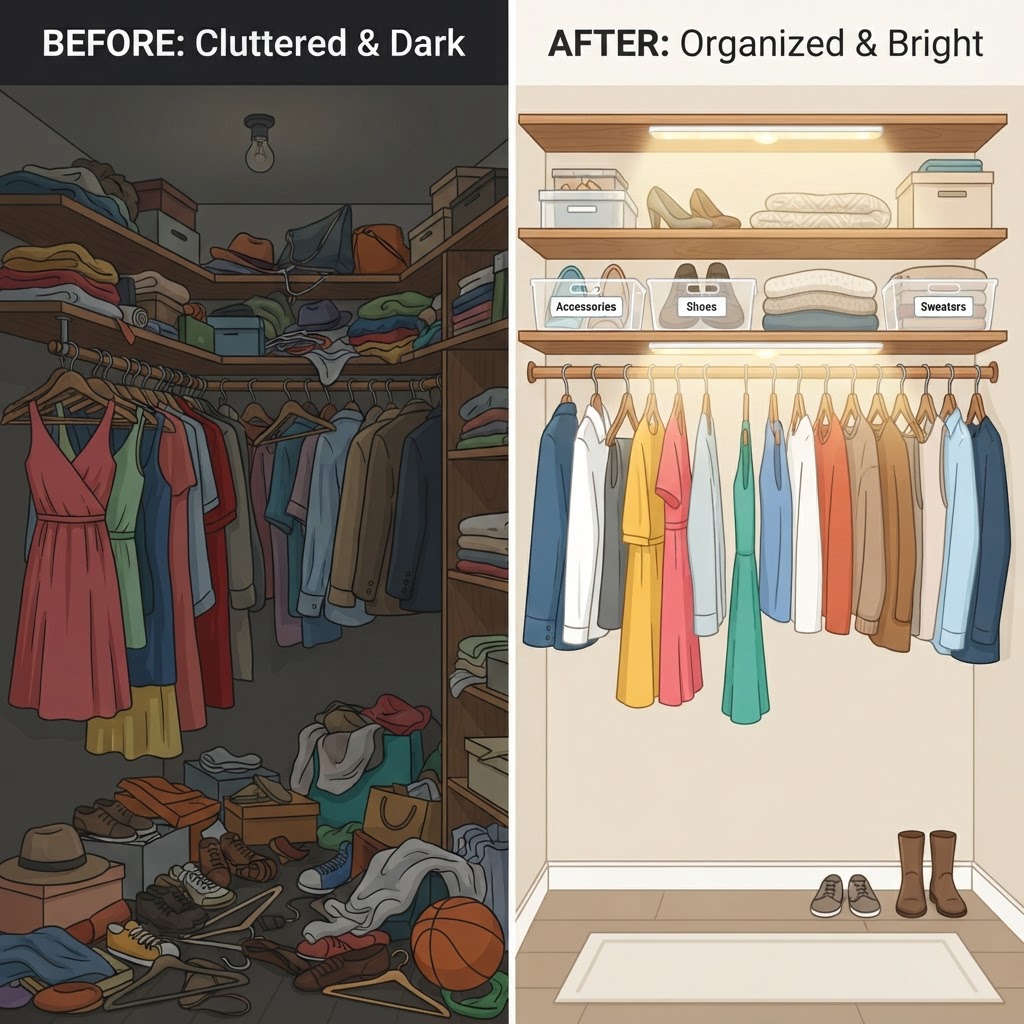
Bright lighting and labels make finding items effortless.

Your closet door acts as a hidden, high-value storage surface that most renters fail to leverage. Over-the-door organizers are legitimate game-changers for small apartment living, transforming a blank, functional space into a dedicated hub for shoes, accessories, or gym gear that otherwise ends up cluttering your floor. Opt for clear pocket organizers; these allow you to instantly locate smaller items without digging through drawers or bins. If you have deep closet doors, install heavy-duty command hooks or an over-the-door bar to hang robes, scarves, or hats. This clears the interior floor space, creating the illusion of a larger closet while keeping your frequently used items at eye level. For maximum efficiency, assign one pocket to one category, such as hosiery, belts, or chargers, which streamlines your daily morning routine significantly.

Implement Drawer Dividers for Small Items

Integrated drawers or modular chests inside your closet often become unorganized ‘junk zones’ without proper compartmentalization. Drawer dividers are the essential tool for maintaining permanent separation between undergarments, socks, and delicate accessories, ensuring every item has a fixed home. When items are physically separated, you reduce the time spent searching for matching pairs, directly improving your daily workflow. Consider using adjustable tension dividers that snap into place; these offer the flexibility to customize compartment sizes as your inventory fluctuates. If you prefer a budget-friendly route, repurpose small clean boxes or trays to create a custom grid system. This prevents smaller garments from shifting around whenever the drawer is opened or closed, keeping your organizational efforts intact regardless of how hectic your morning routine might be. A well-divided drawer system is the difference between a functional closet and a source of constant frustration.

Master the Art of Shelf Dividers

Shelves in small closets frequently turn into ‘leaning towers of sweaters’ that collapse at the slightest disturbance. Shelf dividers serve as rigid, vertical boundaries that keep your folded denim, knitwear, and t-shirts perfectly aligned, regardless of how many items are pulled from the stack. These inexpensive, clip-on accessories eliminate the messy, ‘toppled’ aesthetic that makes a closet feel chaotic. For a minimalist, modern aesthetic, choose acrylic dividers; they provide the necessary structure while remaining virtually invisible to the eye, preventing visual clutter in your small space. They are particularly effective for high-traffic storage shelves where you frequently cycle through clothing. By enforcing a strict ‘lane’ for each category of clothing, you prevent cross-contamination of stacks, ensuring your closet maintains its clean, orderly appearance throughout the entire week, even during the busiest periods of your life.

Create a Modular Floor System

Most closets feature a large, underutilized gap beneath the hanging rods that is often wasted by simply placing a singular laundry hamper in the middle. To maximize this space, transition to a modular system using stackable bins or a low-profile, wheeled utility cart. This approach utilizes every inch of vertical floor-to-rod height that standard layouts ignore. Labeling is the most critical step for a modular system; clear categories like ‘Activewear,’ ‘Swimwear,’ or ‘Bags’ remove the guesswork from your storage. A rolling cart is arguably the most clever addition, as it allows you to pull the entire unit out to access items tucked deep into the back of the closet, effectively eliminating the ‘dark corner’ problem where items go to be forgotten. This systematic approach ensures that even the lowest point in your closet serves a productive, high-utility purpose.

Use Slimline Velvet Hangers

Switching to uniform, slimline velvet hangers is the single fastest way to increase hanging capacity by up to 30%. Because traditional bulky plastic or wooden hangers consume excessive rod width, swapping them for thin velvet versions provides an immediate gain in linear space. The non-slip surface is a major functional benefit, keeping delicate silks or wide-neck shirts securely on the hanger instead of pooling on the closet floor. Beyond the physical space savings, the visual uniformity of velvet hangers creates a cohesive, high-end boutique look. Reducing visual noise is essential for small apartments; when your hangers match, the closet feels intentionally designed rather than cluttered. It is a simple, low-cost investment that pays dividends in both actual space and perceived organization every time you open your closet doors.

Incorporate Lighting for Visibility

Visibility is the primary driver of closet organization; if you cannot see your items, you will not wear them, and they will eventually become clutter. Installing battery-operated LED motion-sensor lights provides bright, clear visibility in the deepest, darkest recesses of your storage space without requiring an electrician or hard-wiring. These lights typically cost between $10 and $25 and turn on automatically, ensuring that you don’t ‘forget’ items tucked in the back corners. When your entire wardrobe is visible, you naturally rotate through your clothing, preventing the habit of relying solely on the items at the front of the rack. Furthermore, bright, white-spectrum lighting makes a small closet feel larger, more premium, and better maintained, turning a ‘storage cave’ into a well-lit dressing area.

Maximize Corners with Rotating Organizers

Corners in reach-in closets are notorious ‘dead zones’ that are nearly impossible to organize effectively with standard shelves. A rotating organizer—often called a Lazy Susan—is the perfect solution for turning these deep, dark corners into a high-utility zone for accessories, shoes, or beauty products. By allowing items to rotate toward you, you eliminate the need to reach into the shadows, making every square inch of your corner space usable. Group items by category, such as placing belts on the bottom level and perfumes or scarves on the top, to maintain a logical, fast-paced routine. This system essentially ‘brings the storage to you,’ ensuring that nothing gets lost in the back. Incorporating a rotating organizer prevents the accumulation of loose items and creates a structured flow in an area that would otherwise be wasted dead space.

FAQ

Q: What is the fastest way to organize a small closet?

Decluttering your wardrobe to remove items you haven’t worn in the last 12 months is the fastest way to organize. Once you have a smaller inventory, switching to slimline velvet hangers instantly saves up to 30% of your rod space and creates immediate visual order.

Q: How do I store bulky winter coats in a tiny apartment?

Use vacuum-seal bags to reduce the volume of winter coats by up to 70% for off-season storage. These sealed bags can be tucked under your bed, inside suitcases, or on high shelves where they don’t consume valuable daily closet space.

Q: Are tiered hangers bad for clothes?

Tiered hangers are generally safe for items like scarves, leggings, or jeans, but they can cause creasing on delicate fabrics like silk or wool. Use tiered hangers for casual wear and save standard velvet hangers for your more structured or delicate items to avoid long-term garment stress.

Q: How can I maximize floor space in a small closet?

Maximize floor space by using a modular rolling cart or stackable bins instead of a standard floor-based hamper. A rolling cart allows you to access items in the back of deep closets easily, effectively turning dead floor space into an organized, high-access storage zone.

Q: How do I keep my small closet smelling fresh?

Place cedar blocks or scented sachets made with dried lavender on your shelves or in your drawer dividers to maintain a fresh scent. Avoid hanging liquid air fresheners, as they can spill and damage clothing; natural, dry options are safer and more effective for enclosed spaces.

10 Smart Shoe Storage Solutions for Narrow Entryways

The most effective shoe storage solutions for narrow entryways include slim tip-out cabinets, vertical wall-mounted floating shelves, and multi-functional bench seating with built-in racks. These space-saving methods prioritize vertical storage and hidden compartments to eliminate floor clutter, ensuring even the smallest foyer remains organized, functional, and visually spacious.

The Psychology of an Organized Entryway

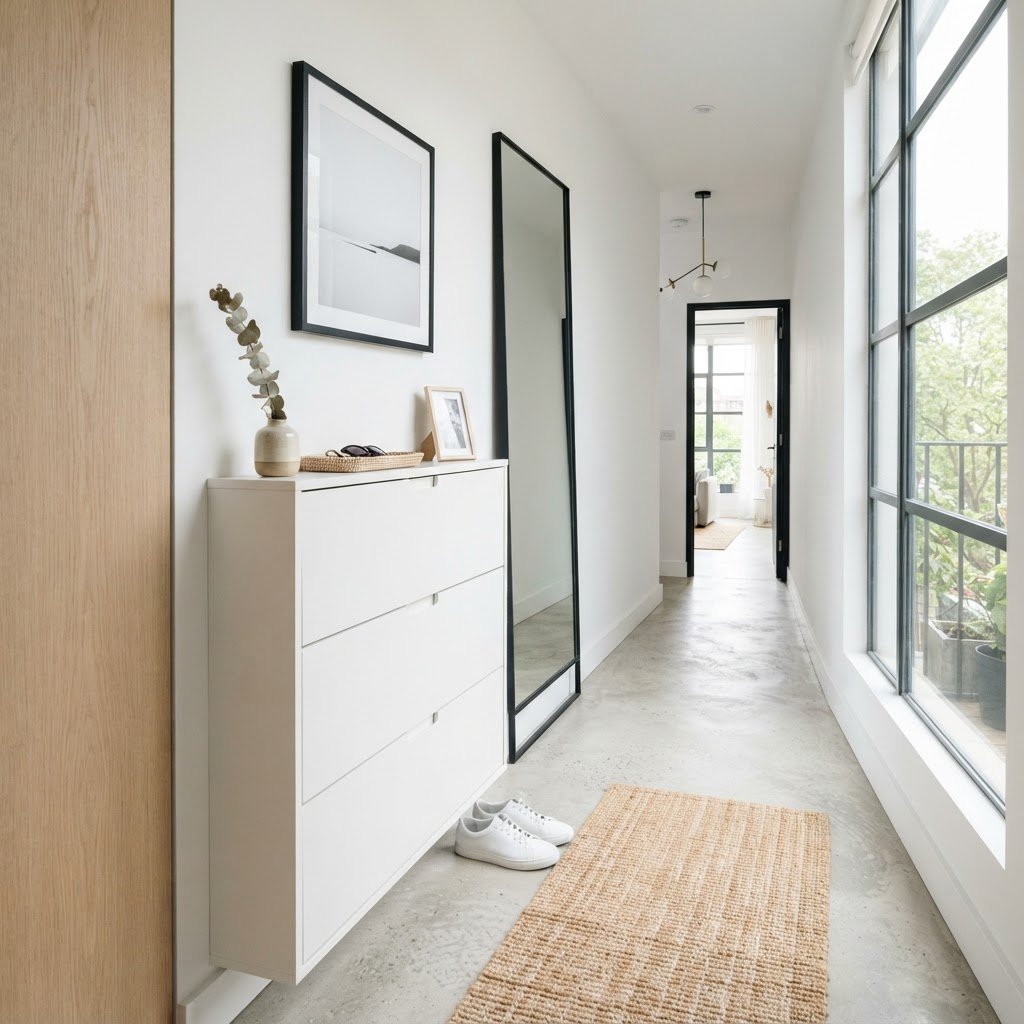
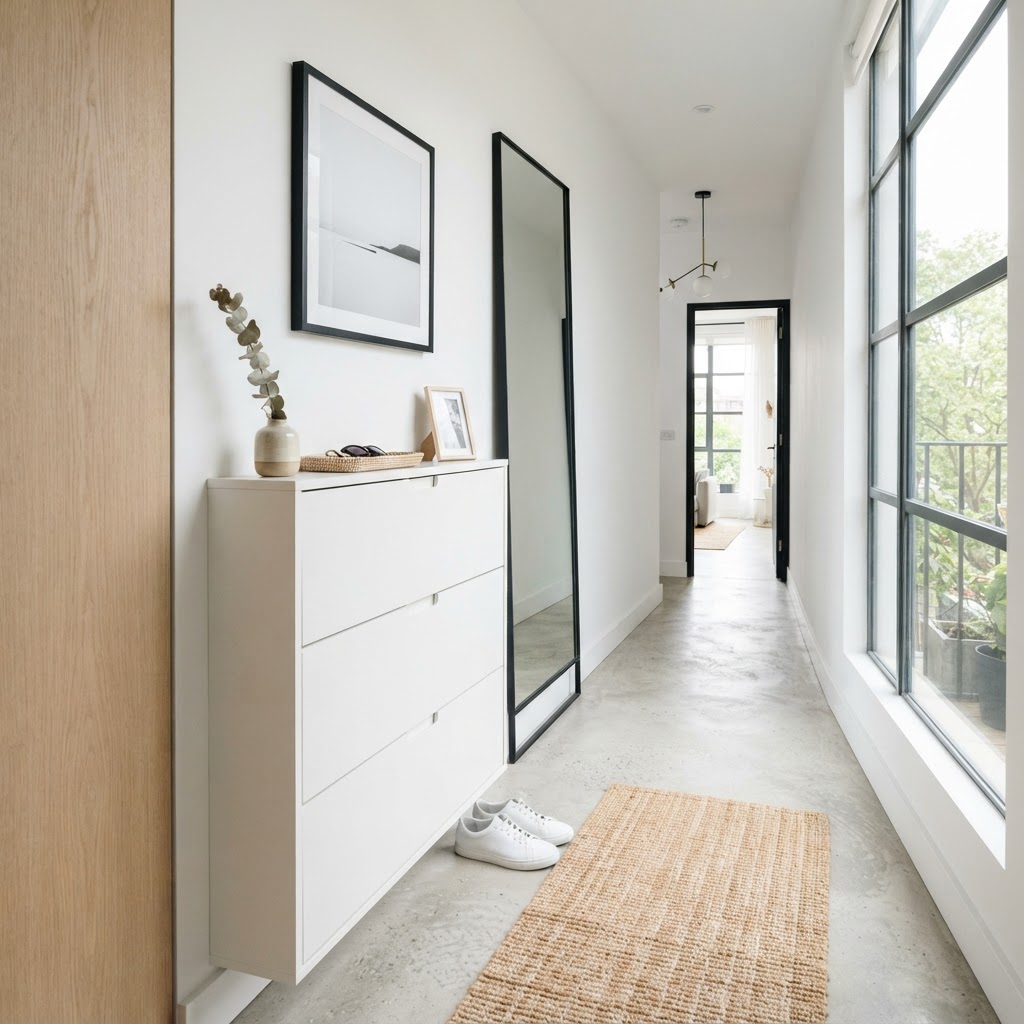
A space-saving tip-out cabinet for small entryways.

Your entryway acts as the transition zone between the hectic outside world and your personal sanctuary. While you focus on organizing your entrance, you might also be looking for cozy tiny living room ideas to ensure the rest of your apartment feels just as inviting and well-curated. While you work on decluttering your foyer, it is also important to look for ways to maximize space in your kitchen, especially if you are looking to maximize space in your kitchen on a tight budget. When this area is cluttered with shoes, it signals stress to your brain the moment you walk through the door. Adopting smart small apartment storage habits begins by clearing the floor, which instantly makes a narrow space feel larger and more inviting. Proper organization helps you manage your daily routine efficiently, ensuring you can grab your keys and shoes without delay. According to interior design ergonomics, a clear floor path of at least 30 inches is required for comfortable movement; keeping footwear off the ground is essential to meeting this standard in tight hallways. By categorizing your footwear by frequency of use—daily commuters near the door and seasonal items on higher shelves—you reduce cognitive friction, allowing for a faster “out-the-door” experience. Investing in modular systems, which often cost between $80 and $250, provides a high return on investment by maximizing usable square footage in apartments where the median price per square foot continues to climb. If you are looking to decorate a small apartment on a budget, these modular systems are a cost-effective way to elevate your space without breaking the bank.

Why Narrow Spaces Need Vertical Thinking

In a tight apartment, the floor is premium real estate. When you run out of floor space, the only way is up. Utilizing wall-mounted units, slim vertical towers, and tiered racks allows you to store multiple pairs of shoes in the same footprint previously occupied by just one pair. This shift in perspective is the foundation of successful entryway organization. Consider the following comparison to determine which vertical method suits your specific layout:

Storage Solution Best For Footprint Impact Capacity
Tip-Out Cabinet Hallways under 10″ deep Minimal High (Hidden)
Wall Shelving Minimalist decor Zero (Floating) Low to Medium
Shoe Tower Tight corners Very Low Very High

1. Slim Profile Tip-Out Cabinets

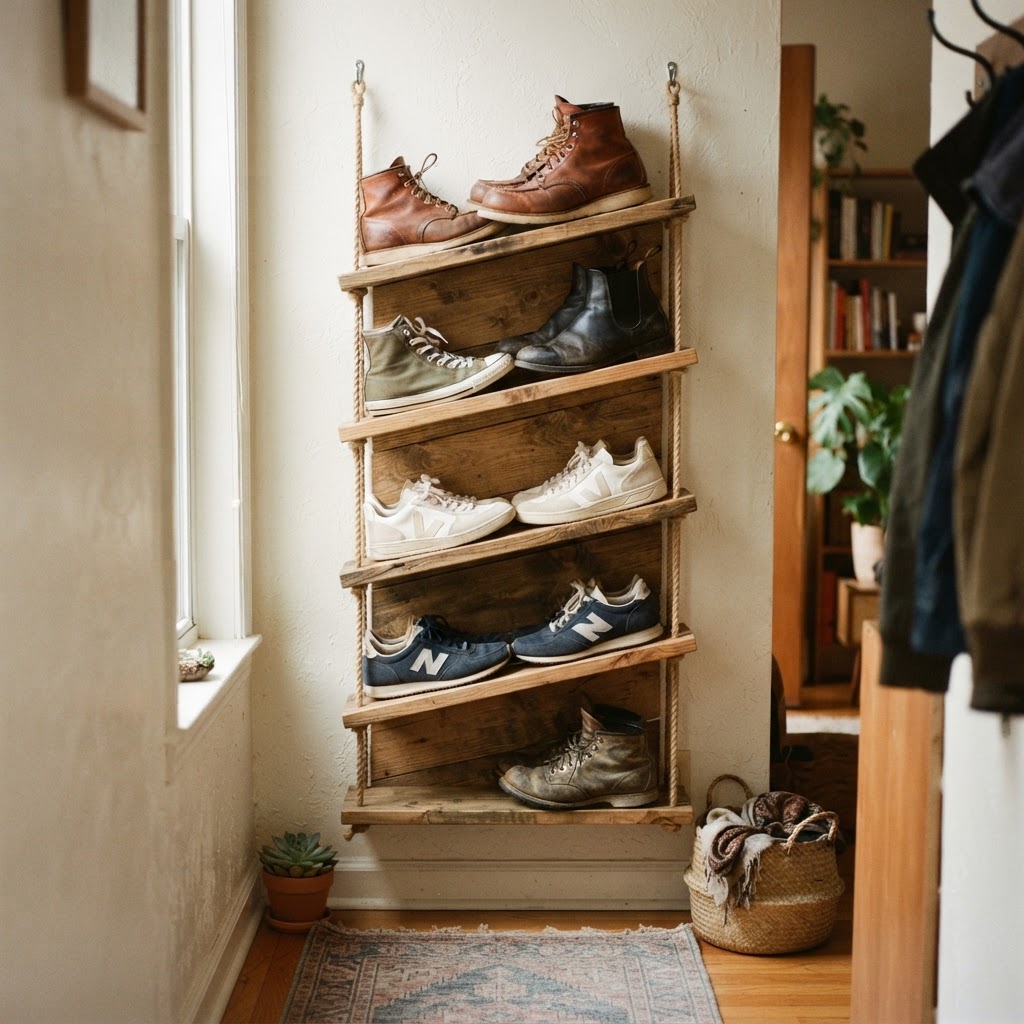
Vertical storage makes the most of narrow walls.

Tip-out cabinets are the gold standard for narrow hallway shoe storage because they are designed specifically to hide footwear in plain sight. These units typically feature tilted drawers that drop down to reveal your shoes, keeping them organized while maintaining a sleek, furniture-like appearance. Because they have a very shallow depth, usually under 10 inches, they are perfect for hallways where every inch matters. If you are looking for even more inspiration, check out these creative ways to store shoes in a tiny entryway to further maximize your floor space. When selecting a unit, look for durable MDF or solid wood construction with double-row hardware; a high-quality model can store between 12 and 18 pairs of shoes while remaining slim enough to sit behind a swinging door. These cabinets are engineered to prevent the “shoe pile” phenomenon, as each pair has a specific, upright location. For added functionality, look for models with a top surface drawer where you can place keys, wallets, or mail, transforming a single piece of furniture into a complete entryway command center. Always anchor these units to the wall for safety, especially in high-traffic areas where accidental bumps might occur.

2. Under-Console Shoe Racks

Floating shelves create an elegant display for footwear.

If you have a narrow console table, you are already halfway to a solution. Instead of leaving the space beneath the table empty, slide a low-profile, two-tier shoe rack directly underneath it. This creates a hidden storage zone that is easily accessible but out of the direct line of sight from the living area. Choose a rack with a neutral finish that matches your console to keep the look cohesive and minimal. By utilizing the “dead zone” beneath your furniture, you effectively reclaim floor space that would otherwise be wasted. For optimal results, measure the clearance of your console—most standard tables offer 24 to 30 inches of height, which is plenty for a stackable two-tier rack. If your console is made of metal, consider a magnetic rack, or use adhesive-backed risers to prevent the unit from sliding when you pull it out. This method is particularly effective for households with fewer than 10 pairs of shoes, as it allows you to rotate footwear without cluttering the walk path. Keeping this area ventilated is key; ensure your rack has slatted or wire shelving to allow airflow, preventing odors from trapping in the fibers of your shoes.

3. Wall-Mounted Floating Shelves

Floating shelves aren’t just for books or decor; they are incredible tools for storing shoes off the ground. Install a series of staggered floating shelves along a blank wall in your entryway to create a “shoe gallery.” This not only saves floor space but also turns your favorite footwear into a design feature. It is a fantastic way to add personality to your home while solving your storage dilemmas. When installing these shelves, use heavy-duty wall anchors or mount directly into the studs to support the weight of heavier boots. For a cohesive look, keep your shelving material consistent with your flooring or baseboards; for example, white shelves against white walls minimize visual weight, making the entryway feel larger. You can also utilize specific shoe-display shelves with angled lips that hold the heel in place, preventing slip-offs. Staggering the shelves at heights of 8, 16, and 24 inches allows for both flats and taller ankle boots to be displayed elegantly. This “gallery” approach is highly effective for limited-space dwellers who value aesthetics as much as utility, effectively proving that your storage can be a decorative highlight rather than a hidden utility item.

4. Behind-the-Door Pocket Organizers

Often, the back of the front door or a nearby closet door is an underutilized goldmine. Over-the-door pocket organizers are inexpensive, easy to install, and perfect for holding flats, sandals, and lightweight sneakers. This is one of the most effective shoe storage solutions for narrow entryways because it keeps items entirely out of the walking path while making use of space that would otherwise be wasted. Most standard over-the-door organizers feature 24 pockets, providing enough storage for up to 12 pairs of shoes in a space that was previously non-existent. When purchasing these, opt for clear PVC or breathable fabric versions to ensure visibility and hygiene. The key to maintaining a clean look is to avoid overstuffing; use pockets for items under 1 pound each to prevent the door from sagging or the organizer from pulling away from the hinges. If your entryway door is not suitable, consider a wall-mounted vertical rack that mimics this pocket layout, ensuring the same efficiency without putting stress on your door frame. This is arguably the most budget-friendly solution, with many high-quality units available for under $25, offering a significant storage boost for minimal expenditure.

5. Built-In Vertical Cubbies

For those willing to do a bit of DIY, building or installing tall, narrow cubbies is a game changer. These units rise from the floor to eye level, providing dedicated slots for every pair of shoes. By creating individual cubbies, you prevent the ‘pile-up’ effect and make it incredibly easy to keep track of your most worn footwear. The vertical orientation draws the eye upward, making the room feel taller. A standard cubby unit, measuring approximately 12 inches wide by 60 inches tall, can hold up to 10 pairs of shoes while consuming less than one square foot of floor space. To elevate the look, add a small piece of molding at the top of the unit so it appears custom-built into the architecture of your home. You can even personalize individual cubbies with labels or hooks for keys and accessories. For small apartments, modular cube organizers are a cheaper alternative that can be stacked to reach the ceiling, though they must be secured to the wall using furniture straps to ensure safety. This method creates a sense of order that makes a chaotic entryway feel like a high-end boutique, providing a dedicated “home” for every pair you own.

6. Woven Baskets with a Purpose

If you prefer a softer, more casual look, tuck a few high-quality woven baskets beneath a wall-mounted bench. While baskets are technically ‘open’ storage, they act as designated zones for specific types of shoes, such as gym sneakers or seasonal boots. When choosing baskets, look for rectangular shapes that fit flush against the wall to ensure you aren’t creating a tripping hazard. Woven seagrass or rattan baskets offer durability and a natural texture that warms up sterile, narrow hallways. To prevent the “messy pile” look, assign one basket per family member; this simple behavioral hack ensures that only one person’s shoes are in a single basket, making retrieval instantaneous. For a cleaner appearance, look for baskets with lids or use fabric liners that can be washed periodically to combat dust and odors. In a narrow hallway, keep the total basket depth to 14 inches or less to maintain the walking path. This solution is ideal for “quick-access” footwear like runners or slip-ons, which are frequently used and returned to the door within seconds, keeping your main storage units reserved for less frequently worn shoes.

7. Rotating Shoe Towers

Rotating shoe towers are brilliant for corners or tight spaces where you need to maximize capacity. These units allow you to store 15 to 20 pairs of shoes in a footprint no larger than a standard floor lamp. Because they rotate, you can quickly scan your collection without having to dig through a dark cabinet or a messy floor pile, making them a high-efficiency choice for small apartment storage. A standard 360-degree rotating tower typically measures 12 to 15 inches in diameter, making it ideal for the often-wasted space behind an open door or a corner junction. For best performance, look for units with ball-bearing swivels that rotate smoothly even when fully loaded. While these can be more expensive than static racks, the density of storage is unmatched for the floor space utilized. When positioning the tower, leave at least 2 inches of clearance on all sides to prevent the unit from scuffing your walls during rotation. They serve as a modern, sculptural element in your foyer, turning a storage necessity into a functional piece of art that keeps your footwear organized and easily accessible at a moment’s notice.

8. Expandable Under-Bench Storage

Many entryways benefit from a slim bench, but adding storage underneath makes it twice as useful. Look for benches that include built-in slatted shelves or pull-out drawers designed for footwear. This ‘dual-use’ furniture is a staple in professional interior design for small homes, providing a place to sit while putting on shoes and a place to store them afterward. An ideal bench for a narrow hallway should be no deeper than 14 inches and offer at least 10 inches of vertical clearance for shoe storage. If you cannot find a pre-made bench, consider buying a slim storage ottoman and replacing the legs with taller, sturdier ones to create space for a shoe tray underneath. This “layering” approach—a bench for sitting and a tray for storing—doubles your organization potential without increasing the furniture footprint. By providing a dedicated seat for putting on footwear, you also reduce the likelihood of shoes being kicked off in random spots throughout the room, as users are naturally incentivized to place them directly onto the designated storage surface before or after sitting.

9. Magnetic or Hook-Based Storage

While less conventional, using heavy-duty hooks to hang boots by their heels or using magnetic strips for specialized footwear can be a brilliant hack. This method is particularly useful for tall boots that lose their shape when stored in traditional racks. By getting boots off the floor, you create a sense of ‘visual breathing room’ that is essential in a small hallway. Magnetic strips can be installed at ankle-height to hold metal-eyelet shoes, or you can use “S” hooks on a wall-mounted rail to hang boots by the pull tabs. This prevents the creasing and folding that often occurs in cramped, horizontal shoe piles. For an even cleaner look, install the hooks behind a curtain or inside a narrow closet space to hide the footwear from view while keeping them perfectly shaped. This method is highly modular; you can add or remove hooks as your collection changes, making it one of the most flexible storage solutions for renters who cannot install permanent cabinetry. It is the perfect blend of utility and space management for those who own high-end boots that require special care to maintain their integrity over time.

10. The ‘One-In, One-Out’ Rule

No list of storage solutions would be complete without a maintenance strategy. Even the best shoe storage solutions for narrow entryways will fail if you have too many shoes for the space. Adopt a strict ‘one-in, one-out’ policy where every time you buy a new pair of shoes, you donate or recycle an old pair. This keeps your collection curated and your entryway functional. Research in minimalist living suggests that the average person wears only 20% of their footwear 80% of the time; auditing your collection every six months is the key to maintaining this balance. Beyond the one-in, one-out rule, consider seasonal rotation: store off-season footwear in vacuum-sealed bags under your bed, leaving only current-season shoes in the entryway. This reduces the density of your storage units, making them feel less cluttered and easier to navigate. Maintaining this discipline ensures that your chosen storage solution remains an effective tool rather than an overfilled, stressful point of friction. By treating your shoe collection as a dynamic, limited set, you preserve the calm, organized environment that a tiny apartment foyer requires to remain welcoming.

FAQ

Q: How can I store shoes in a hallway less than 3 feet wide?

Use vertical, wall-mounted solutions like floating shelves or a slim tip-out cabinet under 10 inches deep. These options keep the floor completely clear, ensuring that you maintain the required 30-inch clearance path while maximizing your storage capacity.

Q: What is the most space-efficient way to store boots?

Vertical hanging using heavy-duty hooks or specialized boot clips is the most efficient method. By hanging boots by the heel or pull tab, you preserve their shape and remove them from floor piles, which effectively saves horizontal space for other frequently used footwear.

Q: Are tip-out cabinets better than open racks for small entryways?

Yes, tip-out cabinets are superior for narrow spaces because they hide footwear completely, reducing visual clutter. While open racks provide easier access, the closed nature of a tip-out unit creates a sleeker, more intentional design aesthetic that makes a cramped space feel significantly larger.

Q: How do I manage shoe odors in small, closed storage units?

Place activated charcoal bags or cedar blocks inside your storage units to absorb moisture and neutralize odors. Because enclosed cabinets can trap air, ensure your storage furniture has back ventilation holes or store only clean, dry shoes to keep the space smelling fresh.

Q: How often should I declutter my entryway shoe storage?

Perform a “shoe audit” every six months to align with seasonal changes. Remove shoes you have not worn in the last 12 months and donate them, keeping your storage units dedicated only to the footwear you actively rotate during the current climate.

15 Genius Tiny Apartment Storage Ideas for Small Spaces

15 Genius Tiny Apartment Storage Ideas for Small Spaces

Maximize your small apartment by utilizing vertical wall space, investing in multi-purpose furniture, and creating hidden storage zones to reduce floor clutter. These strategies allow you to increase usable living space by up to 40% while maintaining a clean, minimalist aesthetic that keeps your home functional and organized.

Rethink Your Vertical Space

In addition to these storage solutions, you should learn how to decorate a small apartment on a budget to further enhance your home’s aesthetic without overspending.

Maximize your living room with a functional storage ottoman.

Vertical storage is the most effective method for increasing apartment capacity because it utilizes neglected wall area rather than limited floor space. By installing storage solutions at eye level or above, you draw the gaze upward, making low-ceiling apartments feel significantly more spacious and airy.

Installing Floating Shelves

Floating shelves are a designer’s favorite for small apartment organization. They provide essential storage for books, plants, and decorative items without the bulk of traditional bookcases. By mounting these shelves higher on the walls, you draw the eye upward, which helps the room feel taller and more open.

Pegboard Systems

Pegboards are incredibly versatile tools for entryways, kitchens, or home offices. You can customize the layout with hooks, baskets, and small shelves to hold everything from keys and bags to cooking utensils. This modular approach allows you to adapt your storage as your needs change over time.

Feature Floating Shelves Pegboard Systems
Installation Fixed Adjustable
Best Use Decor & Books Tools & Accessories
Weight Capacity Moderate High (with proper backing)
Flexibility Low High

Maximizing Furniture Functionality

Utilize cabinet doors to gain extra kitchen storage space.

Multi-purpose furniture transforms tiny rooms by ensuring every item serves at least two distinct functions, effectively doubling your utility per square foot. When choosing pieces for small spaces, prioritize items with hollow interiors or hidden compartments to house overflow items that would otherwise contribute to visual noise.

The Power of Ottoman Storage

An ottoman with a removable lid is the ultimate storage hack for a living room, and if you are looking for more design inspiration, you should explore these cozy tiny living room ideas that help create a relaxing retreat. It acts as a coffee table, a footrest, and a secret compartment for blankets or seasonal items. It is the perfect way to tuck away items that don’t need to be visible every day.

Bed Frames with Built-in Drawers

Your bedroom is likely the largest piece of furniture in your apartment, so it should be working for you. Platforms with built-in drawers underneath can replace a bulky dresser, providing ample space for clothing, linens, or even off-season shoes. If your current bed frame doesn’t have storage, consider using risers to create space for slim plastic bins underneath.

Kitchen Organization Hacks

Choose a bed with built-in storage to maximize bedroom efficiency.

Small kitchens require a zero-surface-clutter policy, which can be achieved by utilizing non-traditional spaces like cabinet backs and walls. By elevating kitchen tools and supplies, you create a professional-grade workflow that makes cooking in a compact space significantly more efficient and less stressful. If you want to take your cooking area even further, exploring some budget-friendly small kitchen ideas can help you transform your culinary space without breaking the bank.

Using Cabinet Door Backs

The back of your cabinet doors is prime real estate that is almost always ignored. By adding adhesive hooks or narrow hanging racks, you can store measuring spoons, cutting boards, or plastic wrap boxes. This simple trick frees up significant space inside your cabinets for larger items.

Magnetic Knife Strips and Rails

Wall-mounted magnetic strips are safer and cleaner than bulky knife blocks that take up counter space. Furthermore, installing a metal rail above your stove allows you to hang frequently used pans or utensils, keeping your workspace clear while adding a professional, industrial look to your small kitchen.

The Bathroom Storage Dilemma

Pegboards offer a customizable solution for any small wall space.

Maintaining a clean, clear vanity is essential for a relaxing bathroom, and this is best achieved through vertical shelving and adhesive-based organizers. By shifting supplies off the counter, you create a sense of calm and ensure all your daily essentials remain within arm’s reach without cluttering the sink area.

Over-the-Toilet Shelving

An over-the-toilet storage unit is a classic small apartment organization solution. These units provide three or four tiers of shelving, perfect for storing extra toilet paper, towels, or apothecary jars. It is a vertical win that keeps your vanity top clear for your actual grooming routine.

Shower Caddies and Suction Hooks

If you have a shower-tub combo, utilize the shower walls for storage. A high-quality hanging caddy can hold all your shampoos and body washes, preventing the dreaded edge-of-tub clutter. Suction hooks are also great for hanging towels or brushes, as they don’t require any permanent drilling.

Closet Optimization Strategies

Beyond simple hangers, you can also implement various effective organization systems for closets to keep everything from accessories to seasonal items in their proper place. Efficient closet systems, such as double-hanging rods or slim hangers, can increase your hanging capacity by up to 30%, preventing the common issue of overstuffed, wrinkled clothing.

Slim Velvet Hangers

One of the most immediate impacts you can make on your closet space is swapping out mismatched plastic or wood hangers for slim velvet ones. They take up significantly less room than traditional hangers and keep clothes from slipping, allowing you to fit roughly 30% more clothing into your rack.

Utilizing Vertical Closet Space

Don’t let the floor of your closet go to waste. A stackable shoe rack or a hanging cubby organizer can make a world of difference. Always try to keep the floor clear so you can easily access items and perform a quick sweep to keep dust at bay.

Hidden Nooks and Dead Space

Sometimes, the best storage is found in the overlooked corners of your home. Between your fridge and the wall, or above your door frames, there is likely space you haven’t considered for storing items you don’t need daily.

Narrow Pull-out Carts

Those slivers of space between major appliances are perfect for slim, rolling utility carts. These are ideal for holding spices, cleaning supplies, or extra dry goods. Being on wheels, they can be pulled out whenever you need access and tucked away completely when finished.

Above-the-Door Shelving

Consider adding a shelf above the entry door of your rooms or your closet. This is an excellent spot for long-term storage, such as boxes of holiday decor or books you aren’t currently reading. It is out of the way, keeping your living area feel airy and uncluttered.

Maintaining Your Organized Space

Once you have implemented these tiny apartment storage ideas, the real challenge is keeping the organization intact. Decluttering is not a one-time event; it is a habit. Schedule a seasonal review of your belongings to ensure you aren’t holding onto items you no longer use or need.

The One-In, One-Out Rule

To prevent clutter from creeping back into your home, adopt the one-in, one-out rule. Every time you buy a new piece of clothing or home decor, commit to donating or discarding one old item. This simple practice ensures your home remains balanced and functional.

Regular Zoning

Every item in your apartment should have a designated “home.” If an item does not have a home, it becomes clutter. Spend a weekend “zoning” your apartment, grouping like items together in containers and labeling them so that everyone in your home knows exactly where things go.

FAQ

Q: What is the best way to start organizing a tiny apartment?

Start by decluttering and purging items you have not used in the last 6-12 months. Once the excess is removed, categorize your remaining belongings and assign each group a specific “home” within your existing storage zones.

Q: How can I add storage to a rental without damaging walls?

Use renter-friendly solutions like tension rods, adhesive hooks, and freestanding vertical units. These options provide ample storage capacity while remaining completely reversible and leaving your walls in their original condition for your security deposit return.

Q: How much space do slim velvet hangers actually save?

Slim velvet hangers can save approximately 30-50% of closet rod space compared to traditional thick plastic or wooden hangers. Their thin profile allows you to fit significantly more garments in the same linear foot of rack space.

Q: Are over-the-toilet units worth it for small bathrooms?

Yes, over-the-toilet units utilize dead vertical space that is otherwise useless in most bathrooms. They typically add 3-4 shelves of storage, which is ideal for towels, toiletries, and extra supplies without occupying any valuable floor or vanity space.