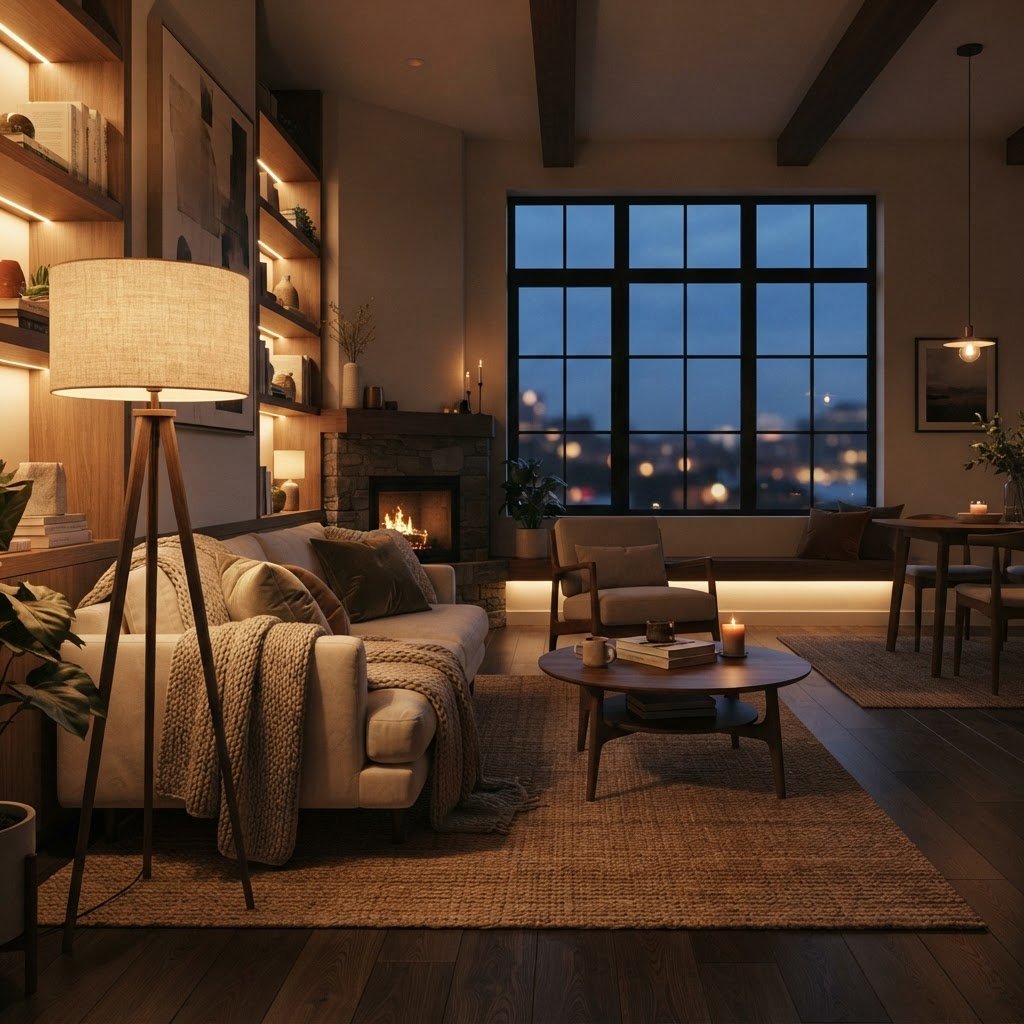
Aesthetic bedroom and living room warm lighting combos are best achieved by layering ambient, task, and accent lights using bulbs between 2200K and 3000K. By combining dimmable floor lamps, warm-tone LED bulbs, and strategic accent strips, you can create a cohesive, cozy atmosphere that reduces stress and enhances interior textures.
The Psychology of Warm Illumination
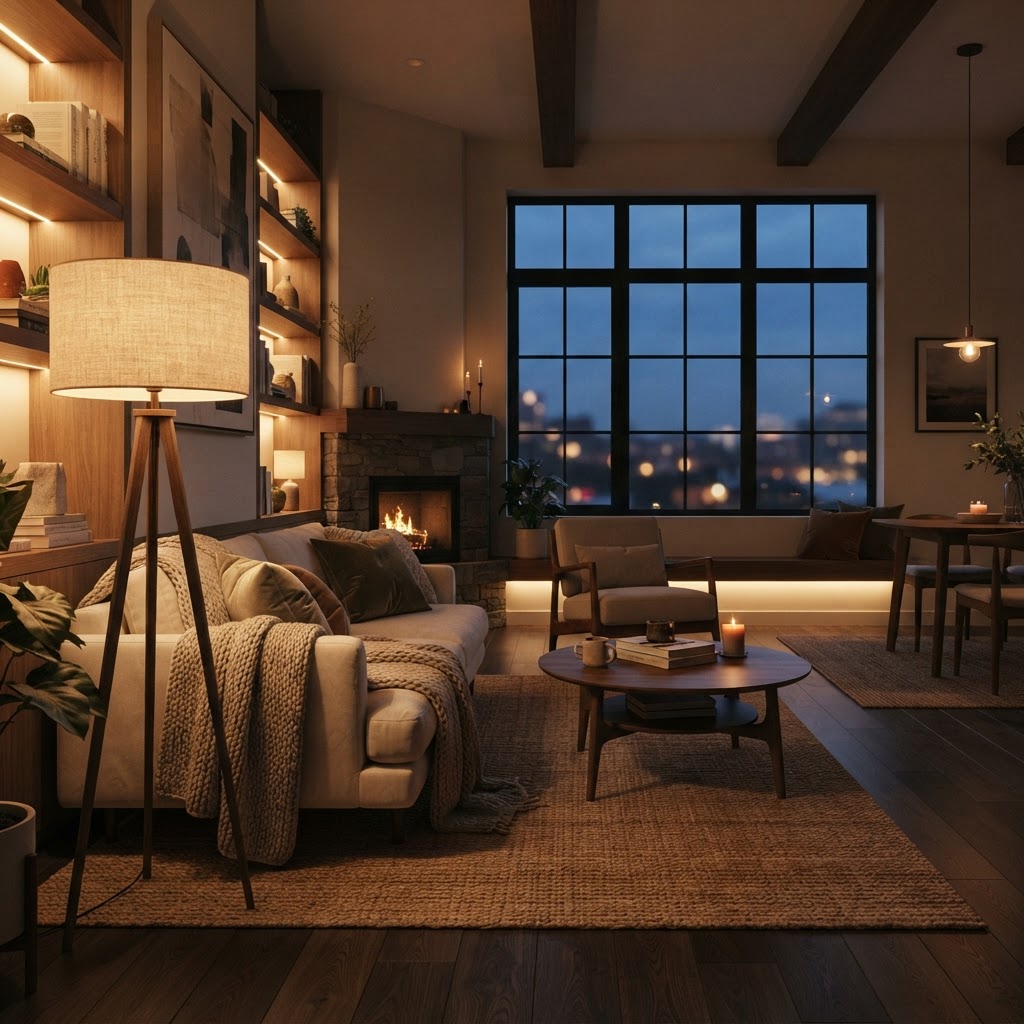
Warm lighting significantly improves mental well-being by aligning your home environment with natural circadian rhythms. Scientific studies indicate that exposure to blue-toned light (above 4000K) late at night suppresses melatonin production, whereas warm light in the 2200K to 3000K range promotes relaxation and prepares the body for sleep by mimicking the sunset. Implementing these warmer tones creates a psychological buffer against external stress, softening architectural lines and turning sterile spaces into intimate, welcoming havens.
Layering Techniques for Living Rooms
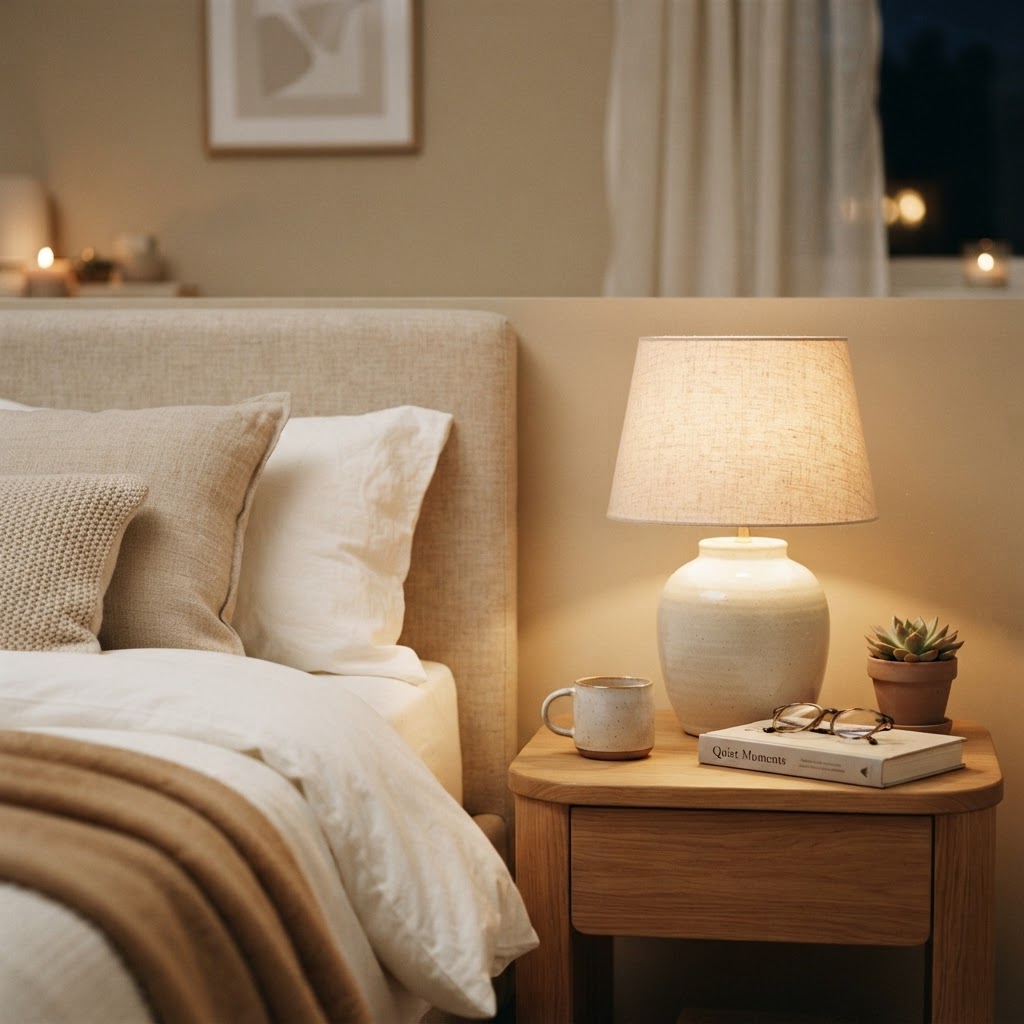
Successful lighting design requires moving away from singular, harsh overhead fixtures in favor of a three-tier layering strategy: ambient, task, and accent lighting. Ambient light provides the base illumination, task light enables specific functions like reading, and accent light serves a purely aesthetic purpose by highlighting textures or art. By ensuring these three layers exist in any living room, you create a dynamic, professional-grade depth that a single ceiling light cannot replicate.
Integrating Floor and Table Lamps
Floor lamps act as the primary anchor for living room zones, effectively grounding the space. A tall, slender floor lamp equipped with a linen shade diffuses light outward, reducing harsh shadows. When paired with a table lamp featuring an amber or cream-colored shade, you create a ‘warmth zone’ that prevents the living room from feeling disjointed or cold. Avoid bright white lampshades, as they can filter out warm hues and wash out the intended cozy glow.
Crafting a Dreamy Bedroom Atmosphere
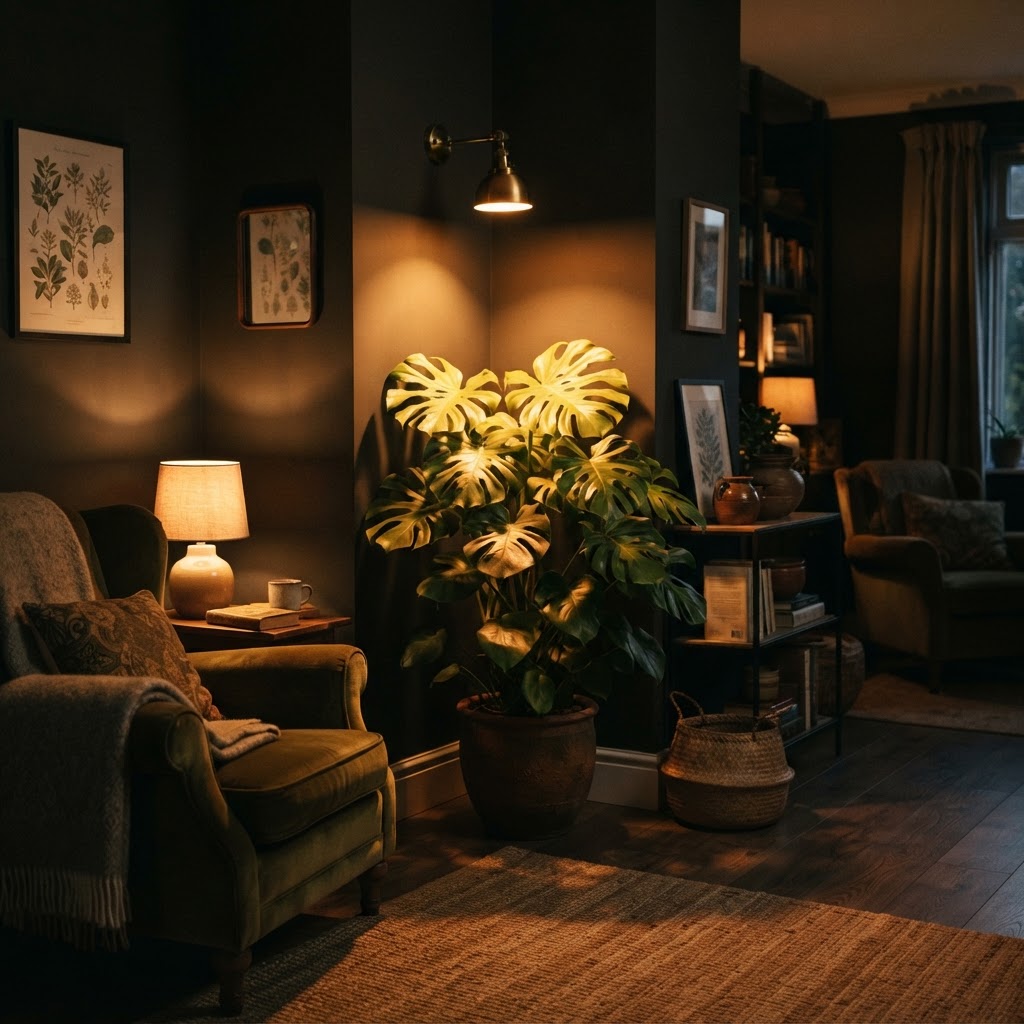
Bedrooms require a focused approach to low-level lighting to ensure the space remains a cocoon of comfort rather than a clinical environment. Professional designers recommend keeping light sources at eye level or below to avoid direct glare; wall-mounted sconces are a superior choice for this, saving valuable nightstand surface space while providing a luxury boutique hotel aesthetic. By prioritizing indirect, diffused light sources, you can ensure that the transition from wakefulness to sleep is smooth and biologically supported by your environment.
Essential Warm Lighting Components
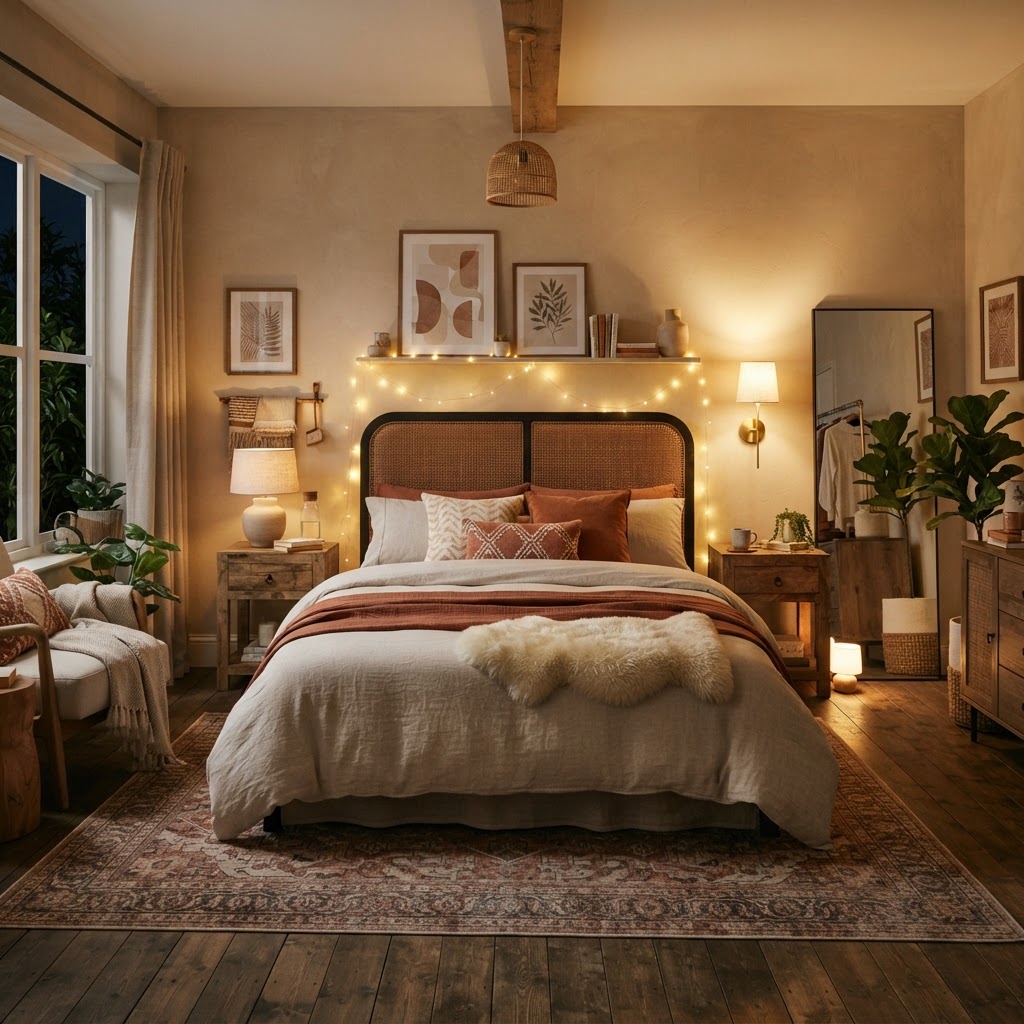
Selecting the correct hardware is non-negotiable for achieving a cohesive aesthetic, as inconsistent color temperatures will immediately ruin the design. Always check the Kelvin rating on packaging; bulbs labeled 2700K are the industry standard for that “warm white” feel. A professional-grade setup typically includes smart dimmers for granular control, high-CRI (Color Rendering Index) LED bulbs to ensure colors appear natural, and diffusion materials like paper or frosted glass to scatter light evenly.
The Power of Dimming and Smart Controls
Implementing dimmable technology provides the necessary flexibility to adapt your room’s mood to specific times of day or activities. Even the most carefully selected warm bulbs can feel intrusive at 100% brightness during a late-night movie; dimmers allow you to dial back the intensity for an instant sense of intimacy. Modern smart home integrations, such as app-controlled bulbs or voice-activated switches, enable you to automate your transition from a bright, productive workspace to a dim, cozy evening environment effortlessly.
Creative Accent Lighting Ideas
Accent lighting acts as the signature of your design, allowing you to highlight unique textures and architectural features that might otherwise remain unseen. Placing a warm, directional spotlight behind a large potted plant creates dramatic silhouettes that add organic depth to a room. Similarly, installing hidden LED strips beneath floating shelves or behind headboards creates a “floating” effect that feels sophisticated and expensive, transforming plain surfaces into curated focal points.
Avoiding Common Lighting Mistakes
The most frequent error in home lighting is the mixing of conflicting color temperatures, such as pairing a 2700K bulb with a 5000K bulb in the same sightline. This inconsistency creates a jarring visual tension that makes the room feel chaotic. To maintain a high-end look, standardize your bulb selection across the entire floor plan. Additionally, avoid placing task lighting too high; keeping light sources at or below eye level prevents glare and maintains the cozy, enclosed feeling required for true comfort.
FAQ
Q: What is the best Kelvin temperature for a cozy living room?
The ideal color temperature for a cozy living room is between 2700K and 3000K. This range produces a warm white light that mimics traditional incandescent bulbs, providing enough brightness for basic visibility while maintaining the inviting, relaxed atmosphere essential for a residential sanctuary.
Q: How do I layer lighting in a small bedroom?
To layer light in a small bedroom, combine a primary ambient light source (like a ceiling fixture with a dimmer) with localized bedside sconces. This dual-source approach avoids cluttering small nightstands while providing both general room illumination and direct task lighting for reading or evening relaxation.
Q: Why do my light bulbs look different if they are all ‘warm’?
Bulbs labeled ‘warm’ can vary due to differences in Kelvin ratings or manufacturing inconsistencies. Even two 2700K bulbs can look different if one has a lower CRI (Color Rendering Index). Always check the CRI rating—look for 90 or higher—to ensure accurate, consistent color across all your light fixtures.
Q: Can smart dimmers be used with all LED bulbs?
No, smart dimmers only work with bulbs explicitly labeled as ‘dimmable’ LEDs. Using a standard bulb with a dimmer switch can cause flickering, buzzing, or damage to the electronics within the bulb. Verify the packaging before installation to ensure compatibility with your specific dimming hardware.
Q: How can I hide LED strips for a professional look?
For a professional aesthetic, place LED strips inside an aluminum channel with a frosted diffuser cover. This setup hides the individual diode dots and creates a continuous, soft beam of light that highlights architectural features or furniture edges without the harshness of exposed wiring.

Leave a Reply