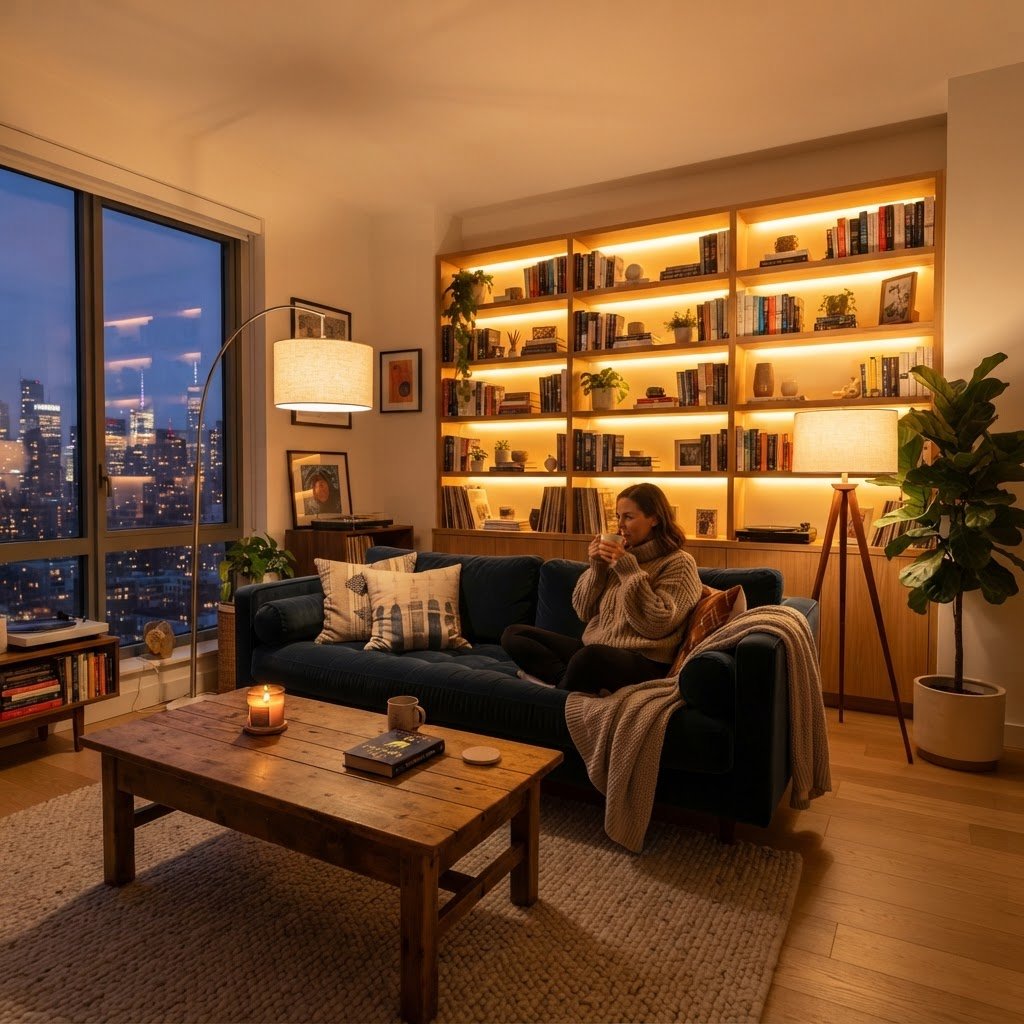
Easy Ways to Add Warm Ambient Light Without Rewiring
You can add warm ambient light to any room without rewiring by utilizing plug-in wall sconces, adhesive LED strips, and smart bulbs controlled via smartphone. These methods allow you to bypass complex electrical work, providing immediate, professional-grade illumination that enhances comfort and depth in your living space.
The Power of Layered Lighting
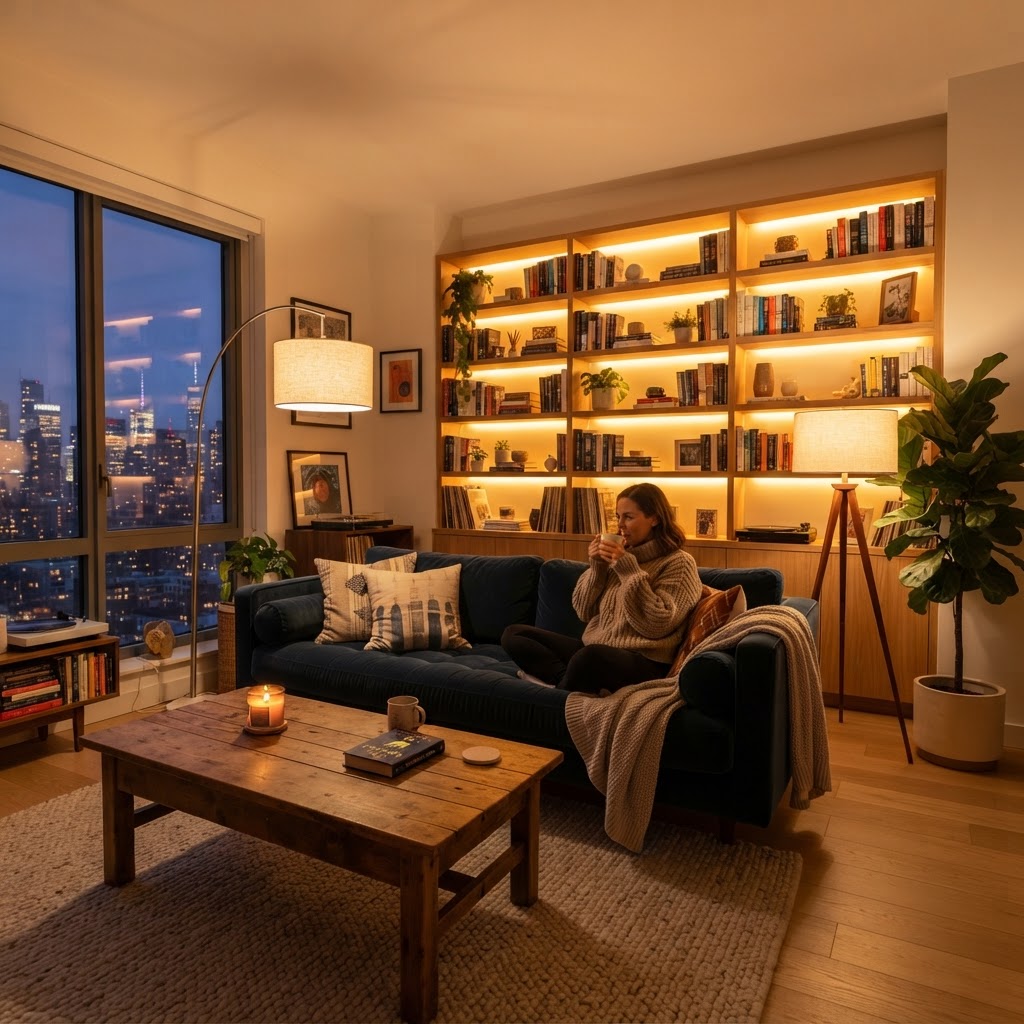
Mastering your home environment requires balancing three distinct layers: task, accent, and ambient lighting to eliminate flat, sterile atmospheres. Ambient lighting serves as the essential base layer, mimicking natural light to create a welcoming, human-centric space that mimics the inviting glow found in high-end hospitality design.
Research indicates that using multiple, smaller light sources creates essential depth through shadows, preventing the “flat” look caused by single-source overhead lighting. By shifting focus to eye-level and floor-level illumination, you avoid the harshness of central fixtures. Aim for at least three light sources per room to achieve balanced dispersion. For most residential rooms under 200 square feet, a combination of one floor lamp, one table lamp, and one accent strip provides optimal coverage. Prioritizing color temperatures between 2700K and 3000K is crucial, as this range mimics the warm, gold-toned hues of sunset, which promotes relaxation compared to the 4000K-5000K blue-heavy spectrums often found in utility rooms or offices.
Utilizing Plug-in Sconces for Vertical Interest
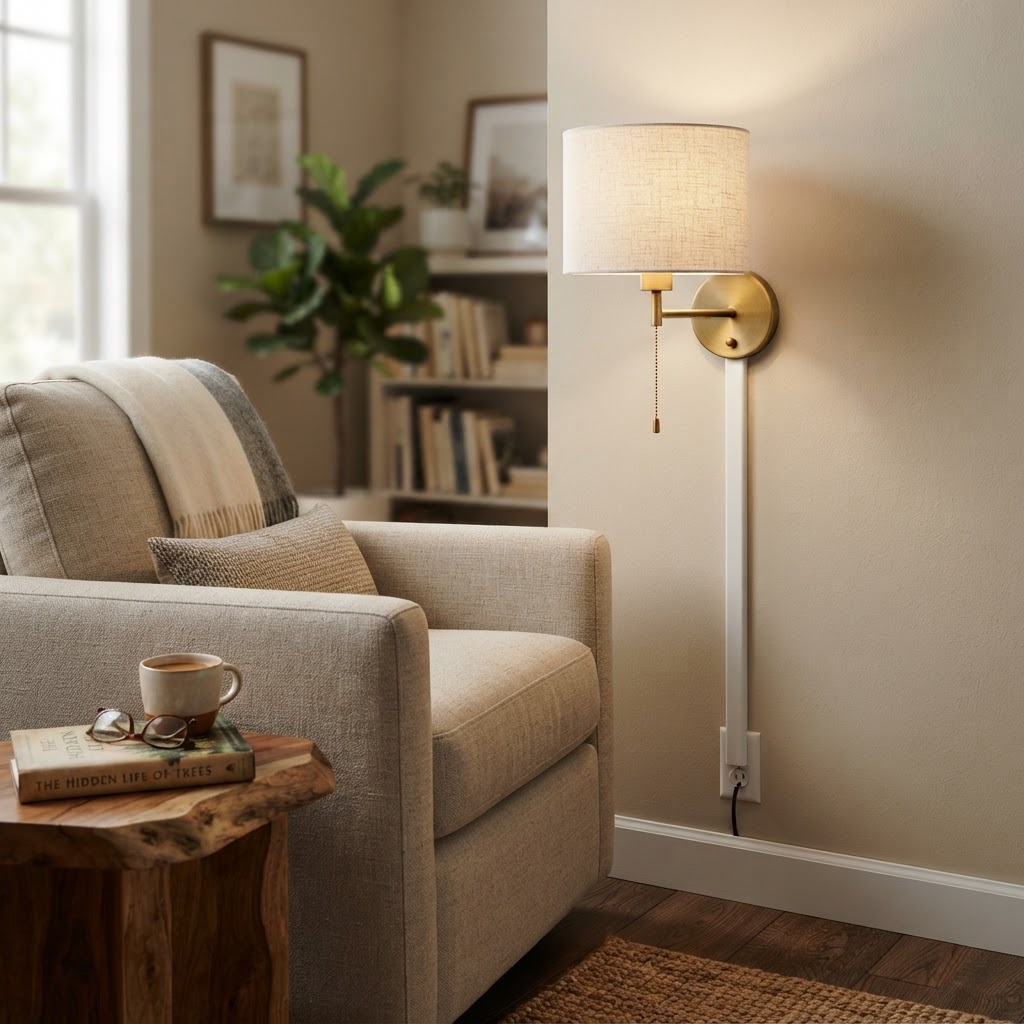
Plug-in wall sconces offer an immediate, high-end design upgrade by providing vertical interest without the need for expensive electrical modifications. These fixtures allow you to install lighting at specific heights—typically 60 to 66 inches from the floor for bedside applications—using only a standard wall outlet for power.
When selecting a style, coordinate with your existing furniture finish to maintain visual harmony. Modern industrial settings benefit from matte black metal with exposed filaments, while coastal aesthetics thrive with linen or woven rattan shades that filter light softly. To address the challenge of exposed cords, consider using cord covers that can be painted to match your wall color, rendering them nearly invisible. For a more intentional look, utilize decorative cable management clips to guide the cord along architectural trim, effectively turning a functional requirement into a structured design element. Research shows that layering light at different heights using sconces can make a small room appear up to 15% larger by drawing the eye to vertical wall planes rather than just the center of the floor.
The Magic of LED Strip Lights
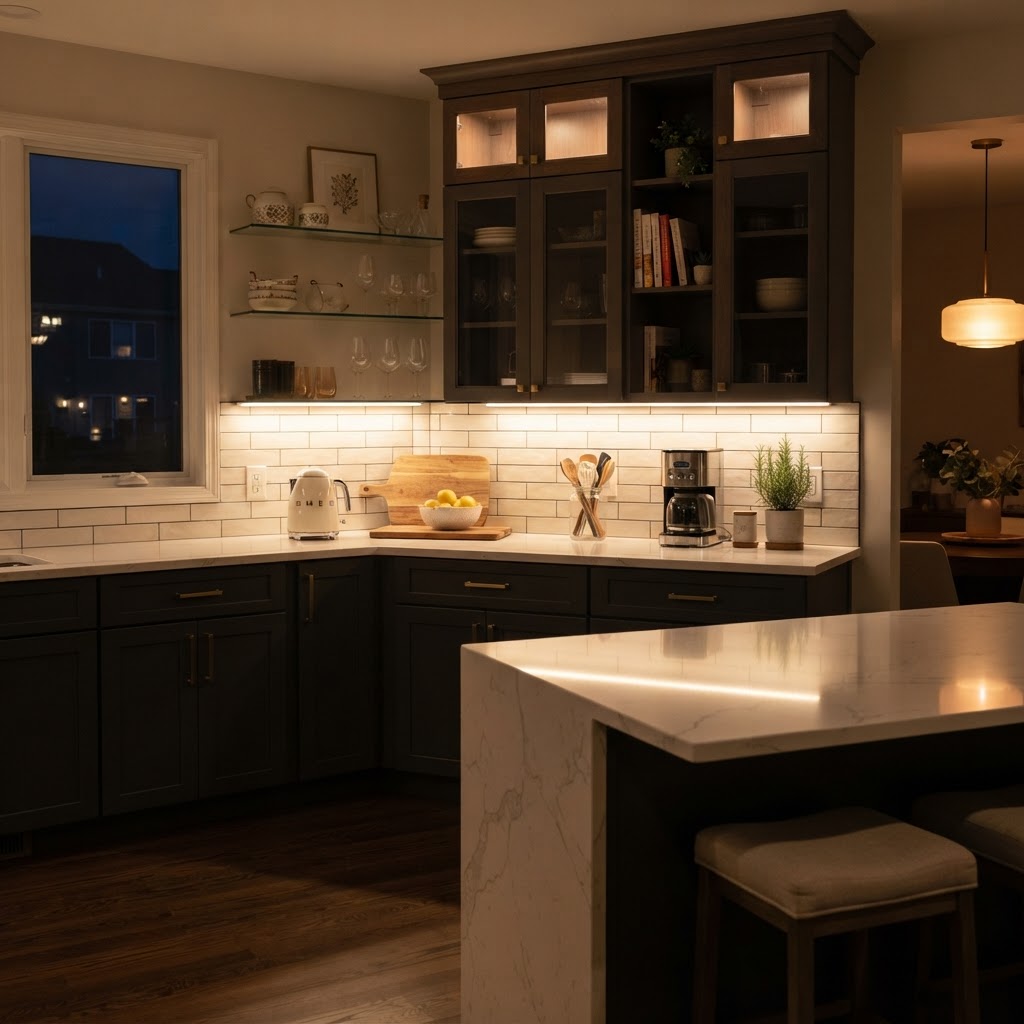
Flexible, adhesive LED strips are the most versatile tools for DIY lighting, providing a hidden, professional-grade halo effect behind furniture and under cabinets. Because these strips operate on low-voltage DC power, they are inherently safer to install than line-voltage fixtures, making them ideal for renters and homeowners alike.
For maximum impact, place LED strips 1-2 inches behind the back edge of your television to provide bias lighting, which significantly reduces eye strain during evening viewing. In kitchens, mounting strips under cabinetry—positioned toward the front edge—creates a functional under-glow that improves visibility on countertops. When shopping for these strips, prioritize high CRI (Color Rendering Index) ratings of 90+ to ensure colors in your room appear natural and vibrant. Always verify the Kelvin temperature is strictly 2700K-3000K, as even a 400K shift toward the blue spectrum can kill the desired “cozy” mood. These strips are cost-effective, often costing less than $30 for a 16-foot roll, offering one of the highest returns on investment for home staging.
Smart Bulbs and Dimmers
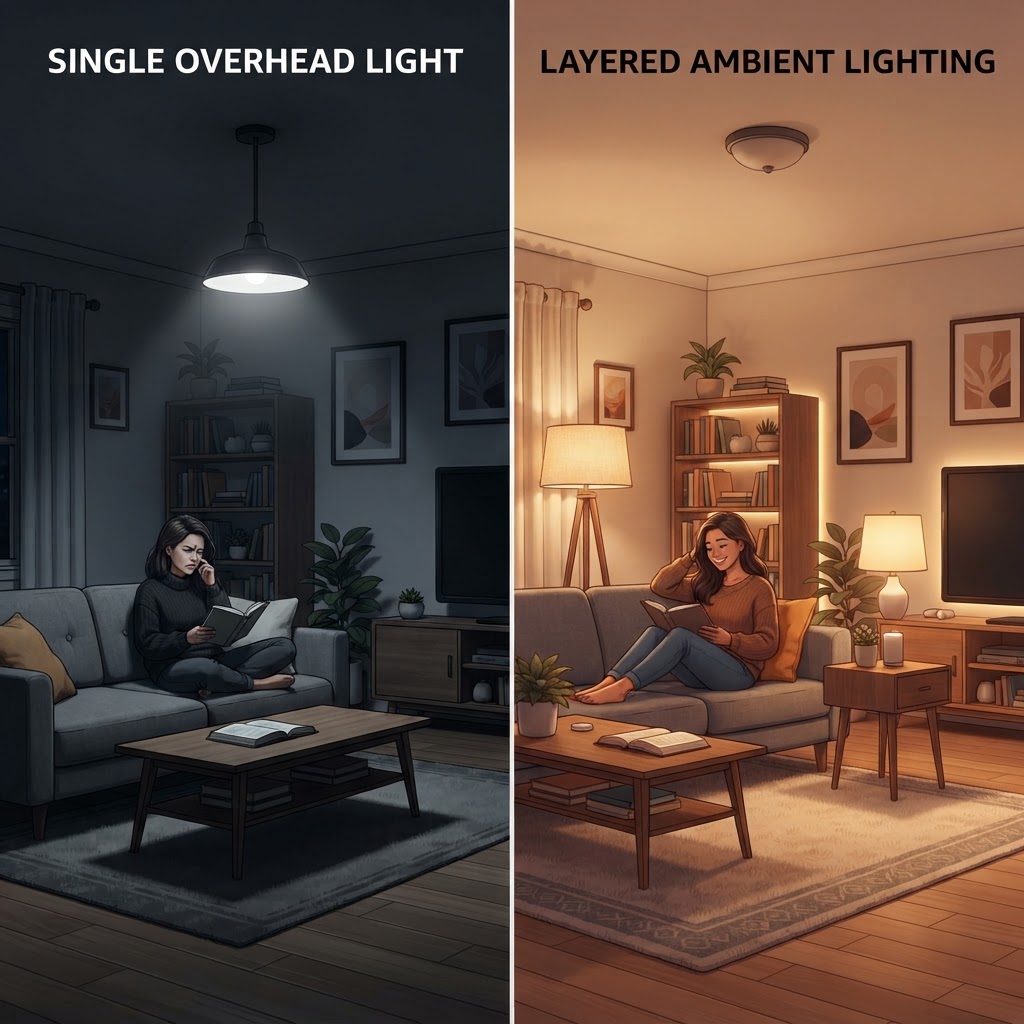
Smart bulbs are the most efficient way to add dimming functionality and color temperature control to existing fixtures without installing hardwired dimmer switches. By connecting these bulbs to a standard Wi-Fi or Zigbee network, you can adjust intensity based on the time of day, effectively creating a “circadian rhythm” lighting scheme.
Beyond basic dimming, smart ecosystems allow for automation. You can schedule your living room lights to slowly fade from a bright 3000K white in the morning to a soft, warm 2200K amber in the evening, signaling to your brain that it is time to wind down. This tech-forward approach removes the need for expensive electrician visits, which can cost anywhere from $150 to $300 per switch installation. Smart bulbs also allow for “scene” creation, where you can link multiple lamps to a single voice command, such as “Movie Mode,” which automatically dims all connected lights to 20% brightness simultaneously.
Floor and Table Lamp Placement
Floor and table lamps serve as the anchor points of your ambient strategy, and their placement should follow the ‘Rule of Three’ to ensure even light distribution. Positioning a floor lamp in a dark corner acts as a visual ‘anchor’ that expands the perception of the room’s total area.
To maximize effectiveness, ensure your lamps are placed at varying heights throughout the room. A common mistake is placing all light sources at the same table-top level, which creates a ‘mid-level’ glow that misses the floor and ceiling planes. The material of your lampshade is equally critical; linen and silk shades in neutral, off-white, or beige tones are superior to stark white plastic or glass, which can create harsh glare. If you are struggling with a large, cavernous room, aim for at least four distinct light sources to ensure no ‘dead zones’ exist. Regularly cleaning these shades is vital, as a thin layer of dust can reduce light output by as much as 10-15%, effectively dulling the warmth you spent time cultivating.
Creating Depth with Accent Lighting
Accent lighting acts as the soul of the room, drawing attention to specific architectural features or decor items to prevent a space from feeling one-dimensional. Battery-operated wireless picture lights are perfect for highlighting bookshelves or wall art without the need to drill into walls or run wires, often lasting up to 100 hours on a single set of batteries.
For high-end displays, rechargeable puck lights are excellent additions inside glass-fronted cabinets. Because these are typically magnetic or adhesive, they can be moved at will to adjust the focus of the light. When combined with your ambient floor lamps, these concentrated pockets of light add necessary visual contrast. Expert designers recommend keeping accent light intensity at least 50% brighter than the ambient light in the same immediate vicinity to ensure the focal point ‘pops’ against the softer background. This technique provides the layered, expensive look of custom millwork lighting for a fraction of the cost.
FAQ
How do I know if a bulb is ‘warm’ enough?
Look for the Kelvin (K) rating on the packaging; bulbs labeled 2700K to 3000K provide a warm, soft white light. Anything rated above 4000K will produce a cooler, bluer light that can make a room feel clinical rather than cozy.
Can I hide light cords behind wallpaper?
Yes, you can use flat, adhesive-backed cord covers that are paintable or match specific wallpaper patterns to blend cords into the wall. Avoid running cords behind hot appliances or in high-traffic areas to prevent damage to the cable casing.
Are smart bulbs compatible with all lamps?
Most smart bulbs use a standard E26 or E27 base, making them compatible with almost all household lamps. Ensure your lamp’s socket wattage rating meets or exceeds the smart bulb’s requirements, though most LED-based smart bulbs draw very little power.
How many light sources should a living room have?
Designers suggest at least three distinct light sources per room to create depth, though rooms larger than 250 square feet often require four to five. This ensures light is evenly dispersed, eliminating dark corners and creating a balanced, professional-looking atmosphere.
Is it safe to leave LED strip lights on for long periods?
Yes, high-quality LED strips are designed for long-term use and run at very low temperatures. Ensure you purchase strips with safety certifications like UL or CE to guarantee the power adapter and adhesive backing meet modern fire safety standards.

Leave a Reply