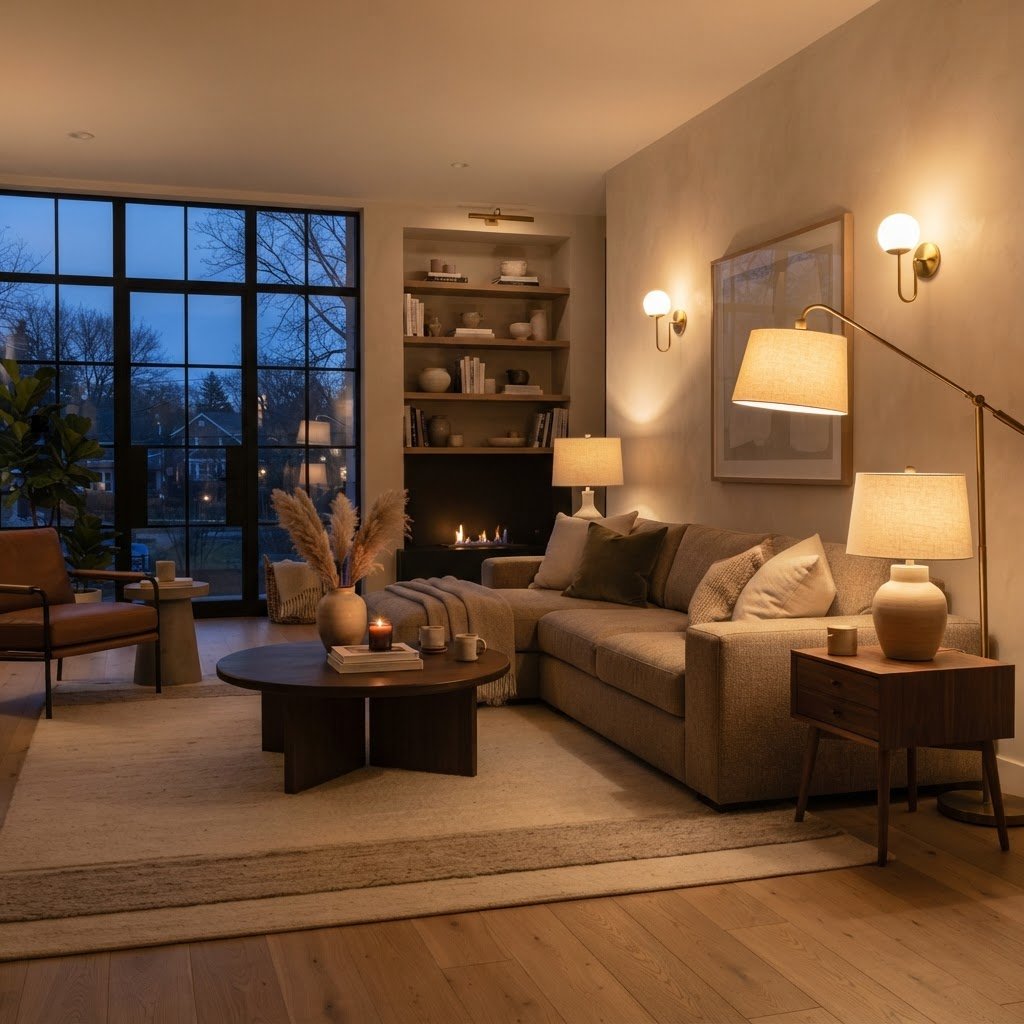
How to Layer Warm Ambient Lighting Like a Designer
To layer warm ambient lighting like a professional designer, combine multiple light sources at varying heights using bulbs with a 2700K to 3000K color temperature, and utilize dimmer switches to control intensity. By balancing ambient, task, and accent layers, you create depth, eliminate harsh shadows, and foster a sophisticated, cozy atmosphere.
The Fundamentals of Lighting Layers
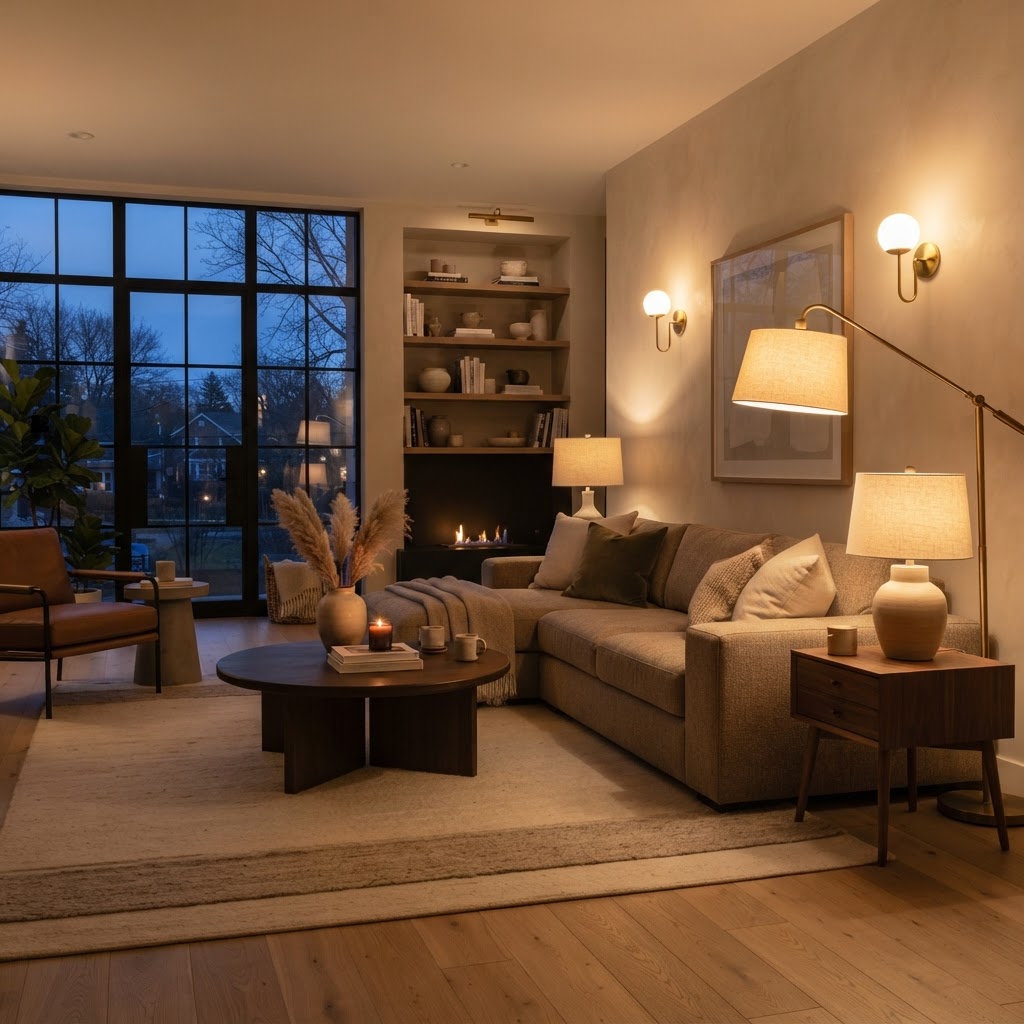
Thinking of your space as a stage allows you to move beyond the “one room, one light” trap that often creates clinical, flat environments. Professional interior designers categorize lighting into three distinct roles: ambient (general fill), task (focused utility), and accent (visual drama). Achieving a layered look requires at least three distinct sources of light placed at different heights to ensure the room feels balanced rather than bottom-heavy or overly dark in corners.
Lighting Strategy Comparison
By strategically distributing these sources, you create a “light pool” effect that draws the eye across the room. Avoid relying on central overhead lights, which cast unflattering downward shadows. Instead, place light sources in at least three corners to anchor the room. This “triangle technique” prevents the feeling of dead zones and creates a soft, diffused glow that makes the space feel larger and significantly more curated.
Choosing the Right Color Temperature
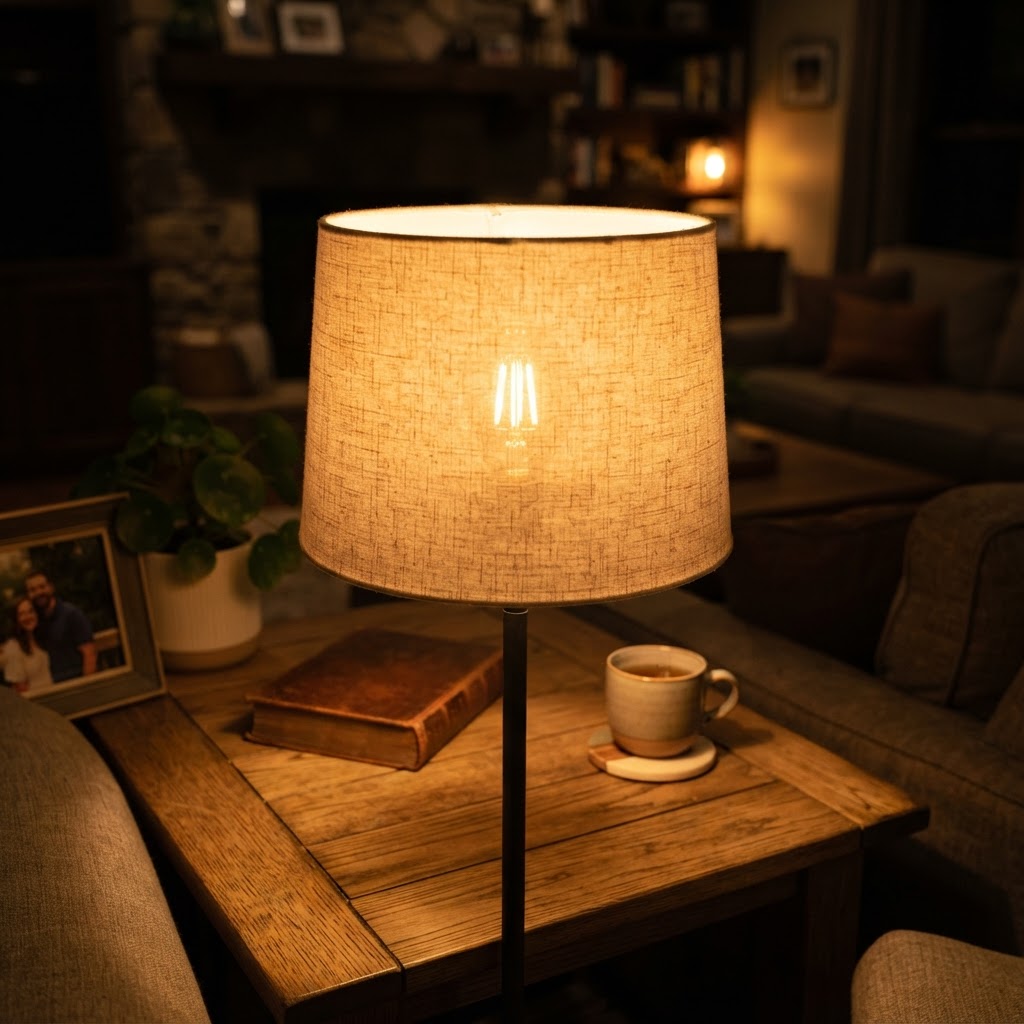
Selecting the correct color temperature, measured in Kelvin (K), is the single most effective way to dictate the psychological comfort of a room. For a warm, residential glow, prioritize bulbs rated between 2700K and 3000K. This range mimics the golden hue of traditional incandescent filaments, which enhances the natural richness of wood, leather, and fabric textures while keeping skin tones looking healthy and vibrant.
Kelvin Temperature Guide
Steer clear of bulbs rated 4000K or higher unless you are in a high-intensity workspace like a garage or clinical laundry room. These blue-spectrum lights inhibit melatonin production, making it difficult for the body to unwind in the evening. Consistency is vital; mixing a 2700K lamp with a 5000K overhead light creates a visual “clash” that the brain perceives as untidy or chaotic. When purchasing LEDs, verify the Kelvin rating on the side of the box to maintain a cohesive, designer-approved atmosphere throughout your home.
Balancing Your Lighting Sources
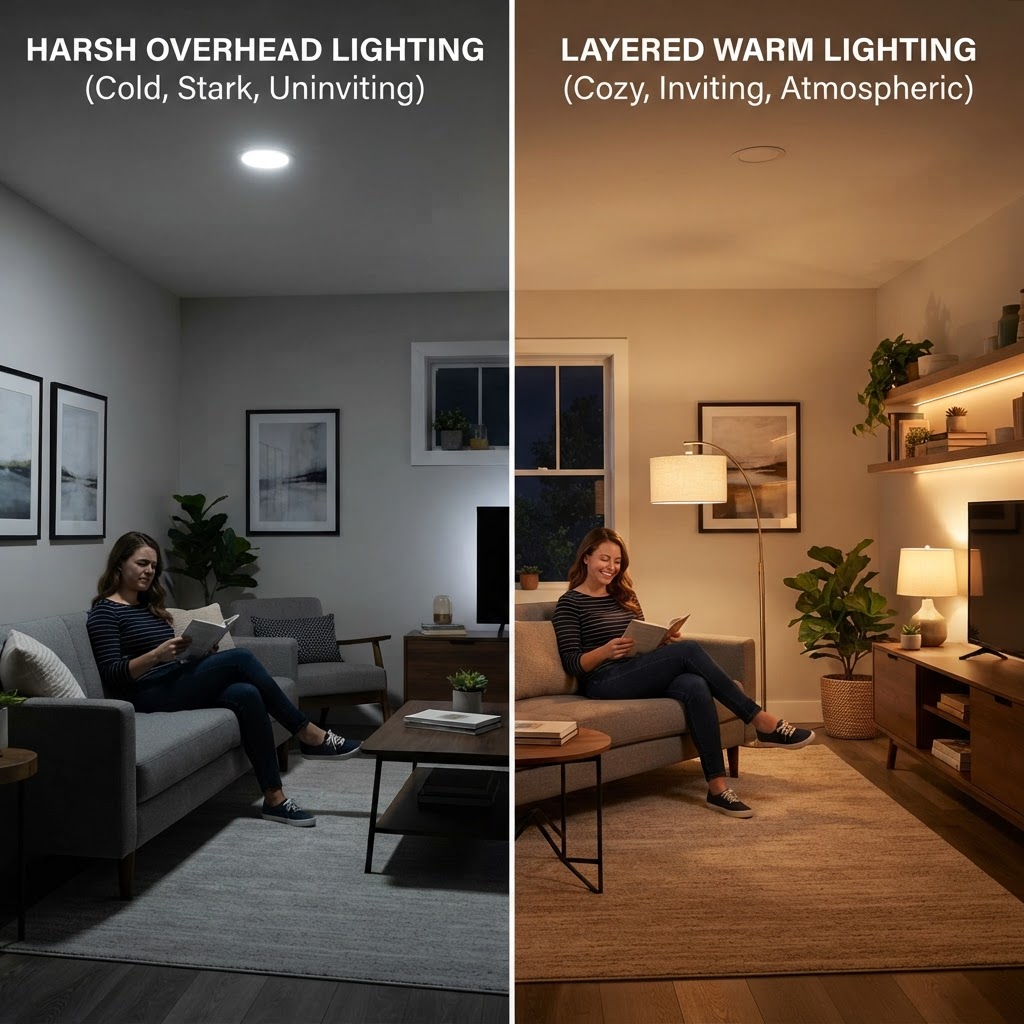
Strategic placement of fixtures is the difference between a house and a home. The common mistake of relying on “boob lights” or high-output recessed track lighting often creates a flat, sterile look that ignores the geometry of the space. Designers mitigate this by ensuring light is emitted from multiple vertical levels—floor, chest, and eye level—which forces the eye to travel through the room’s entire volume.
The Power of Dimmers
A dimmer switch is the ultimate designer “secret weapon” that provides functional flexibility without requiring new fixtures. By installing a universal LED dimmer, you can shift a room from a bright, high-energy environment for daytime chores to a dim, intimate setting for hosting or relaxing within seconds. Modern dimmers are inexpensive, usually retailing for $20 to $40, and can be installed in under 20 minutes with basic tools. This single upgrade allows you to customize the intensity of your ambient layers, ensuring your room never feels too intense or too dim for the time of day, effectively extending the lifespan of your LED bulbs by reducing their energy load.
Incorporating Task and Accent Lighting
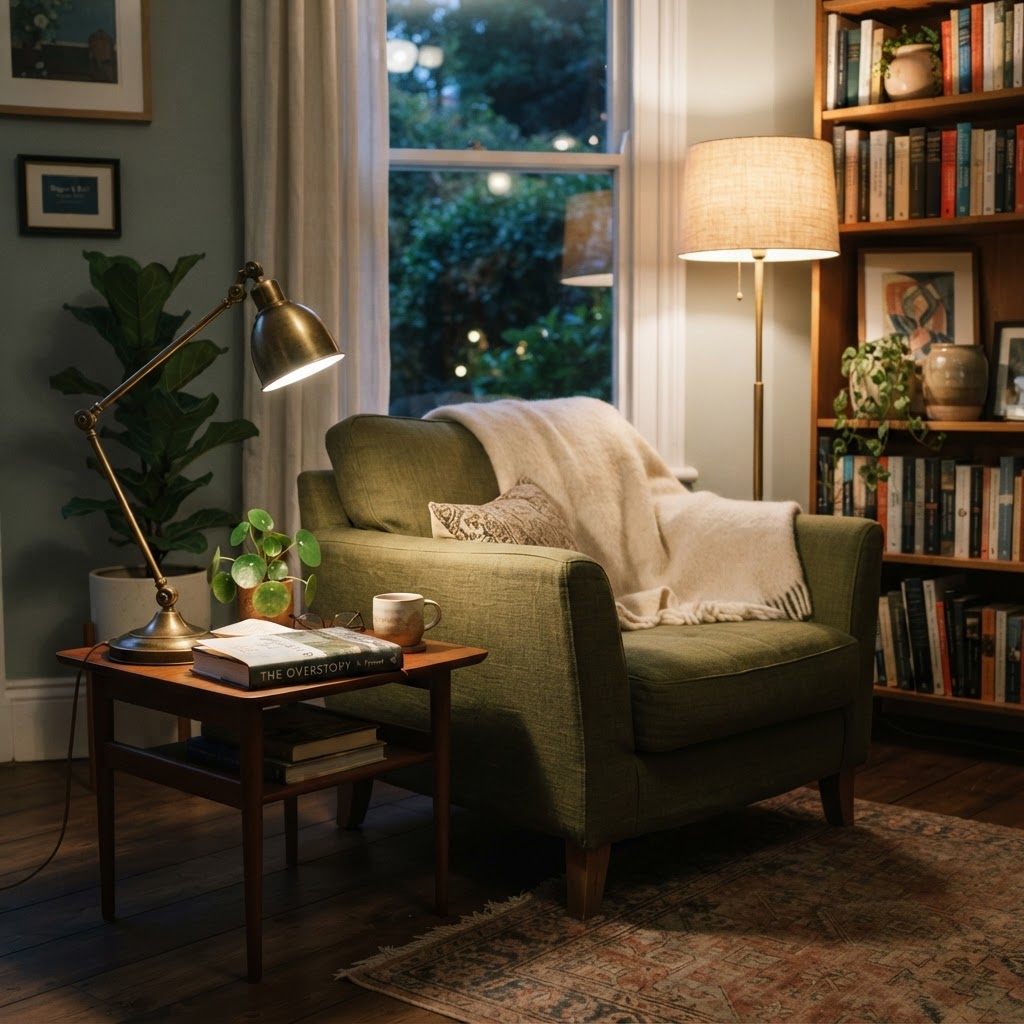
Task and accent layers provide the necessary contrast to elevate your space from a simple room to a professionally designed interior. Task lighting serves the pragmatic needs of the user, such as reading lamps with adjustable necks or focused pendants over an island, while accent lighting acts as the “jewelry” that highlights your personal style. To keep the look cohesive, ensure that task lights share a similar color temperature to your ambient layers, preventing a visual disconnect.
Highlighting Features
Accent lighting, such as picture lights positioned over canvas art or LED strips concealed behind shelving, creates depth by highlighting textures rather than just surfaces. A hidden LED strip casting a warm glow behind a bookshelf creates a “halo effect” that makes the shelf appear recessed and sophisticated. These small, deliberate touches draw the viewer’s eye to your home’s architecture and curated decor. Aim for a subtle approach—the source of the accent light should ideally be hidden, leaving only the soft glow on the wall or object visible. This technique adds an extra dimension, turning static architectural features into dynamic focal points that define the room’s overall aesthetic and personality.
Designing with Different Lamp Heights
Lighting should never be restricted to a single eye level, as uniform height creates a flat, uninspiring visual experience. To create a professional aesthetic, you must curate a mix of floor lamps (typically 5 to 6 feet tall), table lamps (2 to 3 feet tall), and low-profile sources like candles or floor-level up-lights. This vertical variance mimics the layering found in nature, where light filters through trees or reflects off varied surfaces.
By diversifying heights, you guide the visitor’s gaze throughout the entire vertical volume of the room, which creates an illusion of higher ceilings and increased luxury. For instance, placing a floor lamp behind an armchair creates a comfortable “cozy nook,” while a decorative table lamp on a side table adds a secondary layer of intimacy. If you find your room feeling cramped, analyze the heights of your current light sources; if everything sits at the same level, swap one for a tall arc lamp or a shorter accent piece to break the visual monotony and add architectural interest.
Troubleshooting Common Lighting Mistakes
Even experienced homeowners often fall into traps that compromise the quality of their lighting scheme. The most frequent issue is uncontrolled glare—when the bright filament of an LED or the internal structure of a bulb is visible, it triggers eye strain and destroys the warm, diffused atmosphere you are attempting to cultivate.
The Role of Lampshades
The choice of lampshade is more than a decorative decision; it is a critical functional element that acts as a filter for your ambient light. A white linen shade provides a crisp, bright, and airy diffusion that works well in modern spaces, while a thick silk or patterned drum shade casts a more concentrated, dramatic downward glow. To avoid glare, ensure that your shades are opaque enough to hide the bulb entirely. If you have an existing lamp that produces harsh light, consider switching to a “frosted” or “soft white” bulb, which incorporates a coating to help scatter light rays more evenly. By testing the light quality during the evening hours, you can quickly identify hotspots and adjust the position of your shades to ensure a smooth, uniform, and comfortable glow that elevates the room’s mood.
Sustainable Lighting Practices
Sustainability is no longer an alternative; it is the standard for modern lighting design. High-quality LED technology has reached a point where it perfectly replicates the warmth of vintage incandescent bulbs while consuming approximately 80-90% less energy. Modern LEDs are not only energy-efficient but are now designed to be fully dimmable and flicker-free, solving the common issues associated with early-generation smart bulbs.
When upgrading, look for bulbs with a high Color Rendering Index (CRI). A CRI of 90 or higher ensures that colors in your room appear true-to-life under your warm lighting, preventing the “washed out” look that cheaper, low-CRI bulbs often produce. These bulbs are rated for 25,000+ hours of use, meaning that an investment in high-quality LEDs today will likely serve your home for a decade or more. By choosing these sustainable options, you contribute to a smaller carbon footprint while maintaining the luxury of a designer-lit home. Making the transition is a simple, cost-effective step that pays dividends in both electricity savings and the overall comfort of your living space.
FAQ
Q: What is the ideal color temperature for a cozy home?
For a cozy, warm, and inviting atmosphere, use light bulbs with a color temperature between 2700K and 3000K. This range provides a golden, soft light that mimics the traditional warmth of incandescent bulbs and enhances the natural tones of your furniture.
Q: Why does my room feel “flat” even with lights on?
A room feels flat when all light sources are at the same height, creating a lack of depth and shadow. To fix this, incorporate a mix of tall floor lamps, mid-height table lamps, and low-level accent lighting to guide the eye through the vertical space.
Q: How do I avoid glare from my light bulbs?
Glare occurs when the bright filament of the bulb is directly visible to your eyes. You can prevent this by using opaque lampshades that fully shield the bulb, or by switching to frosted or soft-white LED bulbs that help diffuse light more evenly throughout the space.
Q: Are dimmer switches compatible with all bulbs?
Not all bulbs are dimmable; you must check the packaging of your LED bulbs to ensure they are marked as “dimmable.” Additionally, ensure you are using a modern LED-compatible dimmer switch to prevent flickering and humming caused by incompatible hardware.

Leave a Reply