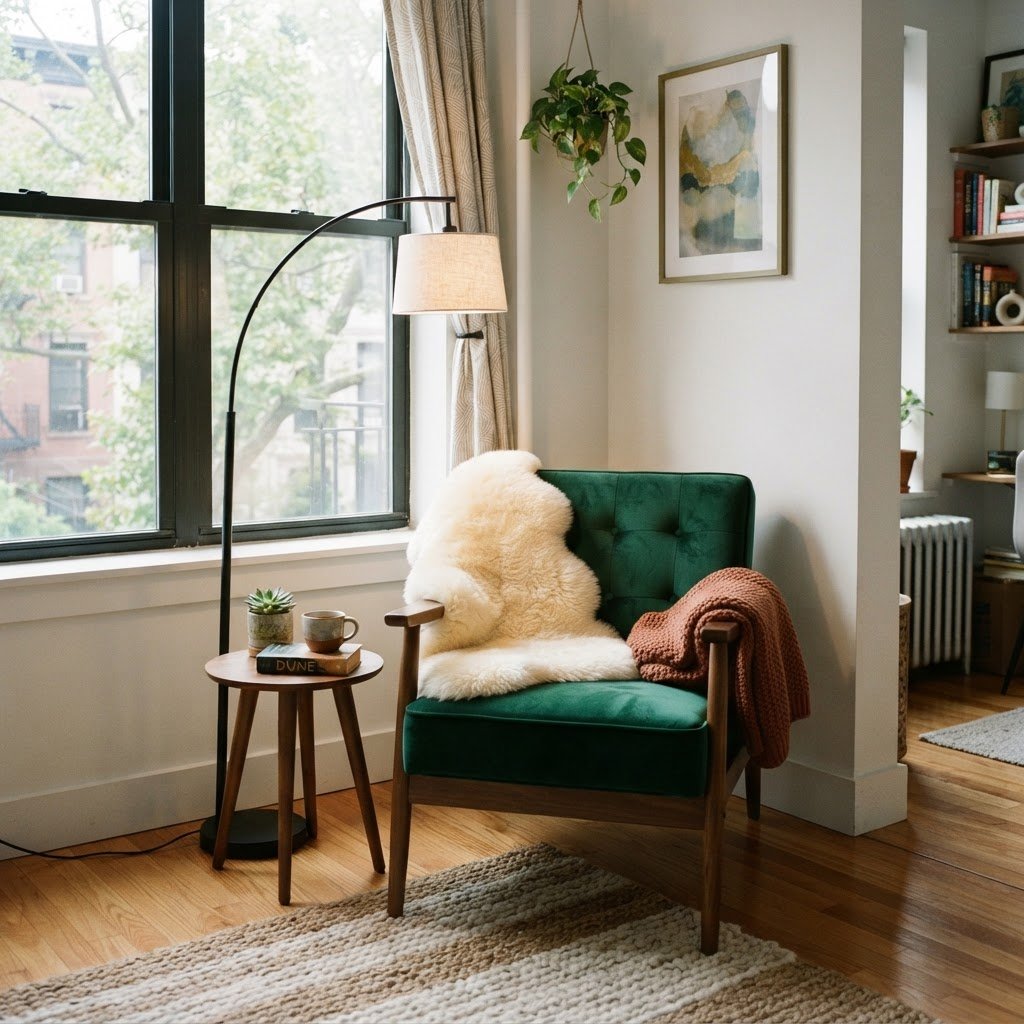
How to Create a Cozy Reading Nook in a Small Apartment
To create a cozy reading nook in a small apartment, identify an underutilized corner and anchor it with a slim-profile chair, task lighting, and vertical storage. By prioritizing multi-functional furniture and using wall space for books, you can carve out a dedicated, distraction-free sanctuary without sacrificing square footage.
Finding the Perfect Spot in Your Home
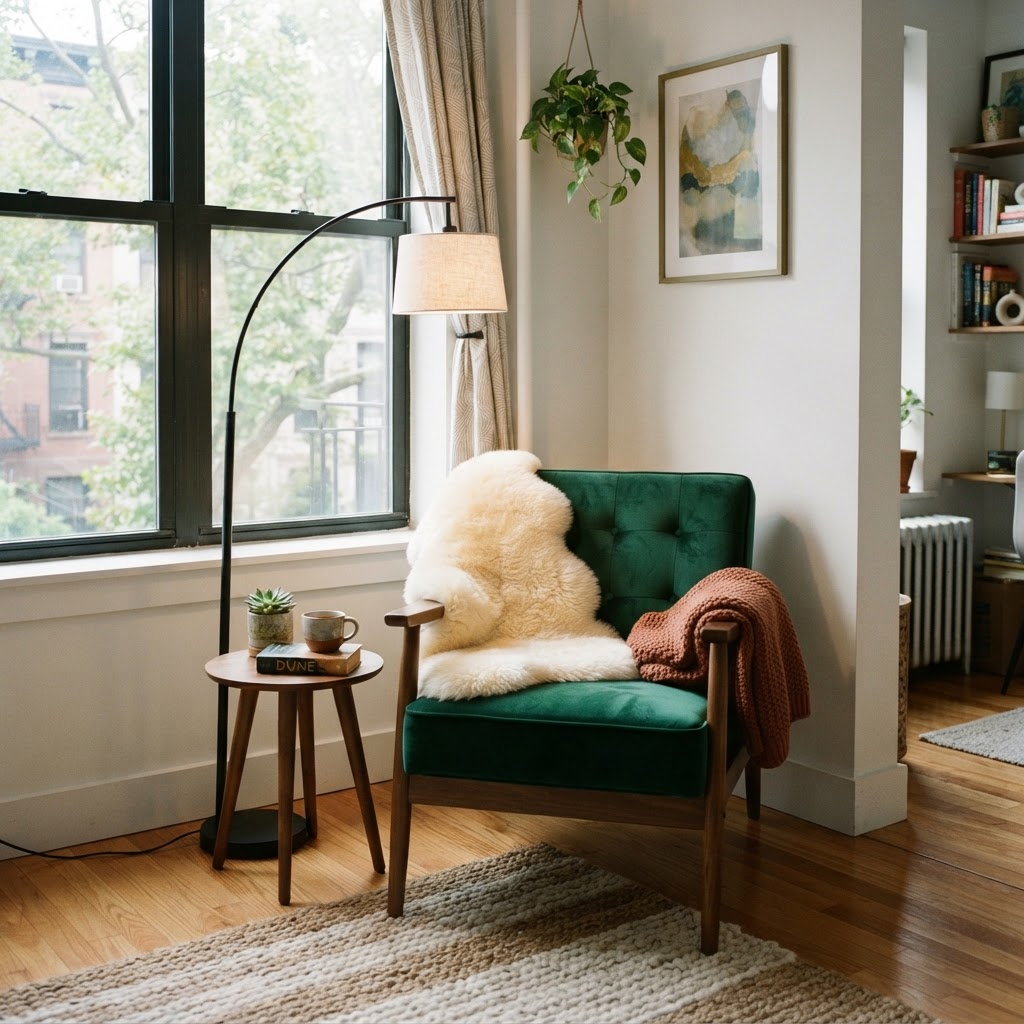
Finding the perfect location requires looking for “dead space” that sits outside of your apartment’s high-traffic flow, such as the area behind a sofa or an unused hallway end. For an optimal experience, prioritize corners with proximity to a window; natural light increases productivity and mood by up to 30% during daylight hours. Even a minimal footprint of 9 to 12 square feet is sufficient if the surrounding area remains clutter-free. If your floor plan is open, use a bookshelf or a folding screen to create a visual “zone” that separates your reading space from the rest of the living area.
Assessing Your Floor Plan
Take a walk through your apartment and look at your floor plan with fresh eyes. Are there any awkward corners where a chair might fit perfectly? If you have a window, prioritize that area, as natural light is an incredible asset for reading during the day. Remember that your nook does not need to be a separate room; it just needs to be a distinct “zone” within your existing layout.
Once you have identified your spot, clear the clutter to get a sense of the actual dimensions. Even a tiny three-by-three foot space is sufficient if the surrounding area is tidy and inviting. If the space feels too open, consider using a decorative room divider or a strategically placed bookshelf to create a sense of enclosure and privacy.
Selecting Space-Saving Furniture
In a small apartment, furniture must prioritize a slim physical profile while maintaining ergonomic support for extended reading sessions. When selecting a chair, compare options based on their footprint versus functionality to ensure they do not overwhelm the floor plan. A mid-century modern accent chair typically occupies 25% less width than a standard recliner, making it superior for constrained urban layouts.
The Anatomy of a Perfect Chair
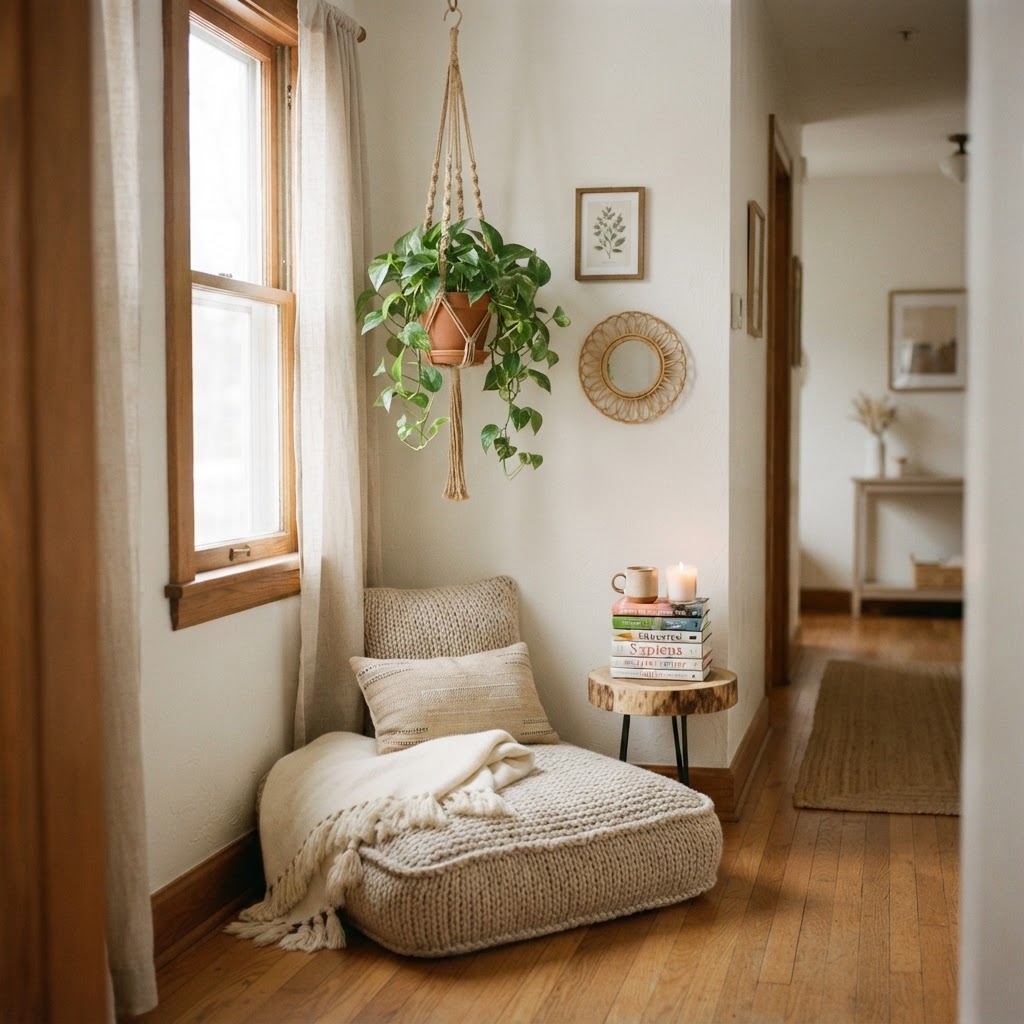
You want a chair that supports your posture for long reading sessions. A wingback chair can provide a sense of architectural structure and depth, while a plush armchair with an ottoman offers versatility. If you are extremely tight on space, a high-quality floor cushion paired with a pile of soft pillows can be a surprisingly chic and comfortable alternative to a traditional bulky seat.
Consider multi-functional furniture, such as a storage ottoman that can hold your current book pile while also acting as a footrest. Every inch counts in small apartment decor, so choosing pieces that double as storage is a smart way to keep your environment organized and clutter-free.
Mastering Lighting for Your Nook
Mastering layered lighting prevents eye strain and transforms your reading corner into a professional-grade environment. Experts recommend using a combination of 2700K (warm white) bulbs for relaxation and 4000K (cool white) bulbs for intense focus. By utilizing wall-mounted swing-arm lamps, you can reclaim floor space that would otherwise be occupied by bulky lamp bases, effectively increasing your usable surface area.
Start with ambient light, such as a dimmable floor lamp, to establish the overall mood. Then, add a dedicated task light, like a sleek wall-mounted swing arm lamp or a table lamp on a side table. Wall-mounted lights are particularly effective in tight quarters because they free up precious floor and table space.
Ambient vs. Task Lighting
Try to mimic natural light for daytime reading while using warmer, softer bulbs for your evening sessions. LED bulbs with adjustable color temperatures are a fantastic investment, as they allow you to shift from cool white for focus to a soft warm yellow for relaxation. Do not underestimate the power of a dimmable switch, as it allows you to change the entire atmosphere of your reading corner with just a flick of the dial.
Adding Personality and Comfort
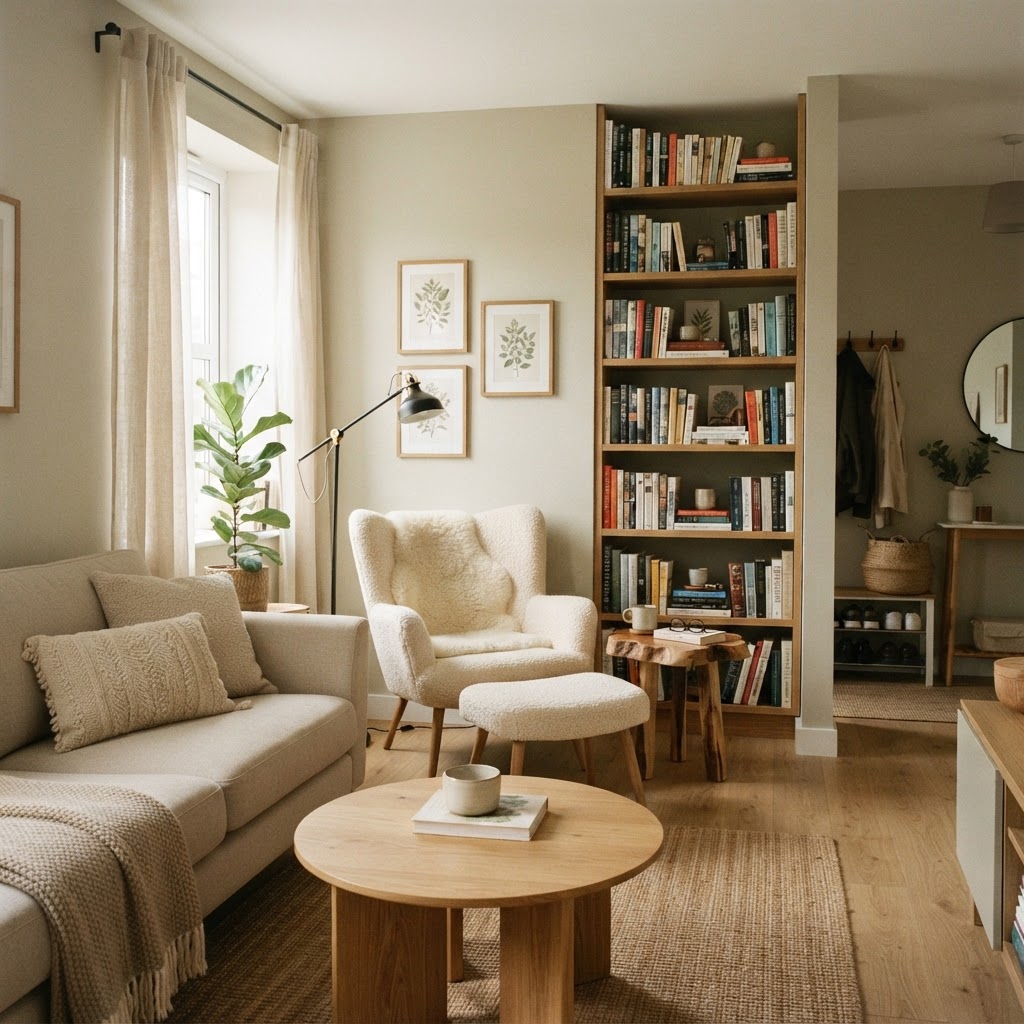
Textiles serve as the primary tool for sound dampening and aesthetic warmth in a small reading nook. Incorporating a rug underneath your chair setup defines the space boundaries while adding a layer of comfort; rugs measuring 3×5 feet are ideal for most standard nooks. Adding textured pillows not only enhances visual depth but also allows you to introduce color palettes—such as light neutrals to enlarge small spaces or jewel tones for a cozy “library” effect—without requiring expensive structural changes.
Consider adding a small, soft area rug to define the space. This is a great way to ground your nook and provide a warm surface for your feet. Even in a small space, textiles help absorb sound, making the nook feel quieter and more isolated from the rest of the apartment. Use your color palette to reflect your personal style; soft neutrals can make a small corner feel airy, while deep jewel tones can create a sophisticated, “library-like” atmosphere.
Organizing Your Books in Style
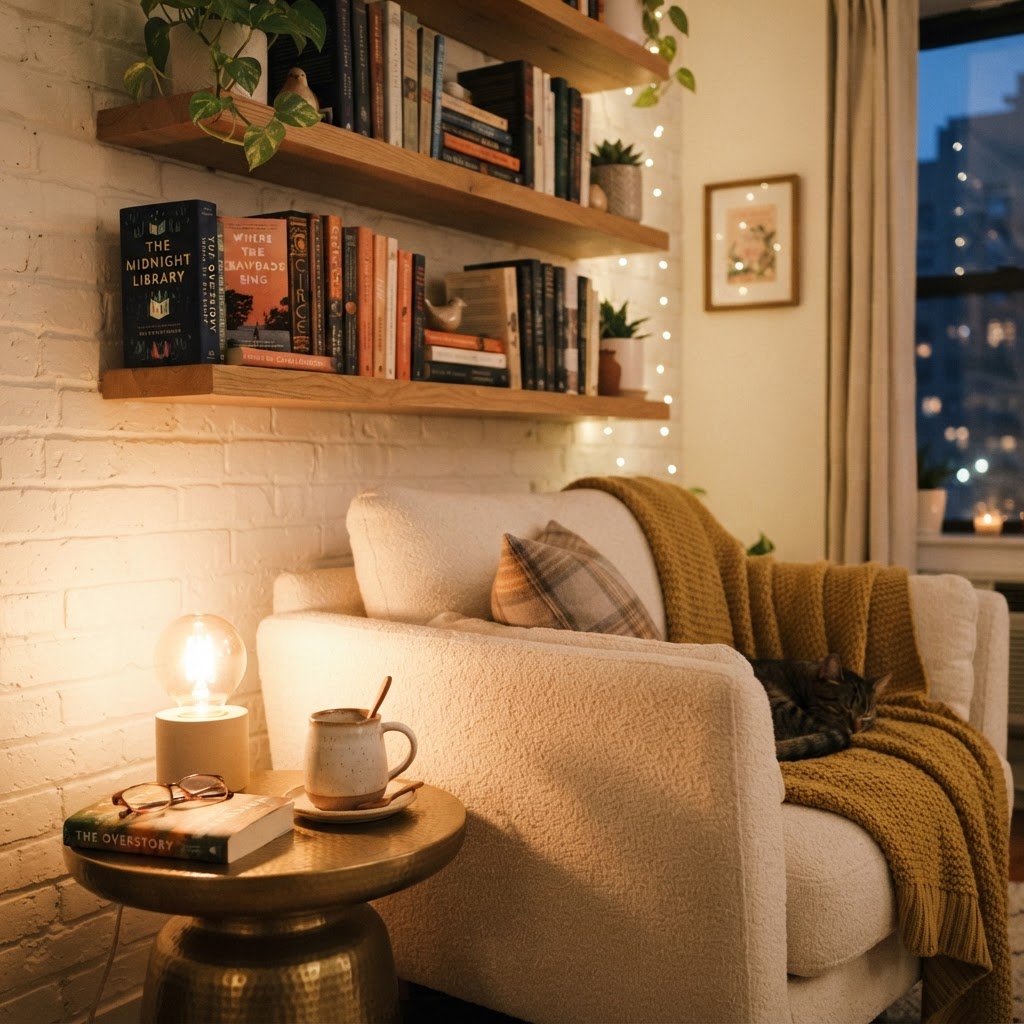
Vertical storage is the most effective method for managing book collections in small apartments, as it utilizes upward wall space rather than floor space. By installing floating shelves at varying heights, you can store upwards of 50 books in just 2 square feet of wall area. Grouping books by color or genre not only improves searchability but also turns your library into a curated design element that enhances the aesthetic of your nook.
Vertical Storage Solutions
Floating shelves are an excellent choice for a tiny home library. They can be installed at different heights to create a dynamic visual display, and they keep your books off the floor. If you prefer a more traditional look, a tall, narrow ladder shelf can lean against the wall, providing multiple levels of storage without feeling like a heavy piece of furniture.
Remember to keep your current reading list organized so that you are not constantly moving piles of books around. A small basket or a magazine rack can keep your “to-read” list tidy, ensuring that your nook stays functional as well as beautiful. Try to group books by color or genre to add an extra layer of design intentionality to your setup.
Personal Touches and Accessories
Personal touches should serve dual functions to maintain a tidy, uncluttered environment. A “C”-shaped side table is essential, as its base slides under your chair, occupying virtually zero additional floor space while providing a stable surface for beverages. Adding a low-light indoor plant, such as a Snake Plant (Sansevieria), improves air quality and adds organic life to the space without requiring intensive maintenance or direct sunlight.
Common Pitfalls to Avoid
Avoiding common design traps ensures your reading nook remains a place of serenity rather than a source of stress. The most prevalent mistake is purchasing oversized furniture; a chair that blocks a walkway or creates “visual friction” will make a small apartment feel claustrophobic. Always utilize cable management solutions, such as wall-mounted clips or adhesive channels, to hide lamp cords, as exposed wires are the primary cause of “clutter fatigue” in limited square footage.
FAQ
How much space do I need for a reading nook?
You need a minimum of 9 to 12 square feet to comfortably accommodate a chair, side table, and floor lamp. Even a corner measuring 3×3 feet can be optimized for a reading nook if you utilize vertical wall storage and slim-profile furniture.
What is the best chair for a small apartment?
The best chairs for small apartments are slipper chairs, mid-century modern accent chairs, or folding lounge chairs. These options offer a narrow profile while maintaining back support, allowing you to maximize seating comfort without encroaching on your limited square footage.
How can I make my reading nook feel bigger?
You can make a reading nook feel larger by using light, neutral-toned textiles and a wall-mounted light source to clear surface space. Incorporating a floor mirror or high-hanging curtains can also draw the eye upward, creating the illusion of more height and volume.
Should I prioritize task lighting or ambient lighting?
You should prioritize task lighting for reading to prevent eye strain, but use ambient lighting to establish a cozy atmosphere. A dimmable, wall-mounted swing-arm lamp is the ideal solution because it provides adjustable task focus while freeing up your table and floor area.
How do I store books without a heavy bookshelf?
Use floating wall shelves or a leaning ladder shelf to store books vertically, which keeps your floor area clear. These options provide ample storage for small collections while acting as wall art, preventing the heavy, crowded feeling that traditional floor-based bookcases often create.

Leave a Reply