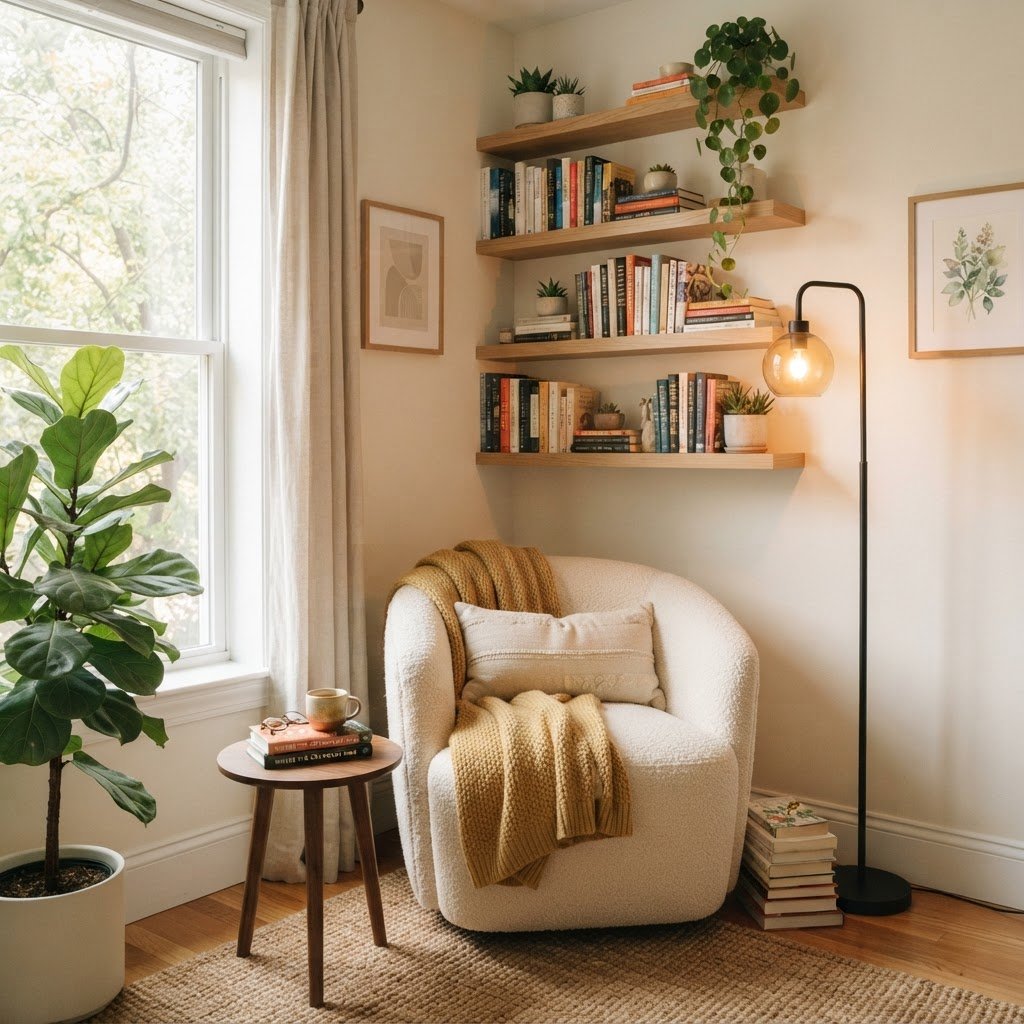
To create a cozy reading nook in a small apartment, carve out a dedicated corner by choosing a space-saving chair, installing vertical shelving, and incorporating layered lighting. Focus on using underutilized areas like window sills or corners to establish a psychological “focus zone” that signals your brain it is time to relax and read.
Assessing Your Available Floor Space
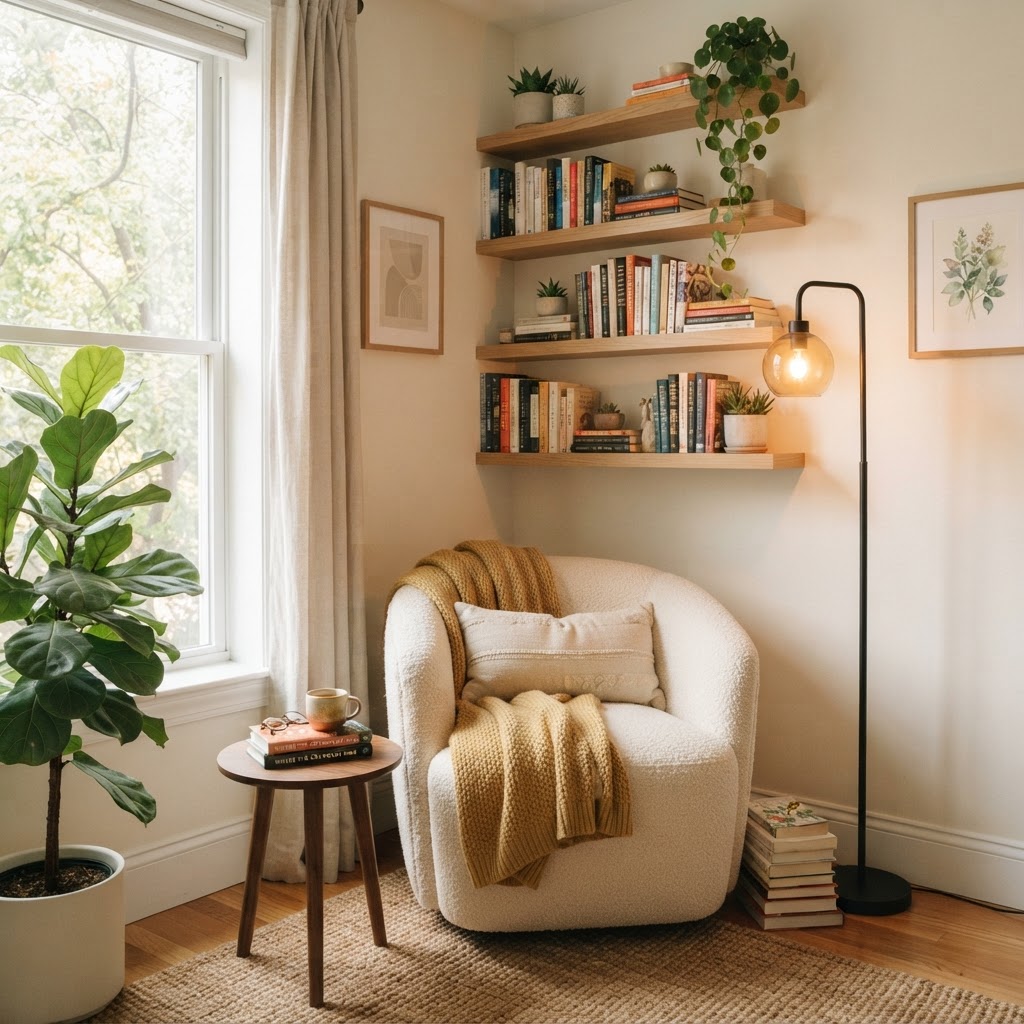
Finding a suitable nook requires identifying “dead space” that isn’t currently serving a functional purpose. You can transform an area as small as 3 feet by 3 feet into a high-value reading zone. Look for corners behind doors, spaces between a bookshelf and a wall, or the ends of hallways. When you measure your space, ensure there is at least 30 inches of clearance for comfortable entry and exit, which prevents the area from feeling claustrophobic. If your apartment has a radiator, you can place a floating shelf above it to create a custom bench seat, provided you maintain a 4-inch gap for heat circulation. By treating even the narrowest gap as a potential sanctuary, you maximize the utility of your square footage without needing a sprawling library.
Identifying Your Nook’s Purpose
Before you buy furniture, determine if your nook is for deep study or casual relaxation. For focused reading, you need ergonomic support that keeps your spine aligned, such as a high-back chair. For casual browsing, a lower, softer option like a bean bag or floor cushion works well. Assessing your needs prevents you from purchasing expensive items that don’t serve your specific reading style.
Mastering the Art of Vertical Storage
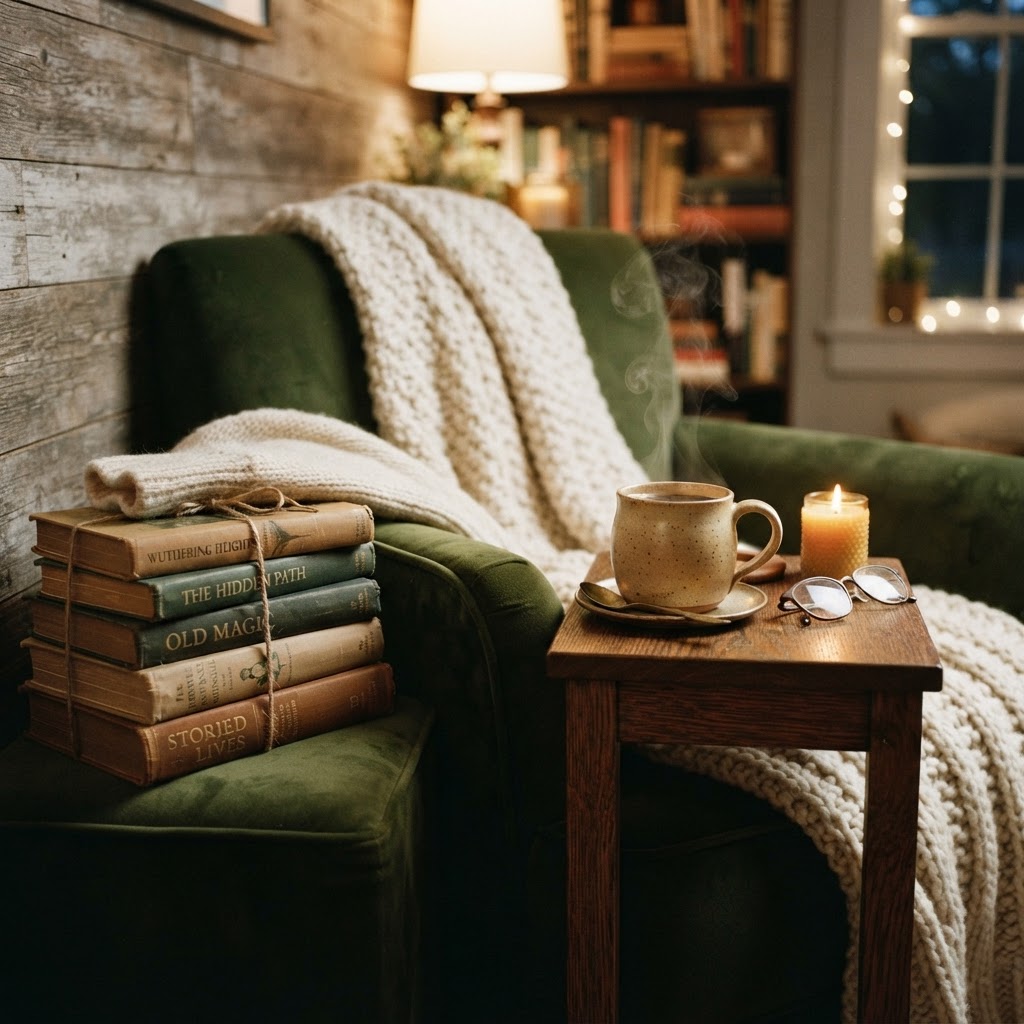
Vertical storage is the most effective strategy for small apartment design because it utilizes unused wall space rather than floor space. By installing shelves that extend to the ceiling, you draw the eye upward, which visually expands the height of a room. For example, a 6-foot tall ladder shelf typically requires only 18 inches of floor width while providing 5-6 levels of storage. Floating shelves are particularly useful in tight spots; they can be mounted at varying heights to store books, plants, and reading lights without creating a “closed-in” feeling. To ensure structural integrity, always use wall anchors capable of supporting at least 25 pounds per shelf. By keeping your collection vertical, you preserve your limited floor area for essential seating, ensuring the space remains a functional sanctuary rather than a storage closet.
Creative Book Display Ideas
Consider installing wall-mounted ledges to display your favorite covers. This acts as both storage and art. You can also utilize modular cube storage that grows with your collection over time. By keeping your books organized and accessible, you ensure that your cozy reading nook remains a relaxing destination rather than a cluttered pile of paper.
Selecting the Perfect Seating
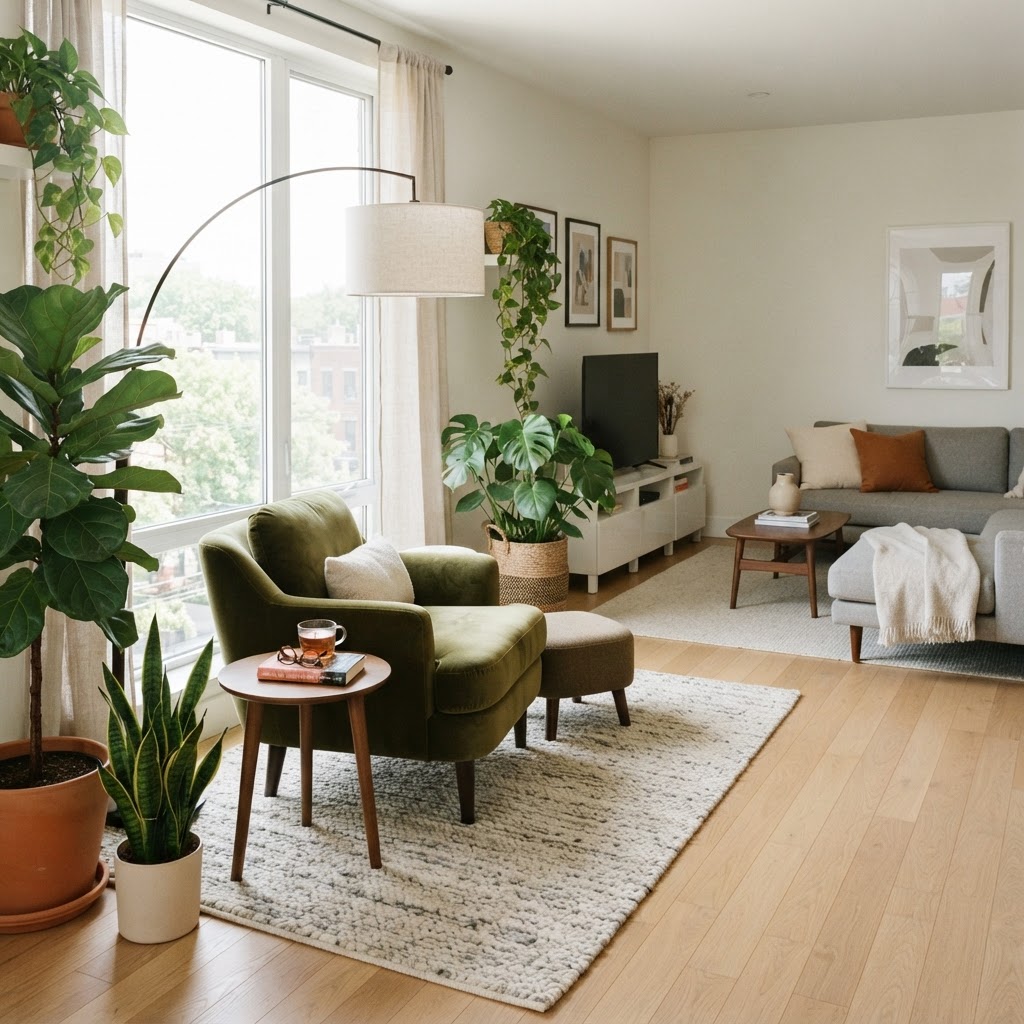
Choosing the right seat requires balancing comfort with a slim physical footprint to ensure the room remains breathable. Chairs with exposed legs are superior for small apartments because they reveal the floor underneath, which reduces the perceived “heaviness” of the furniture. When shopping, prioritize chairs with a seat depth of 20-22 inches, which is the industry standard for comfortable adult seating without excessive bulk. A swivel chair is a smart investment; it allows you to rotate toward the window during the day or toward your living area at night, providing two seating functions in one footprint. If space is truly at a premium, look for chairs with arms less than 3 inches wide, which saves precious inches in tight corners compared to traditional upholstered club chairs. Always test the seat’s firmness; foam densities of 1.8 lbs or higher will hold their shape longer, maintaining your nook’s polished look.
Mastering Layered Lighting
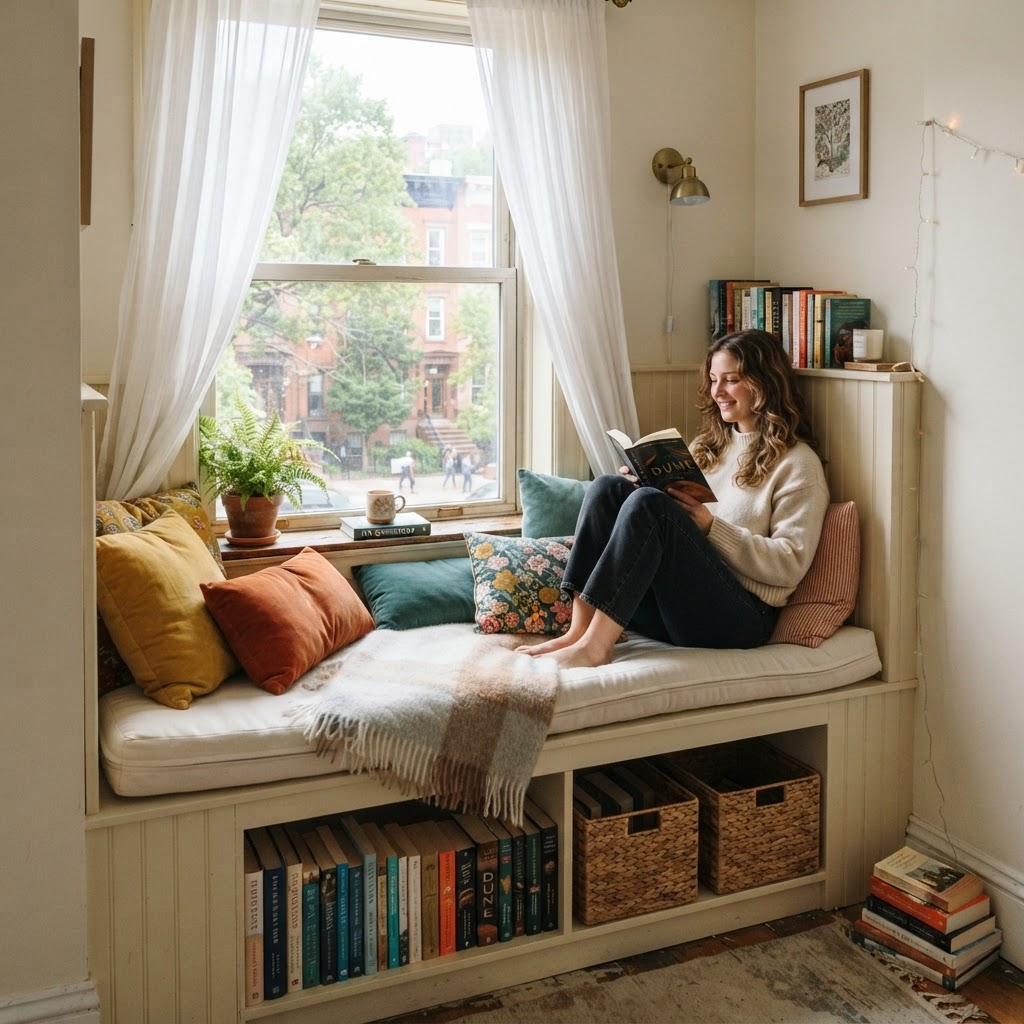
Layered lighting is essential for preventing eye strain and maintaining a cozy atmosphere in your reading nook. A successful setup uses three layers: ambient light for general room illumination, task light for reading, and accent light for ambiance. For task lighting, use a floor lamp with a swing arm, which allows you to position the light source 12-18 inches from the book, providing direct illumination without needing a side table. Avoid cool-toned lighting, as bulbs exceeding 4000K can make a small space feel like an office rather than a sanctuary. Instead, choose LED bulbs at 2700K to 3000K to provide a warm, inviting glow that complements wood tones and textiles. Integrating a smart bulb allows you to adjust brightness levels; for reading, aim for 800 lumens, while for relaxing, you can dim the light to 300 lumens to set the mood.
The Importance of Warm Tones
Ensure your bulbs have a warm color temperature, typically between 2700K and 3000K. Warm light creates a sense of intimacy and calm, whereas cool, blue-toned light can feel clinical and energetic. Adding a small table lamp with a textured shade can also diffuse the light beautifully, casting soft shadows that make your nook feel like a secret burrow.
Adding Personality Through Textiles

Textiles are the most cost-effective way to transform an ordinary corner into a high-end reading retreat. Start by placing a 3×5 foot area rug beneath your chair to create a physical boundary between your reading space and the rest of your apartment. Rugs act as an acoustic buffer, absorbing sound and making the nook feel more intimate. When selecting throw blankets, look for natural fibers like wool or cotton, which offer better breathability and texture than synthetics. Layering textiles, such as adding a knitted throw over a silk-covered lumbar pillow, provides visual depth that makes a space look professionally styled. For added functionality, use a storage ottoman as a secondary seat or footrest; these items typically cost between $50 and $150 and provide a hidden compartment for your current “to-read” stack, effectively reducing visual clutter while adding comfort to your sanctuary.
Essential Comfort Elements
- Throw blankets: Choose wool or chunky knits for extra texture.
- Decorative pillows: Provide lumbar support and aesthetic flair.
- Curtains: Use sheer curtains to soften daylight or heavy drapes for privacy.
- Floor cushions: Add a layer of casual, flexible seating for guests.
Managing Clutter and Maintaining Serenity

Clutter is the primary reason small reading nooks fail to function as retreats, as visual noise prevents the brain from entering a state of deep focus. Implement a “one-in, one-out” policy for your reading materials to ensure your collection never exceeds the capacity of your shelves. Dedicate 5 minutes at the end of each week to clear off surfaces, return loose books to their designated shelves, and shake out textiles. If you struggle with maintaining the space, use a decorative basket to corral small items like glasses, charging cables, or bookmarks, preventing them from scattering across the room. A clean, curated space signals to your brain that you are in a place of leisure rather than productivity. By keeping the area free of non-reading related items like mail or laundry, you protect the nook’s status as a quiet zone in your busy city apartment.
The Psychology of the Reading Retreat

Creating a designated space for reading triggers a psychological response known as “associative learning,” where your environment cues your brain to perform a specific task. By using this spot exclusively for literature, you train your mind to drop into a focus mode within seconds of sitting down, which is a powerful tool for overcoming procrastination. To deepen this connection, consider a multi-sensory approach: use a specific scent, like cedarwood or vanilla, that you only activate during reading time. This olfactory trigger helps the nervous system transition from the stress of a workday into a calm, receptive state. Even if your nook is confined to a chair in the corner of your bedroom, keeping it strictly for reading—and never for checking emails or scrolling social media—ensures the spot retains its psychological value as a peaceful bubble for your intellect and growth.
FAQ
Q: What is the best chair for a small apartment reading nook?
An accent chair with exposed legs and a slim profile is the best choice for small apartments. These designs allow light and air to pass beneath the seat, creating an illusion of more floor space while maintaining essential comfort for long-term reading sessions.
Q: How can I create a reading nook if I don’t have an extra room?
You can create a reading nook by reclaiming a small 3-foot square corner in your bedroom or living area. Utilize vertical storage like floating shelves and a corner-fit chair to define the space as a distinct, dedicated zone without requiring a full room.
Q: Does lighting actually affect my reading focus?
Yes, proper lighting is crucial for both eye health and cognitive focus. Use a 2700K-3000K warm-toned light source positioned near your chair to provide adequate task lighting, which reduces eye strain and helps maintain a focused, calm mental state for reading.
Q: How do I keep a small nook from looking cluttered?
Prevent clutter by using a “one-in, one-out” rule for your books and implementing vertical storage solutions like wall-mounted ledges. Keeping floor surfaces clear and using a dedicated basket for miscellaneous items helps preserve the sanctuary vibe.
Q: Can a window sill be used as a reading nook?
A window sill can function as a perfect reading nook if it is at least 15 inches deep and reinforced to support weight. Add a custom-fit cushion and a nearby wall-mounted lamp to transform a standard window area into a comfortable, light-filled seat.

Leave a Reply