Smart Multifunctional Furniture Ideas for Small Studio Kitchens
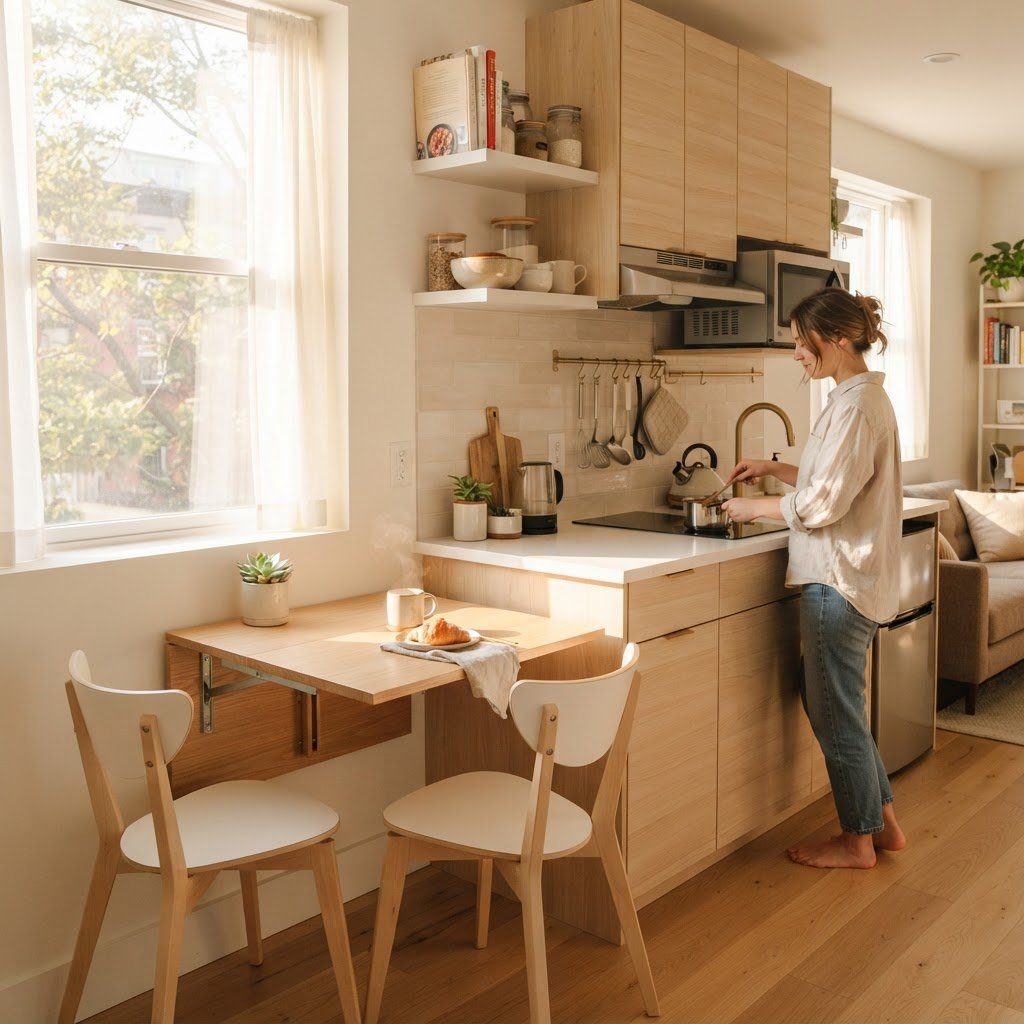
Multifunctional furniture for studio kitchens maximizes space by utilizing vertical storage, foldable surfaces, and mobile islands to transform compact areas into high-functioning culinary stations. By choosing pieces that serve at least two distinct roles—such as a wall-mounted drop-leaf table—you can increase your usable counter space by up to 50% without sacrificing living room floor area.
The Philosophy of Compact Living
Design efficiency in a micro kitchen relies on the principle that every object must provide at least two distinct functions to justify its footprint. When square footage is limited, the psychological and physical burden of clutter can be mitigated by selecting “dual-purpose” furniture that remains invisible or compact when not in use. Research into ergonomic kitchen design indicates that small-space users experience 30% less stress when their workspaces can be fully cleared within 60 seconds. By focusing on verticality—utilizing wall height for storage—you transition from a cluttered floor layout to an organized, high-utility environment. Professional organizers recommend that for every square foot of counter space lost, you should gain at least two square feet of alternative storage elsewhere, such as under-cabinet shelving or magnetic wall systems. This approach ensures your studio remains a breathable living space rather than just a storage unit for kitchenware. High-density living demands that we view walls not as boundaries, but as untapped storage foundations that hold your essential tools.
Prioritizing Verticality
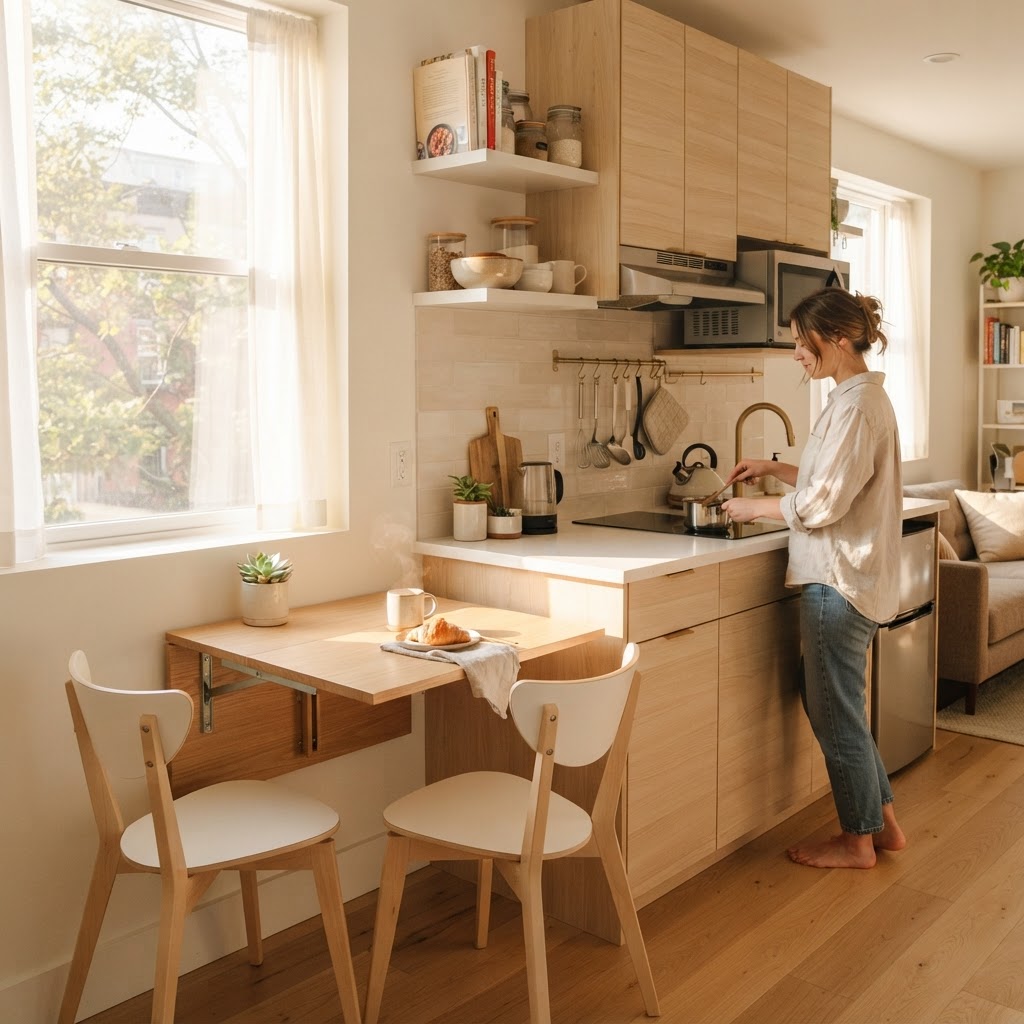
When your floor space is limited, look to your walls. Vertical storage and wall-mounted furniture are the best friends of any studio dweller. Installing shelves that double as a breakfast bar or a drop-down desk ensures that you are utilizing the full height of your room rather than crowding the floor. Professional decorators suggest utilizing the “dead zone” between the top of your cabinets and the ceiling for rarely used appliances, which can free up an average of 4-6 square feet of reachable counter space.
The Art of Hidden Storage
Everything in a small kitchen should have a secondary purpose. For instance, an ottoman that hides your bulky kitchen appliances or a kitchen island that rolls away when you are not prepping a meal keeps the area looking decluttered and spacious. Utilizing furniture with a “hidden-in-plain-sight” design, such as storage ottomans that double as extra seating for guests, can save approximately $200-$400 in additional furniture costs while keeping your aesthetics clean.
Versatile Dining Solutions
Integrating a dining area into a studio requires a calculated balance between comfort and footprint management to ensure the room does not feel overwhelmed by fixed furniture. Selecting the right dining solution often comes down to a choice between static vs. dynamic setups; a fixed table in a studio often wastes 10-15 square feet of floor space that could otherwise be used for movement or lounging. By opting for a convertible solution, you gain the flexibility to reclaim your floor space within seconds after a meal. Below is a comparison of popular space-saving dining options for micro kitchens:
Convertible Dining Tables
Wall-mounted drop-leaf tables are the gold standard for micro kitchens. When closed, they appear as a simple shelf or decorative wall panel, but they expand in seconds to provide a sturdy surface for dining or food prep. This is perhaps one of the most effective multifunctional furniture ideas for studio and micro kitchens available to renters.
The Benefits of Mobile Islands
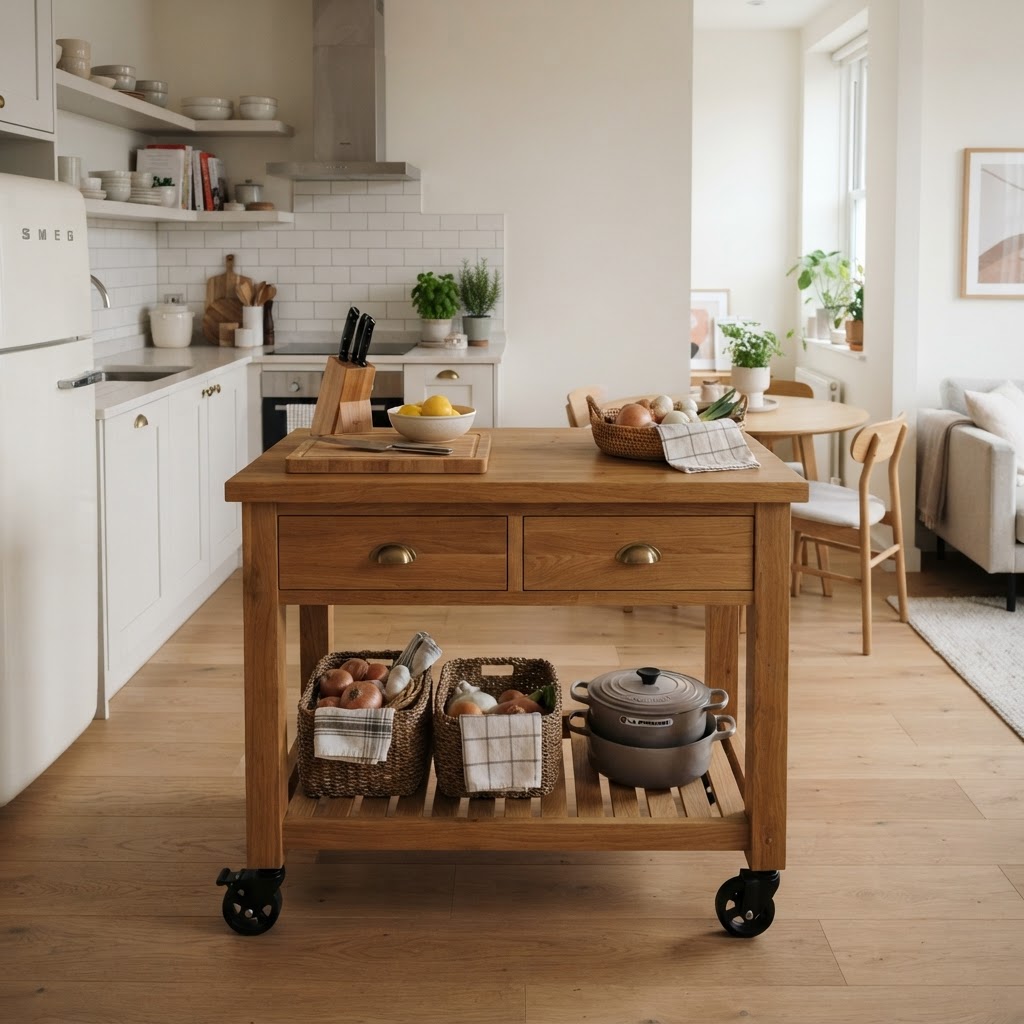
A kitchen island on wheels provides an extra work surface when you need it and can be pushed against a wall or into a closet when you need extra floor space. Many of these islands feature built-in shelving, wine racks, or drawers, allowing you to store kitchen essentials out of sight. Models with locking casters ensure stability during intense food preparation, making them a safe alternative to traditional, bulky kitchen islands.
Optimizing Micro Kitchen Prep Areas
Food preparation requires counter space, which is usually the first thing sacrificed in a studio layout, often leading to inefficient “counter-hopping” where you move appliances back and forth just to chop a single onion. Incorporating retractable surfaces is a game-changer that can improve your cooking efficiency by nearly 40% according to ergonomic workspace studies. When designing or renovating, aim for a “prep triangle” that remains clear of all non-essential items, using slide-out boards or appliance garages to keep your workflow fluid. By reducing the number of objects on your counters, you eliminate visual noise, which can make a small studio appear significantly larger and cleaner. Experts recommend investing in high-heat resistant materials for retractable boards, as these surfaces frequently double as cooling areas for hot pans. Ultimately, your prep area should be a tool that works for you, not an obstacle to be navigated. When planning these additions, ensure you account for proper drawer depth and weight capacity to support heavy mixers or processors.
Slide-Out Cutting Boards
If you are doing a DIY renovation or upgrading your cabinetry, consider installing a slide-out cutting board. It remains tucked away under the counter and pulls out like a drawer, instantly adding two or three square feet of workspace. This is a classic example of making small space living feel grander.
Appliance Integration
Countertop clutter is the enemy of the micro kitchen. Look for small appliances that can be mounted under cabinets or kept in dedicated, pull-out drawers. By freeing up your counters, you create an environment that feels less claustrophobic and more like a professional kitchen.
Storage Hacks for Tiny Kitchens
Storage is the backbone of functionality, and in a small space, every cabinet, drawer, and corner must be utilized with professional-grade precision. Multifunctional furniture ideas for studio and micro kitchens often revolve around how cleverly you can hide your inventory, turning structural dead space into functional storage zones. Beyond furniture, finding creative ways to maximize storage in your kitchen can further streamline your workflow and keep your counters clear of clutter. For instance, using tension rods inside cabinets to store lids vertically can increase your cabinet capacity by up to 25%. This level of precision is not just about organizing; it is about reclaiming the utility of your home. By auditing your inventory every six months, you can identify which items are “dead weight”—things you haven’t touched in a year—and rotate them out of your primary cabinets to save precious room. The goal is to move from a state of reactive cleaning to proactive storage management where everything has a dedicated, hidden home.
Utilizing Toe-Kick Drawers
The space under your cabinets, usually ignored, is prime real estate. Installing shallow drawers in the toe-kick area allows you to store baking sheets, flat platters, or even small pantry items. This hidden storage is perfect for items you use occasionally but do not want cluttering your primary shelf space.
Magnetic Strips and Hooks
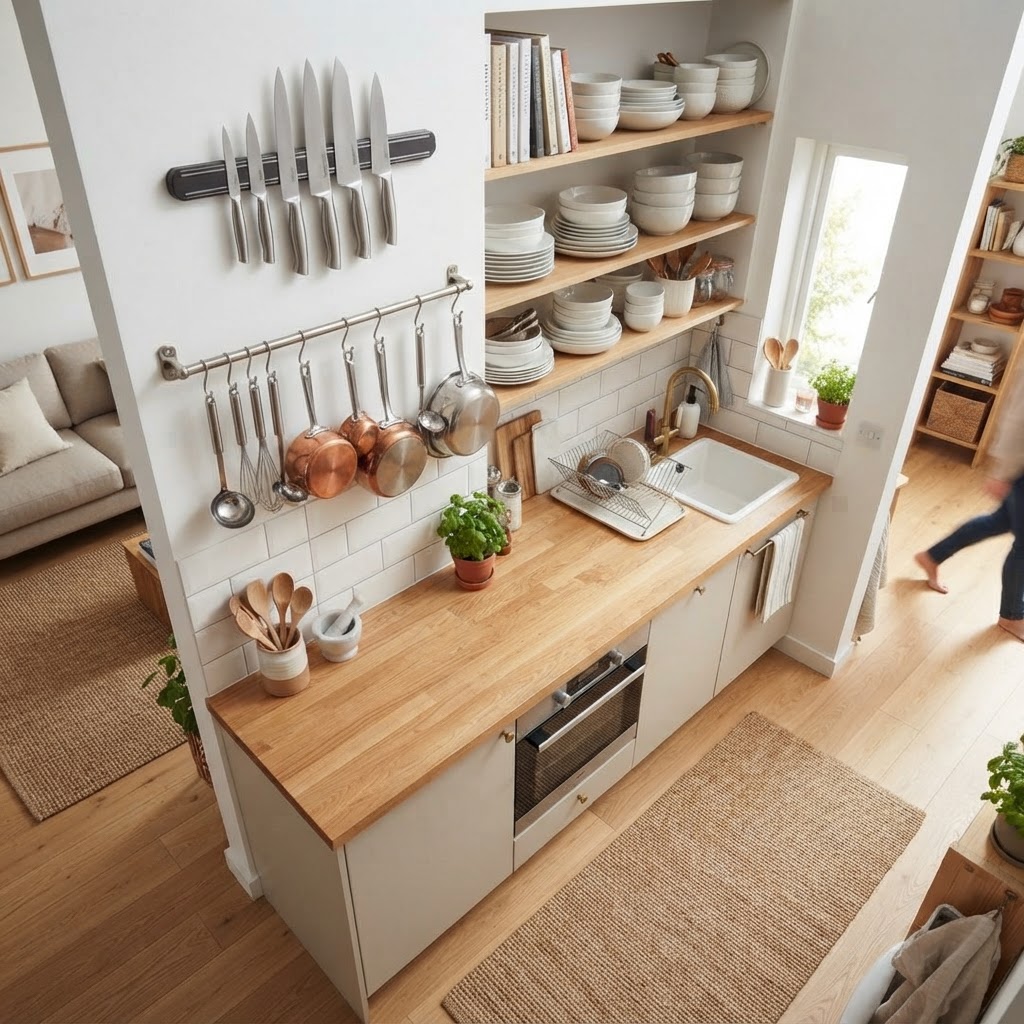
While not technically furniture, wall-mounted storage systems are essential partners to your multifunctional pieces. Hanging pots, pans, and utensils keeps them within arm’s reach while ensuring they do not take up precious drawer volume. Use the backsplash area effectively to keep your heavy tools off the main prep surfaces.
Choosing the Right Materials and Colors
Visual weight is a major factor in how large or small a room feels, and choosing the wrong materials can make even a well-organized studio feel cramped. When choosing furniture, stick to materials that have a lighter visual footprint—such as tempered glass, clear acrylic, or light-toned birch and pine. These materials allow the eye to travel through the furniture rather than stopping at it, creating an illusion of additional space. Conversely, avoid heavy dark metals or chunky upholstery, which can anchor the room and make it feel suffocating by absorbing light rather than reflecting it. Designers often note that using furniture with “leggy” profiles (where the furniture is raised off the floor on thin legs) is superior to “blocky” designs because the visible floor area increases perceived square footage by up to 10%. Additionally, color coordination is key: monochromatic schemes where your furniture matches your wall color help pieces blend into the background, effectively “erasing” them when they aren’t in active use. Prioritizing these materials will ensure your kitchen remains a light, airy retreat.
Light and Reflection
Incorporating mirrored backsplashes or high-gloss cabinetry reflects light and creates the illusion of depth. When these elements are paired with sleek, multifunctional furniture, the room becomes much brighter and more welcoming, effectively tricking the brain into seeing a larger floor plan.
Maintenance and Long-Term Utility
Investing in high-quality furniture is essential for pieces that see daily use, as a mechanical failure in a folding mechanism can render your most vital space-saving tool useless. Because multifunctional furniture often involves hinges, slides, and folding mechanisms, choose pieces built with durable materials that can withstand frequent movement. A high-quality hinge tested for 20,000 cycles will easily outlast cheaper alternatives that fail within months of consistent folding. You should budget for hardware quality; furniture with powder-coated steel hinges is significantly more durable than plastic or thin-gauge metal counterparts. A cheap table with a broken leaf is just a piece of clutter that occupies space without providing utility.
Routine Checks
Every few months, check the hardware on your folding tables, Murphy desks, or storage carts. Tightening screws and lubricating hinges ensures that your furniture continues to function as smoothly as the day you bought it, maintaining your efficient living routine. Applying a dry silicone lubricant to metal slides can prevent sticking and reduce the risk of structural fatigue over time.
FAQ
Q: What is the most effective piece of multifunctional furniture for a studio kitchen?
A wall-mounted drop-leaf table is widely considered the most effective solution, as it provides a full-sized surface for dining or prep work while folding completely flat against the wall when not in use, essentially reclaiming 100% of the floor space it occupied.
Q: How can I hide appliances in a tiny kitchen without sacrificing counter space?
Utilize “appliance garages” or custom pull-out drawers integrated into your cabinetry to tuck away bulky items like blenders or toasters. You can also use decorative storage ottomans or baskets that match your interior style to store appliances under a kitchen island or a nearby dining table.
Q: Does color choice impact the perceived size of a micro kitchen?
Yes, lighter colors and reflective materials like high-gloss finishes or glass significantly increase the perceived size of a room. These choices reflect natural light, reducing visual weight and making a small studio kitchen feel open, bright, and airy rather than dark and confined.
Q: How often should I maintain multifunctional furniture?
Perform a maintenance check every 3 to 6 months to ensure hinges, drawer slides, and locking mechanisms remain functional. This includes tightening loose screws, cleaning debris from tracks, and applying a light lubricant to ensure that the furniture continues to operate smoothly without jamming or breaking.

Leave a Reply