Small Bedroom Ideas That Fix the Real Problem First
To make a small bedroom feel significantly larger and more functional, prioritize optimizing traffic flow and clearing floor space rather than simply buying smaller furniture. Start by auditing your room’s movement patterns, maintaining clear sightlines, and utilizing vertical storage to eliminate the friction that makes compact spaces feel cramped and chaotic.
The Psychology of Space and Flow
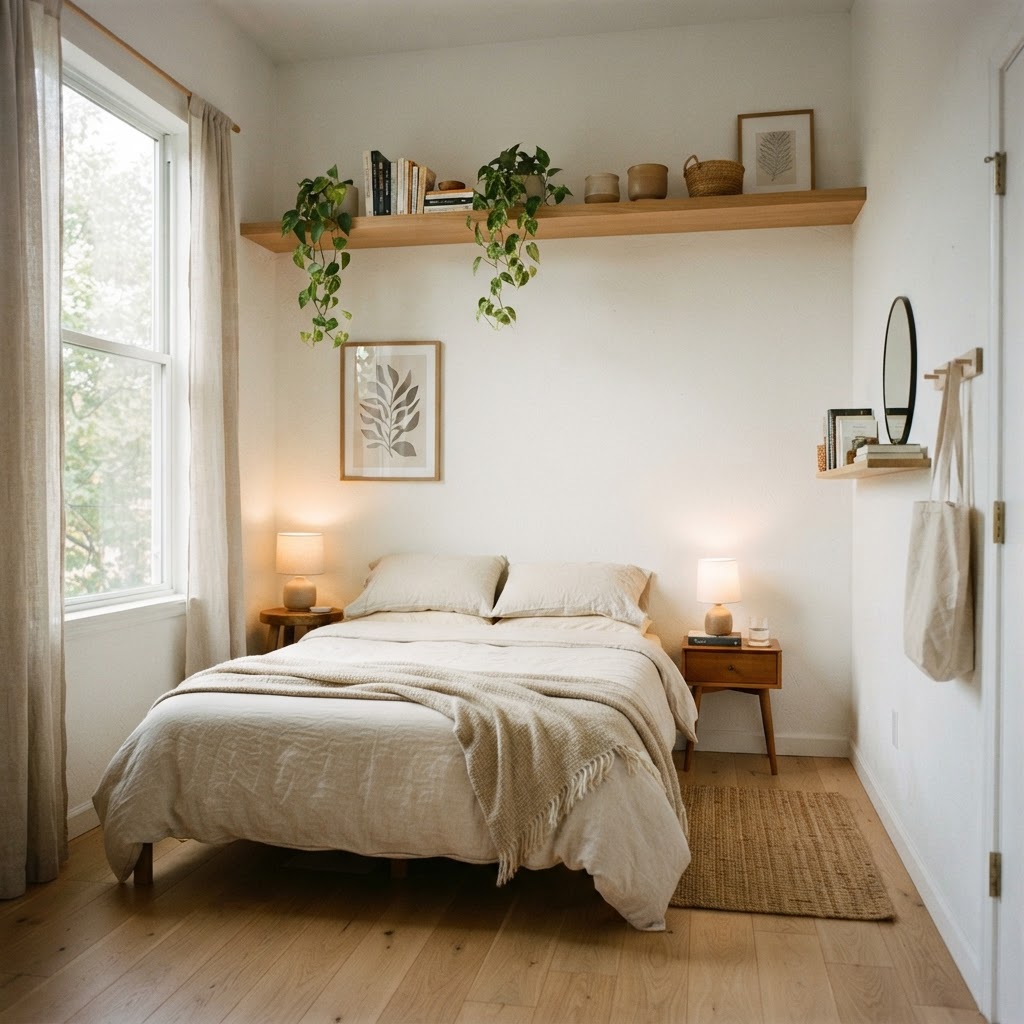
Human perception of room volume relies heavily on uninterrupted visual paths; when your eyes can travel across a floor to the wall base without obstruction, the brain registers the space as larger. A small room feels claustrophobic primarily because of “visual noise”—clutter, awkward furniture placement, or poor lighting that creates visual stop signs. Research in environmental psychology suggests that maintaining 60% of floor visibility can make a room appear up to 20% more spacious. To achieve this, you must treat your floor as a continuous plane rather than a surface for storage. If you currently have piles of laundry or bulky items hindering your movement, these act as psychological barriers that shrink the room’s perceived size. By clearing these obstructions, you shift your brain’s interpretation of the space from a cluttered box to an open sanctuary. Focus on removing any item that forces you to walk around it. When the eye can see the intersection of floor and wall, you successfully expand the room’s perceived dimensions without changing a single square foot of architectural space.
Identifying Your Primary Friction Point
Is your bedroom a place for sleep, or is it a dumping ground for laundry, work files, and tech gadgets? Most small rooms suffer because they attempt to serve too many masters. By auditing what actually happens in the room, you can strip away the non-essentials.
The Rule of Uninterrupted Sightlines
To make a space feel airy, aim to keep the floor surface as visible as possible. When your eyes see the edges of the room where the floor meets the wall, your brain registers more volume. This is why floating furniture is a game-changer for those searching for effective small bedroom ideas.
Why Your Current Furniture Layout Is Likely Failing
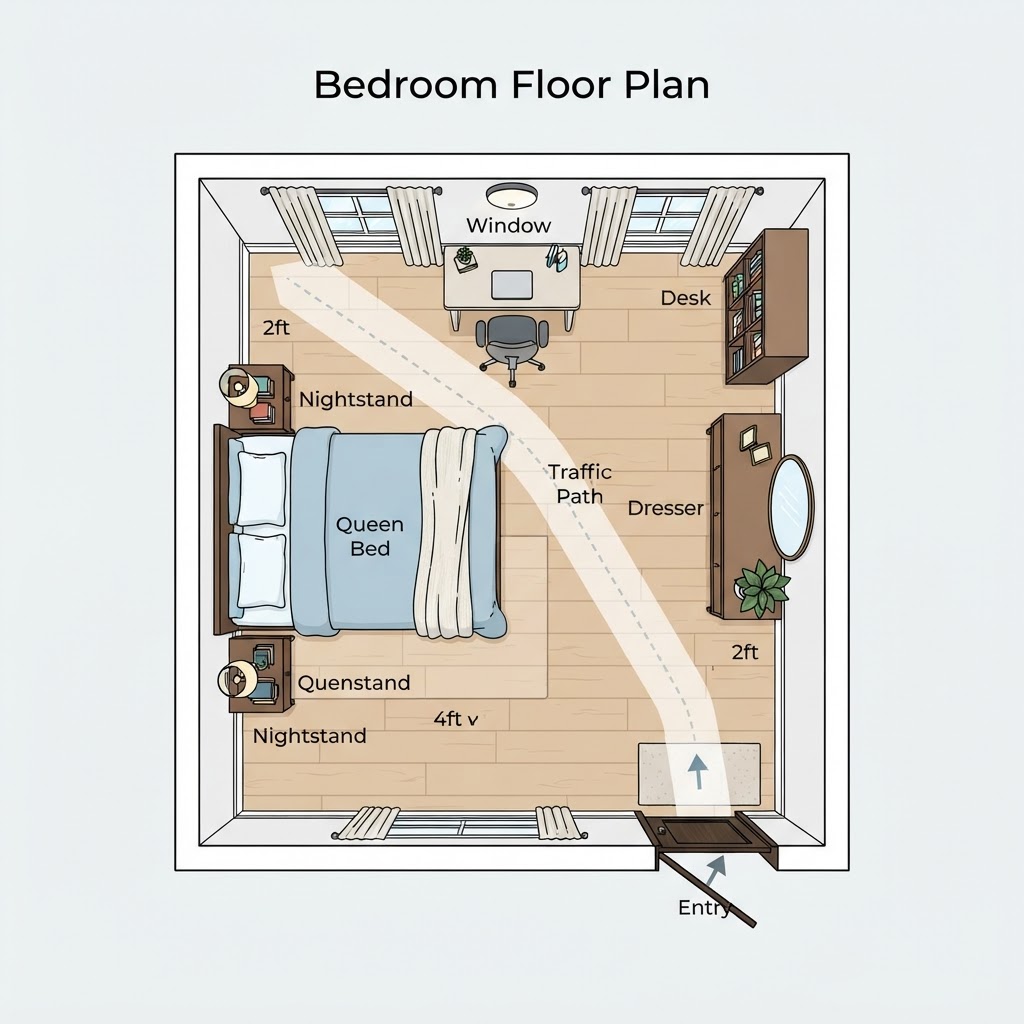
Most homeowners place furniture based on wall alignment, but the most effective layouts prioritize the “traffic triangle”—the natural paths you take to your closet, bed, and door. A layout that forces you to shimmy past a bulky dresser is fundamentally broken, regardless of how “cute” the furniture is. Expert designers suggest mapping your daily rituals for 72 hours; identify where you trip or where items naturally accumulate. If you are regularly navigating an obstacle course to reach your bedside lamp, your furniture is too large for the room’s circulation flow. Replacing a standard 24-inch deep dresser with a 15-inch deep slim-profile unit can regain 9 square inches of floor area per linear foot, significantly opening up pathways. Consider floating your bed away from a corner if it allows for a more efficient path, even if it creates a small gap behind the headboard for hidden shelving.
Mapping Your Daily Rituals
If you have to do an obstacle course just to reach your bedside lamp, your layout is the problem, not your square footage. Track your movement for three days. Where do you trip? Where do you drop things? Where is the ‘clutter magnet’ zone? Fixing the path of movement is the most important step in optimizing your environment.
Vertical Real Estate: The Untapped Frontier
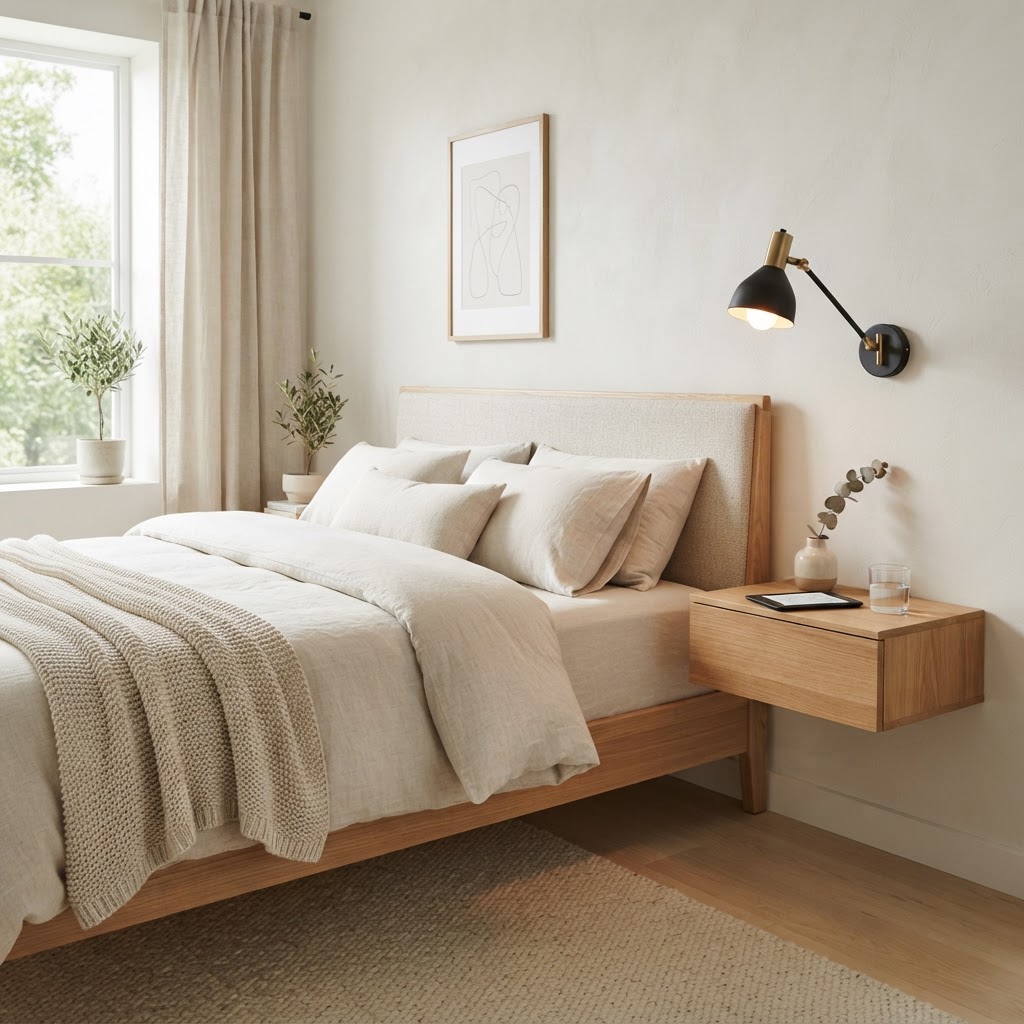
When floor space is at a premium, the ceiling becomes your most valuable storage asset. Most people fail to utilize the top two-thirds of their walls, leaving critical “dead space” that could host floating shelves or high-reach cabinetry. Drawing the eye upward effectively shifts focus away from the room’s narrow width, creating an illusion of height that makes the entire environment feel grander and more intentional. Installing high-reach shelving near the ceiling line can house seasonal items or extra linens, removing them from your daily floor-level storage needs. This technique is particularly effective in rooms with ceilings 8 feet or higher. Furthermore, wall-mounted lighting is a non-negotiable upgrade; replacing a standard 10-inch diameter lamp base with a wall sconce saves roughly 78 square inches of surface area per nightstand. This change isn’t just aesthetic—it eliminates the visual noise of cords and bases, reducing the room’s “clutter score” and creating a boutique hotel aesthetic that feels inherently more spacious and refined.
Installing High-Reach Shelving
Instead of a bulky bookshelf that takes up floor space, install floating shelves near the ceiling line to store books, seasonal items, or decor. This keeps the floor clean while utilizing dead space that would otherwise collect dust. It is one of the most effective small bedroom ideas to shift the focus away from the room’s width and toward its height.
The Power of Wall-Mounted Lighting
Table lamps are wonderful, but in a tiny room, they occupy essential surface area on nightstands. Swapping to wall-mounted sconces creates a boutique hotel look and frees up your bedside table entirely. This simple swap reduces visual noise, making the room feel more intentional and less cluttered.
Multi-Functional Furniture as a Last Resort
Multi-functional furniture should be your secondary priority, utilized only after you have decluttered and optimized your primary traffic flow. Investing in high-cost “smart” furniture like $1,500 Murphy beds or storage ottomans often masks underlying organizational issues rather than solving them. Focus first on the “Bed Storage Revolution”: replace standard bed frames with hydraulic-lift platforms. A hydraulic frame can provide up to 30 cubic feet of storage, effectively acting as an extra closet hidden beneath your mattress. If a full replacement isn’t in your budget, look for “risers” that add 6 inches of clearance, allowing for the use of low-profile rolling bins. This is significantly more effective than buying multi-tiered furniture that adds visual bulk. By utilizing the “dead zone” beneath the bed, you preserve your limited vertical and horizontal surface areas for essential items, adhering to a minimalist design philosophy that prioritizes functionality over ornamental clutter.
The Bed Storage Revolution
If your bed has legs that show a dark, shadowy gap underneath, you are losing prime real estate. Storage bins or under-bed drawers are essential, but even better is a hydraulic bed frame that lifts completely. This turns the entire footprint of your bed into a massive, hidden closet.
Lighting Strategies to Expand the Perimeter
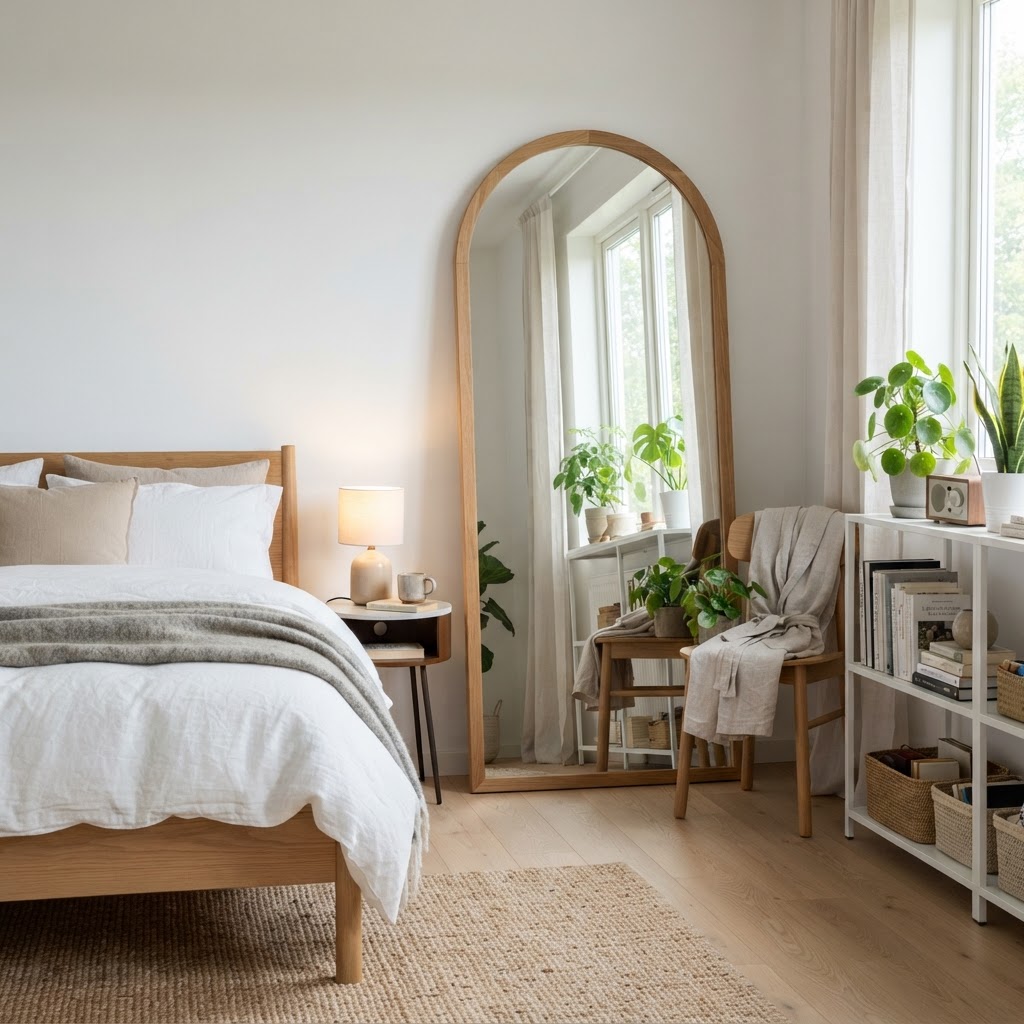
Lighting is the secret weapon for small bedroom ideas that actually work. Poor lighting creates corners of darkness that act as visual boundaries, effectively shrinking the room’s perceived footprint. By layering your light—using ambient, task, and accent lighting—you can blur the edges of your room and make it feel like it extends further than it actually does. Incorporate a minimum of three light sources: an overhead ambient light, bedside task lighting (sconces), and floor-level or strip lighting to “wash” the corners with illumination. Mirrors are the most efficient way to maximize this light; a full-length mirror positioned directly opposite a window will reflect natural daylight, doubling the perceived depth of the room. Avoid using several small, decorative mirrors, as they create a “broken” reflection that adds to visual clutter; instead, use one large-scale, high-quality mirror to maintain a clean, cohesive visual field.
Bouncing Light with Mirrors
Mirrors are a design cliché for a reason: they work. However, placement is everything. A large mirror placed directly opposite a window will bring the outside in and effectively double the visual depth of the room. Avoid small, decorative mirrors; instead, opt for a full-length floor mirror or a wall-to-wall treatment behind your nightstands.
Curating Your Belongings: The Zero-Based Design Approach
If you want to fix your room, you must be ruthless about what you keep inside it. Every object in a small bedroom must either be beautiful or functional. If it is neither, it is stealing your peace of mind. Apply the ‘zero-based’ principle: if you were moving into this room tomorrow, what would you choose to bring with you? Implementing the 24-hour rule is essential here; any flat surface, from your dresser top to your window sill, is a landing strip for junk. By ensuring no item (mail, clothes, chargers) remains on a flat surface for more than 24 hours, you keep the room from reverting to its ‘cramped’ state. This daily audit prevents the accumulation of the “micro-clutter” that causes even large rooms to feel claustrophobic. By curating your space intentionally, you turn a small box into a curated sanctuary where rest is the primary objective rather than storage management.
The 24-Hour Rule for Surfaces
Any flat surface, from your dresser top to your window sill, is a landing strip for junk. Implement the 24-hour rule: no item (mail, clothes, chargers) can remain on a flat surface for more than 24 hours. This keeps the room from reverting to its ‘cramped’ state, regardless of how small it is.
FAQ
Q: What is the best way to make a tiny bedroom look bigger?
To make a tiny bedroom look bigger, prioritize clearing the floor and creating uninterrupted sightlines. Remove excess furniture to expose more floor area and use vertical storage or wall-mounted lighting to keep surfaces clean and open.
Q: Does painting a small bedroom white always help?
While light colors reflect more light, painting a small room white is not a miracle cure if the room remains cluttered. Proper furniture layout, lighting layering, and keeping surfaces clear are more effective than paint color for maximizing space.
Q: Should I use multi-functional furniture in a small room?
Use multi-functional furniture only after you have decluttered and optimized your flow. Focus on “hidden” storage like hydraulic bed frames first, as these provide utility without consuming precious floor or vertical visual space.
Q: How can I optimize my bedroom layout for better movement?
Map your daily movement patterns for 72 hours to identify where you trip or where obstacles exist. Aim to create a clear, direct path between your doorway, closet, and bed to improve room flow and efficiency.
Q: How many light sources should a small bedroom have?
Use at least three layers of light: ambient lighting for general illumination, task lighting like sconces for reading, and accent lighting to brighten dark corners. This effectively blurs the room’s boundaries and increases perceived depth.

Leave a Reply