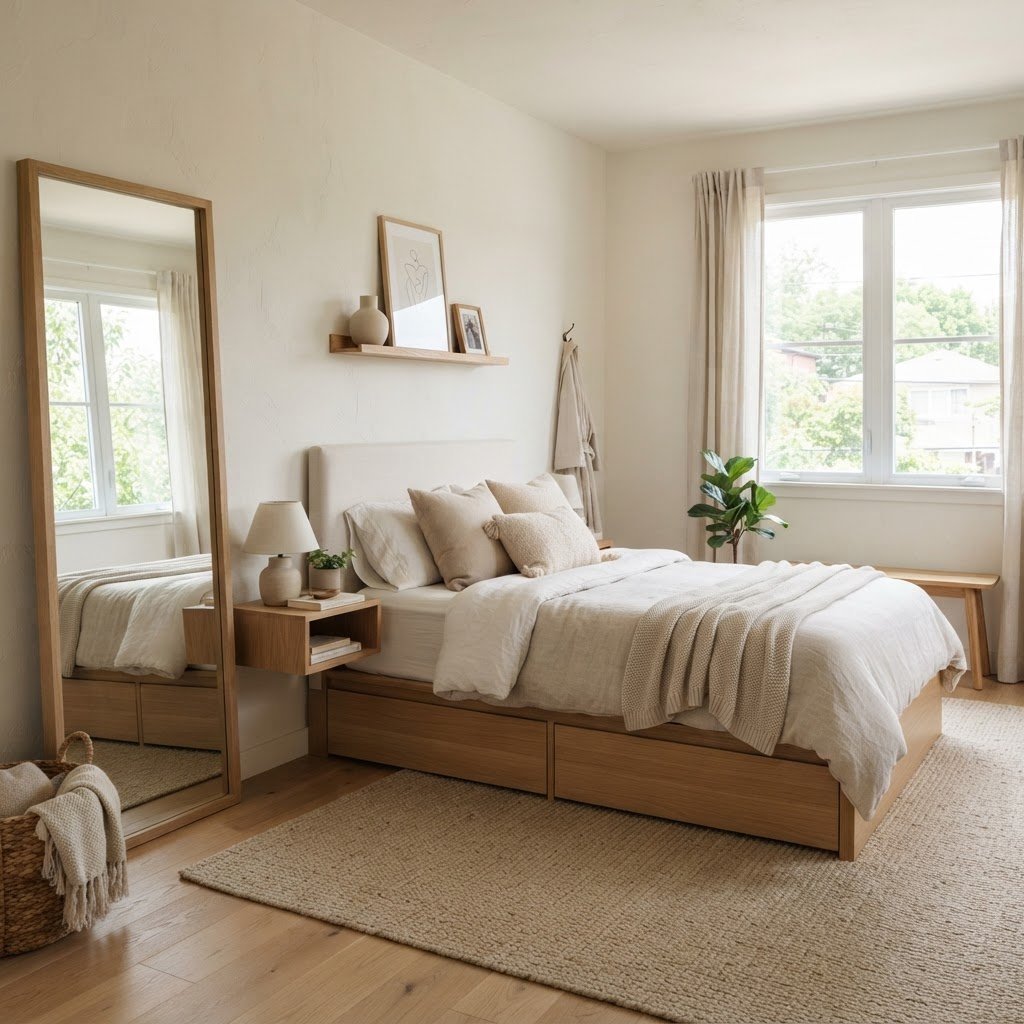
Small bedroom layouts succeed by prioritizing vertical storage, multi-functional furniture, and strategic bed placement to maximize floor area. To optimize any room shape, use light color palettes to expand visual depth, mount lighting on walls to clear surfaces, and utilize the footprint beneath your bed frame for essential hidden storage.
Rethink Your Foundation: The Bed Placement Strategy
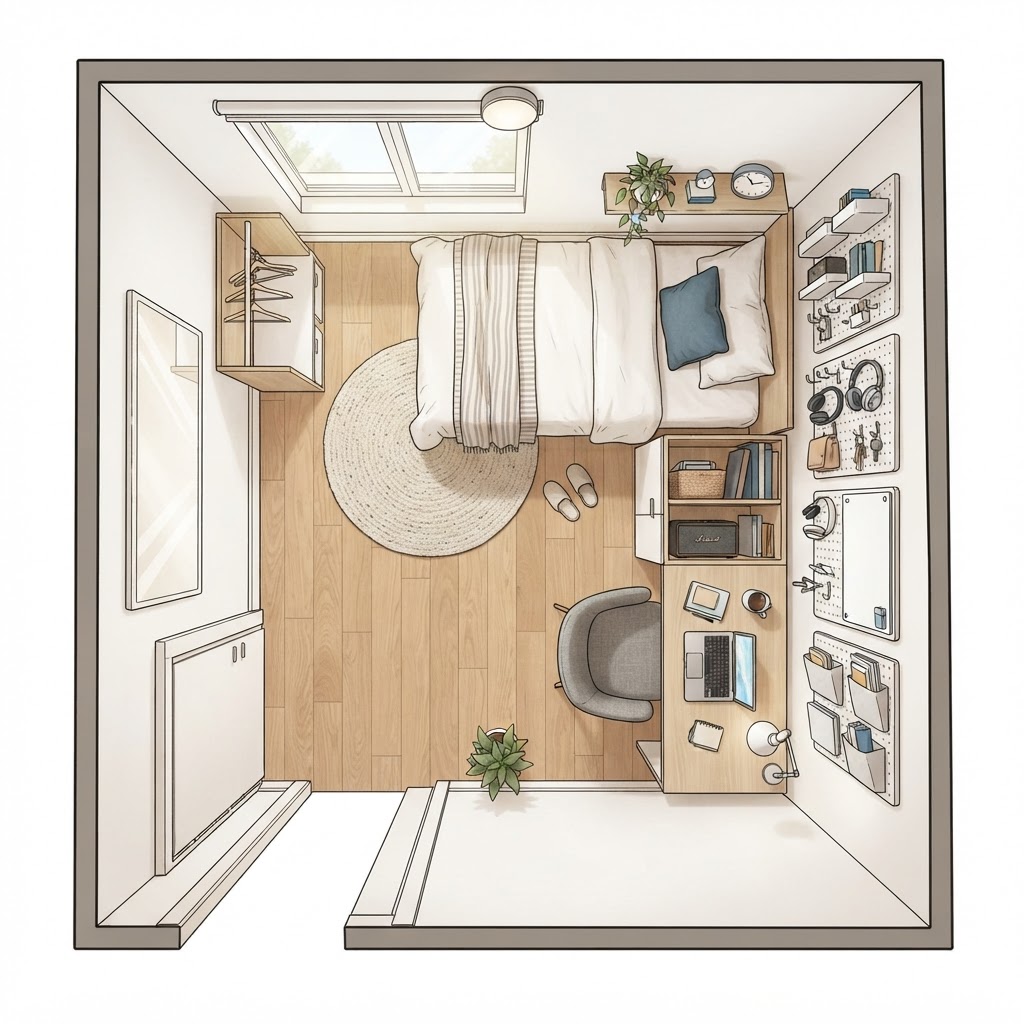
The bed is the primary anchor of your bedroom, and its placement dictates the entire flow and usability of the floor space. In a standard square bedroom measuring roughly 10×10 feet, centering the bed on the main wall provides necessary symmetry and access to both sides for nightstands. However, in narrow or rectangular rooms, pushing the bed into a corner can reclaim up to 20 square feet of floor space, which is critical for adding a desk or extra storage. When evaluating your layout, consider that placing the bed against a corner wall is 30% more efficient for room traffic flow than a center-position in rooms under 100 square feet.
Floating the Bed
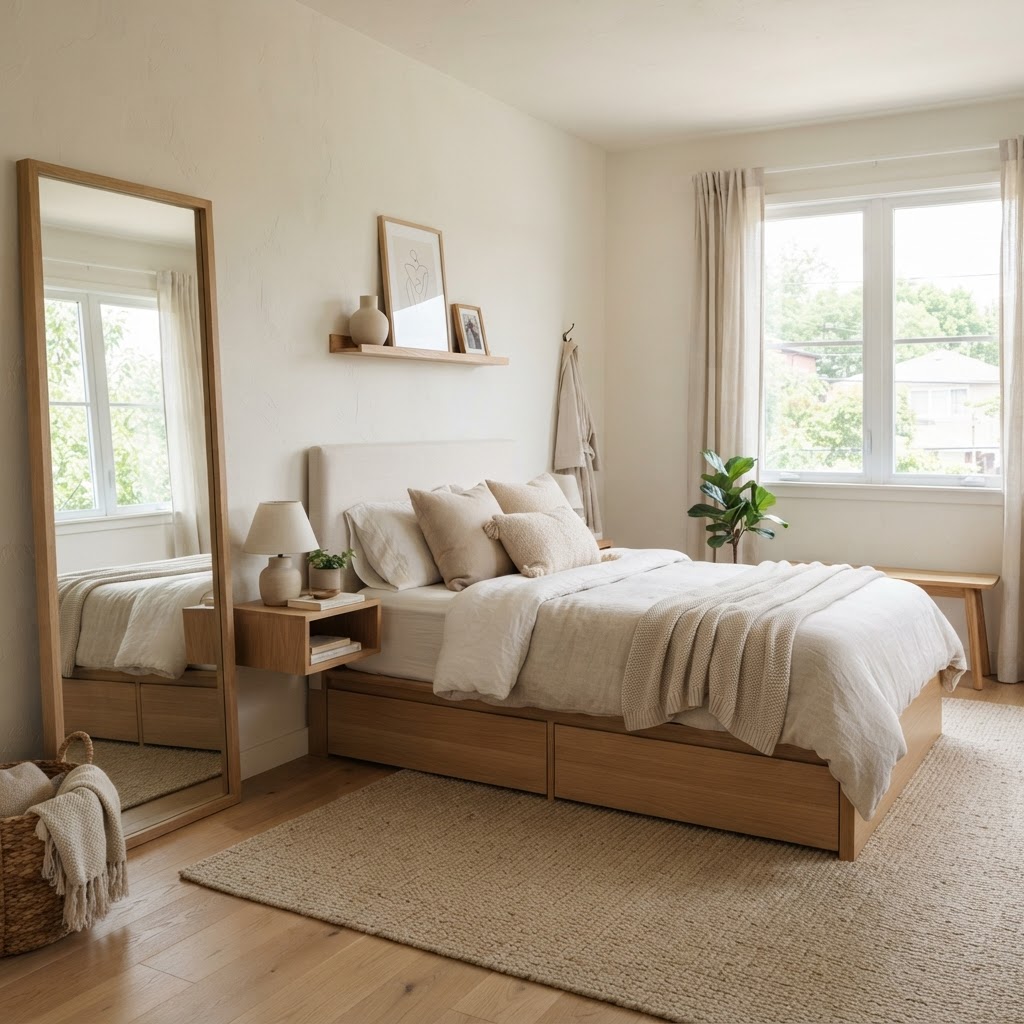
Pulling the bed away from the wall to create a ‘floating’ effect can transform a cramped room into a luxury suite while creating hidden utility. This layout allows for a 12-to-18-inch gap behind the headboard, which can serve as a custom shelving unit or a makeshift walk-in closet for seasonal items. By using hydraulic lift bed frames—which can cost between $300 and $800 depending on quality—you gain access to the entire floor area beneath the mattress. This approach effectively turns a dead-zone into a highly organized storage area, adding approximately 15-20 cubic feet of additional capacity.
Optimizing Flow in Awkwardly Shaped Rooms
Irregularly shaped bedrooms with slanted ceilings or weird alcoves require a calculated, creative approach to furniture arrangement to maintain open pathways. Your primary goal is to ensure an unobstructed 30-inch-wide path from the door to the window or closet, as narrow walkways are the leading cause of “claustrophobic” room design. According to interior design standards, avoiding large furniture in direct sightlines from the entryway increases the perceived size of a room by nearly 20%. To soften the harsh impact of irregular angles, incorporate rounded furniture like circular ottomans or curved headboards, which alleviate the visual tension caused by sharp 90-degree corners in small spaces.
Dealing with Slanted Ceilings
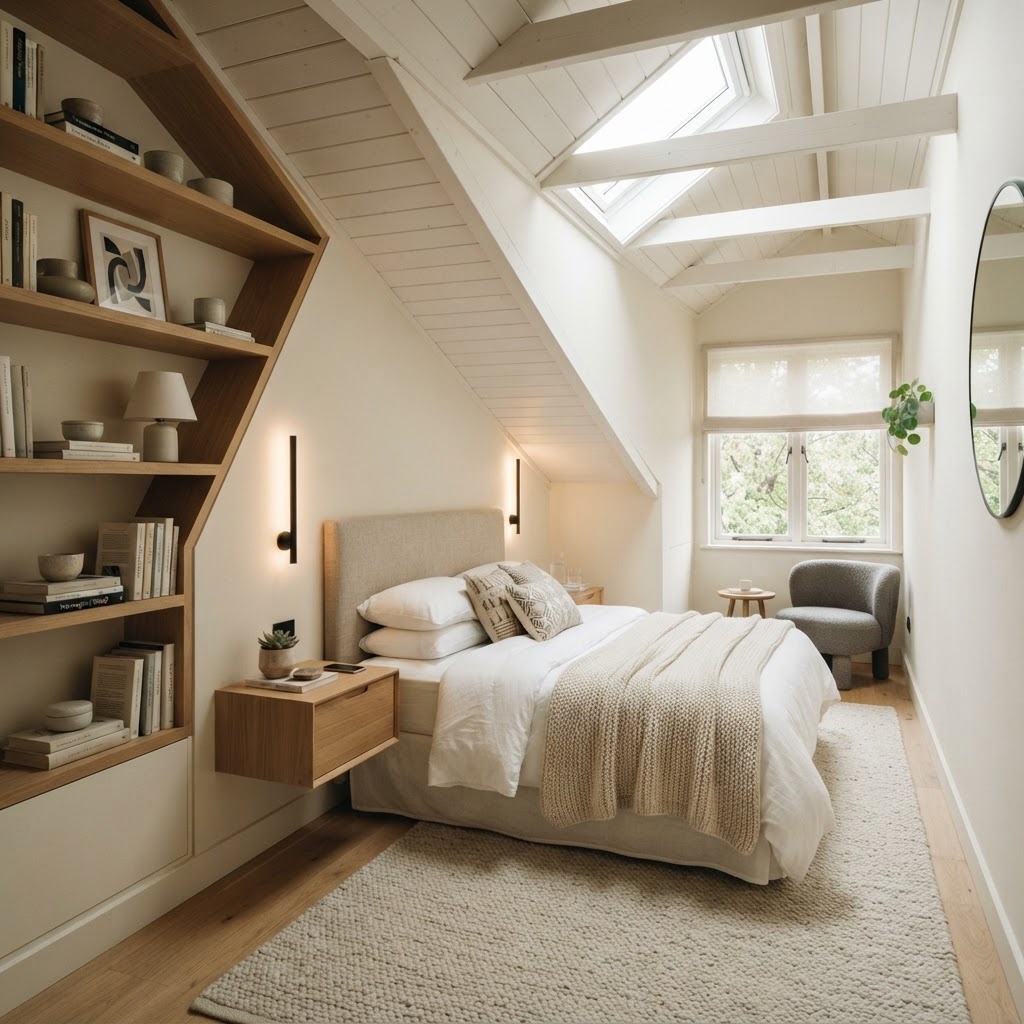
When working with attic bedrooms or eaves, the most effective layout places the headboard directly under the lowest point of the slope. This configuration protects the taller, more usable vertical space for standing and dressing. If the slope prevents a standard headboard, install custom cabinetry or built-in shelving that balances the wall height. By squaring off the area with custom shelving, you can hide irregular structural elements while gaining 4-6 linear feet of storage for books or decorative items, effectively turning a design flaw into a functional, high-end feature.
Harnessing Vertical Storage Solutions
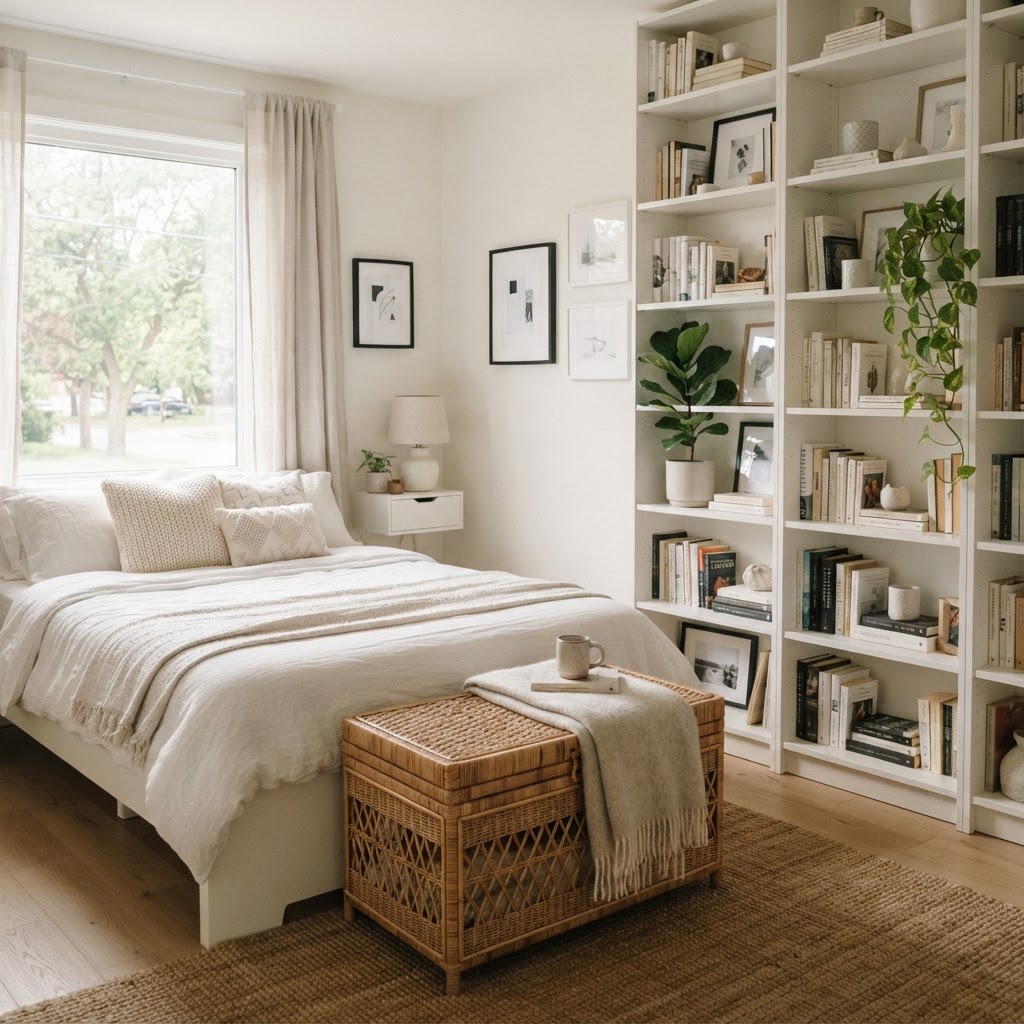
Walls are the most underutilized assets in small bedroom design; using verticality draws the eye upward and keeps the floor clear to create an illusion of space. Implement floating shelves, floor-to-ceiling bookcases, and wall-mounted lighting to maximize every inch of vertical capacity. Keeping the floor visible creates a psychological sense of openness, making a 100-square-foot room feel significantly larger. High-impact vertical solutions, such as mounting shelves at least 7 feet high, ensure that storage doesn’t interfere with your line of sight or daily movement patterns.
The Power of Wall-Mounted Lighting
Replacing bulky bedside lamps with wall-mounted sconces is a cost-effective, aesthetic game-changer for small environments. By installing sconces 24 to 30 inches above the mattress, you reclaim the entire surface area of your nightstands, which typically measures about 1.5 to 2 square feet per table. Opt for models with adjustable arms, which provide task lighting for reading without occupying precious space. This sleek, modern aesthetic also reduces visual clutter, which is a major contributor to stress in small sleeping quarters.
Multi-Functional Furniture for Maximum Impact
In a small bedroom, every piece of furniture must provide at least two distinct functions to justify its footprint and keep the environment clutter-free. Items like ottomans with hidden storage, desks that double as nightstands, or murphy beds for ultimate flexibility are essential investments. A quality murphy bed, while costing more ($1,500-$3,000), can increase the usable floor area of a room by 50% when retracted. By selecting pieces that perform double duty, you can transform your bedroom into a home office or yoga studio during the day, maintaining a clean, minimalist aesthetic at night.
Selecting the Right Bed Frame
Investing in a bed frame with integrated storage is the most impactful decision for clearing floor clutter. Whether you choose hydraulic lift storage or built-in pull-out drawers, you effectively add a secondary dresser to your room. This design choice provides approximately 10 to 20 cubic feet of storage, which is ideal for linens, seasonal clothes, and spare pillows. By removing the need for a separate dresser, you can add 4-6 square feet back into the room’s open floor plan, significantly improving the room’s flow and perceived size.
Lighting and Color Schemes to Expand the Space
Color and lighting serve as functional tools that physically alter the perception of depth within a confined space. Utilizing a monochromatic, light-toned color palette—such as soft whites, creams, or light grays—blurs the boundaries between walls and ceilings, making the room feel larger. Studies suggest that lighter color schemes can increase the perceived volume of a space by up to 10-15%. Additionally, layering artificial lighting with warm color temperatures (2700K-3000K) creates a cozy, expansive atmosphere that avoids the harshness of a single overhead light source.
Mirror Magic
Strategic mirror placement is a professional interior designer’s favorite trick for doubling visual space. Placing a large mirror directly across from a window reflects natural light into dark corners, which can brighten a room by up to 30%. Consider a floor-to-ceiling mirror panel on a closet door to maximize the effect without sacrificing any square footage. Even a gallery of small, framed mirrors can create an expansive, high-end feel while maintaining the necessary balance and proportion of the room’s overall layout.
FAQ
Q: What is the best bed size for a small room?
A: The best bed size for most small rooms is a Full or Queen, provided the frame has integrated storage. If the room is smaller than 80 square feet, a Full bed is recommended to ensure you maintain at least 24 inches of clearance on both sides for easy movement.
Q: How can I make a tiny bedroom look bigger?
A: Use a light, monochromatic color palette and incorporate large mirrors opposite windows to bounce natural light around the room. Additionally, keeping the floor visible by using wall-mounted furniture creates an illusion of extra space that makes the room feel significantly larger.
Q: Should I put my bed in the corner?
A: Yes, placing your bed in the corner is a great strategy for rooms under 100 square feet. This layout maximizes the center floor space, providing enough room for extra furniture like a desk or a dresser that wouldn’t fit if the bed were centered.
Q: How do I organize a bedroom without a closet?
A: Utilize vertical storage by installing floor-to-ceiling shelving and high-mounted clothing racks. Incorporating a bed frame with built-in storage drawers or a storage-equipped ottoman can hold the contents of a dresser, effectively compensating for the lack of a traditional closet.
Q: What lighting is best for small bedrooms?
A: Wall-mounted sconces are the best choice for small bedrooms because they provide focused task lighting without taking up surface space on nightstands. Pairing these with warm-toned bulbs helps create an inviting, spacious, and cozy environment suitable for relaxation.

Leave a Reply