10 Clever Storage Solutions for Apartments With No Pantry
To organize an apartment with no pantry, maximize storage by utilizing vertical wall space with rails, installing over-the-door organizers, using slim rolling carts for bulk items, and decanting dry goods into uniform, stackable containers. These strategies turn under-utilized gaps and surfaces into highly efficient, hidden storage zones for your kitchen essentials.
Rethink Your Vertical Space
Vertical storage is the most effective secret weapon for anyone researching small apartment storage hacks because it stops the “countertop creep” that occurs when cabinet space is exhausted. By installing open shelving above your existing cupboards or utilizing wall-mounted rails, you can keep frequently used items within arm’s reach without sacrificing precious prep area. To learn more about specific techniques beyond pantry solutions, you can explore how to maximize storage in a small apartment kitchen to ensure your entire culinary area is optimized. When you move storage from horizontal surfaces to vertical planes, you increase the usable square footage of your kitchen by an average of 30-40%.
Installing Wall-Mounted Rail Systems
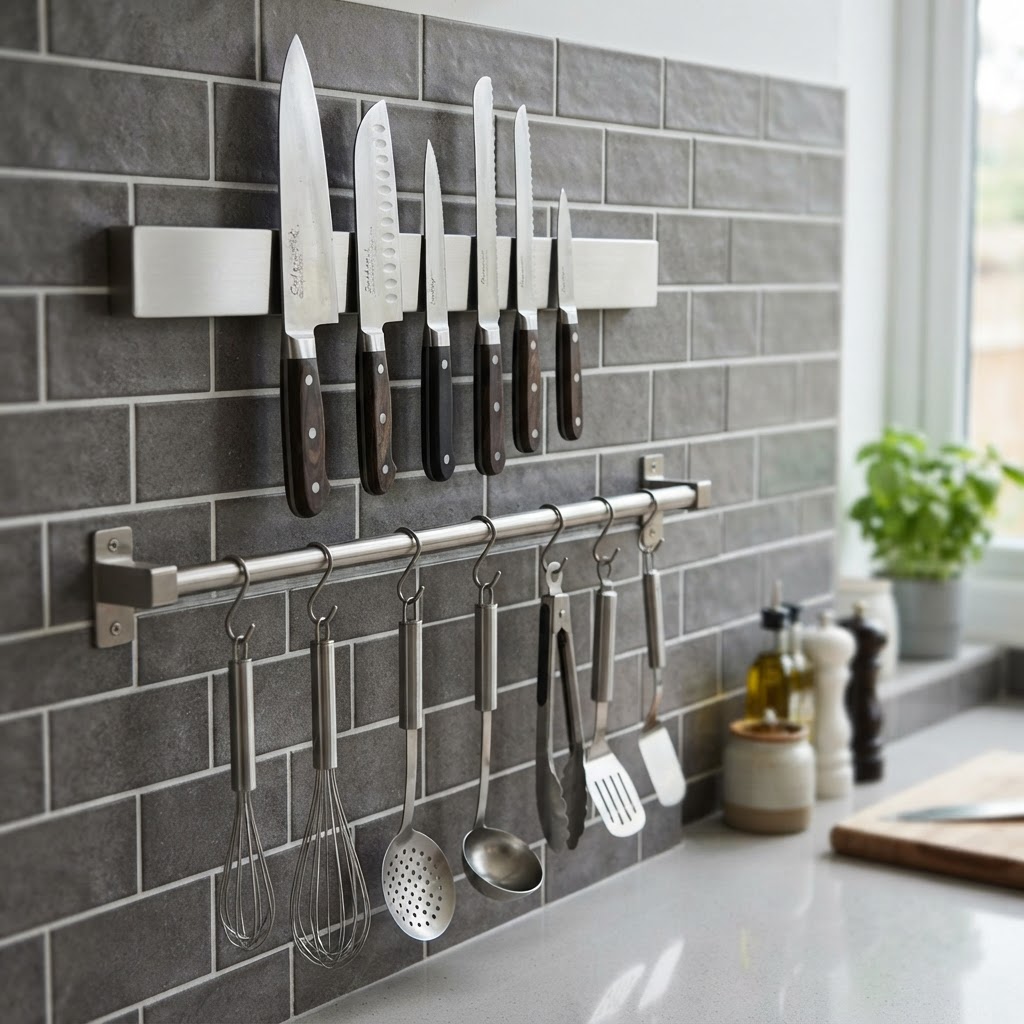
A simple stainless steel rail with S-hooks can hold pots, pans, measuring cups, and even small baskets for spices. This approach clears out your lower cabinets, creating room for bulkier appliances or dry goods that usually reside in a pantry. It also adds a professional, industrial aesthetic to your kitchen that makes small spaces feel intentional and designed. Installing a 36-inch rail can support up to 20 pounds of kitchen gear, making it a robust storage powerhouse for a minimal investment of roughly $20 to $40.
Why Hooks Matter
Hooks are perhaps the most underrated tool in kitchen organization. They allow you to utilize the sides of cabinets or the underside of shelves to hang mugs, utensils, or drying racks. By hanging items, you ensure that your floor space remains clear, which is critical for making a small kitchen feel larger and less cramped. Utilizing “dead air” under cabinets with adhesive or screw-in hooks can increase storage capacity by approximately 15% without requiring any major kitchen renovation or landlord-unfriendly drilling.
Utilize Your Cabinet Doors and Sides
The interior and exterior surfaces of your cabinets are prime real estate for storage that is often overlooked. Most people forget about the back of the doors, but adding over-the-door organizers or adhesive bins can hold everything from aluminum foil and plastic wrap to spice jars and cleaning supplies. These storage solutions for apartments with no pantry are inexpensive, usually costing under $15 per unit, and highly effective for hidden organization. By moving small, frequently used items to door-mounted organizers, you can free up an entire drawer or cabinet shelf for larger, non-perishable pantry items.
The Power of Magnetic Strips
If you lack drawer space for knives or metal tools, consider mounting a magnetic knife strip on the side of a cabinet or directly on the wall. This keeps sharp tools safe and accessible while freeing up a full drawer for other kitchen essentials. You can also use small magnetic tins on the side of the fridge to house loose tea, spices, or small snacks, keeping your counters pristine. Magnetic strips are safer than knife blocks because they prevent bacterial buildup in deep slots, and they can hold up to 5-10 pounds of metal kitchen accessories comfortably.
Invest in Rolling Carts
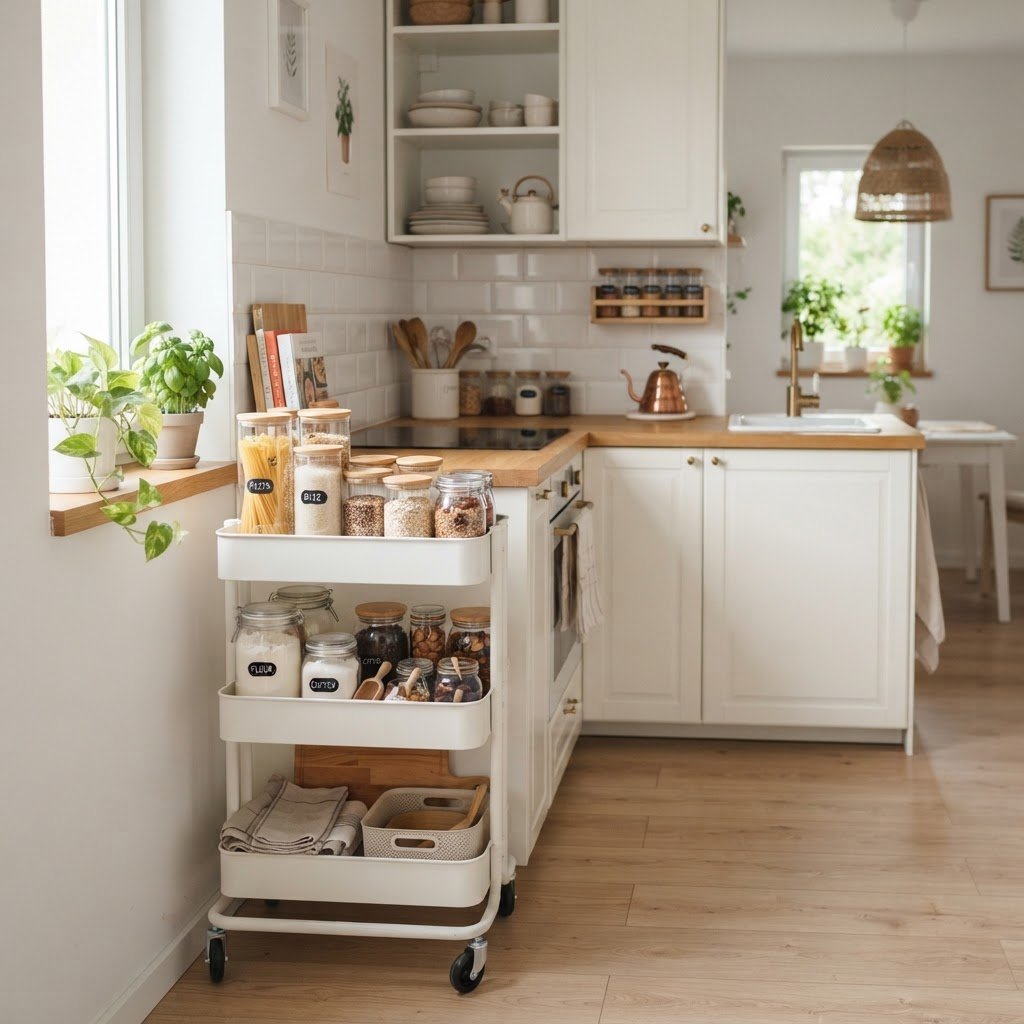
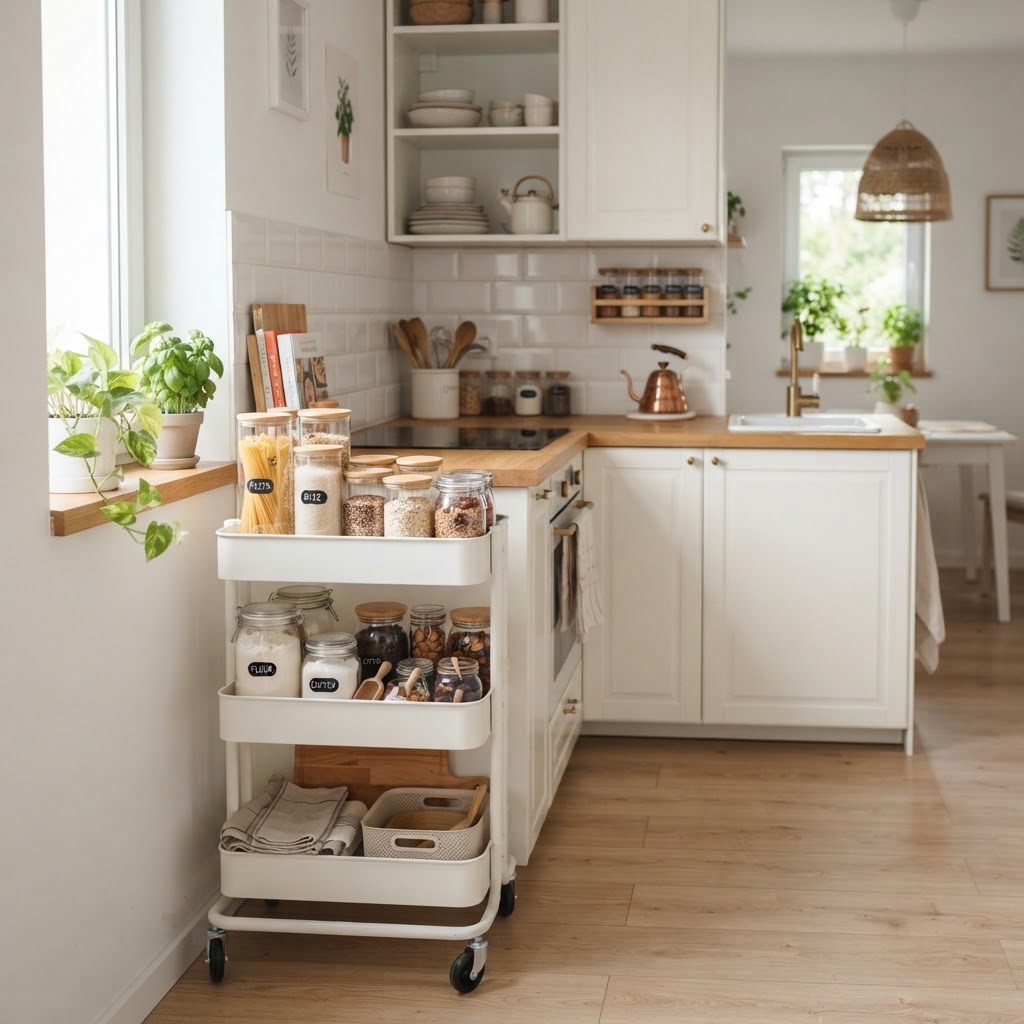
If you absolutely cannot add permanent fixtures to your apartment, a rolling utility cart is your best friend. A slim, multi-tiered cart can act as a mobile pantry, housing your dry goods, small appliances, or baking supplies. When you need to prep a meal, you can simply roll the cart into a corner or into a closet to clear the workspace. A standard 3-tier rolling cart adds approximately 6-9 square feet of additional vertical storage space, effectively acting as an external pantry module that can be tucked away in seconds.
Maximize Dead Zones
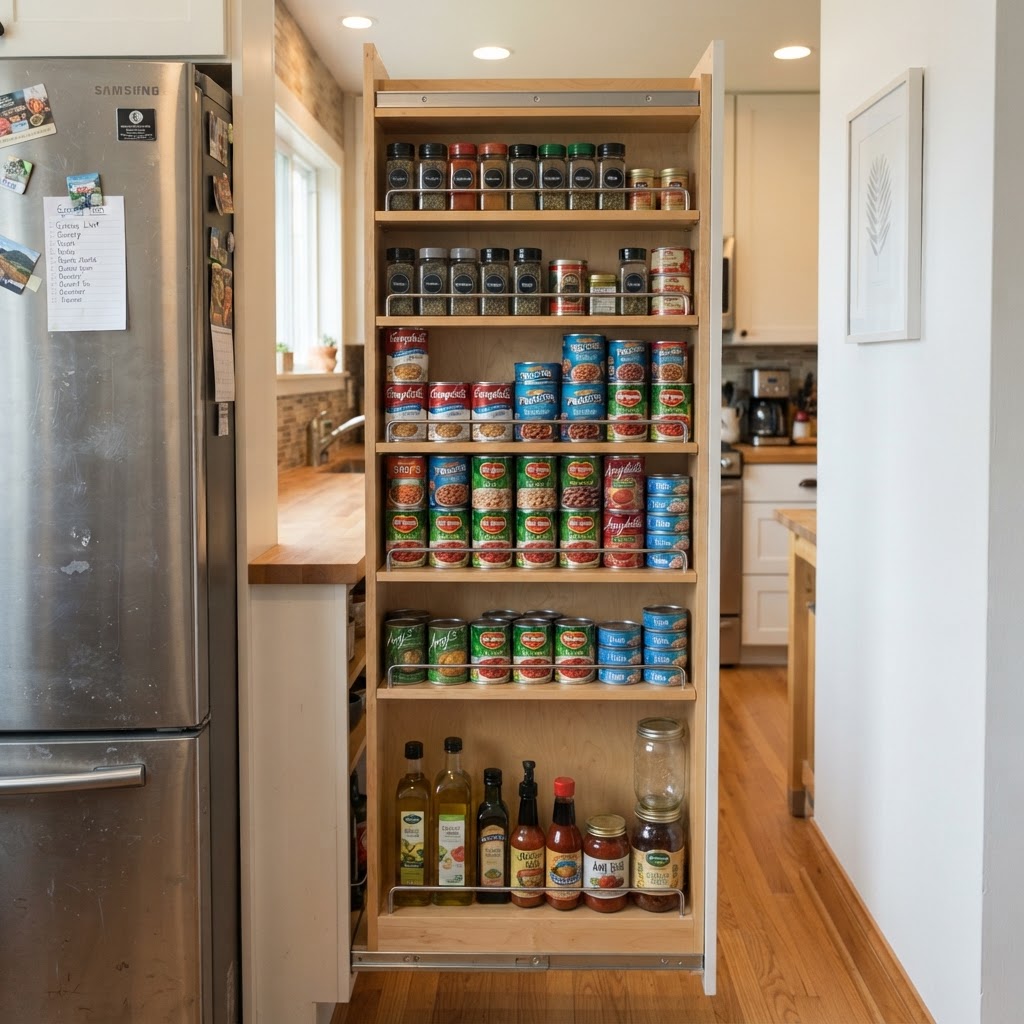
Every kitchen has “dead zones”—those awkward gaps between the fridge and the wall or the sliver of space under the sink. A narrow slide-out pantry cabinet on wheels is one of the most effective storage solutions for apartments with no pantry. These slim units are designed to slide into gaps as narrow as six inches, providing vertical shelving for canned goods, bottles, and boxes. Utilizing a 6-inch gap that is 24 inches deep can yield over 1,000 cubic inches of extra storage space, which is often enough to hold an entire collection of spices, vinegars, and dry goods.
Optimizing Under-Sink Storage
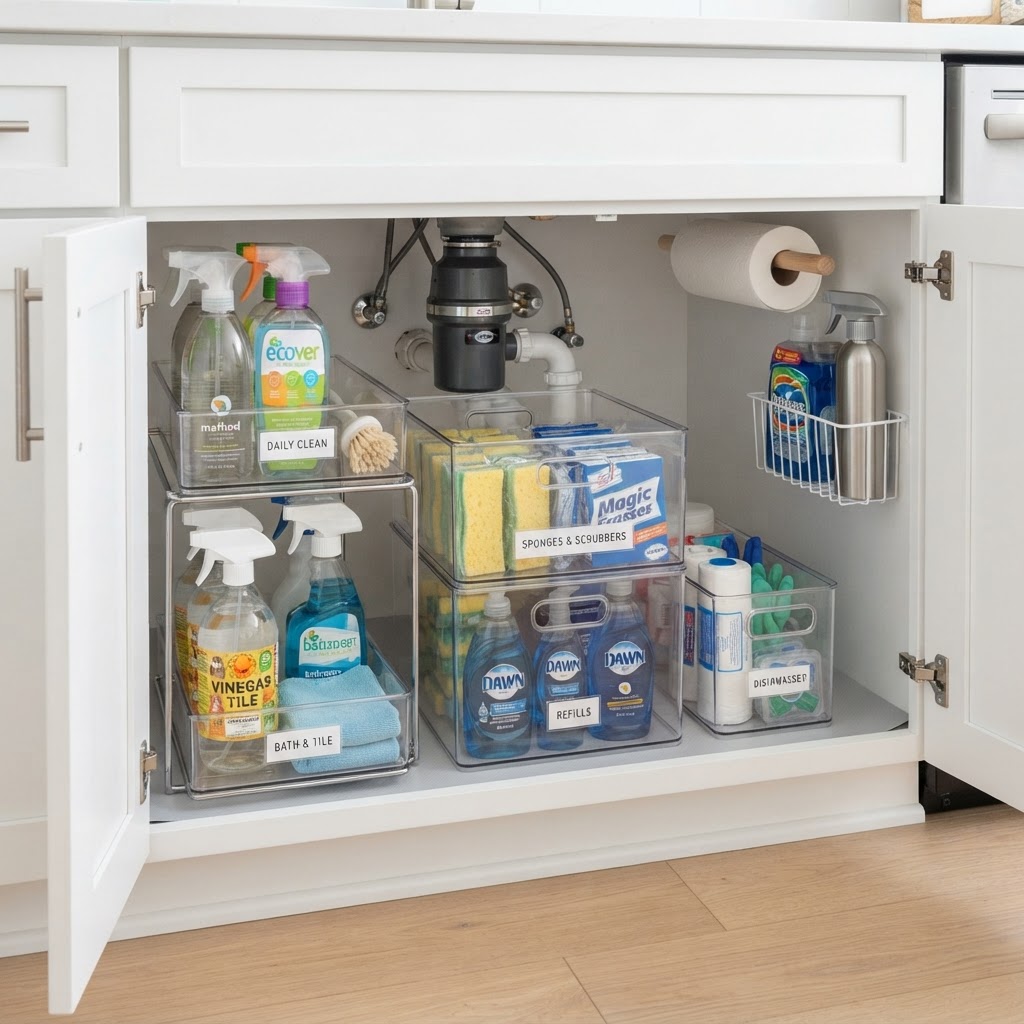
Don’t let the area under your sink become a dark void of forgotten cleaning supplies. By using stackable drawers or tiered organizers, you can double your usable space. Make sure to choose clear acrylic organizers so you can see exactly what you have at a glance, preventing you from buying duplicates at the grocery store. This simple step can save an average household roughly $50 to $100 per year by eliminating redundant grocery purchases caused by poor inventory visibility.
Use Furniture With Dual Purposes
In a small apartment, every piece of furniture should pull double duty to maintain a clutter-free environment. Look for a kitchen island that includes built-in storage or a buffet table that can house your dinnerware and dry goods. If your dining area is part of your kitchen, choose a dining table with integrated drawers or a storage bench that can hold bulk items. While you focus on organizing your kitchen, you can also learn how to decorate a small apartment on a budget to ensure your entire living space feels cohesive and stylish. Multi-functional furniture pieces often provide 20% more storage than standard equivalents without increasing the floor footprint, making them ideal for studio apartments where floor space is at an absolute premium.
The Magic of Decanting
While decanting isn’t a storage piece per se, it is a vital part of maintaining order in a pantry-less home. By transferring pasta, flour, rice, and snacks into uniform, stackable containers, you save significantly more space than you would keeping items in their original, awkwardly shaped packaging. Square or rectangular containers are particularly efficient as they sit flush against one another, eliminating gaps. Using square containers rather than round ones can increase cabinet storage efficiency by up to 25% due to the elimination of “dead” circular gaps.
Create a “Pantry Wall” Using Shelving Units
If you have a blank wall that is just going to waste, consider installing a floor-to-ceiling bookshelf or industrial wire shelving unit. You can dress it up with bins, baskets, and decorative labels to make it look like a curated pantry display. This is one of the most visually impactful storage solutions for apartments with no pantry, turning a blank wall into a feature piece. A standard 72-inch high shelving unit provides 5 to 6 shelves of storage, which effectively replaces a small walk-in pantry in terms of total linear storage capacity.
Choosing the Right Baskets
When using open shelving, containment is key to maintaining a clean visual profile. Use uniform wicker or wire baskets to corral smaller items, which prevents the “visual noise” that makes a small kitchen look cluttered. Assign each basket a category, such as “breakfast,” “snacks,” or “canned goods,” so you can find what you need instantly. Consistent bin usage reduces the time spent searching for items by an estimated 30 seconds per meal, streamlining your daily cooking routine.
Optimize Your Refrigerator Space
Don’t forget that your fridge is part of your storage ecosystem. Use hanging drawer organizers that attach to the underside of your fridge shelves to house small items like cheese, meat, or produce. By utilizing the vertical height within the fridge, you free up shelf space for larger containers, reducing the overflow that usually spills into the kitchen. These organizers typically cost under $10 and can effectively expand your total refrigerator storage capacity by 10% to 15%.
FAQ
Q: What is the best way to store bulk dry goods without a pantry?
Transfer bulk items into clear, square, airtight containers and store them on a vertical shelving unit or a slim rolling cart. This prevents pests, saves space by eliminating bulky packaging, and allows you to easily monitor your inventory levels at a glance.
Q: How can I create a pantry in a tiny kitchen without building cabinets?
Install open shelving or a tall, narrow bookcase against a blank wall to serve as a “pantry wall.” Use uniform baskets and labeled bins to corral your dry goods and small appliances, ensuring the setup remains visually organized rather than cluttered.
Q: Are over-the-door organizers safe for rental apartments?
Yes, most over-the-door organizers use non-damaging hooks or adhesive strips that are easy to remove when you move out. Always verify the weight limit on the package, as some over-door units are designed only for lightweight items like spices or cleaning supplies.
Q: How do I stop my kitchen counters from getting cluttered?
Focus on removing everything that is not used daily and relocate it to wall-mounted rails or magnetic strips. If an item doesn’t have a specific “home” off the counter, it will inevitably end up cluttering your workspace, so prioritize vertical storage solutions for all tools.

Leave a Reply