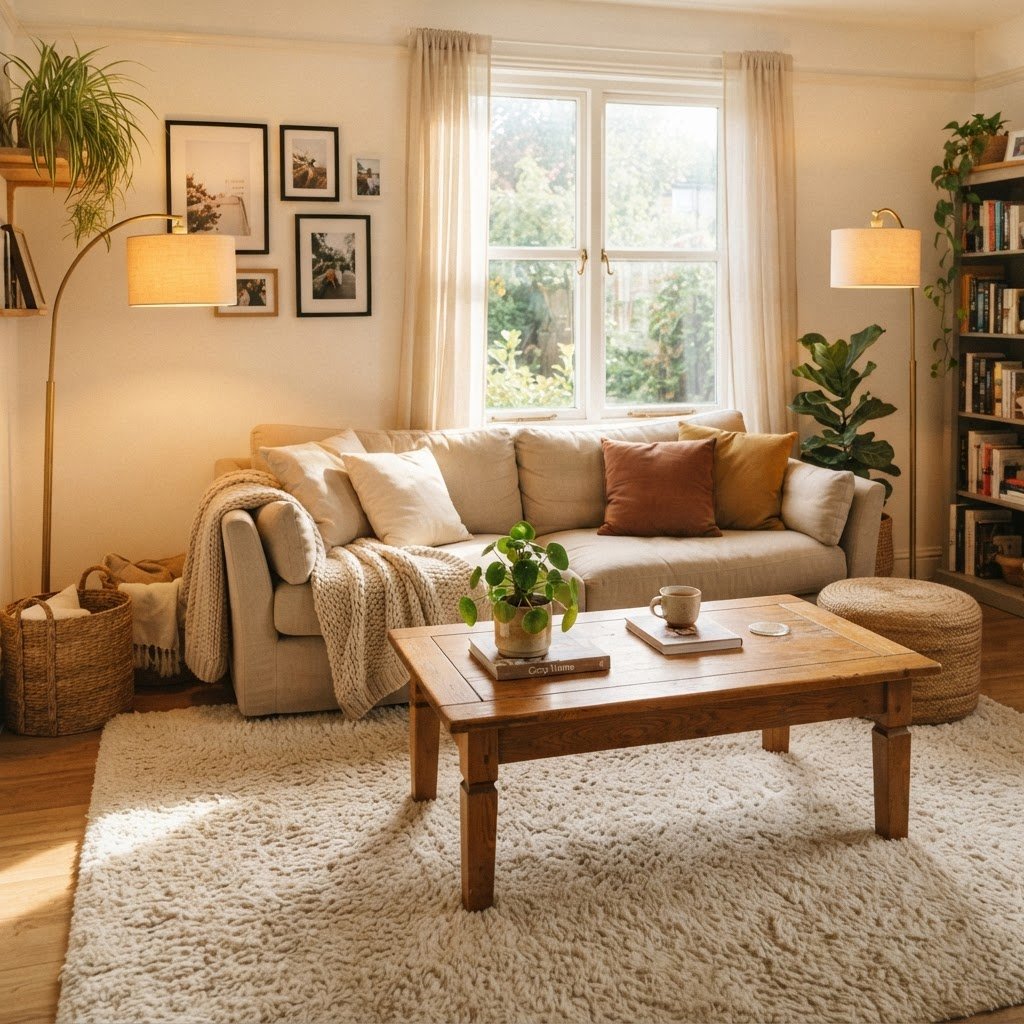
The easiest way to warm up a cold rental living room is by layering soft textiles, replacing harsh overhead lighting with 2700K-3000K warm-toned bulbs, and using large-scale area rugs to anchor the space. These low-cost, non-permanent strategies neutralize sterile white walls and clinical flooring, instantly creating a cozy, personality-driven sanctuary without violating your lease.
The Power of Textiles and Soft Layers
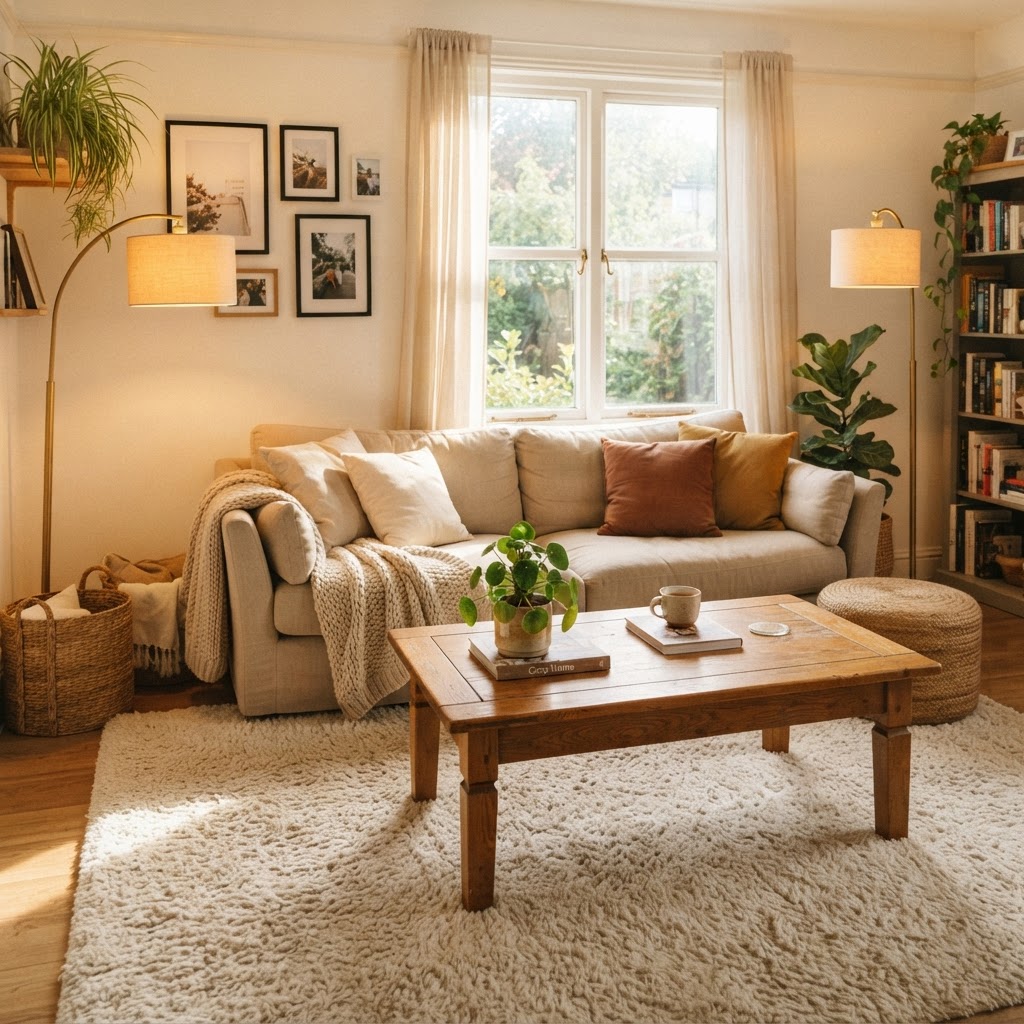
Hard surfaces like tile, laminate, or standard apartment-grade carpet are notorious for making a room feel cold in both the literal and psychological sense. The first step in your transformation should be introducing high-quality area rugs, which act as a visual anchor and a physical insulator that significantly improves the acoustics of hollow-sounding rooms by absorbing echoes. For maximum warmth, consider layering a plush wool or synthetic rug over existing carpet, as this adds immediate texture and depth. To help you select the best materials for a cozy rental vibe, refer to the comparison table below:
Choosing the Right Fabrics for Warmth
Beyond rugs, consider the upholstery and window treatments you bring into the space. Velvet throw pillows, chunky knit blankets, and floor-to-ceiling linen curtains add a tactile richness that elevates a rental’s cheap base finishes. Focus on natural fibers or high-quality synthetics that feel soft to the touch to effectively counteract harsh environments. The goal is to create a space that feels softened rather than industrial; adding fabric to at least 40% of the room’s surface area can lower the perceived temperature of the space significantly.
Master the Art of Rental-Friendly Lighting
One of the primary culprits behind a cold living room is harsh, overhead “boob” lighting or fluorescent bulbs, which are often too bright and sit at an unflattering color temperature. To warm up a cold rental living room, you must eliminate the reliance on the ceiling fixture by distributing light at eye level using floor lamps, table lamps, and wall-mounted battery-operated sconces. Aim for a layered lighting scheme where you have at least three light sources per room to eliminate shadows and create pockets of warmth.
Why Color Temperature Matters
Always opt for “warm white” or “soft white” bulbs with a Kelvin rating between 2700K and 3000K. These bulbs emit a yellowish, cozy glow that mimics the setting sun, instantly creating an inviting atmosphere that makes furniture look more expensive. You can replace every bulb in a standard one-bedroom apartment for under $30, making this one of the most cost-effective upgrades for any renter looking to shift the ambiance of their home overnight.
Introducing Color Without Paint
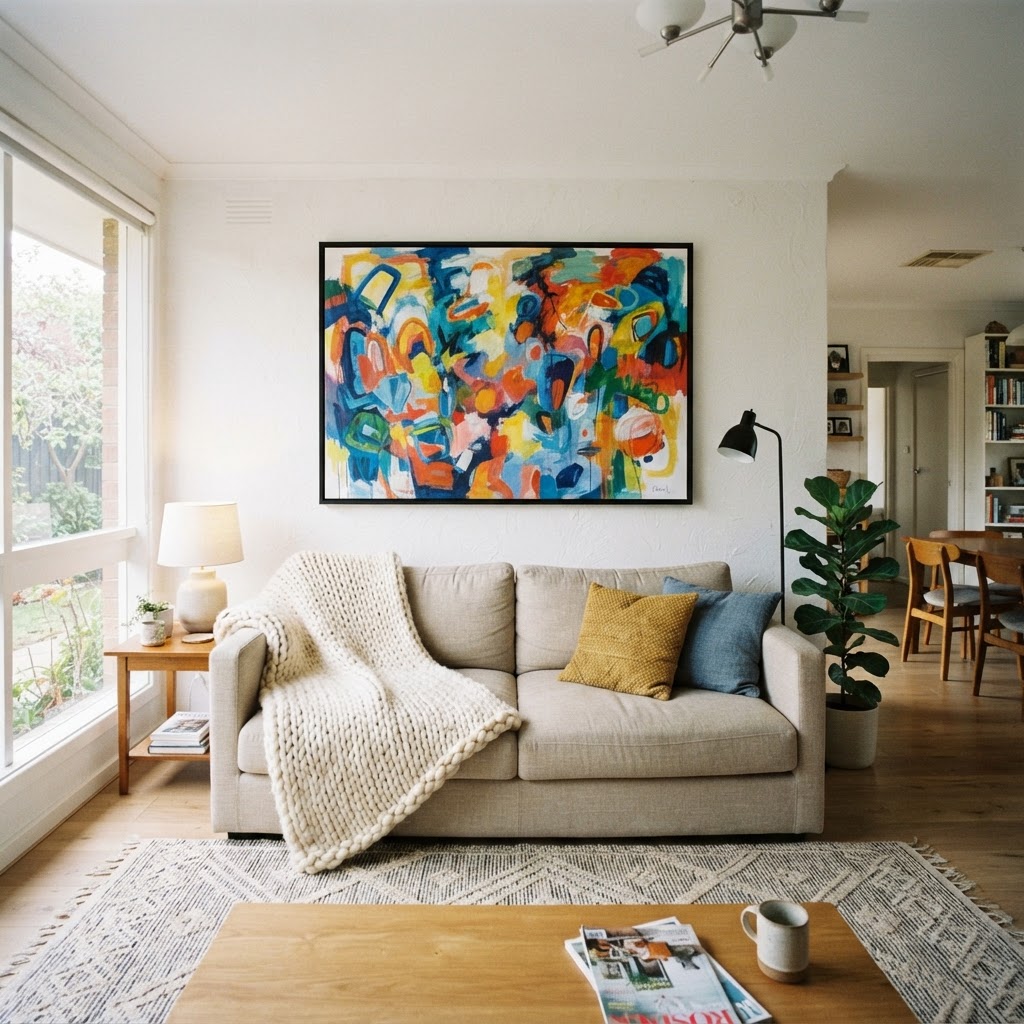
Most leases strictly forbid painting walls, which can leave you stuck with “landlord beige” or stark white, but you can bypass this by using large-scale art, peel-and-stick wallpaper, or removable wall decals to break up vast expanses of white. These elements inject life and character into a room without the need for permanent changes. Large, colorful abstract canvases act as a focal point, drawing the eye away from bland structural features and adding visual “weight” to the walls.
Using Peel-and-Stick Wallpaper
If you want a more dramatic change, look for high-quality peel-and-stick wallpaper, which can transform a room in roughly 4 hours of labor. Whether you cover a single accent wall or the entire space, the pattern and texture will provide the warmth that blank walls lack. Always verify surface compatibility first; smooth, clean drywall is ideal, whereas highly textured or porous surfaces may require a specialized primer or may not hold the adhesive as effectively.
Bringing the Outdoors In with Greenery
Plants are nature’s best solution for a cold, sterile environment because their organic shapes, deep greens, and life-giving presence make a room feel lived-in and healthy. Choose low-maintenance, high-impact plants like snake plants, pothos, or ZZ plants if you don’t have a green thumb; these varieties thrive in typical apartment light levels of 200-500 foot-candles. These plants provide a structural element that adds softness to otherwise empty corners or shelves.
Creative Plant Displays
Use varying heights for your plants—place a tall fiddle leaf fig in a corner and smaller succulents on a coffee table to create visual movement. Decorative pots in warm tones like terracotta or woven seagrass baskets help transition the plants into your overall design theme. By placing a plant next to a window, you frame the outdoor view and bridge the connection between the indoors and nature, which studies show lowers stress levels in home environments.
Strategic Furniture Placement and Flow
Sometimes a room feels cold because the furniture layout is awkward or pushed entirely against the walls, creating a “waiting room” aesthetic. If your living room allows, try “floating” your furniture away from the walls by at least 6-12 inches to create a more intimate seating area. This encourages conversation and makes the room feel less like a corridor and more like a defined, intentional sanctuary.
If you have a small space, use a console table behind the sofa or a distinct area rug to define the boundaries of your living area without needing physical barriers. Maintaining clear traffic paths—ideally 30 inches wide—will ensure the room feels spacious yet cozy.
Personalization Through Meaningful Decor
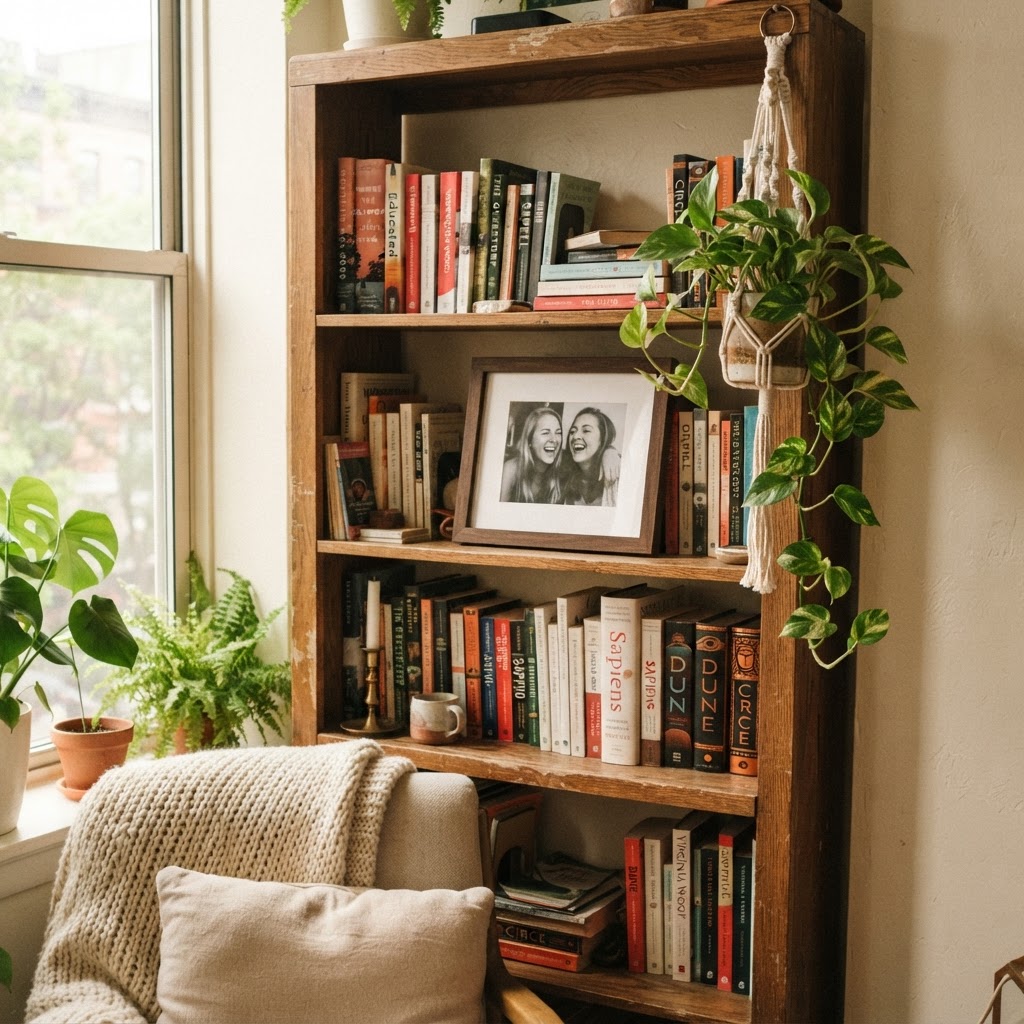
A space feels cold when it lacks soul; therefore, the easiest way to warm up a cold rental living room is to incorporate personal items that tell your unique story. Displaying books, vintage finds, framed photos, or travel souvenirs makes the space uniquely yours. When a guest walks in, they shouldn’t just see a model home; they should see a reflection of your personality.
Mixing Old and New
Don’t be afraid to mix vintage or antique pieces with modern rental furniture. A vintage chair with worn leather or a rustic wooden side table can provide the “wabi-sabi” element of imperfection that makes a house feel like a home. These pieces are inherently warmer than mass-produced retail items and add a layer of complexity to your interior design that suggests a life well-lived.
FAQ
Q: What is the most effective color temperature for a cozy living room?
The most effective color temperature for a cozy living room is between 2700K and 3000K, often labeled as “warm white” or “soft white.” These bulbs emit a yellow-toned light that mimics the natural color of sunset, effectively neutralizing the sterile feel of standard overhead lighting.
Q: Can I hang decor on rental walls without causing damage?
Yes, you can hang decor without damage by using adhesive strips like Command hooks or specialized picture-hanging wire systems that require only tiny, easily fillable pinholes. Always test the adhesive on an inconspicuous area of the wall to ensure it doesn’t peel the underlying paint upon removal.
Q: How can I make a rental rug feel more like permanent flooring?
The best way to make a rental rug feel permanent is to choose a high-pile or “shag” rug that covers at least 70% of the visible floor area in your seating zone. Adding a thick felt rug pad underneath also increases the plushness, making the flooring feel warmer and more insulated.
Q: Are peel-and-stick wallpapers easy to remove without losing my security deposit?
Most modern peel-and-stick wallpapers are designed specifically for renters and can be removed without damaging drywall if the walls were properly primed before installation. Always ensure you purchase a product explicitly labeled “removable” or “renter-friendly” to guarantee the adhesive will not leave a residue.
Q: How many plants do I need to make a small room feel warmer?
For a standard-sized rental living room, three to five plants of varying heights can provide enough organic texture to warm the space significantly. Focus on placing one large floor plant in a corner and grouping two to three smaller plants on coffee tables or shelves for a balanced look.

Leave a Reply