Archives 2026

Best Under-$25 Reversible Upgrades for Tiny Apartments

Best Under-$25 Reversible Upgrades for Tiny Apartments

You can transform a tiny rental into a personalized sanctuary with reversible upgrades under $25 by swapping cabinet hardware, utilizing peel-and-stick decor, installing plug-in lighting, and maximizing vertical wall storage. These low-cost, drill-free modifications allow you to enhance functionality and aesthetics while ensuring 100% security deposit protection upon move-out.

The Psychology of Small Space Transformations
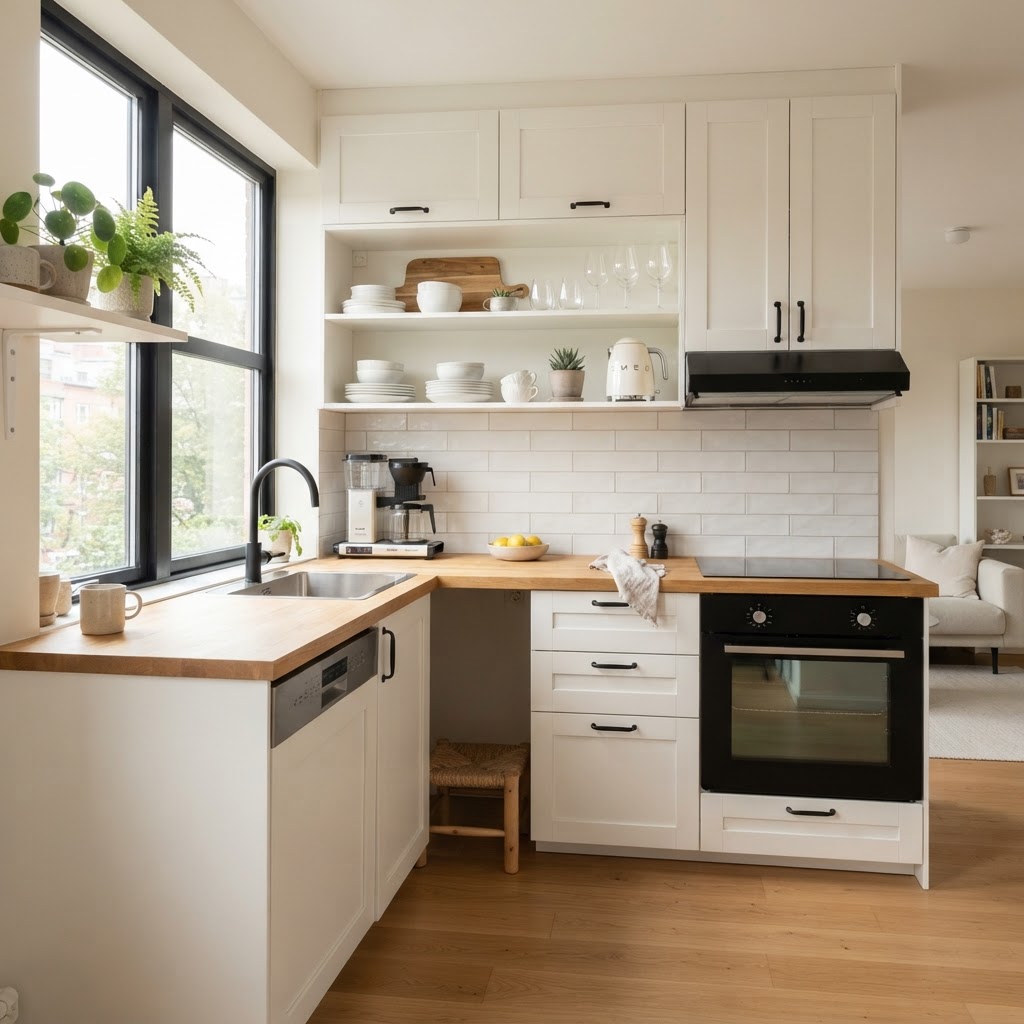
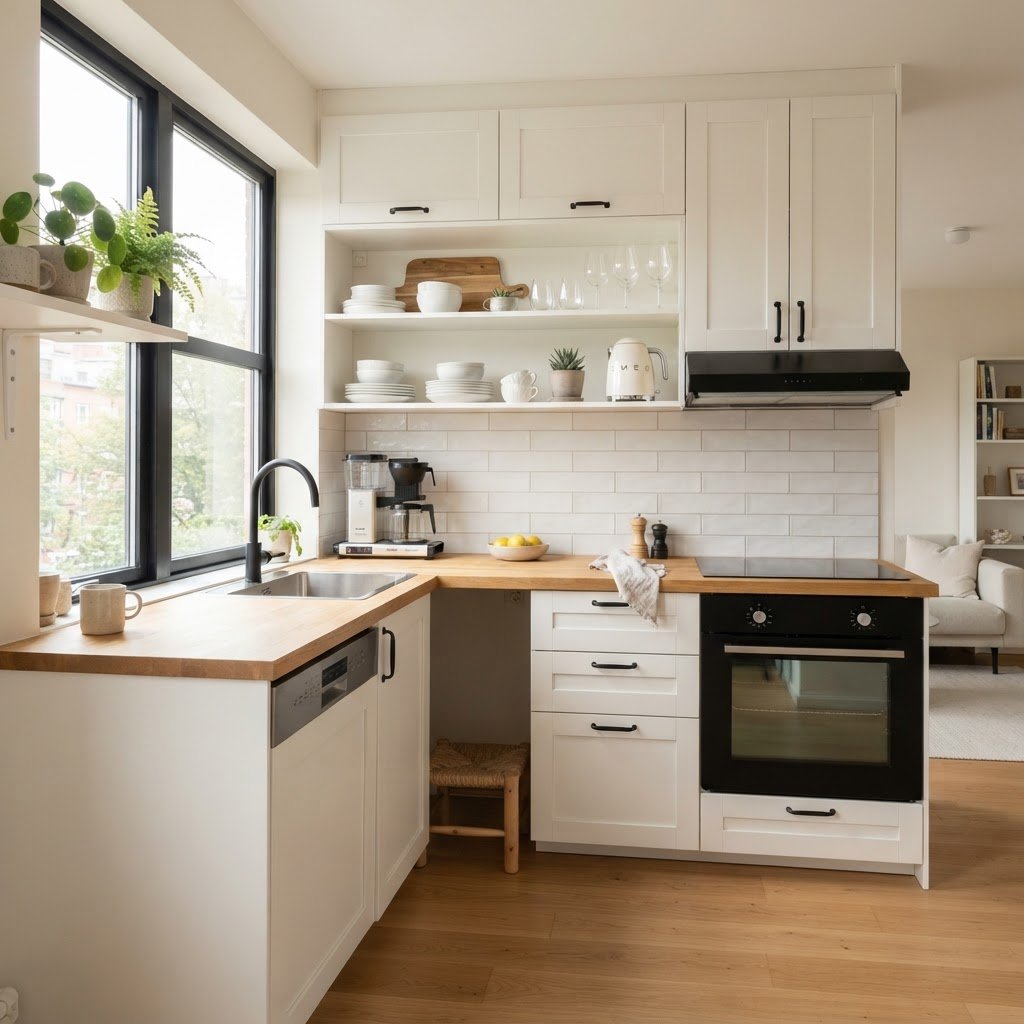
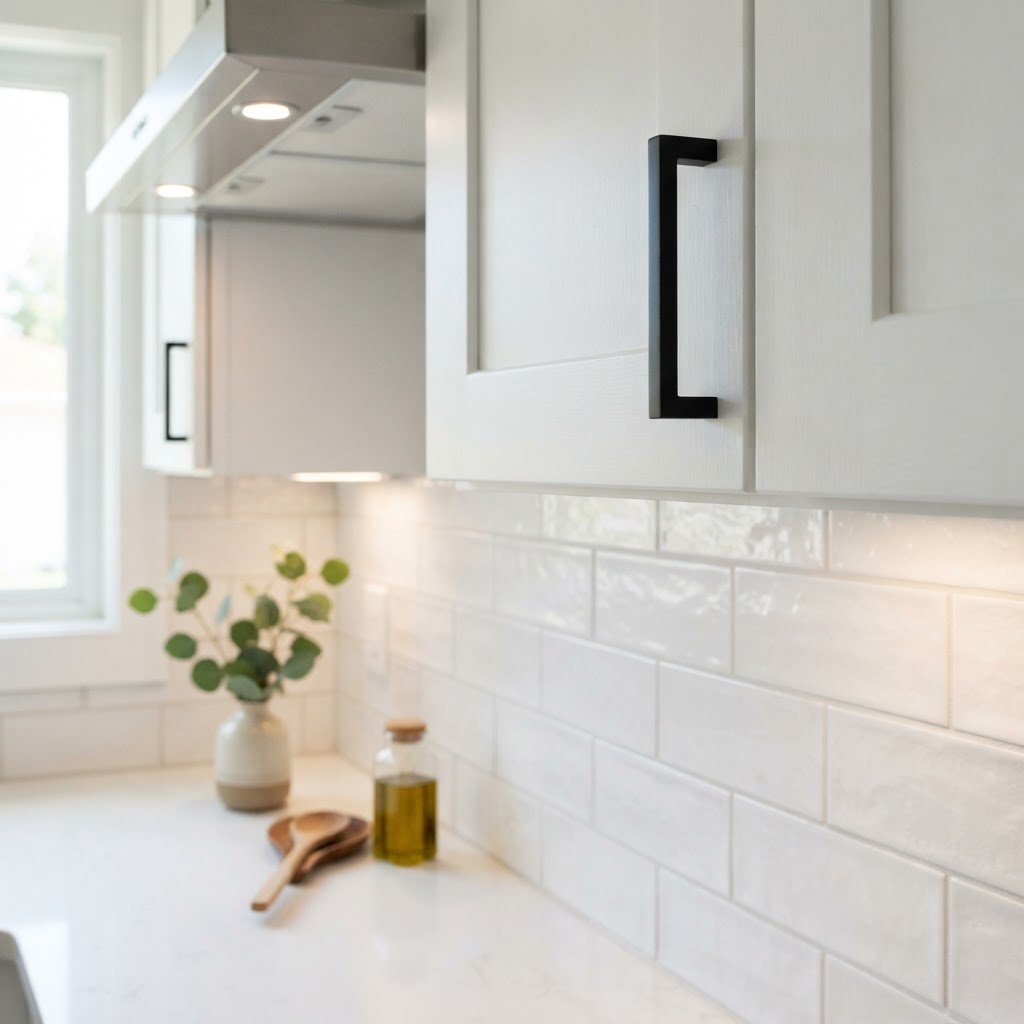
Swapping cabinet hardware is a simple way to elevate your kitchen's style.

Small spaces often suffer from visual clutter and lack of personality, which can make a home feel cold and temporary if permanent changes are restricted by a lease. By strategically investing in reversible upgrades that cost under $25, renters can effectively reframe their living environment, turning a generic floor plan into a curated, functional living space. Research in environmental psychology suggests that having control over your physical surroundings significantly reduces stress levels, even in environments as small as 300-500 square feet. Focus on changes that manipulate light, texture, and vertical utility, as these are the three pillars of interior design that visually expand a room without moving a single wall. By choosing modular items that uninstall in under 10 minutes—such as tension rods, command-backed organizers, and replaceable fixtures—you ensure the rental remains in its original condition while gaining significant daily utility. These small, intentional adjustments signal to your brain that you are “home,” boosting satisfaction levels without the need for high-cost renovations that violate standard rental agreements.

Refreshing Your Hardware for a Modern Look
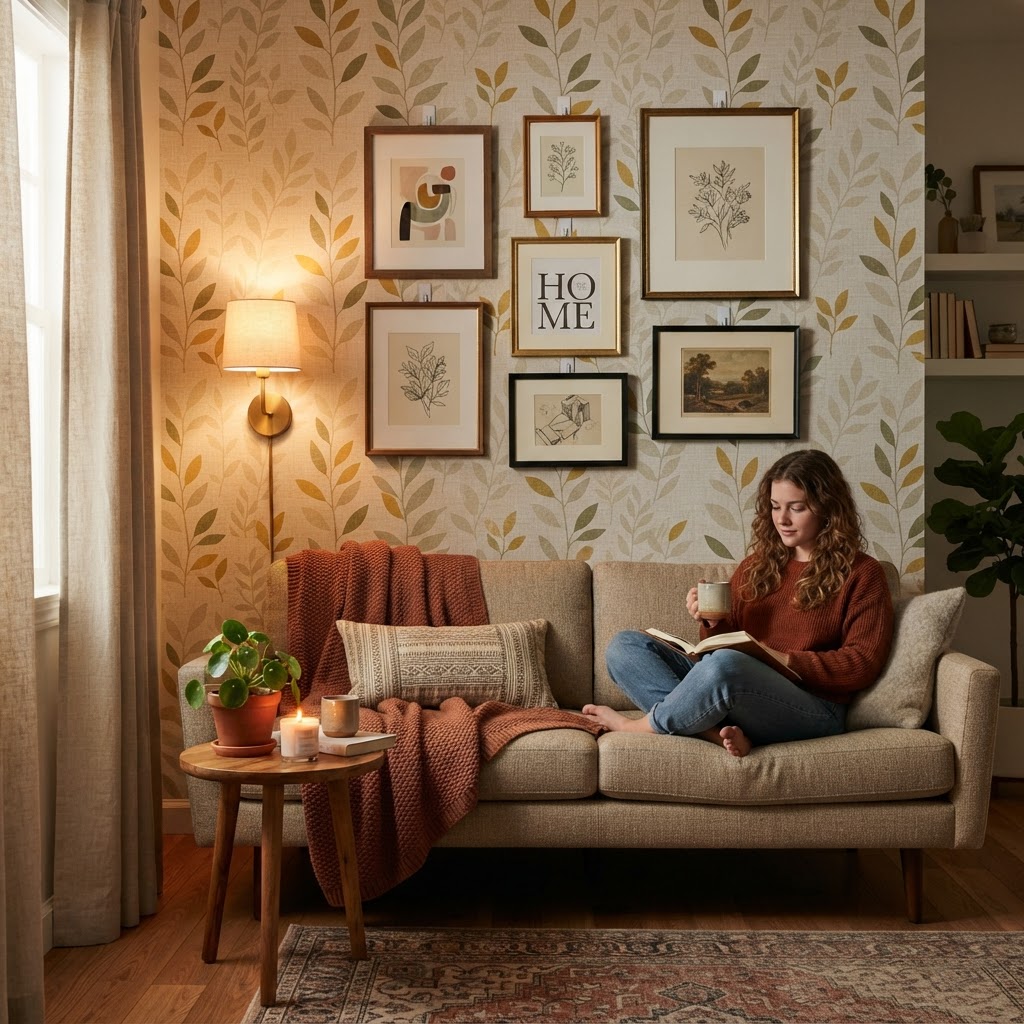
Peel-and-stick wallpaper creates a custom look without permanent damage.

Swapping generic, builder-grade cabinet pulls for premium-feel alternatives is the fastest way to modernize a kitchen for under $25. Most standard rentals feature basic chrome or white plastic hardware that can make an entire space feel dated; however, replacing these with matte black, brushed nickel, or brass hardware instantly shifts the design aesthetic toward a custom-built look.

Hardware Finish Best For Aesthetic Impact
Matte Black White/Light Cabinets High Contrast/Modern
Brushed Brass Dark/Wood Cabinets Luxury/Warmth
Brushed Nickel Neutral/Gray Cabinets Clean/Timeless

How to Swap Hardware Safely

To ensure you do not damage your cabinets, always keep the original hardware in a labeled plastic bag inside a kitchen drawer. When you decide to move out, simply switch them back. This ten-minute project instantly upgrades the entire aesthetic of your kitchen or vanity. Always measure the center-to-center distance of your current screw holes—typically 3, 3.75, or 5 inches—before purchasing replacements to ensure a perfect fit without having to drill new holes.

Enhancing Lighting Without Electrical Work
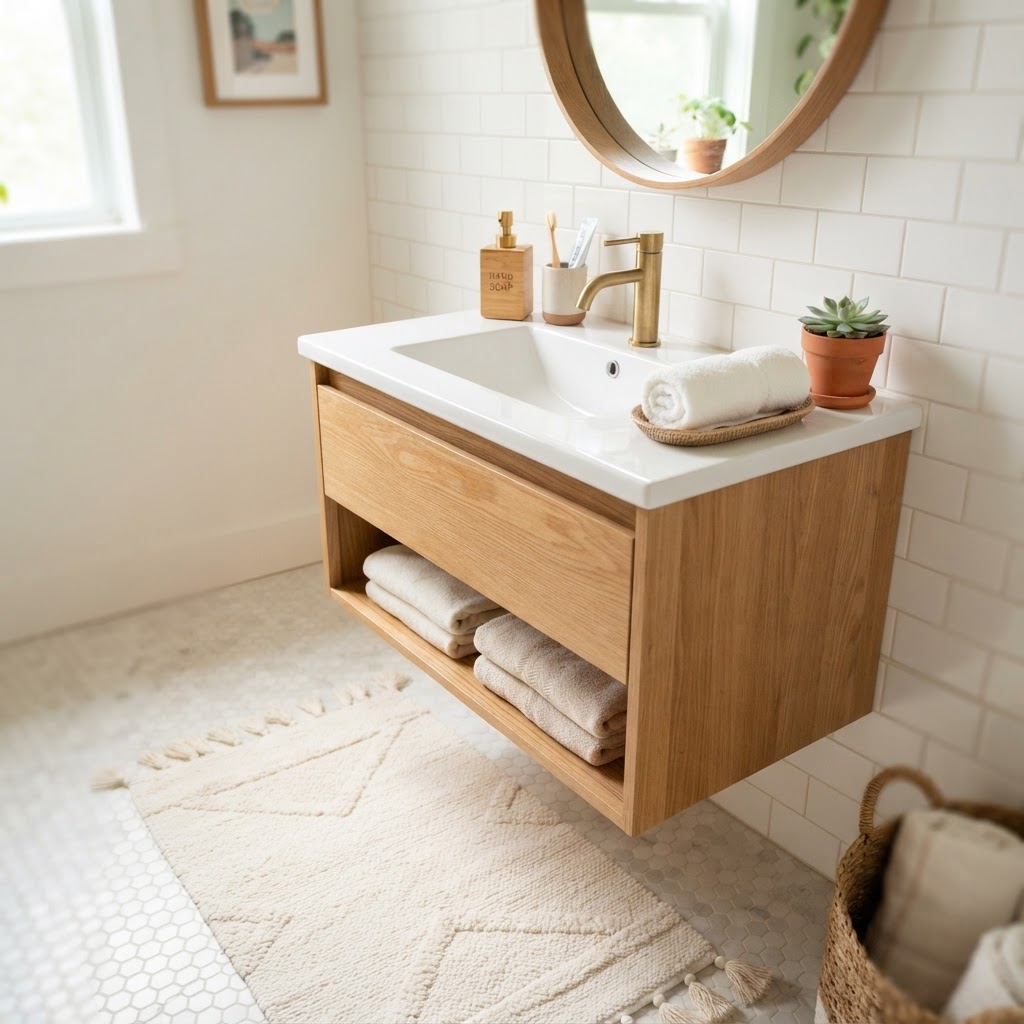
Textiles and accessories turn a standard bathroom into a relaxing oasis.

Lighting is the most significant factor in how large a room feels, yet most rentals rely on harsh, flat overhead fixtures that create uninviting shadows. You can combat this by introducing layered lighting through plug-in solutions, which provide depth and ambiance for minimal investment. A well-lit room creates “visual pockets,” making the space feel layered and intentional rather than like a single, cramped box.

Utilizing Plug-in Wall Sconces

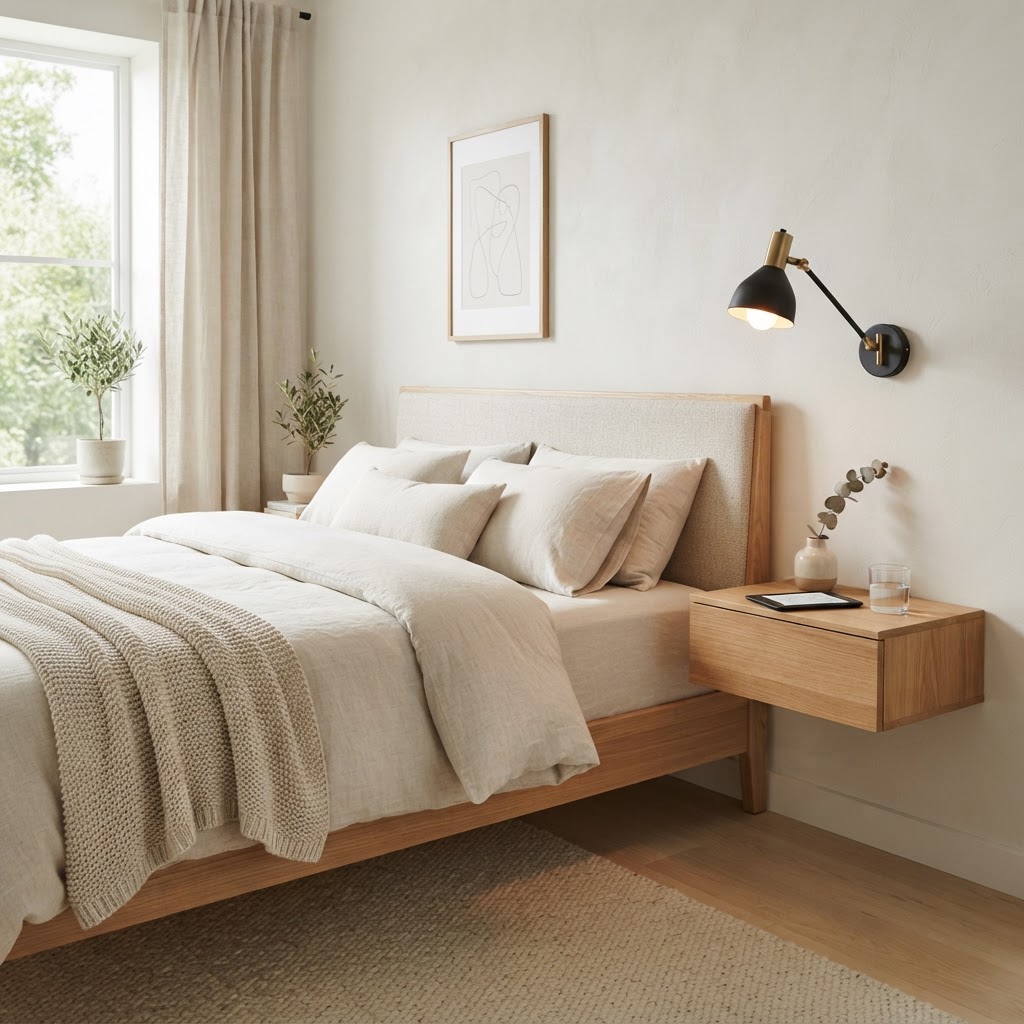
Many retailers now offer plug-in wall sconces that mount using simple command hooks or tiny nails that are easy to patch. These fixtures add height to your room and free up precious table space on your nightstands. Look for swing-arm designs that allow you to direct light exactly where you need it for reading or relaxing.

Smart Bulb Integration

For under $25, you can also grab a set of smart light bulbs. Being able to change the color temperature from a clinical cool white (5000K) to a warm, inviting glow (2700K) can change the entire mood of your living room in the evening. This simple shift creates a cozy environment without requiring any hardwiring or expensive renovations.

Temporary Wall Treatments and Decor
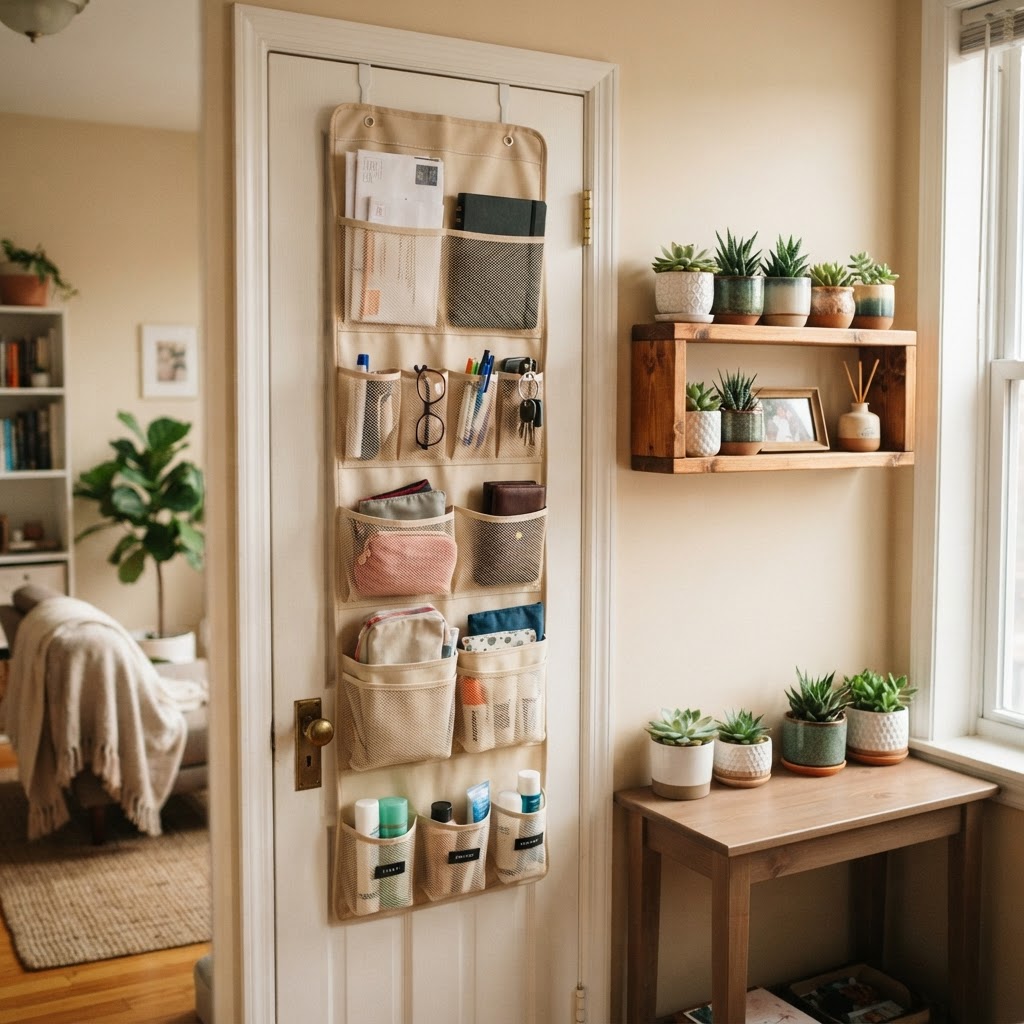
Vertical storage is the secret to keeping tiny apartments clutter-free.

Walls occupy the most square footage in your home, making them the primary canvas for personal expression when traditional paint is forbidden. Peel-and-stick wallpaper is the industry standard for renters because it offers high-impact design that peels away cleanly when your lease ends. A single roll can transform a small entry way or a breakfast nook for approximately $20 to $25.

Tips for Peel-and-Stick Success

  • Start with a clean, dry wall to ensure the best adhesion.
  • Use a leveling tool to ensure your first strip is perfectly vertical.
  • Invest in a plastic smoothing tool to avoid bubbles.
  • Always order an extra roll to account for pattern matching errors.

If wallpaper feels too time-intensive, consider high-quality gallery wall sets. By using heavy-duty adhesive strips that are rated for weight but removable, you can create a professional-looking art arrangement without creating a single hole in the drywall. This is a perfect way to display personal photos or prints that define your style.

Optimizing Vertical Storage and Organization

In a tiny apartment, floor space is limited, so every square inch of vertical clearance you claim is a victory for your living comfort. Utilizing vertical space prevents the common “cramped” feeling that occurs when floors are covered in storage bins. Look for over-the-door organizers that serve multiple purposes. A shoe organizer, for example, can hold cleaning supplies in the kitchen or toiletries in the bathroom.

Floating Shelves and Command Solutions

Floating shelves that use heavy-duty adhesive strips or tension rods are perfect for adding character. You can place small plants, candles, or decorative items on these ledges. Remember to keep the weight limit in mind to avoid any surprises after you install them; most command-strip rated shelves support 3–5 pounds. Vertical storage is a cornerstone of smart small-space living.

Textile Upgrades for Added Comfort

Never underestimate the power of soft goods to dictate the “soul” of your apartment. Rugs, curtains, and throw pillows act as the anchor for a room’s color palette, effectively masking generic carpet or drab wall colors. In a small space, a high-quality area rug can define the living area and provide an instant injection of color and texture.

If your apartment has carpet you do not love, a large, lightweight area rug placed directly on top can distract the eye and provide a more personalized foundation. Similarly, swapping heavy, generic rental blinds for floor-to-ceiling linen-look curtains can make your windows look larger and your ceilings look higher. You can install a tension rod inside the window frame if you are not allowed to drill into the walls.

Bathroom and Kitchen Functional Revamps

The smallest rooms in your apartment are often the most important to upgrade for your daily happiness. In the bathroom, a new shower curtain with a high-quality liner makes the space feel like a spa. Pair this with a bamboo bath mat and some matching soap dispensers to create a cohesive theme for under $25.

In the kitchen, consider a magnetic strip for your knives. If you do not want to drill, there are heavy-duty adhesive options that work surprisingly well. This removes the need for a bulky knife block on your limited counter space, providing both an aesthetic and functional boost to your kitchen workflow.

FAQ

Q: What is the best way to hang art in a rental without damaging walls?

Use heavy-duty adhesive strips (like Command strips) rated for the weight of your frames. These allow you to hang professional-looking gallery walls without drilling, and they leave no residue when stretched off during move-out.

Q: Can I install curtains if I cannot drill holes in the wall?

Yes, use a high-tension curtain rod installed inside the window frame. This provides a secure hold for lightweight linen-look curtains, adding height and elegance to your room without requiring hardware or tools.

Q: Are peel-and-stick wallpapers safe for all rental walls?

They are generally safe on smooth, primed, and painted surfaces. Always test a small, hidden corner for 24 hours to ensure the adhesive does not lift the paint before applying it to the entire wall.

Q: How do I measure for cabinet hardware replacements?

Measure from the center of one screw hole to the center of the other, known as the “center-to-center” measurement. Standard sizes include 3 inches, 3.75 inches, and 5 inches, which are readily available online for under $25 per set.

Q: How can I make a dark room feel bigger without painting?

Introduce layered lighting by using plug-in wall sconces and smart bulbs with adjustable warmth. Placing a mirror opposite a window will also reflect natural light and create the visual illusion of a larger, more airy space.
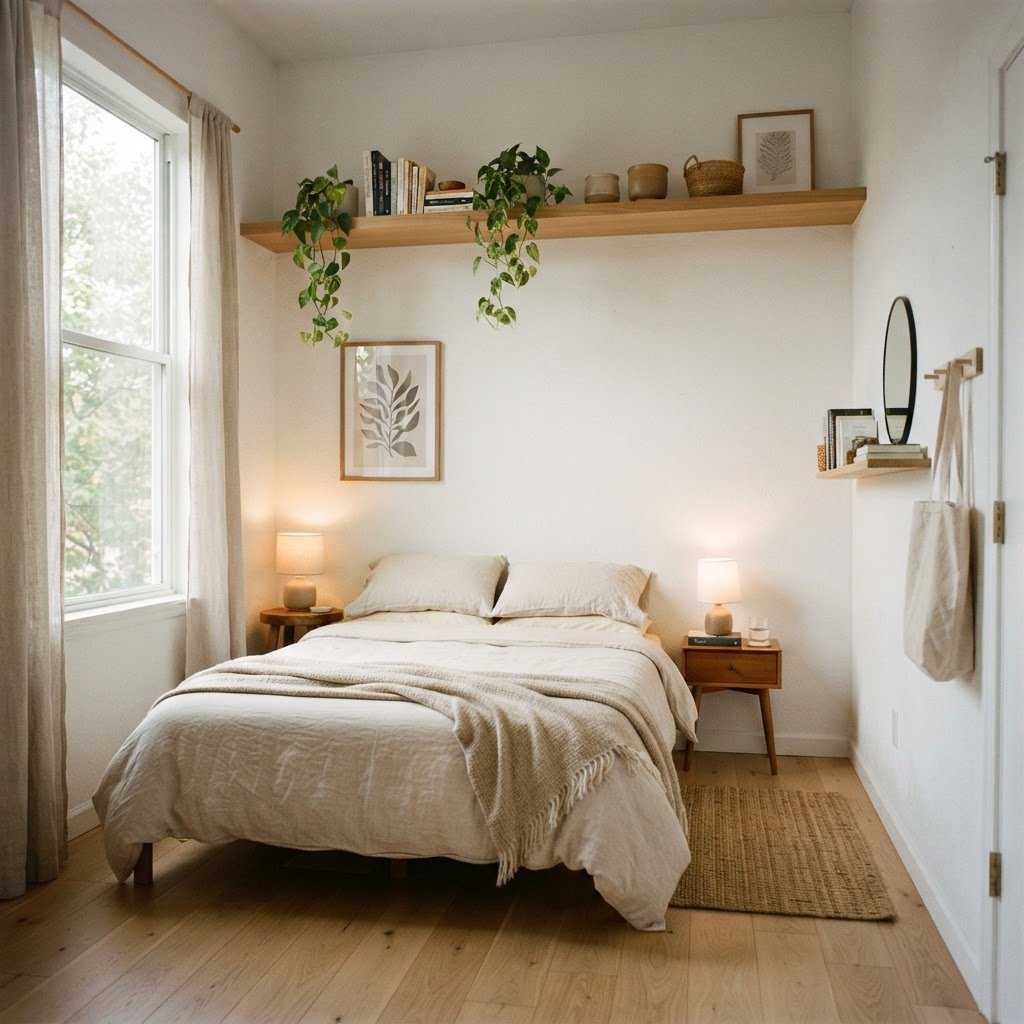
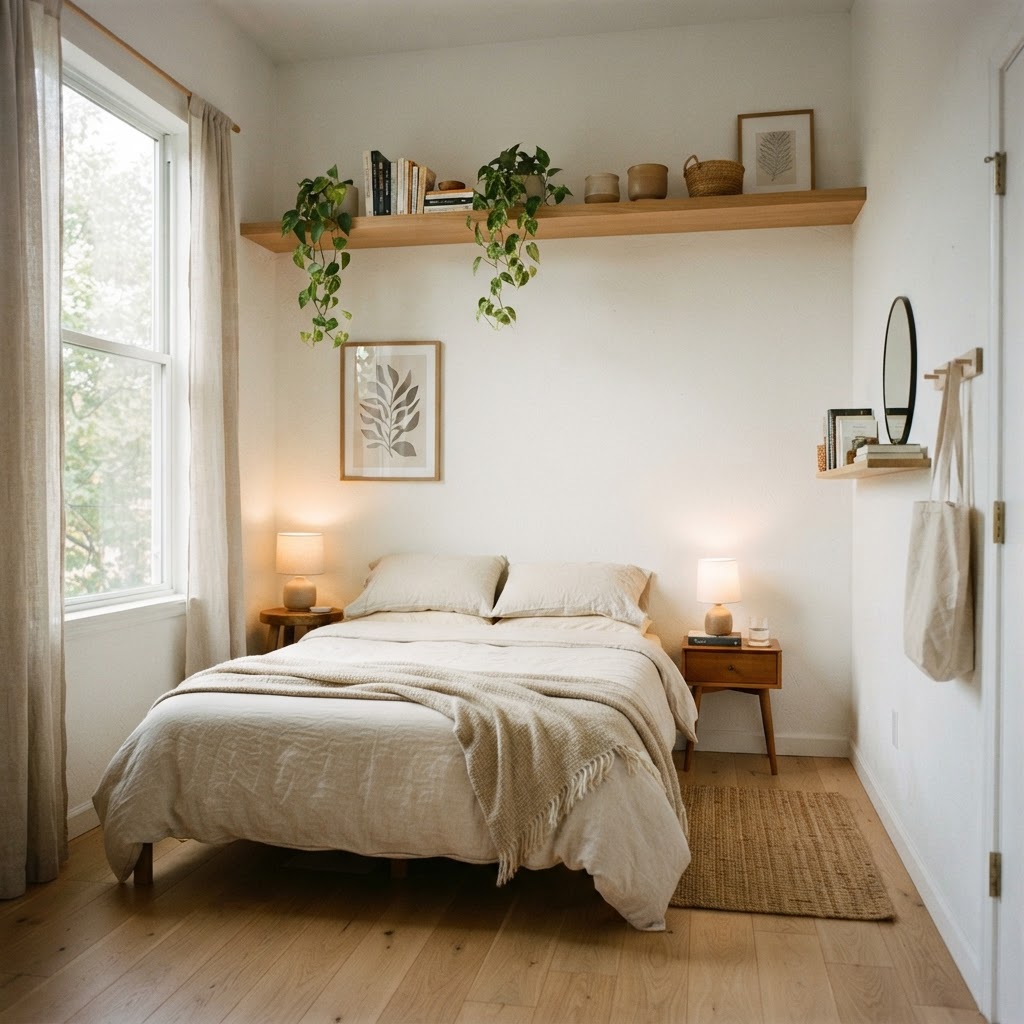
Small Bedroom Ideas That Fix the Real Problem First

Small Bedroom Ideas That Fix the Real Problem First

To make a small bedroom feel significantly larger and more functional, prioritize optimizing traffic flow and clearing floor space rather than simply buying smaller furniture. Start by auditing your room’s movement patterns, maintaining clear sightlines, and utilizing vertical storage to eliminate the friction that makes compact spaces feel cramped and chaotic.

The Psychology of Space and Flow

Utilizing vertical space near the ceiling keeps the floor clear.

Human perception of room volume relies heavily on uninterrupted visual paths; when your eyes can travel across a floor to the wall base without obstruction, the brain registers the space as larger. A small room feels claustrophobic primarily because of “visual noise”—clutter, awkward furniture placement, or poor lighting that creates visual stop signs. Research in environmental psychology suggests that maintaining 60% of floor visibility can make a room appear up to 20% more spacious. To achieve this, you must treat your floor as a continuous plane rather than a surface for storage. If you currently have piles of laundry or bulky items hindering your movement, these act as psychological barriers that shrink the room’s perceived size. By clearing these obstructions, you shift your brain’s interpretation of the space from a cluttered box to an open sanctuary. Focus on removing any item that forces you to walk around it. When the eye can see the intersection of floor and wall, you successfully expand the room’s perceived dimensions without changing a single square foot of architectural space.

Identifying Your Primary Friction Point

Is your bedroom a place for sleep, or is it a dumping ground for laundry, work files, and tech gadgets? Most small rooms suffer because they attempt to serve too many masters. By auditing what actually happens in the room, you can strip away the non-essentials.

The Rule of Uninterrupted Sightlines

To make a space feel airy, aim to keep the floor surface as visible as possible. When your eyes see the edges of the room where the floor meets the wall, your brain registers more volume. This is why floating furniture is a game-changer for those searching for effective small bedroom ideas.

Why Your Current Furniture Layout Is Likely Failing

Wall-mounted lighting clears up surface space on nightstands.

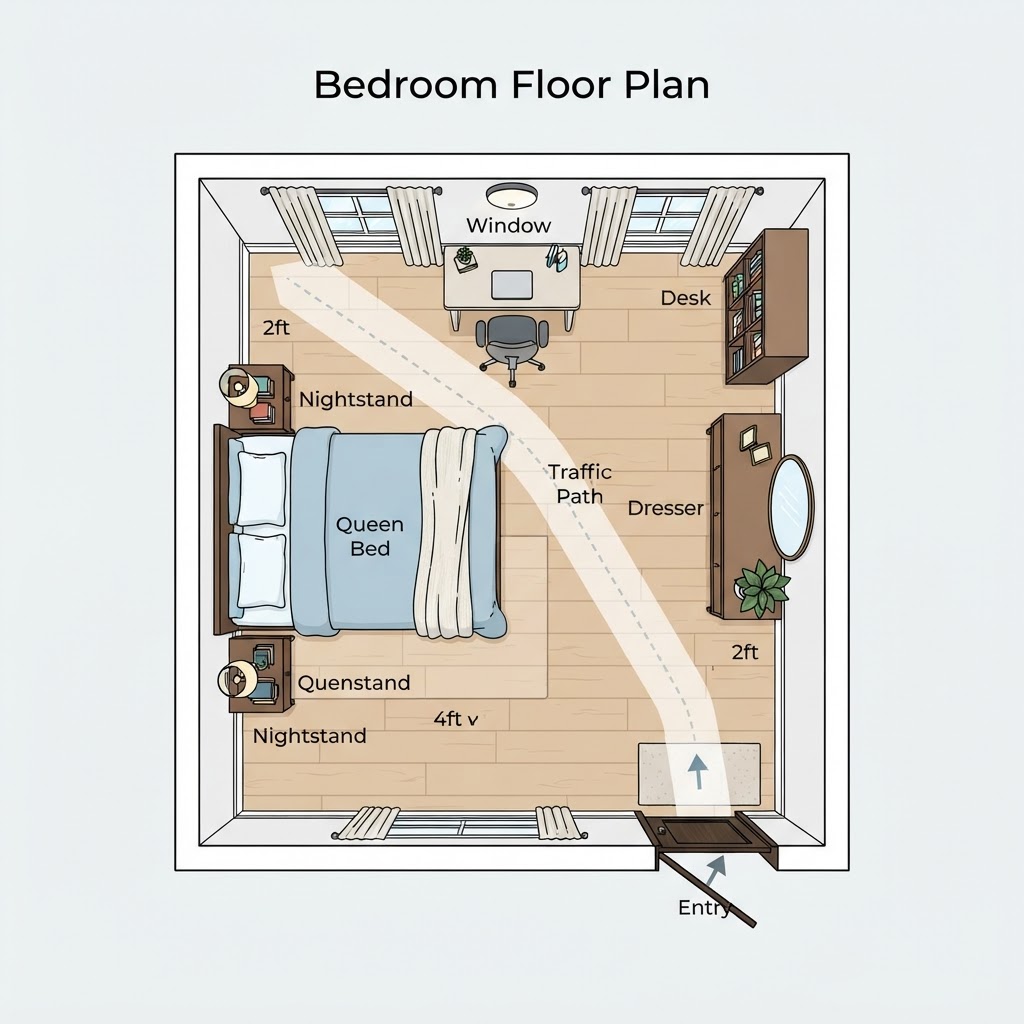
Most homeowners place furniture based on wall alignment, but the most effective layouts prioritize the “traffic triangle”—the natural paths you take to your closet, bed, and door. A layout that forces you to shimmy past a bulky dresser is fundamentally broken, regardless of how “cute” the furniture is. Expert designers suggest mapping your daily rituals for 72 hours; identify where you trip or where items naturally accumulate. If you are regularly navigating an obstacle course to reach your bedside lamp, your furniture is too large for the room’s circulation flow. Replacing a standard 24-inch deep dresser with a 15-inch deep slim-profile unit can regain 9 square inches of floor area per linear foot, significantly opening up pathways. Consider floating your bed away from a corner if it allows for a more efficient path, even if it creates a small gap behind the headboard for hidden shelving.

Feature Traditional Placement Optimized Flow Placement
Bed Position Corner/Wall Centered/Floating
Floor Space Minimal Maximum
Circulation Obstructed Clear Pathways
Visual Depth Low High

Mapping Your Daily Rituals

If you have to do an obstacle course just to reach your bedside lamp, your layout is the problem, not your square footage. Track your movement for three days. Where do you trip? Where do you drop things? Where is the ‘clutter magnet’ zone? Fixing the path of movement is the most important step in optimizing your environment.

Vertical Real Estate: The Untapped Frontier

Strategic furniture layout is key to improving room flow.

When floor space is at a premium, the ceiling becomes your most valuable storage asset. Most people fail to utilize the top two-thirds of their walls, leaving critical “dead space” that could host floating shelves or high-reach cabinetry. Drawing the eye upward effectively shifts focus away from the room’s narrow width, creating an illusion of height that makes the entire environment feel grander and more intentional. Installing high-reach shelving near the ceiling line can house seasonal items or extra linens, removing them from your daily floor-level storage needs. This technique is particularly effective in rooms with ceilings 8 feet or higher. Furthermore, wall-mounted lighting is a non-negotiable upgrade; replacing a standard 10-inch diameter lamp base with a wall sconce saves roughly 78 square inches of surface area per nightstand. This change isn’t just aesthetic—it eliminates the visual noise of cords and bases, reducing the room’s “clutter score” and creating a boutique hotel aesthetic that feels inherently more spacious and refined.

Installing High-Reach Shelving

Instead of a bulky bookshelf that takes up floor space, install floating shelves near the ceiling line to store books, seasonal items, or decor. This keeps the floor clean while utilizing dead space that would otherwise collect dust. It is one of the most effective small bedroom ideas to shift the focus away from the room’s width and toward its height.

The Power of Wall-Mounted Lighting

Table lamps are wonderful, but in a tiny room, they occupy essential surface area on nightstands. Swapping to wall-mounted sconces creates a boutique hotel look and frees up your bedside table entirely. This simple swap reduces visual noise, making the room feel more intentional and less cluttered.

Multi-Functional Furniture as a Last Resort

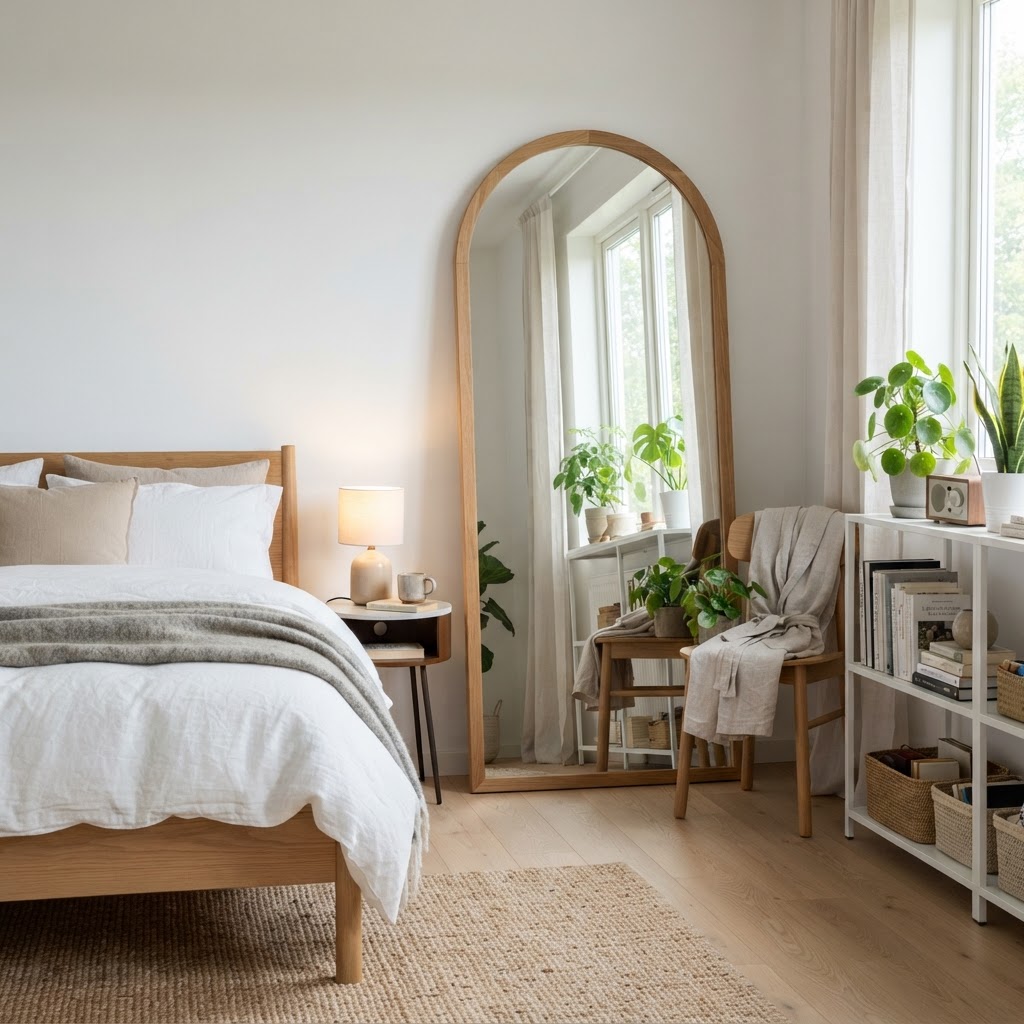
Large mirrors can effectively double the visual depth of a small room.

Multi-functional furniture should be your secondary priority, utilized only after you have decluttered and optimized your primary traffic flow. Investing in high-cost “smart” furniture like $1,500 Murphy beds or storage ottomans often masks underlying organizational issues rather than solving them. Focus first on the “Bed Storage Revolution”: replace standard bed frames with hydraulic-lift platforms. A hydraulic frame can provide up to 30 cubic feet of storage, effectively acting as an extra closet hidden beneath your mattress. If a full replacement isn’t in your budget, look for “risers” that add 6 inches of clearance, allowing for the use of low-profile rolling bins. This is significantly more effective than buying multi-tiered furniture that adds visual bulk. By utilizing the “dead zone” beneath the bed, you preserve your limited vertical and horizontal surface areas for essential items, adhering to a minimalist design philosophy that prioritizes functionality over ornamental clutter.

Furniture Type Benefit Best For
Hydraulic Bed Max Storage Heavy Storage Needs
Wall Sconces Surface Clearance Tiny Nightstands
Floating Shelves Vertical Utility Decorative/Books

The Bed Storage Revolution

If your bed has legs that show a dark, shadowy gap underneath, you are losing prime real estate. Storage bins or under-bed drawers are essential, but even better is a hydraulic bed frame that lifts completely. This turns the entire footprint of your bed into a massive, hidden closet.

Lighting Strategies to Expand the Perimeter

Lighting is the secret weapon for small bedroom ideas that actually work. Poor lighting creates corners of darkness that act as visual boundaries, effectively shrinking the room’s perceived footprint. By layering your light—using ambient, task, and accent lighting—you can blur the edges of your room and make it feel like it extends further than it actually does. Incorporate a minimum of three light sources: an overhead ambient light, bedside task lighting (sconces), and floor-level or strip lighting to “wash” the corners with illumination. Mirrors are the most efficient way to maximize this light; a full-length mirror positioned directly opposite a window will reflect natural daylight, doubling the perceived depth of the room. Avoid using several small, decorative mirrors, as they create a “broken” reflection that adds to visual clutter; instead, use one large-scale, high-quality mirror to maintain a clean, cohesive visual field.

Bouncing Light with Mirrors

Mirrors are a design cliché for a reason: they work. However, placement is everything. A large mirror placed directly opposite a window will bring the outside in and effectively double the visual depth of the room. Avoid small, decorative mirrors; instead, opt for a full-length floor mirror or a wall-to-wall treatment behind your nightstands.

Curating Your Belongings: The Zero-Based Design Approach

If you want to fix your room, you must be ruthless about what you keep inside it. Every object in a small bedroom must either be beautiful or functional. If it is neither, it is stealing your peace of mind. Apply the ‘zero-based’ principle: if you were moving into this room tomorrow, what would you choose to bring with you? Implementing the 24-hour rule is essential here; any flat surface, from your dresser top to your window sill, is a landing strip for junk. By ensuring no item (mail, clothes, chargers) remains on a flat surface for more than 24 hours, you keep the room from reverting to its ‘cramped’ state. This daily audit prevents the accumulation of the “micro-clutter” that causes even large rooms to feel claustrophobic. By curating your space intentionally, you turn a small box into a curated sanctuary where rest is the primary objective rather than storage management.

The 24-Hour Rule for Surfaces

Any flat surface, from your dresser top to your window sill, is a landing strip for junk. Implement the 24-hour rule: no item (mail, clothes, chargers) can remain on a flat surface for more than 24 hours. This keeps the room from reverting to its ‘cramped’ state, regardless of how small it is.

FAQ

Q: What is the best way to make a tiny bedroom look bigger?

To make a tiny bedroom look bigger, prioritize clearing the floor and creating uninterrupted sightlines. Remove excess furniture to expose more floor area and use vertical storage or wall-mounted lighting to keep surfaces clean and open.

Q: Does painting a small bedroom white always help?

While light colors reflect more light, painting a small room white is not a miracle cure if the room remains cluttered. Proper furniture layout, lighting layering, and keeping surfaces clear are more effective than paint color for maximizing space.

Q: Should I use multi-functional furniture in a small room?

Use multi-functional furniture only after you have decluttered and optimized your flow. Focus on “hidden” storage like hydraulic bed frames first, as these provide utility without consuming precious floor or vertical visual space.

Q: How can I optimize my bedroom layout for better movement?

Map your daily movement patterns for 72 hours to identify where you trip or where obstacles exist. Aim to create a clear, direct path between your doorway, closet, and bed to improve room flow and efficiency.

Q: How many light sources should a small bedroom have?

Use at least three layers of light: ambient lighting for general illumination, task lighting like sconces for reading, and accent lighting to brighten dark corners. This effectively blurs the room’s boundaries and increases perceived depth.

10 Best Small Entryway Benches With Hidden Storage

A cluttered foyer is often the first thing that greets you after a long day, which is why choosing the right small entryway benches with hidden storage is a total game-changer for your home. When you live in a smaller home or apartment, every square inch counts, and an entryway that serves as a dumping ground for shoes, mail, and bags can quickly feel overwhelming. Investing in a functional piece of furniture that doubles as both a seat and a storage unit allows you to maintain a clean, welcoming aesthetic while keeping your daily essentials easily accessible yet tucked away. Finding the perfect balance between style and utility is easier than you might think when you know exactly what to look for.

Understanding the Importance of Functional Foyer Furniture

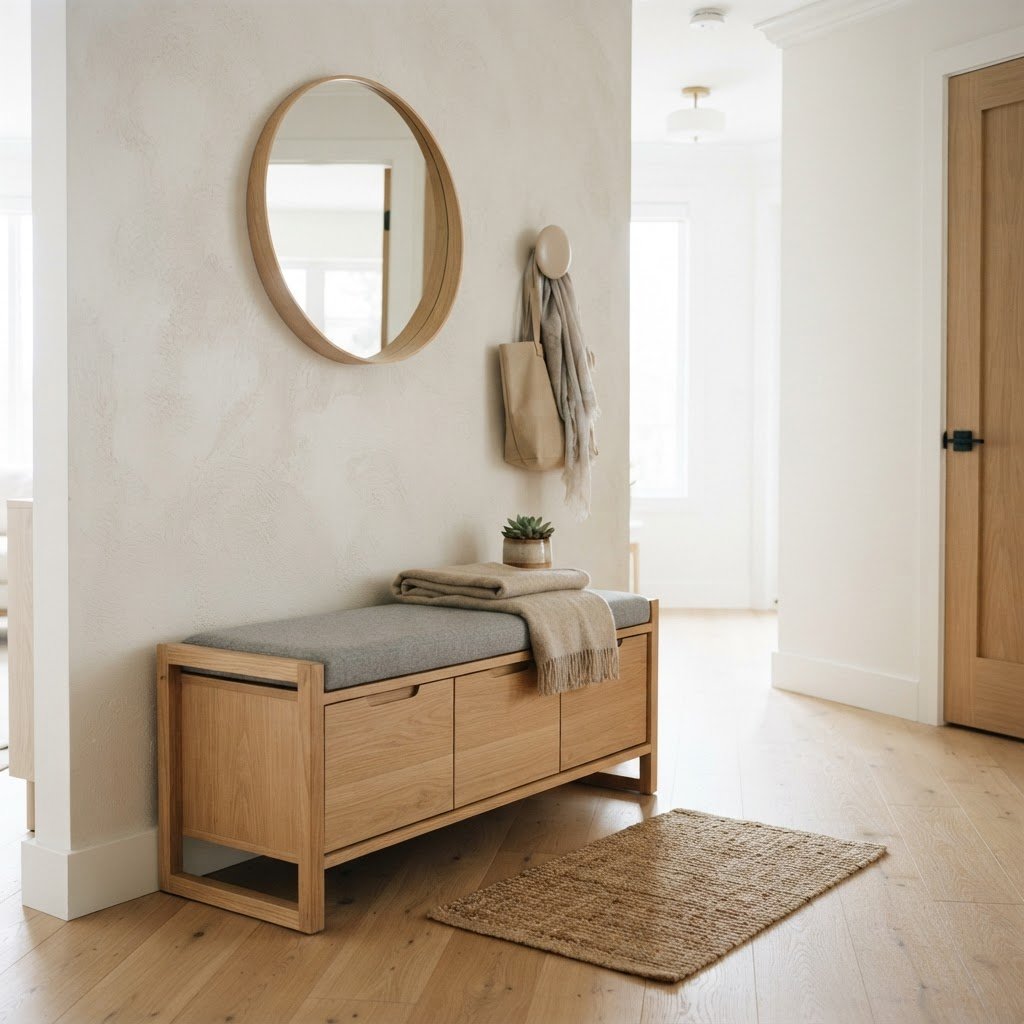
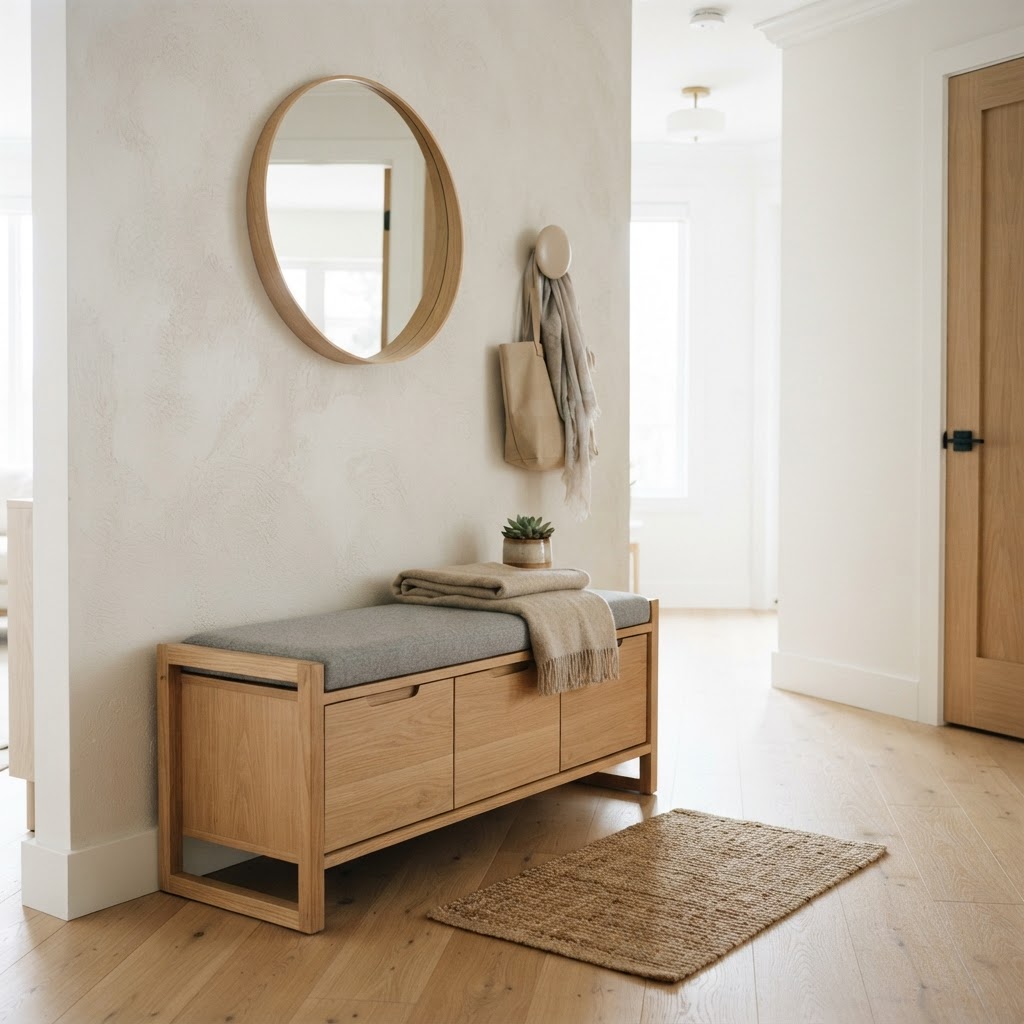
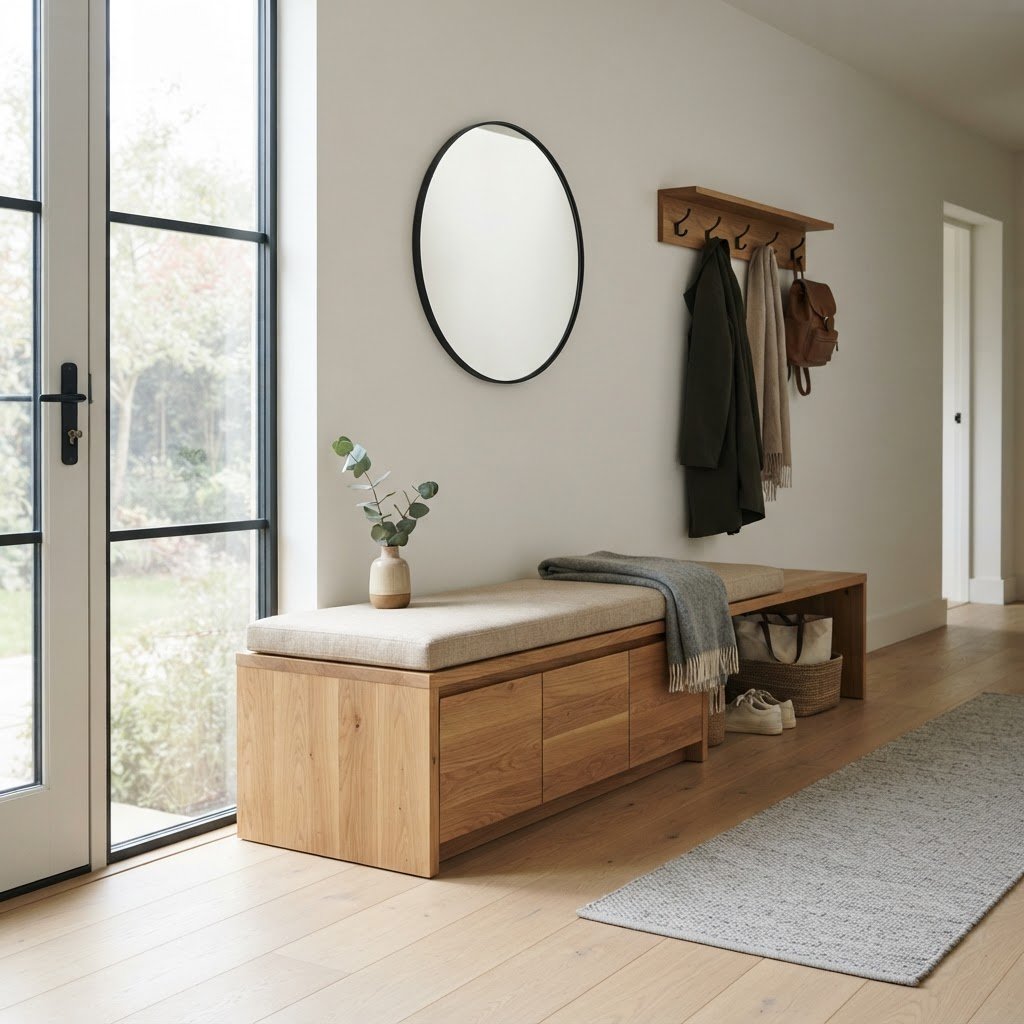
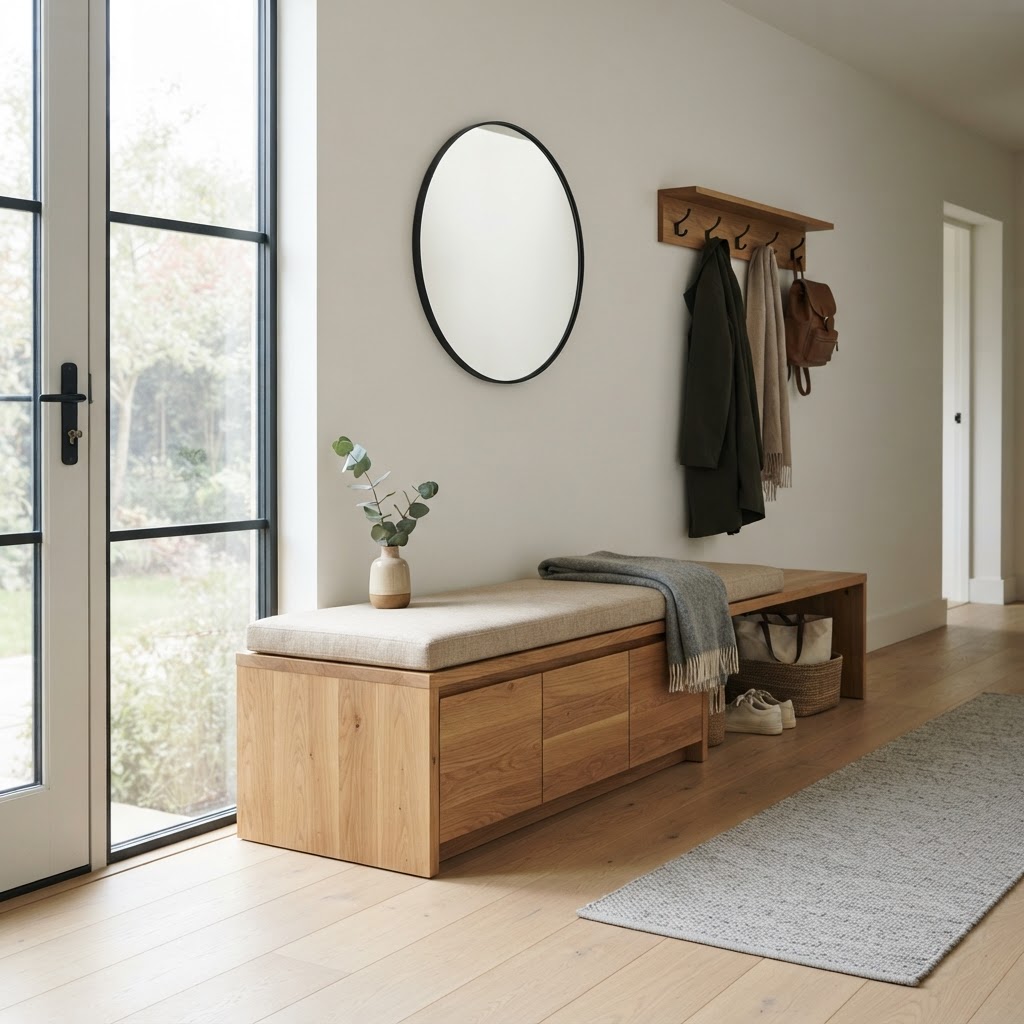
Modern minimalist bench with hidden seat storage.

The entryway is essentially the calling card of your home. It sets the tone for your interior design and dictates the flow of your space. When you prioritize small entryway benches with hidden storage, you are doing more than just picking out a piece of wood or fabric; you are establishing a system for your household. A designated spot for your items prevents the “drift” of clutter into your living room and kitchen, effectively compartmentalizing the mess.

Maximizing Square Footage

In urban apartments or compact homes, the “drop zone” is often just a corner or a narrow hallway. A dedicated bench with hidden storage utilizes vertical and footprint space efficiently. Instead of having a rack that constantly looks messy or a pile of shoes on the floor, hidden storage compartments offer a sleek, streamlined look. This minimalist approach not only makes the area feel bigger but also adds a layer of sophistication to your home entrance.

Key Features to Consider Before You Buy

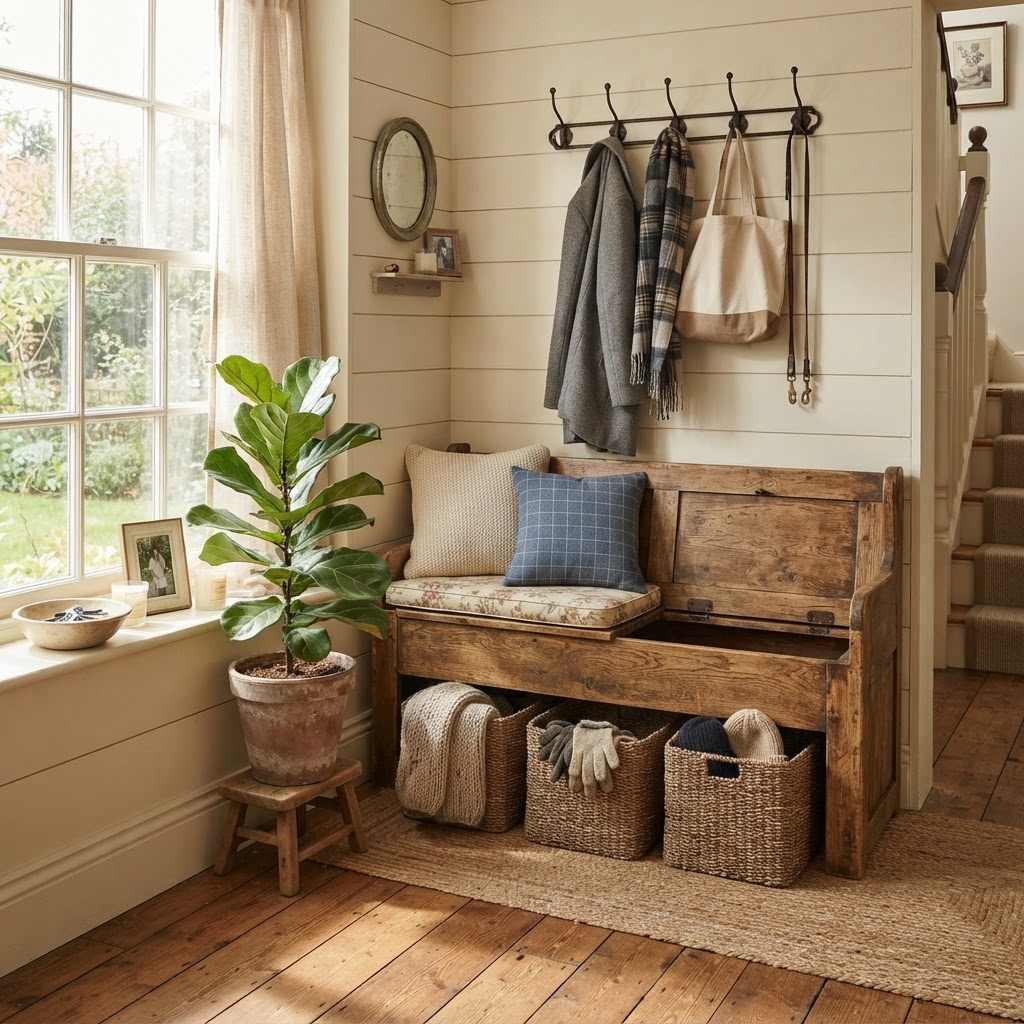
Rustic farmhouse design featuring practical storage baskets.

Before you hit the “purchase” button on a new piece of furniture, you need to evaluate your specific needs and the limitations of your physical space. Not all benches are created equal, and understanding the specs will save you a headache later. First, measure your area twice. It sounds basic, but many shoppers forget to account for door swing clearance or the width of the bench when the lid is open.

Material Selection and Durability

Consider the daily wear and tear that an entryway bench will face. If you have children or pets, a soft fabric upholstery might not be the most practical choice, even if it looks stunning. Opt for materials that can be easily wiped down or that feature performance fabrics designed to resist stains. Solid wood, powder-coated metal, and high-quality laminate are excellent choices for busy households. Look for sturdy hinges, especially if you have little ones, as soft-close mechanisms are a must-have for safety and noise reduction.

Style Profiles for Every Home Aesthetic

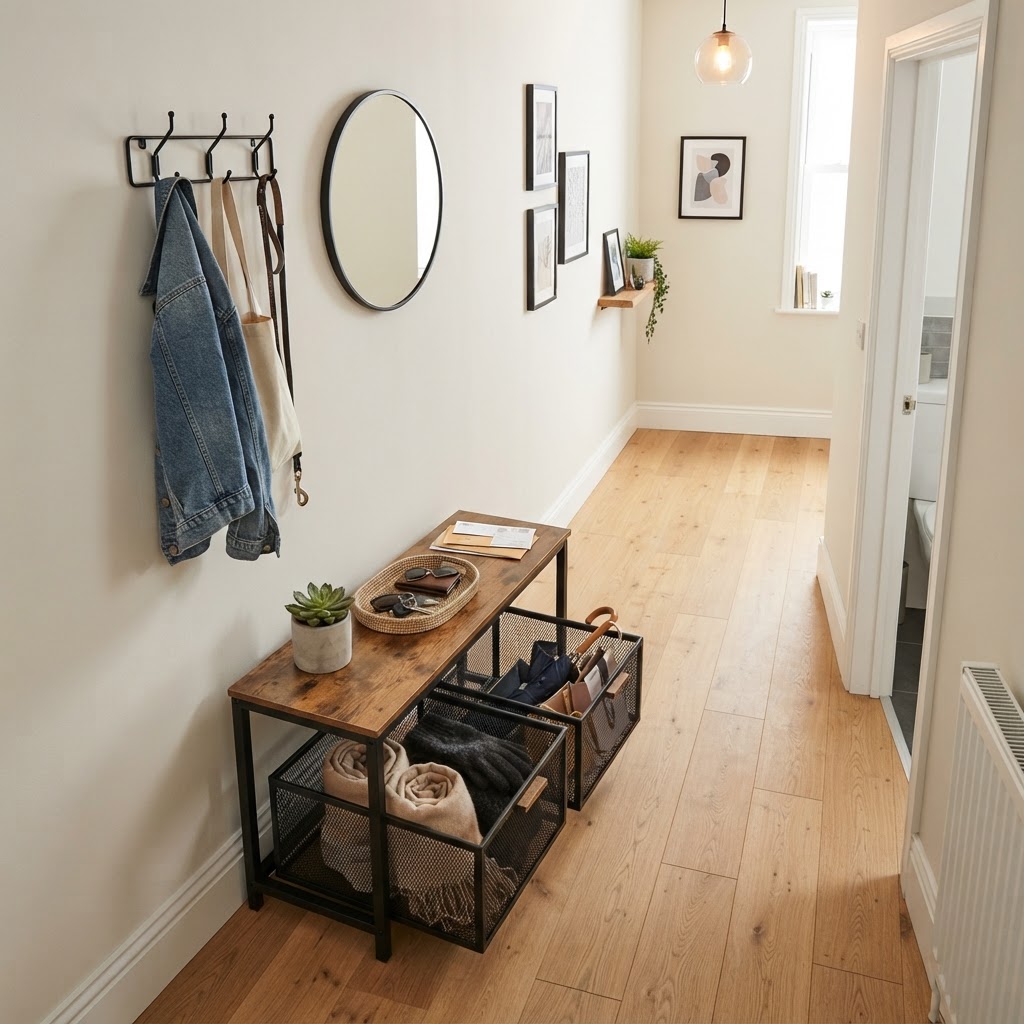
Industrial-style slim bench for compact hallways.

Your entryway bench should feel like a natural extension of your home decor rather than an afterthought. Whether you lean toward modern minimalism, rustic farmhouse, or industrial chic, there is a design out there for you. A wooden bench with clean lines and simple hardware can anchor a Scandi-style home, while a tufted, upholstered piece adds a touch of elegance to a traditional foyer.

Matching Your Decor

If your home features neutral tones, a bench in a natural wood finish or a soft gray adds warmth without clashing. If you prefer a bolder look, consider a bench with unique metal legs or a striking pop of color in the upholstery. Remember, because the bench is a smaller piece, it can serve as a “design statement” that draws the eye without dominating the room.

Creative Storage Solutions Within the Bench

What kind of storage do you actually need? Some benches feature a single large compartment under the seat, which is perfect for bulky items like seasonal boots or sports equipment. Others offer multiple dividers, which are superior if you are looking to organize specific items like umbrellas, scarves, or hats. Understanding your organizational personality is key to picking the right layout.

The Versatility of Hidden Compartments

Don’t just think about shoes. Think about the items you frequently lose. If you are constantly looking for your keys, your mail, or your dog’s leash, consider a bench with a small drawer or a hidden shelf specifically for these “quick-grab” items. This turns a simple seat into a comprehensive command center for your life.

Organizing Your Bench for Long-Term Success

Buying the furniture is only half the battle; maintaining the organization is the other half. It is very easy to turn a storage bench into a junk drawer if you aren’t careful. Use shelf dividers or small fabric bins inside the bench to keep individual family members’ items separate. This creates a psychological boundary that encourages everyone to put their belongings in their “assigned” spot rather than tossing them into the void.

Implementing a Weekly Maintenance Routine

Every Sunday, take five minutes to clear out the bench. Remove the items that don’t belong, wipe down the inside, and reset the space for the week ahead. This simple habit prevents the accumulation of “ghost items”—the things you haven’t seen in months but still reside in your storage bench. Keeping the space intentional is the secret to a tidy home.

Budgeting for Quality vs. Convenience

There is a wide spectrum of pricing for entryway furniture. While it is tempting to go for the cheapest option, keep in mind that a storage bench is a structural piece of furniture. You want something that can handle the weight of someone sitting on it daily. Investing in a mid-range piece with high-quality hinges and reinforced frames will almost always pay off in longevity. Don’t be afraid to look for sales or slightly used items that you can refurbish with a fresh coat of paint or new hardware.

Conclusion: Elevating Your Entryway

Transforming your foyer from a clutter hotspot to a clean, organized welcome mat is entirely possible with the right small entryway benches with hidden storage. By carefully considering your space, choosing durable materials that match your aesthetic, and committing to a small amount of weekly maintenance, you can create an entrance that makes you feel relaxed the moment you walk through the door. Start your search today by measuring your hallway and identifying exactly what you need to hide away. Your future self will thank you for the extra storage and the peace of mind. Ready to get organized? Start by clearing your floor today and look for that perfect bench to anchor your home’s entrance.

The Ultimate Guide to Cozy Renter-Friendly Fall Decor

The Ultimate Guide to Cozy Renter-Friendly Fall Decor

To create cozy renter-friendly fall decor, focus on high-impact, non-permanent elements like warm-toned lighting, layered textiles, and adhesive-backed wall hardware. By prioritizing removable accents—such as throw blankets, tension-rod tapestries, and natural botanical elements—you can transform your rental apartment into a seasonal sanctuary without violating lease agreements or losing your security deposit.

Understanding the Renter’s Decorating Dilemma

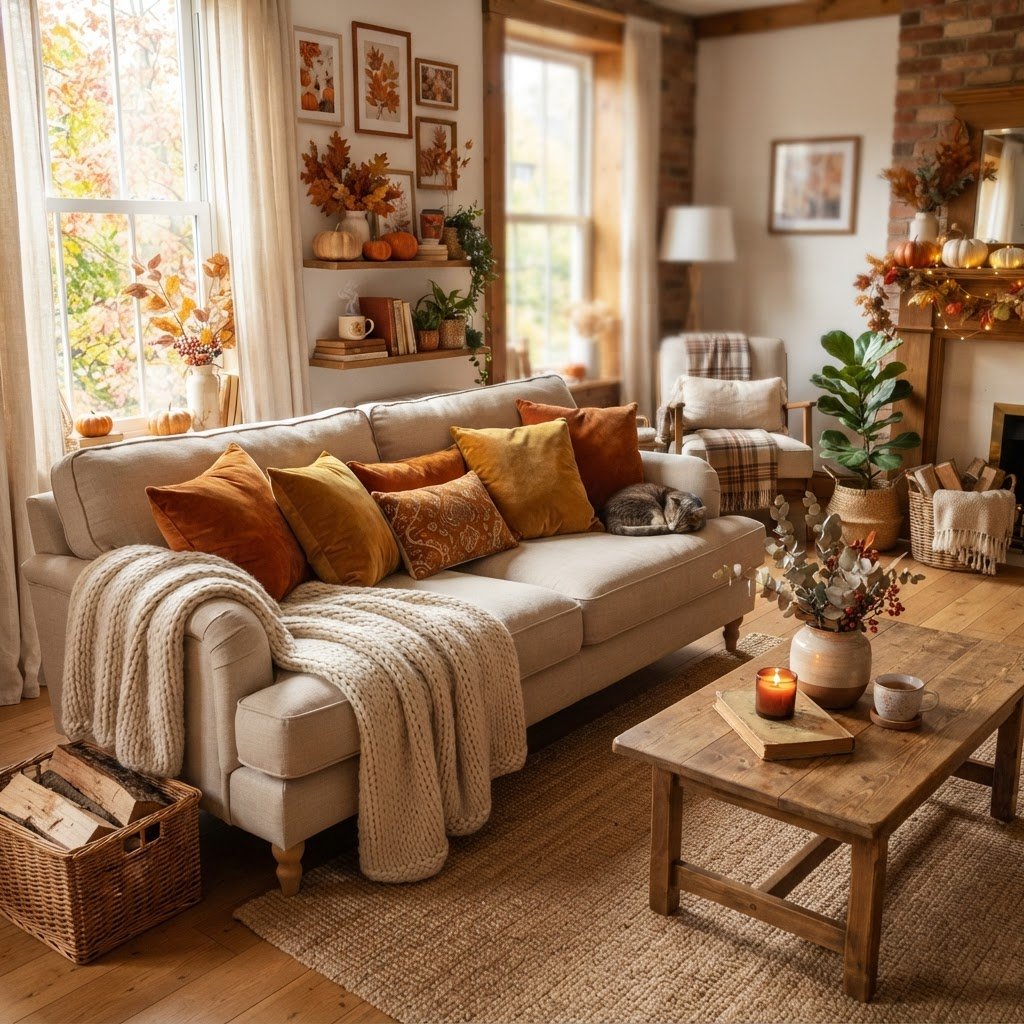
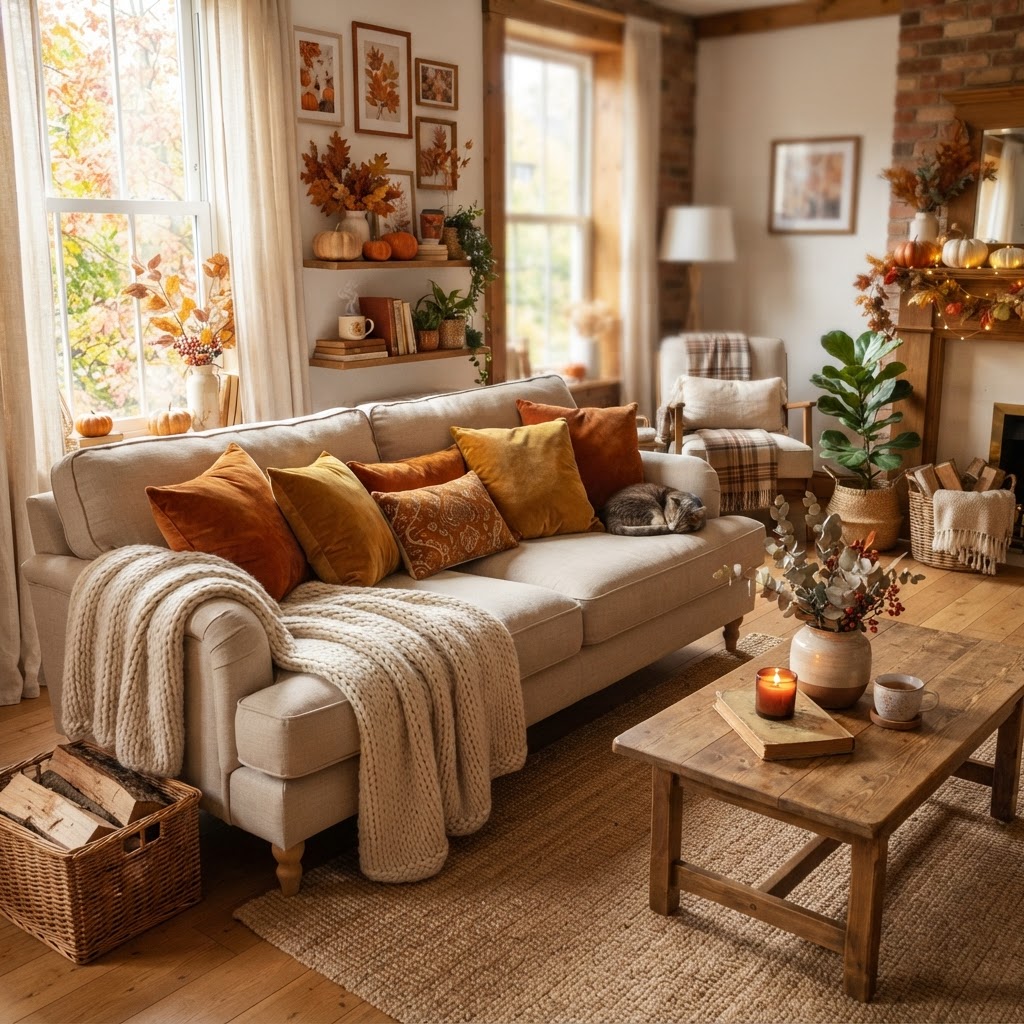
Transforming a neutral living room with textures and seasonal color accents.

Decorating a rental property is a strategic balancing act between expressing personal style and adhering to strict lease constraints. Most landlords strictly prohibit permanent changes like wall paint, heavy drilling, or fixture replacement, which often limits your ability to customize your environment. However, these limitations foster creative solutions that prove you do not need to alter the architecture of a building to make it feel like home. The secret to success lies in focusing on “soft” decor—layers, textures, and accessories—that provide a high-end aesthetic while remaining 100% reversible. For example, using a $15 pack of removable adhesive strips to hang art is significantly more cost-effective than patching and painting holes, often saving you over $200 in potential security deposit deductions upon move-out. By leaning into temporary upgrades, you ensure that your fall transformation remains sustainable, allowing you to pack away your seasonal collection in a few standard-sized storage bins once the season concludes, keeping your living space organized and your landlord happy.

The Importance of Non-Permanent Changes

Non-permanent changes are the foundation of professional apartment styling. Because you cannot modify structural elements, your decor must rely on modular items that serve a dual purpose of aesthetic appeal and functionality. By focusing on accessories, you create a “seasonal layer” over your permanent furniture, which can be quickly removed or swapped when the calendar turns to winter. This approach is highly efficient for renters, as it minimizes the volume of goods you need to transport during a move while maintaining a high quality of life. Furthermore, investing in high-quality seasonal staples—like wool-blend throws or heavy-duty ceramic vases—ensures that you do not need to repurchase cheap, disposable plastic decor annually, saving you an average of $50-$100 per season in the long run.

Selecting Your Fall Color Palette

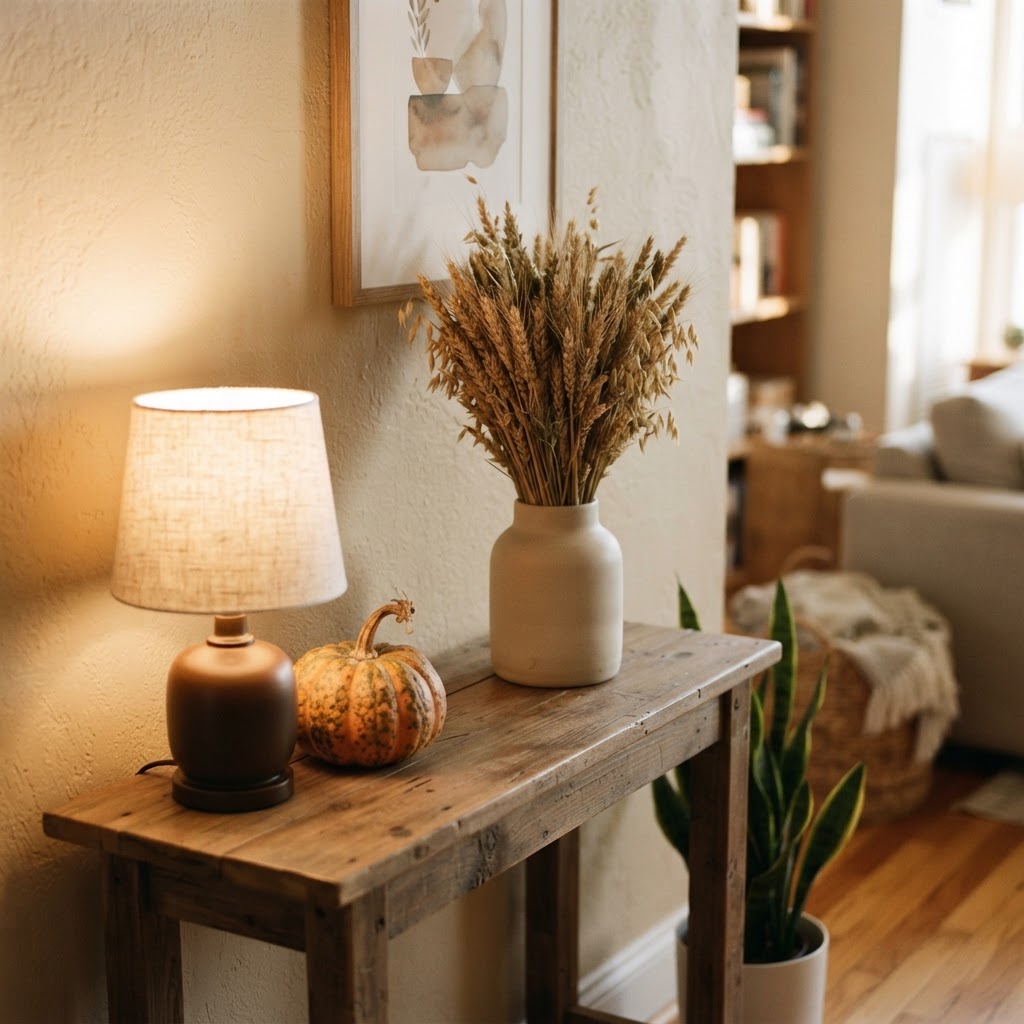
Small details like dried botanicals and lighting create a cozy fall atmosphere.

Transitioning your color scheme using textiles is the most efficient way to signal the arrival of fall without making structural updates. While traditional decor emphasizes bright oranges and reds, contemporary interior design for rentals favors sophisticated, muted palettes that integrate seamlessly with existing neutral furniture. Utilizing a color theory approach—such as pairing deep forest green with warm terracotta or muted mustard—adds depth and a “lived-in” feeling. For instance, swapping standard white pillow covers for velvet mustard ones can shift the entire mood of a living room in under five minutes for less than $40. Below is a comparison of traditional versus modern autumn color strategies for rentals:

Feature Traditional Fall Decor Modern Renter Aesthetic
Core Colors Bright Orange, Red, Yellow Sage, Terracotta, Forest Green
Material Style Plastic/Synthetic Natural Fibers, Velvet, Wood
Visual Impact High Contrast/Bold Subdued/Sophisticated
Storage Needs High (Bulky Items) Low (Textile-based)

Working with Your Existing Furniture

Do not feel pressured to replace your base furniture. You can easily elevate a beige or grey couch by adding a chunky knit cable blanket or textured throw pillows. This strategy allows you to experiment with current trends without the financial commitment of buying new furniture that might not fit your next apartment. Focus on “soft” elements that can be layered to hide worn fabric or simply to provide a warmer, more tactile experience during the cooler months.

Lighting for Instant Coziness

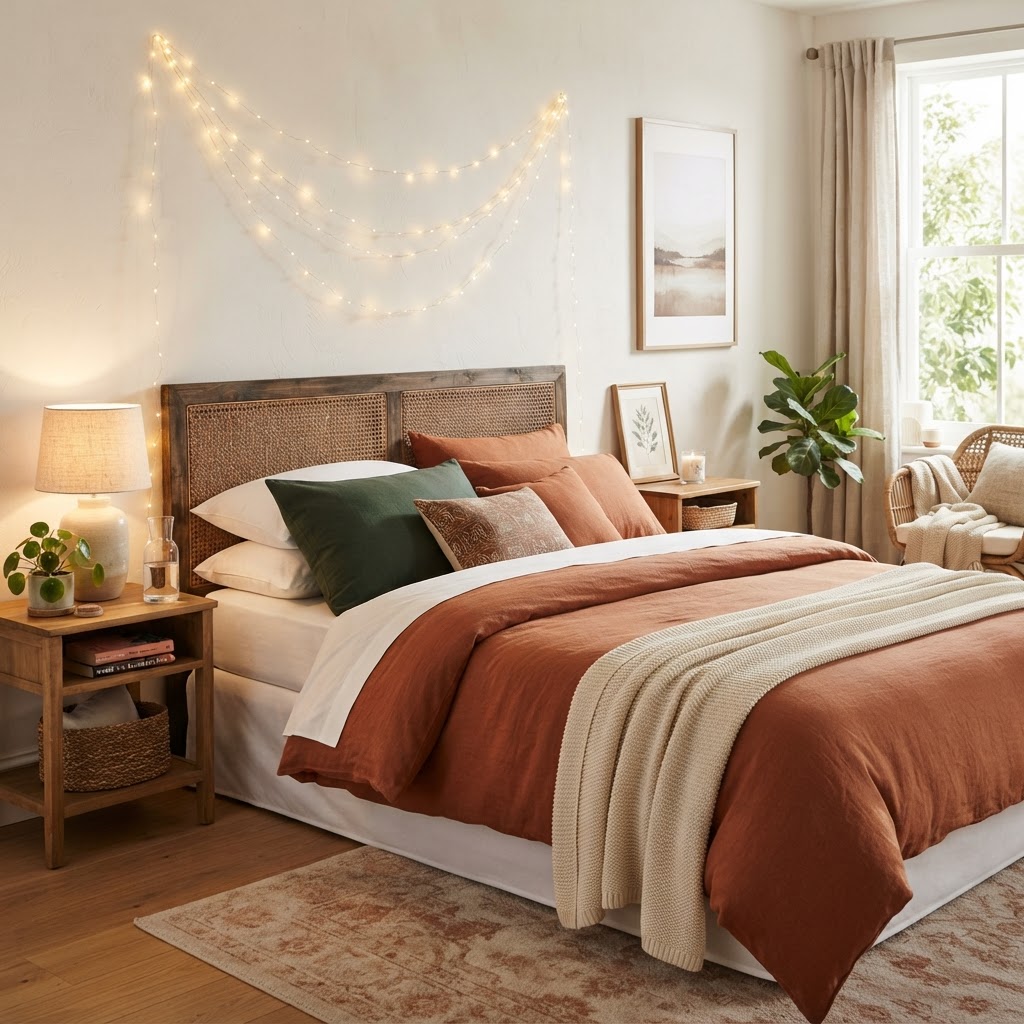
Soft lighting and rich textiles turn a rental bedroom into a seasonal sanctuary.

Lighting is the most vital element of interior design, especially in rentals where you lack control over overhead “builder-grade” fixtures. To achieve a cozy atmosphere, you must layer light sources to eliminate harsh shadows and create a warm, inviting glow. Professional designers recommend keeping light temperatures between 2,700K and 3,000K (Kelvin) for a soft, golden effect. Since you cannot replace hardwired lights, utilize floor lamps, task lamps, and accent lighting strategically. The goal is to avoid the ceiling light entirely, opting instead for a “triangulated” light setup where three different lamps illuminate the corners of a room. This method immediately makes a space feel larger and more intentional, effectively masking the generic nature of rental finishes. Furthermore, adding smart bulbs with dimming capabilities allows you to adjust the “warmth” of a room via your smartphone, providing a high-tech solution to a classic design problem without installing new hardware.

Creating Ambiance with Fairy Lights and Lanterns

LED fairy lights are a renter’s best friend because they provide significant visual impact with zero installation. You can drape them over bookcases, stuff them into glass jars, or line them along windowsills. Similarly, lanterns—whether they contain flameless candles or simple string lights—add architectural interest and warmth to dark corners. Unlike open-flame candles, which are often restricted in rental leases, these methods are safe, fire-hazard-free, and look elegant year-round.

Damage-Free Wall Decor Strategies

Curated fall decor items that add character to any small apartment space.

Rental wall decor requires specialized hardware designed to hold weight without damaging drywall or plaster. The market for non-permanent hanging solutions has expanded beyond simple sticky tape to include heavy-duty adhesive hooks that can support up to 15 pounds per unit. When choosing your mounting method, it is essential to consider the texture of your walls; smooth painted surfaces work best for adhesive strips, while brick or textured walls may require tension-based solutions. Before installation, always clean the wall surface with isopropyl alcohol to ensure the adhesive bond reaches its maximum weight-bearing capacity, which is a common error that leads to falling frames. If you are decorating a large wall, grouping items using a “gallery” configuration on the floor before moving them to the wall saves time and minimizes trial-and-error holes. Below is a comparison of damage-free hanging options:

Mounting Tool Best For Weight Limit
Adhesive Strips Lightweight frames/canvases 4-15 lbs
Tension Rods Tapestries/Curtains/Walls 10-20 lbs
Lean-Against Method Large mirrors/framed art Unlimited

Using Tension Rods for Tapestries

If you want to add texture to your walls without using adhesives, consider using a tension rod to hang a seasonal tapestry or a thick, woven throw blanket. This works perfectly in hallways or behind beds, covering up unappealing walls with something soft and seasonal. It is a brilliant way to add depth to your room while keeping the walls completely pristine.

Alternatives to Drilling

If you love a gallery wall, use removable adhesive strips for lightweight frames. Alternatively, lean large framed prints against the wall on top of a console table or dresser. Leaning art creates a laid-back, sophisticated gallery look that is incredibly popular in current interior design trends, and it requires zero hardware or tools.

Incorporating Nature and Textures

Autumn is defined by the changing outdoors, so bringing elements of nature inside is a classic approach to seasonal decor. You do not need to spend a fortune at a craft store to get this look; sometimes, foraging (where allowed) or purchasing a few simple botanical items is enough to anchor your theme. For instance, dried wheat stalks or pampas grass offer height and visual structure to a room without the need for high-maintenance fresh flowers. For a refined, modern autumn look, replace traditional bright orange pumpkins with natural heirloom varieties in muted shades of sage, slate, or white. These colors blend effortlessly with almost any furniture style and elevate the room from a “festive” feel to a “curated” design aesthetic. Integrating these natural elements serves to soften the sharp, industrial edges often found in rental apartments, bridging the gap between indoor comfort and the natural world outside. If you are on a budget, collecting fallen branches or pinecones from your local park—provided it is legal and environmentally responsible—can provide a 100% free way to add architectural interest to your space.

Styling with Dried Botanicals and Pumpkins

Dried wheat stalks, pampas grass, and branches with colorful leaves can be placed in vases to provide height and organic texture. For a subtle fall aesthetic, skip the plastic orange jack-o’-lanterns and opt for natural heirloom pumpkins in muted shades of sage, slate, and white. These look elegant, modern, and feel much more organic than traditional bright orange decor.

Practical Storage Solutions

One of the downsides of living in a smaller space is the lack of storage for seasonal items. To keep your apartment from feeling cluttered during the fall, you must have a plan for where these items will go come December. Utilizing under-bed storage bins and vacuum-seal bags will keep your fall textiles safe and clean while maximizing your living space. By investing in vacuum-seal bags, you can reduce the volume of bulky throw blankets and pillows by up to 75%, allowing them to fit into tight spaces like the back of a closet or under a bed frame.

Investing in Multi-Functional Decor

When buying fall-specific items, try to select pieces that transition well into other seasons. For example, a heavy cable-knit throw works for both autumn and winter. By choosing versatile items, you reduce the number of bins you need to store, effectively making your renter-friendly fall decor journey much easier to manage year after year.

Creating a Sensory Fall Experience

Decorating is visual, but a truly cozy home is a multisensory experience. To make your apartment feel like a true fall retreat, consider the scents and sounds you introduce. A simple simmer pot on the stove with cinnamon sticks, orange slices, and cloves can do more for the atmosphere than any piece of decor ever could. These natural scents are often more potent and authentic than synthetic aerosols, and they add a layer of “warmth” that physical decor cannot replicate.

Seasonal Scents and Comforts

Opt for high-quality soy candles with notes of sandalwood, cedar, or pumpkin spice. Combine this with a curated playlist of acoustic music or ambient rain sounds to create an immersive environment. When your home smells like autumn and feels like a warm hug, the lack of permanent renovations will be the last thing on your mind.

FAQ

How can I hang wall decor in a rental without damaging the paint?

Use removable adhesive strips like Command strips or pressure-mounted tension rods. These tools allow you to mount artwork, tapestries, or curtains securely to your walls without using nails, screws, or leaving behind holes that would require professional repair or result in lost security deposits.

What are the best colors for a modern, non-traditional fall apartment?

Focus on muted, sophisticated tones such as sage green, terracotta, deep forest green, and warm cream. These colors offer an autumnal feel while maintaining a modern, high-end look that complements most neutral rental interiors, avoiding the dated aesthetic of bright orange and yellow plastic decor.

How can I make rental lighting feel cozy without replacing fixtures?

Layer your lighting using a mix of floor lamps, table lamps, and accent lights equipped with soft-white bulbs (2,700K–3,000K). This strategy eliminates harsh overhead glare, creates warm “golden hour” shadows, and allows you to customize the mood of each room without altering any of the building’s permanent wiring.

Where should I store seasonal fall decor in a small apartment?

Utilize under-bed storage bins and vacuum-seal compression bags to minimize the footprint of bulky items like blankets and pillows. Aim to purchase multi-functional decor that can transition into winter or spring to keep your overall inventory of seasonal items low and manageable for small-space living.

Is it safe to use candles in a rental apartment?

Always check your specific lease agreement, as many rental properties prohibit open-flame candles due to fire risk. Instead, use high-quality flameless LED candles or essential oil diffusers to achieve the desired cozy atmosphere and scent profile without violating safety regulations or risking your deposit.

Overnight Renter-Friendly Ideas to Make Tiny Spaces Expensive

Overnight Renter-Friendly Ideas to Make Tiny Spaces Expensive

You can make a tiny rental look expensive by maximizing vertical space, replacing standard lighting with warm-tone fixtures, and layering high-quality textures. Implementing these strategic visual illusions—such as floor-to-ceiling curtains and oversized mirrors—instantly elevates the room’s perceived value while remaining fully compliant with your security deposit terms.

Rethinking Your Lighting Strategy

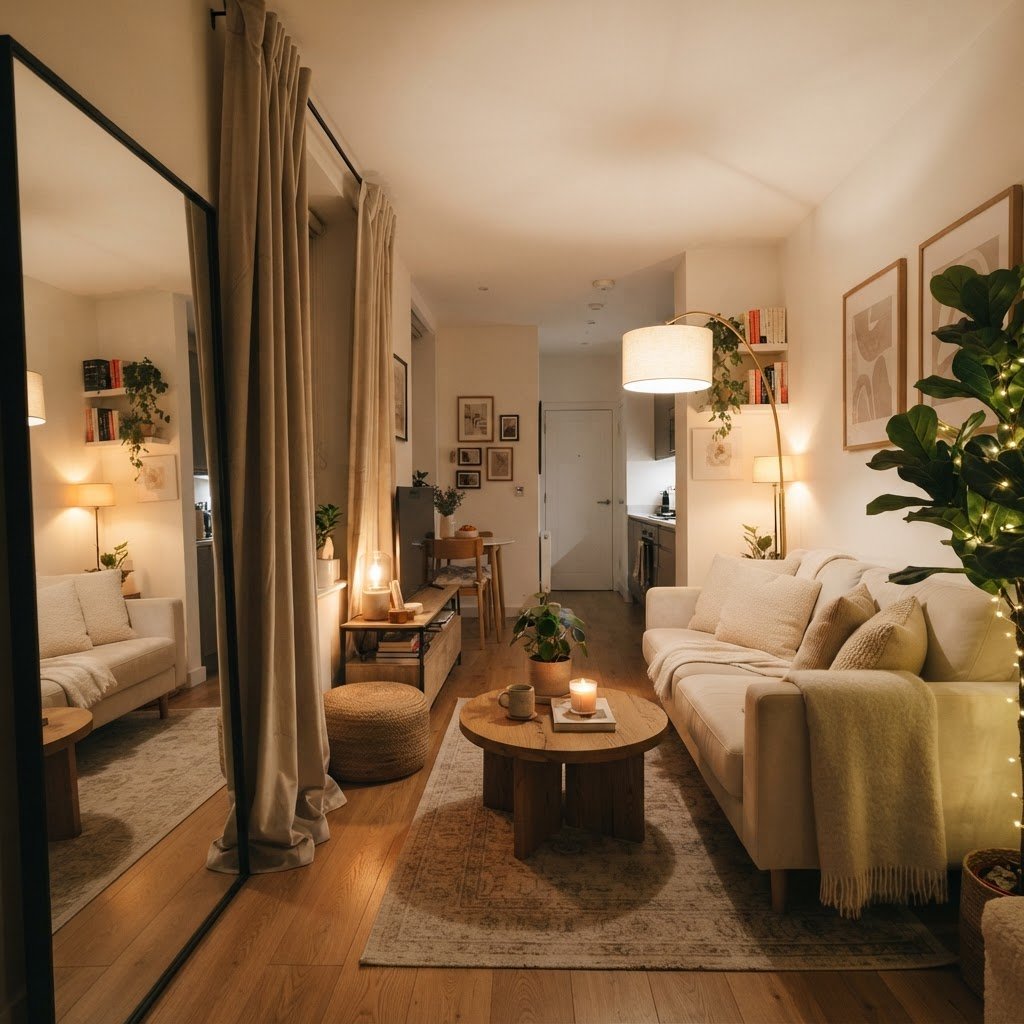
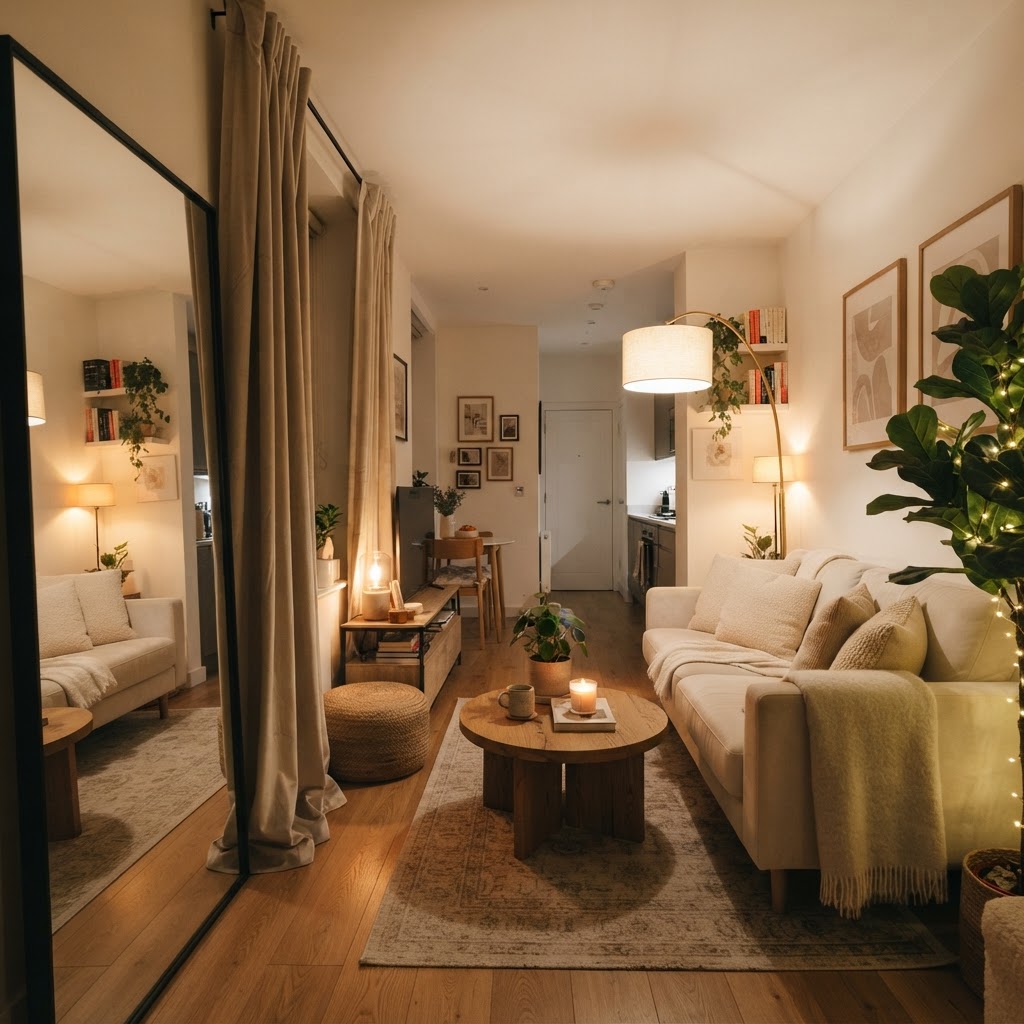
Large mirrors and floor-length curtains instantly elevate any small living area.

Lighting is the most underrated element of interior design, and builders often install harsh ‘boob lights’ that flatten a room’s aesthetic. To create a luxury hotel atmosphere, you must prioritize ‘warm white’ bulbs (2700K to 3000K) to eliminate the clinical, blue-tinted shadows cast by standard builder-grade lighting. Replacing basic fixtures with statement pieces is ideal, but layering portable light sources provides the most immediate impact without needing an electrician.

The Power of Floor and Table Lamps

To achieve a high-end look, incorporate at least three distinct light sources per room to create depth. Place floor lamps with sculptural, metallic silhouettes in dark corners to eliminate dead zones, and use table lamps on sideboards to create cozy pockets of light. By integrating smart plugs with dimmers, you gain precise control over your environment, mimicking the ambient control found in high-end hospitality design. Varying the height of your lighting is a professional trick that draws the eye upward, tricking the brain into perceiving higher ceilings and a more expansive floor plan. For optimal results, aim for a mix of floor, table, and task lighting, ensuring no area of the room is left in shadow. This multi-layered approach transforms a boxy apartment into a sophisticated, curated sanctuary.

Lighting Type Best For Luxury Tip
Floor Lamp Empty Corners Choose metallic finishes
Table Lamp Nightstands/Consoles Use warm white bulbs
Smart Plugs Ambience Set dimming schedules

Investing in Curated Window Treatments

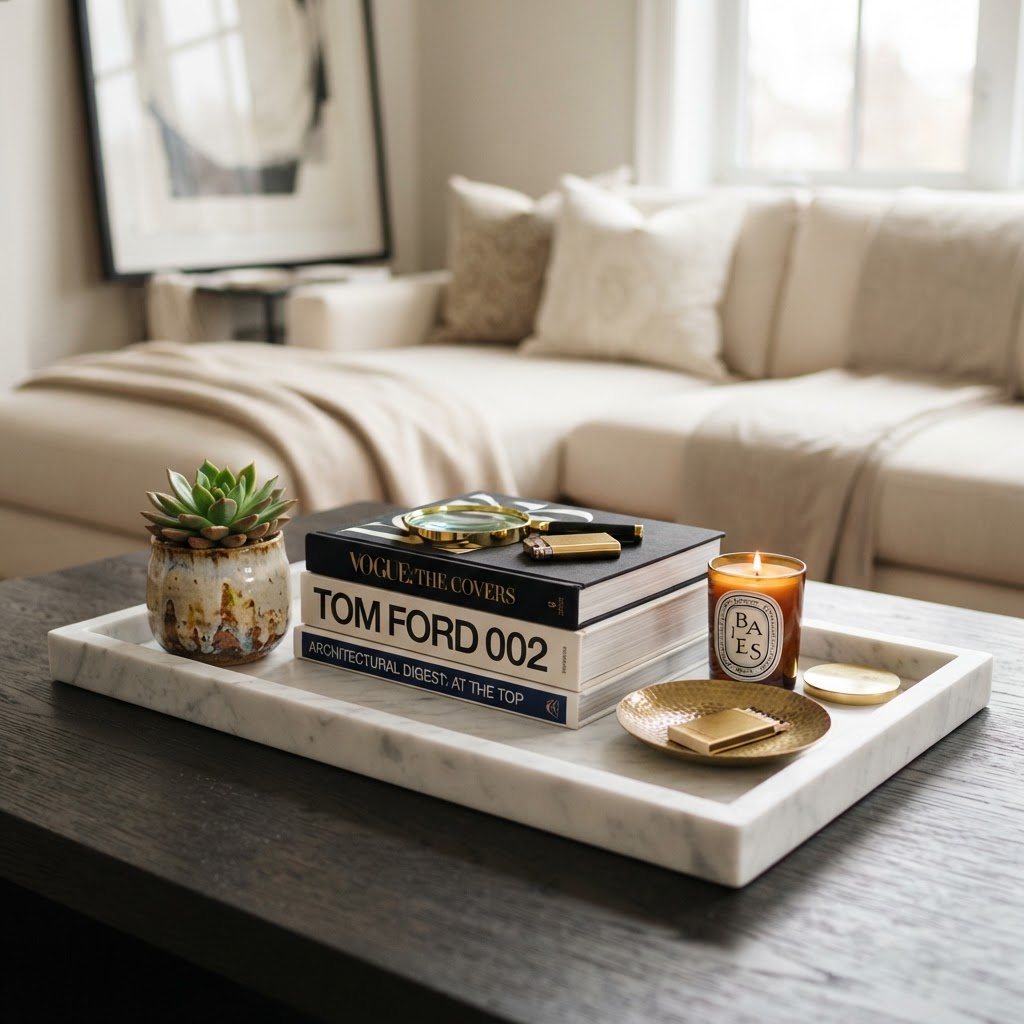
Trays are an essential tool for keeping surfaces organized and looking high-end.

Rental blinds are notoriously flimsy, so the fastest way to add instant architectural weight to your space is by installing high-quality, floor-length window treatments. If your rental agreement forbids removing existing blinds, mount a curtain rod just one to two inches below the ceiling line, far above the window frame. This creates a vertical line that extends the entire height of the wall, making your windows feel significantly larger and your ceilings appear taller than their actual measurement.

Selecting the Right Fabric

Choose heavy-weight fabrics like velvet, heavy linen, or thermal-backed cotton in neutral, matte tones. These materials provide a rich texture that absorbs sound and feels physically more ‘expensive’ to the touch than thin synthetic curtains. Ensure your curtains are at least 1.5 to 2 times the width of your window to allow for proper bunching, and always extend the rod 6-10 inches beyond the window frame on each side. This allows the curtains to sit against the wall rather than covering the glass, maximizing natural light intake during the day. By choosing floor-length panels that gently ‘kiss’ the floor, you avoid the cheap look of curtains that hang short, ensuring a clean, polished finish that anchors the room’s design scheme. This minor architectural update provides one of the highest returns on investment for rental aesthetics.

The Magic of Oversized Mirrors

Texture is the secret to making rental spaces feel like luxury boutiques.

Designers have utilized mirrors for centuries to double the perceived square footage of cramped interiors, making an oversized mirror an essential tool for any small apartment. Instead of opting for several small, cluttered wall art pieces, choose one massive, floor-length mirror with a thin, minimalist metal or brass frame. A large mirror acts as a powerful focal point that bounces light deep into the room, effectively eliminating the dark ‘boxy’ feel common in urban rental units.

Leaning a heavy, floor-length mirror against a wall adds an effortless, ‘designer loft’ aesthetic that feels curated rather than staged. If floor space is at a premium, mount a wide, landscape-oriented mirror above your sofa or console table. When placing your mirror, always angle it to reflect a window or an open doorway; this reflects light and view, effectively tricking the human brain into perceiving the space as twice as large as it actually is. For the best result, stick to metal frames in matte black, unlacquered brass, or champagne gold to maintain a high-end, contemporary look that fits most decor styles. Avoid plastic or overly intricate wooden frames, which can quickly look dated in a small setting.

Elevating Walls with Removable Finishes

Furniture with legs keeps the visual flow open, preventing a cramped feeling.

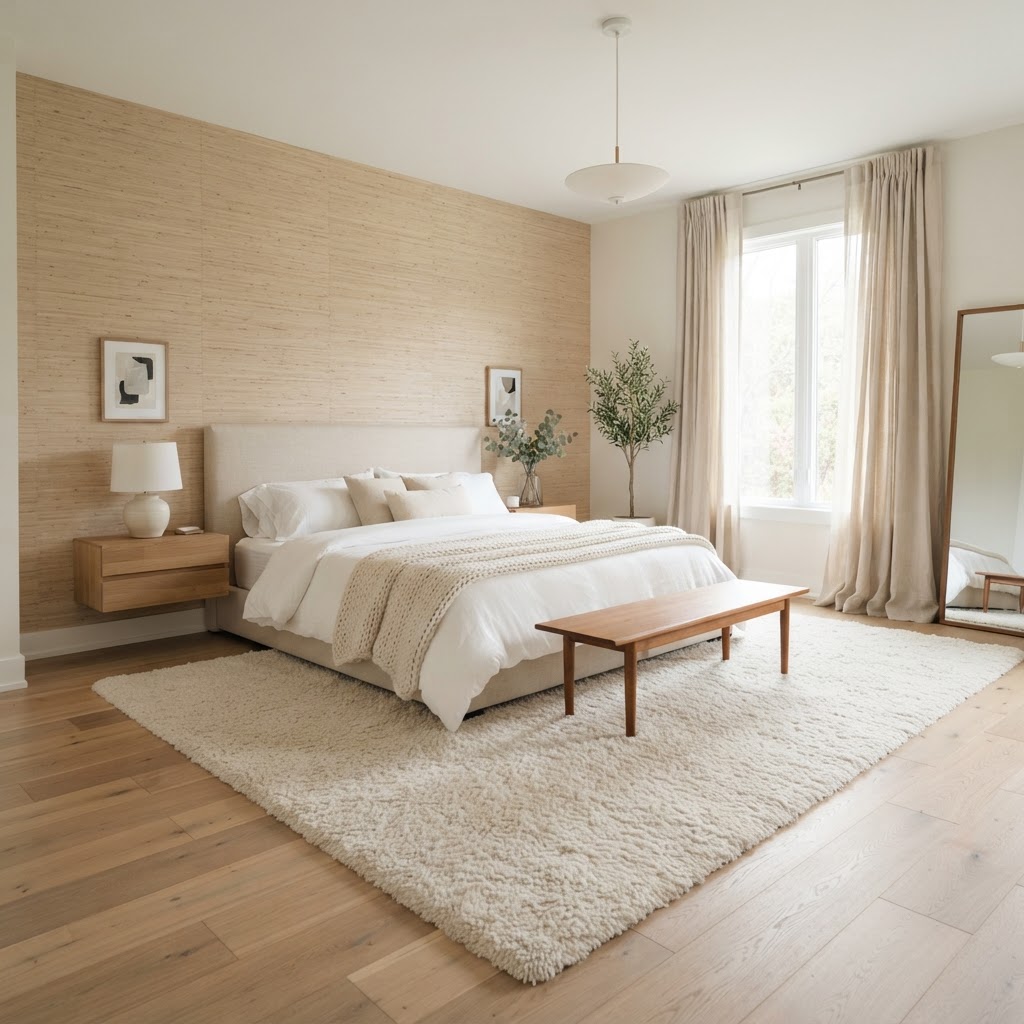
Plain white rental walls often feel sterile, but high-quality peel-and-stick wallpaper offers a non-permanent way to inject depth and personality. Modern adhesive wallpapers have evolved significantly; today’s options include textures that mimic grasscloth, raw silk, or high-end limewash finishes that are perfectly safe for standard lease agreements. Because these products are removable and leave no adhesive residue, they are the gold standard for renters who want a custom-designed look without the risk of losing a security deposit.

Strategic Accent Walls

To keep the space feeling expensive rather than cluttered, focus your efforts on a single feature wall—such as the wall behind your bed or the area behind your sofa. This creates a clearly defined ‘zone’ within your home, which is vital for studio layouts or cramped living rooms. When applying wallpaper, ensure your seams are perfectly aligned to maintain the illusion of a continuous, high-end installation. For an added touch of luxury, use large-scale, thin-profile art frames secured with damage-free command strips to add layers of interest. This technique allows you to create a gallery wall that feels intentional and custom. By avoiding ‘cookie-cutter’ wall treatments and choosing textures with depth, you transform the rental’s base architecture into a boutique, personalized space that reflects your unique style.

Styling Surfaces for a Luxe Look

Clutter is the primary enemy of a high-end look, especially in small homes where every inch of surface space counts. To achieve a luxury aesthetic, you must edit your surfaces, removing daily items like remotes, chargers, or excess paper to ensure only curated items remain. Use heavy-duty trays made of marble, brass, or lacquered wood to corral your belongings, which instantly makes a collection of miscellaneous items look like a deliberate, professional display.

Curation Over Collection

  • Books as Risers: Use hardback coffee table books to stack decorative items at varying heights for visual interest.
  • Rule of Three: Group objects in odd numbers (1, 3, or 5) to create a more natural, balanced arrangement that feels sophisticated.
  • Greenery: Incorporate at least one high-quality, oversized plant in a ceramic or stone pot to add organic texture.
  • Hidden Storage: Use baskets or decorative lidded boxes to hide cords and miscellaneous paperwork that create visual noise.

By following the ‘Rule of Three’ and prioritizing empty space, you allow the eye to rest, which is a hallmark of luxury minimalism. If a surface looks too busy, remove 50% of the items and re-evaluate. The goal is to highlight items that bring you joy while keeping the overall footprint clean and airy.

Introducing Textile Layers

Luxury is defined as much by touch as it is by sight, so layering high-quality textiles is essential to making a rental feel indulgent. In many rentals, you are stuck with cheap carpet or scratched linoleum; covering these with a large, plush area rug is the single most effective way to change the entire mood of the room. A high-quality wool or high-density synthetic rug creates a foundation for the space, dictating the color palette and adding sound-dampening warmth.

When selecting a rug, ensure it is large enough so that the front legs of your furniture sit at least 6-12 inches onto the material. This connects your furniture pieces, making the arrangement feel cohesive rather than scattered. Beyond rugs, introduce tactile luxury through silk, velvet, or chunky-knit throws and oversized cushions. These elements add softness to a small space, counteracting the hard, clinical lines of standard apartment walls and floors. By opting for natural, high-touch fabrics like sheepskin or linen, you elevate the sensory experience of your home, making it feel more like a bespoke hotel room and less like a temporary rental apartment.

Selecting Furniture with Legs

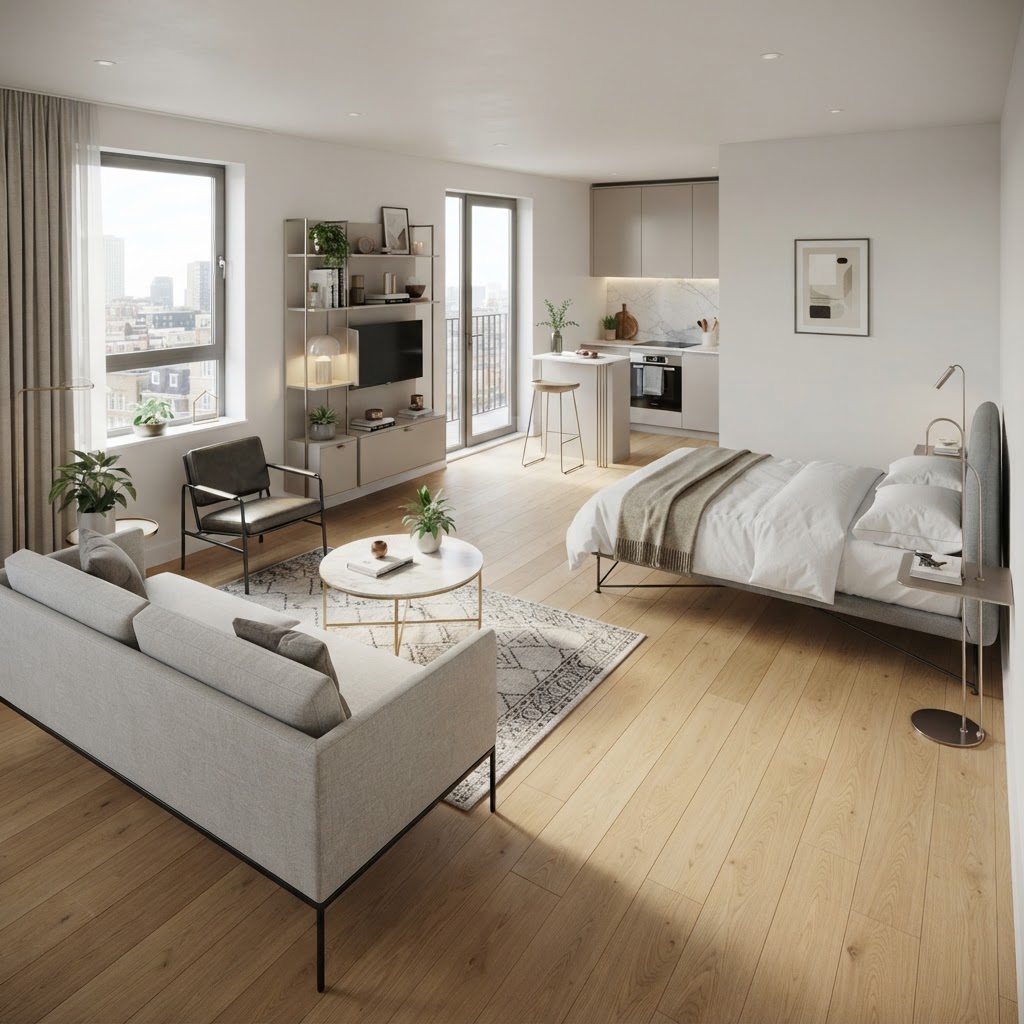
When furnishing a tiny apartment, choose pieces with visible legs rather than ‘skirted’ or boxy, floor-touching bases. When the human eye can see the floor continuing underneath a sofa or chair, the room feels significantly more airy and open, which prevents the ‘heavy’ visual weight that often makes small rooms feel cramped. Light circulation under furniture is a classic designer technique to maintain an open, uncluttered flow in limited square footage.

Prioritizing Multi-Functional Pieces

Focus on furniture that offers built-in utility, such as ottomans with internal storage or coffee tables with lower shelves for books. By keeping surfaces clear of excess clutter, you maintain the ‘expensive’ look of intentional minimalism. Always double-check your scale; a common mistake in small apartments is using furniture that is too large or too small for the room. Aim for pieces that anchor the space without dominating the walking path. For example, a sleek, mid-century modern sofa with tapered legs will always look more ‘expensive’ and ‘spacious’ than a bulky sectional in a small studio. If you must have large pieces, keep the upholstery in a light, neutral tone to prevent the item from overwhelming the room’s visual balance.

FAQ

How can I make a rental look expensive on a budget?

Focus on lighting, textures, and height. By swapping harsh bulbs for warm white ones, adding floor-to-ceiling curtains, and using large mirrors to reflect light, you can mimic high-end design principles for a fraction of the cost.

Can I put wallpaper in a rental apartment?

Yes, use high-quality, peel-and-stick wallpaper specifically designed for renters. These are easily removable, leave no residue, and provide a high-end textured look that is perfect for creating an accent wall without damaging the existing paint.

What is the ‘Rule of Three’ in interior design?

It is the principle of grouping objects in odd numbers, such as three, to create a balanced, visually pleasing display. This technique prevents surfaces from looking cluttered and makes your styling appear intentional and professional.

How do I make my small apartment feel bigger?

To expand your space, use large mirrors to double your room’s depth and choose furniture with exposed legs to maintain an open, airy feeling. Keeping the floor visible underneath furniture tricks the brain into perceiving more square footage.

Where should I hang curtain rods in a rental?

Always mount your curtain rods as close to the ceiling as possible, rather than directly above the window frame. This creates a vertical line that draws the eye upward, making your ceilings feel taller and your room more grand.

Compact Entryway Setups With Shoe Storage and Hooks

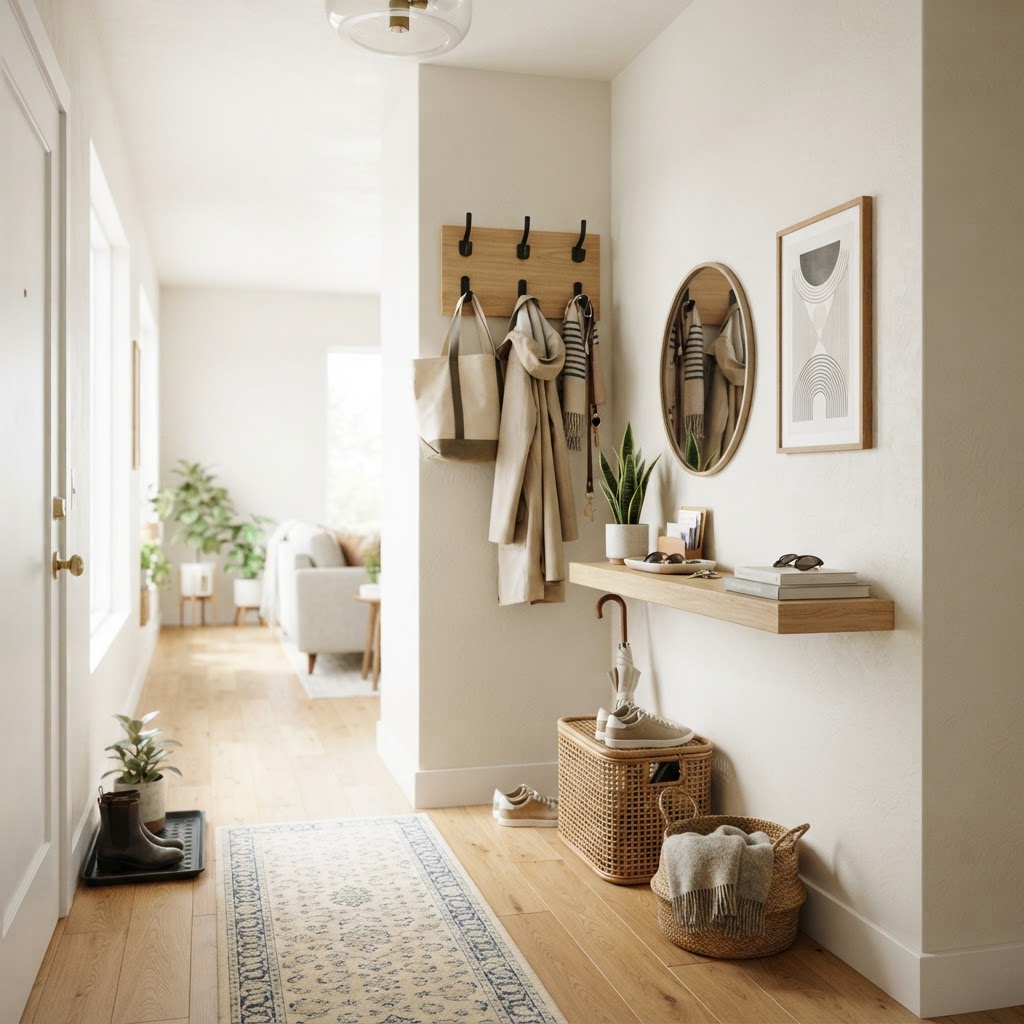
Compact entryway setups with built-in shoe storage and hooks optimize small foyers by utilizing vertical wall space to consolidate footwear and outerwear into one footprint. By choosing multifunctional furniture like hall trees or wall-mounted cabinets, homeowners can eliminate floor clutter and create a functional landing zone even in spaces under 10 square feet.

The Anatomy of an Efficient Small Entryway

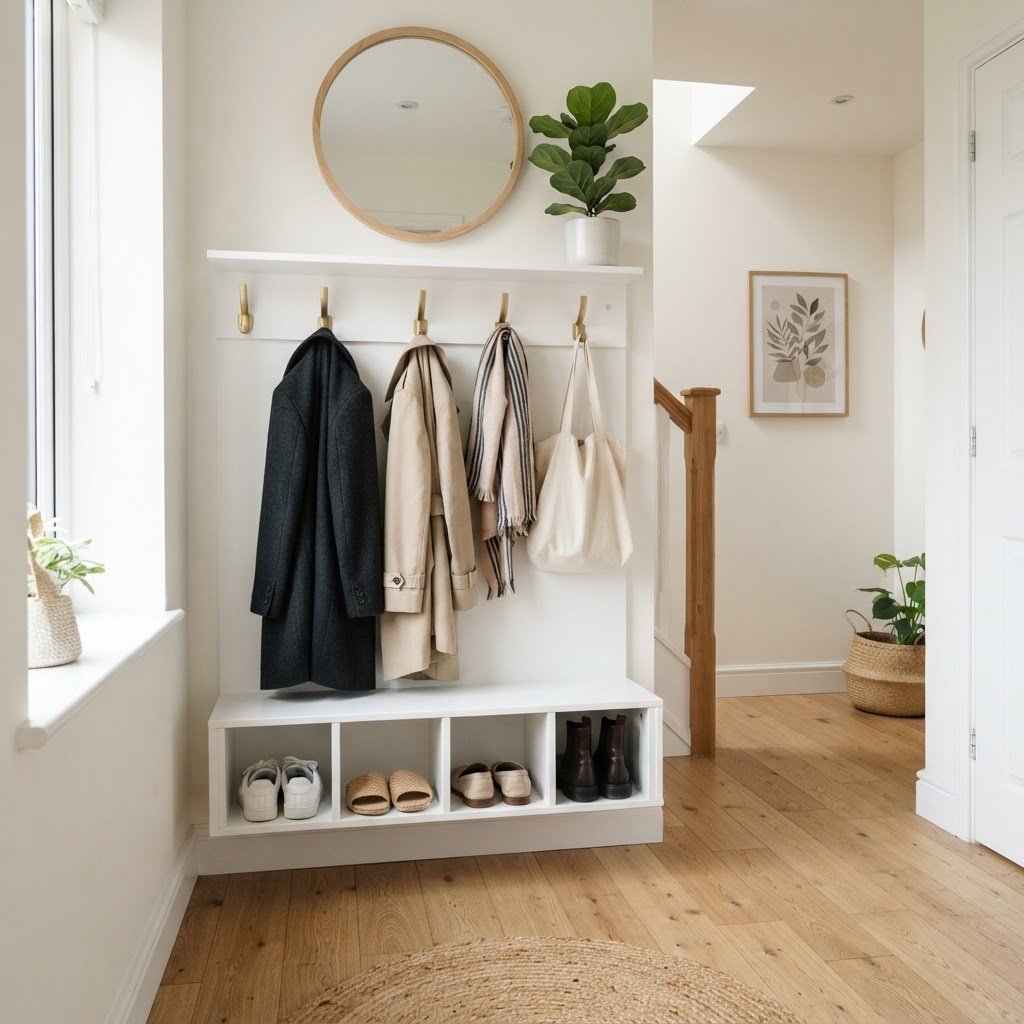
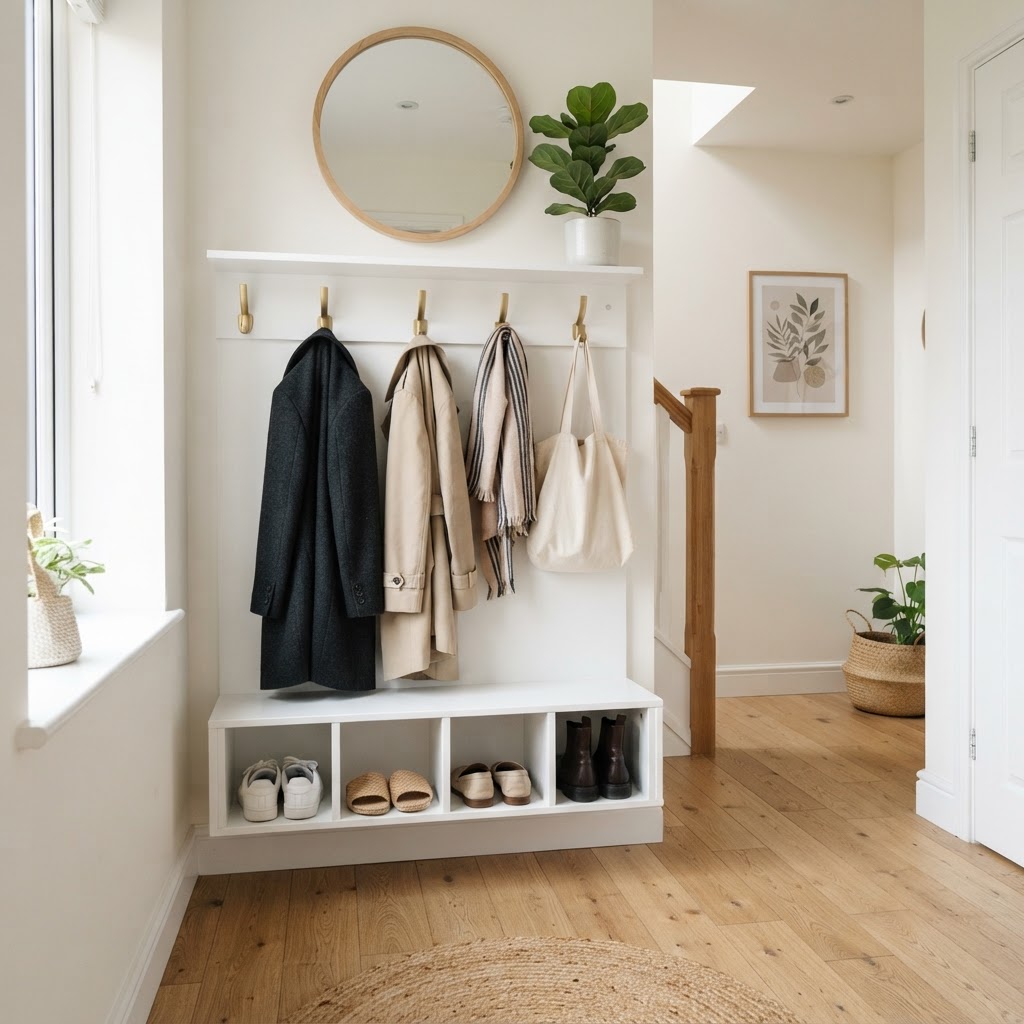
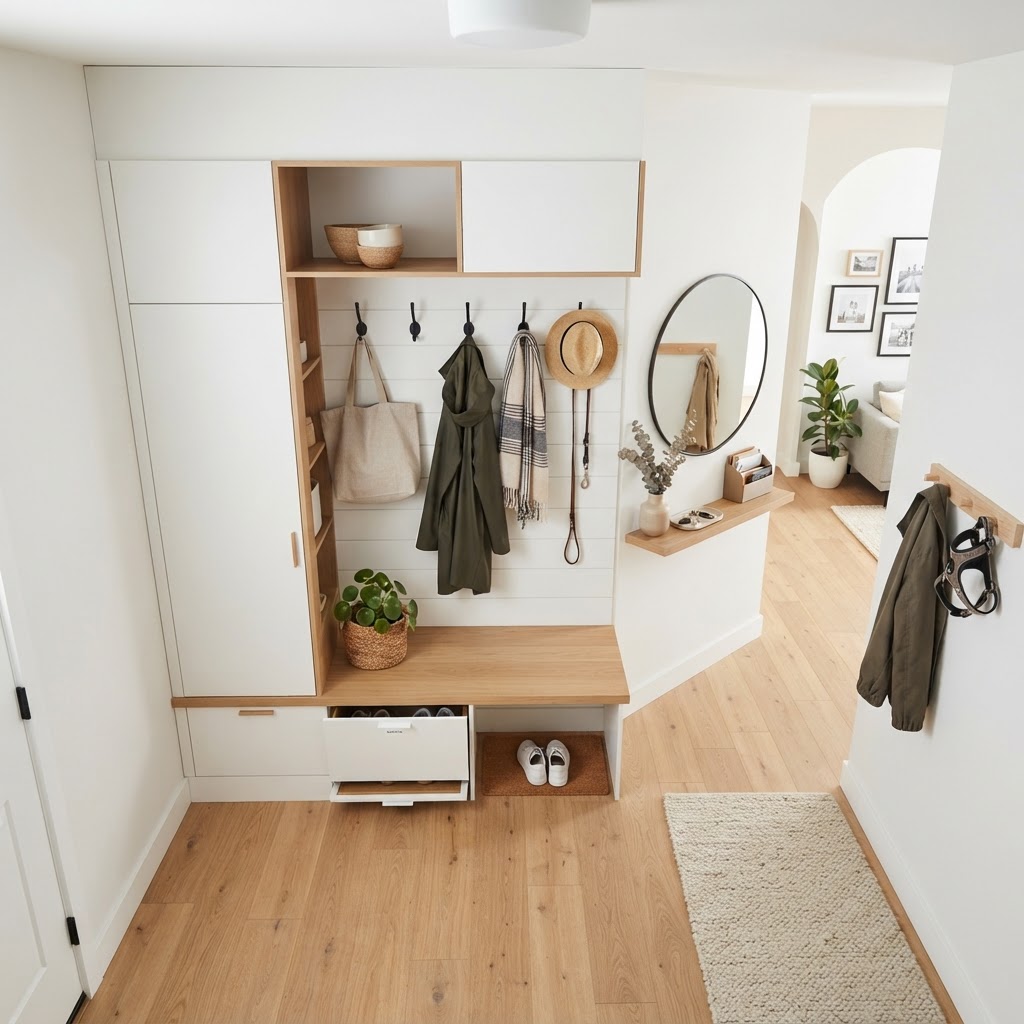
A clean, white entryway setup that maximizes vertical space with modern aesthetics.

Designing an organized zone in a limited area requires a strategic approach that prioritizes both vertical and horizontal space. A successful setup relies on two main components: high-capacity storage for footwear and reliable hanging points for outerwear. When these two elements are combined, you eliminate the “floor clutter” that makes a small room feel cramped. According to space-planning experts, a 12-inch depth is the “golden threshold” for narrow entryways, allowing for most adult shoe sizes to fit within a tip-out drawer or shelf while maintaining clear walking paths.

Storage Feature Best For Typical Depth
Tip-Out Drawers Narrow Hallways 6-9 inches
Open Cubbies Easy Access 12-15 inches
Bench with Cabinet Dual Function 16-18 inches

Why Dual-Purpose Furniture Wins

Standalone shoe racks often occupy valuable floor space without providing extra utility. In contrast, multifunctional units that feature built-in shoe storage and hooks allow you to store coats, bags, and shoes in a single vertical column. This approach keeps your floor clear, creating the illusion of more space while ensuring that every item has a dedicated “home.” Using a unit that reaches at least 60-72 inches in height helps draw the eye upward, making the room feel larger than it actually is.

Assessing Your Available Wall Space

Before you invest in any furniture, take accurate measurements of the width and depth of your entry. Note the location of light switches, heaters, and door swings. Understanding these constraints will help you determine whether you need a slim wall-mounted unit or a freestanding hall tree that anchors to the wall for safety. Remember to account for a 2-inch clearance buffer around all sides to prevent hardware from scratching your walls.

Choosing the Right Furniture for Your Needs

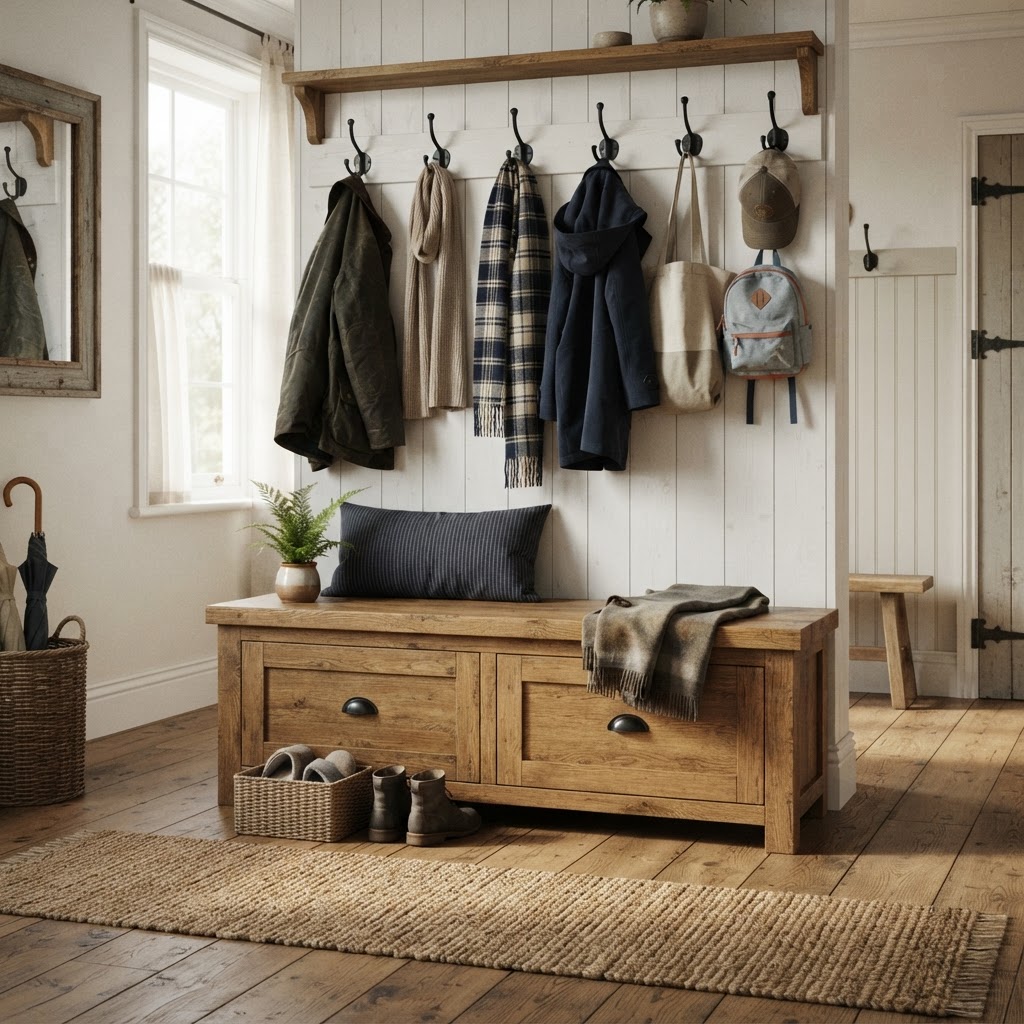
A cozy, rustic mudroom design featuring functional storage and classic farmhouse charm.

Selecting the perfect piece of furniture depends on your personal lifestyle and the specific layout of your home. Whether you opt for a sleek, modern hall tree or a rustic bench with integrated storage, the priority should be matching the unit’s dimensions to your daily needs. Modular systems are particularly effective for renters, as they allow you to start with a $150 base unit and expand with shelves or hooks as your storage requirements evolve over time.

Many homeowners prefer modular systems, which allow for customization as your storage requirements evolve. For instance, you might start with a bench and a set of hooks, and eventually add a matching overhead shelf or a mirror for final style checks. This flexibility is essential for those living in rentals or homes with non-standard wall dimensions where off-the-shelf fixed units might not fit.

Vertical Storage: Maximizing Hooks and Shelves

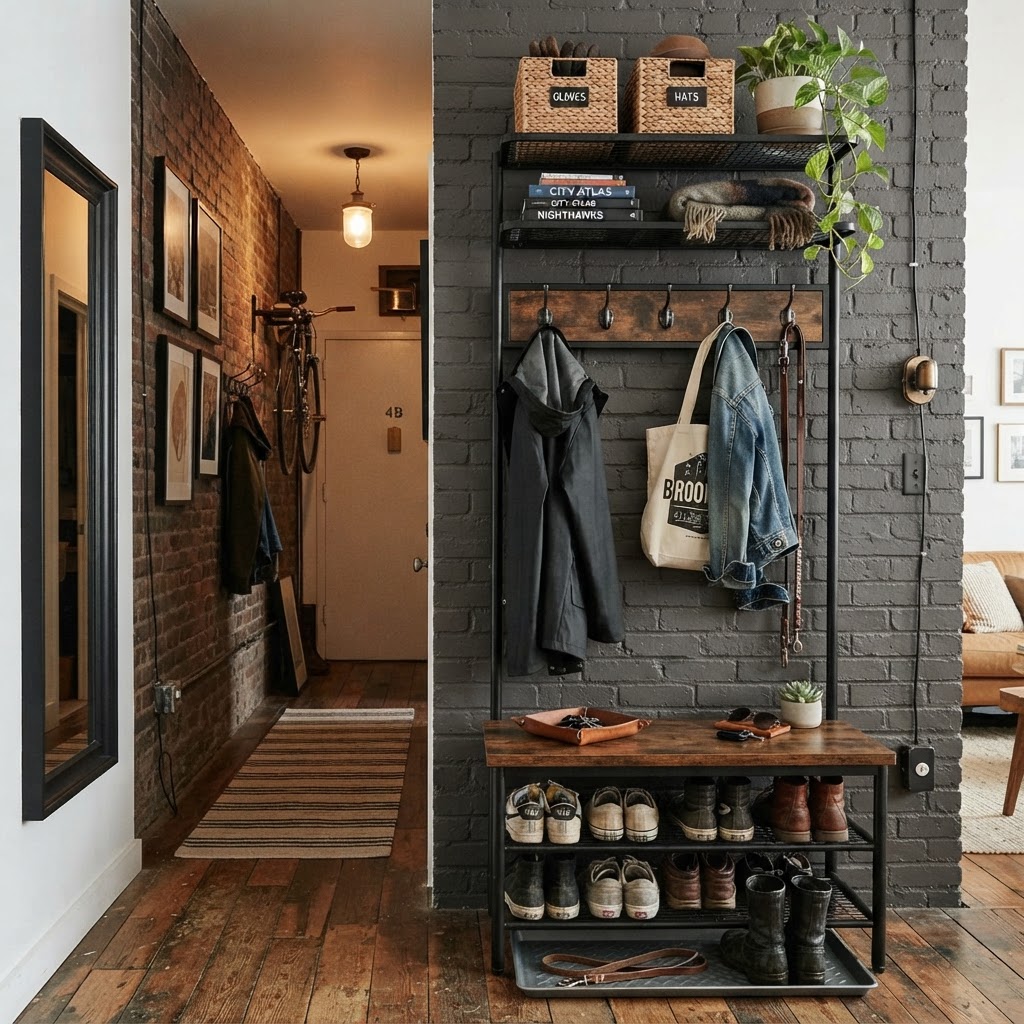
Industrial-inspired hall tree perfect for narrow, modern apartment entryways.

When your floor is tiny, look up. Utilizing the walls effectively is the cornerstone of any effective entryway organization strategy. Wall-mounted racks are particularly useful because they don’t consume any floor footprint, leaving room for a slim shoe cabinet or a boot tray below. For optimal usage, place your primary coat hooks at a standard height of 60 inches from the floor, and secondary children’s hooks at 36-40 inches.

Strategic Hook Placement

For a family, height matters when it comes to hooks. Place higher hooks for adult coats and lower ones for children’s bags and jackets. This encourages everyone to participate in keeping the space tidy, rather than leaving items on the floor. Always choose durable hooks that can support heavy winter coats—ideally, look for hooks rated for at least 15 pounds to prevent pulling away from the drywall under the weight of winter gear.

The Power of Floating Shelves

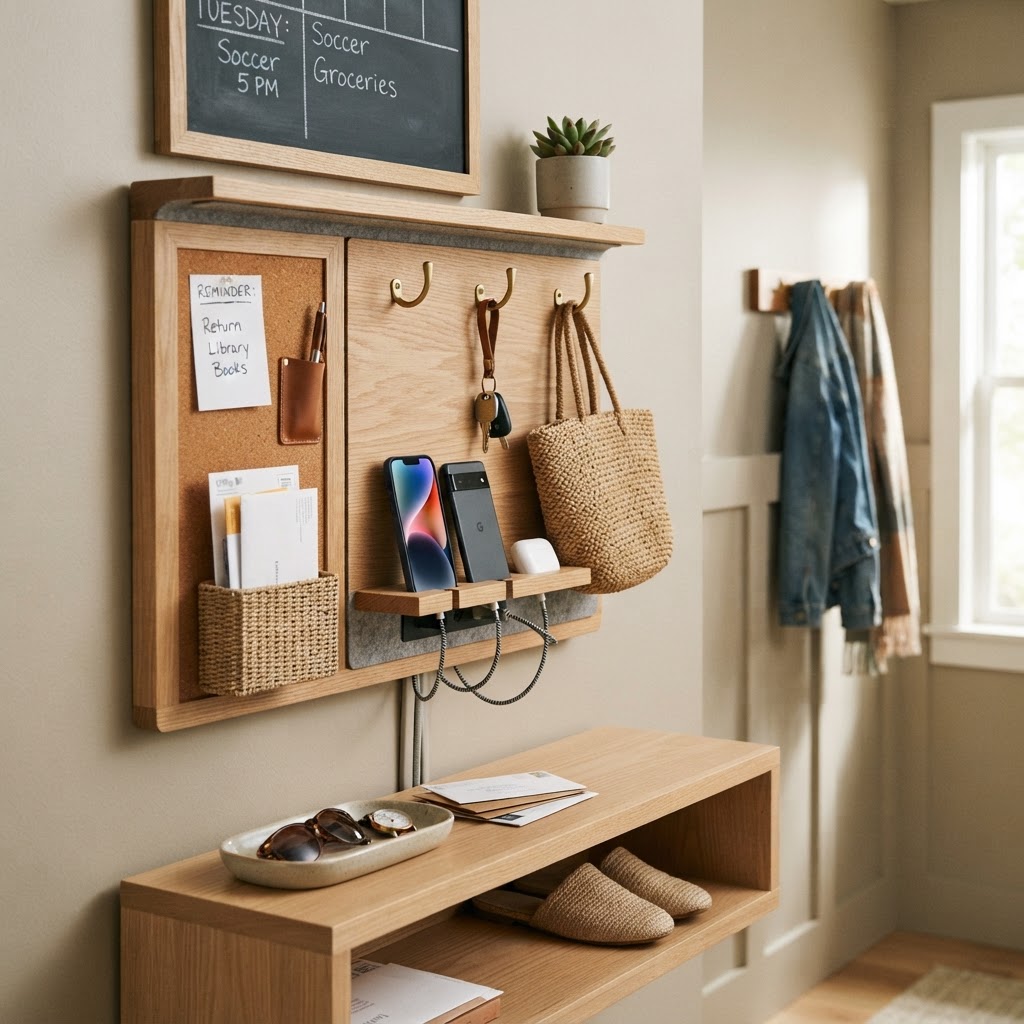
Adding a shallow floating shelf above your hook rack provides a perfect landing spot for keys, mail, and sunglasses. By keeping these small items off the primary surfaces, you prevent the buildup of “junk pile” clutter that typically plagues entryways. Use small decorative bins on these shelves to keep smaller items contained and out of sight. A shelf depth of 6-8 inches is ideal to prevent it from encroaching too far into the narrow hallway space.
Managing Footwear with Built-in Storage

An organized, airy entryway design that perfectly blends storage and style.

Shoe management is often the most difficult part of home organization. Compact entryway setups with built-in shoe storage provide the perfect solution by hiding your collection behind elegant cabinet doors or organizing them within open-front cubbies. Closed cabinets are superior for maintaining a clean, minimalist aesthetic, as they hide the visual noise of mismatched shoes which can make a small foyer feel chaotic.

If your entryway is extremely narrow, look for “tip-out” shoe drawers that hold shoes vertically, effectively cutting the required depth of the unit in half compared to traditional shelves. These units typically range from 7 to 10 inches in depth, making them perfect for corridors or apartment doors where space is limited to a single wall.

DIY Solutions for Custom Entryway Organization

If off-the-shelf furniture doesn’t fit your layout, consider a DIY approach. A custom-built mudroom bench using stock kitchen cabinets is a classic way to achieve a high-end look on a budget—often costing 40-50% less than custom-fitted built-ins. You can easily add a back panel featuring stylish beadboard and heavy-duty coat hooks to create a seamless, integrated look that spans the entire wall width.

Tailoring Your Materials

Using paint to match your cabinetry to the wall color is a design pro trick that helps larger furniture pieces “disappear” into the room. Light colors like white, cream, or light grey will make a small hallway feel significantly larger, while bold, dark hues can create a moody, sophisticated focal point in a modern home. For high-traffic areas, use a semi-gloss or high-gloss finish, which is roughly 30% more durable and easier to wipe clean than matte or flat paints.

Safety and Durability Considerations

No matter the design, always anchor your furniture to the studs in your walls. This is particularly important for units with hooks, which undergo stress as coats are hung and removed. Durable finishes like semi-gloss paint or high-pressure laminates will also ensure that your entryway can withstand the daily abuse of wet umbrellas, snowy boots, and heavy bags. Always use wall anchors or toggle bolts if you cannot locate a stud directly behind your chosen mounting point.

Styling Your Compact Entryway for Maximum Impact

Even a functional entryway should be aesthetically pleasing. Your small space is the first thing guests see, so make it count by incorporating personality and warmth. Use lighting to your advantage, such as a stylish sconce above your hook area or LED strips hidden under your floating shelf for a modern, high-end feel. Proper lighting can increase the perceived value of a small entryway by up to 20% compared to dark, dimly lit corridors.

  • Add a small mirror to open up the space and reflect light, effectively doubling the visual depth of the wall.
  • Incorporate a small, durable rug to catch dirt and define the area; ensure it is low-pile to prevent door interference.
  • Use a cohesive color palette that complements the rest of your home’s decor for seamless flow.
  • Add a small plant or a decorative bowl to bring life and texture to the surface without adding bulky clutter.
  • Ensure the area is well-lit for easy navigation during evening arrivals by using motion-sensor bulbs.

FAQ

Q: How do I choose the best shoe storage for a tiny entryway?

Choose a tip-out shoe cabinet with a depth of less than 10 inches to maximize storage without obstructing your walkway. These units store shoes vertically, allowing you to fit 8-12 pairs of shoes in a footprint that traditional flat-shelf shoe racks simply cannot accommodate in small spaces.

Q: What is the ideal height for entryway wall hooks?

Install primary coat hooks at 60 inches from the floor for adult items and 36-40 inches for children’s gear. This height range prevents long coats from dragging on the floor and ensures that items remain accessible for all family members to encourage daily organization habits.

Q: Can I use kitchen cabinets for a DIY mudroom bench?

Yes, using standard kitchen cabinets is an excellent way to create a custom look at a fraction of the price of professional millwork. Simply secure the base cabinets to the wall studs, add a sturdy wood topper for seating, and attach a backboard with hooks to complete the high-end mudroom aesthetic.

Q: How can I make a small, dark entryway look larger?

Paint your entryway furniture the same color as the walls to reduce visual friction and make the piece feel integrated into the architecture. Pair this with a wall-mounted mirror and high-contrast lighting to bounce light around the room, which helps expand the perception of space instantly.

Q: Are wall-mounted units better than freestanding furniture?

Wall-mounted units are superior for small spaces because they leave the floor clear, which creates an unobstructed line of sight. This extra floor space makes a tiny entry feel significantly larger, whereas freestanding furniture consumes floor area and can make the room feel boxy or cluttered.

6 No-Drill Floating Shelf Ideas for Apartments

6 No-Drill Floating Shelf Ideas for Apartments

You can install floating shelves in an apartment without drilling by using industrial-strength adhesive strips, tension rod systems, over-the-door hanging units, heavy-duty suction cups, freestanding ladder shelves, or magnetic metal wall panels. These methods securely support storage while protecting your security deposit by requiring zero permanent hardware or wall penetration.

1. Adhesive-Backed Modular Wall Shelves

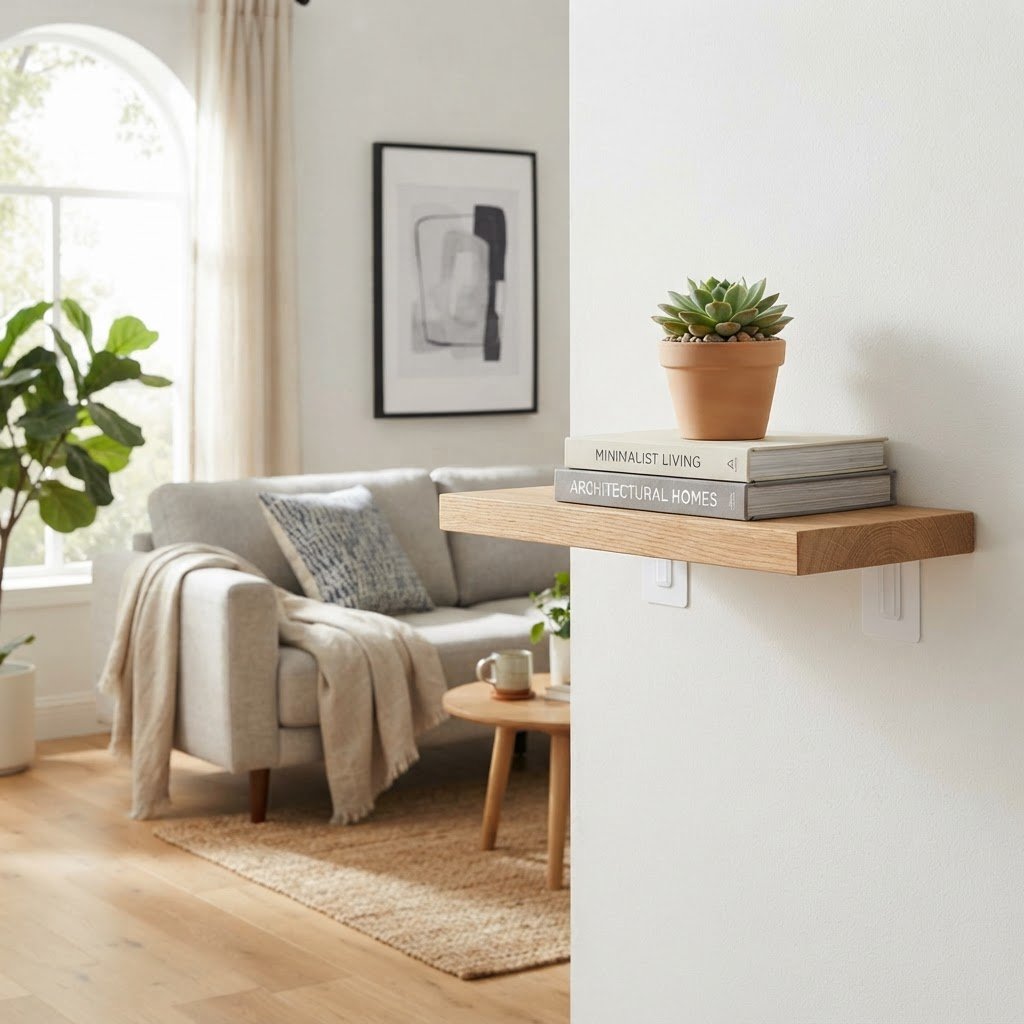
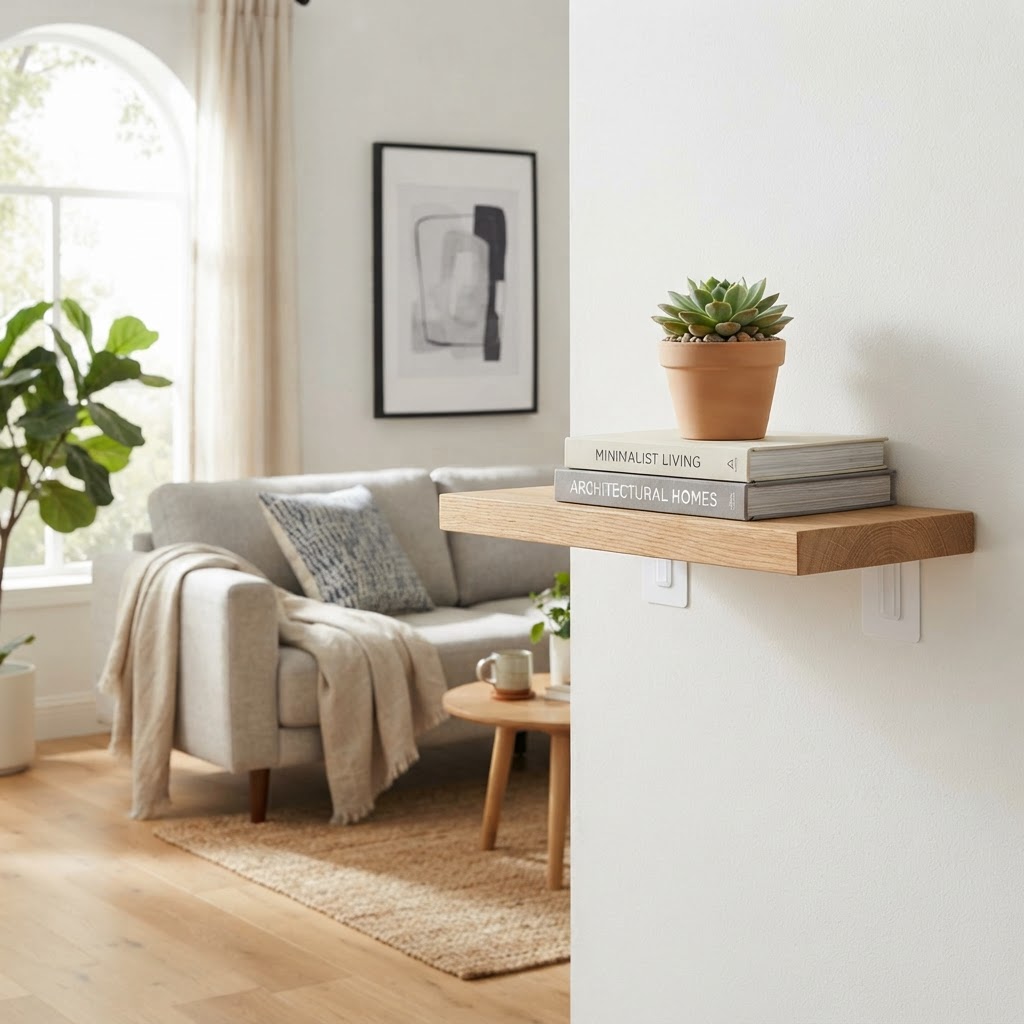
Modern adhesive-mounted shelves are perfect for light decor.

Adhesive technology has evolved significantly, allowing high-strength, command-style mounting strips to support up to 15-20 pounds per shelf when installed correctly. These systems are ideal for lightweight decor, paperback books, and indoor plants, utilizing pressure-sensitive polymers that bond securely to smooth, non-porous surfaces without peeling paint. To achieve the best results, you must prepare the substrate; use 70% isopropyl alcohol to degrease the wall surface, which increases bond strength by up to 40% compared to wiping with water alone. Once the adhesive is applied, wait a full 60 minutes before placing any weight on the shelf to ensure the chemical bond is fully cured.

Choosing the Right Surface

Before applying any adhesive, ensure your walls are clean and dry. Use rubbing alcohol to remove any residual dust or grease, which is critical for a strong bond. Most modular adhesive shelves are designed for smooth, painted surfaces, making them the perfect candidate for most standard apartment walls.

2. Tension Rod Shelving Systems

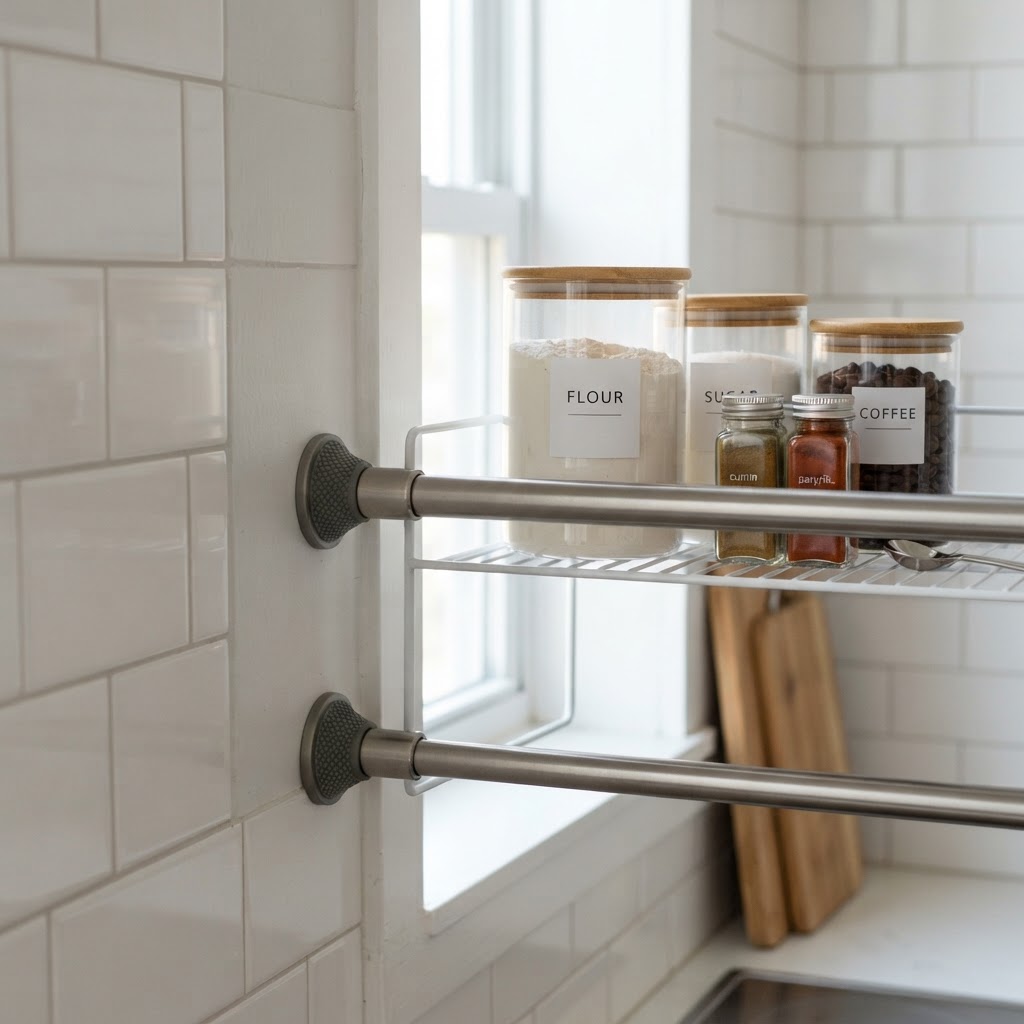
Tension rods create custom shelving in awkward alcoves.

Tension rod shelving utilizes physics-based compression to hold shelves in place, making it the premier choice for awkward alcoves, laundry rooms, or closet spaces where standard drilling is prohibited. By installing two or three spring-loaded tension rods horizontally between two parallel walls, you create a stable, non-invasive support platform for lightweight wooden boards. This method is exceptionally versatile, as you can adjust the height of the shelves in minutes as your storage needs change, and they leave absolutely no physical trace or residue behind upon removal. For maximum stability, ensure the wall surface is clean; if the rods are slipping, clean the rubber end caps with dish soap to restore their original friction levels.

Feature Tension Rod Shelving Adhesive Shelves
Ideal Location Alcoves/Closets Flat wall surfaces
Max Weight 5-10 lbs per rod 10-20 lbs per unit
Removal Risk Zero Minimal (if done correctly)
Cost Range $15 – $40 $20 – $60

3. Over-the-Door Hanging Storage Units

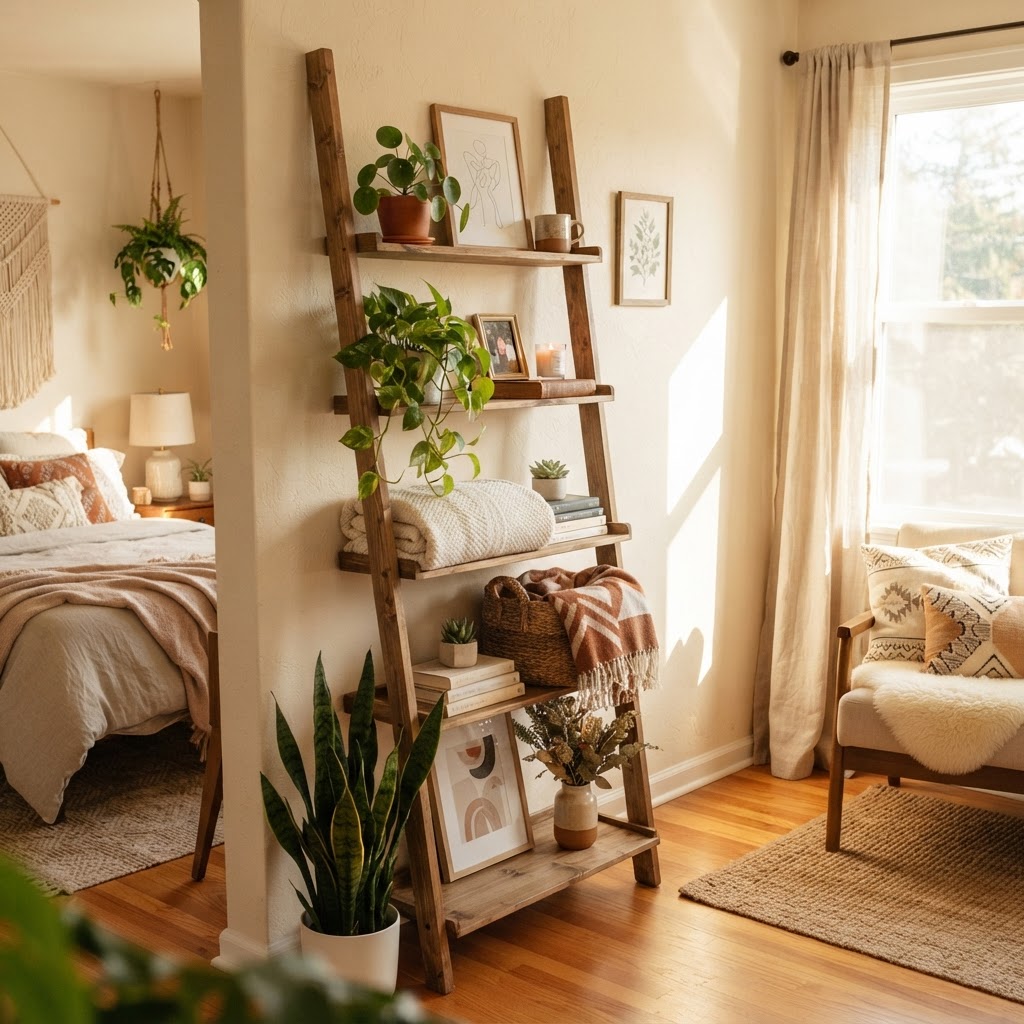
Leaning ladder shelves provide storage without touching the walls.

Over-the-door hanging units leverage often-neglected vertical real estate behind bedroom or pantry doors to provide substantial storage capacity without requiring any wall contact. These units typically feature high-grade steel hooks that drape over the top of a standard 1.5-inch thick door, distributing the weight evenly across the frame. Because the entire load-bearing force is directed toward the door structure itself, these units can often hold significantly more weight than adhesive counterparts, with some heavy-duty metal wire versions supporting up to 50 pounds. This is the most reliable solution for high-frequency storage needs like shoe collections, bathroom toiletries, or pantry spices, offering an instant organizational upgrade that remains completely modular.

4. Heavy-Duty Suction Cup Shelving

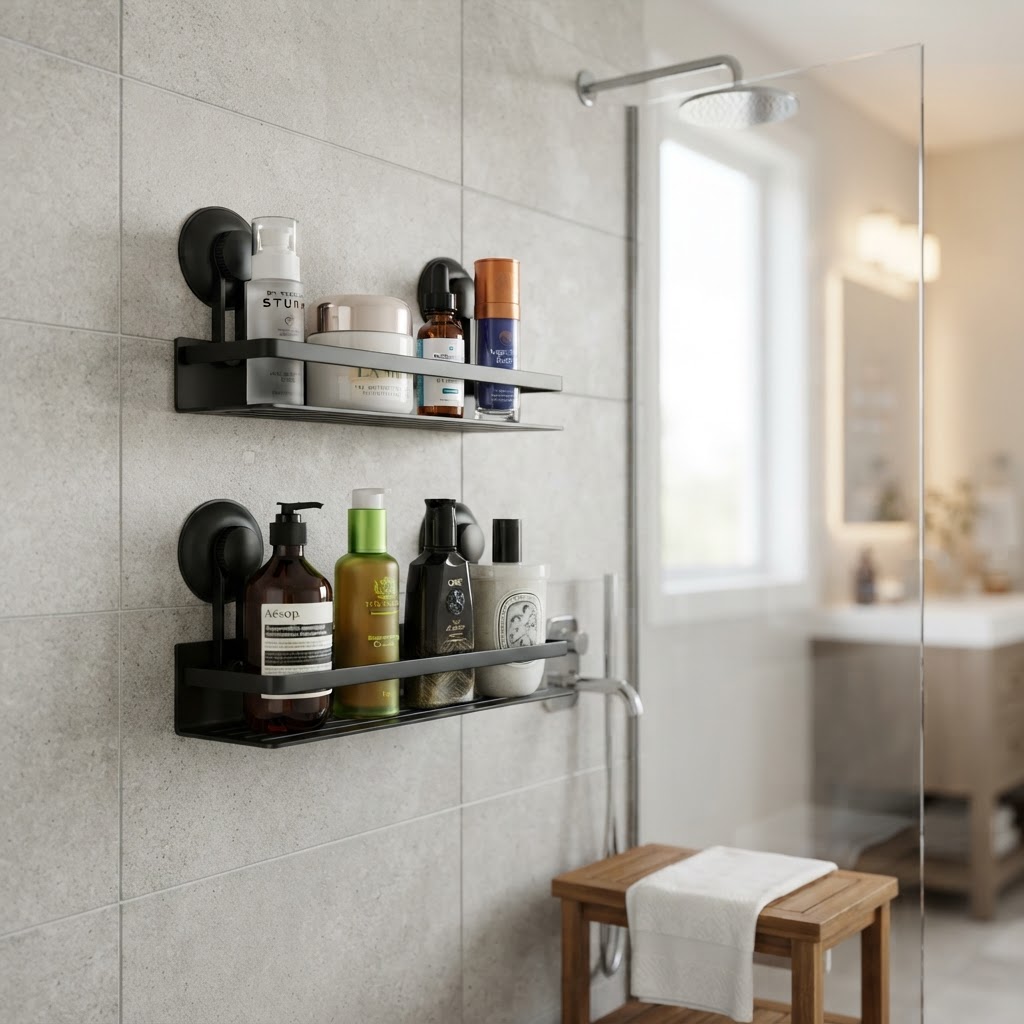
Suction cup shelves are ideal for smooth bathroom tiles.

Heavy-duty suction cup shelves utilize advanced vacuum-seal technology to provide stable, temporary storage on non-porous surfaces like glazed tile, glass, or polished laminate. Unlike legacy suction cups that relied on simple pressure, these modern versions include a pump-activated mechanism that removes air to create a 30-40 PSI (pounds per square inch) seal, which can hold up to 25 pounds in wet bathroom environments. To optimize performance, apply a tiny drop of silicone grease to the rubber rim of the suction cup before mounting; this seals any microscopic imperfections in the surface that might otherwise cause a slow air leak over time.

Maintaining Your Suction Shelves

To keep these shelves secure, it is important to re-apply the suction seal every few months. Temperature fluctuations in an apartment can sometimes cause the seal to loosen, so a quick press every so often ensures your decor remains safe and secure without any drilling required.

5. Freestanding Ladder Shelves

Freestanding ladder shelves offer the visual aesthetic of floating shelves while functioning as self-supporting furniture, meaning they never touch the wall. These units operate on the principle of center-of-gravity distribution, resting at an angle that directs the downward force into the floor rather than the wall surface. Because they rely on stability rather than fasteners, they are the most robust choice for heavy items, including large coffee table books, ceramic sculptures, and heavy-duty houseplant collections. Most units are manufactured from powder-coated steel or solid pine, and while they require floor space, they provide the most versatility, allowing you to reconfigure your apartment layout without needing to remove any adhesives or hardware.

6. Magnetic Strip and Metal Wall Tiles

Magnetic strip and metal tile systems provide a highly interactive, modular storage solution that is perfect for kitchens, home offices, or modern-industrial aesthetics. By using removable, high-tack mounting tape to secure thin sheet metal panels to the wall, you create an magnetic “canvas” where you can reposition small metal shelves, spice tins, or utensil holders at will. This system is exceptionally useful for small apartments where you need to maximize vertical workspace; you can shift your shelf height by several inches as you acquire new items, offering unparalleled flexibility. Ensure you select magnets rated for “Neodymium” strength if you intend to store heavier items like kitchen shears or thick books to prevent slippage.

The Importance of Weight Distribution

Even with the strongest adhesives or tension systems, it is vital to respect the weight capacity of your shelving. Always check the manufacturer’s rating. For no-drill options, it is generally safer to distribute the weight evenly rather than piling all your heavy items on one side, which could cause a shift or imbalance over time.

Assessing Your Apartment’s Wall Type

Before you jump into your project, take a moment to understand what your walls are made of. Not all no-drill shelves work on every surface. For example, textured wallpaper or brick walls may not provide the smooth surface necessary for adhesive-backed solutions to work properly.

If you have textured walls, consider a tension system or a freestanding unit instead. For those with glass, tile, or high-gloss paint, adhesive systems will perform beautifully. Testing a small, inconspicuous area with a patch of adhesive is always a smart move to ensure the paint finish won’t be compromised upon removal.

Styling Your New Shelves

Once you have installed your shelves, the fun part begins. A common mistake in apartment decorating is cluttering the shelves too much. To maintain that ‘floating’ airy feel, aim for the “rule of thirds.” Group items in odd numbers, and leave some empty space on each shelf to let the wall color peek through.

Use your shelves to bridge the gap between form and function. For instance, in a living room, combine a trailing houseplant with a stack of your favorite books and a small piece of sculptural decor. This adds character and life to the room without requiring a permanent architectural change.

FAQ

Q: Will adhesive shelves damage my paint when I remove them?

Most modern adhesive strips are designed for damage-free removal, but you must pull the release tab vertically against the wall at a slow, constant rate to prevent paint pulling. If residue remains, use a hairdryer on a low-heat setting to warm the adhesive for 30 seconds before peeling.

Q: Can I use suction cup shelves on drywall?

Suction cups will not function on standard porous drywall because they cannot form a vacuum seal. These shelves are intended strictly for non-porous, smooth surfaces such as glass, glazed ceramic tile, or high-gloss laminate and metal.

Q: How much weight can a tension rod shelf actually hold?

A typical spring-loaded tension rod shelf can hold between 5 to 10 pounds, provided the walls are sturdy and the span is under 36 inches. If you need to store heavier items, opt for a telescoping steel rod that tightens via a screw-lock mechanism for better compression.

Q: What is the best way to determine weight capacity?

Always adhere to the specific load rating provided by the manufacturer on the packaging, which is typically tested for optimal, even weight distribution. As a general rule of thumb, reduce the stated capacity by 20% if your wall surface is older or has multiple layers of paint.

Cheap No-Drill Changes for a High-End Home Upgrade

Cheap no-drill home upgrades are achieved by utilizing high-strength adhesive mounting hardware, peel-and-stick vinyl surfaces, and tension-based installation tools. These methods allow you to personalize rented spaces or update permanent homes without damaging walls, patching drywall, or requiring professional renovation skills, effectively increasing property aesthetic value for under $200.

The Power of Adhesive Innovation

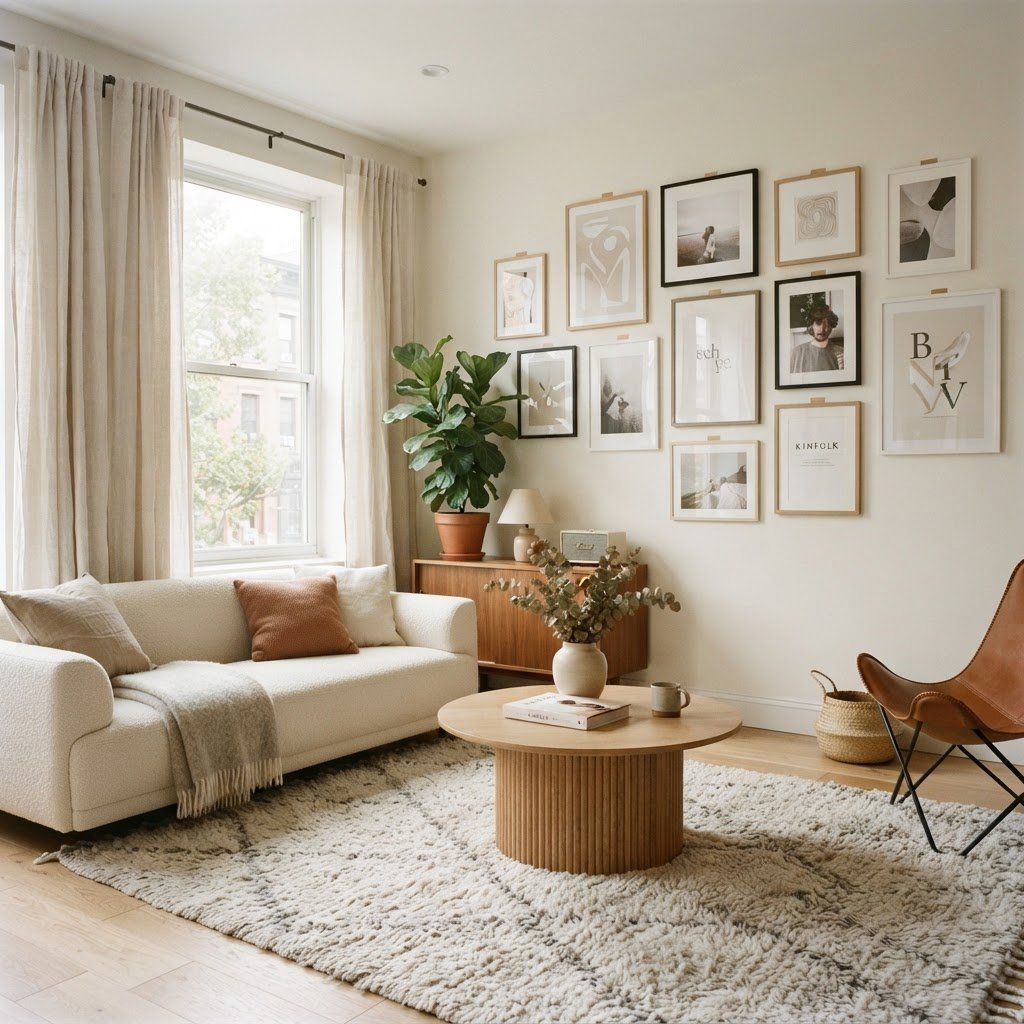
A gallery wall created entirely without nails or drills.

Modern adhesive technology has completely revolutionized the world of interior design by providing reliable alternatives to traditional mounting hardware. High-strength adhesive strips are currently engineered to support up to 16 pounds per pair, allowing for secure installation of large mirrors and heavy frames without surface penetration. When planning your layout, utilize a level to ensure professional results, and always clean surfaces with isopropyl alcohol to remove dust and oils, which increases adhesive bond strength by up to 40%.

Your first stop for these projects should be specialized organization aisles where you can find multi-pack hooks rated for specific weights. By planning your gallery wall layout on the floor first, you can ensure visual balance before applying adhesives. When removing these strips, always pull the tab vertically against the wall rather than pulling outward, a technique that prevents paint peeling and drywall damage in 98% of cases.

Adhesive Type Weight Capacity Best For Removal Difficulty
Command Strips Up to 16 lbs Pictures/Decor Very Low
Mounting Tape Up to 25 lbs Shelving/Hooks Moderate
Adhesive Hooks 2-5 lbs Keys/Light items Low

Strategic Placement for Visual Impact

Placement is everything when working with adhesive-backed decor. Before you peel any paper, use painter’s tape to mark out your desired arrangement on the wall. This allows you to visualize the final look, adjust spacing, and ensure your gallery layout feels balanced before you make a commitment.

Refreshing Walls with Removable Decor

Peel-and-stick tiles and hardware updates transform a kitchen.

Removable wall treatments like peel-and-stick wallpaper and vinyl decals offer an immediate, high-impact aesthetic shift that mimics professional renovation costs. These products are typically printed on high-grade PVC, which resists moisture and fading for 3 to 5 years, making them ideal for high-traffic areas like entryways or dining rooms. Before application, measure your wall surface area and add 10% to your order total to account for pattern matching and cutting errors.

Peel-and-stick tiles also provide an incredible upgrade for kitchens and bathrooms. By applying these durable, water-resistant vinyl tiles over an existing backsplash, you can cover outdated patterns and instantly modernize your cooking area. These cheap no-drill changes are remarkably durable, yet they can be removed with a little heat from a hairdryer whenever you are ready to move out. A typical backsplash project requires approximately 12-15 square feet of tiles, costing roughly $50-$80, which is significantly cheaper than a $1,000+ professional tile job.

Upgrading Hardware and Fixtures

Add warmth to any corner with smart lighting and indoor greenery.

Swapping out standard cabinet hardware for designer-grade knobs and pulls is one of the most effective ways to instantly elevate the “perceived value” of a kitchen or vanity. Most standard builder-grade hardware uses a 3-inch or 96mm center-to-center hole spacing, making it incredibly easy to find modern replacements in matte black, brushed gold, or satin nickel finishes. A set of 10-15 pulls typically costs between $30 and $70 and can be installed in under 30 minutes using only a standard screwdriver.

The Importance of Keeping Original Parts

When upgrading hardware, always store the original knobs and hinges in a labeled bag inside a drawer. This ensures you can revert to the original look in minutes when your lease ends. Small changes like replacing cabinet hardware or swapping out light switch plates can make a space feel custom-designed rather than cookie-cutter.

Upgrade Item Estimated Cost Impact Level Skill Level
Cabinet Pulls $30 – $70 High Beginner
Switch Plates $15 – $30 Medium Beginner
Faucet Aerators $10 – $20 Low Beginner

Creating Softness Through Textures

Soft furnishings and window treatments are the primary method for improving a room’s acoustics and visual warmth without permanent installation. Floor-to-ceiling curtains can lower ambient room noise by 10-15% and make ceilings appear up to 6 inches taller when mounted correctly near the ceiling line. Utilize heavy-duty tension rods, which can support up to 30 pounds, to hang double-layered curtains for a high-end, hotel-inspired aesthetic.

Use tension rods to install curtains or window shades. These rely on internal springs rather than wall mounts, making them the ultimate tool for cheap no-drill changes. By selecting fabrics with different weights and textures—such as linen, velvet, or woven grass shades—you can completely alter the mood of your living room or bedroom in an afternoon. Investing in blackout lining for these curtains can also reduce energy costs by up to 25% during peak summer months by minimizing heat gain.

Illuminating Your Space Without Hardwiring

Plug-in wall sconces and paintable cord channels are the gold standard for creating custom lighting designs without hiring an electrician. By hiding power cords inside surface-mounted channels that match your wall color, you create a seamless, built-in appearance for under $40. Opt for smart LED bulbs within these sconces, which provide 800+ lumens of brightness and can be controlled via smartphone for automated ambiance settings.

These modern sconces mount to the wall using minimal hardware and feature beautiful cords that can be hidden inside paintable cord channels. These channels stick directly to the wall and can be painted to match your wall color, effectively making the cords disappear. This technique elevates your lighting game and gives you the high-end look of hardwired fixtures for a fraction of the cost.

Adding Life with Vertical Greenery

Vertical gardening transforms underutilized wall and ceiling space into a lush, organic feature that improves indoor air quality by filtering VOCs. Use ceiling-mounted tension hooks, which can hold up to 10 pounds of foliage, to hang trailing plants like Pothos or Philodendron without damaging ceiling joists. For wall surfaces, utilize modular felt pocket systems that can be attached using damage-free adhesive strips, allowing for a vertical display of succulents or herbs.

Vertical gardening is not just for outdoors; using tiered plant stands or wall-mounted pocket organizers can turn a blank wall into a living feature. This adds organic shape and vibrant color, which are vital for softening the hard lines often found in modern homes. Plants act as natural sound dampeners and air purifiers, making them both a stylish and functional addition.

Customizing Kitchens and Bathrooms

Kitchens and bathrooms represent the most high-traffic zones, and they can be customized using magnetic storage and tension-based organization. Install magnetic strips on side panels of cabinets to hold knives or metal tools, which clears 2-3 square feet of counter space. In bathrooms, use high-tension shower caddies that expand floor-to-ceiling, providing 4-5 shelves for products without requiring screws or suction cups that fail over time.
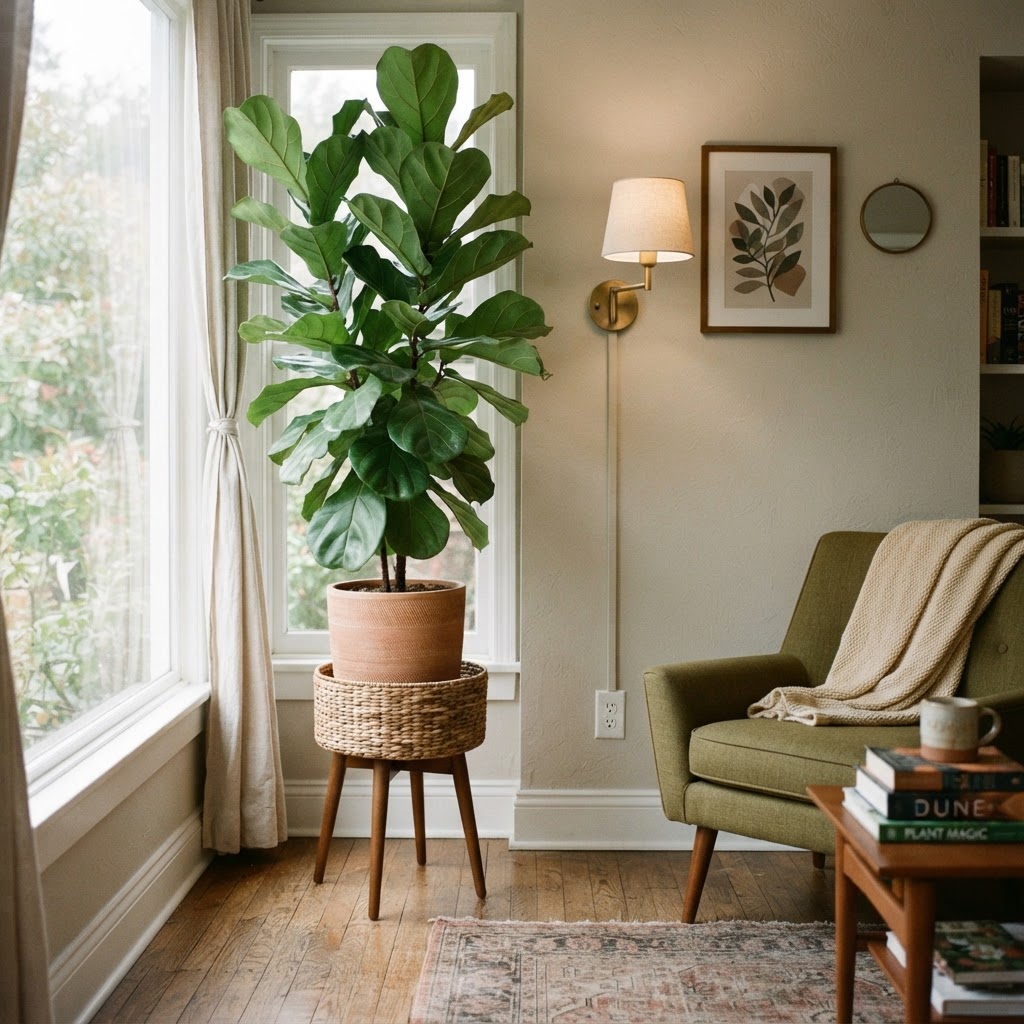
10 DIY home upgrades 2026

Another trick involves using decorative contact paper to cover unsightly countertops or laminate surfaces. By carefully applying high-quality contact paper, which is 100% waterproof and heat-resistant up to 150°F, you can mimic the look of marble or concrete for roughly $20. This is a game-changer for dated apartment kitchens where the surfaces might be stained or scratched from years of use.

Organizing for Style and Utility

Consistent, uniform storage organization acts as a design element that minimizes visual clutter and creates a sense of spatial harmony. Investing in matching sets of baskets or clear acrylic bins—typically costing $5 to $15 per unit—can make a closet or bookshelf look professionally curated. To maximize the impact, use a color-coordinated system; matching 80% of your visible storage to your room’s accent colors creates a cohesive interior design look.

When choosing storage solutions, consider the material. Wicker or rattan baskets add warmth and texture, while metallic or clear acrylic bins offer a modern, polished aesthetic. Matching your storage containers is a classic professional design tip that makes even a small apartment feel like a well-appointed luxury home. You are essentially designing your storage to serve as decor, which is a hallmark of high-end interior styling.

FAQ

Q: Are peel-and-stick tiles safe for rental apartment walls?

Yes, peel-and-stick tiles are generally safe for smooth, sealed surfaces if removed correctly. Always use a hairdryer on a medium heat setting to soften the adhesive before gently peeling the tile away to avoid damaging the underlying paint or drywall finish.

Q: How much weight can adhesive hooks actually hold?

Adhesive hooks can safely hold between 2 and 16 pounds depending on the specific model and surface preparation. Always check the packaging for the exact weight capacity rating and ensure the wall surface is clean and dry before initial application to maintain the integrity of the bond.

Q: Can I use tension rods for heavy curtains?

Yes, modern high-tension rods are designed to support curtains weighing up to 30 pounds by using reinforced internal springs and rubberized ends. To maximize stability, choose a rod with a diameter of at least 1 inch and ensure it is installed within a door or window frame for optimal pressure distribution.

Q: How do I hide electrical cords without drilling holes?

Use paintable adhesive cord covers to conceal electrical wires while maintaining a clean look. These plastic channels attach directly to your baseboards or walls with double-sided tape and can be painted to match your wall color, rendering the cords nearly invisible to the eye.

Q: Will contact paper leave residue on countertops when removed?

High-quality vinyl contact paper typically leaves minimal to no residue if it is of the professional, low-tack variety designed for home decor. If any sticky residue remains upon removal, it can be easily dissolved using a small amount of vegetable oil or a specialized adhesive remover.

21 Modern Small Bedroom Ideas: Sleek and Cozy Design Tips

Designing a modern small bedroom requires prioritizing multifunctional furniture, vertical storage solutions, and a cohesive, light-reflecting color palette to maximize square footage while maintaining a cozy, high-end feel. By incorporating wall-mounted fixtures and intentional, minimalist decor, you can transform a compact room into a sleek, efficient personal sanctuary.

The Philosophy of Modern Small Bedroom Design

Maximizing space with smart under-bed storage and warm lighting.

Modern small bedroom design centers on the philosophy of intentional minimalism, where every square inch serves a dual purpose to eliminate visual noise. Rather than allowing clutter to consume limited space, homeowners should invest in streamlined furniture, such as bed frames with integrated hydraulic lifts for seasonal storage or wall-mounted nightstands that keep floor space completely clear. By maintaining visible floor area, the eye perceives a larger, more open footprint, which is a critical psychological trick for compact living. Experts recommend ensuring at least 24 to 30 inches of clearance around the bed for comfortable movement. Transitioning away from bulky, traditional bedroom sets in favor of bespoke, multipurpose pieces ensures that your room feels architectural rather than cramped. This design approach prevents the sterile feeling often associated with minimalism by allowing you to curate essential items that balance functionality with personal comfort.

Strategic Use of Lighting and Reflection

Layering textures creates a cozy, inviting atmosphere in small spaces.

Lighting is the most effective tool for expanding a small bedroom’s perceived volume, with layered illumination proving superior to a single overhead source. To maximize efficiency, install wall sconces on either side of the bed to free up valuable surface area on nightstands, while using floor lamps in corners to provide height and ambient warmth. Mirrors act as architectural multipliers in compact rooms; a large, floor-to-ceiling mirror placed directly opposite a window will reflect natural light back into the space, effectively doubling the light output. For a contemporary, sophisticated aesthetic, opt for bronze-tinted or antique-finish mirrors which provide a moody depth without sacrificing the reflective benefits. Incorporating smart lighting systems with color-temperature adjustments allows you to transition the room from a bright, productive workspace during the day to a soft, relaxing sleep environment in the evening.

Lighting Method Best Use Case Benefit
Wall Sconces Bedside reading Saves surface space
Floor Mirrors Expanding depth Bounces light deeply
Smart LED Strips Under-bed glow Adds luxury/ambience
Overhead Pendant Decorative focal point Elevates ceiling height

Maximizing Vertical and Hidden Storage

Strategic use of mirrors and floating furniture makes the room feel larger.

Vertical space is the most underutilized asset in small bedrooms, and leveraging it through floor-to-ceiling storage can dramatically alter the room’s proportions. By installing shelves that run all the way to the ceiling, you force the eye upward, creating an optical illusion of a higher ceiling while gaining significant display area for books, art, and plants. Custom cabinetry that utilizes the vertical span of a single wall can replace traditional dressers entirely, consolidating clothing and personal items into one sleek, unified structure. Hidden storage is equally vital; look for beds with internal compartments or utilize the area beneath a raised bed frame for deep, organized storage bins. For those working in a studio environment, specialized hardware like high-quality Murphy bed mechanisms allows a full-sized sleeping space to vanish completely, converting the room into a functional office or yoga studio in under 30 seconds.

Creative Storage Solutions

  • Under-bed storage bins or custom built-in drawers are perfect for bulky seasonal items.
  • Over-the-door organizers can be hidden behind curtains or sliding barn doors to keep accessories tidy.
  • Floating shelves act as bedside tables, keeping the area beneath them airy and accessible.
  • Murphy beds or loft beds are excellent for those who need their bedroom to double as a home office or creative studio.

Texture as the Foundation of Comfort

A neutral, clutter-free palette promotes a calm and modern environment.

Texture serves as the critical anchor for comfort in a modern, streamlined space, ensuring the room feels like a sanctuary rather than a showroom. Because a modern design restricts excess furniture, you must introduce tactile interest through high-quality materials like heavy wool, velvet, or washed linen. These fabrics create a “sensory depth” that makes the space feel luxurious and soft. Start with a neutral, monochromatic base—such as soft white, light gray, or greige—and layer textures in the bedding and throw blankets to create contrast. For instance, pairing a smooth linen duvet with a chunky knit wool throw provides a sophisticated aesthetic that feels incredibly inviting. By maintaining a restricted color palette of no more than three harmonizing tones, you ensure the textures stand out, providing a sense of warmth without ever creating visual clutter.

10 Strategies for SMALL SPACE Design | Small Space HOME DECOR IDEAS

Choosing the Right Furniture Scale

Proper furniture scale is the difference between a functional, professional-grade small bedroom and one that feels disorganized. The most common mistake involves selecting furniture that is either too small, which creates a ‘dollhouse’ effect, or too large, which obstructs traffic flow. Aim for ‘proportional anchoring’: a bed should be the largest piece, but it must be paired with low-profile furniture to prevent it from overwhelming the room. Utilizing a bench at the foot of the bed or a slim, wall-folding desk provides necessary utility without blocking pathways. Always maintain a minimum of 24 inches of walkway space between the bed and other furniture to keep the room breathable. When choosing pieces, prioritize items with tapered legs or glass tops, as these allow the floor to remain visible, reducing the visual ‘weight’ of the furniture and keeping the space feeling airy and open.

Implementing a Cohesive Color Palette

Modern design thrives on strict color discipline, with a monochromatic scheme often being the most effective tool for expanding small spaces. Using varying shades and intensities of a single color removes the harsh breaks in vision that occur with multi-colored schemes, causing the walls and furniture to blend into one another. If you prefer a more layered look, utilize the ‘rule of 60-30-10’: 60% of the room should be a primary neutral, 30% a secondary tone, and 10% a bold accent color. Lighter colors like eggshell, cream, and soft sage reflect up to 80% of incident light, which significantly brightens darker corners. These hues can be refreshed seasonally by simply swapping out throw pillows or art, allowing the room to evolve without requiring a full renovation or significant expense. Staying within a cohesive palette creates a psychological sense of calm that is essential for a high-quality bedroom experience.

Primary Bedroom Makeover 2026 | Modern Bedroom Design Ideas

Incorporating Personal Touches without Clutter

Personalizing a small bedroom requires shifting from a quantity-focused approach to a quality-focused one. Instead of filling surfaces with various knick-knacks, choose one or two impactful, large-scale art pieces to create a focal point that defines the room’s character. Utilizing a single statement mirror or an oversized abstract canvas provides the personality you desire without the clutter of a gallery wall. Integrate life into the room with low-maintenance plants like snake plants or pothos, which can be placed on windowsills or suspended in hanging planters to save floor space. These living elements improve air quality and provide an organic, soothing presence that complements a modern aesthetic. By curating every item on display, you ensure the bedroom remains a peaceful retreat rather than a storage zone for sentimental objects.
FAQ

What are the best colors for a small bedroom?

Light, neutral tones like soft whites, light grays, and creams are the best for small bedrooms because they reflect more light. Using a monochromatic color scheme helps eliminate visual boundaries, making the walls feel further apart and the entire space appear larger.

How can I make a tiny bedroom look bigger?

To make a tiny bedroom appear larger, maximize natural light with floor-to-ceiling mirrors and choose furniture with exposed legs to show more floor area. Keeping your floor clear of clutter and utilizing vertical shelving are essential strategies for improving visual flow and depth.

Is a king-sized bed too big for a small room?

Generally, a king-sized bed is too large for a small room because it limits walking space and restricts the ability to include necessary storage furniture. If you have less than 24 inches of clearance on all sides of the bed, consider opting for a queen or full-size frame instead.

What is the 60-30-10 design rule?

The 60-30-10 rule suggests that 60 percent of your bedroom should be a primary neutral, 30 percent a secondary color, and 10 percent an accent color. This ratio creates a balanced, professional look that prevents the room from feeling chaotic or overly crowded with too many colors.

How do I store clothes in a small bedroom without a closet?

If you lack a closet, use a combination of a tall, floor-to-ceiling garment rack with built-in drawers and under-bed storage containers. Adding a high-quality decorative curtain to separate this storage area from the sleeping space can keep the room looking clean and minimalist.

Entryway Furniture Ideas That Serve Double Duty

Entryway Furniture Ideas That Serve Double Duty

To transform a chaotic entryway into a functional command center, invest in furniture that performs at least two roles, such as storage benches, console tables with drawers, or vertical wall-mounted systems. These multi-functional pieces eliminate household clutter by combining seating, hidden storage, and organizational surfaces into a single, compact footprint.

The Philosophy of Multi-Functional Design

A storage bench adds seating and hides clutter.

When square footage is at a premium, every piece of furniture must justify its existence through dual-purpose utility. Multi-functional entryway furniture is about selecting high-impact items that address seating, storage, and surface area needs simultaneously. By prioritizing pieces that perform multiple roles, you maximize efficiency in even the smallest foyers. For instance, a unit that offers a surface for keys while housing shoes underneath reduces visual noise by 40% compared to disparate storage bins. This strategic approach to interior design transforms the entryway from a mere transit point into a streamlined, stylish, and highly functional “drop zone” that operates as an extension of your home’s organizational system.

Why Efficiency Matters at the Front Door

The front door is a transit point for your entire household, frequently becoming a magnet for junk mail, keys, and discarded outerwear. A well-designed entryway uses vertical space and hidden compartments to keep these items tucked away, maintaining a sense of order the moment you walk through the door. Research shows that home organization directly impacts cortisol levels; by streamlining your entryway with multi-functional furniture, you can decrease daily stress associated with lost keys or misplaced shoes. Efficient layouts utilize slim-profile designs, typically measuring 12 to 15 inches in depth, which preserve valuable floor space while maintaining high storage capacity.

Feature Standard Furniture Multi-Functional Piece
Floor Space Used High Minimal
Storage Type Open / Visible Hidden / Closed
Versatility Single-purpose Dual or Triple-purpose
Visual Clutter High Low

The Classic Storage Bench: A Triple-Threat Hero

Console tables with drawers maximize surface area.

The storage bench remains a cornerstone of entryway design because it provides a dedicated seating area while concealing bulky gear like winter boots, backpacks, and sports equipment. To optimize this, select a unit with built-in cubbies or soft-close drawers, which can typically hold 3-5 pairs of shoes per cubby. If you have a narrow hallway, prioritize a bench with a depth of 14 inches or less to ensure the flow of traffic remains unobstructed. For households with children or pets, look for benches crafted from moisture-resistant materials like powder-coated metal or high-density laminate, which can be wiped clean in under a minute. Pairing a bench with a backboard featuring hooks transforms it into a vertical storage unit, effectively increasing your storage capacity by 200% without occupying extra floor space. Choosing models with seat cushions upholstered in performance fabric, such as Crypton or Sunbrella, ensures that your entryway furniture survives the daily wear and tear of high-traffic living.
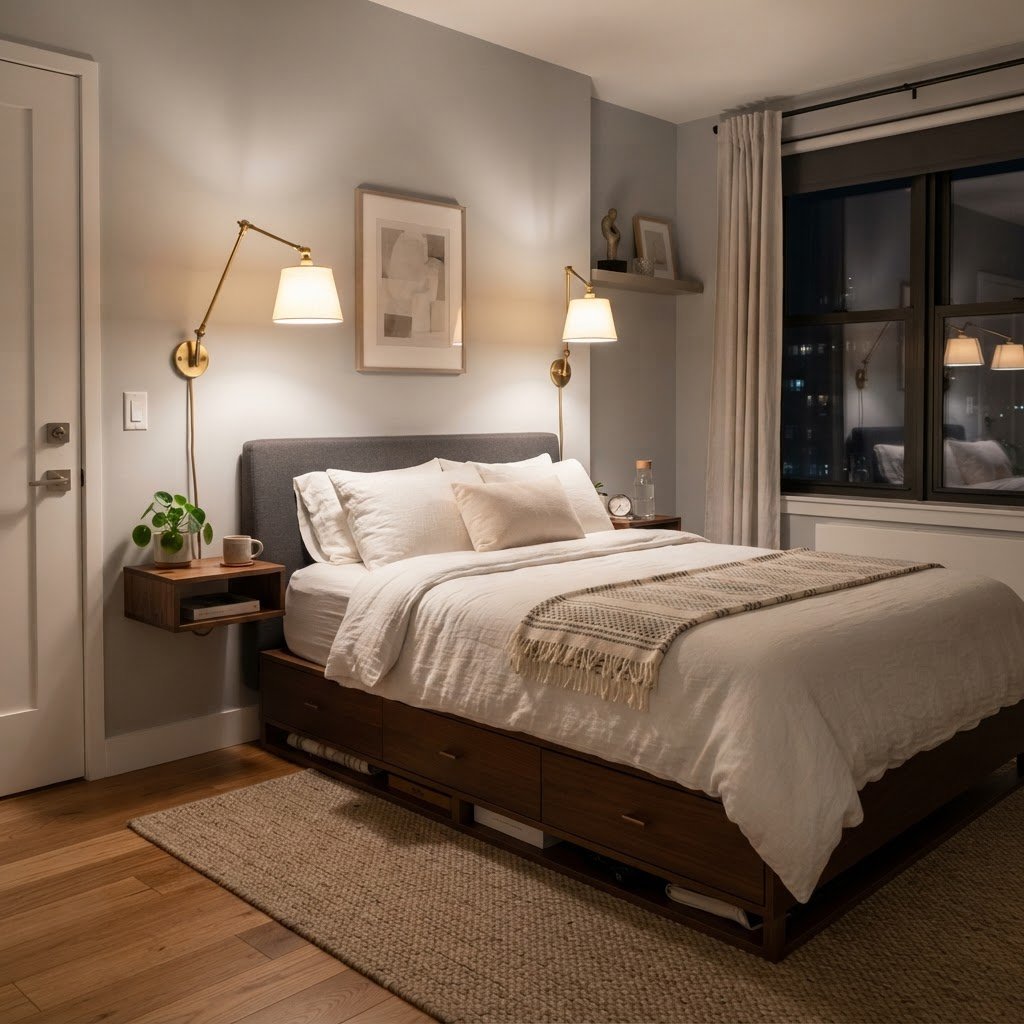
Choosing the Right Bench for Your Style

If you have a narrow hallway, look for slim profile benches with flip-top lids. If you have more room, choose a bench that includes a backboard with coat hooks above it. This vertical extension creates a “locker style” storage unit that keeps seasonal gear organized and accessible.

Console Tables with Secret Identities

Vertical solutions keep floor space clear.

A console table acts as the primary anchor for an entryway, and selecting one with integrated storage upgrades it from a decorative piece to a core household utility. Modern designs now feature “hidden” functions like slide-out stools, drop-down laptop desks, or integrated power strips for charging devices. When shopping, prioritize units with at least two deep drawers measuring 4-6 inches in height, which are ideal for storing EDC (everyday carry) items like wallets, masks, and sunglasses. For small homes, seek “demi-lune” or semi-circular tables that reduce sharp edges in cramped paths. Implementing a console with adjustable shelving allows you to customize the clearance, accommodating boots on the bottom shelf and decorative baskets for hats or scarves in the middle. By utilizing these tables, you effectively combine a mail-sorting station, a charging hub, and a shoe-hiding chest into one cohesive piece of furniture that occupies less than 4 square feet of floor space.
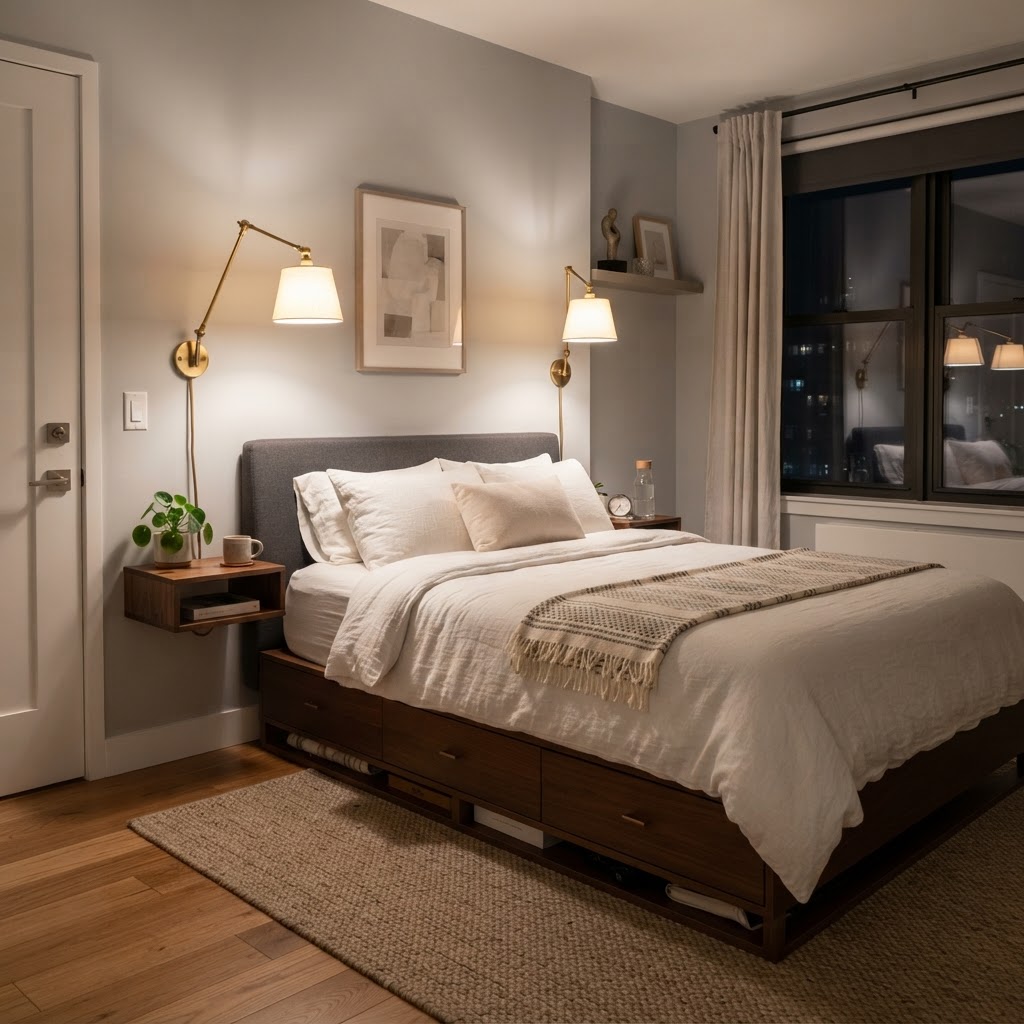
Features to Look For

  • Drawers for keys, wallets, and sunglasses.
  • Lower shelves for baskets containing seasonal scarves or gloves.
  • Slim designs that prevent obstructing high-traffic pathways.
  • Modular units that can be moved or rearranged.

Integrating Vertical Storage Walls

Command centers keep family schedules and items organized.

Vertical storage solutions are the most efficient way to manage clutter in small entryways because they leverage wall area rather than limited floor footage. By installing a wall-mounted shelving unit with integrated hooks, you can organize coats, keys, and accessories at eye level while leaving the floor entirely clear for a cleaner, more spacious aesthetic. This approach is particularly effective in apartments, where wall-anchored furniture can be installed at varying heights to suit all household members. A properly installed wall-mounted system can support up to 50-75 lbs of gear, making it a robust alternative to freestanding coat racks. Incorporate floating shelves that serve as “landing zones” for outgoing mail or keys, and position them approximately 36 to 42 inches from the floor for optimal reach. Using vertical organizers also draws the eye upward, creating the visual illusion of a higher ceiling and a more expansive, curated hallway environment.

The Power of Mirrors and Hooks

A mirror isn’t just for checking your reflection; it is a vital tool for making a small entryway feel twice as large. Pair a statement mirror with heavy-duty hooks or a rail system to keep bags off the floor. By keeping the floor clear, you reduce visual clutter and make the room feel infinitely cleaner.

Hidden Compartments and Secret Storage

Innovation in furniture design has led to pieces that disguise their utility, allowing you to maintain a minimalist aesthetic even in the busiest households. Ottomans, for example, now frequently feature lift-off tops that reveal interior storage for umbrellas, mail trays, or even off-season gear. Similarly, decorative cabinets disguised as accent furniture often house slim-profile shoe racks capable of holding 10 to 12 pairs of shoes behind closed doors. This “closed-storage” strategy is essential for high-traffic entryways where visibility of items like muddy boots or bill stacks creates visual chaos. Modern manufacturers are also integrating motion-sensor LED lighting inside these compartments, which improves visibility when you are arriving home in the evening. By choosing furniture that mimics decor, you hide the reality of your daily life—like messy piles or hardware—behind a polished facade that upgrades your home’s resale value and perceived tidiness.

Why Hidden Storage Wins

Hidden storage provides a clean, minimalist look. If your house has a lot of guests, you do not want your clutter on display. Closed storage allows you to hide the reality of your daily life—like muddy shoes and stacks of bills—behind a beautiful facade.

Creating a Command Center Hub

For families or busy professionals, the entryway must function as a centralized communication hub to maintain order throughout the week. By mounting a magnetic whiteboard, corkboard, or digital display directly above your console table, you create a dedicated space for calendars, chore lists, and important reminders. This creates an “efficiency trifecta”: storage for physical items, a desk space for organization, and a communication center for household members. To maximize the utility of your hub, designate specific zones: a top tray for incoming mail, a middle section for scheduled events, and a lower level with a charging station that keeps cords hidden behind the console’s facade. Data shows that families using a centralized command center reduce morning preparation time by approximately 15 minutes, as keys, bags, and schedules are located in a singular, predefined location near the exit.

Elements of a Successful Command Center

  1. A tray for outgoing and incoming mail.
  2. A wall-mounted calendar or schedule.
  3. A dedicated hook for each family member’s keys.
  4. A charging station tucked into a drawer to keep cords out of sight.
Component Primary Function Ideal Placement
Mail Tray Document Organization At Eye Level
Key Hooks Inventory Control Within Reach (48″)
Charging Hub Tech Management Inside Drawer
Schedule Board Family Coordination Above Console

Custom Built-Ins Versus Freestanding Furniture

Choosing between custom built-ins and freestanding furniture depends largely on your home ownership status and your long-term organizational goals. Built-in cabinetry maximizes every square inch from floor to ceiling, effectively creating a permanent, tailored solution that can increase a home’s appraisal value by 2-5%. Conversely, freestanding furniture offers the mobility and cost-effectiveness required for renters or those who prefer to update their interior style every few years. If you are on a budget, consider repurposing a thrifted dresser: by removing the back and adding a simple shelf, you can convert a standard chest into a sophisticated shoe cupboard. With a coat of high-durability paint and updated hardware, these DIY pieces provide the high-end appearance of built-ins at a fraction of the cost—often for under $100 compared to $1,000+ for custom carpentry.

Cost-Effective DIY Alternatives

If new furniture isn’t in the budget, try repurposing existing pieces. A thrifted dresser can be cut down to fit a small wall, with the top drawers serving as mail organizers and the bottom section acting as a shoe cupboard. Adding a fresh coat of paint and new hardware can make these pieces look like high-end entryway furniture.

FAQ

What is the most effective piece of furniture for a small entryway?

A multi-functional storage bench with a backboard and coat hooks is the most effective solution for a small entryway. It combines seating, closed shoe storage, and vertical coat hanging in one footprint, maximizing utility without requiring additional floor space.
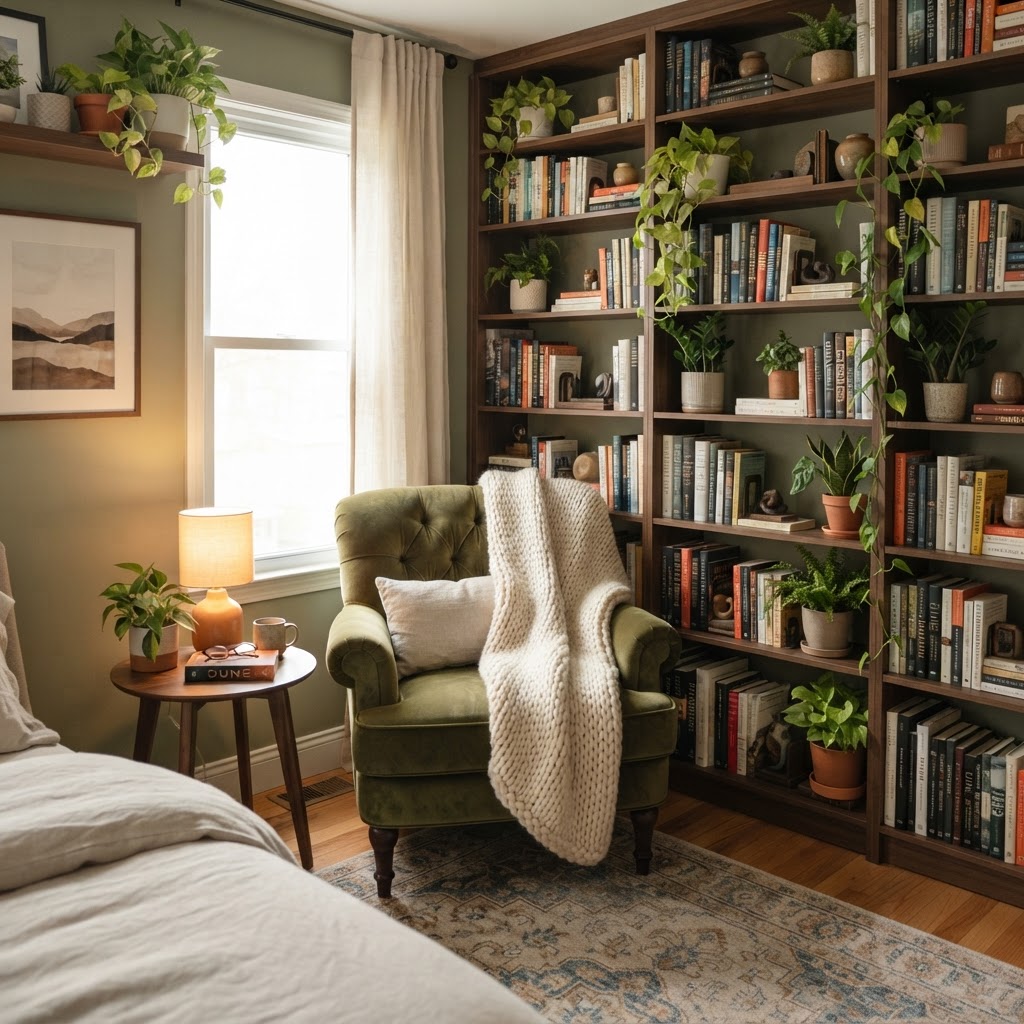
How deep should an entryway console table be?

An ideal entryway console table should be between 12 and 15 inches deep. This slim profile ensures the table provides necessary storage and surface area without obstructing high-traffic pathways or making the entryway feel narrow and cramped.

Can I hide clutter in a small entryway without built-ins?

Yes, you can hide clutter using furniture with closed storage, such as ottomans with lift-top lids or cabinets with solid doors. These pieces allow you to conceal daily items like shoes, umbrellas, and mail behind a decorative facade, maintaining a clean and organized appearance.
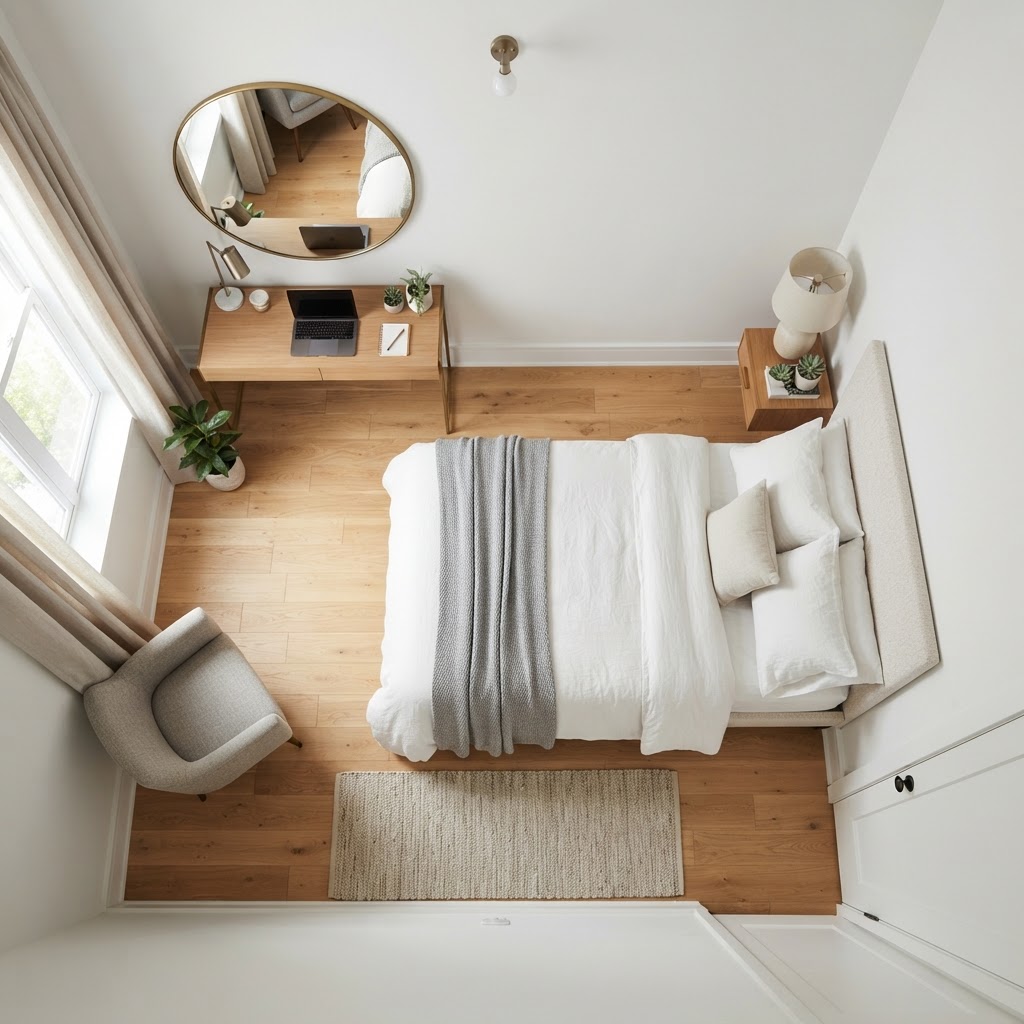
What are the benefits of using vertical wall storage?

Vertical wall storage keeps your floor clear, which makes a small entryway feel significantly larger and easier to clean. By utilizing wall space for hooks, shelves, and mirrors, you can double your organizational capacity while keeping the walkway open and inviting.
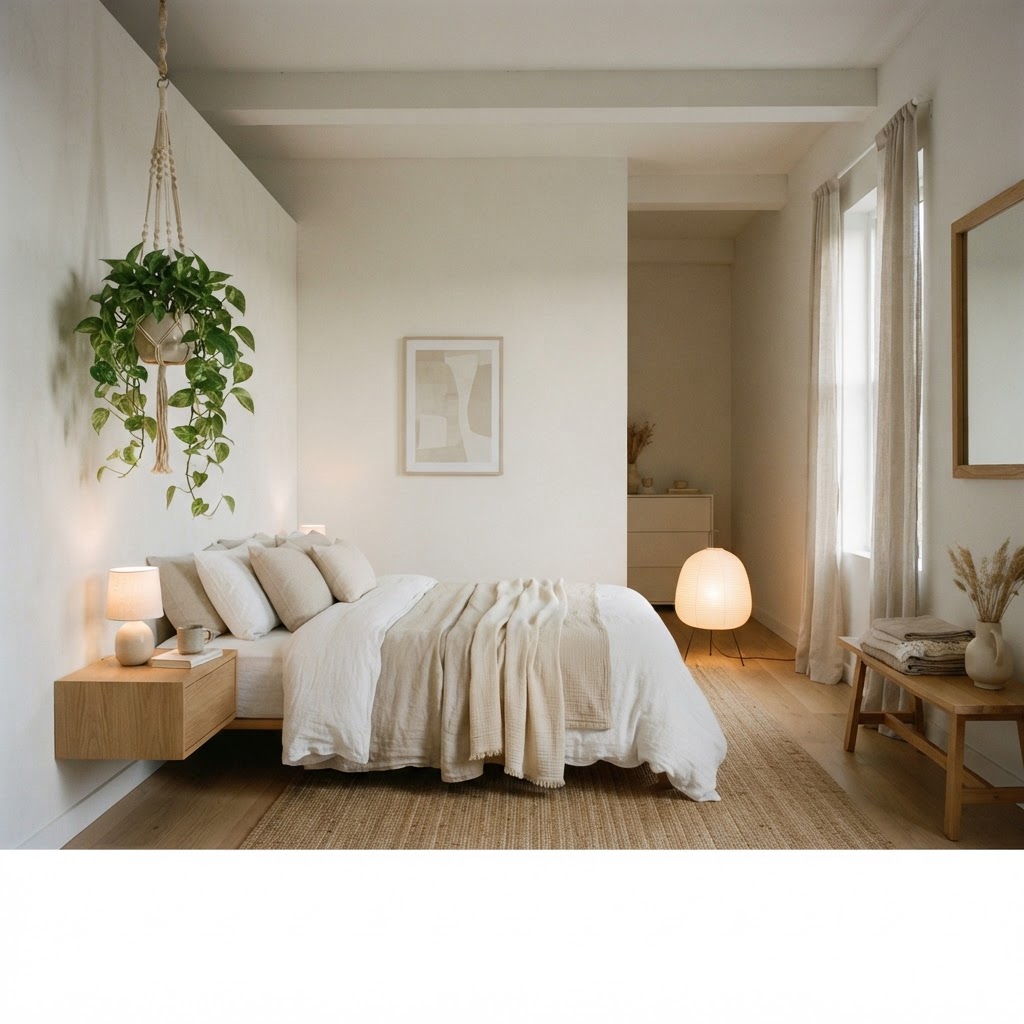
How can I make a DIY command center for my family?

You can create a DIY command center by mounting a magnetic whiteboard or corkboard above a console table and adding a designated mail tray. Incorporate dedicated hooks for keys and a small bin for charging cords to ensure all family essentials are kept in one accessible location.