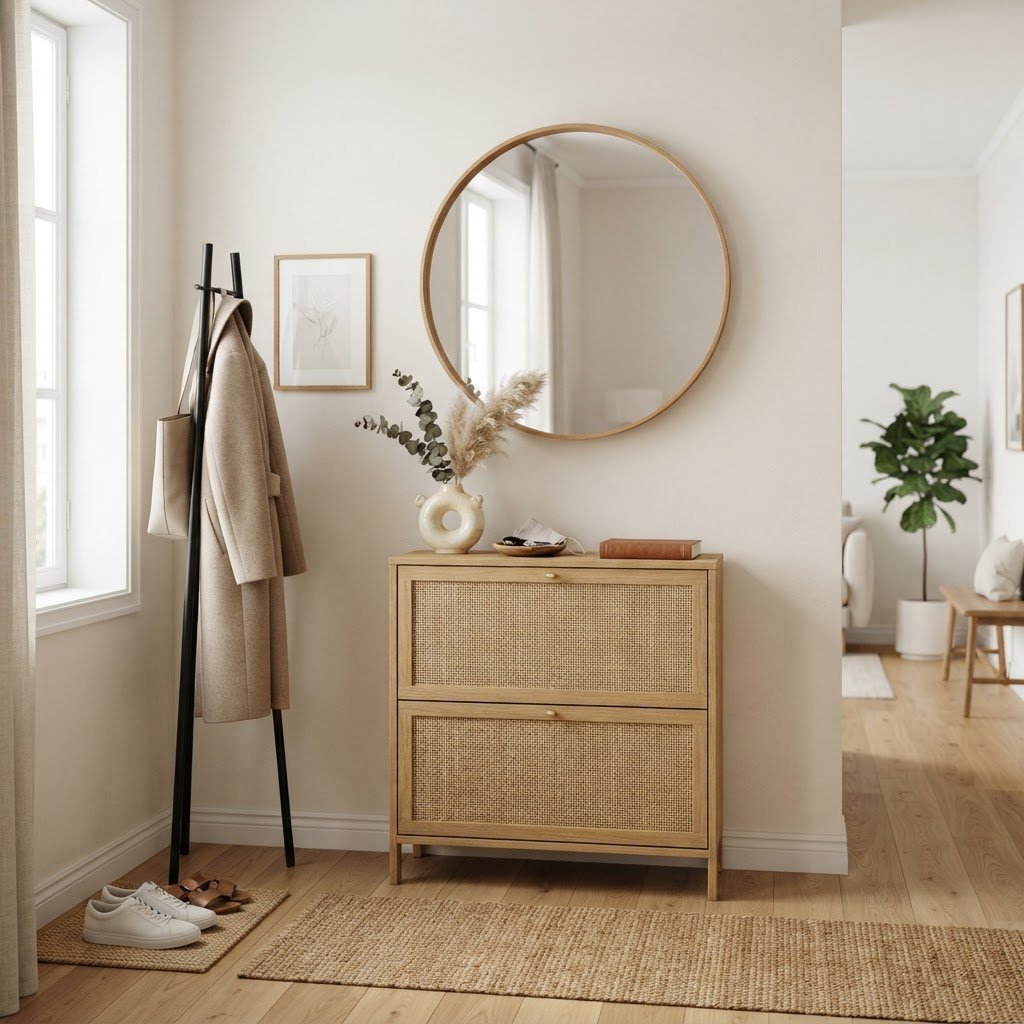
Stylish Rattan and Modern Shoe Cabinets for Small Spaces
To organize a small entryway effectively, choose slim-profile rattan or modern shoe cabinets that offer at least 10 inches of depth and tip-out storage mechanisms. These furniture pieces maximize vertical wall space while providing breathable, closed storage that conceals footwear, eliminates visual clutter, and enhances the aesthetic of narrow apartment corridors.
The Rise of Rattan in Modern Interior Design
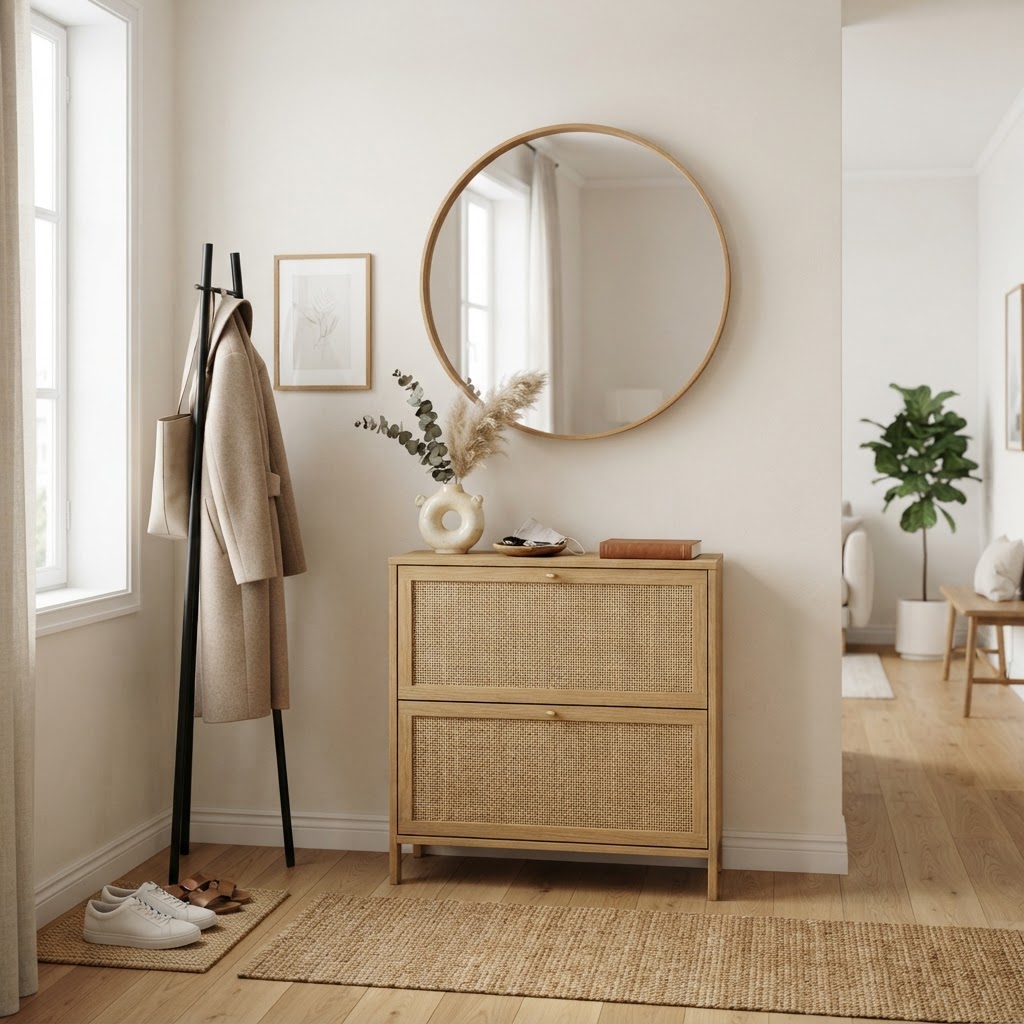
Rattan has transitioned from a bohemian trend to a permanent fixture in high-end modern interior design, primarily due to its ability to provide warmth without visual weight. Unlike solid wood or MDF cabinets which can feel heavy in a 50-square-foot foyer, rattan weaving allows for airflow, which is critical for preventing moisture buildup and odors in enclosed shoe storage. Contemporary designers favor rattan panels because they bridge the gap between organic textures and minimalist “Scandi-style” furniture. By using natural materials, you anchor a neutral entryway with a focal point that feels intentional rather than utilitarian. Integrating this texture effectively requires balancing the open weave with solid frames—typically metal or matte-finished wood—ensuring the piece complements existing door hardware or lighting fixtures. Data suggests that furniture with “breathable” elements lasts 30% longer than fully sealed cabinets, as reduced humidity prevents the degradation of leather and synthetic shoe linings. When shopping, prioritize sustainably harvested rattan, which features tight, uniform weaves that resist sagging over time, ensuring your storage solution remains a staple of your home decor for years to come.
Why Texture Matters in Small Spaces
In small entryways, texture is your best friend for creating visual interest without adding clutter. Solid, painted cabinets can sometimes feel heavy and imposing in a cramped hallway. Rattan panels, however, allow for breathability while concealing the contents, offering a lighter look that maintains a sense of openness. This material balance is crucial for achieving a designer look in a limited square footage environment.
Benefits of Dedicated Shoe Storage
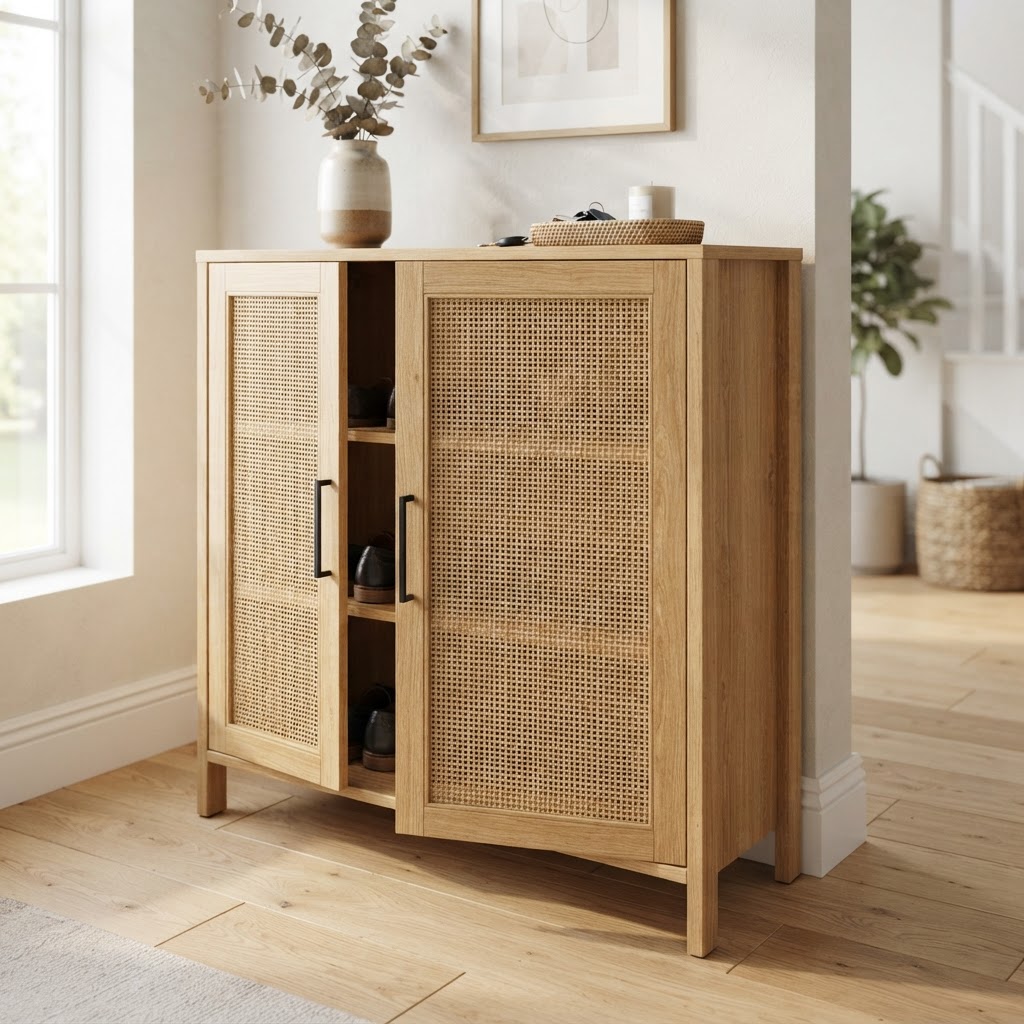
Investing in a dedicated shoe storage solution fundamentally alters your home’s hygiene and overall flow by creating a permanent “landing zone” for outdoor items. Statistics indicate that a significant percentage of household dust and allergens enter the home via footwear; keeping shoes contained in a cabinet reduces the need for frequent vacuuming by up to 25% in high-traffic entryways. Beyond cleanliness, these cabinets act as a psychological boundary. When you remove your shoes upon entry, it signals a mental shift from the stress of the outside world to the comfort of your living space. Modern units are designed to house between 8 to 24 pairs, depending on the orientation, allowing even the most extensive collections to stay organized in less than 3 square feet of floor space. Furthermore, organizing by frequency of use—keeping daily sneakers at waist level and seasonal items at the base—streamlines your morning routine. A well-organized shoe storage cabinet eliminates the 5-10 minutes often spent searching for matching footwear, providing a tangible boost to daily productivity and reducing household friction.
Enhancing Home Flow
Having a specific place for footwear encourages family members and guests to stow their shoes immediately upon entry. This simple habit keeps dirt contained to the mudroom area and creates a clear, unobstructed path through your home. Choosing a piece that fits perfectly against your wall means you won’t sacrifice precious floor space just to keep things orderly.
Selecting the Right Cabinet for Your Floor Plan
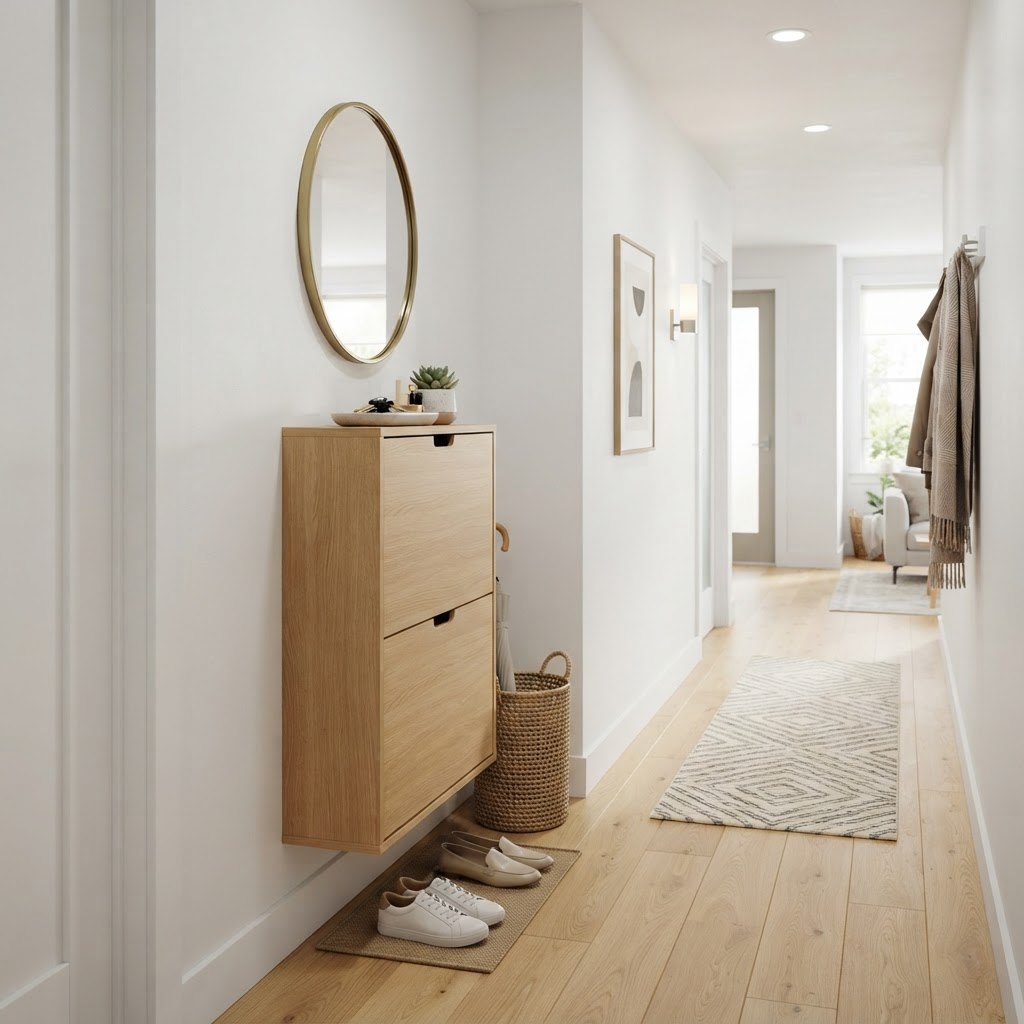
Before you purchase any piece of furniture, it is essential to measure your entryway accurately by calculating the “clearance zone” for both doors and foot traffic. A standard hallway requires at least 36 inches of clearance to walk comfortably; therefore, a cabinet with a depth of 9 to 12 inches is the “gold standard” for urban apartments. When measuring, account for baseboards, which often push the cabinet out by an extra inch, and ensure that wall-mounted units are anchored into studs to support the weight of heavy winter boots. Tip-out mechanisms are highly recommended for spaces under 4 feet wide, as they eliminate the need for clearance space required by traditional swing-out doors. If your hallway is unusually narrow, opt for a cabinet with a mirrored front to create the optical illusion of double the space. Prices for these specialized units range from $150 to $600; however, mid-range options (between $250-$400) typically offer the best balance of structural durability, such as reinforced hinges and humidity-resistant backing. Always verify the maximum shoe size accommodated by the unit, as standard tip-out drawers may struggle with men’s sizes 12 and above.
Features to Look For
- Slim profile (under 12 inches deep)
- Adjustable shelving to accommodate varying shoe heights
- Breathable materials (like rattan) to prevent odors
- Sturdy hardware that complements your existing door handles
- Wall-mounting options to prevent tipping and increase floor visibility
Modern Design Aesthetics and Functionality
Modern shoe storage isn’t just about utility; it is about seamless integration. The best modern pieces feature hidden compartments, recessed handles, and matte or wood finishes that allow them to blend into your wall decor. By opting for a cabinet that features a minimalist design, you keep the focus on your curated entryway styling rather than on the furniture itself.
Pairing Styles for a Unified Look
Mixing a sleek metal-legged cabinet with rattan door accents bridges the gap between mid-century modern and coastal organic styles. This versatility ensures that even if you renovate other parts of your home, your shoe cabinet remains a relevant and stylish centerpiece. Always look for pieces that echo the finishes present in your lighting fixtures or mirror frames to create a cohesive narrative throughout the entry.
Organizing Your Shoe Collection Like a Pro
Once you have your cabinet, the next challenge is optimizing the interior. Use the vertical height to your advantage by installing extra shelves if possible, and store everyday shoes at waist height for easy access. Seasonal items, like winter boots or summer sandals, can be rotated to the bottom or top shelves to ensure your most-used items remain within arm’s reach.
Maintaining Your Storage Solution
Keep your cabinet looking new by vacuuming the interior shelves regularly and dusting the rattan panels. If you have open-weave rattan, it is worth occasionally wiping it down with a damp cloth to prevent dust buildup. By treating your shoe cabinet as a piece of furniture rather than just a rack, you ensure it stays a functional part of your home for years to come.
Small Space Hack: Vertical Storage Solutions
If you find yourself truly limited on floor space, think vertically. Tall, narrow cabinets are incredibly efficient for maximizing storage capacity without infringing on your walking path. Many modern vertical cabinets are designed to be wall-mounted, which helps keep the floor clear and makes the entryway appear significantly larger.
Incorporating Mirrors and Decor
Above your shoe cabinet, consider adding a mirror or a piece of wall art to draw the eye upward. A mirror is especially helpful in small entryways as it reflects light and creates the illusion of more space. Combined with a rattan shoe cabinet, a well-placed mirror can turn a tiny foyer into a grand, welcoming entrance that feels far larger than it actually is.
FAQ
Q: What is the ideal depth for a shoe cabinet in a small entryway?
An ideal shoe cabinet for a small space should be between 9 and 12 inches deep. This slim profile ensures the unit provides ample storage without obstructing narrow walkways or encroaching on high-traffic areas in your home.
Q: Why is rattan a good material for shoe storage?
Rattan is an excellent choice because it is a breathable, organic material that prevents moisture buildup and odors inside the cabinet. The open weave facilitates airflow, which is essential for maintaining the quality of leather and fabric footwear over long periods.
Q: How can I fit large shoe sizes into a tip-out cabinet?
To fit larger shoes (size 12+) into a tip-out cabinet, look for units with adjustable middle dividers or deeper drawer designs. You can also place larger shoes at an angle or diagonally within the tip-out bins to maximize the available interior depth.
Q: How do I clean and maintain rattan shoe cabinets?
Regularly dust the rattan panels with a soft-bristled brush or a vacuum attachment to prevent particulate buildup in the weave. For deeper cleans, wipe gently with a damp, lint-free cloth and immediately pat dry to prevent the natural fibers from warping.

Leave a Reply