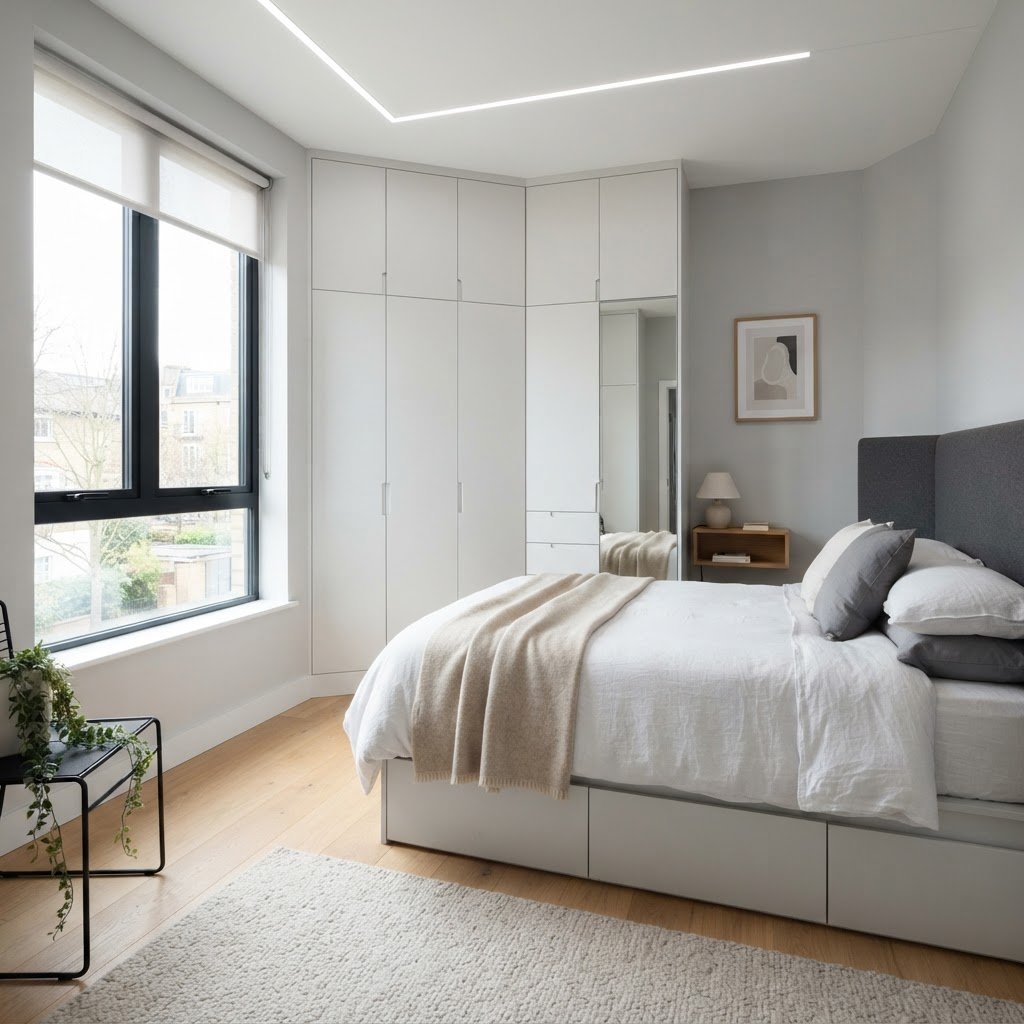
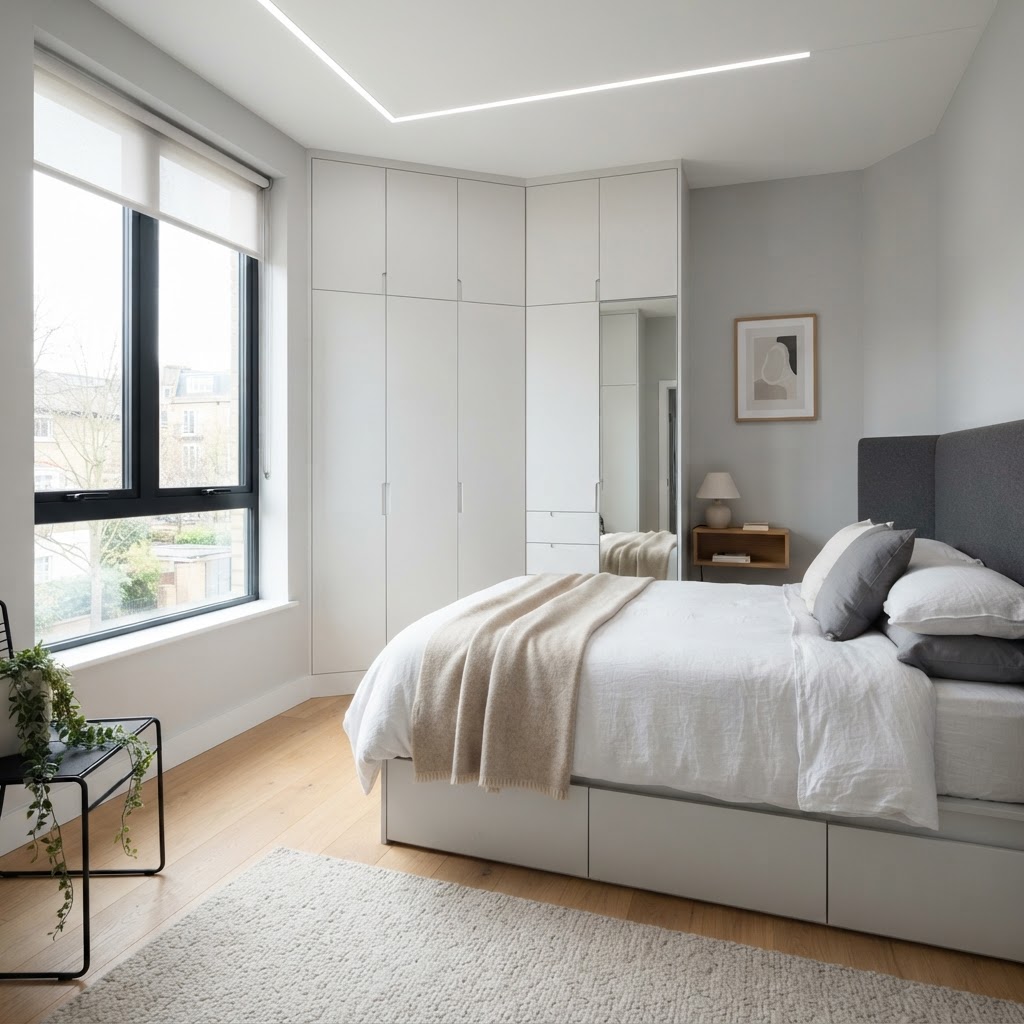
Smart small bedroom ideas focus on maximizing functionality through vertical storage, multi-functional furniture, and strategic lighting to create an expansive, clutter-free sanctuary. By utilizing under-bed storage, floor-to-ceiling shelving, and light color palettes, you can transform a cramped footprint into a modern, breathable, and highly organized living space.
Rethinking Your Layout for Maximum Flow
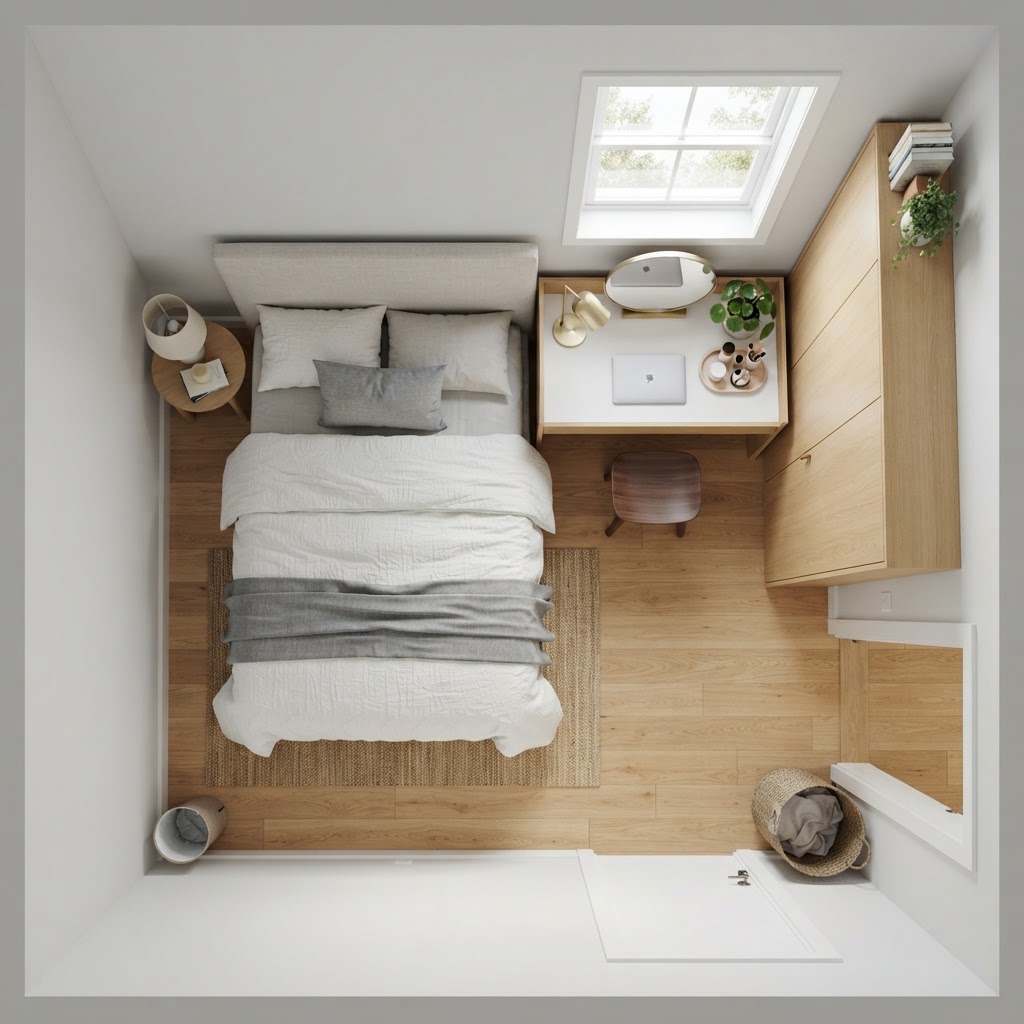
An efficient bedroom layout is built on the rule of clear traffic patterns and precise measurements. Designers recommend maintaining at least 24 to 30 inches of walking clearance around the bed to prevent the room from feeling claustrophobic or restricted. By measuring your floor plan down to the inch, you can identify “dead zones” that are perfect for slim-profile furniture or built-in organizers.
The Power of Vertical Space
When floor area is scarce, your walls become your most valuable real estate for both storage and aesthetic impact. Installing floor-to-ceiling shelving systems draws the eye upward, effectively creating the illusion of a higher ceiling while maximizing square footage. For maximum utility, mount shelves at least 12 inches deep to accommodate standard storage bins while keeping the floor footprint entirely clear.
Choosing the Right Bed Frame
Your bed is likely the largest piece of furniture you own and should double as your primary storage hub. Select a bed frame featuring integrated hydraulic lift storage or deep-set drawers, which can add up to 15-20 cubic feet of hidden storage capacity. Opting for a frame with an upholstered headboard that features hidden cubbies allows you to eliminate the need for bulky, separate bedside tables entirely, freeing up critical floor space.
Mastering Storage with Modern Precision
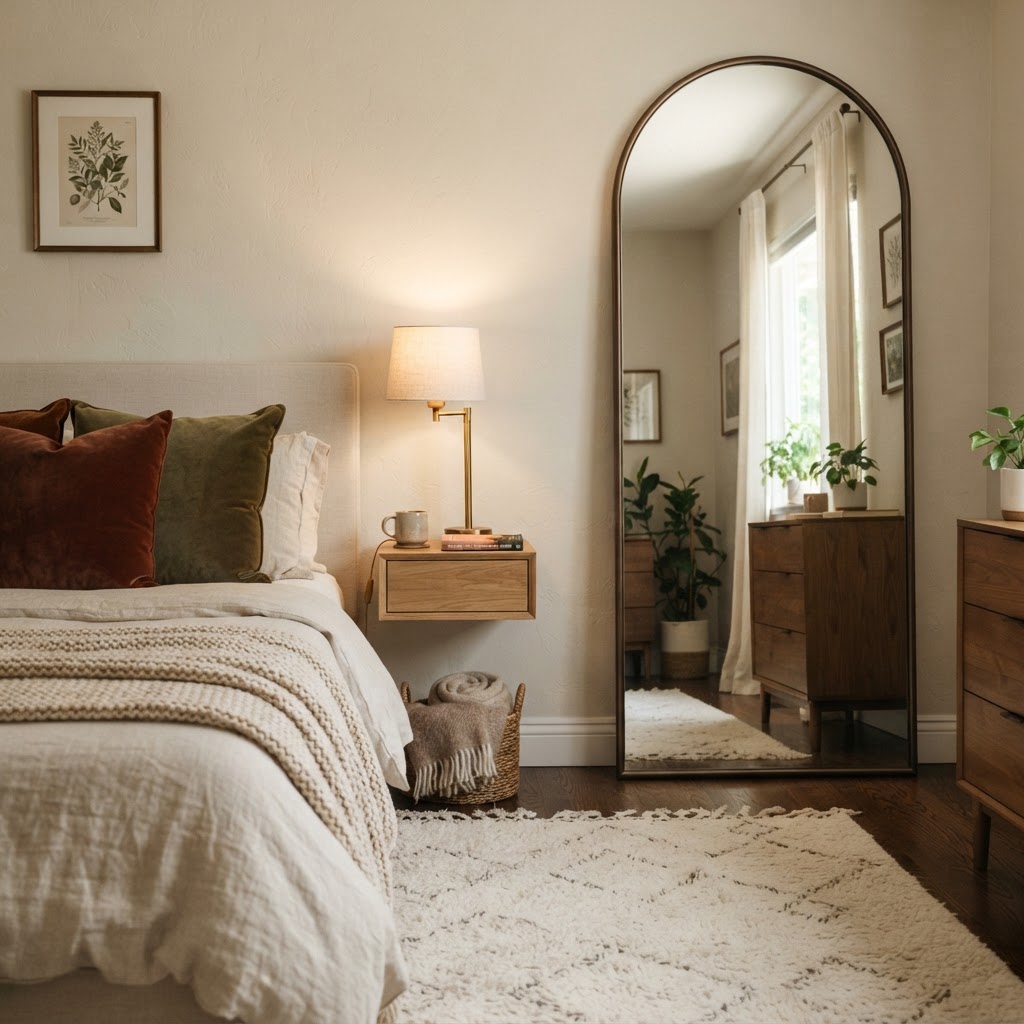
Effective storage in a modern small bedroom requires an “invisible” approach where organizational tools blend seamlessly into the wall architecture. Custom built-ins are the gold standard here; by painting these units the exact same shade as your walls, you minimize visual noise, which prevents the furniture from overwhelming the room. Utilizing high-quality wall-mounted nightstands instead of traditional floor-resting ones creates a floating effect, which studies show increases the perceived size of a room by revealing more of the floor plane.
Color Palettes and Lighting Strategies
Color choices dictate the perception of volume, with light, reflective palettes acting as a primary tool to make a room feel larger. White, soft greys, or muted earth tones bounce natural light across the space, reducing the feeling of being closed in. To introduce depth without darkening the room, use high-texture fabrics like velvet or linen pillows, which provide sensory warmth without the “visual weight” of dark, heavy patterns.
Layered lighting is critical because single overhead sources create harsh, depth-flattening shadows that make rooms appear smaller. By integrating a three-tier system—recessed ambient lighting, a task-oriented pendant or lamp, and warm accent LEDs—you create depth and character. Strategically placing these lights can highlight the edges of the room, naturally drawing the eye outward and away from the center.
Multi-Functional Furniture Hacks
Small bedrooms demand furniture that serves at least two distinct purposes to remain efficient. A desk that doubles as a nightstand is a classic example of space-saving engineering that supports a hybrid remote-work lifestyle. By choosing modular pieces, you gain the ability to reconfigure your room based on the time of day, ensuring the space is never locked into a single, restrictive layout.
Selecting Transformable Pieces
When shopping for transformable furniture, prioritize durability—specifically items with high-quality metal hinges or pneumatic lifts—that will withstand daily use. A bench with internal storage can serve as both a seat for changing shoes and a repository for seasonal throws. These multi-purpose choices ensure that every item in your room earns its place through utility, rather than simply taking up space.
The Role of Textiles and Decor
Textiles are the final layer that bridges the gap between a “cramped” feel and a “sanctuary” vibe. By utilizing high-quality linens and soft, plush blankets, you create a tactile environment that feels luxurious rather than claustrophobic. Cohesion is the key here: keeping your textile colors within a tight, monochromatic, or low-contrast palette prevents the eyes from darting around the room, which helps maintain a serene and spacious mental atmosphere.
Mirrors are the most cost-effective tool for doubling the perceived size of a room. A large floor mirror placed directly opposite a window will reflect natural light back into the space, effectively acting as an artificial window. This trick not only increases luminosity but also creates a visual break in the wall, preventing it from feeling like a solid, encroaching barrier.
Technology and Comfort Integration
Modern bedroom design leverages smart technology to enhance the quality of rest without the need for additional furniture. Smart blinds, which can be programmed to sync with your sleep-wake cycle, replace bulky curtains that often trap light and occupy space. Similarly, smart thermostats manage temperature zones to ensure your sleep environment is optimal without needing manual intervention or extra portable fans/heaters.
Cable management is the secret to a high-end, calm aesthetic in a small bedroom. Visible wires cause “visual clutter,” which elevates stress levels. Utilize cable management boxes or bed frames with integrated USB charging ports to keep all power needs tucked away. A clear nightstand surface is essential for mental clarity and should be the primary goal of your technology integration strategy.
Maintenance and Daily Habits
Maintaining a small bedroom requires strict, daily discipline to prevent the rapid accumulation of clutter. Making your bed every morning is the most effective way to reset the visual anchor of the room. Using designated storage bins for smaller, frequently used items prevents them from collecting on surfaces, which is the fastest way to make a small room feel chaotic and unmanaged.
Regularly auditing your belongings ensures that your space only contains items that serve a clear function or provide joy. Experts recommend the “one-in, one-out” rule: for every new item you bring into your small bedroom, one must be donated or discarded. This habit keeps your inventory lean and ensures your sanctuary remains a purposeful, restful space.
FAQ
What are the best colors for a small bedroom?
Light, neutral colors like soft white, pale grey, or muted earth tones are the best for small bedrooms. These shades reflect natural light and create an airy, open feel that makes walls appear further away than they actually are, preventing the “cramped” sensation of darker rooms.
How can I add more storage to a tiny bedroom?
Utilize vertical space with floor-to-ceiling shelving and prioritize furniture with integrated storage, such as under-bed drawers or headboards with cubbies. By getting items off the floor and onto the walls, you maintain clear floor space, which is essential for making a room look and feel larger.
Does a large mirror make a small room look bigger?
A large mirror significantly increases the perception of space by reflecting light and creating the illusion of depth. When positioned strategically across from a window, it doubles the natural light in the room, which helps to remove dark corners that usually make a small bedroom feel closed in.
How should I arrange furniture in a very small bedroom?
Prioritize a layout that keeps the walking path to the bed clear and ensures furniture does not block natural light sources like windows. Aim to place your largest piece of furniture, the bed, against the longest wall, and use wall-mounted lighting to save valuable nightstand space for essential items.
What is the best way to keep a small bedroom organized?
The most effective method is to maintain a daily habit of tidying surfaces and utilizing a strict “one-in, one-out” inventory rule. Use hidden storage organizers and cable management tools to keep all personal belongings tucked away, ensuring the room remains a clean, uncluttered, and peaceful sanctuary for rest.

Leave a Reply