Archives August 2026

8 Clever Ways to Organize Under the Sink in Small Kitchens

8 Clever Ways to Organize Under the Sink in Small Kitchens

To organize under a small kitchen sink effectively, utilize vertical storage solutions like tiered shelving, tension rods, and adhesive door hooks to maximize every square inch. By categorizing items into clear bins and implementing rotating turntables, you can transform a chaotic cabinet into an efficient, accessible cleaning station within minutes.

Assess and Declutter Your Under-Sink Zone
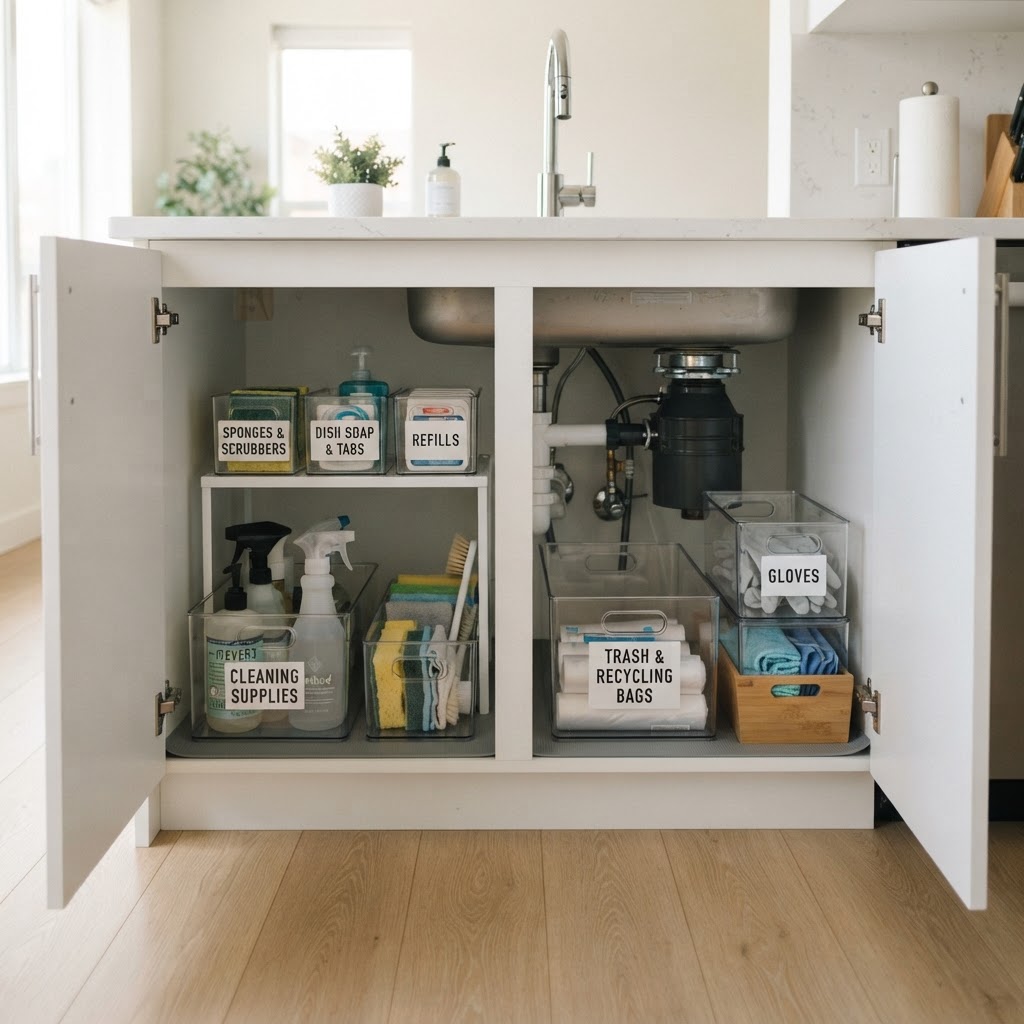
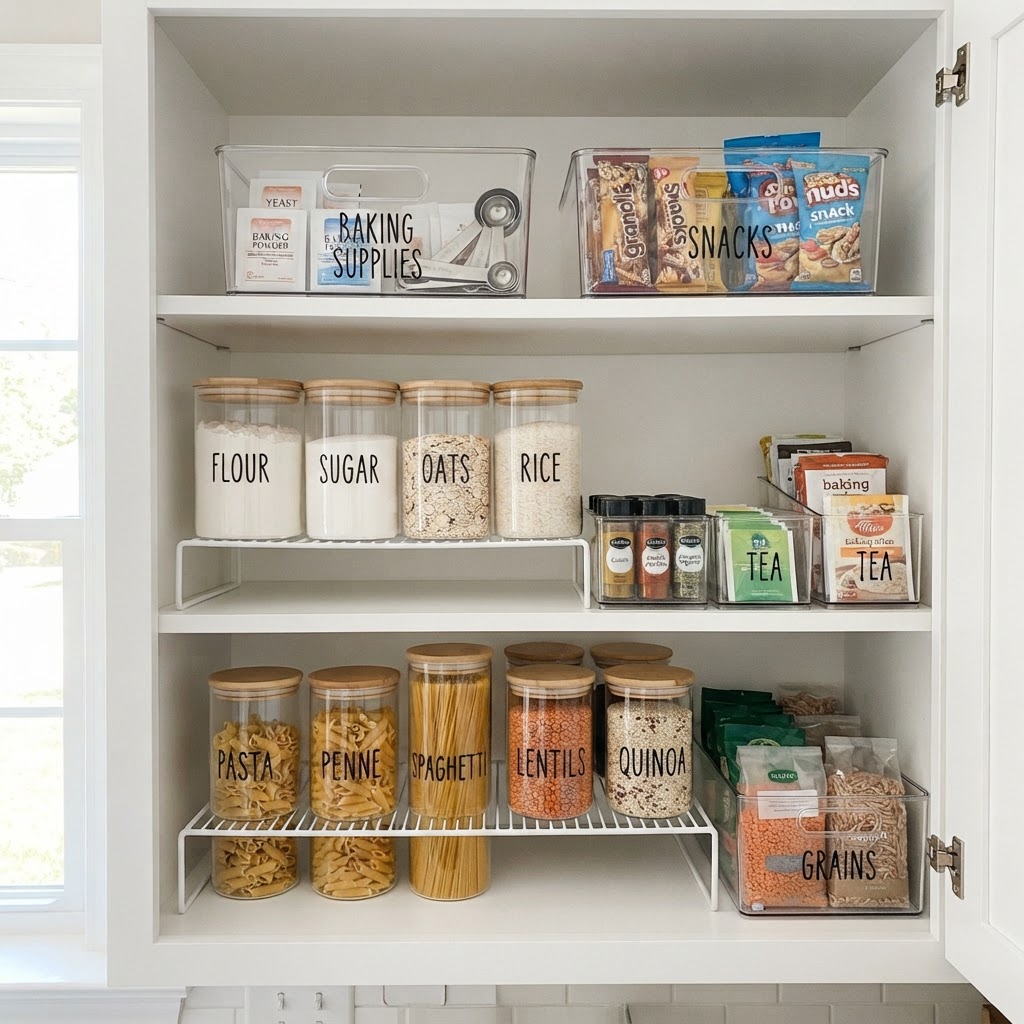
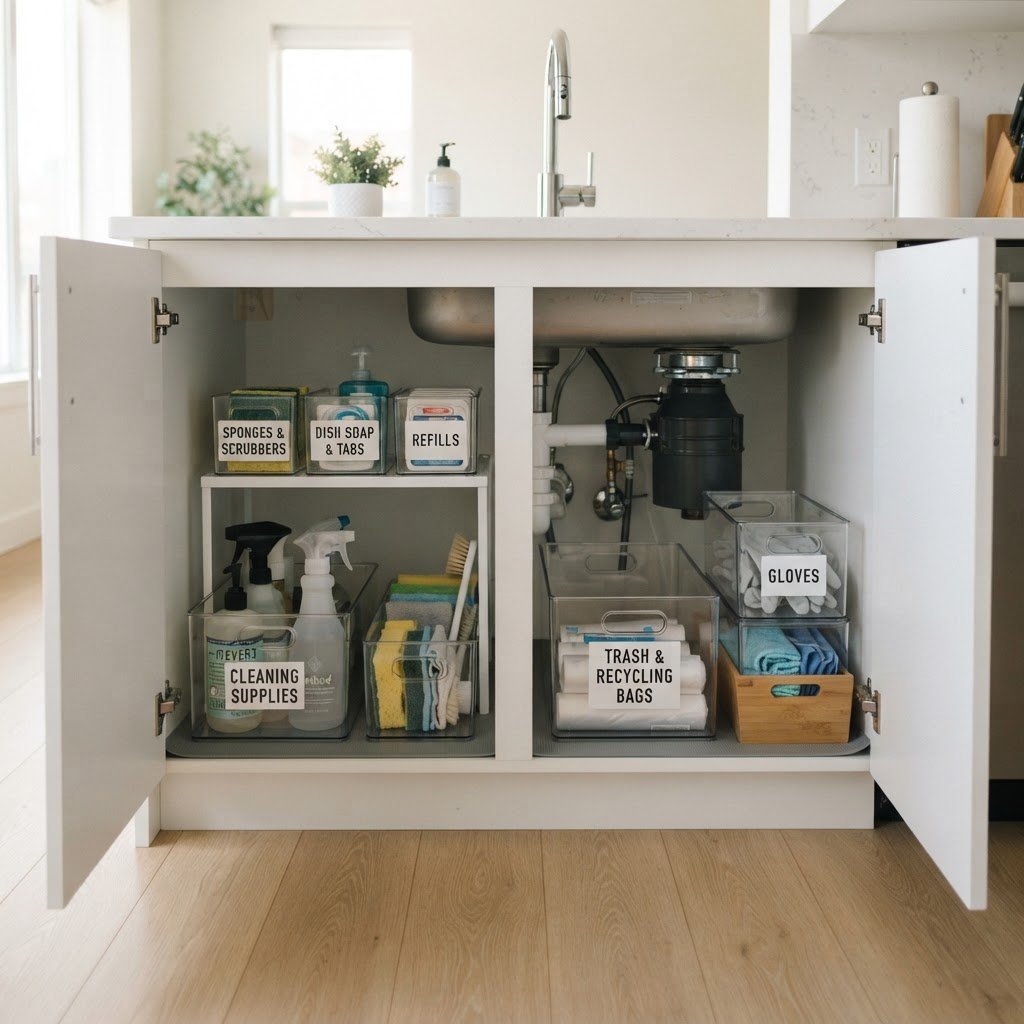
Clear, labeled bins maximize every inch of under-sink storage.

Before purchasing storage, clear the entire cabinet to perform a deep audit of your supplies. Empty everything, wipe down surfaces with a disinfecting cleaner, and discard expired products or items that belong in other rooms. Statistics show that up to 30% of under-sink items are either expired or never used, which directly contributes to unnecessary clutter. This foundational step is crucial because it provides an accurate measurement of your available space, allowing you to plan a custom configuration without interference from unused, heavy-duty chemicals or duplicate sponges. If you are looking to revitalize your living space, learning how to decorate a small apartment on a budget can help you find affordable solutions that make a major impact. If you are trying to stretch your renovation dollars, integrating our budget-friendly small apartment kitchen ideas can help you elevate the entire room while you tackle your under-sink storage project.

Why Decluttering Matters

Removing unnecessary items prevents a domino effect where clutter breeds more clutter. When you limit your inventory to essential daily items, the maintenance phase becomes significantly faster. Take a hard look at those “just in case” cleaners that have been sitting there for years; if they haven’t been used in 12 months, donate or properly dispose of them to reclaim prime real estate. For more specialized strategies, check out our guide on storing cleaning supplies in tiny homes to ensure every bottle has its place.

Utilize Adjustable Tiered Shelving
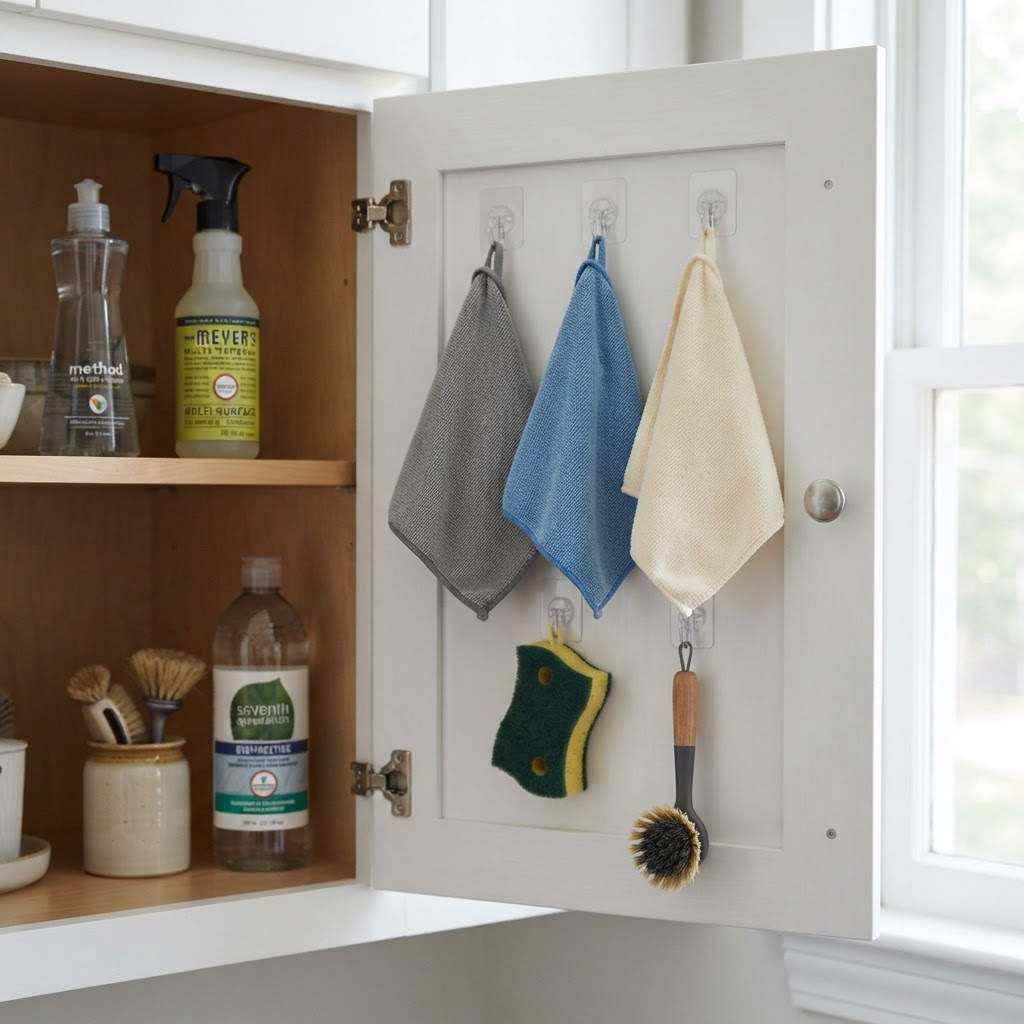
Utilize cabinet doors to keep sponges and cloths off the floor.

Installing adjustable tiered shelving units is the single most effective way to navigate around obstructive plumbing pipes. These racks allow you to stack supplies vertically, effectively tripling your usable surface area. Look for units that feature expandable widths between 15 and 25 inches and removable panels to accommodate drain pipes. If vertical space is limited to under 18 inches, a two-tier pull-out drawer is superior, as it allows you to access items at the back of the cabinet without kneeling or digging. Below is a comparison of common under-sink shelving materials to help you decide:

Material Best For Price Range Durability
Plastic/Acrylic Lightweight, clear visibility $15 – $30 Moderate
Powder-Coated Steel Heavy bottles, moisture resistance $30 – $60 High
Bamboo Sustainable, aesthetic appeal $25 – $50 Moderate

Install Adhesive Hooks on Cabinet Doors
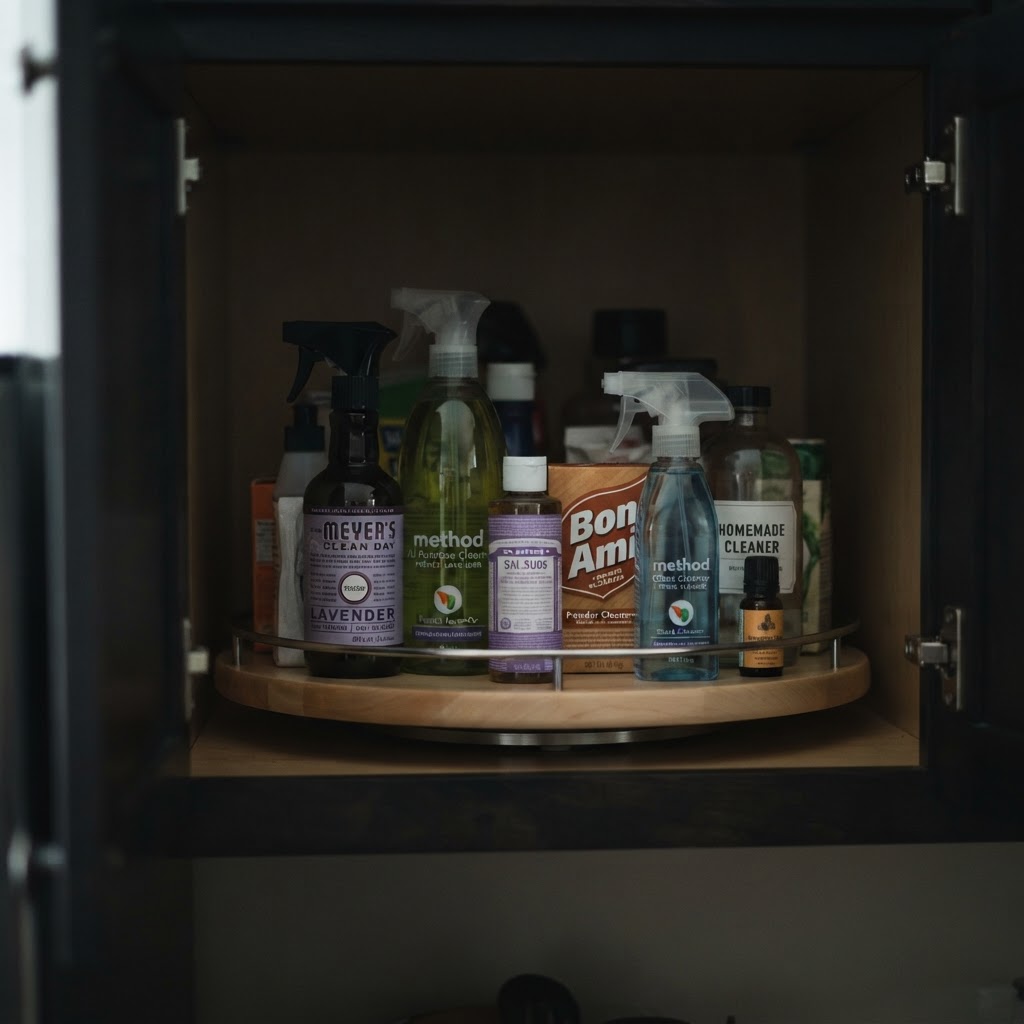
A Lazy Susan makes reaching cleaning supplies effortless.

Your cabinet doors are often forgotten, yet they provide the most valuable vertical real estate for small-item storage. By adding water-resistant adhesive hooks or narrow bins to the interior doors, you successfully lift sponges, dish brushes, and microfiber cloths off the floor, which prevents mildew growth. For best results, use heavy-duty command strips rated for at least 3-5 pounds to ensure items do not fall when the door is opened quickly. Utilizing the back of the doors is a classic technique used by professional organizers to clear the “floor” space for heavier bulk items like multi-packs of paper towels or trash bags.

Group Items with Clear Plastic Bins
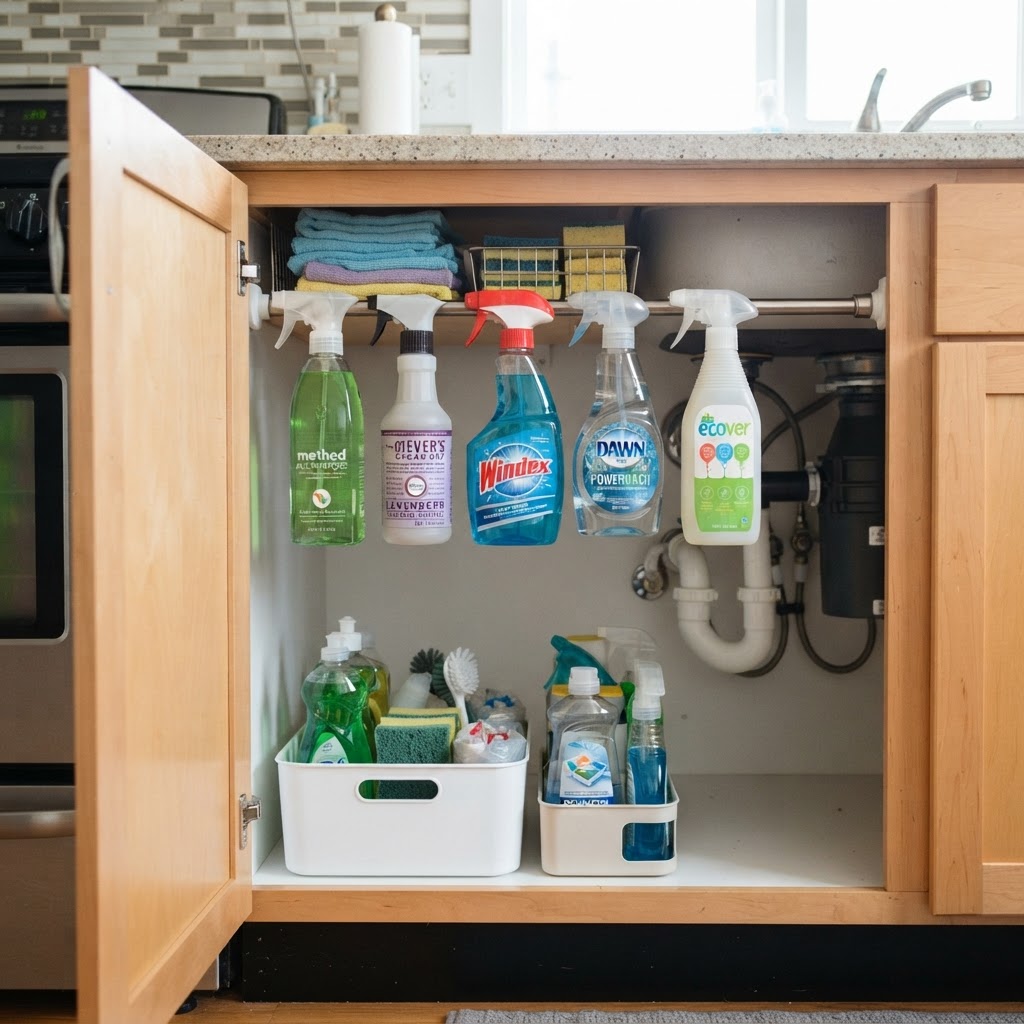
Tension rods are a simple way to hang spray bottles vertically.

Categorization serves as the secret weapon of any professional organizer, turning a dark, cluttered zone into a visual inventory system. Group like items—such as surface cleaners, dish soap refills, and scrub brushes—into clear, labeled plastic bins to make items easy to find and inventory. Clear bins specifically help you track supply levels, reducing over-purchasing by roughly 20% by making stock visible. Using a label maker creates a permanent “home” for every item, which encourages other household members to return items to their proper location.

Implement Lazy Susans for Easy Reach

A rotating turntable, or Lazy Susan, provides 360-degree access to deep-cabinet items that would otherwise disappear into dark corners. These units are ideal for taller spray bottles and cleaning solutions, offering immediate access without the need to rearrange items. When choosing a Lazy Susan, opt for models with at least a 1-inch raised edge; this prevents bottles from tipping during rotation, which is vital for taller, thinner containers. For best function, measure your depth and width and choose a turntable that leaves at least 2 inches of clearance on all sides to prevent friction against the cabinet walls.

Maximize Vertical Space with Tension Rods

Installing a tension rod horizontally near the top of the cabinet creates an instant “hanging zone” for spray bottles. This DIY hack is particularly useful for small kitchen cabinets where fixed shelving isn’t possible due to plumbing fixtures. By hanging bottles by their trigger heads, you keep the base of the cabinet completely clear for larger, bulkier storage. Ensure the rod you purchase is made of stainless steel or rust-resistant aluminum, as the area under the sink is frequently exposed to humidity. A standard 15-20 inch tension rod typically supports 3 to 5 full-sized bottles without sagging.

Invest in Modular Stackable Drawers

Modular, stackable plastic drawers offer superior containment for small items like scrubbers, sponges, and small tools that tend to roll around on shelves. These units essentially create a mini-dresser inside your cabinet, allowing you to maximize the full height of the space without requiring complex installation or hardware. When shopping for these units, prioritize those that are stackable and clear; measuring your exact cabinet height is critical here—aim for a set that utilizes at least 90% of the vertical space available between the cabinet floor and the bottom of the sink drain.

Establish a Maintenance Routine

Maintaining an organized under-sink area requires a simple, recurring audit to ensure items don’t accumulate junk over time. Set a calendar reminder to check for leaks and wipe down storage bins every 90 days. During this brief 10-minute check, verify that all products are still relevant and that the system you designed is still functioning for your daily habits. Consistent maintenance prevents the “junk drawer” effect from returning, ensuring that your investment in organization lasts for years rather than months.

FAQ

How do I stop under-sink smells?

To eliminate odors, place a small bowl of activated charcoal or a container of baking soda inside the cabinet to absorb moisture. Regularly cleaning the area and ensuring no damp sponges are left sitting on the floor will also prevent mildew growth.

Can I use wood organizers under the sink?

Yes, but you should apply a water-repellent sealant to protect the wood from leaks and high humidity. Avoid using raw wood, as it is prone to swelling and mold in damp, dark environments like under-sink cabinets.

What is the best way to handle leaking pipes?

Always prioritize plumbing repairs over organization. If you detect a leak, clear the cabinet immediately to prevent water damage to your storage units and cabinetry, and address the pipe seal or connection before reinstalling any items.

How do I measure a small cabinet correctly?

Measure the width, depth, and height of the cabinet interior, specifically noting the position of pipes and the disposal unit. Subtract at least 1-2 inches from these dimensions to ensure your chosen organizers fit comfortably without scratching the cabinet walls.

Where should I store heavy items?

Store heavier items, such as bulk detergent jugs or cleaning buckets, on the base of the cabinet floor. This adds stability to the cabinet and prevents the risk of shelving units tipping over from uneven weight distribution.
12 Multifunctional Storage Benches and Ottomans for Apartments

12 Multifunctional Storage Benches and Ottomans for Apartments

Multifunctional storage benches and ottomans for apartments maximize square footage by providing hidden storage compartments and dual-purpose seating. These furniture pieces effectively reduce visual clutter in tight living spaces, acting as both a storage solution for linens, shoes, or electronics and a comfortable surface for seating or serving drinks.

The Philosophy of Smart Apartment Living

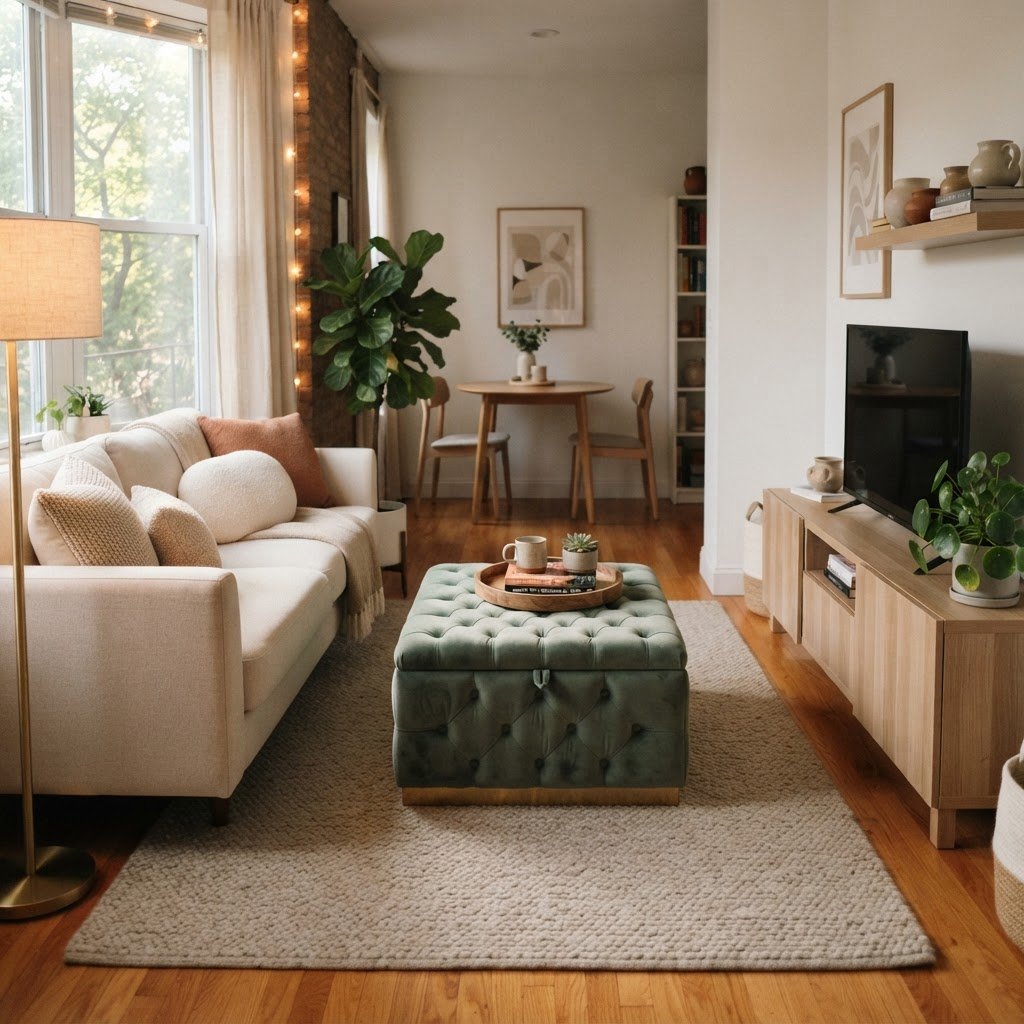
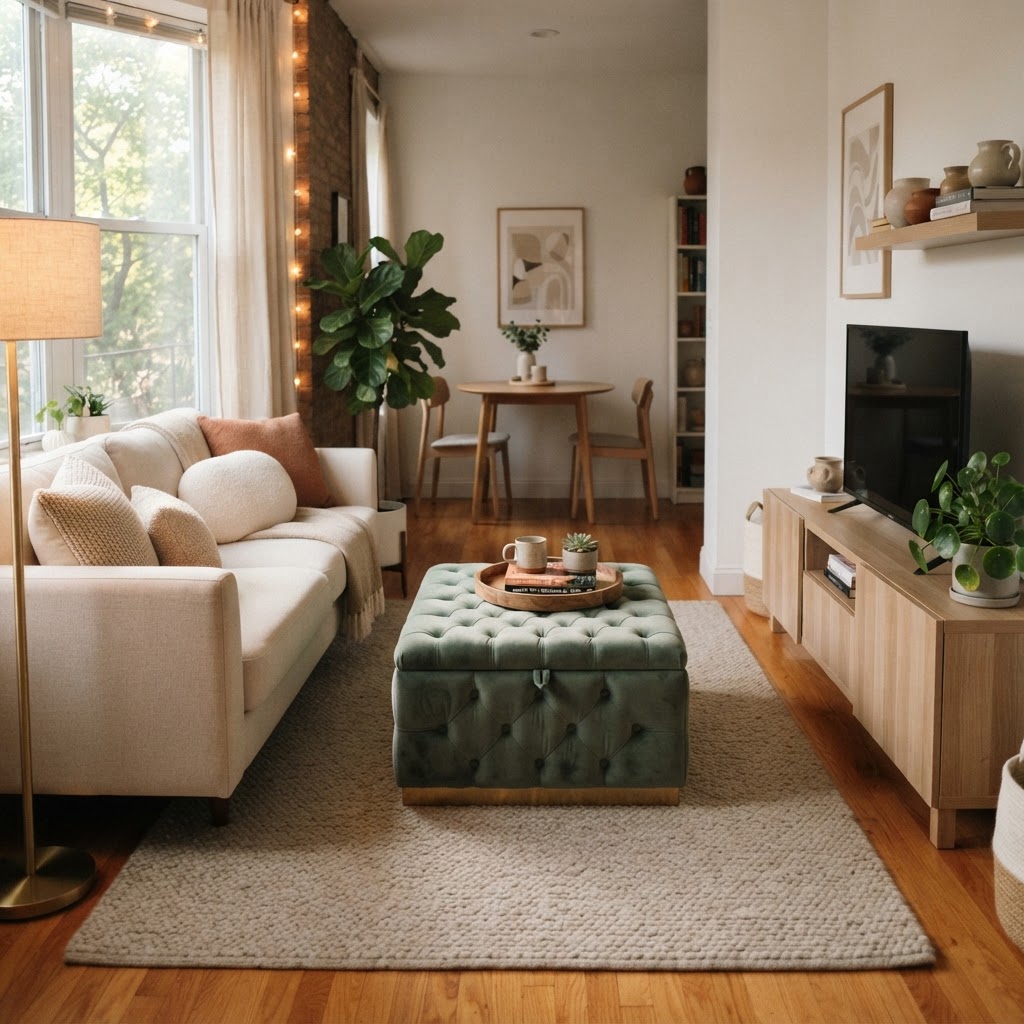
A velvet storage ottoman adds both elegance and hidden space to a compact living room.

In environments with under 600 square feet, every piece of furniture must serve at least two distinct functions to prevent overcrowding. Multifunctional storage benches are the cornerstone of this design philosophy, functioning as a primary seat for putting on footwear while concealing bulky items that otherwise overwhelm your floor space. If you are looking to revitalize your living space without breaking the bank, learn how to decorate a small apartment on a budget with our curated DIY tips. By choosing furniture that earns its keep, you treat your apartment as an integrated system rather than a collection of disparate items.

When evaluating pieces, prioritize modularity and efficiency. An ottoman that opens to reveal 3 cubic feet of interior space can house up to four heavy blankets or five board games, clearing vital closet capacity. This approach directly contributes to a perceived increase in room volume; by keeping surfaces clear, you eliminate the visual noise that makes small apartments feel claustrophobic. Furthermore, utilizing furniture with hidden storage reduces the need for secondary storage units like plastic bins, which often detract from a home’s aesthetic appeal and modern interior design standards.

Feature Storage Bench Storage Ottoman Ideal Placement
Primary Use Entryway seating Footrest/Seating Entryway, Bedroom
Storage Capacity High (often deep) Medium (hollow core) Living Room
Versatility Limited to surface High (can be table) Multi-use areas

Entryway Solutions: First Impressions Matter

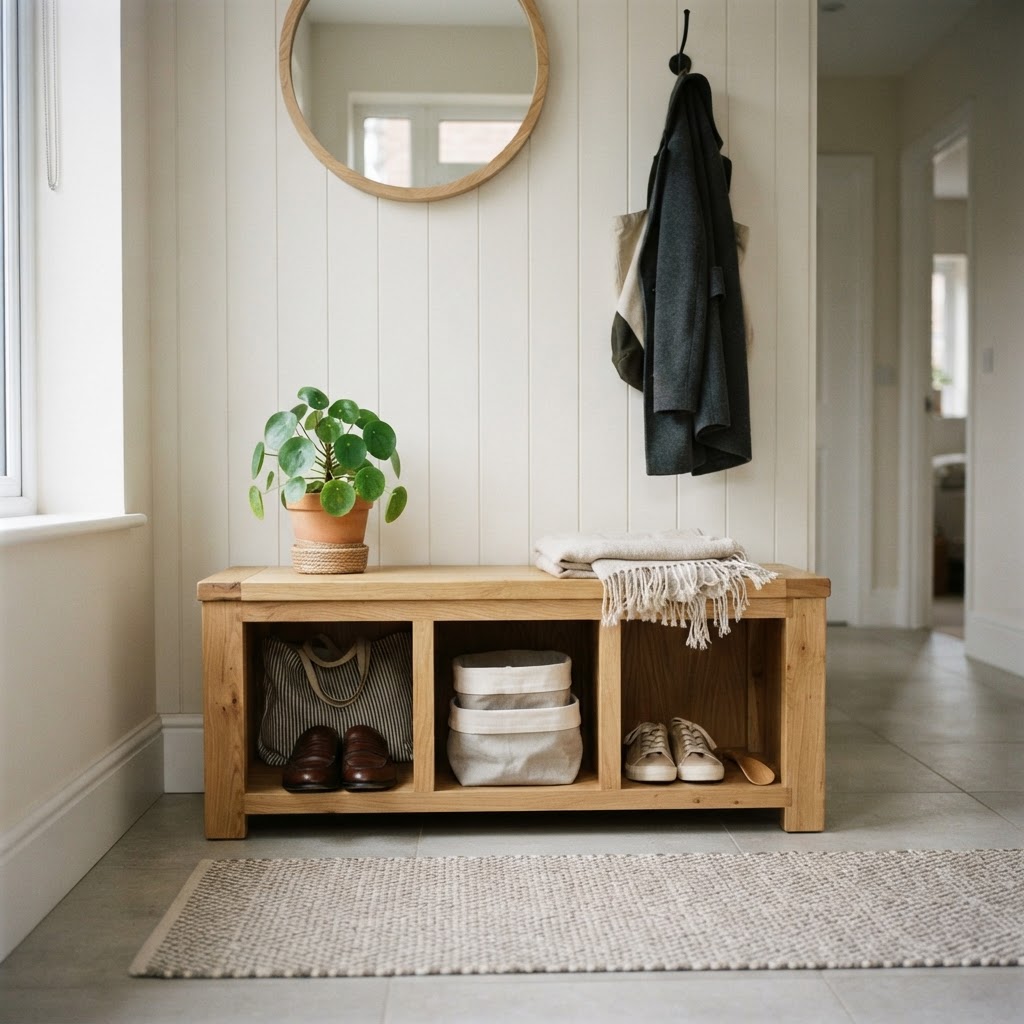
Keep your entryway clutter-free with a bench that includes smart cubby storage.

An organized entryway serves as the vital buffer zone between your private sanctuary and the outside world, requiring furniture that manages high-traffic chaos efficiently. Sleek entryway benches featuring built-in cubbies or soft-close drawers transform a cluttered corridor into a model of home efficiency. By designating specific slots for mail, keys, and up to four pairs of shoes, you prevent the accumulation of items that impede movement in tight floor plans.

Choosing the Right Material

When selecting materials for high-traffic entryways, durability is the primary metric for long-term investment. Performance velvet, which scores over 50,000 double rubs on the Wyzenbeek abrasion test, or high-grade faux leather are superior choices for frequent seating. Solid wood frames provide the structural integrity required to support multiple users simultaneously, whereas particle board alternatives may fail after 12-18 months of heavy load. For households with pets or children, opt for Crypton-treated fabrics that offer inherent stain resistance, ensuring that your storage investment remains pristine despite daily wear and tear in your apartment’s entry zone.

Living Room Ottomans: Beyond Footrests

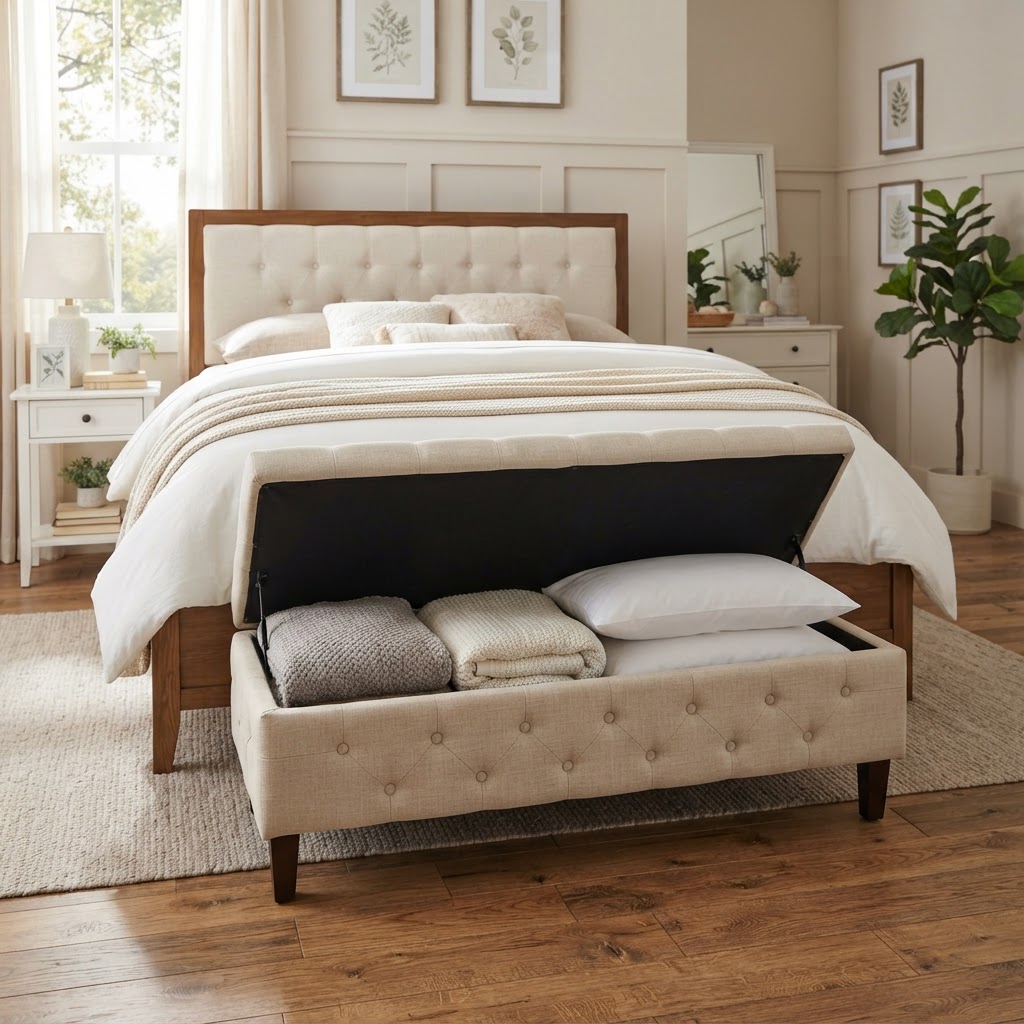
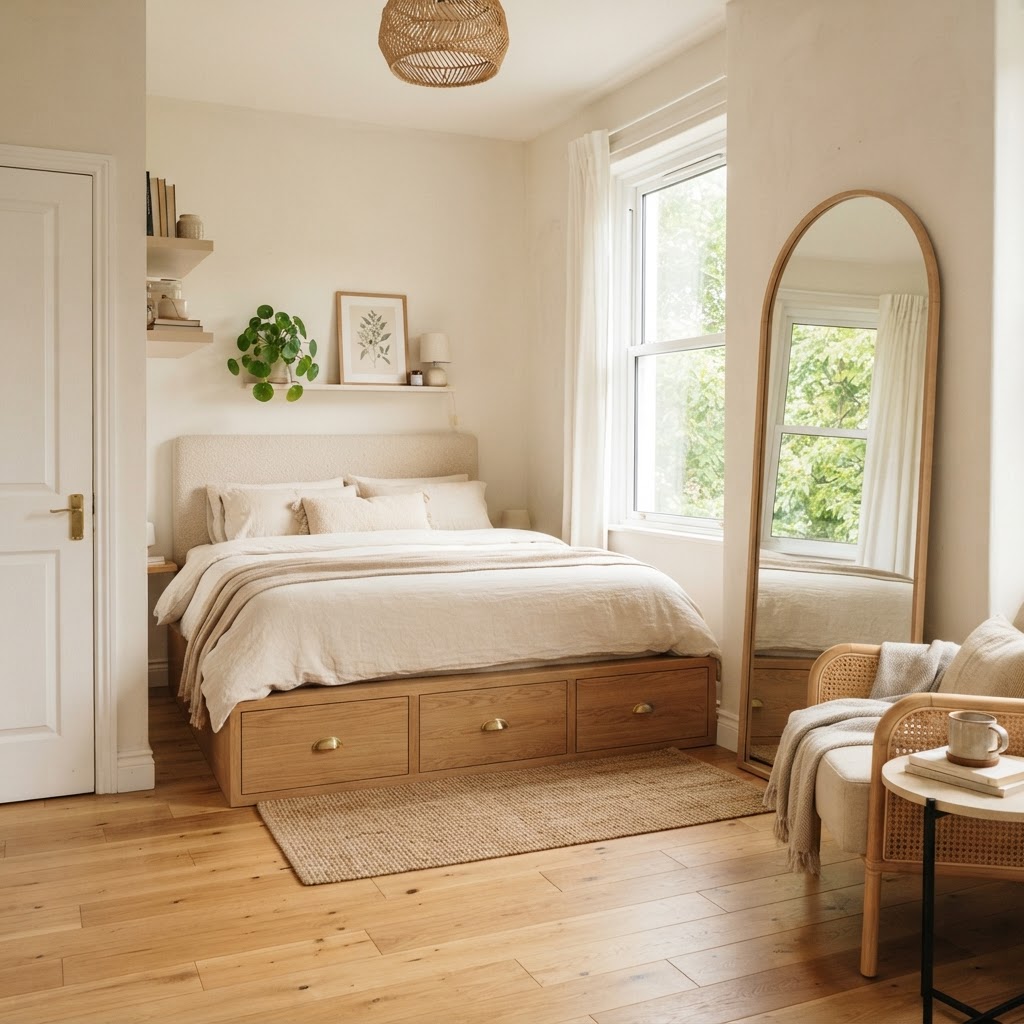
Utilize the space at the foot of your bed with a lift-top bench for seasonal linens.

For more inspiration on keeping your common areas tidy, check out these clever living room storage ideas that help maximize every square inch of your home. While you focus on upgrading your living room storage, don’t forget that many of these space-saving strategies also apply to your cooking area, so check out these budget small apartment kitchen ideas to further optimize your home.

In compact living rooms, the ottoman is an underutilized asset that should function as both a comfort item and a concealed storage vessel. A well-chosen hollow ottoman with a weight-tested hinged lid or removable top provides a dedicated home for remote controls, charging cables, and magazines, preventing these items from cluttering your coffee table. For ultra-small footprints, nesting ottomans offer a flexible 3-in-1 solution: they provide extra seating for guests, act as separate footrests, and consolidate into a single footprint when not in use.

To optimize functionality, look for ottomans with internal dimensions of at least 15 inches square. This capacity is sufficient to store a standard throw pillow or two large weighted blankets. If space is extremely limited, consider circular designs; their lack of sharp corners improves traffic flow in tight walkways, reducing the chance of accidental bumps. By choosing models with internal organizational liners, you protect delicate items from potential snagging on the interior frame, ensuring your belongings remain protected and easily accessible whenever you need them.

The Secret to Hidden Storage

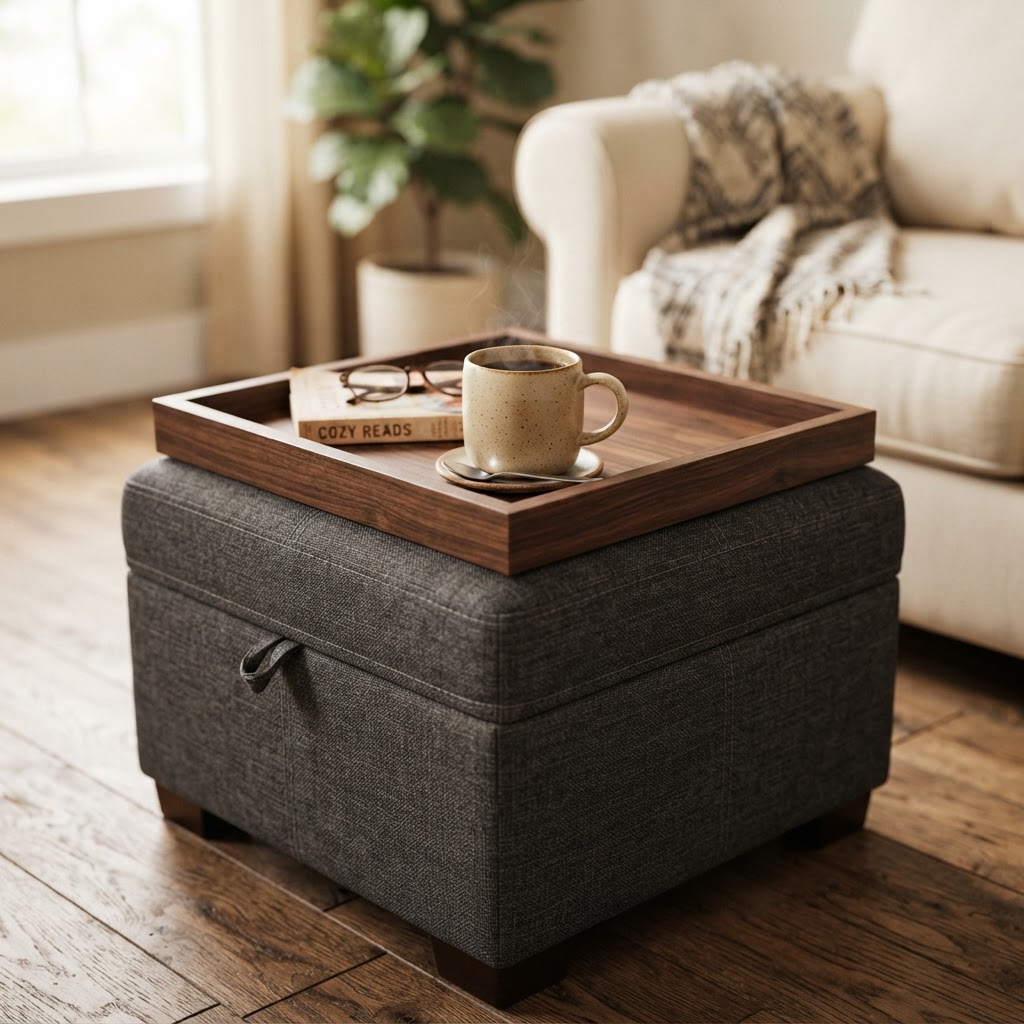
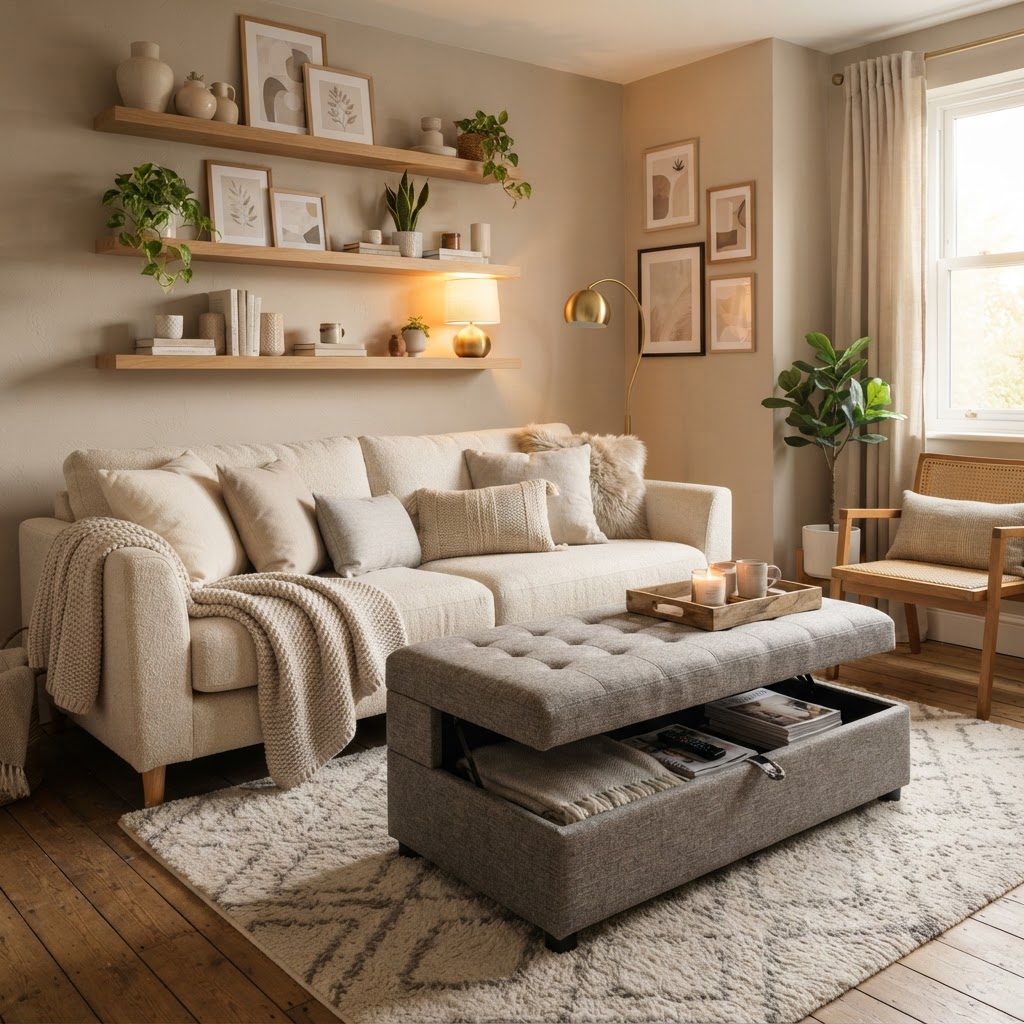
An ottoman with a tray top creates a stable surface for drinks and decor.

Effective hidden storage relies on the specific mechanism of the furniture piece, where lift-top, drawer, and basket-style designs offer distinct levels of accessibility and organization. Minimalist lift-top benches, often featuring tufted or smooth leather surfaces, provide a large, uninterrupted storage volume suitable for bulkier items like spare bedding or out-of-season clothing. Conversely, benches with integrated drawers or baskets allow for segmented organization, which is significantly more efficient for smaller items that require frequent access.

Organization Tips for Small Spaces

To maximize the utility of your internal storage, implement modular plastic or fabric bins within the bench to categorize your items. A simple 3-bin system can separate workout accessories, guest linens, and miscellaneous cables, preventing a cluttered “junk drawer” effect at the bottom of the bench. If you have a deeper storage cavity, use adjustable dividers to secure items in place, ensuring they don’t shift when you move the piece. For larger storage benches, adding a small battery-operated LED motion sensor light can improve visibility inside, making it easier to find smaller items without disrupting your entire organization system.

Styling Your Multifunctional Furniture

Multifunctional furniture serves as an excellent vehicle for aesthetic expression, allowing you to introduce color, texture, and form without encroaching on your living area’s footprint. A mustard yellow or deep emerald velvet ottoman acts as a vibrant focal point, immediately elevating a neutral-toned apartment interior. Meanwhile, pieces with organic elements, such as rattan bases or solid walnut legs, bring warmth and natural texture to modern apartments, balancing the sterility of hard plastic or laminate surfaces often found in urban dwellings.

Functionality should always bridge the gap to décor; the top surface of your ottoman or bench is a prime location for layering. By placing a sturdy 15-inch wooden or metallic tray atop a soft-cushioned ottoman, you instantly convert a plush footrest into a stable surface for beverages, candles, or decorative books. This hybrid usage allows you to maintain the comfort of upholstered furniture while benefiting from the rigid utility of a traditional coffee table. To prevent surface wear, ensure your tray has a felt or non-slip base, maintaining the integrity of the ottoman’s fabric over time.

Top 12 Picks for Your Apartment

  1. The Lift-Top Tufted Bench: Perfect for end-of-bed storage.
  2. The Mid-Century Modern Wooden Credenza-Bench: Sleek and sophisticated.
  3. The Nested Fabric Ottoman Set: The ultimate space-saver.
  4. The Industrial Metal-Frame Storage Bench: Great for urban lofts.
  5. The Circular Velvet Storage Ottoman: Soft edges for tight walkways.
  6. The Bench with Wicker Baskets: Provides easy-access storage for shoes.
  7. The Slim Entryway Console with Drawers: Ideal for narrow hallways.
  8. The Plush Ottoman with Internal Tray: Dual-purpose surface and interior.
  9. The Minimalist Leather Bench: Easy to clean and incredibly durable.
  10. The Velvet Bench with Gold Accents: Adds a touch of luxury to your bedroom.
  11. The Square Ottoman with Hidden Wheels: Easily movable for flexible layouts.
  12. The Multi-Tiered Bench: Combines a shoe rack with a storage chest.

Why These Picks Work

These selections are curated to minimize “visual noise,” a key factor in how large a room feels to the human eye. By maintaining a clean, cohesive design, you allow the mind to relax, which is essential in small-scale living environments. Whether you occupy a 400-square-foot studio or a larger one-bedroom unit, these pieces bridge the gap between essential utility and intentional, high-end interior design.

Common Mistakes to Avoid

Avoid the trap of purchasing oversized storage pieces that dominate your floor plan and restrict movement. Before ordering, verify that your selected bench or ottoman leaves at least 24 to 30 inches of clearance for walking paths. Additionally, always check the seat height; for maximum comfort, your bench or ottoman should sit within 2 inches of your existing sofa or bed height. Mismatched scales can ruin the visual flow of a small room, making it appear cluttered even when everything is tidily put away.

FAQ

Q: What is the ideal storage bench size for small apartments?

Small apartments typically benefit from benches ranging from 30 to 48 inches in width and 15 to 18 inches in depth. This footprint balances storage capacity with the need to keep hallways and living areas clear for easy movement throughout the home.

Q: How do I clean a velvet storage ottoman?

Use a soft-bristled brush to remove dust weekly and spot-clean stains with a mixture of water and a drop of dish soap. Avoid harsh chemicals or saturating the fabric, as velvet can easily mat or lose its luster when exposed to excessive moisture.

Q: Can a storage bench double as a coffee table?

Yes, a storage bench or ottoman can serve as a coffee table if you place a stable tray on top. This provides a hard surface for drinks and decor while keeping the soft, comfortable aesthetic of your furniture intact for daily use.

Q: Are storage benches with wheels worth it?

Storage benches with wheels are highly recommended for apartments because they allow for easy reconfiguration of your living space. Models with locking casters ensure the piece stays firmly in place while providing the flexibility to move it during cleaning or hosting guests.

How to Make a Small Bathroom Feel Bigger With Smart Storage

How to Make a Small Bathroom Feel Bigger With Smart Storage

To make a small bathroom feel bigger, prioritize clearing all surfaces, utilize vertical wall space for shelving, and install large mirrors to reflect light. By replacing bulky vanities with floating units and using light, monochromatic color palettes, you eliminate visual noise and create an open, airy environment that maximizes every square inch.

The Psychology of Space and Clutter

The most effective way to expand a small bathroom is to reduce visual noise by clearing off countertops entirely. When every surface is covered with toiletries, the human eye has no “resting point,” which creates a psychological sense of claustrophobia even in a room with functional space. Research suggests that a de-cluttered space can reduce stress levels by up to 25% while simultaneously making a room appear 15% larger. To achieve this, you must treat your countertop as a premium “whitespace” zone. Start by removing any items not used in the last 30 days. For the items that remain, aim for a “one-in, one-out” policy where every new product purchase requires the disposal or storage of an older one. This minimalist approach serves as a fundamental tenet of efficient small apartment organization, ensuring that the room feels like a retreat rather than a storage closet, and it is a key strategy when you choose to decorate a small apartment on a budget to maximize your overall living space.

Simplify Your Daily Routine

Start by taking a brutal inventory of what you actually use on a daily basis. Many people keep expired products or items they haven’t touched in months. By removing these items, you instantly open up room for the essentials, which is a fundamental tenet of effective small apartment organization.

Vertical Thinking: Reaching for the Ceiling

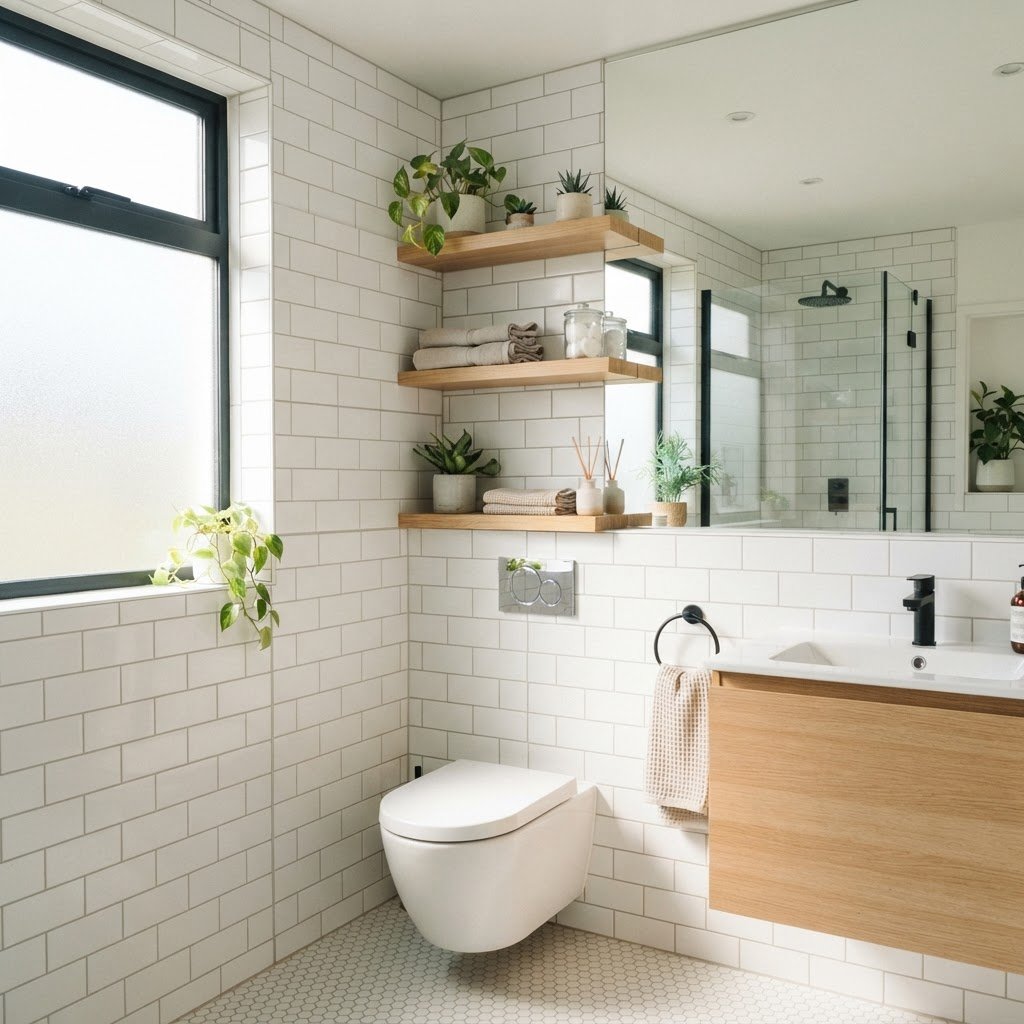
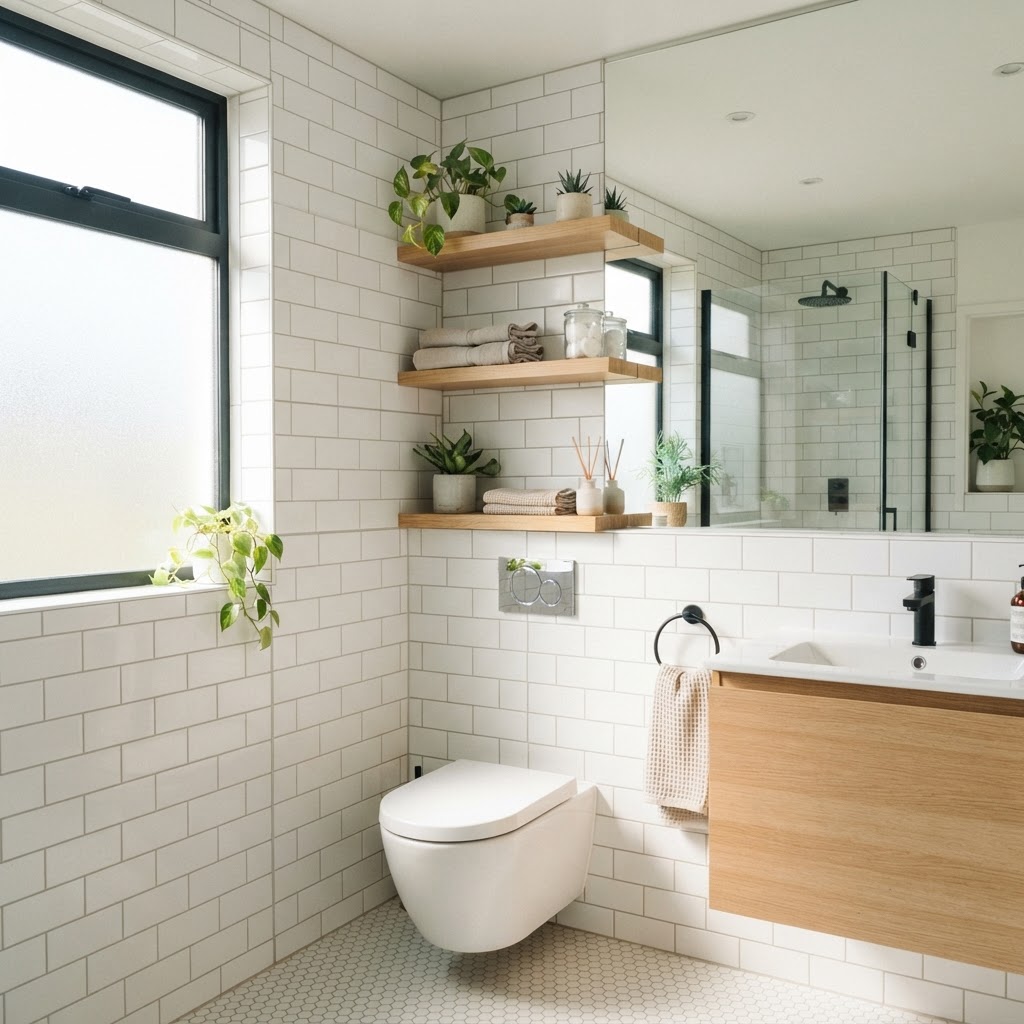
When floor space is at a premium, the most underutilized asset in your bathroom is the wall space reaching toward the ceiling. Most homeowners ignore the area above the toilet or the sink, yet this space offers an incredible opportunity for storage that does not impede your walking path. Installing floating shelves or tall, thin cabinets allows you to house everything from towels to extra toiletries without encroaching on the limited floor footprint. When selecting vertical storage, opt for materials like glass, acrylic, or white-lacquered wood. These materials provide a “transparent” or reflective quality that prevents the furniture from feeling like a wall-block, keeping the sightlines open and the room feeling expansive.

Installing Over-the-Toilet Storage

The space above your toilet is prime real estate that often goes to waste. You can opt for a sleek shelving unit that fits over the toilet tank, or mount individual wall shelves for a cleaner, more minimalist look. Choose materials like glass or white wood to maintain an airy aesthetic that doesn’t feel too bulky or imposing.

Storage Type Best For Space Impact Cost Estimate
Floating Shelves Decorative items/Towels Minimal $20 – $50
Over-Toilet Rack Bulkier toiletries Moderate $40 – $100
Recessed Cabinet Hidden storage Zero footprint $150 – $400

Mirror Magic and Light Reflection

Mirrors are the most powerful optical illusion tool in interior design, as they double the perceived depth of a room. By replacing a standard, small vanity mirror with a wall-to-wall or floor-to-ceiling mirror, you effectively break the physical boundary of the wall, making the bathroom feel twice as large. Furthermore, placing a mirror opposite a window or a primary light source helps to bounce natural or artificial light throughout the room, eliminating dark corners that shrink a space. For those needing additional functionality, recessed medicine cabinets offer the “magic” of a large mirror with the utility of concealed storage behind the glass. This combination allows you to hide clutter completely while maintaining a sleek, reflective surface that enhances the room’s brightness and scale.

Hidden Medicine Cabinets

If you need more storage, look for recessed medicine cabinets that hide behind a large mirror. This allows you to have a massive reflective surface while gaining concealed storage where you can tuck away daily items. It’s the perfect blend of form and function for those aiming to make a small bathroom feel bigger.

Utilizing Door Backs and Dead Zones

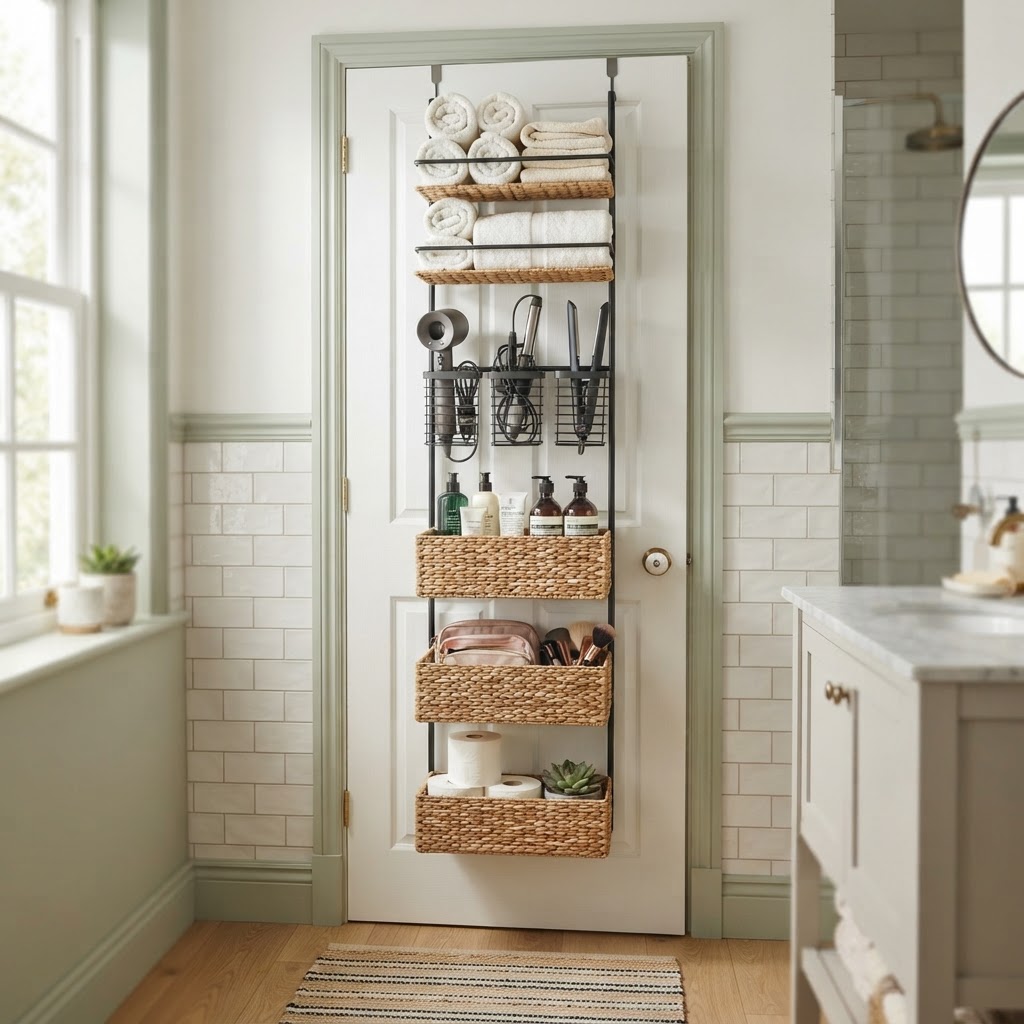
In a small apartment, the back of the bathroom door represents approximately 6 to 8 square feet of usable, “invisible” vertical storage space. Most people neglect this area, but utilizing a high-quality over-the-door organizer can store hair dryers, straighteners, spare toilet paper, and cleaning supplies—all items that would otherwise clutter your limited drawer space. The key is to select organizers that fit the scale of your door. If you have a moisture-heavy bathroom, prioritize mesh organizers over fabric or clear plastic, as the airflow prevents mildew and keeps tools dry. By reclaiming this dead zone, you can clear off your vanity surface entirely, which is the most critical step in making a small space feel larger and more organized.

The Anatomy of a Door Organizer

  • Clear pockets allow you to see what is inside without digging.
  • Heavy-duty hooks work perfectly for bulky items like towels or robes.
  • Mesh organizers are better for items that might be damp, as they allow for airflow.
  • Adjustable racks can be customized to fit the height of your specific bottles and tools.

Choosing Multi-Functional Furniture

Maximizing small bathroom utility requires selecting furniture that serves at least two distinct purposes to minimize the number of objects taking up floor space. A small, teak or bamboo stool, for example, functions as a seat during a lengthy skincare routine while doubling as a pedestal for a plant or a temporary shelf for folded fresh towels. Just as these storage techniques work for your bath, you can also use clever organization hacks to maximize space in your kitchen when you explore various budget-friendly small apartment kitchen ideas to transform your culinary area. When considering your vanity, avoid pedestal sinks; although they appear “open,” they offer zero storage and force you to buy additional shelving units that clutter the floor. A floating vanity with a single, deep pull-out drawer is a superior choice. Because the unit is mounted to the wall, it keeps the floor clear, which tricks the eye into seeing more floor space and making the entire room appear significantly larger.

Why Compact Vanities Matter

Consider replacing a pedestal sink with a small vanity that features a cabinet underneath. While pedestal sinks look “open,” they provide zero storage. A floating vanity with a single deep drawer offers hidden space that maintains the visual flow of the floor, which helps the bathroom feel larger.

Color Palettes and Texture Selection

Color is the primary tool for manipulating the perception of size, as monochromatic, high-light-reflecting schemes minimize hard visual boundaries. Using white, cream, or light grey paint on both walls and ceiling tricks the brain into not perceiving where the wall ends and the ceiling begins, effectively creating an infinite-feeling space. To avoid a “sterile” aesthetic, introduce texture rather than contrasting color. Incorporating items like woven seagrass baskets, matte-finished hardware, or linen towels adds depth and tactile warmth without adding “visual weight.” Polished chrome or nickel hardware also contributes to a larger look by reflecting light throughout the room, unlike dark, matte-black fixtures which can sometimes absorb light and visually “anchor” a space, making it feel smaller and more constrained.

Incorporating Texture Without Clutter

If an all-white bathroom feels too sterile, introduce texture through towels, baskets, and hardware rather than color. A woven seagrass basket adds warmth and keeps small items neatly contained, while polished nickel or matte black hardware provides a sophisticated focal point that draws the eye upward and outward.

Feature Makes Room Feel Larger Makes Room Feel Smaller
Wall Color Light/Monochromatic Dark/High-Contrast
Fixtures Floating/Wall-mounted Pedestal/Floor-standing
Lighting Layered (Sconces + Ceiling) Single source/Dim
Hardware Polished/Reflective Matte/Dark

Organizing the “Hidden” Drawers

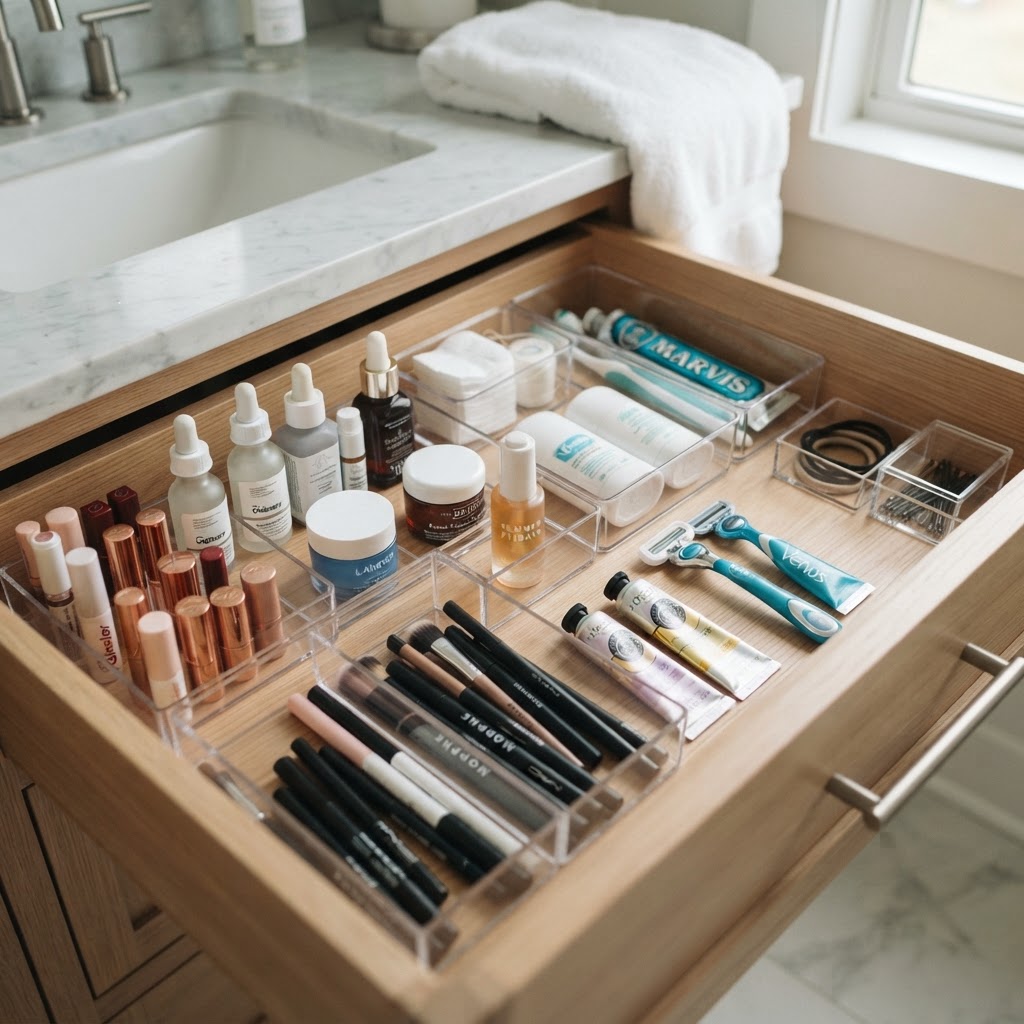
Small bathroom storage is ineffective if your internal drawers remain a chaotic jumble of tangled cords and scattered cosmetics. Utilizing clear acrylic drawer dividers allows you to assign a specific, “fixed” home to every tool, which prevents the slow accumulation of clutter that happens when things are tossed in haphazardly. For maximum efficiency, implement the “Categorization Method,” where items are grouped by frequency of use. If you are tired of loose items sliding around, consider using multi-level drawer organizers to tame your bathroom clutter and keep your essentials perfectly categorized. Vertical dividers are particularly useful for thin items like nail files, tweezers, and brushes, which otherwise take up too much drawer real estate if laid flat.

The Categorization Method

  1. Keep all hair styling tools together.
  2. Dedicate one bin for dental hygiene products.
  3. Group skincare items by morning and evening routines.
  4. Utilize vertical dividers for thin items like nail files or tweezers.

Lighting Strategies to Enhance Openness

Lighting is often the most overlooked factor in small bathroom design, yet it dictates whether the room feels like a cramped closet or a bright, expansive space. A single overhead light source creates harsh shadows and dark corners, both of which visually contract the room. To combat this, you should aim for layered lighting; install sconces on either side of the mirror to eliminate facial shadows and provide cross-illumination. Additionally, consider the color temperature of your bulbs. Cool-toned LED bulbs (around 3000K to 4000K) best mimic daylight, creating a clean, vibrant aesthetic that makes the walls seem to recede. Avoid yellow-toned, dim bulbs, as they contribute to a “gloomy” atmosphere that traps the eye within the room’s actual, small dimensions.

The Impact of Cool vs. Warm Tones

Using cool-toned LED bulbs can mimic natural daylight, which makes a room feel fresh and vibrant. Avoid yellow-toned, dim bulbs that can create a gloomy, cramped atmosphere. Even the smallest space feels larger when it is flooded with bright, crisp light.

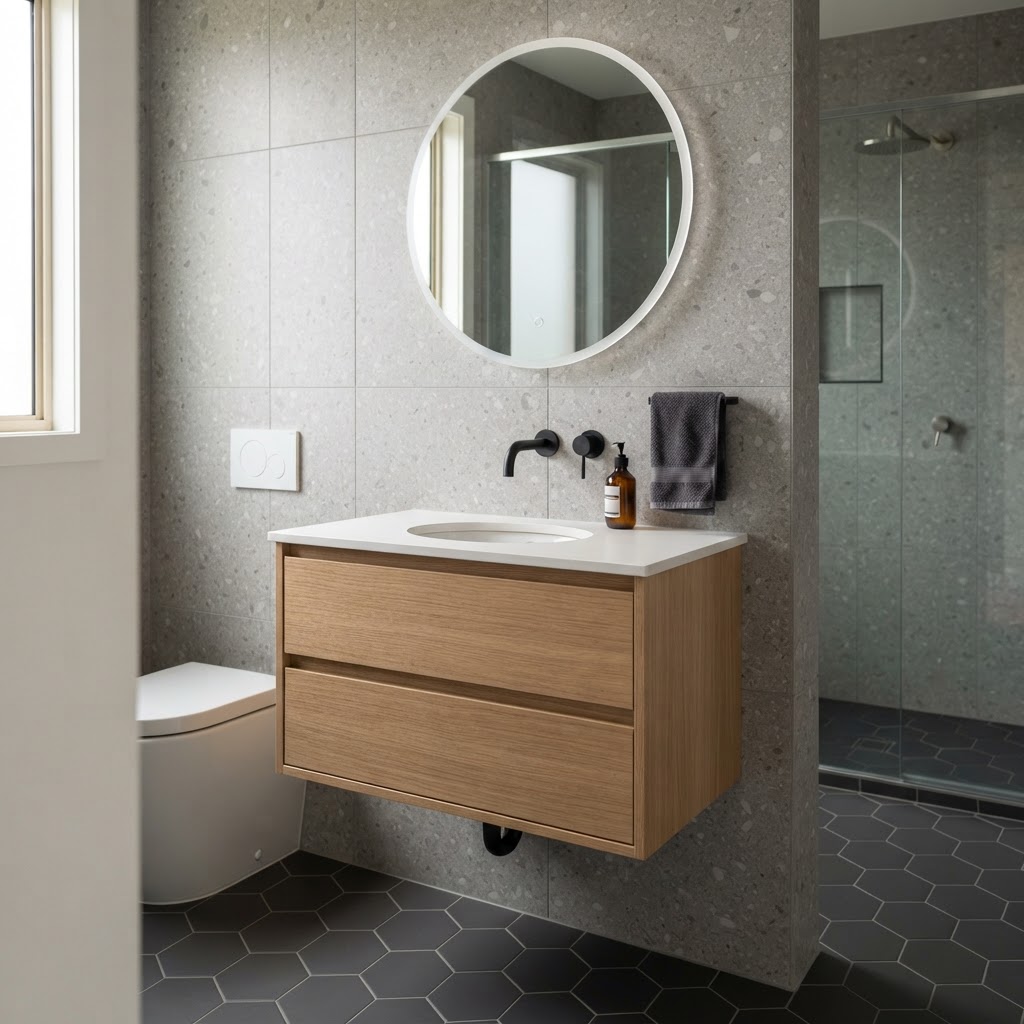
Floating vanities free up floor space, making the entire room appear larger.

Utilizing the back of your bathroom door is a genius way to gain extra storage space.

Drawer dividers are essential for keeping small bathroom items from becoming a cluttered mess.

Maximizing vertical space with floating shelves creates an airy and open feel.

FAQ

Q: What is the best color for a small bathroom?

A: The best color for a small bathroom is white or off-white. Using a monochromatic, light-reflecting palette eliminates hard visual boundaries and makes walls appear to recede, which creates an immediate illusion of a much larger, more open space.

Q: Are pedestal sinks better than vanities for small bathrooms?

A: No, pedestal sinks are generally worse because they offer zero storage and force you to add bulky standalone shelving units. A floating vanity is the better choice as it clears the floor area and provides hidden storage, creating both more space and a cleaner look.

Q: How can I store items in a bathroom without wall space?

A: You can store items using over-the-door organizers, which utilize the back of the bathroom door for vertical storage. Alternatively, use multi-level drawer organizers inside your existing cabinetry to maximize the internal volume of your storage space without needing to mount anything on your walls.

Q: Does lighting actually make a small bathroom look bigger?

A: Yes, bright, layered lighting is critical for expanding a space. Installing sconces on either side of the mirror and using cool-toned daylight LED bulbs (3000K-4000K) eliminates dark corners and shadows, which visually “stretches” the room’s dimensions and makes it feel fresh and airy.

Q: How do I stop my bathroom drawers from getting messy?

A: Use clear acrylic drawer dividers to assign a specific, permanent home for every item. Categorizing your products into bins by function—such as grouping hair tools together or separating morning and evening skincare—prevents clutter from re-accumulating after you have cleaned them out.

Small Living Room Decor Ideas: Maximize Comfort & Storage

Small Living Room Decor Ideas: Maximize Comfort & Storage

To maximize a small living room, prioritize multi-functional furniture, utilize vertical wall space for storage, and use light color palettes to create an expansive feel. By choosing streamlined pieces that lift off the floor and keeping surfaces clutter-free, you can effectively double the perceived square footage of any compact apartment.

Rethink Your Furniture Choices

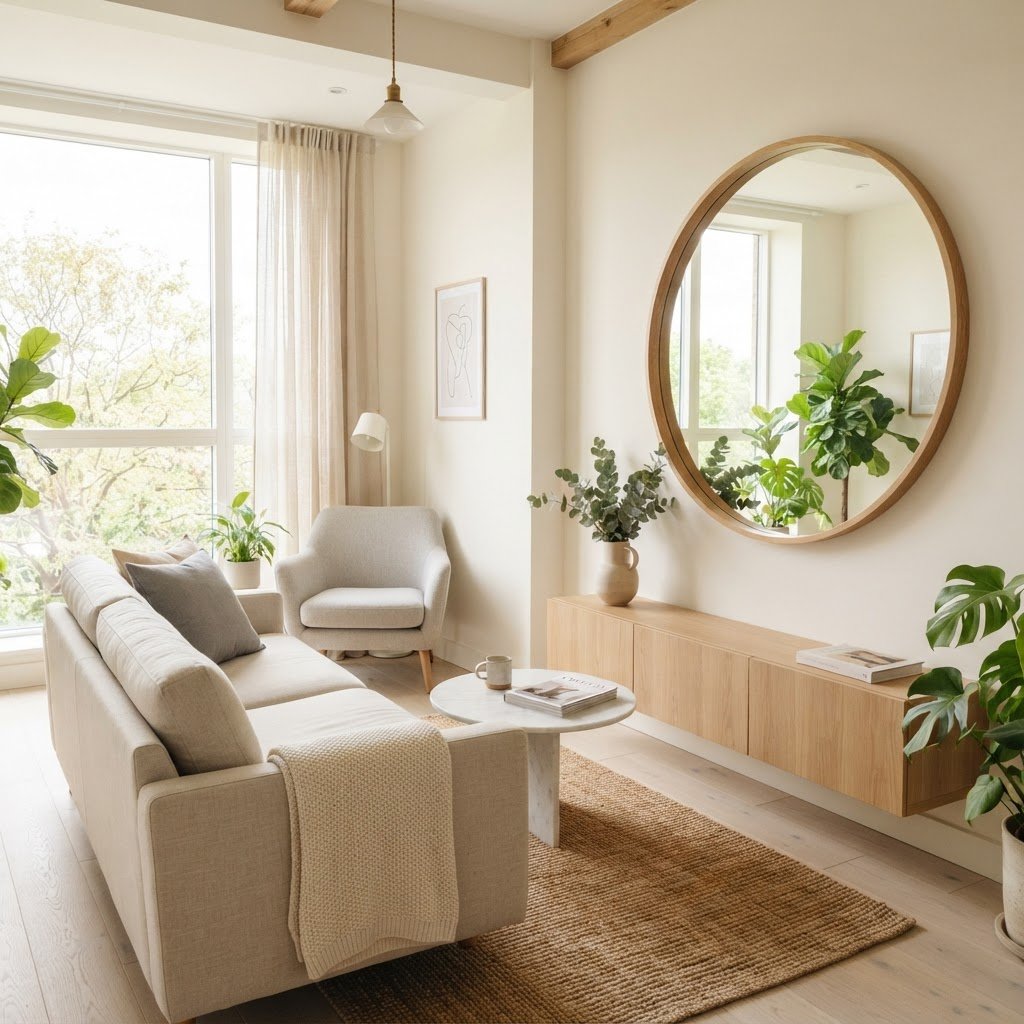
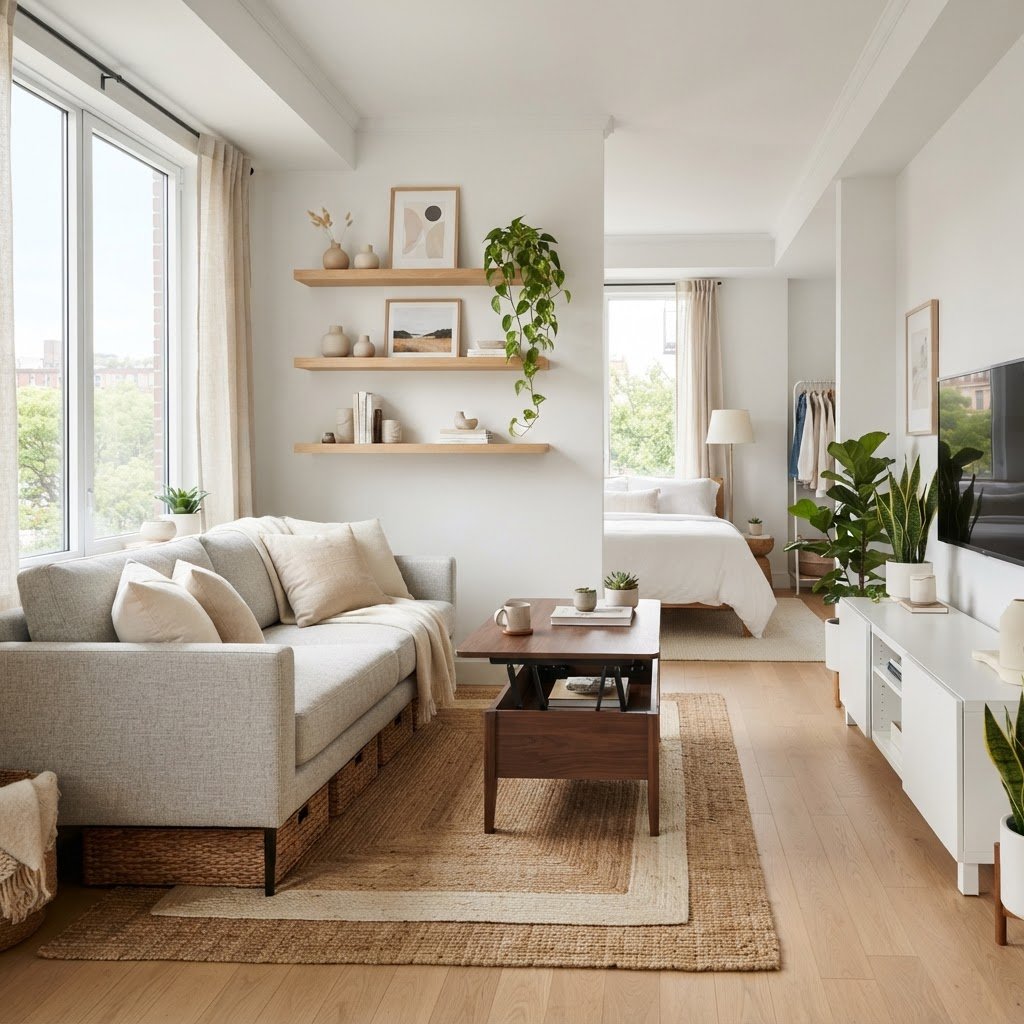
Using light colors and mirrors creates an expansive feel in small spaces.

When working with limited square footage, every piece of furniture must serve at least two purposes to justify its floor footprint. Instead of choosing bulky, oversized sofas that dominate the room, opt for streamlined silhouettes with exposed legs; furniture that sits on legs creates the illusion of more space underneath, preventing the room from feeling heavy or claustrophobic. Research shows that choosing furniture with a “visual weight” below 30% of the total room volume significantly increases the comfort rating of small floor plans.

The Power of Multi-Functional Pieces

If you are looking to maximize every square inch, incorporating clever living room storage ideas can help you stay organized without sacrificing style. Investing in multi-functional furniture is the golden rule for compact living. A coffee table with built-in drawers or a lift-top mechanism offers hidden storage for remotes, blankets, and books. Similarly, ottomans with removable tops can serve as extra seating for guests while secretly hiding clutter inside. For optimal results, prioritize furniture that can be moved easily, such as pieces on hidden casters.

Furniture Type Benefit for Small Spaces Space-Saving Potential
Lift-Top Coffee Table Storage + Workspace High
Sleeper Sofa Bed + Seating Very High
Nesting Tables Surface Area on Demand Medium
Storage Ottoman Footrest + Hidden Bin High

Choosing a sofa bed is another excellent way to add utility to your living area. Modern designs have evolved significantly, offering comfort levels that rival traditional sofas while providing a guest sleeping solution. By selecting items that pull double duty, you effectively reduce the need for excessive shelving or storage cabinets.

Master the Art of Vertical Storage

Multi-functional furniture is essential for maximizing storage in tight layouts.

If floor space is at a premium, look up because your walls are your best asset for maximizing storage without sacrificing precious floor footage. Installing floor-to-ceiling bookshelves or floating shelves helps draw the eye upward, making the ceiling appear higher and the room feel more expansive. According to interior design standards, using the top 2 feet of wall space near the ceiling can increase your storage capacity by up to 25% without impacting the room’s “walkable” feel.

Creative Wall Solutions

Utilize the space above your windows or doorways for additional shelving. This often-overlooked area is perfect for displaying decorative items, plants, or books you don’t need daily access to. Using wall-mounted sconces instead of floor lamps also clears up valuable floor space, freeing up room for plants or side tables. Avoid “visual clutter” by keeping these high shelves organized with uniform bins or baskets.

Don’t forget the back of your doors. Over-the-door organizers can be used for more than just shoes; they are perfect for storing craft supplies, chargers, or small electronic devices. By keeping surfaces clear of small objects, you maintain a clean and airy atmosphere that is vital in smaller spaces.

Color Palettes and Lighting Strategies

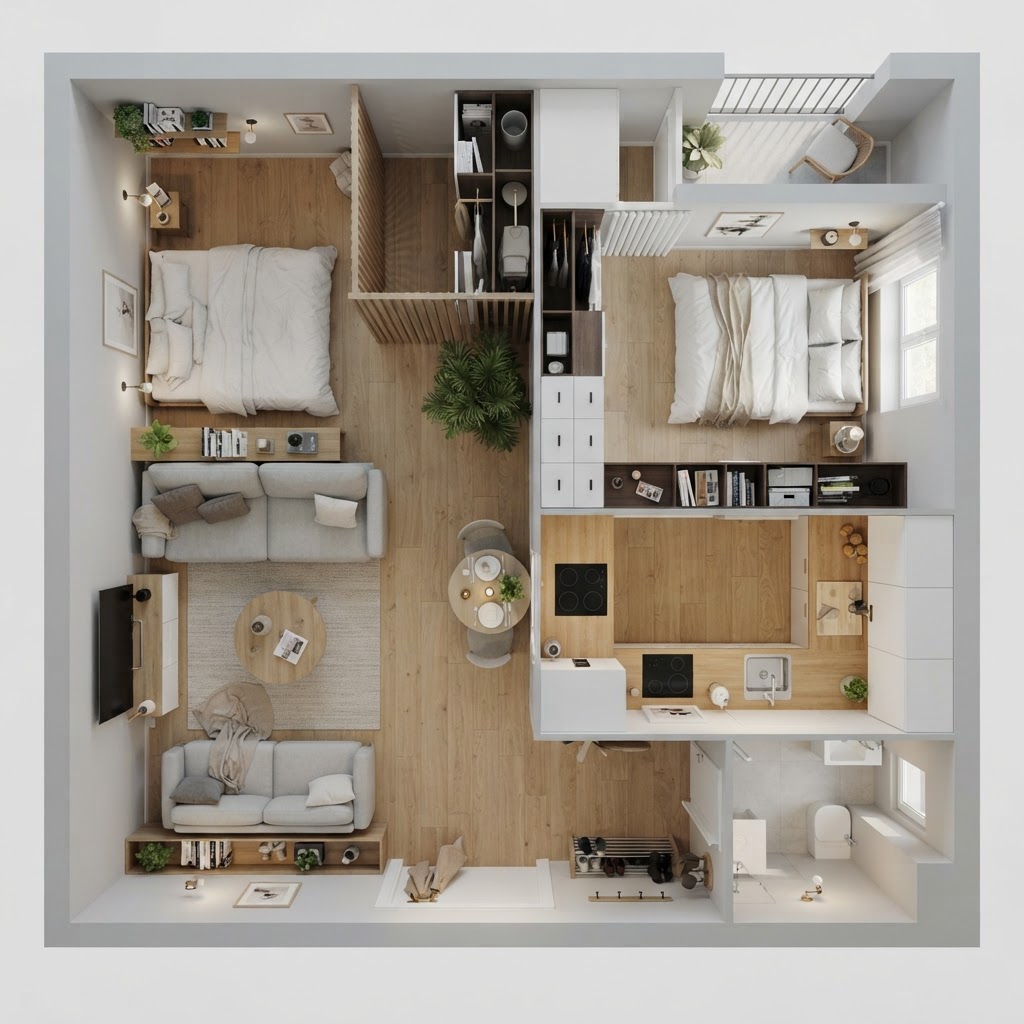
A well-organized layout defines separate areas for living and relaxing.

Color plays a psychological role in how we perceive space, as lighter, neutral tones such as off-white, soft gray, or pale beige reflect more light, making a small living room feel brighter and more open. This doesn’t mean you have to avoid color entirely; rather, use vibrant hues as accents in pillows, rugs, or artwork to add personality. Experts suggest a 60-30-10 color rule: 60% dominant light neutral, 30% secondary neutral, and 10% bold accent color to maintain a sophisticated, airy balance.

Lighting is equally important for creating a sense of volume. Avoid relying solely on a single overhead light fixture, which can create harsh shadows and make corners feel dark and closed off. Instead, layer your lighting with floor lamps, table lamps, and LED strips under shelves to create warmth and depth. Ensure that natural light is not obstructed by using sheer curtains that allow sunshine to filter through while still providing privacy. If you have a small window, placing a large mirror directly opposite it can double the amount of natural light entering the room, instantly making it feel double the size.

Strategic Layout and Flow

Vertical shelving maximizes storage without taking up precious floor space.

Arranging furniture in a small room requires careful consideration of the flow of movement, so avoid the common mistake of pushing all your furniture against the walls. “Floating” your furniture slightly away from the walls—even by just a few inches—creates a more intimate and cozy arrangement while preventing the room from feeling like a waiting area. For an optimal layout, maintain at least 30 inches of walking clearance in high-traffic pathways to ensure the space remains functional and accessible. Beyond the living area, you can also explore clever small apartment kitchen ideas to ensure the heart of your home stays just as functional and spacious.

Define zones with area rugs. A well-placed rug can anchor a seating area, visually separating it from a dining or workspace corner without the need for physical partitions. Keep the path between your entry points and focal points clear to avoid the “obstacle course” feel that often plagues tiny homes. Using a rug that is sized correctly (usually extending at least under the front legs of your furniture) helps define the zone’s boundaries effectively.

Mirrors and Reflective Surfaces

Mirrors are the oldest, most effective trick in the book for expanding small spaces, as placing a large mirror on a main wall acts as a window to another space, tricking the brain into perceiving more depth. Consider mirrored furniture, such as a side table or a console, to reflect your decor and add a touch of glamour without occupying visual weight. These pieces are particularly effective when placed near sources of light to amplify the room’s overall brightness.

Glass or acrylic “ghost” furniture is another fantastic option. Coffee tables with glass tops or clear acrylic chairs essentially disappear into the room, fulfilling their purpose without clogging up your line of sight. This allows you to have the necessary furniture without sacrificing the “open” feeling of the design. According to home staging experts, using clear furniture can reduce the “visual clutter” impact by nearly 50% compared to solid, dark-colored wood pieces.

Curating Your Decor and Clutter Control

In a small space, clutter is the primary enemy of comfort, so you must adopt a strict “one in, one out” rule for accessories to prevent shelves and tables from becoming overwhelmed. Choose high-quality decorative pieces rather than a large collection of small trinkets, which can make a space look busy and disorganized. Focus on scale and proportion: a single large piece of artwork usually makes a bigger impact and looks less cluttered than a gallery wall filled with tiny, disjointed frames.

If you want to achieve a high-end look without overspending, it is important to learn how to decorate a small apartment on a budget using clever DIY projects and strategic shopping habits. Look for hidden nooks and crannies that are currently going to waste. Underneath your sofa or chairs might seem inaccessible, but low-profile baskets can slide underneath to store rarely used items. If you have a corner, consider a corner cabinet or a pedestal plant stand that also functions as a storage unit. Using decorative boxes or woven baskets as functional decor allows you to hide away mail, chargers, and toys in plain sight, creating a uniform, clean look that doubles as texture and style.

FAQ

How do I make a tiny living room look bigger?

Use a light-colored, monochromatic color palette and incorporate mirrors to reflect light and depth throughout the room. Selecting furniture with exposed legs and utilizing vertical wall space helps maintain an airy, open feeling that prevents the area from feeling crowded.

What is the best furniture for a small living room?

Prioritize multi-functional furniture like lift-top coffee tables, ottomans with internal storage, and sleeper sofas. Choose pieces with slim profiles or transparent materials, such as acrylic or glass, to maintain clear lines of sight and minimize visual weight in the room.

Should furniture touch the walls in a small room?

Avoid pushing all furniture against walls, as this can make the room look like a stiff waiting area. Floating furniture even a few inches away from the wall creates a sense of depth and flow, making the room feel more intentional and spacious.

How can I add storage to a small living room without bulky cabinets?

Utilize vertical wall space with floor-to-ceiling shelving and install over-the-door organizers for hidden storage. Incorporate functional decor such as woven baskets, storage ottomans, or decorative boxes to contain clutter while keeping the aesthetic clean and organized.

13 Genius Ways to Store Cleaning Supplies in a Tiny Home

13 Genius Ways to Store Cleaning Supplies in a Tiny Home

To store cleaning supplies in a tiny home efficiently, utilize vertical wall space with pegboards, repurpose over-the-door organizers for hidden storage, and maximize cabinet interiors using tension rods and pull-out shelving. These space-saving tactics eliminate clutter by ensuring every tool has a designated home, even in areas under 500 square feet.

Utilize Vertical Space for Maximum Efficiency

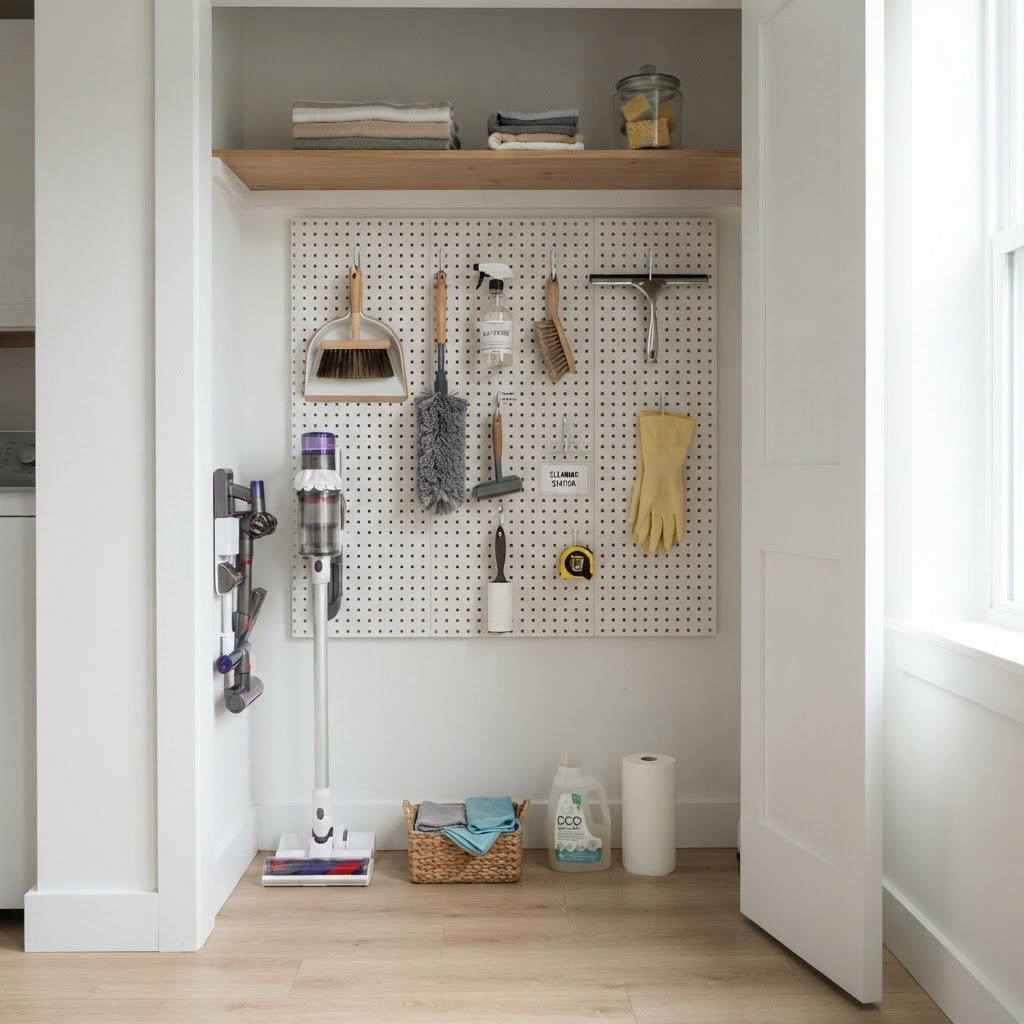
Using pegboards maximizes vertical storage in tight spaces.

When floor space is non-existent, look up; walls are an often underutilized asset in small homes, providing room to stash essentials without interfering with your daily flow. Installing wall-mounted systems is one of the most effective ways to reclaim your footprint and maintain a clear floor.

Install Pegboards in Utility Closets

Pegboards are the ultimate tool for customizable storage because they allow for modular arrangements that adapt as your inventory changes. By mounting a 2×4 foot pegboard inside a cabinet door or on a bare wall in a laundry nook, you can hang spray bottles, microfiber cloths, and scrub brushes at eye level for immediate access.

This keeps everything visible, ensuring you aren’t digging through a dark, cramped bin. Research shows that keeping tools visible reduces “cleaning fatigue,” as you spend 30% less time searching for specific supplies. You can easily adjust the hooks as your inventory changes, making it a flexible solution for any tiny home resident. For heavy-duty items, ensure your pegboard is rated for at least 20 pounds to prevent sagging over time.

Storage Method Best For Space Saved (Approx.)
Pegboard Small hand tools 4-6 sq ft
Wall Mounts Stick vacuums 2 sq ft
Tension Rods Spray bottles 1-2 sq ft

Repurpose Hidden Cavities and Nooks

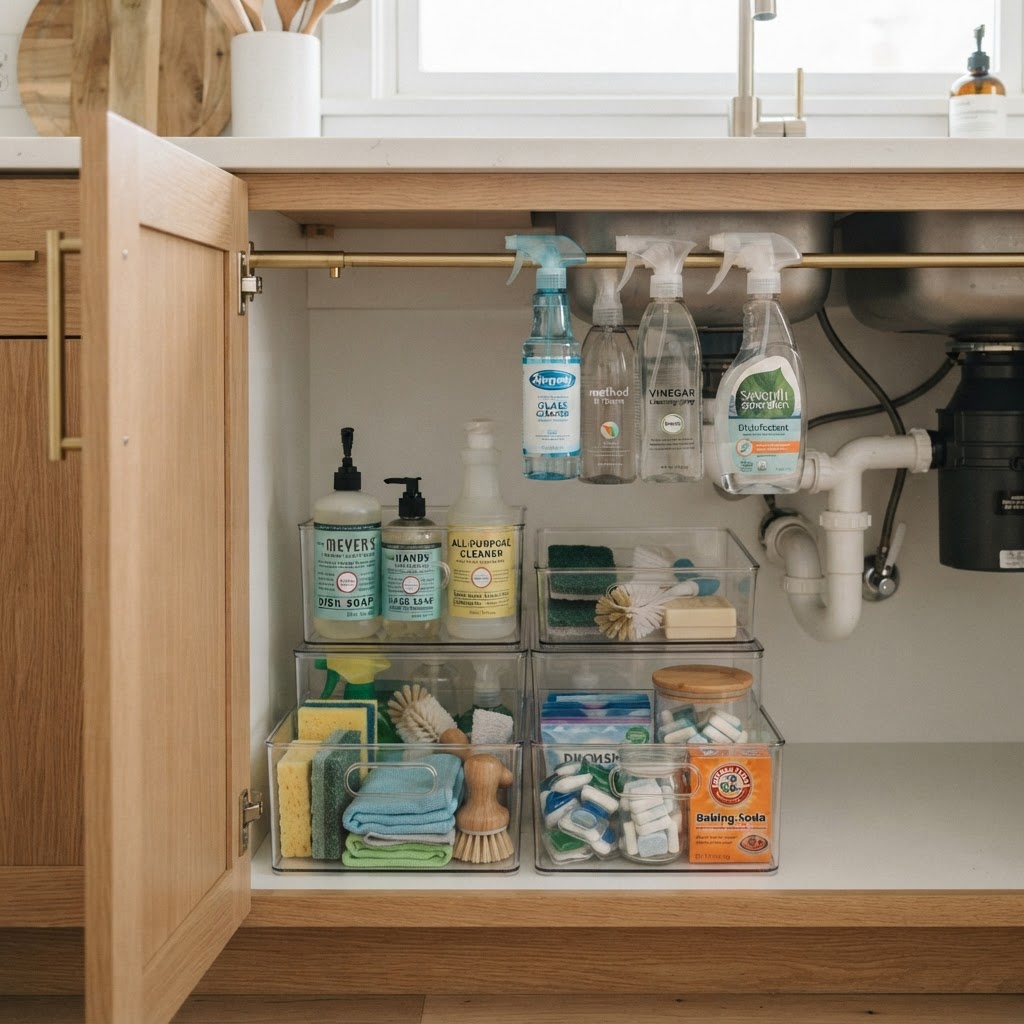
Tension rods and clear bins create an organized under-sink area.

Every tiny apartment has hidden potential behind doors, under furniture, or within the dead space of existing cabinets that often goes unnoticed. These “forgotten” zones are perfect for items you don’t use every single day, allowing you to maximize every cubic inch of your layout.

The Over-the-Door Organizer Advantage

Over-the-door organizers are classic small apartment storage staples because they convert unused swing space into a high-capacity pantry or closet. Instead of using them for shoes, dedicate one to your cleaning supplies, utilizing the deep pockets to store sponges, surface cleaners, and dusting tools.

Place these organizers on the back of your pantry or bathroom doors to keep cleaning agents hidden from plain sight, maintaining a clean aesthetic. When measuring for these organizers, aim for a depth of at least 4 inches to accommodate standard 32oz spray bottle bases. This “hidden-in-plain-sight” strategy is effective because it keeps items within arm’s reach while ensuring they do not occupy valuable surface area on counters or floors, which is essential for visual order in studios under 400 square feet.

Create Slim Pull-Out Stations

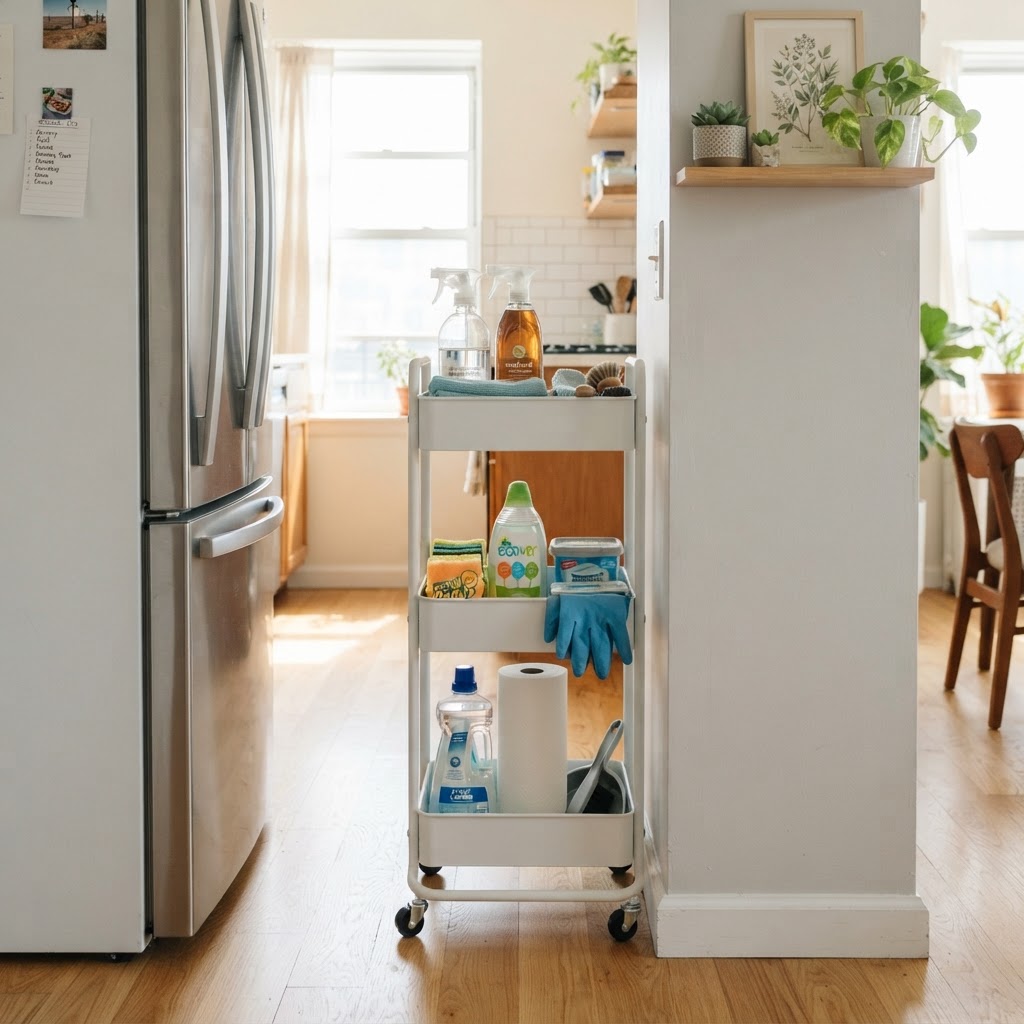
Mobile utility carts are perfect for keeping cleaning tools on hand.

One of the most frustrating aspects of tiny home living is the “stuffing” method, where you cram items into a cabinet and hope nothing falls out. Utilizing pull-out organizers to maximize space allows you to access items at the back of a deep cabinet with ease, typically increasing cabinet efficiency by up to 50%.

These slide-out shelves can fit in the narrow 6-inch gaps between appliances or inside cramped under-sink cabinets. By installing a vertical slider, you can organize bottles by height and frequency of use, ensuring you never buy duplicates because you couldn’t find what you already had. Consider installing heavy-duty ball-bearing slides which hold up to 100 pounds, ensuring the unit operates smoothly even when fully loaded with glass-bottled detergents. These units effectively turn a dark, unreachable abyss into a well-lit, fully accessible inventory system that simplifies your weekly maintenance routine.

Maximize Under-Sink Real Estate

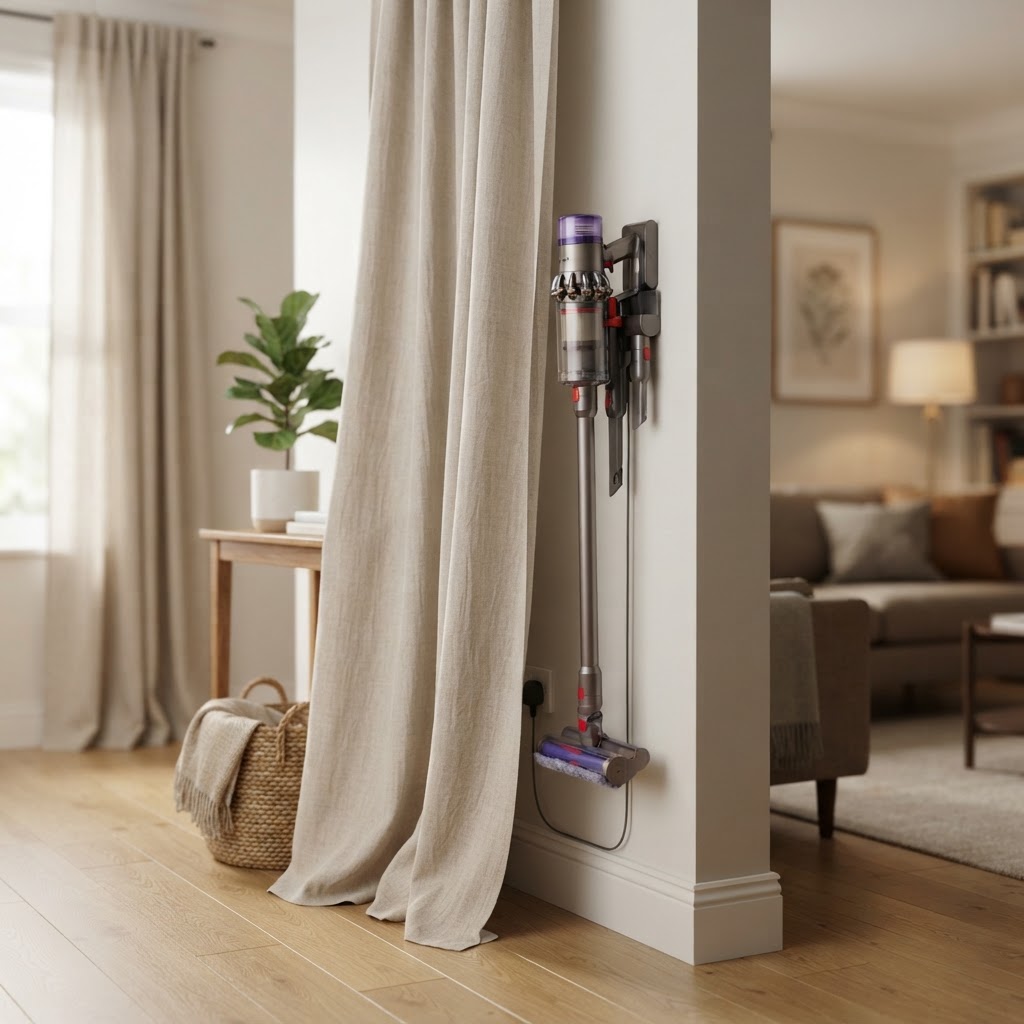
Wall-mounting your vacuum saves valuable floor space.

Under-sink storage is notoriously messy in a tiny home, often becoming a graveyard for half-empty bottles and tangled rags. To optimize this, treat it like a professional storage unit by creating distinct zones for different cleaning categories. If you are focusing on the culinary area of your home, exploring various budget-friendly small kitchen ideas can help you reclaim counter space while keeping your cleaning tools neatly tucked away.

Use stackable, clear plastic bins to create height; by stacking containers, you essentially double your usable surface area. Add a tension rod across the top of the cabinet to hang spray bottles by their triggers, which frees up the floor for heavier items like vacuum attachments or extra sponges. A standard spring-loaded tension rod can hold up to 10 pounds, making it perfect for several spray bottles. This method is highly recommended for renters because it requires zero drilling or permanent hardware, maintaining your security deposit while providing a clean, professional-grade organization system for your most frequently used supplies.

The Magic of Magnetic Storage

Many cleaning tools feature metal components, and you can easily add small magnetic strips to the handles of those that do not. Magnetic knife strips are not just for kitchens; they are brilliant for holding metal-handled scrubbers, scissors, or small tools on the inside of a cupboard wall.

This keeps your metal tools from getting lost in the clutter of a drawer while keeping them dry and ventilated, preventing rust and odors, which is essential when your home lacks proper airflow. A high-quality neodymium magnetic strip can support up to 15 pounds per foot, making it one of the strongest ways to store tools in a cramped kitchen. By keeping these items vertically aligned, you save approximately 15% of your drawer space, which can then be reallocated to other kitchen essentials. This setup is particularly effective in high-humidity areas, as the increased airflow prevents bacteria buildup on damp brushes.

Mobile Storage Carts for Flexibility

In a tiny home, you don’t always have the luxury of dedicated closets, so a slim, rolling utility cart can act as a mobile cleaning station. This cart lives in a corner or under a desk and rolls out only when you need it, effectively creating a portable “cleaning command center.”

Fill it with your most used supplies, a duster, and a handheld vacuum. When it’s cleaning day, you have everything you need in one place, allowing you to move through your home room-by-room without trekking back and forth to your storage area. Look for carts with a width of 5 to 8 inches to ensure they slide into unused gaps between your washer and dryer or refrigerator. A quality steel cart usually costs between $30 and $60, providing a durable solution that can last for years of daily service.

Optimize Vacuum Storage

Vacuum cleaners are often the biggest culprits for taking up precious square footage, so they require a dedicated, hidden “garage.” If you don’t have a broom closet, look for “hidden” storage spots like the space between your refrigerator and the wall, or create a custom enclosure inside an existing piece of furniture.

Consider investing in a stick vacuum that mounts directly to the wall. By mounting it in a discreet location, such as inside a hallway closet or behind a curtain, you keep it off the floor while ensuring it stays charged and ready to go. A wall mount keeps your floor clear, making the room look significantly larger by creating an uninterrupted view of the floor line. Most modern stick vacuums require only 10 inches of wall width, making them the most efficient option for apartments under 300 square feet.

Feature Standard Vacuum Stick Vacuum
Storage Space Large (needs closet) Minimal (wall mount)
Weight Heavy Lightweight
Charging Corded/Plug-in Docked/Integrated

Incorporate Multipurpose Furniture

In small apartment storage and organization, every piece of furniture should pull double duty to ensure you aren’t paying for “wasted” square footage. When you decorate a small apartment on a budget, you often find that multipurpose furniture pieces serve both aesthetic and storage roles efficiently. An ottoman with a storage cavity inside is perfect for holding extra mop heads, cleaning rags, or bulk supplies that you only buy once every few months.

Look for benches with built-in baskets or side tables with deep drawers. By integrating your supplies into the furniture itself, you eliminate the need for extra plastic bins that take up walking space. This “hidden in plain sight” approach is key to maintaining a minimalist, tidy home. For example, a standard 18-inch storage ottoman can house up to 4 gallons of cleaning supplies, effectively clearing your floor of clutter without requiring a dedicated closet. This strategy is essential for achieving a balanced, zen-like aesthetic in studio environments.

FAQ

Q: What is the best way to store cleaning supplies in a studio apartment?

A: The best way is to utilize vertical storage like pegboards or over-the-door organizers to keep items off the floor. By keeping your supplies in “hidden zones” like the back of a pantry door, you ensure your living space remains visually clutter-free and professional.

Q: How do I manage cleaning supplies without a dedicated closet?

A: Use mobile utility carts that can be rolled out during cleaning and tucked away into narrow gaps between furniture. Alternatively, repurpose multipurpose furniture like storage ottomans or benches to act as discreet containers for your essential tools.

Q: What should I do with bulky vacuum cleaners in small spaces?

A: Opt for a stick vacuum that can be wall-mounted in a discreet location or stored in the narrow gap between your refrigerator and the wall. Wall-mounting keeps the device off the floor and ensures it is always charged and ready for use.

Q: Are tension rods effective for organizing cleaning supplies?

A: Yes, tension rods are highly effective for hanging spray bottles by their triggers inside under-sink cabinets. This creates an organized vertical line of bottles that leaves the floor of the cabinet free for heavier, bulkier items like vacuum attachments.

Q: How often should I purge cleaning supplies to save space?

A: Perform a “cleaning inventory purge” every six months to discard expired products or items you haven’t used in over a year. Keeping only what you use regularly is the most effective way to maximize your limited storage capacity.

Tiny Living Room Ideas: Stylish Tips for Renters

Tiny Living Room Ideas: Stylish Tips for Renters

To transform a tiny living room into a stylish, functional sanctuary, prioritize multi-functional furniture, utilize vertical wall space with renter-friendly adhesives, and employ layered lighting to create depth. By avoiding wall-clinging layouts and using area rugs to define zones, you can maximize your square footage without violating rental agreements.

Rethinking Your Layout for Maximum Flow

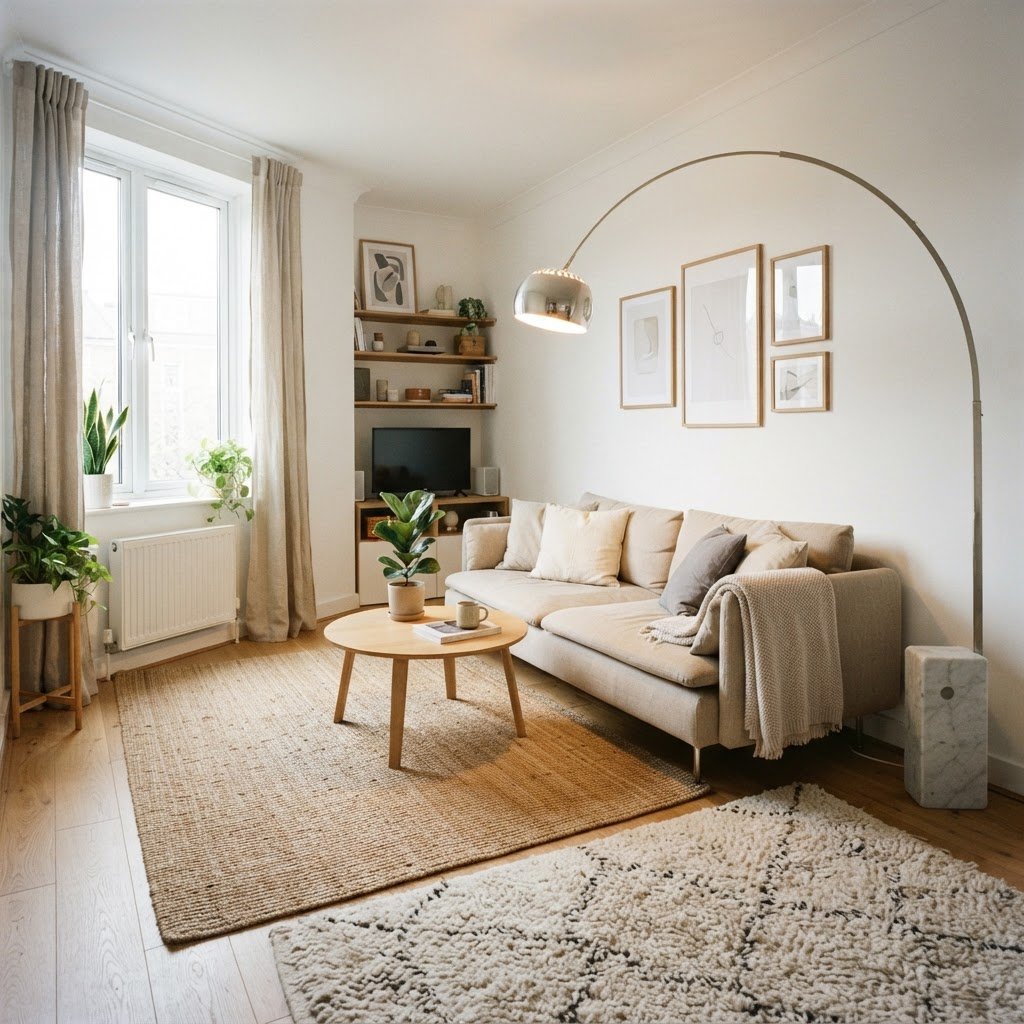
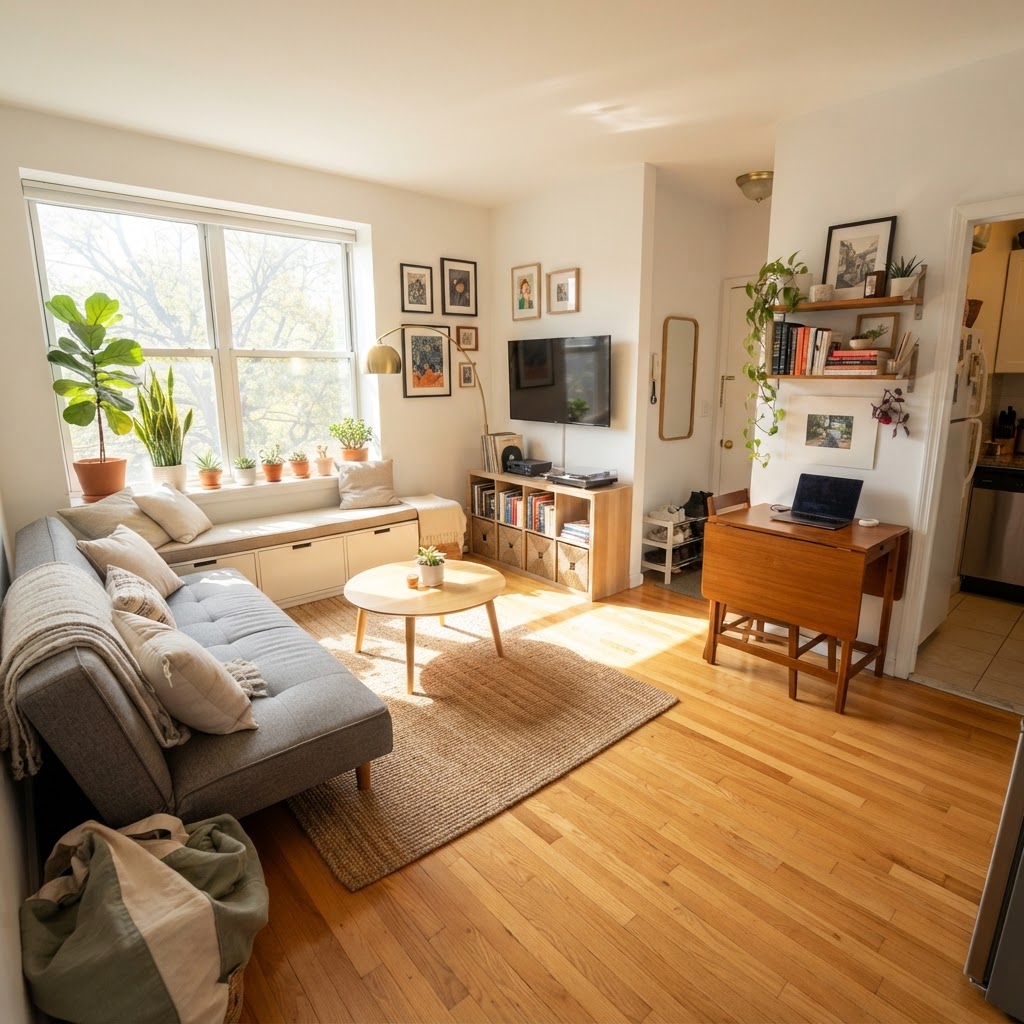
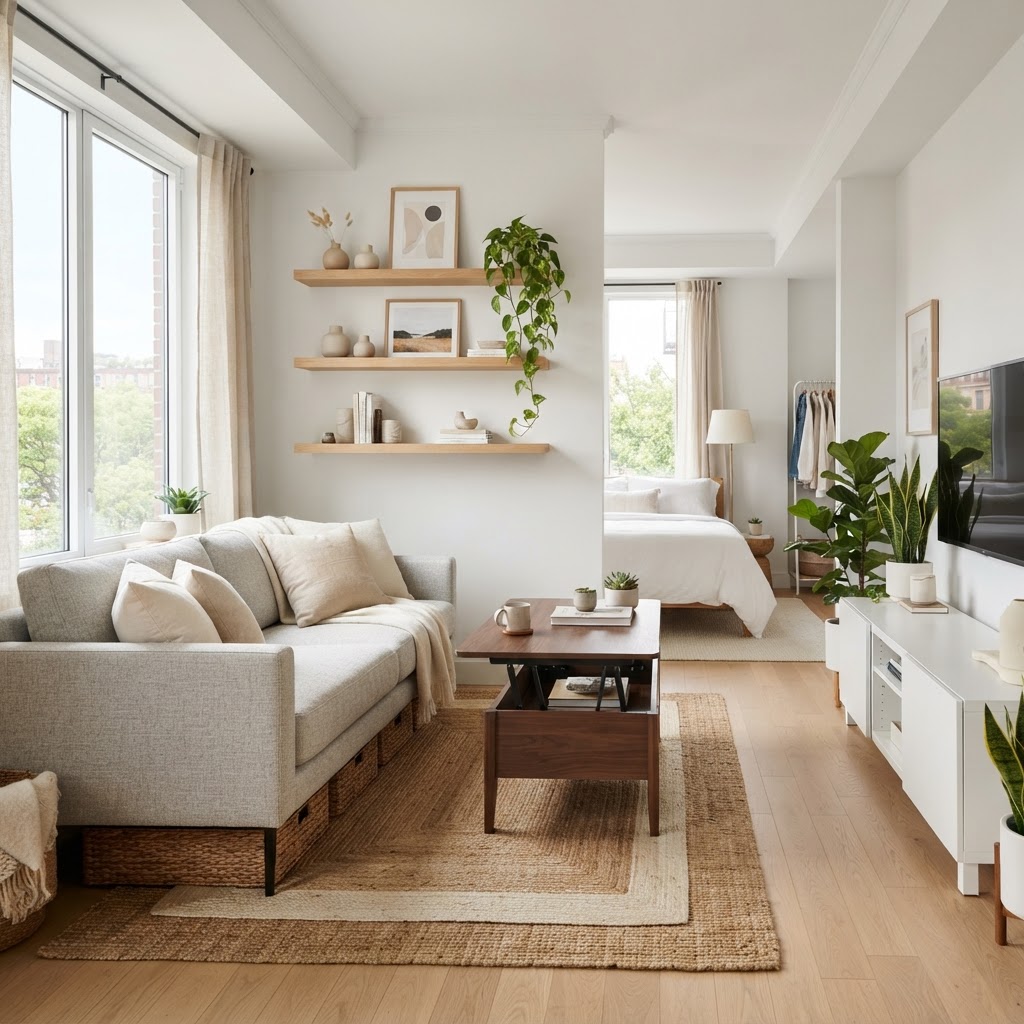
Bright and airy Scandinavian-inspired living room design.

Furniture placement is the most significant factor in creating the illusion of a larger room, with the golden rule being to avoid pushing every piece against the wall. Floating furniture—pulling seating at least 4 to 6 inches away from walls—creates “breathing room” and enhances traffic flow, making the space feel more intentional and spacious. Incorporating clever living room storage ideas allows you to clear surface clutter, which is the primary cause of cramped visual perception in small apartments.

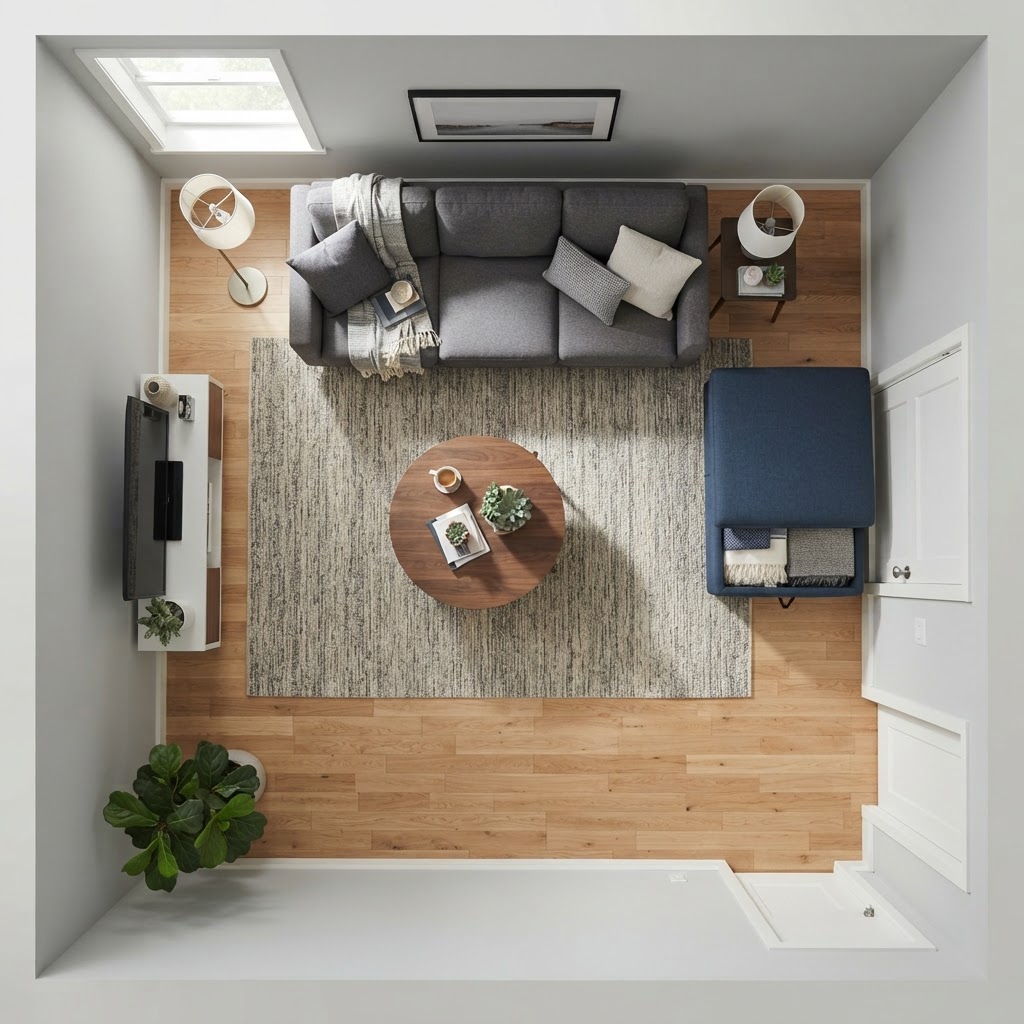
Defining zones is essential for studio or small-apartment living. Use a high-quality area rug to anchor your seating area; a common mistake is choosing a rug that is too small, which makes the room look fragmented. For optimal results, aim for a rug size that allows at least the front legs of your sofa and chairs to sit on it. This technique visually defines the room’s purpose and grounds the furniture, preventing the “floating furniture” look from feeling chaotic.

Feature Traditional Layout Floating Layout
Traffic Flow Often restricted Enhanced and open
Perceived Space Can feel cramped Feels larger/airy
Focal Point Wall-focused Conversation-focused

Prioritizing Multi-Functional Furniture

Every square inch counts in a tiny apartment, so invest in pieces that serve at least two purposes. A storage ottoman is the ultimate rental hack, functioning as extra seating, a footstool, or a coffee table when topped with a wooden tray. Modular furniture is another vital investment; look for sofas with detachable arms or sections that allow you to reconfigure the piece if you move to a new apartment with a different floor plan. If you are looking to stretch your funds further while furnishing your space, our guide on how to decorate a small apartment on a budget provides easy DIY tips that prioritize style without the high price tag.

Investing in Versatile Pieces

When selecting furniture, look for pieces with “visual weight” in mind. Opt for sofas or armchairs with elevated wooden or metal legs that expose the floor underneath. Seeing the floor continue beneath your furniture tricks the brain into perceiving more square footage. Additionally, consider nesting tables; they provide surface space when hosting guests but stack together to take up the footprint of a single side table when not in use.

Vertical Storage and Renter-Friendly Shelving

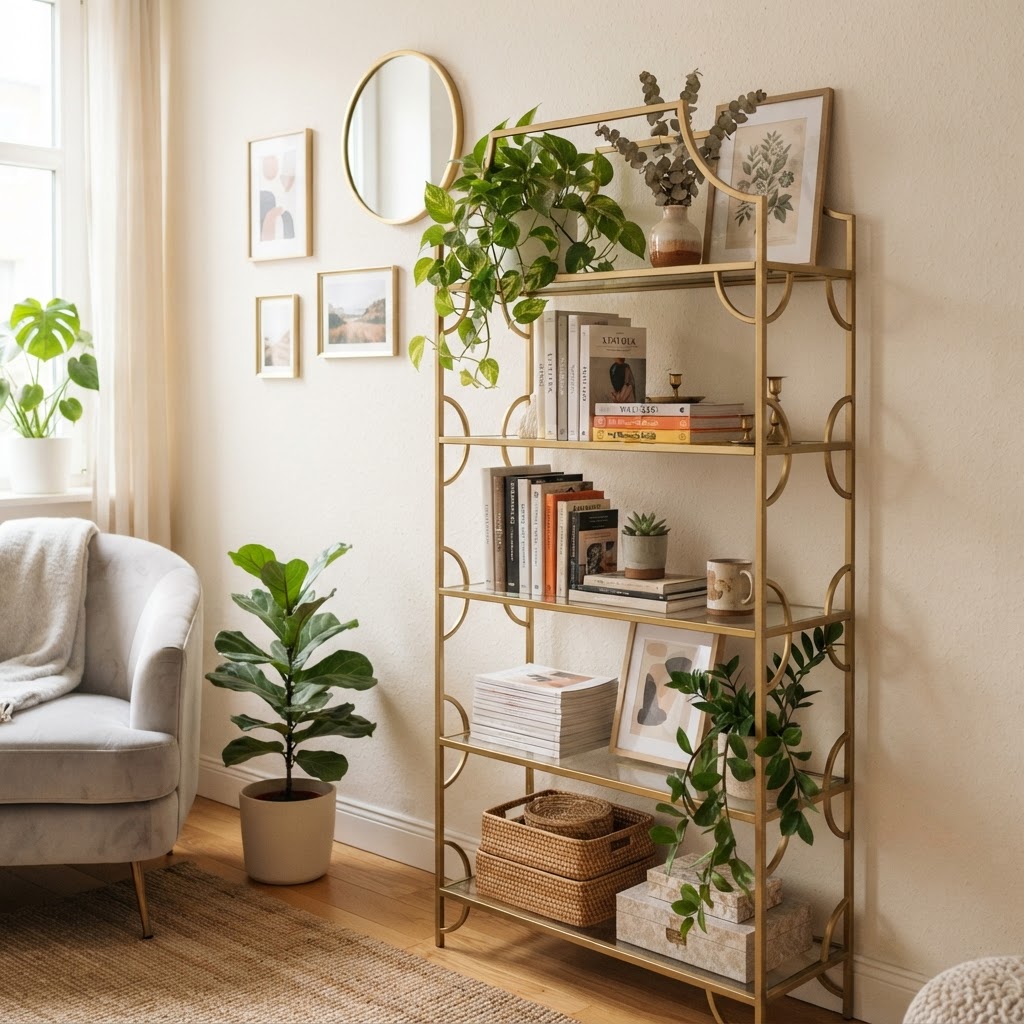
Maximizing vertical space with decorative open shelving.

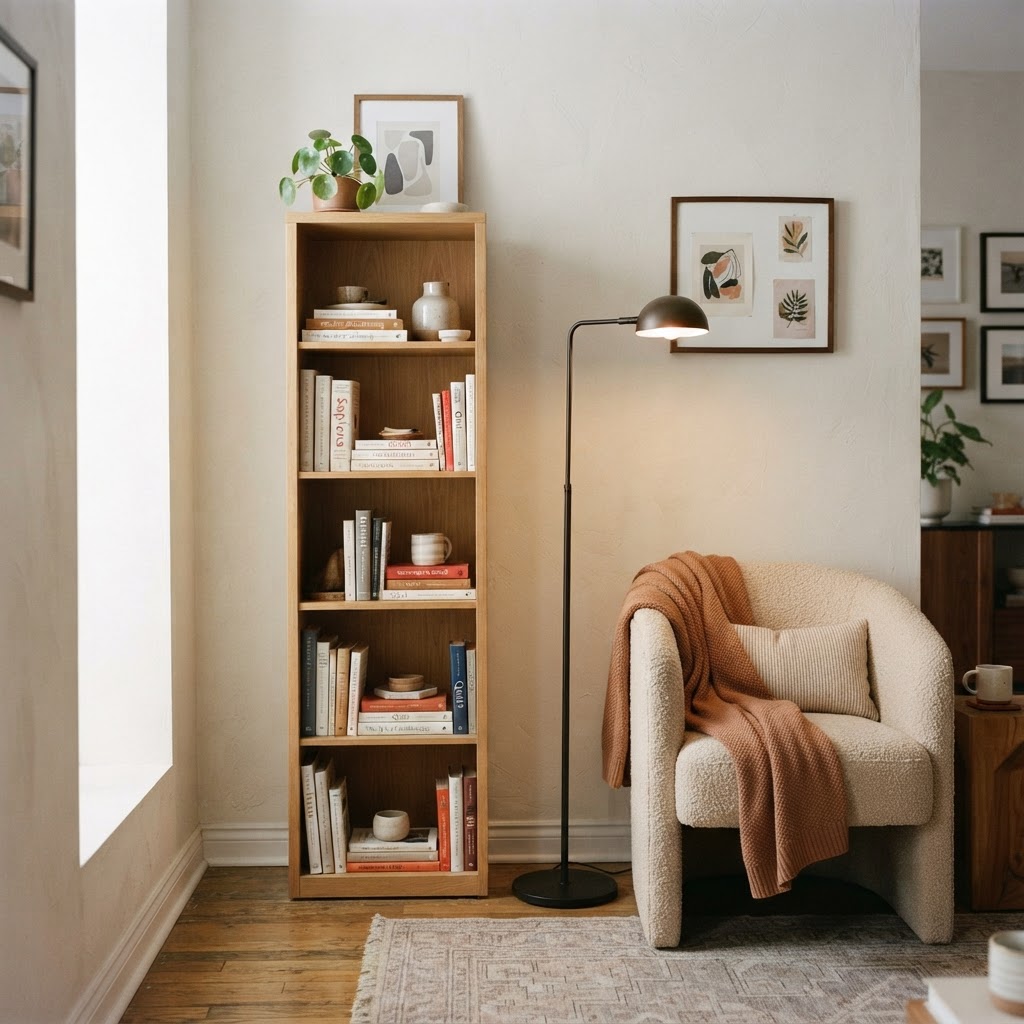
Vertical storage is the most efficient way to expand your room’s capacity without sacrificing precious floor space. Since landlords often restrict drilling into walls, utilize tension-rod shelving systems or tall, freestanding bookcases that can be anchored to wall studs using thin, minimal-impact mounting straps. These systems draw the eye upward, highlighting ceiling height and making the room feel grander than it truly is.

Adhesive-backed modular shelving units are perfect for displaying books and decor without damaging drywall. When arranging these shelves, maintain a 60/40 balance of objects to empty space to prevent the room from feeling claustrophobic. Grouping decor by color or material creates a cohesive look that masks the “clutter effect” often associated with open shelving. If you are worried about security deposits, keep a small container of spackle on hand to patch tiny nail holes, which is standard practice for most lease agreements.

Shelving Type Installation Method Best For
Tension Rods Pressure-fit Renters needing non-damaging solutions
Adhesive Mounts Peel-and-stick Lightweight decor/books
Tall Bookcases Wall-anchor straps Heavy storage/display

Infusing Personality with Temporary Decor

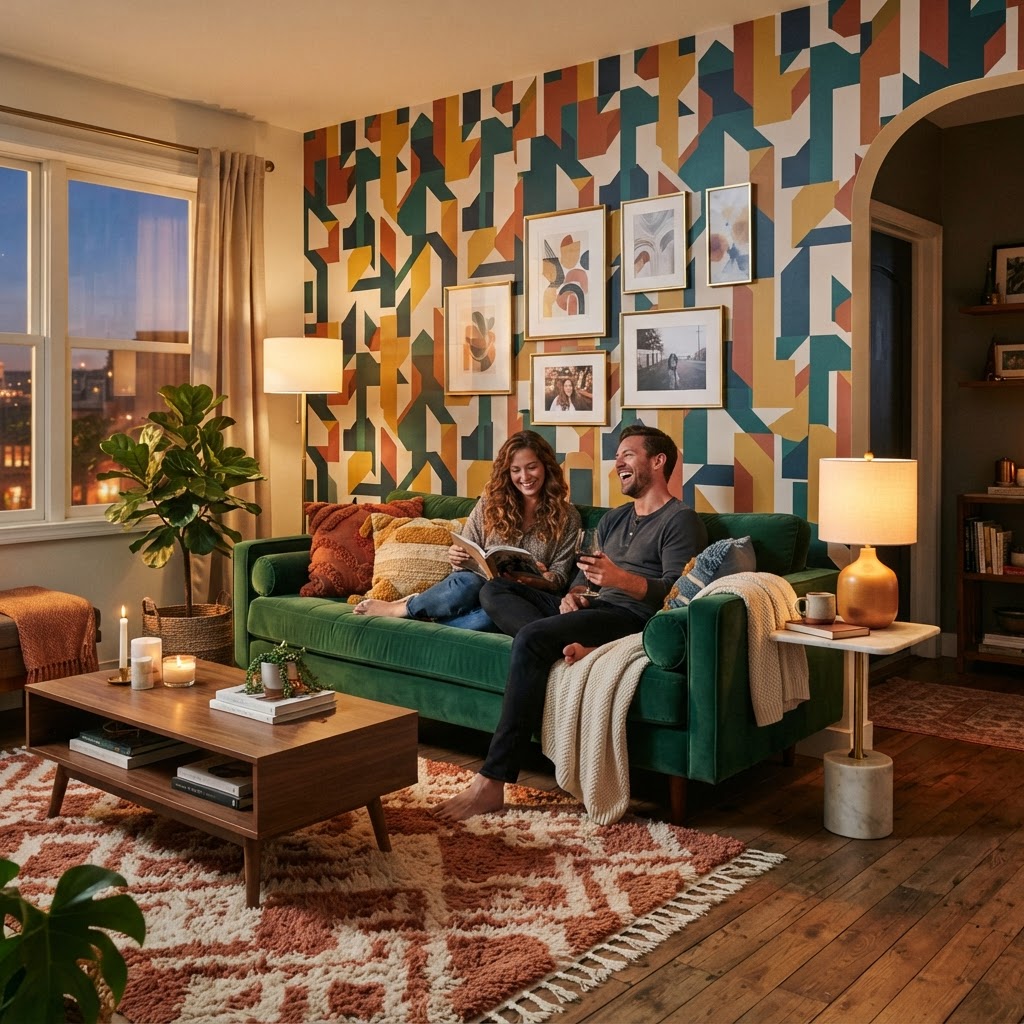
Using peel-and-stick wallpaper to add personality.

Rental apartments often feature “landlord white” walls that can feel sterile, but peel-and-stick wallpaper provides an instant, temporary design upgrade. Modern self-adhesive wallpapers have improved significantly in quality since 2020, now offering textures like grasscloth or linen that look remarkably real. These wallpapers are typically rated for 3-5 years of use and can be removed with a hair dryer and some patience, leaving no residue behind.

Texture is the secret to a sophisticated space. By layering textiles such as velvet cushions, wool throws, or linen curtains, you add warmth without needing permanent renovations. For art, skip the collection of small, disjointed frames; instead, invest in one large-scale art piece or a gallery wall anchored by a consistent frame color. This creates a focal point that draws the eye and gives the room a custom, high-end feel.

The Magic of Lighting Layers

Strategic furniture placement for improved room flow.

Lighting should always be layered, combining ambient, task, and accent sources to avoid the harsh, flat look of a single ceiling fixture. Start with a main floor lamp to provide ambient light, add a desk lamp for task lighting in work zones, and incorporate smart-bulb-equipped sconces or string lights to provide a warm glow. Aim for a color temperature between 2700K and 3000K, which is considered “warm white” and is essential for making a room feel inviting.

Strategic placement of lamps can even “push” the walls out visually. By placing a floor lamp in a dark corner, you eliminate the shadows that define the edges of the room, effectively blurring the boundaries of your living space. Using smart plugs allows you to control the entire lighting scheme via a smartphone or voice assistant, making it easy to create a “cozy” mood at sunset without having to walk around the room to flip individual switches.

Greenery and Natural Elements

Plants add life and organic texture, which is vital for softening the rigid lines of apartment interiors. If you have limited floor space, use ceiling-mounted hooks (which are easily patched) or window-mounted suction planters to bring greenery inside. For low-light apartments, choose hardy plants like Snake Plants (Sansevieria) or Pothos (Epipremnum aureum), which can survive on as little as 2-4 hours of indirect light per day.

Elevating plants on stands of varying heights creates visual interest and makes the room look styled rather than cluttered. Placing a tall, leafy plant in a corner serves as a soft, natural focal point that breaks up the square shape of the living room. For maximum impact, group plants in odd numbers—three or five plants together look more natural and aesthetically pleasing than a scattered arrangement of individual pots.

Curating Your Items for a Clutter-Free Life

Clutter is the primary enemy of small-space design, making it essential to adopt an intentional curation habit. Implement the “one in, one out” rule: for every new item you bring into your living room—be it a book, candle, or decor piece—another must be donated or discarded. Keeping surface areas clear, such as coffee tables and shelves, is vital to maintaining an open, serene atmosphere.

Use storage vessels that match your decor style to hide items that are purely functional, like remotes, chargers, or spare batteries. Woven baskets, fabric bins, or decorative wooden boxes serve as stylish design elements while doubling as “clutter traps.” By ensuring everything has a designated home, you eliminate the daily mess that makes small living rooms feel suffocating. Remember that negative space is a design feature; leaving a wall blank or a shelf half-empty is often what makes a space look truly professional.

Maintaining Balance and Proportion

Balance is achieved by distributing visual weight evenly throughout the room. If you have a large sofa on one side, counter it with a statement rug or a large plant on the other. Avoid buying furniture specifically sized for a small room if it means sacrificing comfort; instead, buy one or two high-quality, full-sized pieces rather than five tiny, low-quality ones that make the space look like a showroom floor.

FAQ

Q: How can I decorate a rental living room without making holes in the walls?

Use command strips, tension rods, or modular shelving units that rely on gravity rather than hardware. These solutions provide the same functionality as mounted shelves or art while keeping your walls pristine for your security deposit return.

Q: What is the best rug size for a small living room?

Aim for a rug large enough that at least the front legs of your sofa and accent chairs sit on it. A larger rug actually makes a small room feel bigger by unifying the floor space, whereas a small “floating” rug makes the room look disjointed.

Q: How do I hide clutter in a tiny living room?

Use multi-functional furniture like ottomans with storage lids or decorative baskets that tuck under consoles. By providing a “home” for every small item, you can keep your surfaces clear and maintain a clean, open aesthetic.

Q: Does floating furniture really make a room look bigger?

Yes, pulling furniture away from walls creates depth and shadow, which makes a room feel more spacious and less boxy. It also improves traffic flow, allowing you to walk behind furniture rather than being forced into a single, narrow path.

Q: What are the best plants for a low-light apartment?

Snake plants, ZZ plants, and Pothos are ideal for apartments with limited natural light. These species are highly resilient, require infrequent watering, and thrive in indoor conditions, adding life without the need for constant maintenance.

9 Vertical Kitchen Storage Ideas for Limited Counter Space

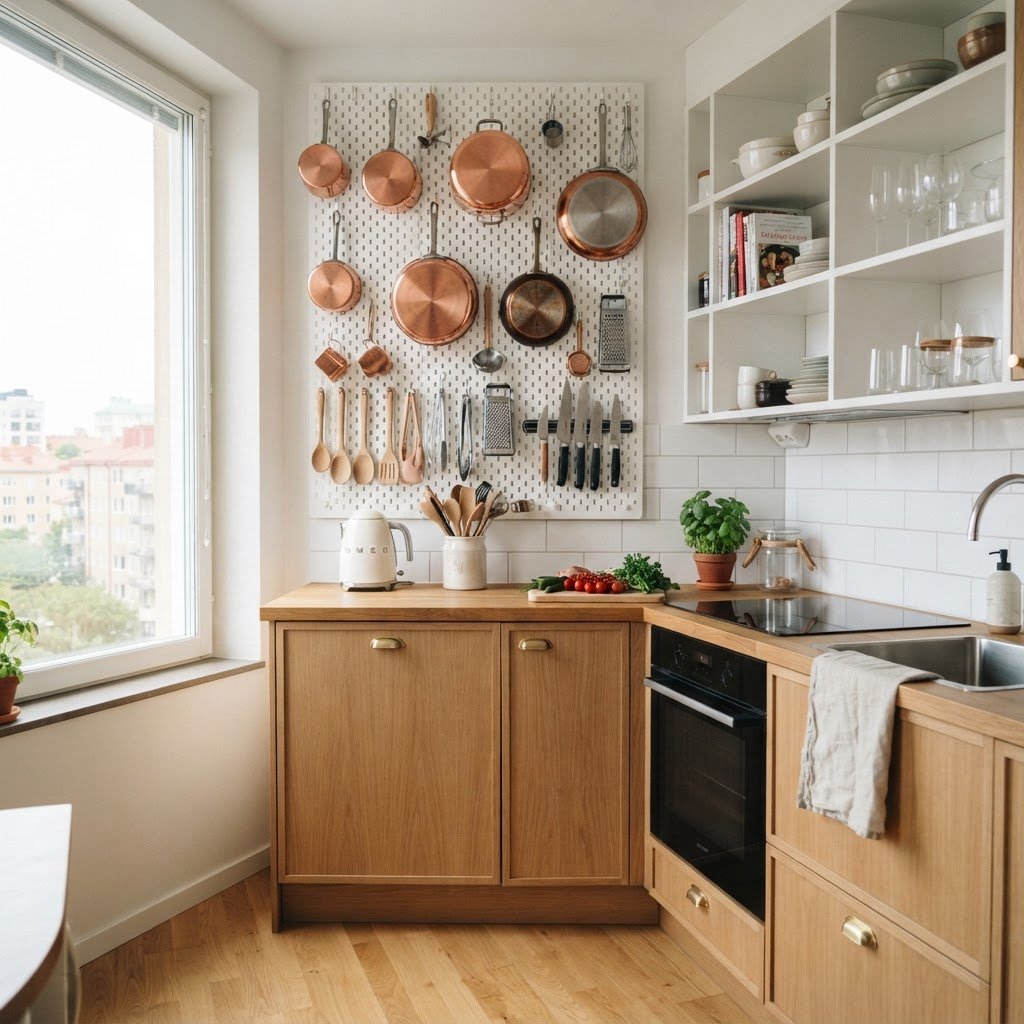
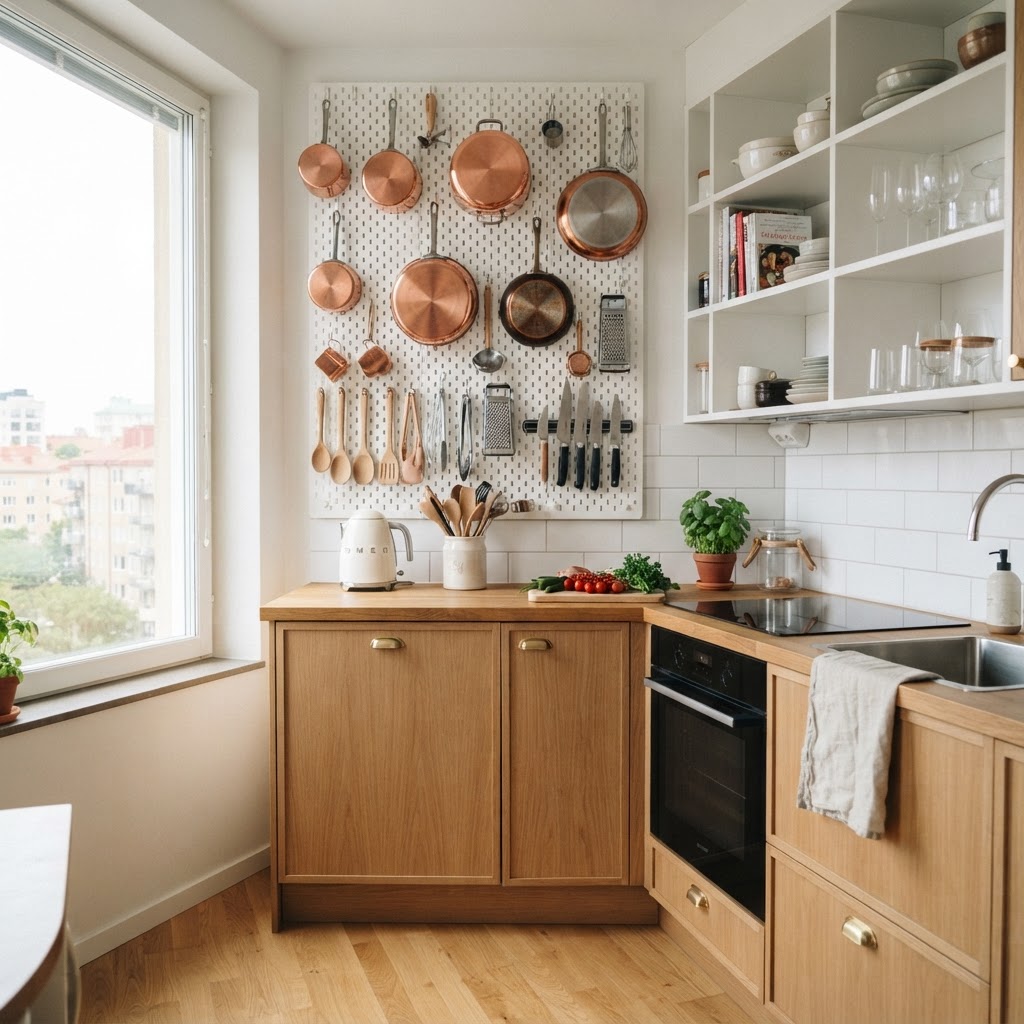
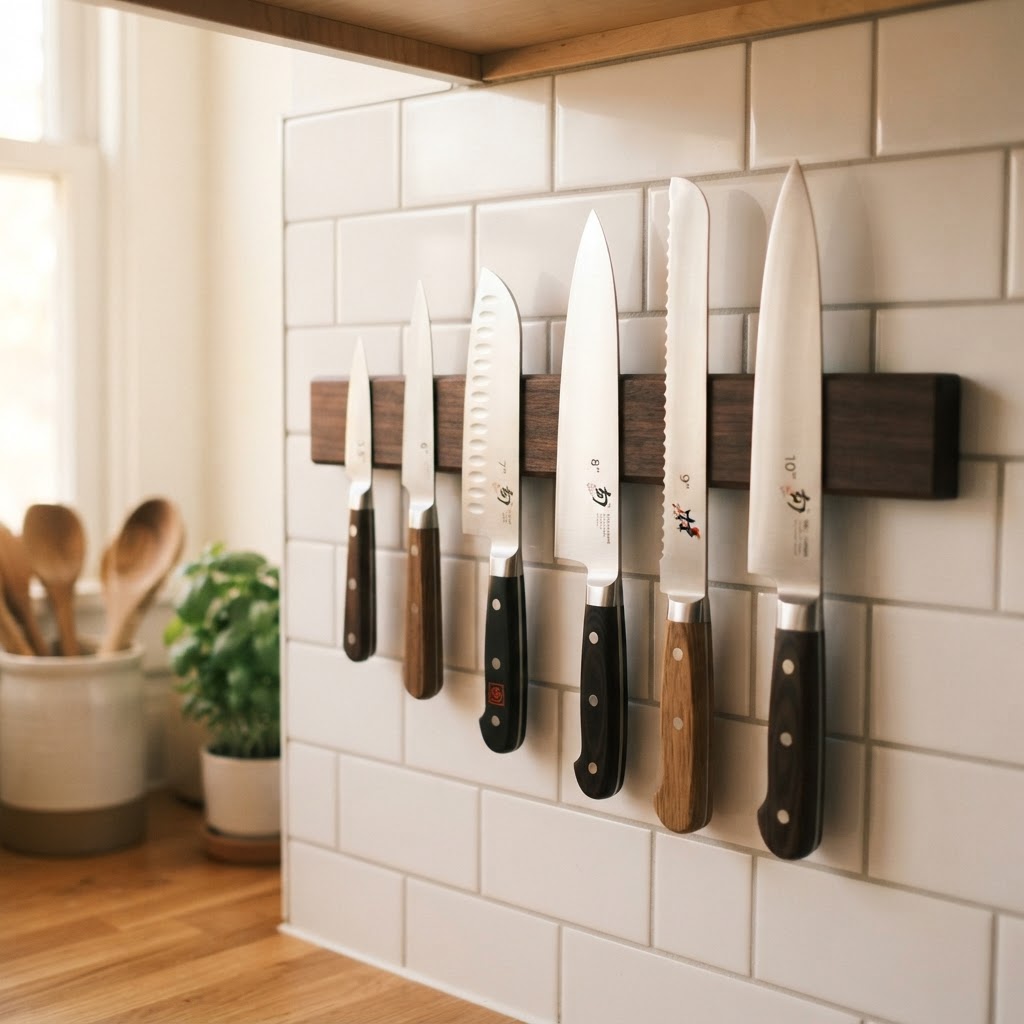
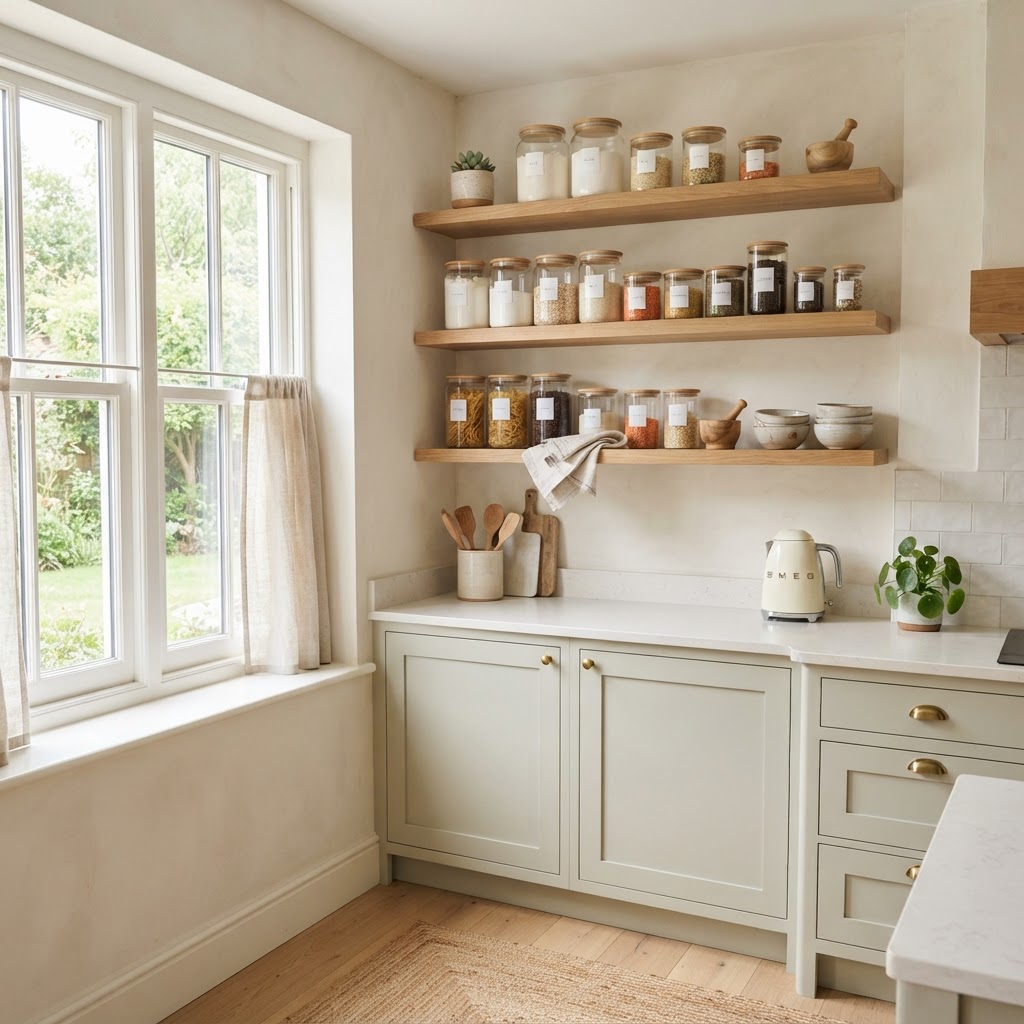
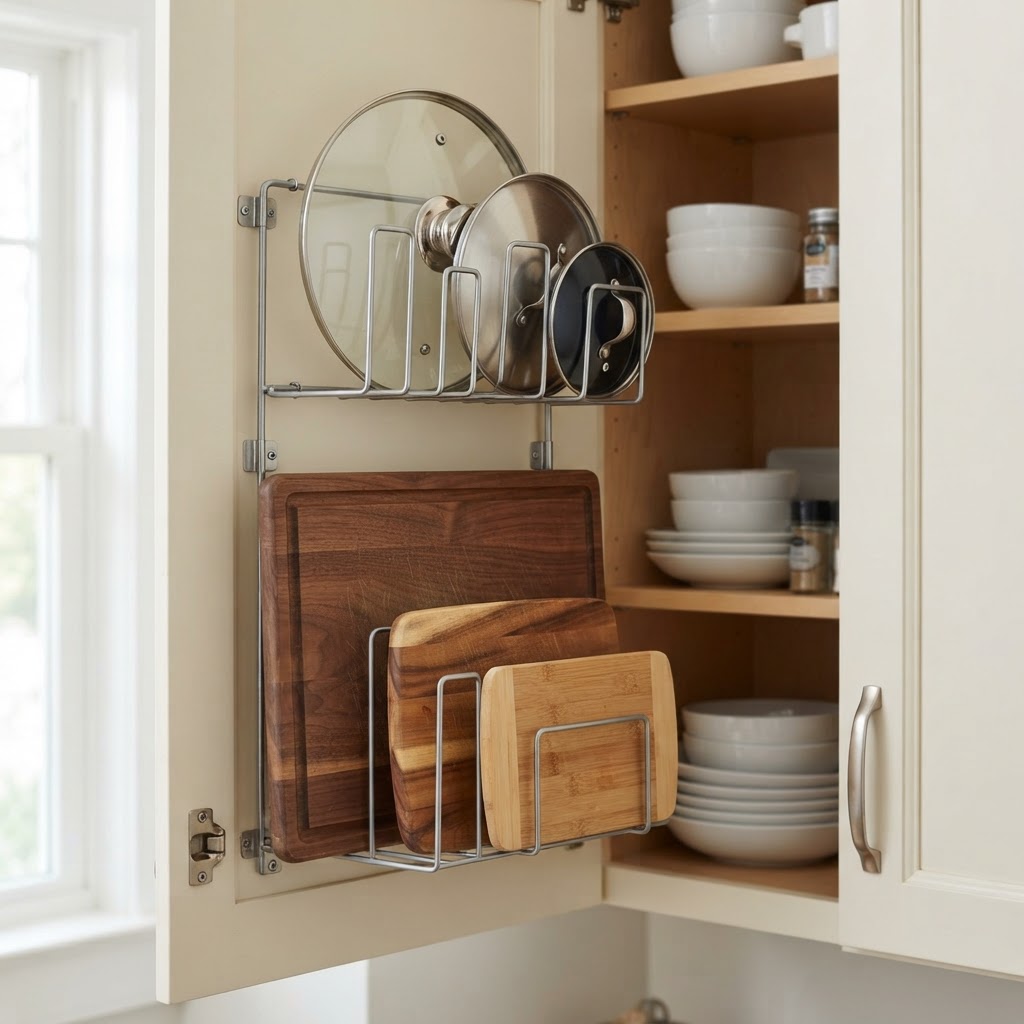
Living in a small apartment often means sacrificing square footage, and nowhere is that loss felt more keenly than in the kitchen. When every inch of surface area is occupied by a toaster, coffee maker, or cutting board, cooking becomes a stressful exercise in maneuvering. The secret to reclaiming your sanity is to stop looking at the floor and start looking at your walls. By utilizing vertical kitchen storage, you can effectively clear the clutter from your limited counter space and transform your kitchen into a functional, ergonomic workspace. ## The Power of Verticality in Tiny Kitchens A pegboard turns an empty wall into an efficient tool storage center. When we think of storage, we often gravitate toward drawers and lower cabinets, which are notoriously difficult to organize. However, empty wall space is perhaps the most underutilized real estate in any home. By moving items off the horizontal surfaces and onto the vertical plane, you create a sense of openness that makes small rooms feel significantly larger. This shift isn’t just about aesthetics; it is about efficiency. When your most-used tools are hung at eye level, your workflow becomes more intuitive, saving you precious minutes during meal prep. ### Why Counter Space Matters Beyond these vertical solutions, there are many additional ways to maximize storage in your small kitchen that can help streamline your daily cooking routine. Clutter acts as a barrier to productivity in the kitchen. When your counters are covered, you have nowhere to chop vegetables, knead dough, or arrange plates. By implementing vertical storage solutions, you essentially increase the footprint of your kitchen without needing to renovate or add cabinetry. This approach is essential for apartment renters who are restricted by what they can permanently change in their space. ## 1. Wall-Mounted Pegboards for Utensils Magnetic knife strips keep blades organized and off your limited counter space. A classic tool used by professional chefs and hobbyists alike, the pegboard is the gold standard for vertical organization. It is incredibly versatile, allowing you to rearrange hooks, baskets, and shelves as your collection of kitchen tools changes. Because you can customize the layout completely, a pegboard ensures that no space is wasted. Instead of a bulky knife block or a crowded utensil jar, install a pegboard behind your stove or near your prep area. You can hang ladles, spatulas, whisking tools, and even small pots directly on the wall. For those who want a minimalist look, choose a white or metallic pegboard that blends into your wall color. This strategy keeps your items clean, accessible, and completely off your counters. ## 2. Magnetic Knife Strips Floating shelves offer beautiful, accessible storage for daily essentials. Knife blocks are notorious counter-space hogs. They are often large, heavy, and difficult to clean, often trapping bacteria in the slots. A magnetic knife strip is the perfect, hygienic alternative that uses zero footprint. By mounting a heavy-duty magnetic bar under your cabinets or directly onto a backsplash, you can keep your blades sharp, organized, and out of reach of children. Choosing the right strip is vital; look for high-strength neodymium magnets that can support the weight of a heavy chef’s knife. Installing this near your primary prep area means your most essential blade is always just a quick grab away. It serves both as a functional tool and a modern piece of wall art that adds character to an otherwise dull kitchen wall. ## 3. Hanging Rails and S-Hooks Utilize the interior of cabinet doors for hidden vertical storage. If you have a decorative backsplash or a small strip of wall above your counter, a hanging rail system is an elegant solution. Similar to the professional kitchen aesthetic, these rails allow you to suspend heavy items like copper pots, cast iron pans, or strainers. Using S-hooks, you can easily slide items to the side or remove them when needed. This method is particularly effective for items you use every day, such as your favorite mug or a mesh colander. Because the items are hanging, they air-dry naturally after being washed, which helps prevent moisture buildup inside your cabinets. It turns your cookware into a display piece, saving precious cabinet space for items that are less aesthetically pleasing. ## 4. Under-Cabinet Shelf Baskets Not all vertical storage requires drilling into walls. If you are a renter and cannot make permanent changes, under-cabinet shelves are your best friend. These wire baskets slide onto the shelf of an existing cabinet, utilizing the empty space between your items and the ceiling of the cabinet. They are perfect for storing napkins, sandwich bags, or spice jars that would otherwise be stacked precariously. By adding these baskets, you essentially double the usable space of a single shelf. This keeps your vertical storage organized and accessible, preventing the dreaded “black hole” effect where items get lost at the back of the shelf. It’s a low-cost, high-impact storage hack for any small apartment. ## 5. Over-the-Door Pantry Organizers If you have a closet or a pantry door, you have an incredible amount of untapped storage. An over-the-door rack can hold everything from canned goods and spices to cleaning supplies and food wraps. This removes the need for these items to occupy space in your primary kitchen cabinets, freeing up room for bulky kitchen gadgets. When choosing an over-the-door system, look for one with adjustable baskets. This allows you to fit taller items like vinegar bottles or cereal boxes. Always measure the clearance of your door frame to ensure the unit doesn’t prevent the door from closing properly. This simple addition can feel like adding an entire new pantry to your kitchen. ## 6. Tiered Vertical Racks for Spices Spices are the leading cause of clutter in many small kitchens. Keeping them in a drawer often means you have to dig to find the one you need, while leaving them on the counter results in a crowded, messy look. A tiered wall-mounted spice rack keeps your spices at eye level and arranged alphabetically or by frequency of use. By installing these racks on the side of your cabinets or directly on the wall, you liberate space for cooking. For a cleaner look, use uniform glass jars with clear labels. This not only organizes your ingredients but also adds a professional, designer touch to your kitchen decor. ## 7. Floating Shelves for Dry Goods Floating shelves are a beautiful way to integrate storage into your kitchen’s overall design. By installing a series of shelves above your counter, you can store your everyday items—like glasses, plates, and dry goods in clear canisters—in a way that feels intentional and curated. Unlike bulky upper cabinets, open shelving keeps the room feeling light and airy. Make sure to mount these shelves into studs for maximum support, especially if you plan to store heavy ceramic dishes. Consider adding a small lip or rail to the front of the shelves to keep items secure. This creates a vertical stack of storage that keeps your counters completely clear for your culinary creations. ## 8. Cabinet Door Storage Add-ons The inside of your cabinet doors is a goldmine for storage. You can mount small plastic bins or wire baskets to the interior of the doors to hold pot lids, cutting boards, or cleaning brushes. This “hidden” storage is perfect for items that you use daily but prefer to keep out of sight. Using adhesive-backed hooks or screw-in mounts, you can customize these areas to fit your specific needs. Mounting a small rack to hold your cutting boards keeps them upright, allowing them to dry properly while saving significant space on your work surface. This is one of the most effective ways to maximize small kitchen efficiency without making your home look cluttered. ## 9. Magnetic Canisters and Tins Finally, utilize the often-forgotten space on the sides of your refrigerator. Magnetic canisters are perfect for storing small items like tea bags, packets of herbs, or small snack packs. Because they attach to a magnetic surface, they move around easily and don’t require any permanent installation. This keeps small, easily lost items within reach without them ever touching your counter. It is a quick, inexpensive way to reclaim space in even the smallest kitchenette. Use these magnetic containers to group related items together, such as coffee-making supplies or baking essentials, for a more streamlined morning routine. ## Conclusion Limited counter space doesn’t have to mean a limited kitchen experience. By thinking vertically and utilizing the walls, doors, and sides of your cabinets, you can drastically increase the functionality of your home. Whether you start with a simple magnetic strip or a full-scale pegboard installation, every small change brings you closer to a clutter-free environment. Start small, assess your most frustrating pain points, and begin implementing these vertical kitchen storage ideas today to reclaim your space and your love for cooking. Take action this weekend—choose one of these nine ideas, visit your local hardware store, and watch your kitchen transformation begin!
How to Make a Small Living Room Feel Bright, Open, and Calm

Living in a compact apartment or a cozy cottage often presents a unique design challenge: how to make a small living room feel bright, open, and calm without compromising on style or functionality. While the square footage may be limited, your creative possibilities are vast. By leveraging clever lighting, color psychology, and strategic furniture arrangements, you can turn even the tightest corners into a serene retreat that feels significantly larger than it actually is.

The Power of a Light and Neutral Color Palette

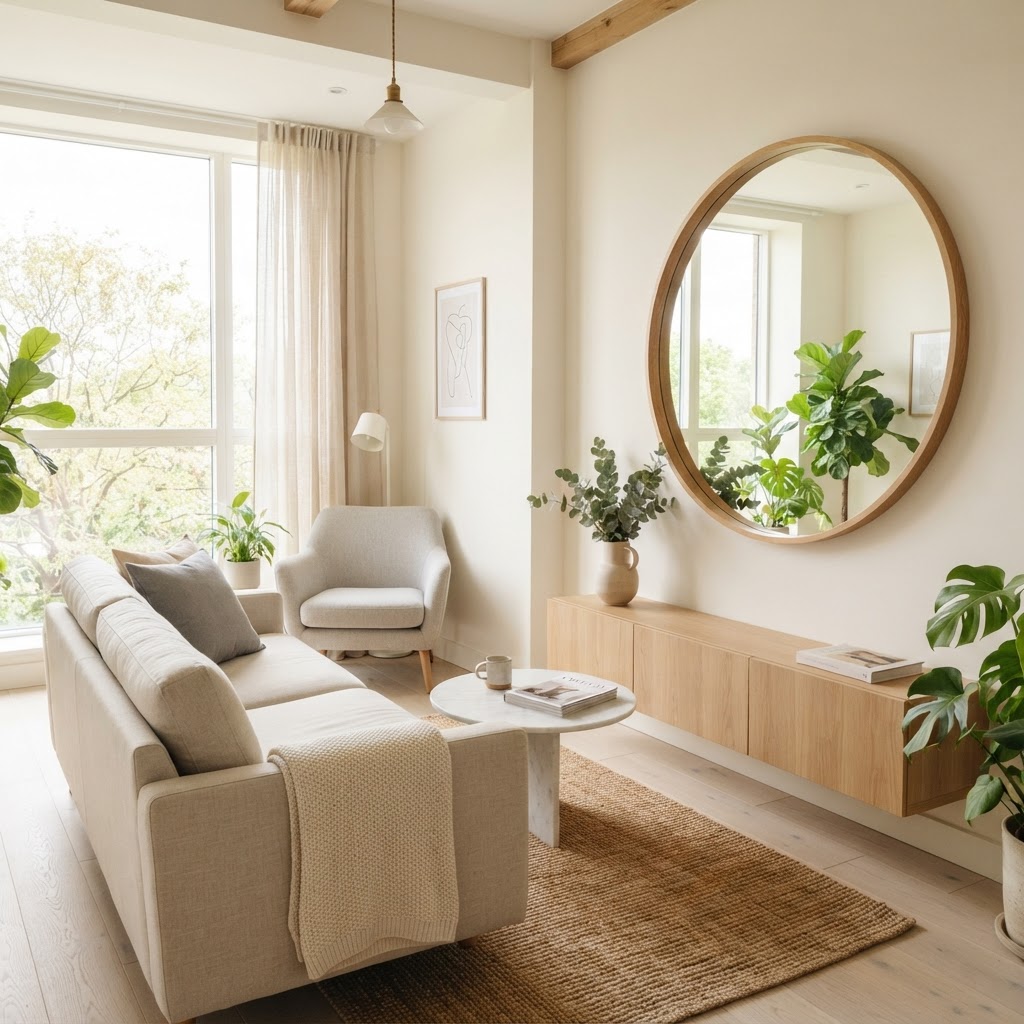
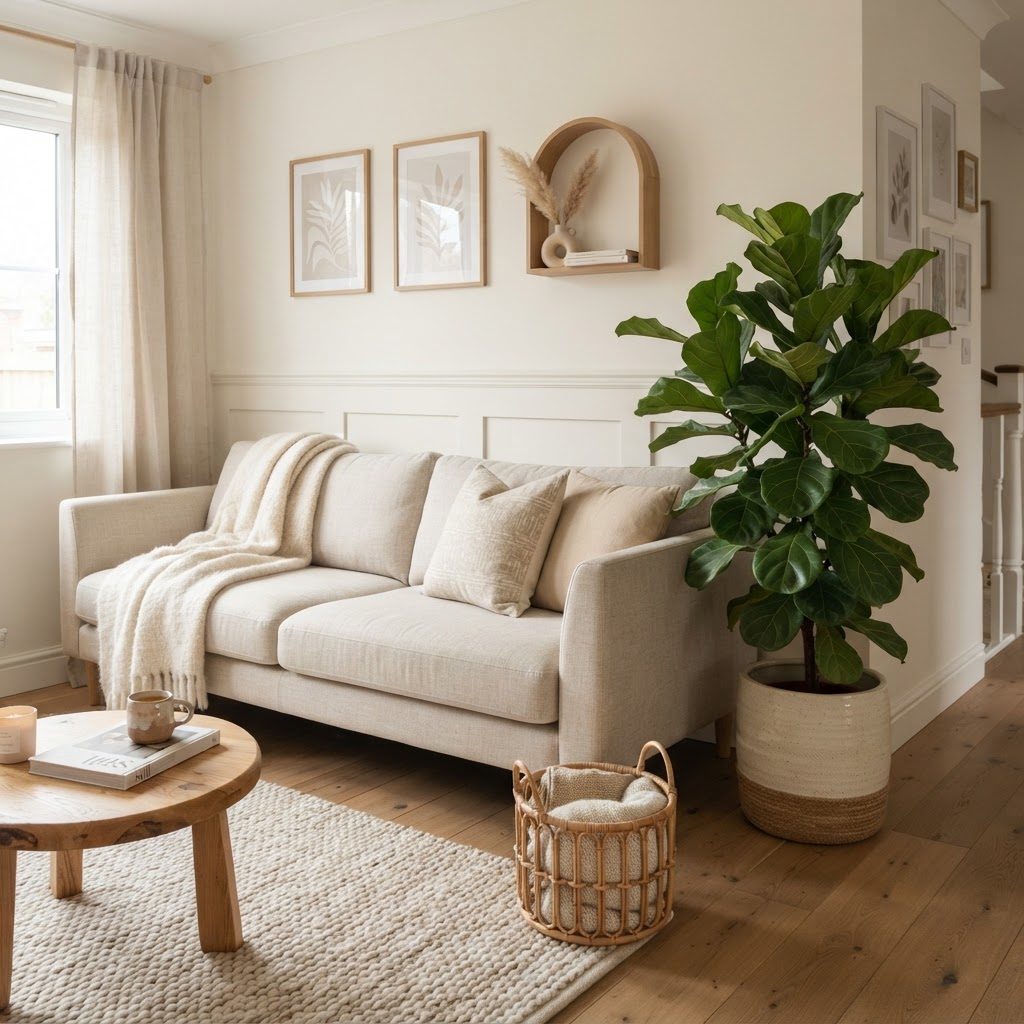
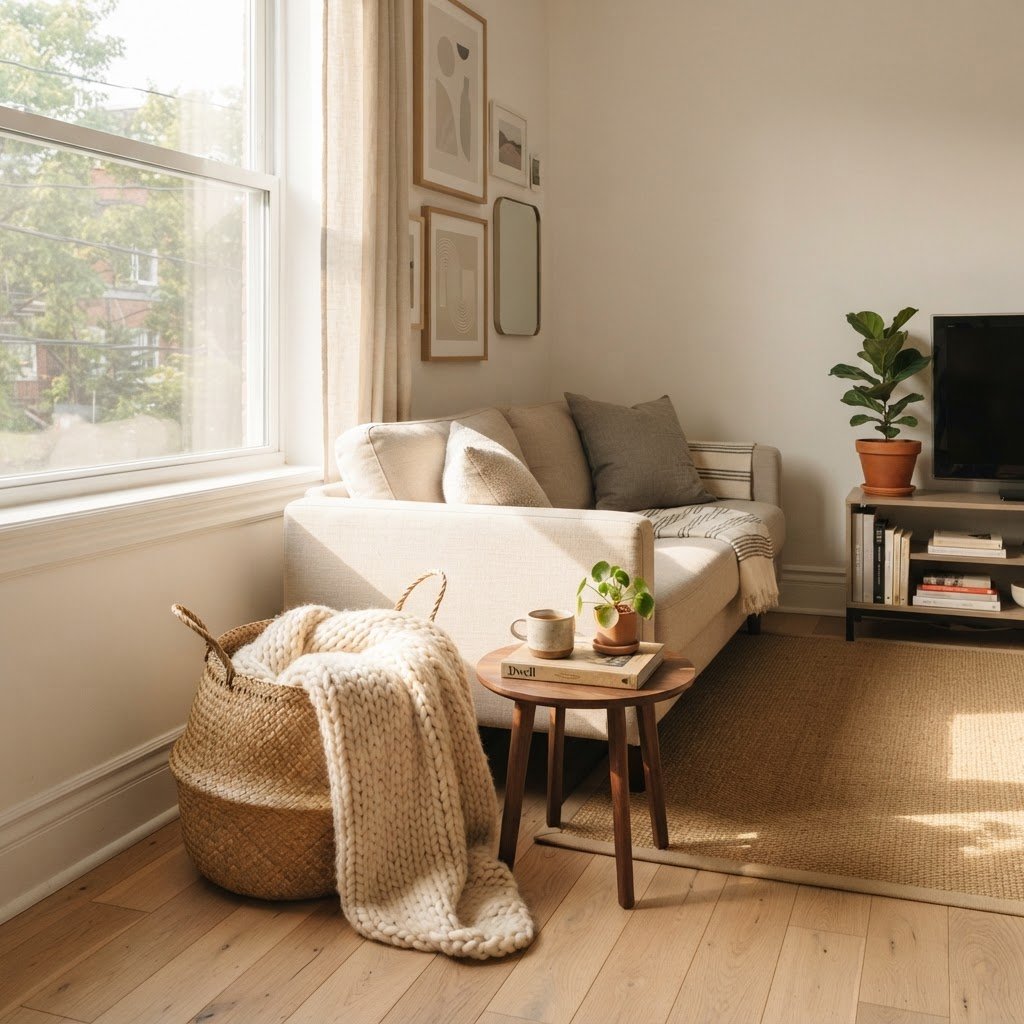
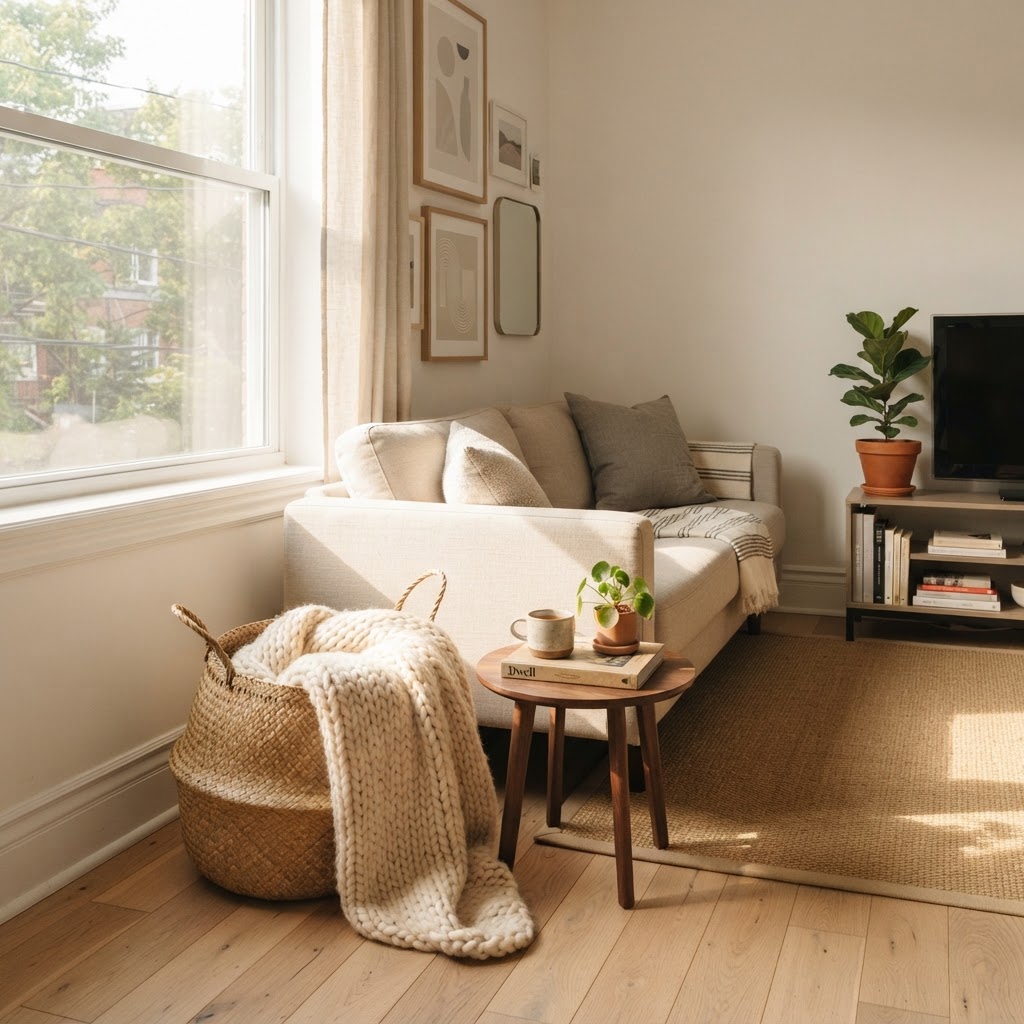
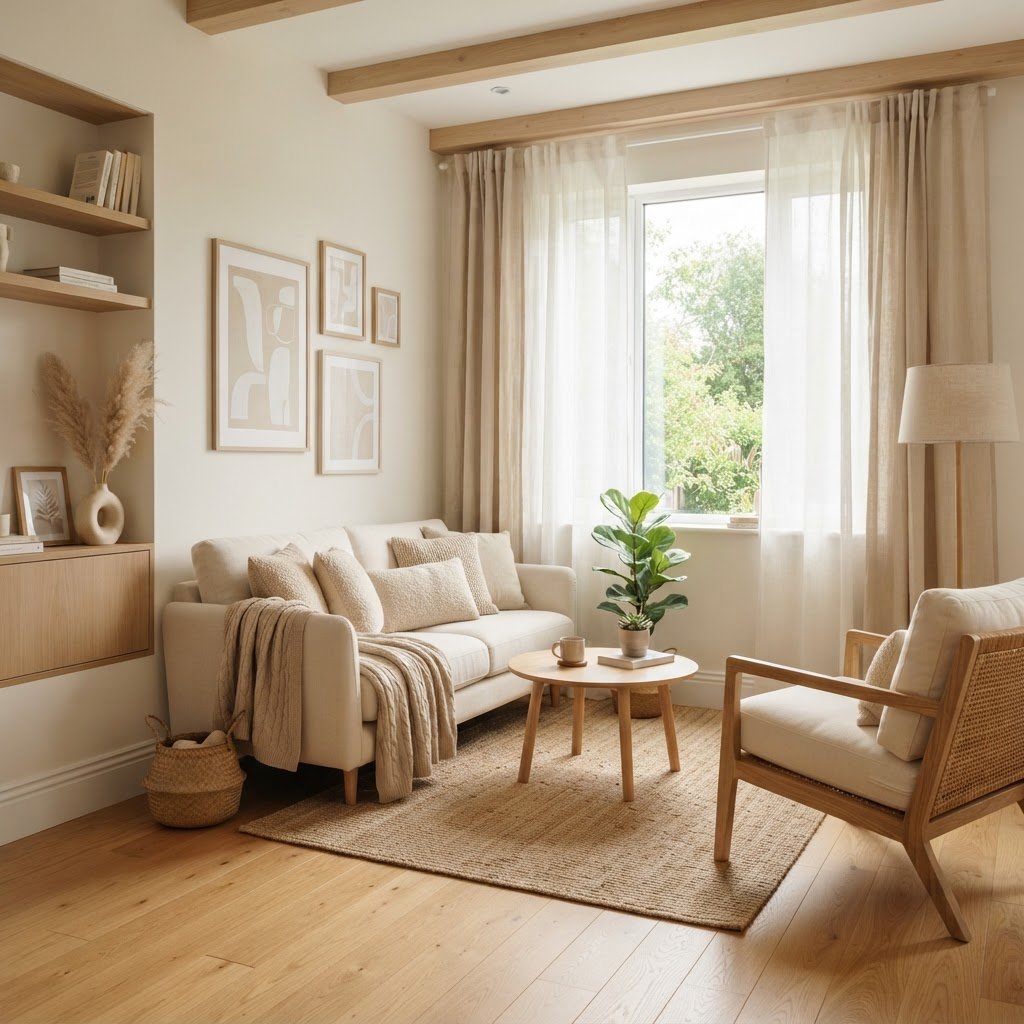
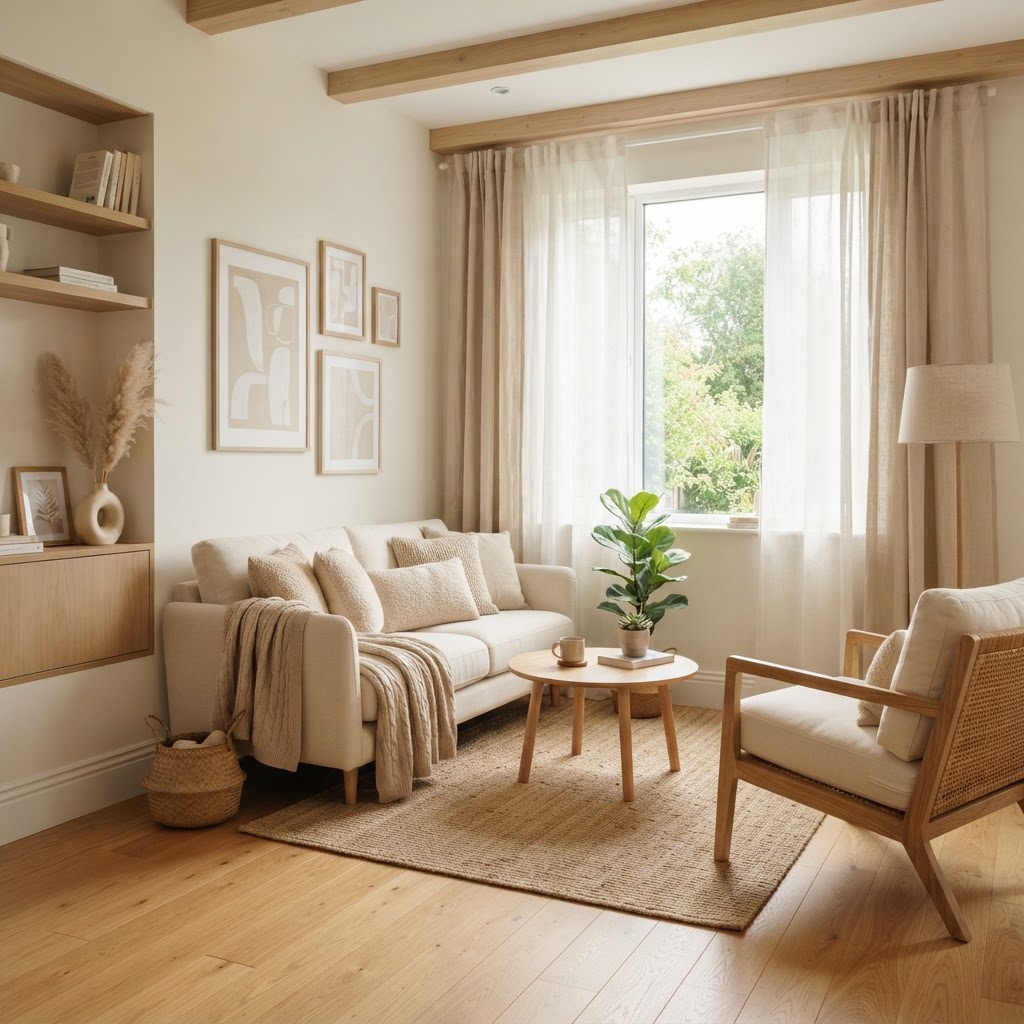
Bright neutrals expand the visual boundaries of a small room.

The foundation of any space that aims for an airy, expansive feeling is its color scheme. Light colors are highly reflective, which helps bounce natural light around the room and visually pushes the walls outward. Choosing soft whites, warm beiges, or light greys for your walls creates a seamless backdrop that minimizes visual clutter.

Choosing the Right Shades

When aiming to make a small living room feel bright, open, and calm, consider the undertones of your paint. Cool blues and greens can provide a tranquil, spa-like atmosphere, while creamy whites add a touch of warmth. Avoid dark, heavy colors that can make the walls feel like they are closing in on you, especially if the room lacks abundant natural light.

The Rule of Monochromatic Layers

To keep the room from feeling too sterile, incorporate different shades of the same color palette. Layering a cream sofa with off-white throws and light beige rugs creates depth and interest without creating harsh lines. This technique helps the eye move continuously through the room, which is the secret to making a small living room feel bright, open, and calm.

Maximizing Natural Light and Artificial Illumination

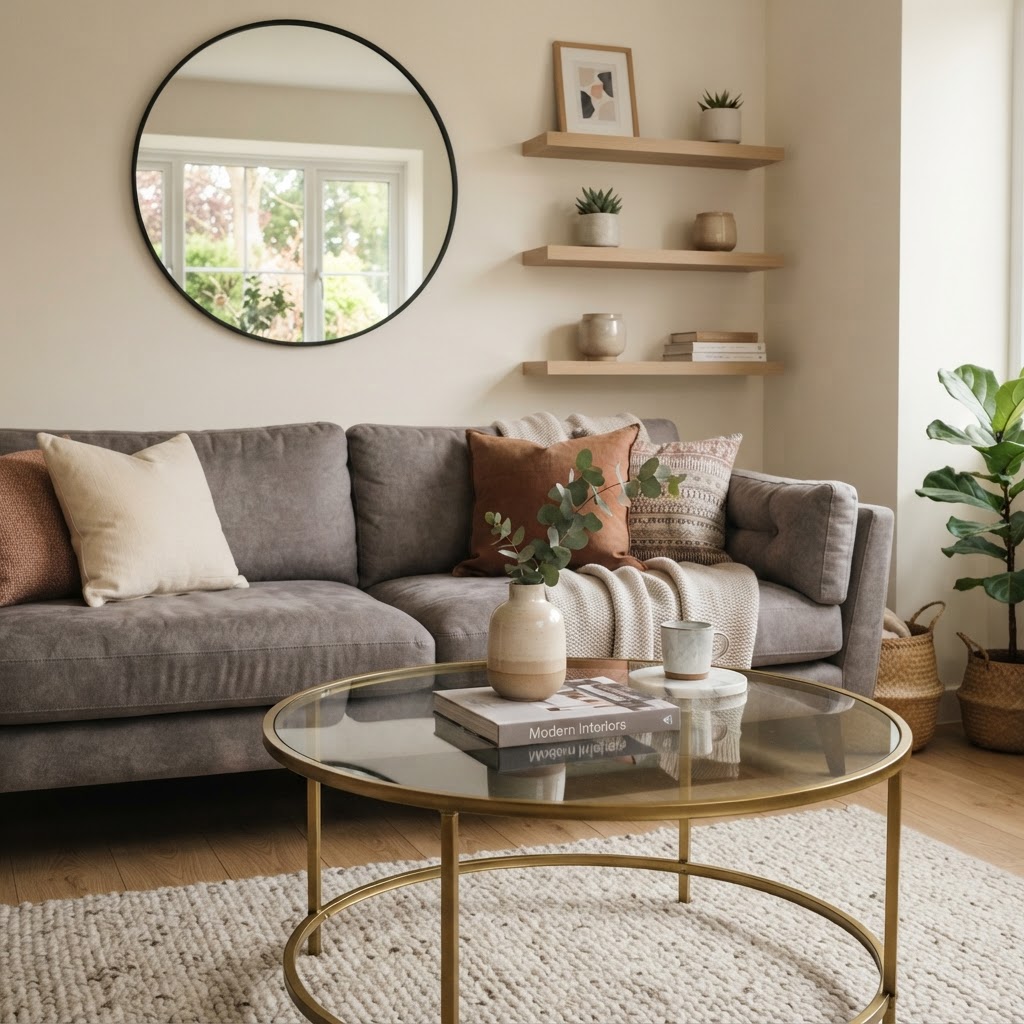
Mirrors and glass furniture are essential for creating an open feeling.

Lighting is perhaps the most critical element in making a small room feel larger. Natural light is your best asset, so you should do everything possible to maximize its entry. Keep window treatments minimal; consider using sheer curtains that provide privacy while still allowing sunlight to filter through softly.

Strategic Use of Mirrors

Mirrors are the oldest trick in the designer’s handbook for a reason. By placing a large mirror directly opposite a window, you effectively double the amount of natural light entering the room. Furthermore, mirrors create an illusion of depth, tricking the brain into thinking there is another room beyond the surface of the glass.

Layering Artificial Lighting

Never rely on a single overhead light, which can create harsh shadows and flatten a room. Instead, use a combination of floor lamps, table lamps, and wall sconces. By placing lights at various heights, you create a “glow” throughout the room that eliminates dark corners and creates a sense of openness.

Choosing Furniture That Scales to Your Space

Adding greenery brings life to a calm, minimalist space.

Furniture choice is often the culprit behind a cramped-looking living room. The goal is to select pieces that are functional but don’t overwhelm the visual field. Opt for furniture with “leggy” profiles—sofas and chairs that are elevated on thin legs show the floor underneath, which creates a subconscious feeling of extra space. Before you commit to a furniture arrangement, it is helpful to explore optimized small living room layouts that ensure your space feels intentional rather than cramped.

The Benefits of Multifunctional Pieces

In a small living room, every square inch must earn its keep. Look for ottomans with hidden storage, nesting tables that tuck away when not in use, or wall-mounted media consoles that free up floor space. When the floor is visible, the room naturally feels less cluttered and more inviting.

Creating Visual Flow and Decluttering

Keep floor space clear to enhance the flow of your small living room.

Clutter is the enemy of a calm environment. When every surface is covered with trinkets, magazines, and remotes, the room feels busy and chaotic. To keep your living space feeling organized, adopt a “one in, one out” policy for new items and utilize vertical storage solutions like floating shelves.

Keeping Walkways Clear

Clear paths are essential for the feeling of openness. Even if you love a particular coffee table, if you have to shimmy around it to reach the sofa, it is too big for your space. Keep the center of the room as open as possible to encourage movement and flow.

Vertical Interest

Draw the eye upward to make the ceiling feel higher. Use tall bookcases or hang artwork closer to the ceiling rather than at eye level. When you emphasize the height of the room, you distract from the narrowness of the floor plan.

Textures and Fabrics for a Calm Atmosphere

While we want to keep colors neutral, adding texture is vital to prevent the room from looking one-dimensional. Incorporate natural materials like linen, jute, wool, and light-toned wood. These materials bring a sense of organic calm to the room, making it feel grounded and comfortable.

How to Layer Textures Successfully

  1. Start with a neutral base color for your large items like sofas and walls.
  2. Add a natural fiber rug to create a warm, textured foundation.
  3. Incorporate throw pillows in various fabrics like velvet or chunky knits for tactile comfort.
  4. Introduce wooden accent pieces to add warmth and contrast to the light palette.

Maintaining the Balance of Form and Function

Finding the balance between “bright and open” and “cozy and calm” is a journey. Sometimes, you may find that the room feels too open and lacks character. This is where personal touches like greenery or a singular piece of bold art can add personality without overwhelming the space.

Bringing Nature Inside

Plants are a fantastic way to add life to a room. Choose plants with varying leaf shapes to add interest, but avoid massive, floor-filling trees. A few well-placed succulents or a hanging plant can bridge the gap between the indoors and the beauty of nature, enhancing the overall calm feeling of your home.

Conclusion

Creating a living room that feels bright, open, and calm is well within your reach, regardless of your home’s current footprint. By focusing on light-reflective surfaces, choosing scaled-down furniture, minimizing clutter, and layering in natural textures, you can design a space that feels like a breath of fresh air. Remember that the goal is not to fill every corner, but to curate a home that serves your needs and provides a peaceful escape from the outside world. Start by tackling one section of your living room today—perhaps clearing off a surface or swapping out heavy drapes for sheers—and notice how much more space you find in your everyday life.

16 Small Apartment Decluttering and Storage Tips That Stick

Living in a compact urban dwelling requires a shift in mindset, where every square inch counts and clutter is the primary enemy of comfort. When you are looking to master small apartment decluttering, the process is less about minimalism and more about intentional living. Many residents struggle with the feeling of being closed in by their belongings, but with the right strategy, you can turn even the tiniest studio into a functional oasis. Implementing effective small apartment storage solutions is the key to maintaining a peaceful home that serves your needs without overwhelming your visual field.

The Psychology of Decluttering Small Spaces

Utilizing vertical wall space and multifunctional furniture is key to small apartment storage.

Before you begin moving furniture or buying organizers, you must understand why clutter accumulates in the first place. In small apartments, surface space is limited, and horizontal surfaces like coffee tables and kitchen counters become catch-alls for mail, keys, and daily debris. This visual noise creates a sense of chaos that impacts your mental health.

The One-In, One-Out Rule

The most effective way to prevent future clutter is to adopt the ‘one-in, one-out’ rule. For every new item you bring into your home—be it a book, a kitchen gadget, or a piece of clothing—an existing item must be donated, recycled, or discarded. This keeps your inventory static and forces you to consider the utility of every new purchase.

Assessing Your Daily Needs

Start by tracking what you actually use in a week. If you own three waffle irons but only cook breakfast on Sundays, that is a prime candidate for storage or removal. Decluttering is a process of curation, not just disposal. By auditing your belongings, you gain back the breathing room necessary for a comfortable small space lifestyle.

Maximize Vertical Storage Potential

Shelf risers and clear bins keep kitchen essentials organized and visible.

When your floor space is limited, the only way to go is up. Walls are underutilized assets in most rentals, offering a canvas for shelving and organization systems that keep items off the ground. Using vertical space is a fundamental pillar of successful small apartment storage strategies.

Install Floating Shelves

Floating shelves are ideal because they provide storage without the visual heaviness of large bookcases. They can be placed above doorways, desks, or beds to house books, plants, or decor. By drawing the eye upward, these shelves also create the illusion of higher ceilings, which makes your apartment feel significantly larger.

Command Hooks and Over-the-Door Organizers

For those who cannot drill holes in their walls, there are many renter-approved storage hacks that don’t require drilling which act as a true game changer. Use them for coats, bags, or even kitchen utensils. Over-the-door organizers are also highly versatile; use them for shoes, toiletries, or cleaning supplies in tight pantry spaces.

Clever Hidden Storage Solutions

A platform bed with built-in storage is perfect for maximizing small bedroom square footage.

True organization magic happens when your storage is invisible. Furniture with built-in functionality is essential for anyone interested in small apartment decluttering that lasts. Think of your furniture as a secret agent—it should look great while serving a hidden purpose.

The Power of Lift-Top Furniture

A lift-top coffee table can hide away gaming controllers, remote controls, or craft supplies, keeping your living room looking pristine. Similarly, ottomans with removable lids serve as both extra seating for guests and storage for throw blankets or spare pillows. These dual-purpose items prevent ‘surface creep,’ where items slowly migrate from cabinets to tables.

Organizing the Kitchen and Bathroom

These two rooms are notoriously difficult to manage because they are packed with small, varied items. In the kitchen, utilize magnetic knife strips to clear counter space, and in the bathroom, use clear acrylic bins to keep medicine and cosmetics visible but tidy.

Drawer Dividers and Shelf Risers

Drawer dividers are non-negotiable for kitchen utensils and junk drawers. By giving every single item a dedicated “home,” you eliminate the frustration of rummaging through piles. Shelf risers are another hero of small apartment storage, as they effectively double the square footage of your cabinets, allowing you to stack plates and bowls without the danger of a landslide.

Maintaining Decluttering Habits

Decluttering isn’t a one-time project; it is a lifestyle. To keep your home organized, you must establish routines. Spend five minutes every evening putting items back in their place and wiping down surfaces. This ‘reset’ prevents clutter from becoming a weekend-long chore.

Categorizing and Labeling

Grouping like items together is the gold standard of organization. Store all your cleaning supplies in one bin, all your electronics cables in another, and all your office supplies in a third. Labeling these bins makes it easy for you—and guests—to find what you need quickly.

The Seasonal Rotate Strategy

If you live in a climate with changing seasons, your closet likely becomes a point of contention. Do not keep heavy winter coats in your closet during the middle of July. Use vacuum-seal bags to compress out-of-season clothing and slide them under your bed or onto the top shelf of your closet. This single habit can instantly free up 30% of your primary hanging space.

Lighting and Visual Space

Sometimes, the clutter is not physical; it is visual. An overstuffed room feels smaller, but you can counteract this with strategic lighting. A well-lit room feels airy and open, whereas dark corners make a space feel confined. Use mirrors to reflect light and create depth, which is a classic trick for small apartment living.

Mirrors as Decluttering Tools

Place a large mirror opposite a window to bounce natural light throughout the room. By visually expanding the room, you reduce the ‘closed-in’ feeling that often accompanies cramped quarters. When the room feels bigger, you feel less stressed, which in turn makes you more likely to maintain your organization systems.

Conclusion and Final Thoughts

Mastering small apartment decluttering and storage is a journey of refining your habits and choosing furniture that works as hard as you do. By embracing vertical space, utilizing hidden storage, and committing to daily resets, you can turn any apartment into a spacious sanctuary. Remember, the goal is not to have a ‘perfect’ home, but a home that provides you with freedom and peace of mind. Start with one drawer or one shelf today and feel the difference that a bit of intentional space can make. Which corner of your home will you tackle first? Start your journey to a more organized life right now and take back your space.

10 Budget-Friendly Storage Finds That Look Expensive

Living in a small apartment often feels like a constant battle between your desire for a curated aesthetic and the reality of limited square footage. When every inch counts, finding the right organization tools is essential, but you do not need to sacrifice your style for utility. In fact, many of the best budget-friendly storage finds that look expensive are right under our noses if we know exactly what to look for. By focusing on materials, finishes, and hidden storage potential, you can elevate your space significantly.

The Art of Selecting High-End Looking Storage

If you are focusing on high-end aesthetics in other areas of your home, you might also appreciate these small living room ideas that look expensive to complete your curated design.

Woven baskets are perfect for adding texture and hiding clutter.

To make your home look more expensive, the secret lies in consistency and texture. When shopping for storage, look for natural materials like rattan, wood, or matte metal finishes rather than cheap-looking plastic. These materials tend to age gracefully and add visual depth to a room that plastic simply cannot replicate.

Why Texture Matters in Small Spaces

Texture adds a layer of sophistication to a room that feels intentional rather than cluttered. When you use woven baskets or velvet-lined boxes, you are incorporating tactile elements that feel luxurious. These textures distract the eye from the actual clutter contained within, making the room feel like a well-designed sanctuary instead of a storage unit.

1. Woven Rattan or Seagrass Baskets

Decanting pantry staples into glass jars elevates your kitchen's aesthetic.

The humble woven basket is a classic for a reason. Instead of opting for thin, flimsy wicker, look for thick, tight-weave seagrass or rattan baskets with leather handles. These look like high-end boutique finds but are often available at affordable home goods stores. They are perfect for hiding blankets in the living room or storing shoes in an entryway.

2. Velvet-Lined Jewelry Trays

Floating shelves save space while providing a sophisticated display area.

Nothing says luxury quite like velvet. Using velvet-lined trays to organize your jewelry, watches, or small knick-knacks creates a “boutique display” effect inside your dresser drawers. You can find these in affordable sets that mimic the organization style used by expensive department stores, instantly making your morning routine feel more elegant.

3. Matte Black or Gold Metal Bins

Wire bins are great for visibility, but choose those with a heavy-duty matte finish. Gold, brass, or matte black metal bins feel much more premium than chrome. These work exceptionally well in kitchens or bathrooms for organizing toiletries or spices, adding a touch of industrial chic to your small apartment storage.

4. Acrylic Drawer Dividers

For a clean, minimalist look, thick acrylic is unbeatable. It is transparent, meaning it creates no visual weight, which is crucial for small apartment storage. Using clear acrylic dividers for your office supplies or makeup allows your beautiful drawer interiors to shine through, providing a high-end, customized aesthetic.

5. Faux Leather Storage Ottomans

Furniture that doubles as storage is the holy grail for apartment dwellers. A faux leather ottoman provides a sophisticated pop of texture and a hidden cavity for books or extra bedding. Look for designs with tufted details or clean mid-century modern lines to ensure it looks like a designer piece rather than a simple plastic bin.

6. Glass Jars with Bamboo Lids

Decanting pantry staples into glass jars is one of the most effective ways to make a kitchen look expensive. When you choose glass jars with airtight bamboo lids, you unify the look of your shelves. This removes the “visual noise” of branded packaging, creating a serene and organized environment.

7. Wooden Floating Shelves

Adding vertical storage is essential, but skip the cheap particle board options. Look for solid wood or high-quality wood veneer floating shelves. When installed properly with invisible brackets, these look like custom built-ins. They provide a beautiful stage for your books and decor while keeping your floor space clear.

8. Fabric-Wrapped Storage Boxes

Standard cardboard boxes look messy, but fabric-wrapped boxes offer a soft, structured look. Linen-textured fabrics, in particular, lend an air of timeless elegance. These boxes are ideal for hiding paperwork or cables in a home office, keeping your workspace clutter-free and visually calm.

9. Collapsible Felt Bins

Felt provides a soft, architectural aesthetic that looks great on open shelving. These bins are surprisingly affordable and offer a muted color palette that works well in modern interiors. They are perfect for storing items that don’t need to be hidden but need to be contained, like board games or hobby supplies.

10. Wall-Mounted Pegboards

Often associated with workshops, a high-quality pegboard painted in a chic, solid color can be a statement piece in a kitchen or craft room. Use matching hooks and wooden dowels to keep things uniform. This type of wall storage is highly functional and looks like a well-planned, professional interior design decision.

Organizing Your Small Apartment Strategically

Even the most expensive storage bins will fail if your apartment is not organized with a plan. Start by auditing everything you own. If you haven’t used an item in a year, it is time to donate it. Storage should be about curating the things you love, not hoarding the things you don’t use.

The Vertical Advantage

When floor space is limited, look up. Use the space above your cabinets, the back of your doors, and the entirety of your walls. By moving storage upward, you keep the main living areas feeling open and airy. This is a core tenant of successful small apartment storage design.

Maintaining the Look of Luxury

Once you have implemented these budget-friendly storage finds that look expensive, the trick is maintenance. An organized space is a habit, not a one-time event. Spend five minutes each evening putting items back into their designated “expensive-looking” homes.

Decluttering Checklist

  • Clear surfaces (countertops and tables) are essential for a luxury feel.
  • Group similar items together to avoid visual fragmentation.
  • Use labels only when necessary and ensure they are aesthetically pleasing.
  • Leave some empty space on shelves to avoid the look of overcrowding.

Conclusion

Transforming your small apartment into an organized oasis does not require a massive budget. By choosing items that favor texture, consistency, and intelligent design, you can achieve a high-end look while maximizing your storage capabilities. Start by swapping out your mismatched plastic bins for one or two of the budget-friendly storage finds listed above and notice how quickly your space begins to feel more like home. Which storage hack will you try first? Share your progress in the comments below!