How to Arrange a Bed in a Small Room for Maximum Space
To arrange a bed in a small room for maximum space, center it on the most prominent wall to balance the layout, utilize under-bed storage containers for bulky items, and install wall-mounted lighting to free up surface area. Prioritizing these vertical and floor-level optimizations creates flow and minimizes the feeling of confinement.
The Psychology of Furniture Placement in Small Spaces
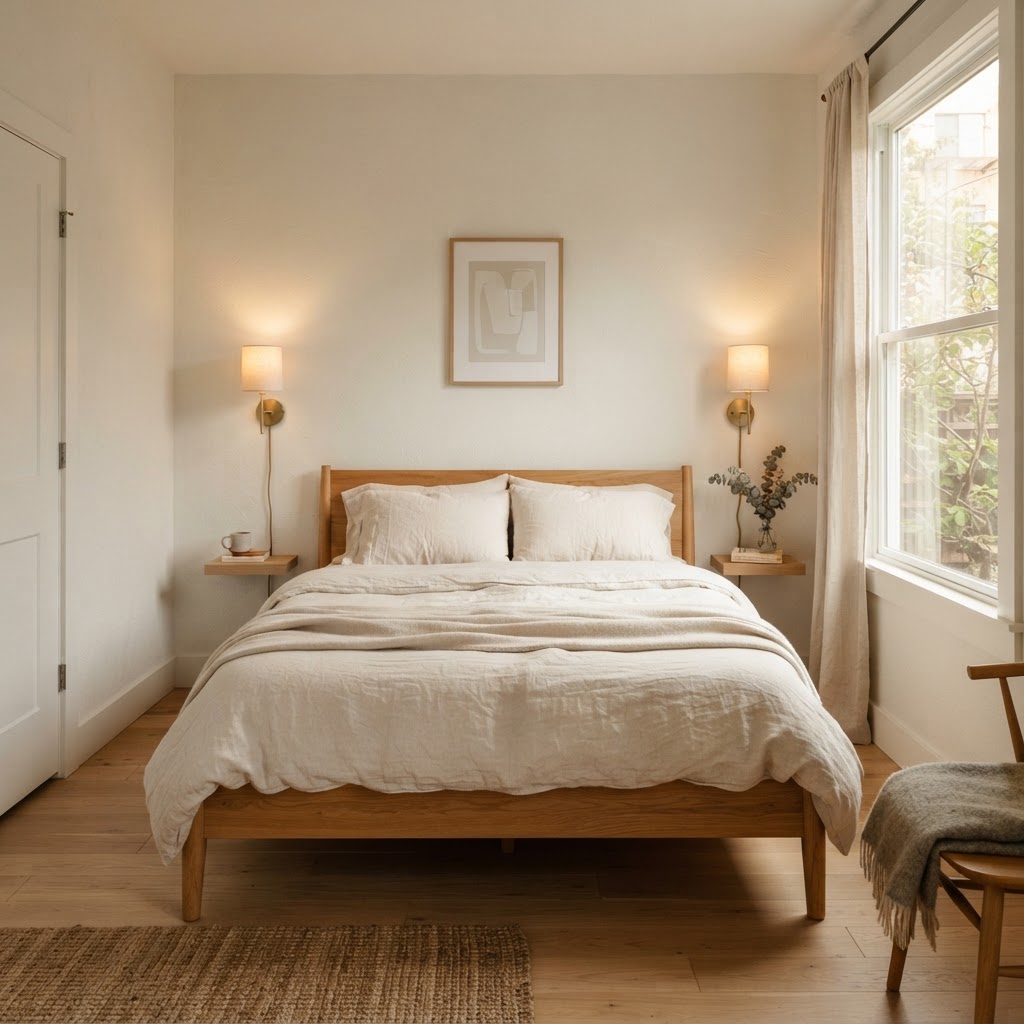
Understanding the psychology of furniture placement helps transform a cramped bedroom into an open, inviting sanctuary. The core principle is maintaining “flow,” which refers to the ease of movement and visual paths within a room. When you walk into your bedroom, your eyes should be able to travel around the space without hitting a ‘dead end’ created by a bulky headboard or an awkwardly placed footboard. Proper furniture arrangement is not just about fitting pieces into a grid; it is about creating a sense of psychological openness.
One common mistake is pushing the bed into a corner to save floor area, which often makes a room feel like a college dorm. To achieve a more grown-up, balanced look, pull the bed away from the walls by at least 6 to 12 inches. If you can maintain even a few inches of clearance on either side, it makes the room feel intentional and well-designed rather than haphazard. By leaving space to navigate, you reduce the visual weight of the bed and allow the eye to perceive more floor surface area, which is the key factor in how we psychologically measure the size of a room.
Center Stage: Floating the Bed
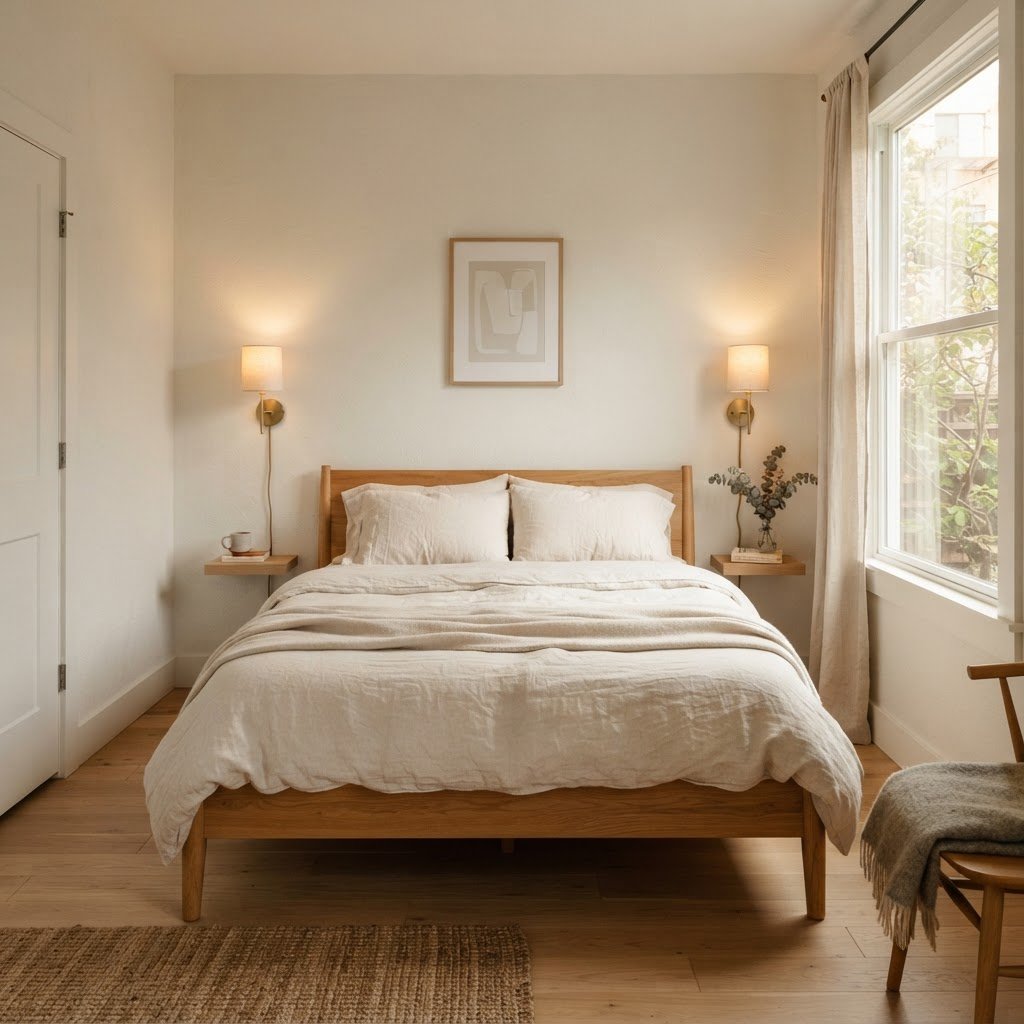
“Floating” the bed—placing it against a wall but centered—often provides the most symmetrical and aesthetically pleasing results in a small room. By centering the bed, you create two distinct, equal-sized areas on either side, which serve as perfect symmetrical points for lighting or small nightstands. This layout creates a natural focal point, drawing the eye toward the headboard and bedding while shifting focus away from the limited floor dimensions.
This technique is particularly effective if you have an off-center window. You can use floor-to-ceiling curtains spanning the width of the wall behind the bed to trick the eye into thinking the window is centered, creating a luxury hotel vibe. Below is a comparison of common bed placement strategies:
Utilizing the Space Underneath the Bed
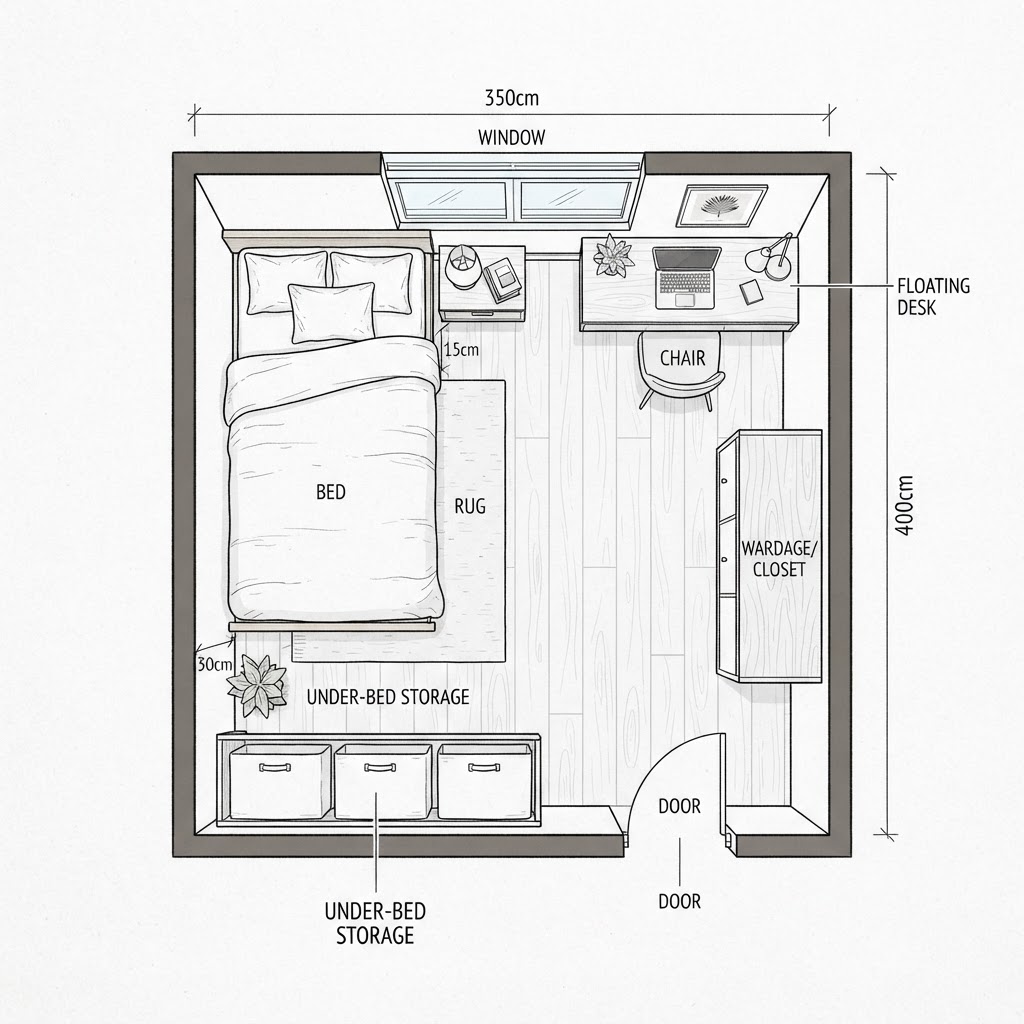
If you want to know how to arrange a bed in a small room effectively, you must master the art of under-bed storage. In small bedrooms, the area underneath the bed is prime real estate that is often wasted. Instead of leaving this space empty or letting it become a graveyard for dust bunnies, use it as a hidden, functional closet.
Look for bed frames with built-in drawers. These provide a clean, integrated look that keeps your belongings organized and out of sight. If your current frame doesn’t have built-in storage, invest in slim rolling bins that measure approximately 6 to 8 inches in height to slide easily under standard frames. Use this space for seasonal clothes, extra linens, or items you don’t need to access on a daily basis. By maximizing this hidden volume, you can potentially remove a bulky dresser from your room, opening up 4 to 6 square feet of floor space. This “hidden storage” method is the single most effective way to declutter a bedroom without sacrificing the items you need for your daily lifestyle.
Vertical Thinking and Wall-Mounted Solutions
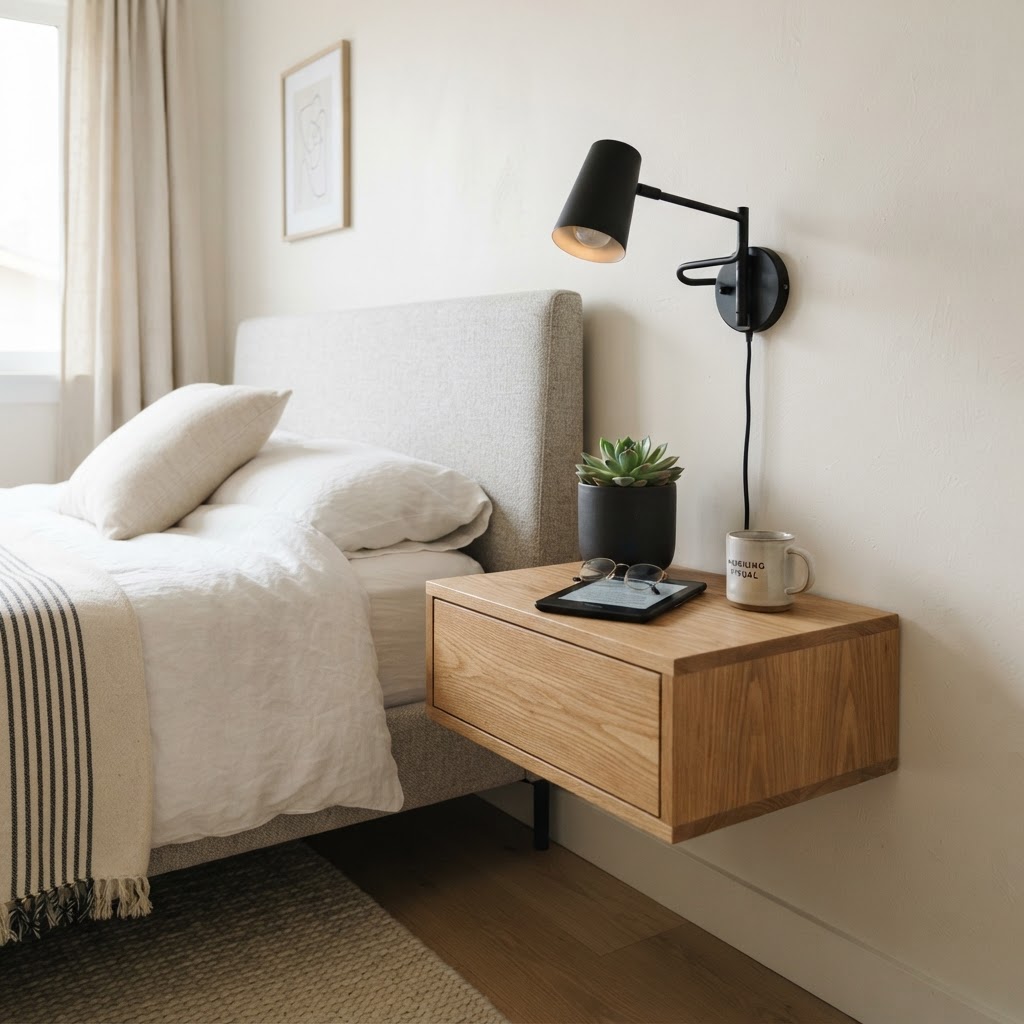
When floor space is at an absolute premium, look up because walls are your best friend for creating “visual breathing room.” By moving items off the floor and onto the walls, you trick the brain into perceiving a larger room dimension. Start with your lighting; instead of bulky table lamps that consume the entirety of your nightstand surface, install wall-mounted sconces on either side of the bed. This simple change is one of the most effective ways to maximize bedroom space without sacrificing the utility of your bedside lighting.
Floating Shelves vs. Traditional Nightstands
Another way to manipulate your layout is by replacing traditional nightstands with floating shelves. A floating shelf mounted at the same height as a standard nightstand provides necessary utility without the visual weight of legs or bulky cabinets. By keeping the floor beneath the table visible, the room feels more expansive. To choose between these options, consider that floating shelves provide a modern, minimalist look that is ideal for rooms under 100 square feet, whereas traditional nightstands are better if you require closed storage like drawers for personal items.
The Power of Mirrors and Reflective Surfaces
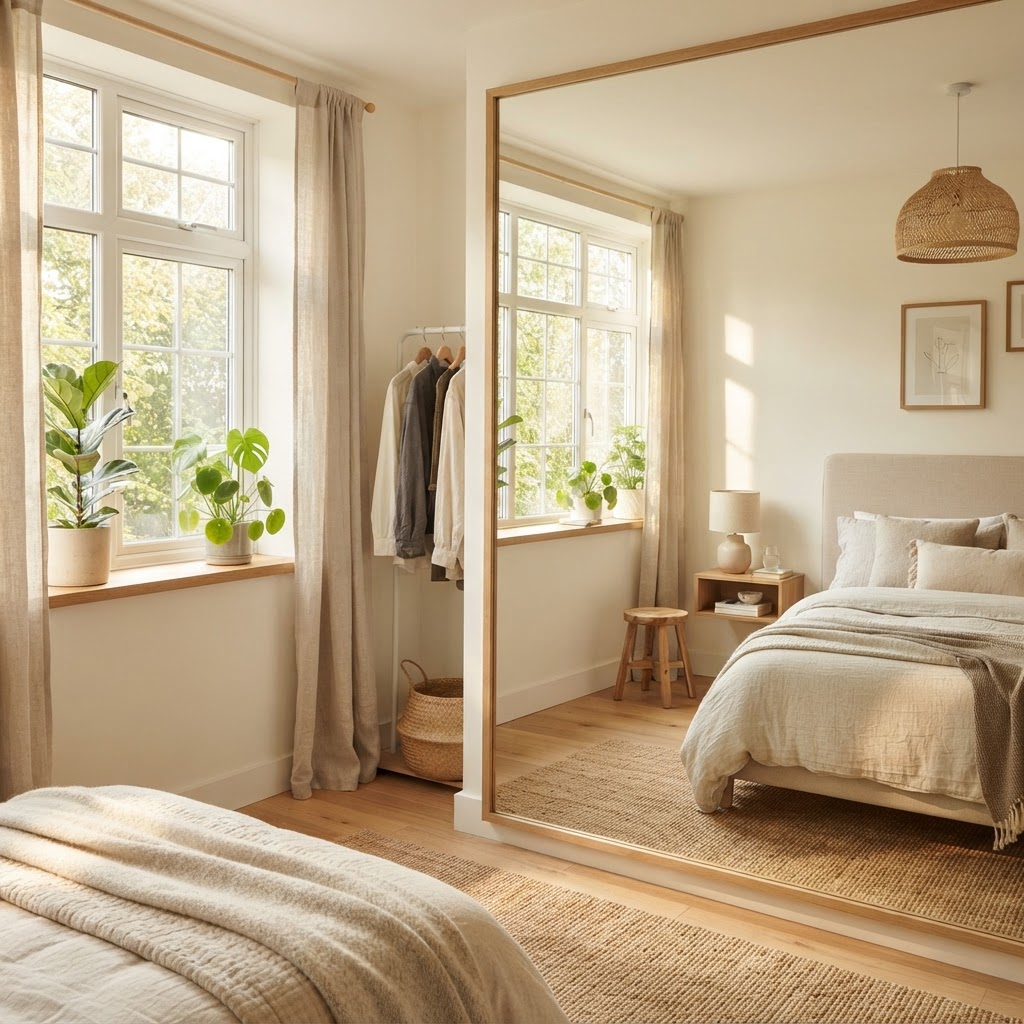
Mirrors are a classic interior designer trick, but they are particularly powerful in a small bedroom for bouncing natural light throughout the room. If you place a large mirror on the wall opposite a window, it creates the illusion of a second window, which can make even a dark, cave-like room feel bright and airy. The goal is to maximize the “bounce factor” of the light within your available square footage.
Consider adding a floor mirror in a corner, or hanging a decorative mirror above the headboard. When using mirrors, always ensure they are reflecting something beautiful, such as a light fixture, a piece of art, or a clear view of the outdoors. You should avoid placing a mirror where it reflects a cluttered closet or a pile of laundry, as this will simply double the visual mess. High-quality silver-backed mirrors are best for brightness, providing approximately 20-30% more reflectivity than lower-cost alternatives, effectively brightening corners that overhead lighting often misses.
Multifunctional Furniture for Tiny Bedrooms
When learning how to arrange a bed in a small room, you need to be ruthless about the furniture you choose. Every single item in your bedroom should ideally serve more than one purpose to optimize your limited square footage. If you have a small space, a chair should be more than just a place to sit; it could double as a storage bin or a fold-up desk.
Look for ottomans that open to reveal storage, or a bench at the foot of the bed that keeps extra blankets tucked away. If you have enough room for a desk, look for a wall-mounted drop-leaf desk that can be folded down when you are finished working. The key to successful small-room design is ensuring that your furniture is working as hard as you are. By swapping one single-purpose piece, such as a traditional ottoman, for a storage-enabled piece, you can reclaim up to 2 cubic feet of internal storage space.
Lighting and Color Palette Secrets
Sometimes, the best way to handle a small room is through visual trickery rather than physical reconfiguration. A light and cohesive color palette can make a tiny space feel endless. If you paint your walls, baseboards, and ceiling in the same light tone (such as off-white, light gray, or soft beige), you blur the lines where the wall ends and the ceiling begins. This removes the ‘box’ feeling that often plagues small bedrooms.
In addition to paint, lighting plays a crucial role in how we perceive volume. A single overhead light will create harsh shadows, making the corners look smaller and darker. Instead, use a layered lighting approach. Incorporate wall sconces, a small bedside lamp, and even a strip of warm-spectrum (2700K to 3000K) LED lighting behind the headboard to create a soft, ambient glow. This multi-source lighting makes the room feel cozy, intimate, and warm, rather than tiny and claustrophobic. By layering light, you essentially “push” the walls outward visually, making the room feel larger than it actually is.

Leave a Reply