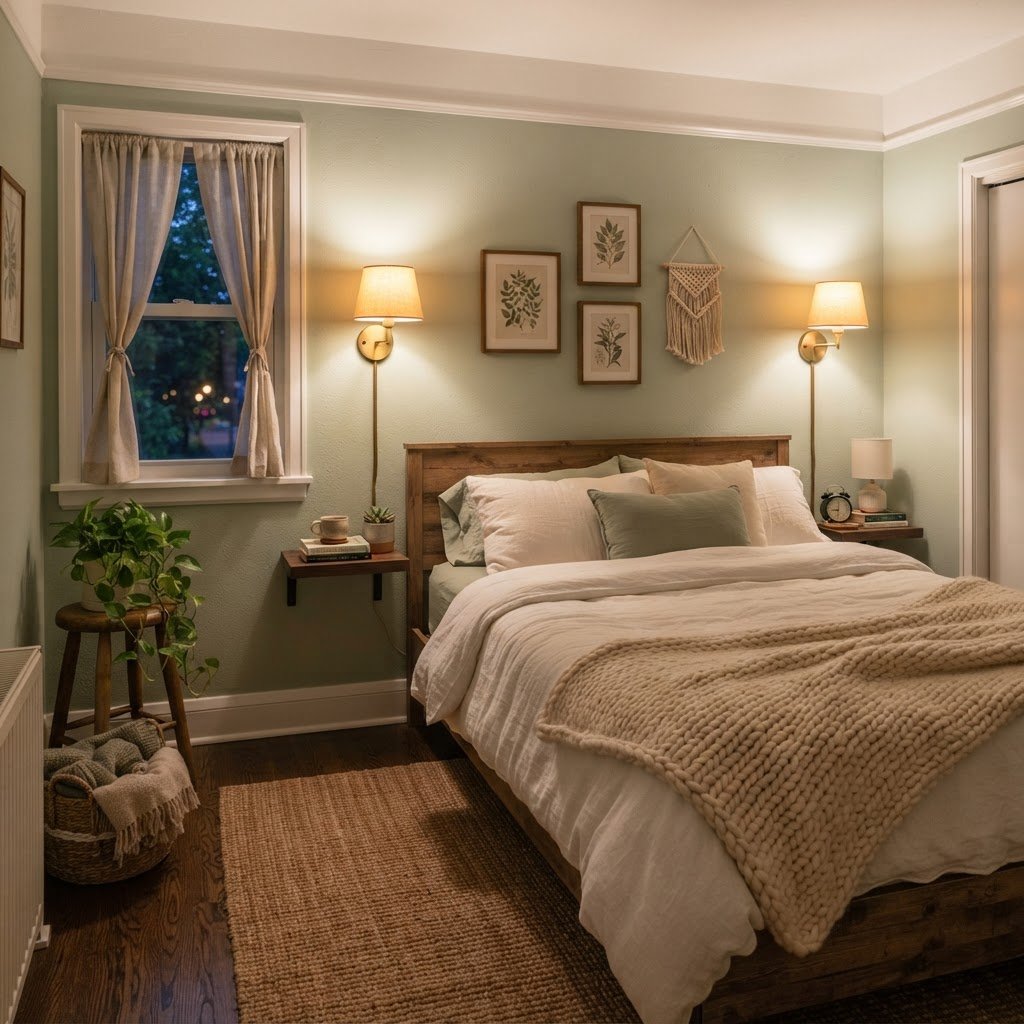
Cozy Relaxing Small Bedroom Ideas: Lighting, Texture & Color
To create a cozy, relaxing small bedroom, prioritize a monochromatic light color palette, layered warm-toned lighting, and tactile textures like velvet or chunky knits to maximize comfort without visual clutter. Strategic furniture placement and vertical storage allow you to maintain an open, tranquil atmosphere that promotes deep rest in limited square footage.
The Power of a Soft Color Palette
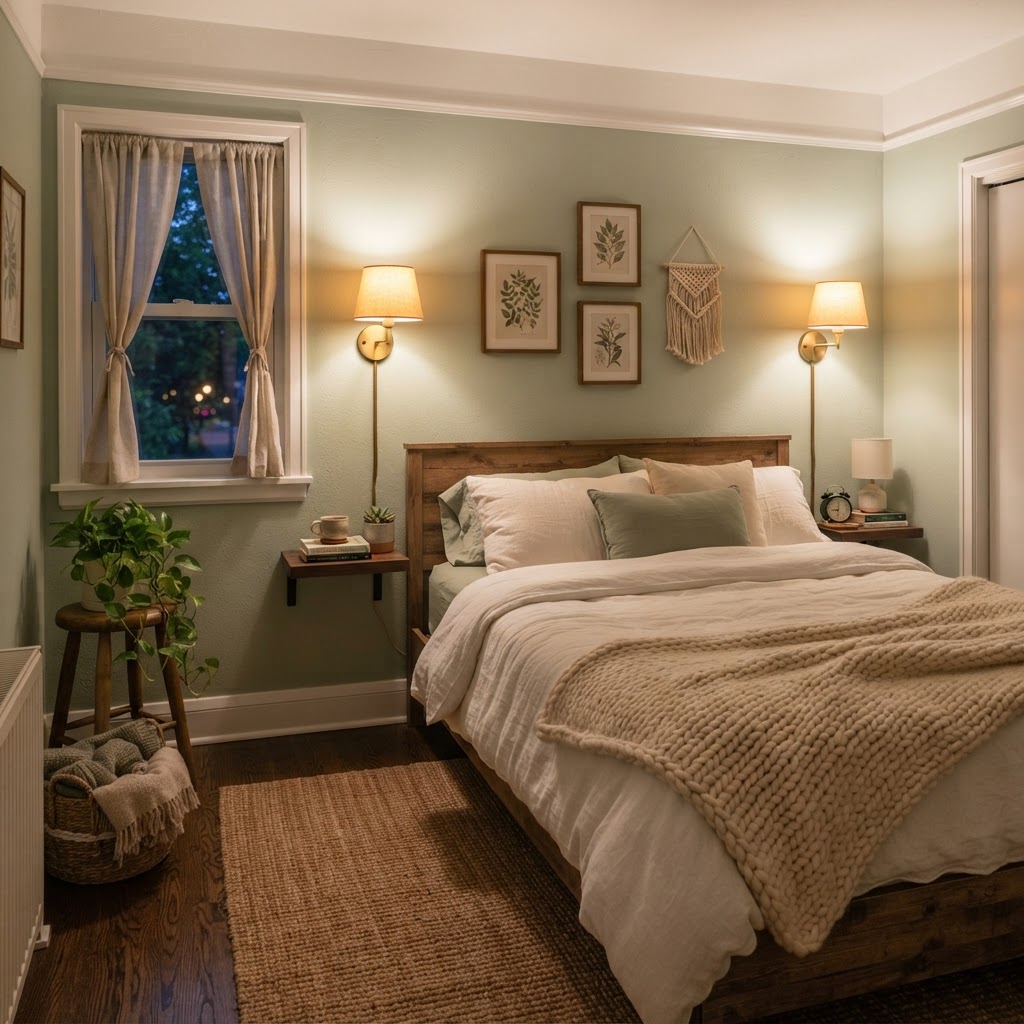
Color is the primary driver of a room’s atmosphere, and in a small space, selecting the right palette can visually expand the dimensions of your sanctuary. A cohesive color scheme minimizes visual friction, allowing the eye to rest rather than jump between contrasting hues. For a professional finish, aim for a 60-30-10 color ratio: 60% as your neutral base, 30% as a secondary tone, and 10% as an accent.
Selecting Calming Hues
Soft, muted tones work best when aiming for relaxation, as they reflect natural light and minimize shadows that make rooms feel smaller. Think of misty grays, soft sage greens, dusty blues, or creamy off-whites with an LRV (Light Reflectance Value) of 50 or higher. Darker, moody colors like charcoal or navy can create a “cocoon” effect for intimacy, but these require high-quality lighting to prevent the room from feeling cave-like. Research indicates that cool-toned blues and greens can actively lower heart rate and reduce stress, making them ideal for high-pressure bedrooms.
Painting Techniques for Small Spaces
Paint your baseboards, window trim, and crown molding the exact same color as your walls to eliminate visual breaks. This professional design trick effectively hides the boundaries of the room, creating an illusion of seamless depth. In rooms under 100 square feet, using a matte finish on walls and an eggshell finish on trim provides a sophisticated contrast that adds dimension without creating a busy, distracting environment.
Mastering Bedroom Lighting Design
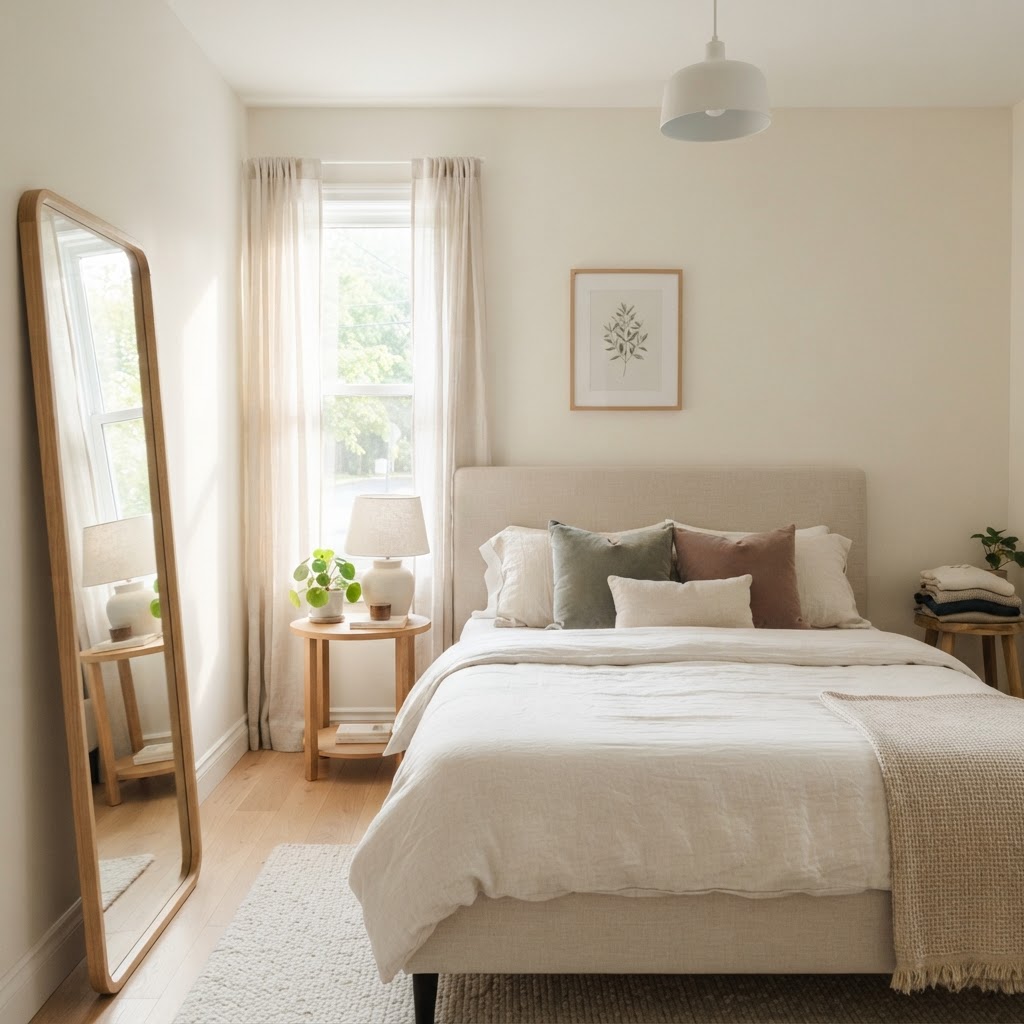
Layering lighting is the most effective way to turn a functional small bedroom into a relaxing retreat by providing adjustable brightness levels for different times of the day. Clinical overhead lighting creates harsh shadows that accentuate tight corners, whereas a tiered lighting plan creates soft focal points that distribute light evenly throughout the space.
Layering for Ambiance
Start your lighting plan with a 3-point system: ambient lighting for general navigation, task lighting for reading, and accent lighting to highlight room architecture or texture. Always install dimmable switches, as they allow you to transition the room from a productive space in the morning to a restorative wind-down zone at night. Aim for at least three light sources placed at different heights to ensure the corners of the room are not left in darkness, which visually shrinks the square footage.
Types of Cozy Lighting
- Warm-toned LED bulbs (2700K or lower) are essential to mimic sunset hues and support melatonin production.
- Wall-mounted sconces are ideal for small rooms as they preserve nightstand surface area and clear visual space.
- Draped fairy lights or hidden LED strips along a headboard provide ambient glow without taking up floor space.
- Floor lamps tucked into corners soften shadows and draw the eye toward unused vertical edges, making the room feel wider.
Introducing Texture for Depth
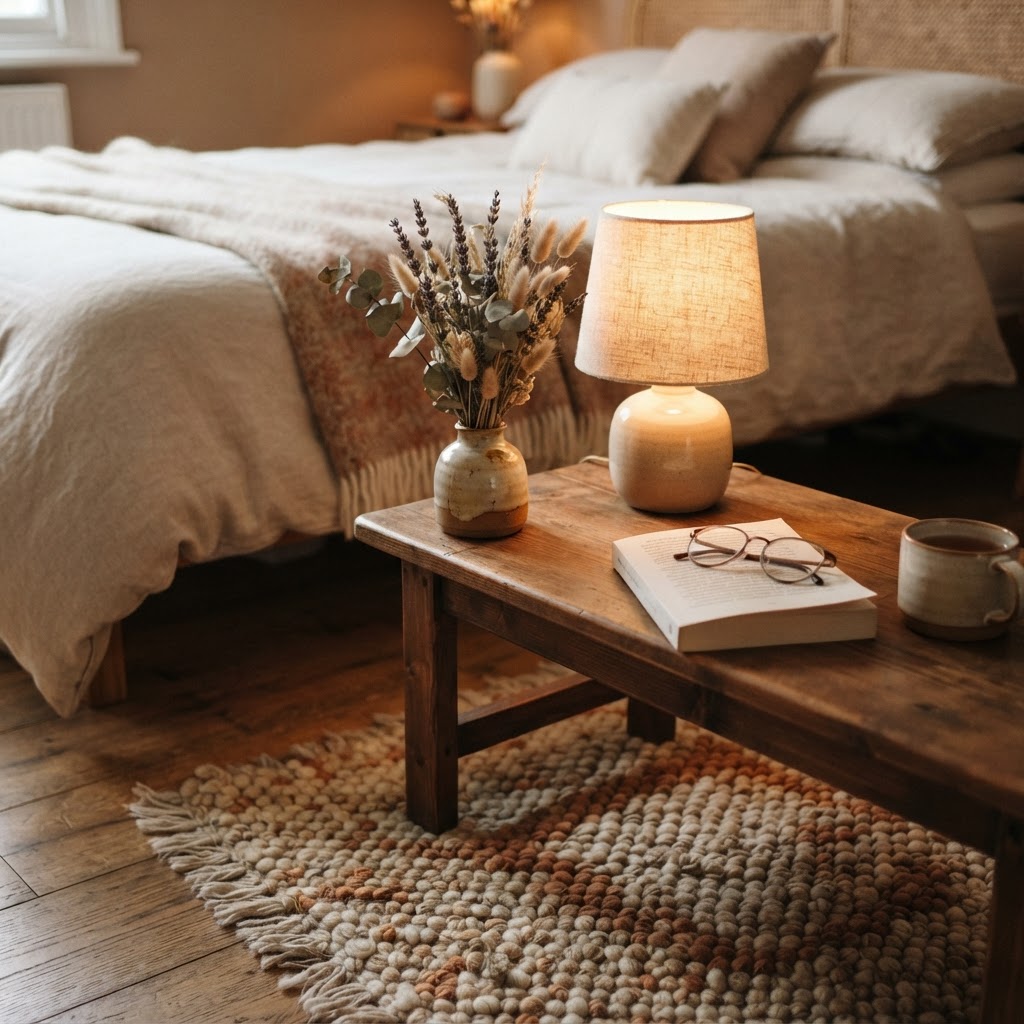
In a small space where bold colors might overwhelm, texture provides necessary depth and a luxurious, sensory-rich experience. When you limit your color palette, the visual focus shifts to how surfaces feel to the touch, creating an inviting environment that compensates for a lack of physical space.
Bedding and Linens
Invest in high-quality bedding that utilizes a blend of finishes to prevent the room from looking flat. Pair crisp, high-thread-count cotton sheets with a heavy chunky-knit throw, velvet accent pillows, or a high-pile faux-fur runner to anchor the bed as the room’s focal point. Using at least three different textile textures creates a sophisticated, multi-dimensional look that makes the bed feel like a curated, comfortable haven. Keep in mind that natural fibers like linen and wool breathe better, contributing to temperature regulation for better sleep quality.
Incorporating Organic Materials
Wood, rattan, and wool bring nature indoors, grounding the space and adding essential organic warmth. A solid oak side table, a woven jute rug, or a wool-upholstered headboard can break up the monotony of standard drywall and synthetic finishes. These elements provide a softer, more forgiving aesthetic that feels intentional. Integrating at least one organic, tactile element per 50 square feet of bedroom space is a recommended benchmark for achieving a “spa-like” sensory balance.
Maximizing Space with Smart Furniture
Every piece of furniture in a small bedroom must provide high utility while maintaining a “light” visual silhouette to keep the floor plan from feeling crowded. When choosing furniture, prioritize pieces with legs rather than solid bases, as exposing the floor underneath creates a subconscious sense of expanded space.
The Illusion of Space
Select nightstands with open legs or wall-mounted floating shelves to maintain a sense of airy flow. Mirrors are a classic, scientifically backed tool for spatial expansion; placing a floor-length mirror opposite a window can double the amount of natural light entering the room, effectively doubling the perceived depth. Consider a headboard with integrated shelving to replace the need for extra furniture like bookcases, which reduces visual clutter and increases your usable floor area by up to 15%.
Multipurpose Pieces
Space-efficient design relies on items that serve dual purposes, such as an ottoman at the end of the bed that offers hidden storage for seasonal linens. A drop-leaf desk or a vanity that doubles as a laptop workspace can be a game-changer in compact bedrooms. By reducing the total number of individual items, you prevent the visual noise that triggers stress, keeping the room atmosphere focused solely on relaxation and recovery.
Curating a Peaceful Sanctuary
Your bedroom must function as a sensory-controlled environment designed to lower your heart rate and facilitate deep recovery. By removing visual noise and integrating calming sensory cues, you transform a sleeping space into a holistic retreat that actively supports your mental well-being.
Decluttering for Clarity
Visual clutter acts as a constant stressor, keeping the brain in a state of high-alert stimulation. Utilize under-bed storage containers for seasonal items and aim to clear all surfaces of decorative items that do not serve a daily purpose. Implementing a ‘one-in, one-out’ rule for bedroom decor helps maintain a curated, intentional aesthetic that remains calm and orderly over time.
Sensory Integration
Engage multiple senses to anchor your brain in a state of rest. Use essential oil diffusers with lavender or cedarwood, which are proven to promote relaxation and deeper sleep stages. Placing a plush, high-pile rug underfoot ensures your first contact in the morning is gentle, setting a positive tone for the day. These sensory-focused details elevate the room from a utilitarian sleeping area into a holistic sanctuary.
Common Mistakes to Avoid
Avoiding common layout and design pitfalls is crucial for maintaining a cozy, relaxing environment without inadvertently making the room feel stressful. The most frequent errors involve scale, light positioning, and failing to utilize the room’s full three-dimensional potential.
Oversized Furniture
Never prioritize a king-sized bed if it compromises the ability to walk comfortably around the room’s perimeter. A general design rule is to maintain at least 24 to 30 inches of walking clearance around the sides and foot of the bed. If your furniture dominates the room, the space will feel claustrophobic regardless of the decor; opt for a Queen or Full size if it means reclaiming floor space for comfort.
Poor Lighting Placement
Direct, high-intensity overhead lighting located directly above your pillow creates harsh glare that disrupts melatonin production. Always position primary reading lights so they are directed toward your book or nightstand, rather than shining toward your eyes. Proper positioning combined with warm-toned bulbs is the difference between a clinical room and a restorative one.
Ignoring Vertical Space
If you lack floor space, treat the walls as your most valuable asset for storage and visual interest. Install wall-mounted shelves, hang curtains floor-to-ceiling to draw the eye upward, and place art slightly higher than eye level. By maximizing the vertical plane, you add personality and function without sacrificing a single square inch of floor space, making the room feel significantly larger.
FAQ
How do I make a tiny bedroom look bigger?
Use monochromatic light color schemes and paint your trim the same color as the walls to remove visual borders. Additionally, incorporate mirrors to bounce light and choose furniture with exposed legs to create the illusion of more open floor space.
What are the best colors for a relaxing small bedroom?
Soft, muted tones like sage green, dusty blue, misty gray, and creamy off-whites are best for relaxation. These colors have high light reflectance values, which keep the room feeling airy, bright, and calm while minimizing the sense of being enclosed.
Should I use dark colors in a small bedroom?
Yes, dark colors like charcoal or navy can work if you lean into the ‘cocoon’ effect for intimacy and comfort. However, you must pair dark walls with excellent, layered lighting to prevent the room from feeling too small or cave-like.
What is the 60-30-10 rule in interior design?
This rule suggests using 60% of a neutral base color for walls and large items, 30% of a secondary color for bedding or curtains, and 10% of a bold accent color for decor. This balance ensures a small space looks intentionally designed rather than cluttered.
How can I improve my bedroom’s lighting for sleep?
Switch to warm-toned LED bulbs (2700K or lower) and install dimmable switches to regulate light intensity. Layer your lighting using sconces, task lamps, and accent lights to avoid the harsh, clinical glare of a single overhead fixture.

Leave a Reply