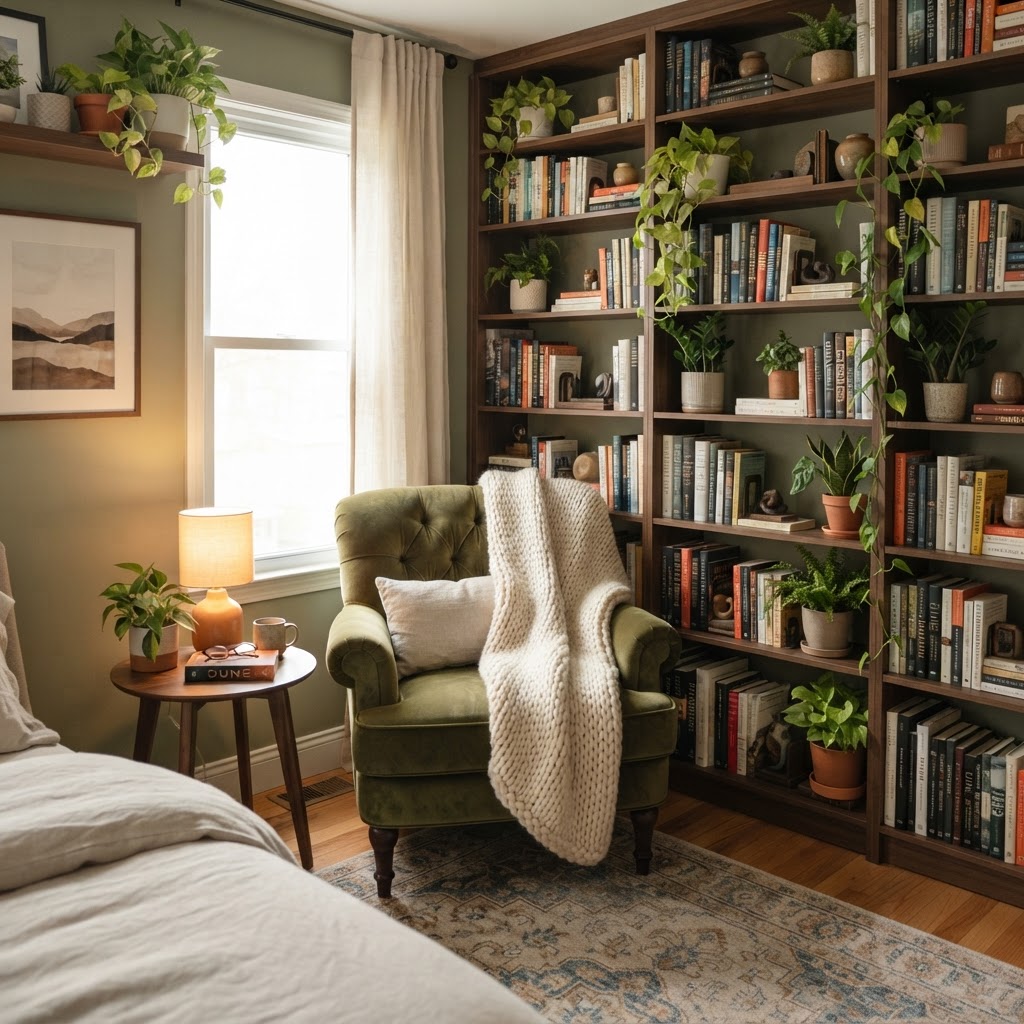
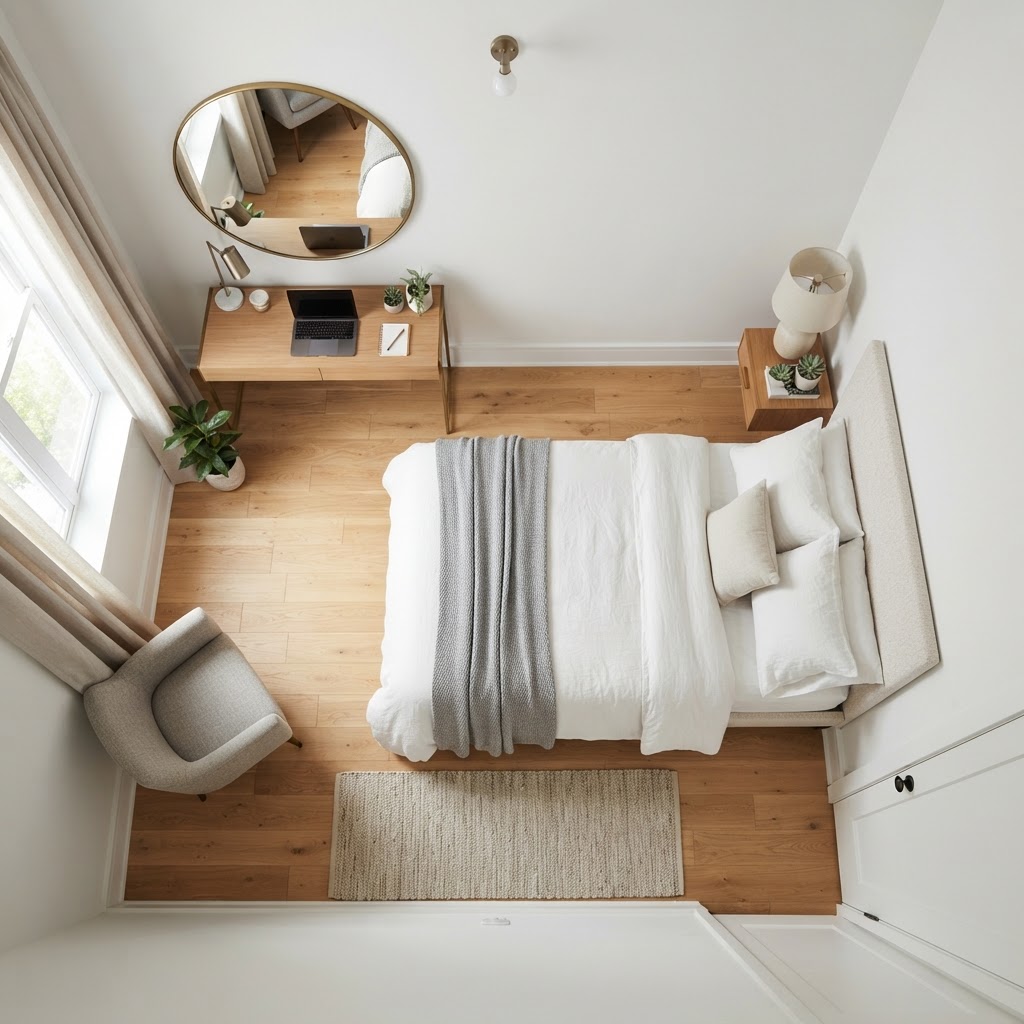
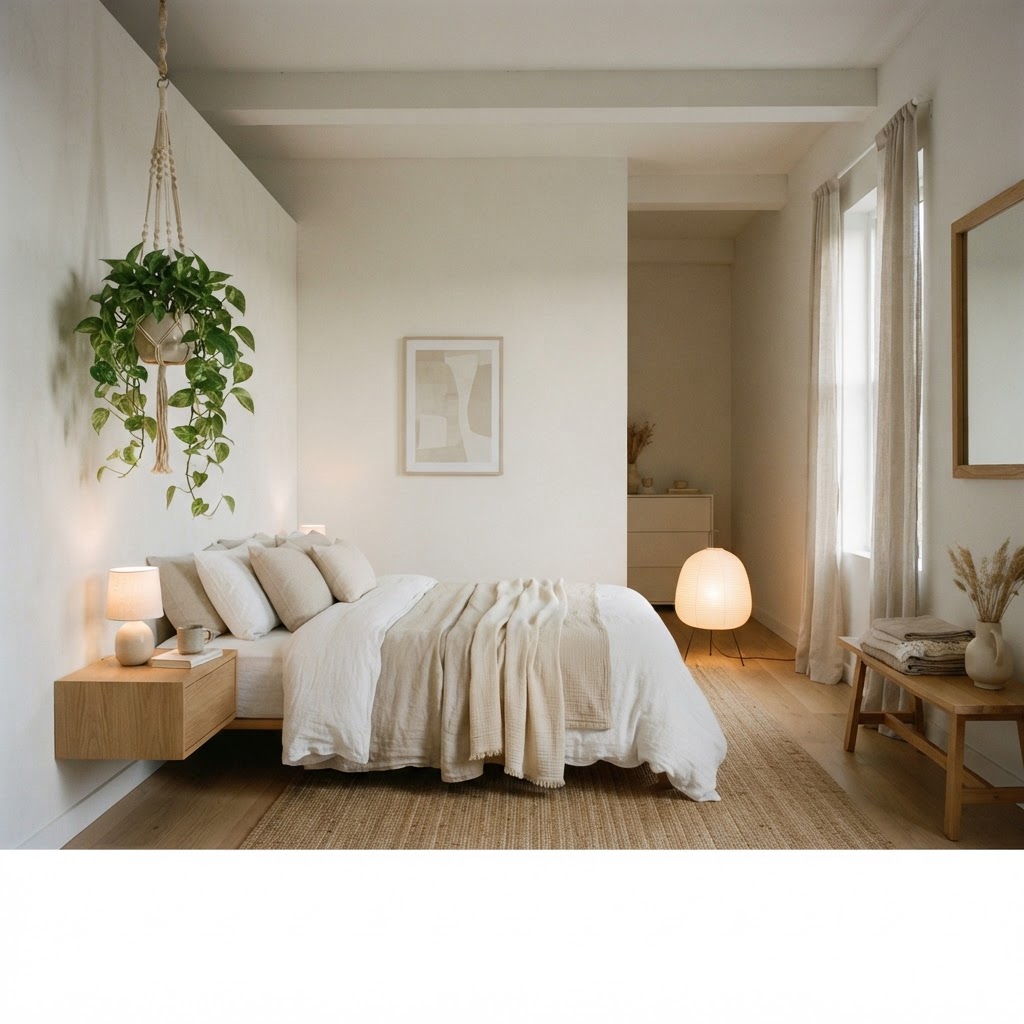
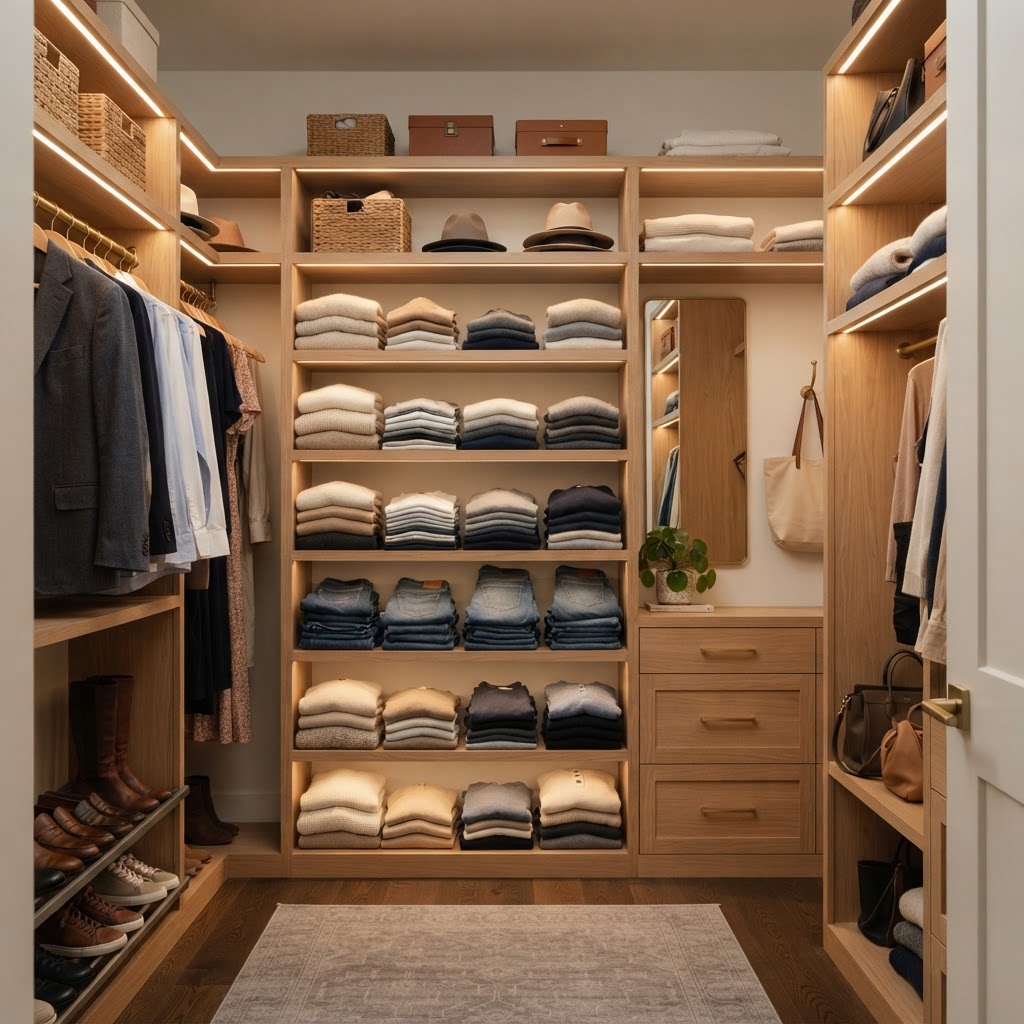
Living in a city apartment often means compromising on square footage, but your sleep sanctuary does not have to feel like a broom closet. Implementing the right tiny bedroom apartment ideas can turn even the smallest nook into an airy, organized, and stylish retreat. By rethinking how you use vertical space, multi-functional furniture, and clever lighting, you can create a room that feels twice its actual size. The key to successful small-room design lies in intentionality, where every single piece serves a dual purpose and clutter is strictly prohibited. Let us dive into thirty actionable strategies to help you maximize every inch of your space.
Rethink Your Furniture Layout
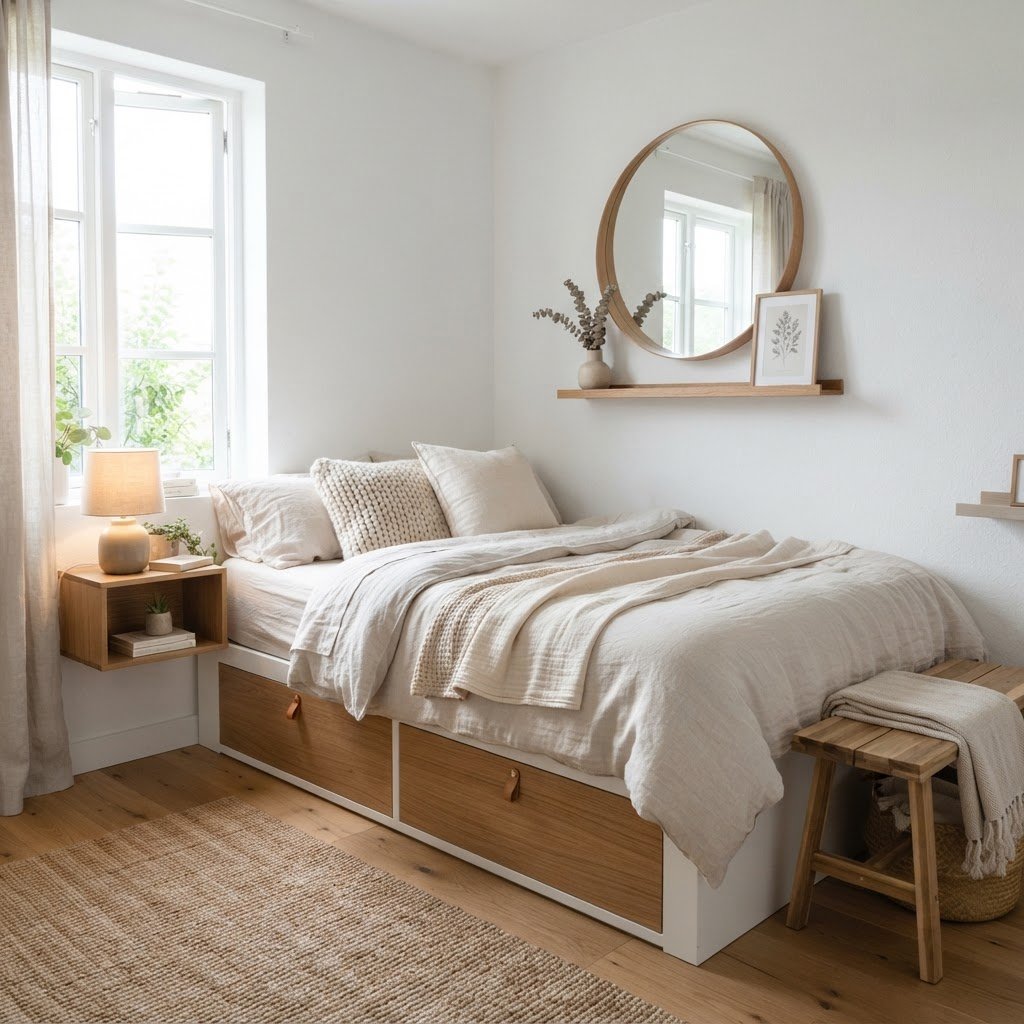
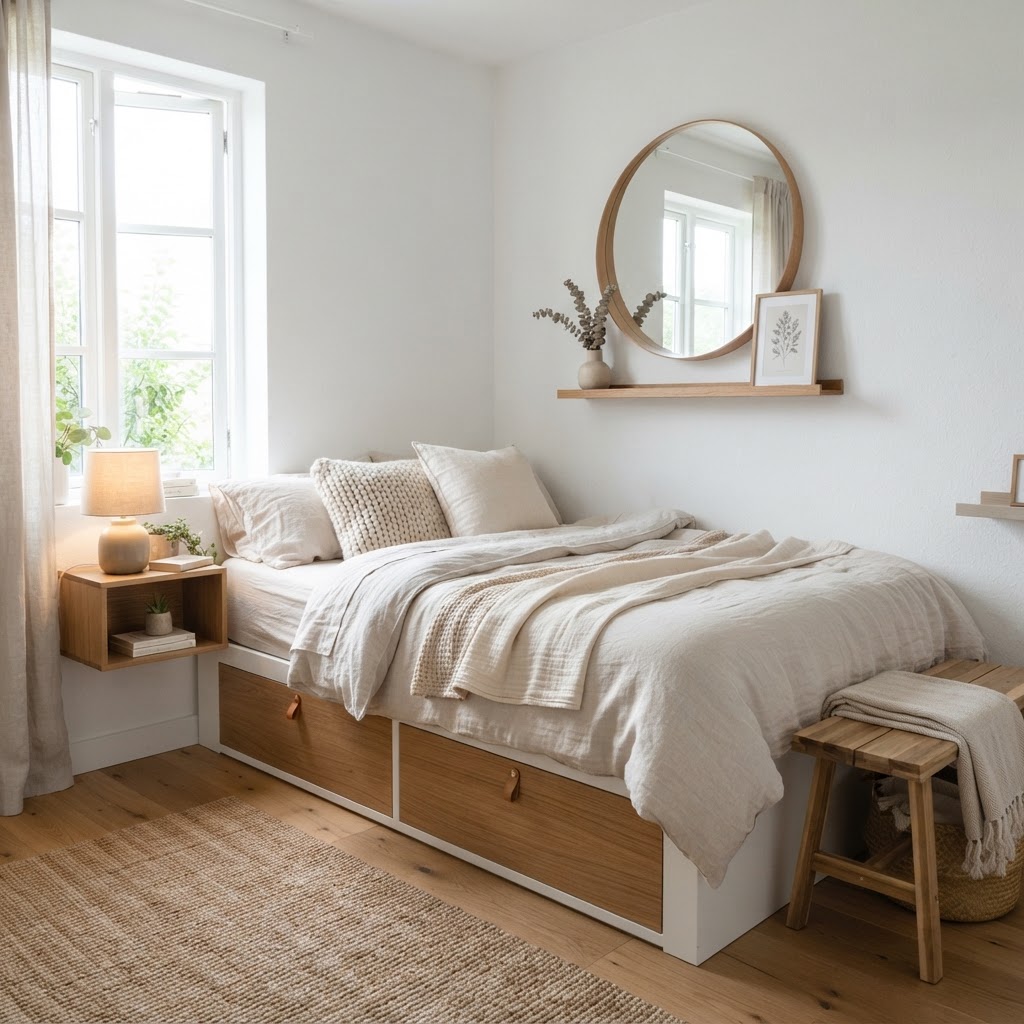
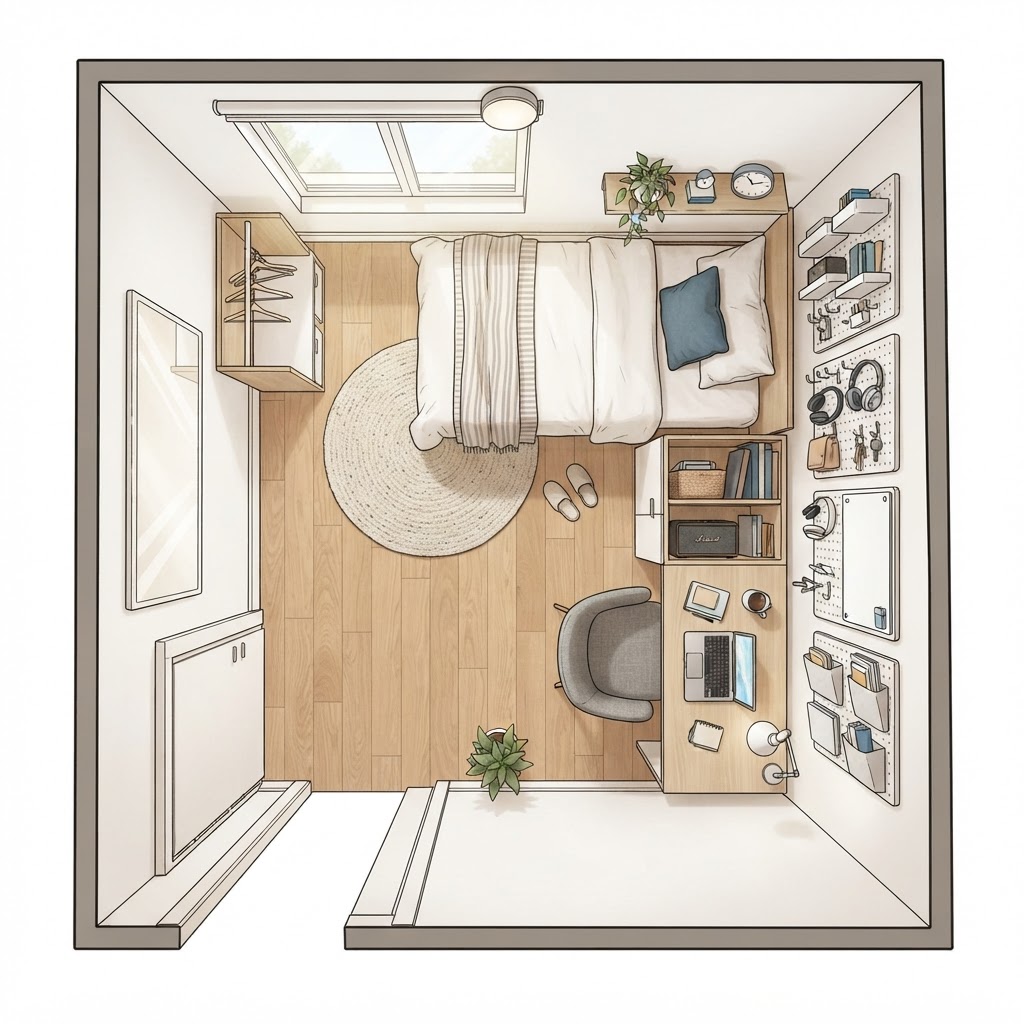
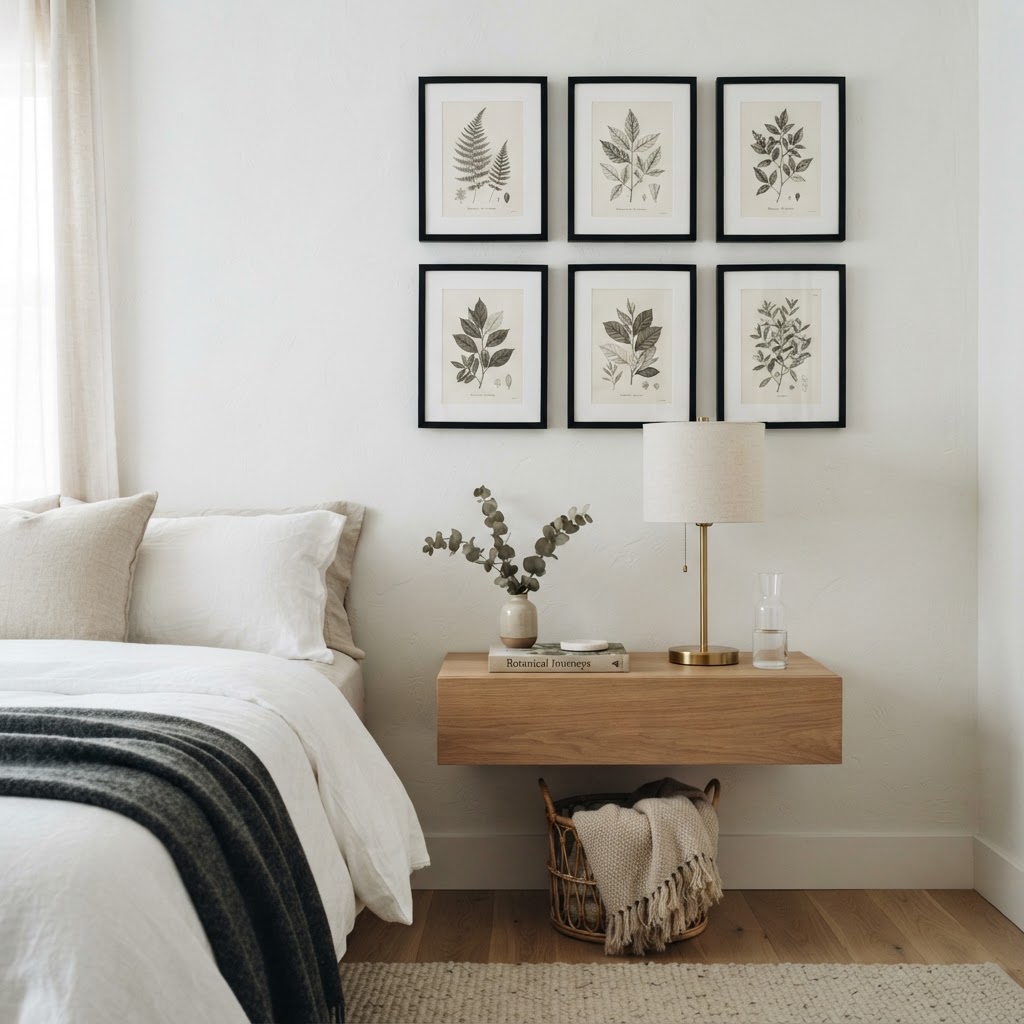
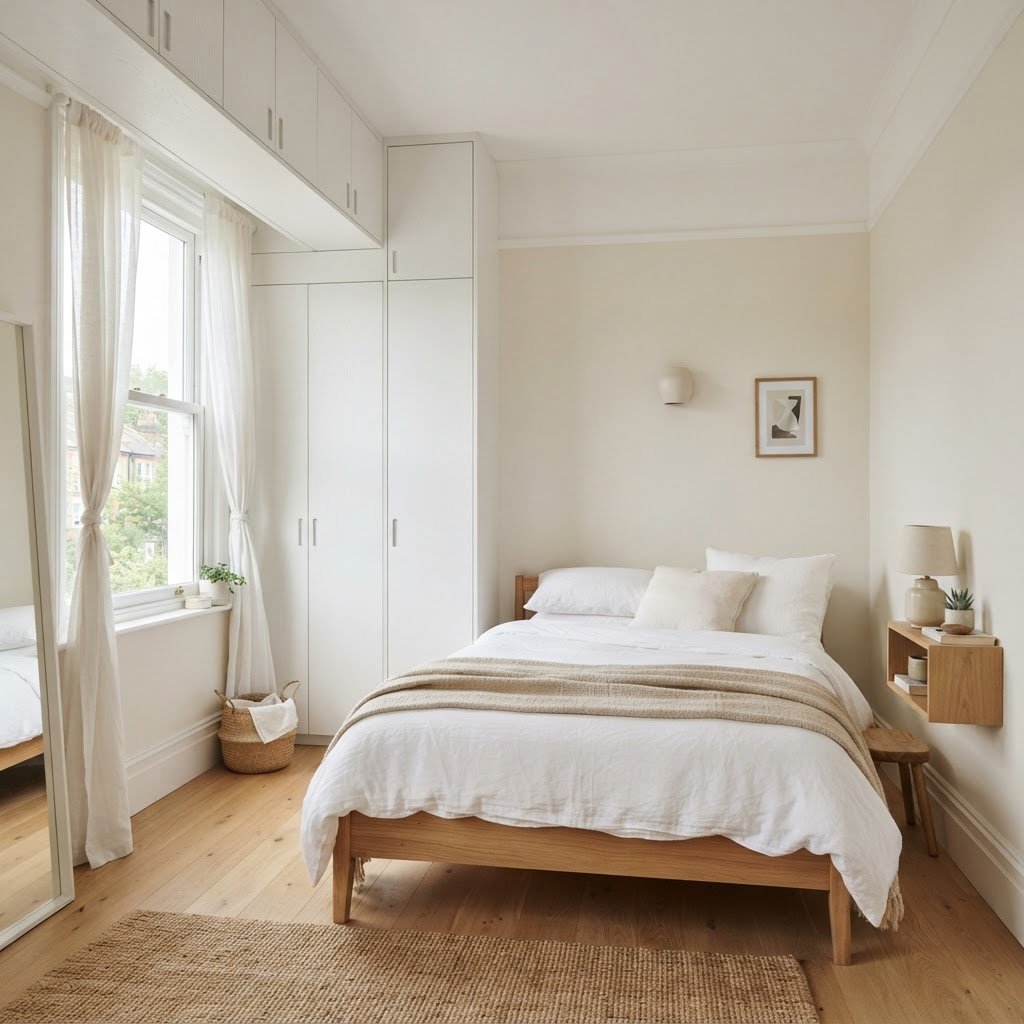
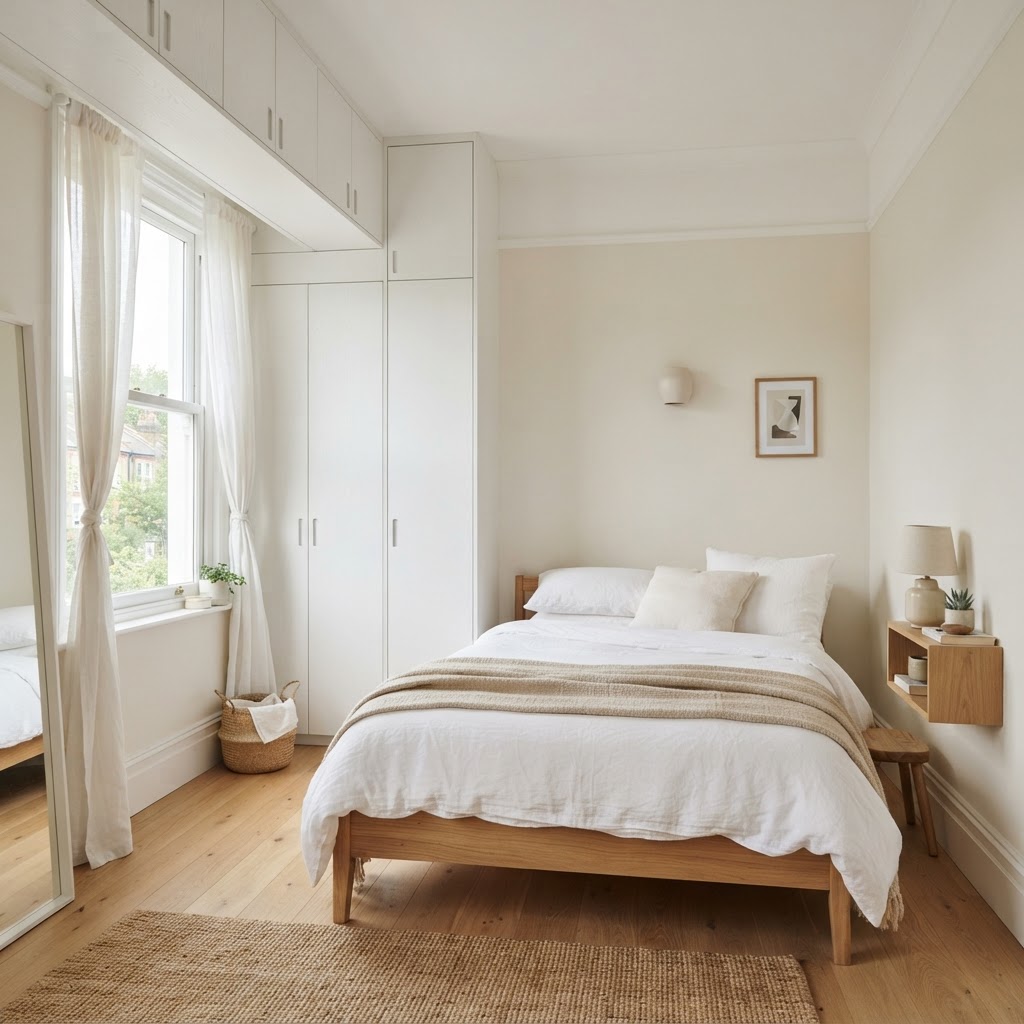
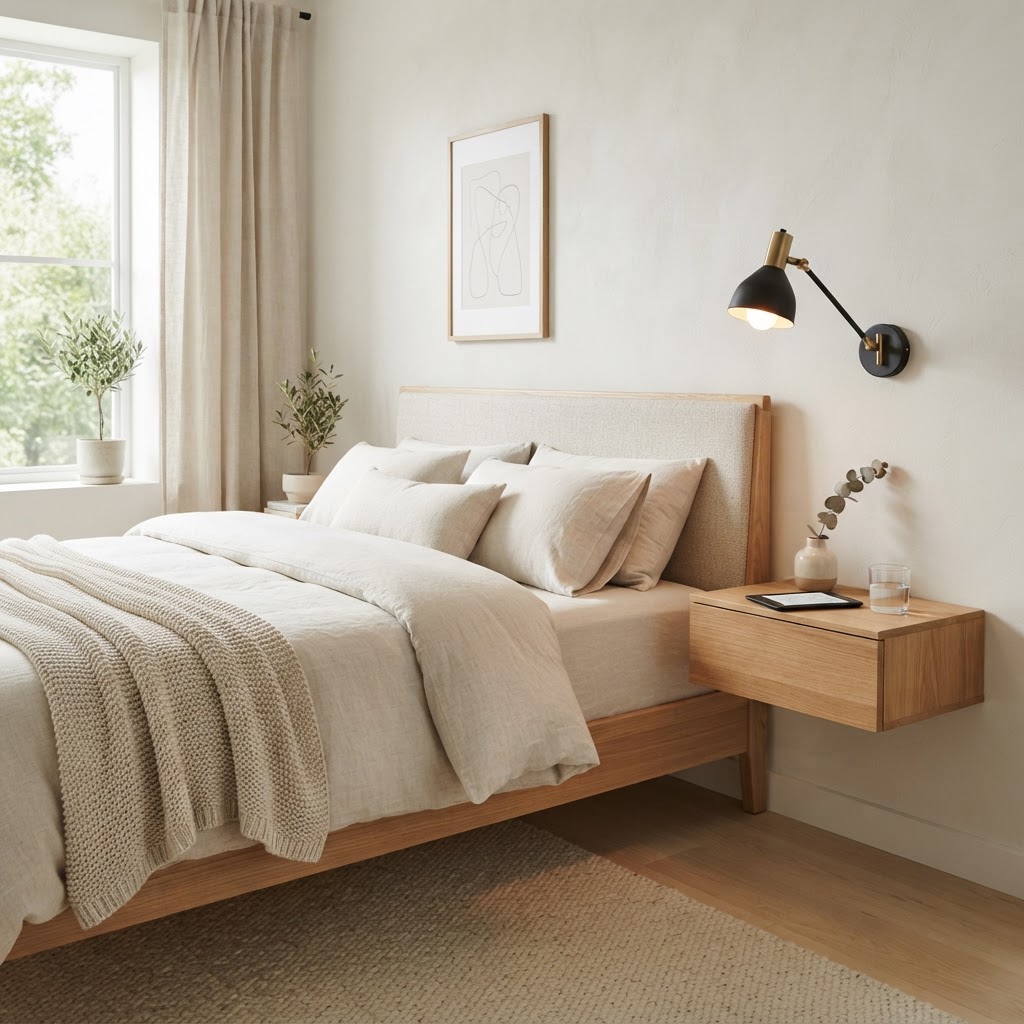
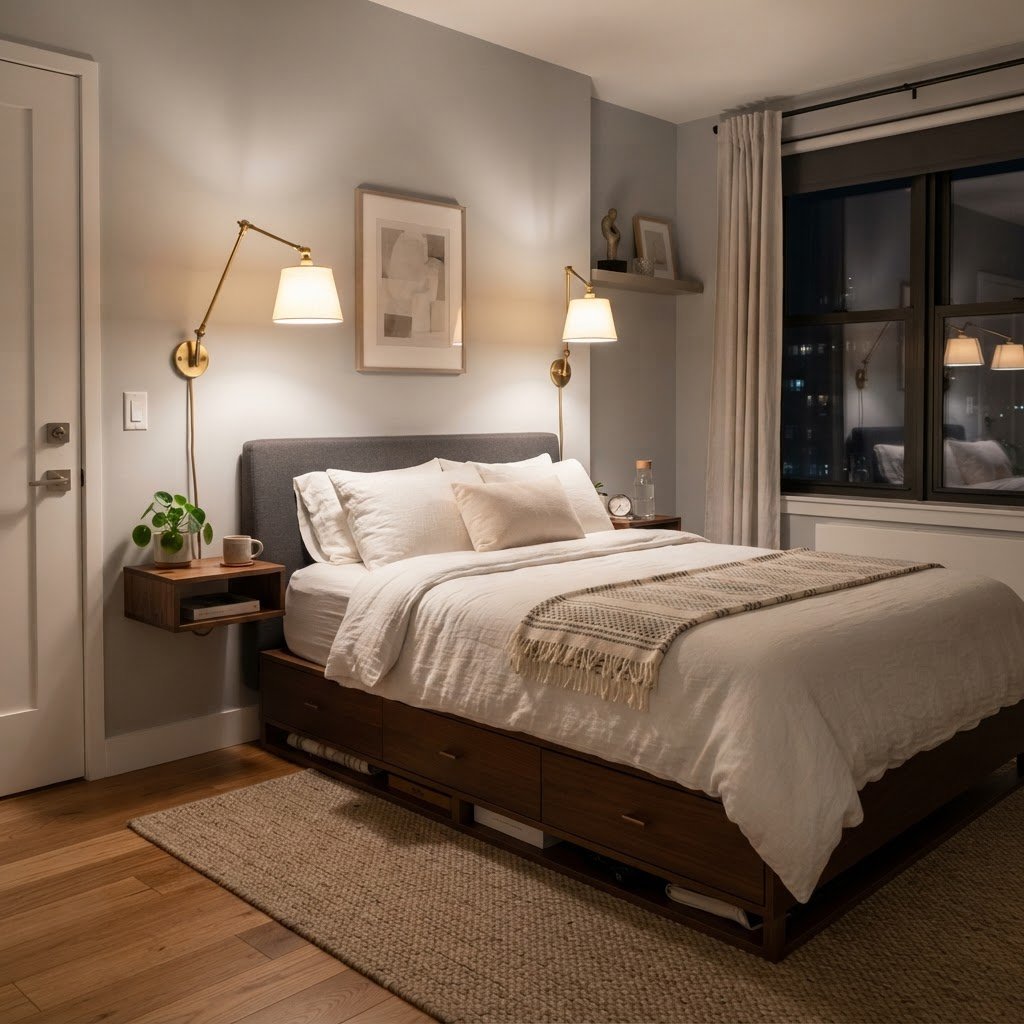
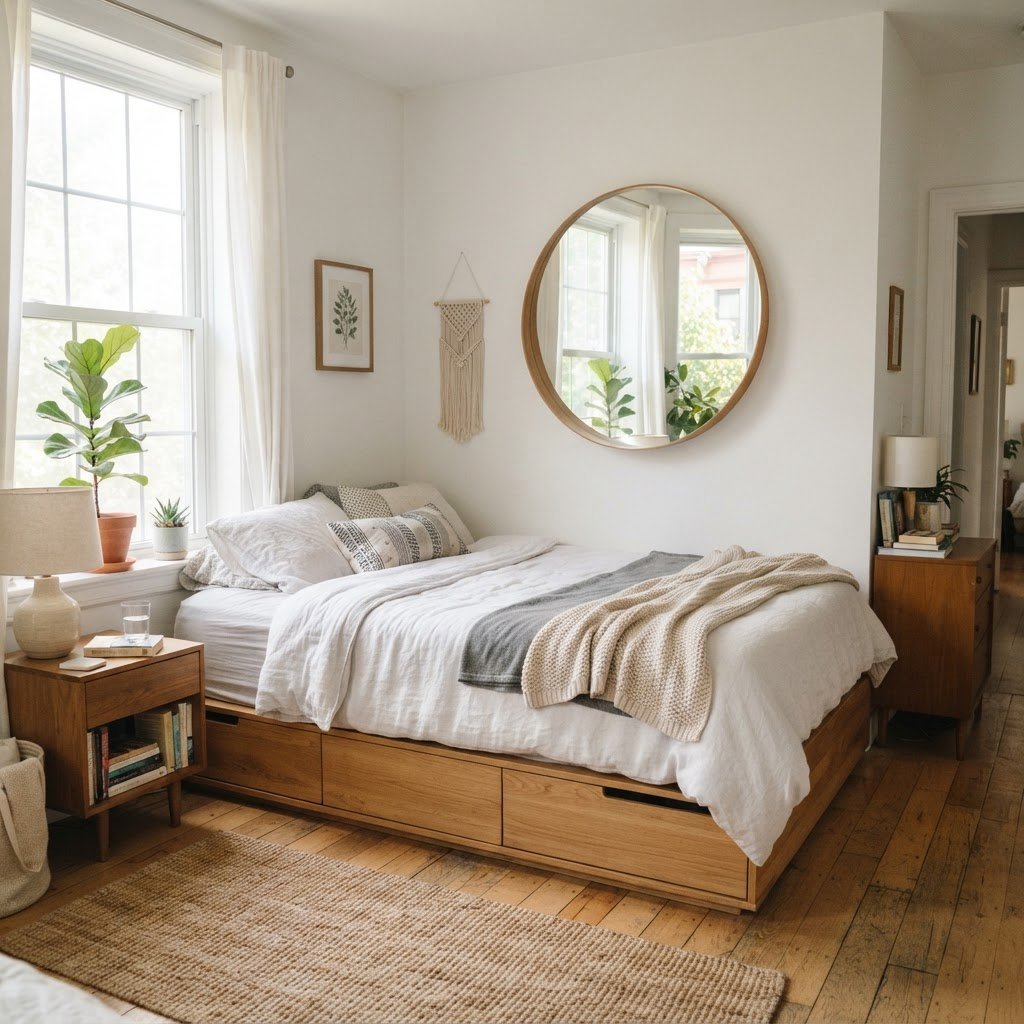
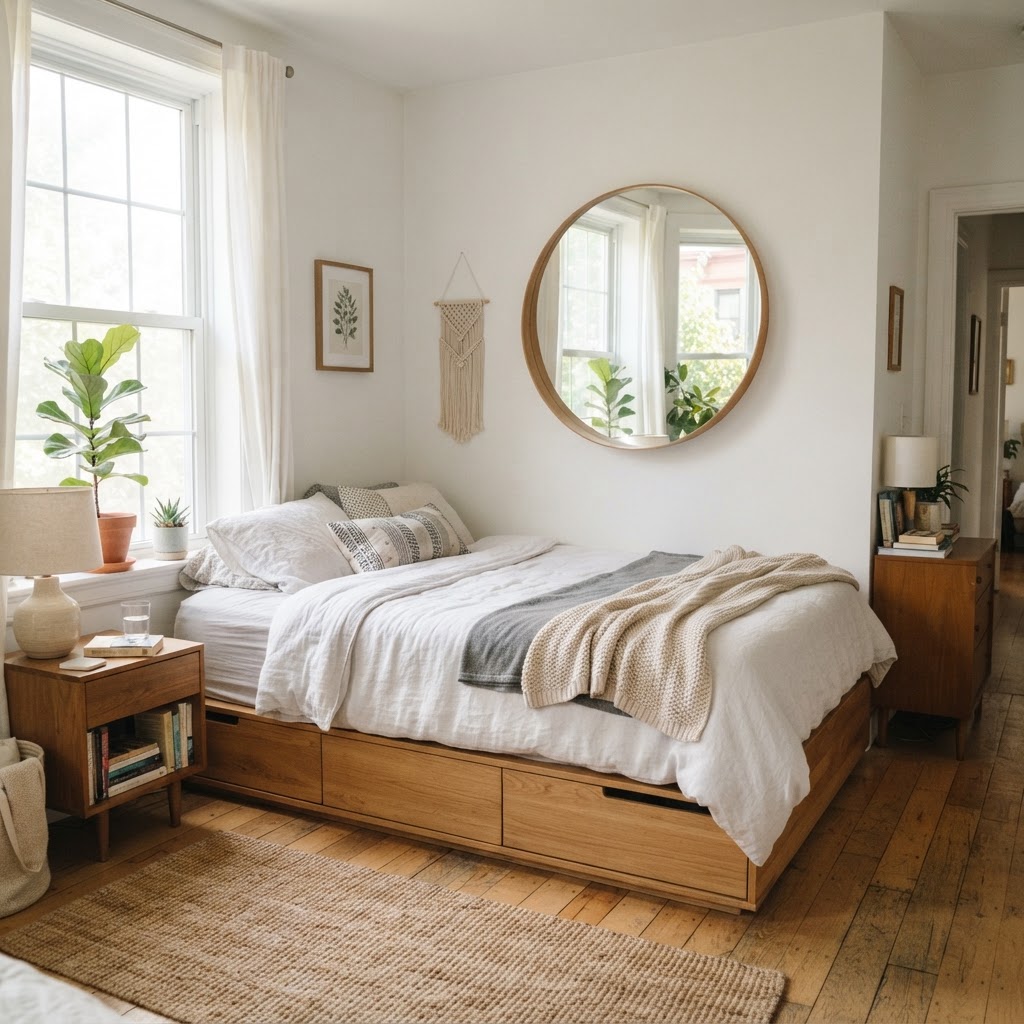
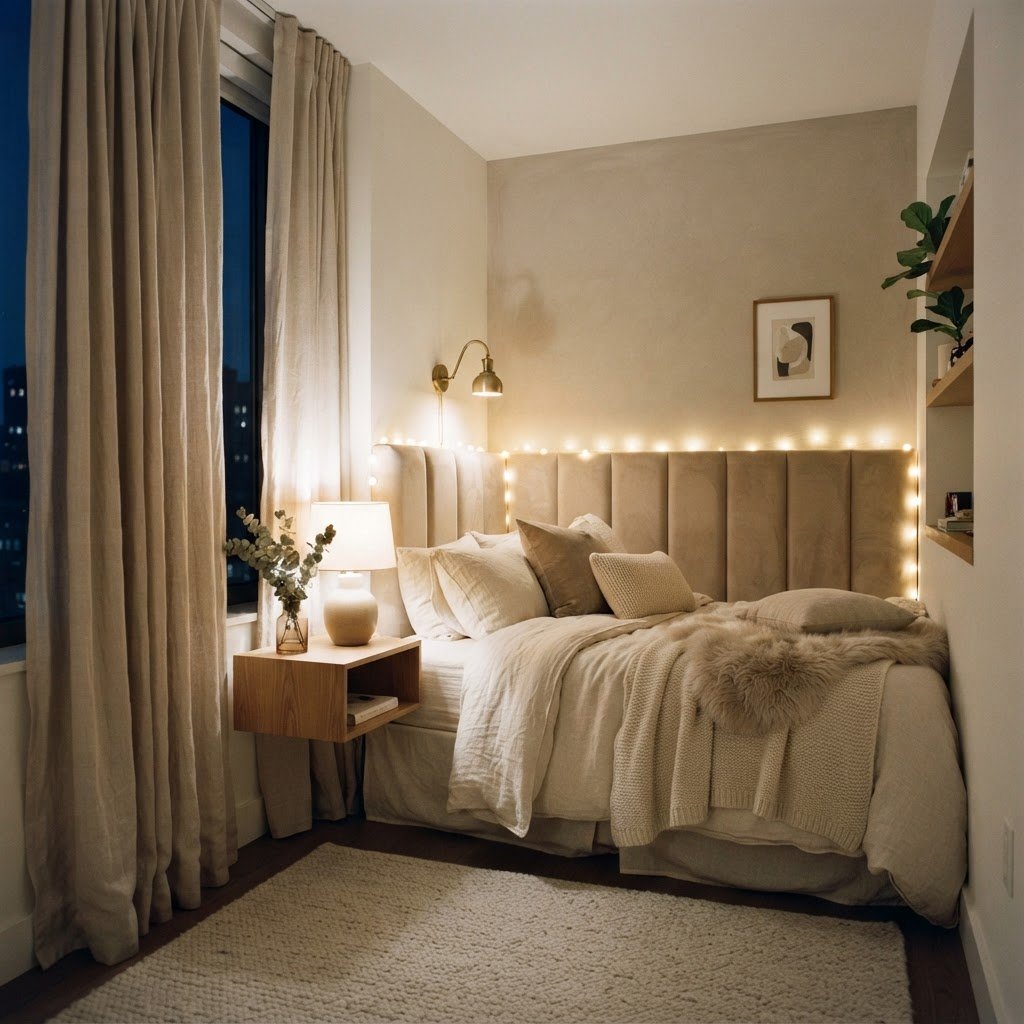
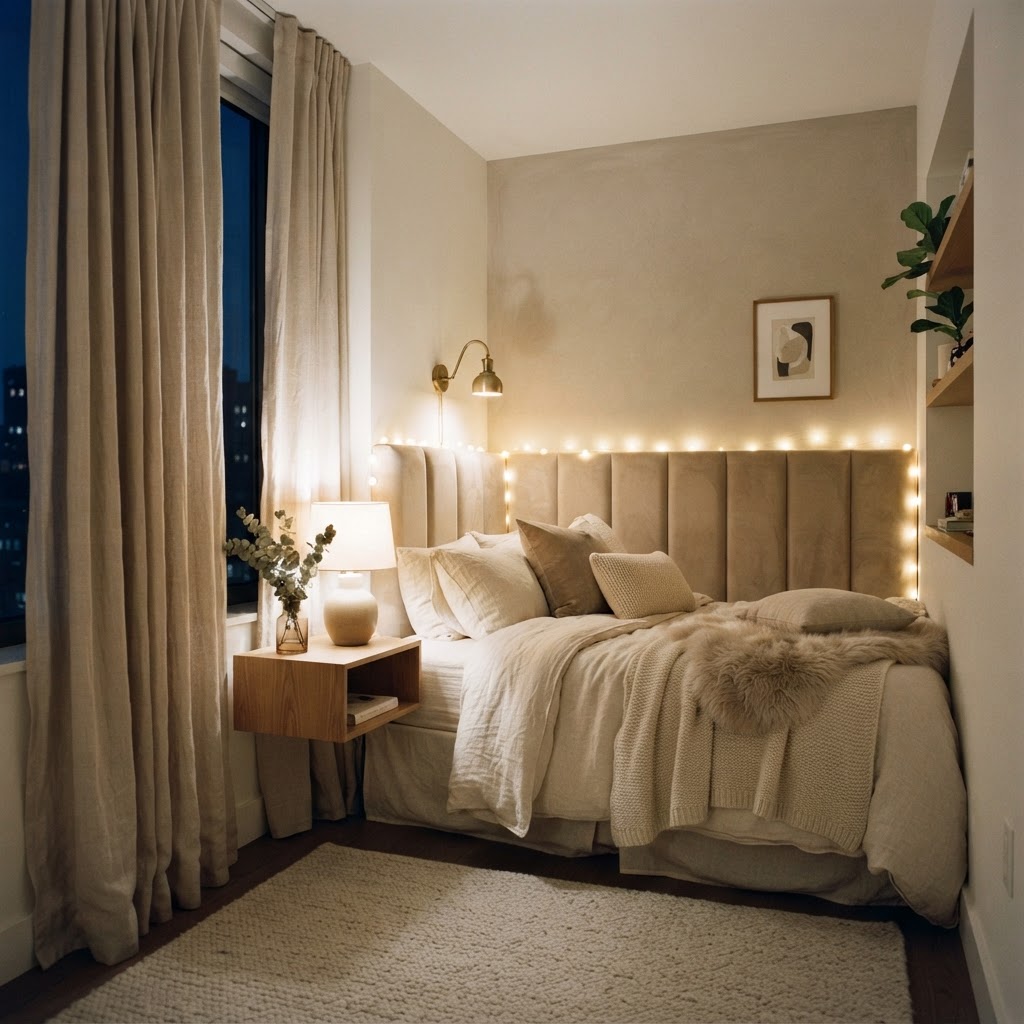
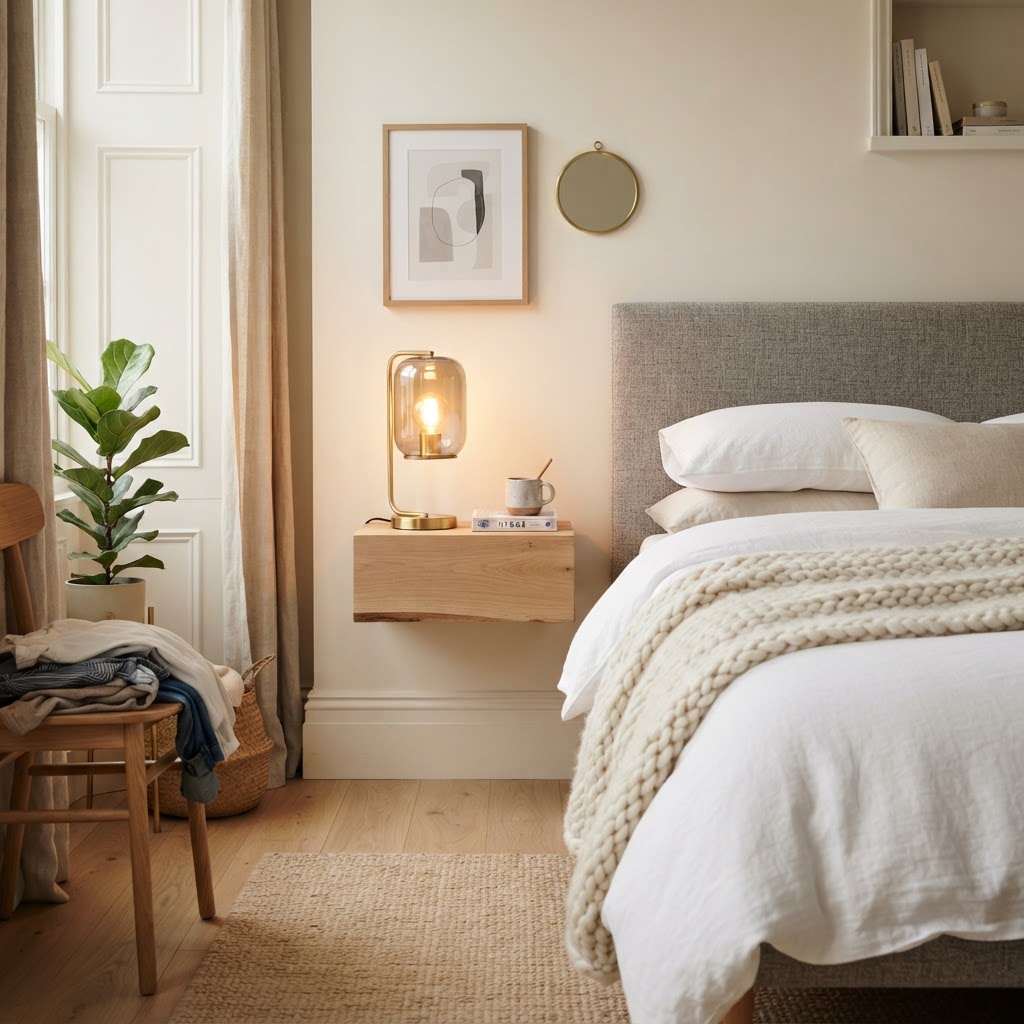
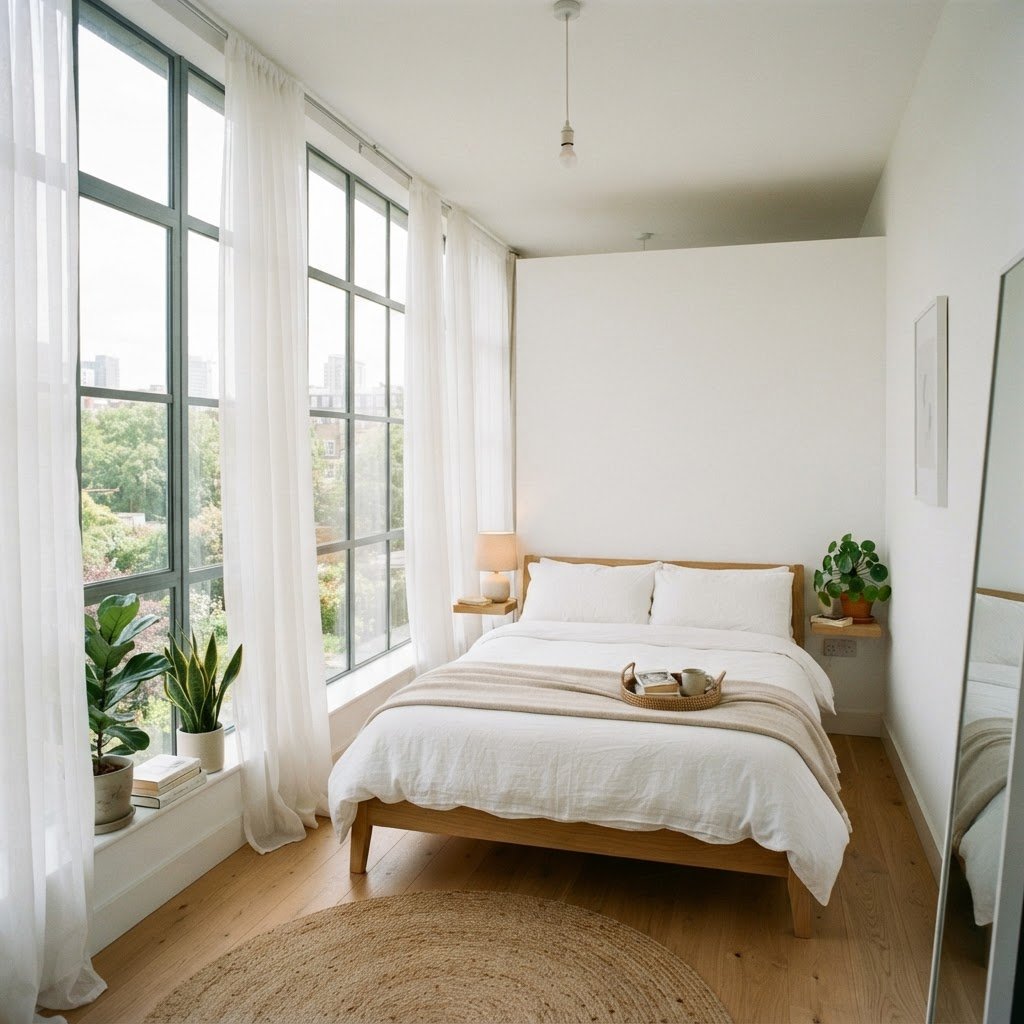
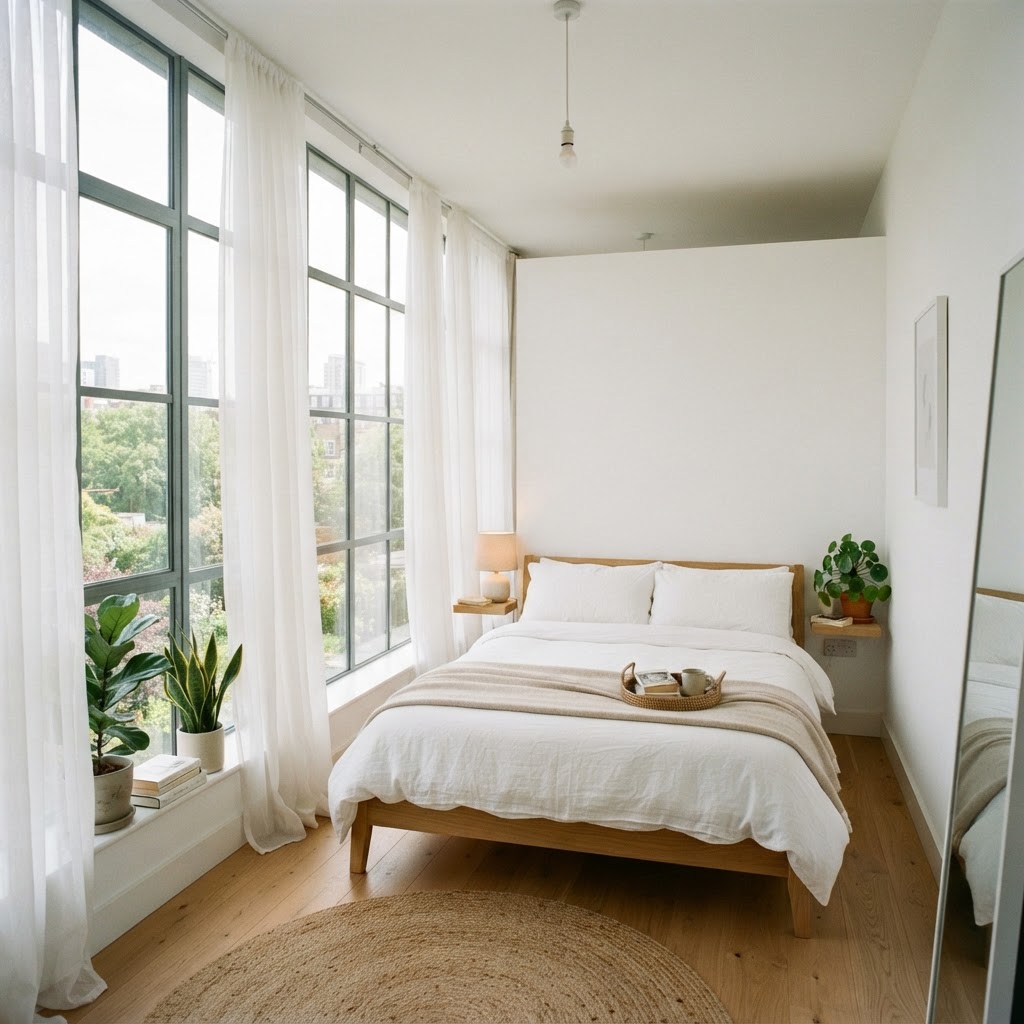
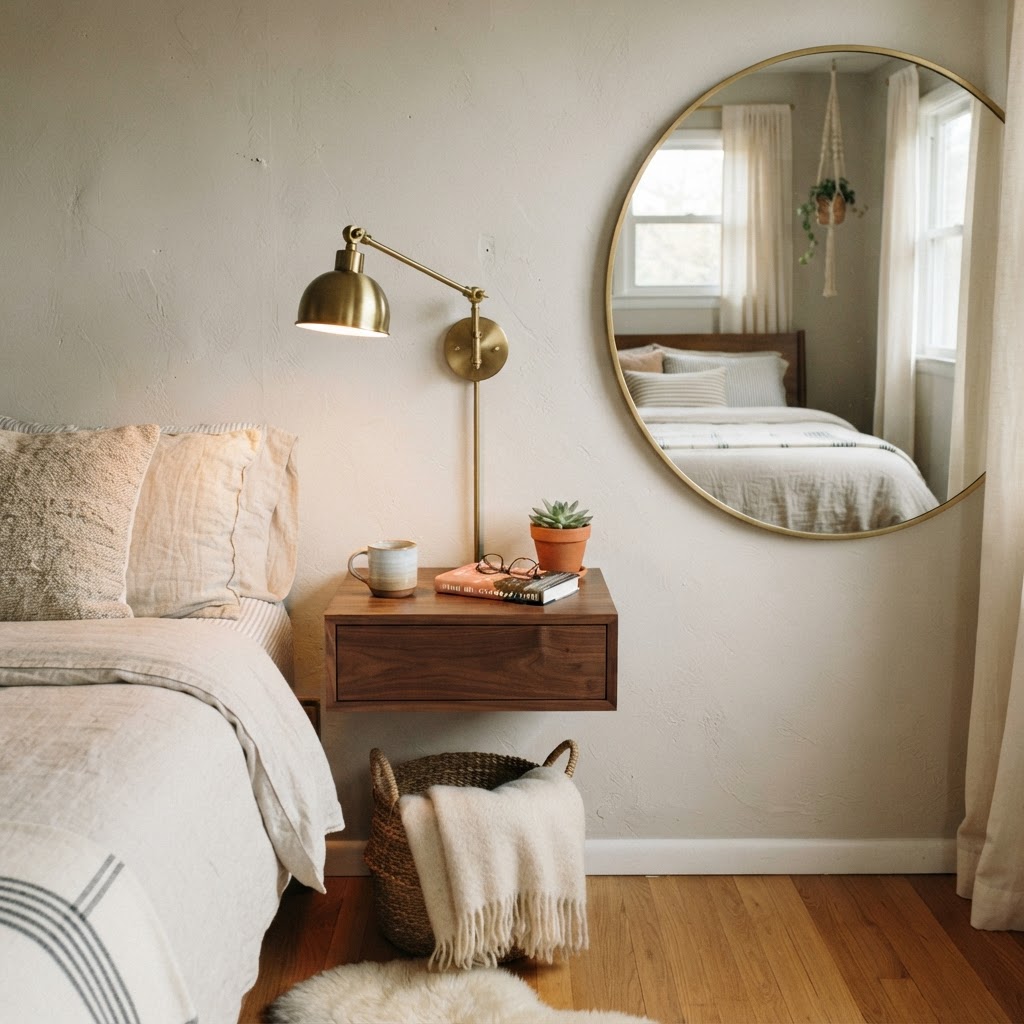
When working with limited floor space, the standard placement of a bed in the middle of the wall might not be your best bet. Consider pushing your bed into a corner to create an L-shaped sleeping zone, which frees up valuable central floor area for movement. Another genius move is using wall-mounted nightstands or floating shelves instead of traditional bedside tables, as these create an illusion of more floor space by showing more of the ground beneath them.
The Power of Multi-Functional Pieces
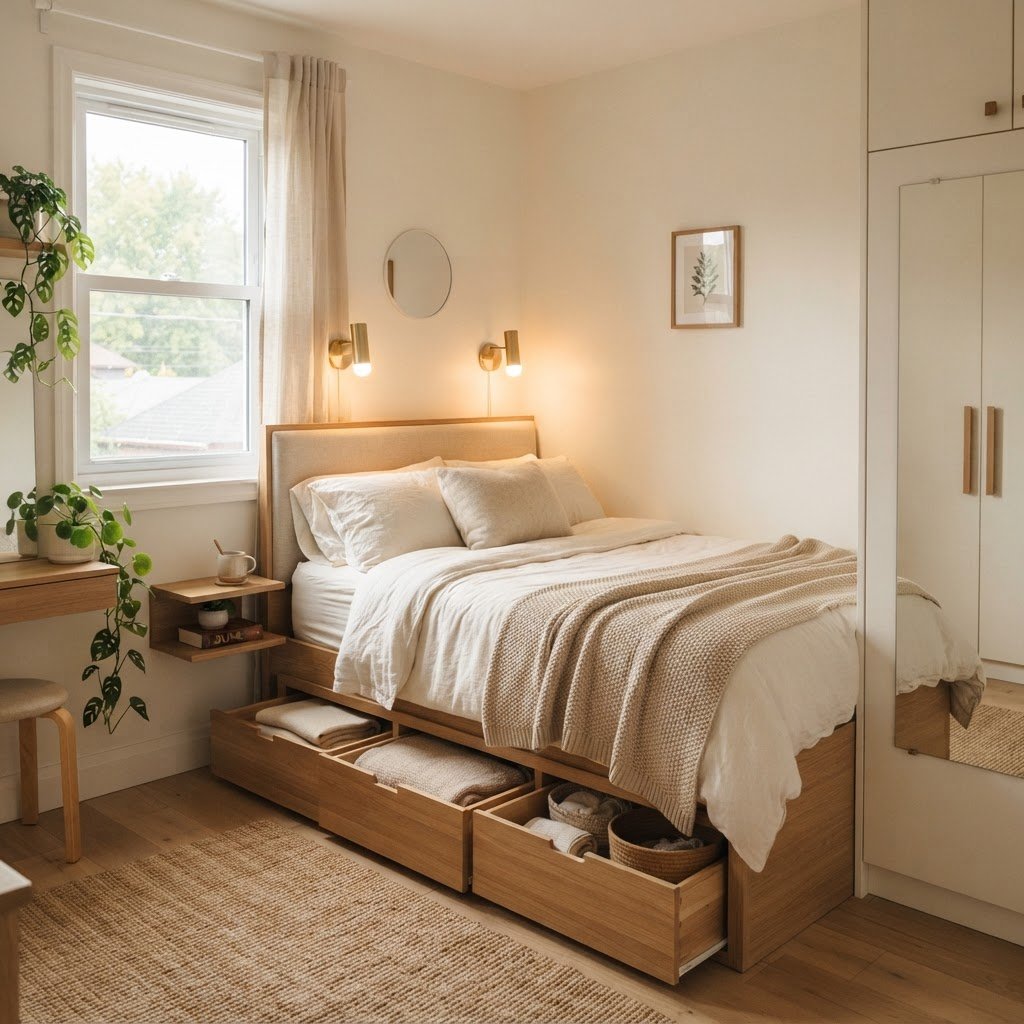
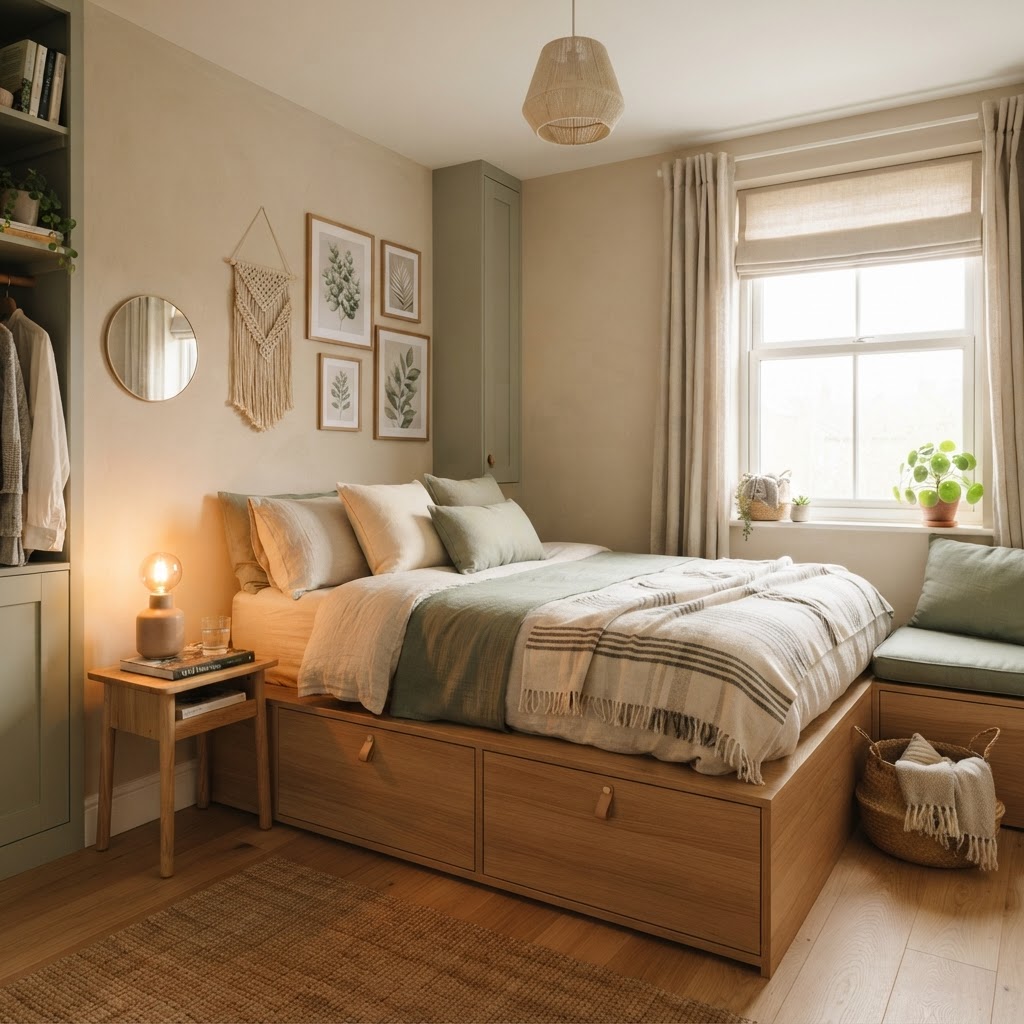
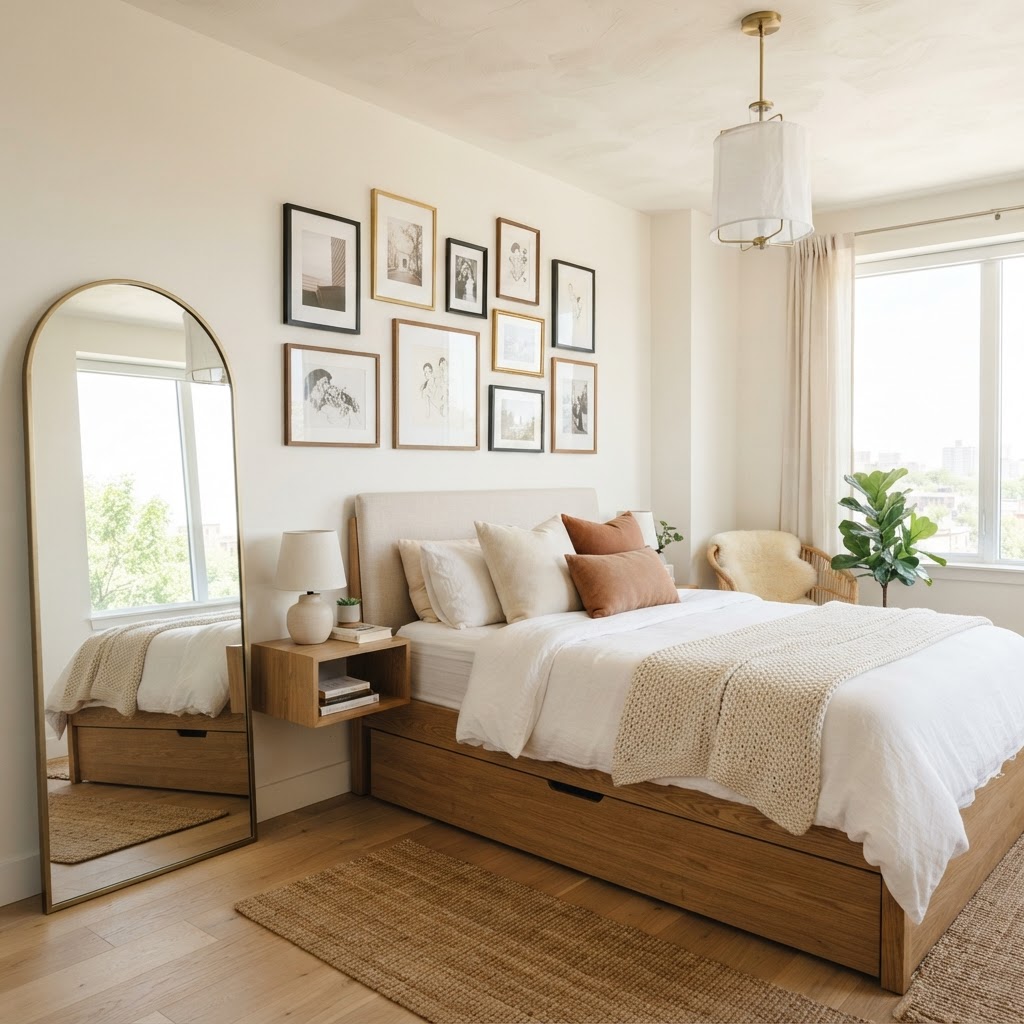
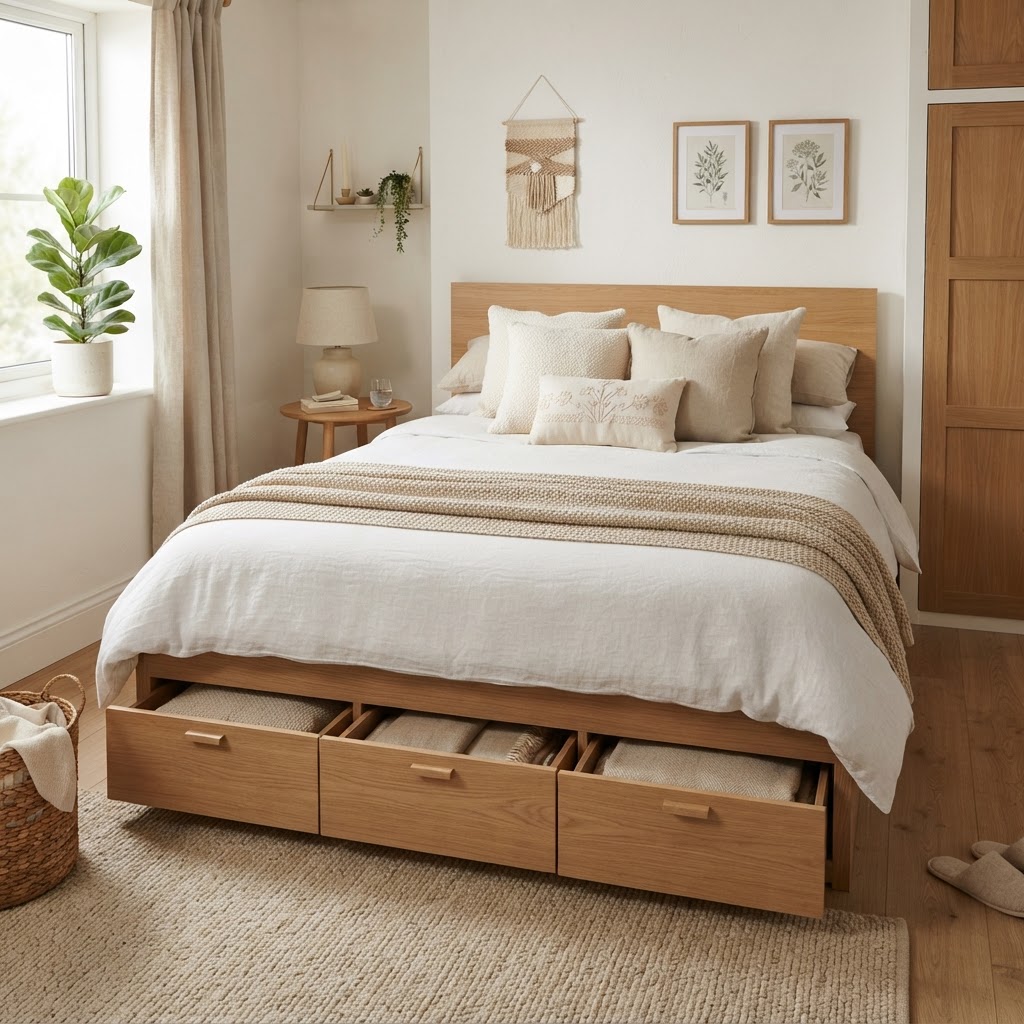
In a tiny bedroom, if a piece of furniture does not have a hidden secret, it probably shouldn’t be there. Invest in a bed frame with built-in drawers or one that lifts via hydraulics to provide deep, hidden storage for out-of-season clothing and bedding. Furthermore, opt for ottomans that double as storage chests or vanity stools that hide makeup organizers inside. These items keep your living area clear of visual clutter, which is the primary enemy of small bedroom aesthetics.
Mastering Vertical Storage Solutions
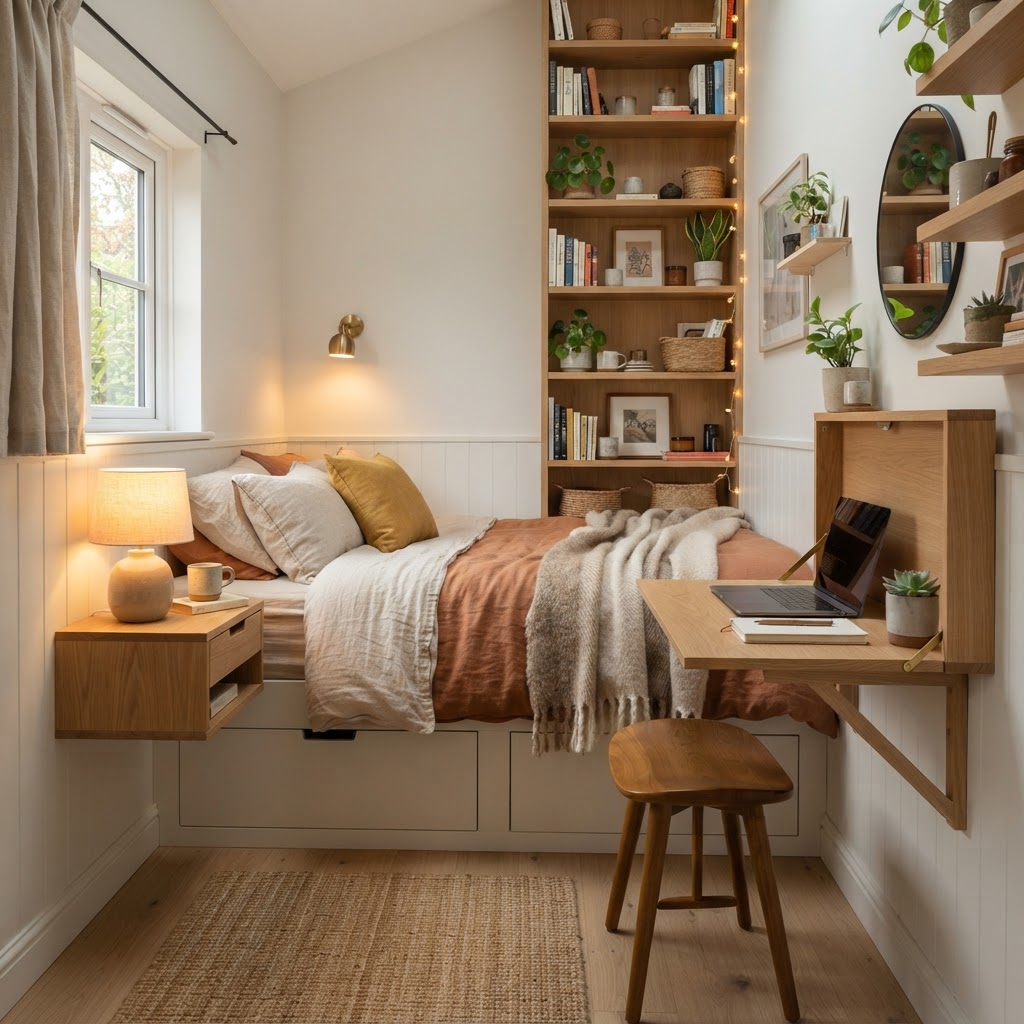
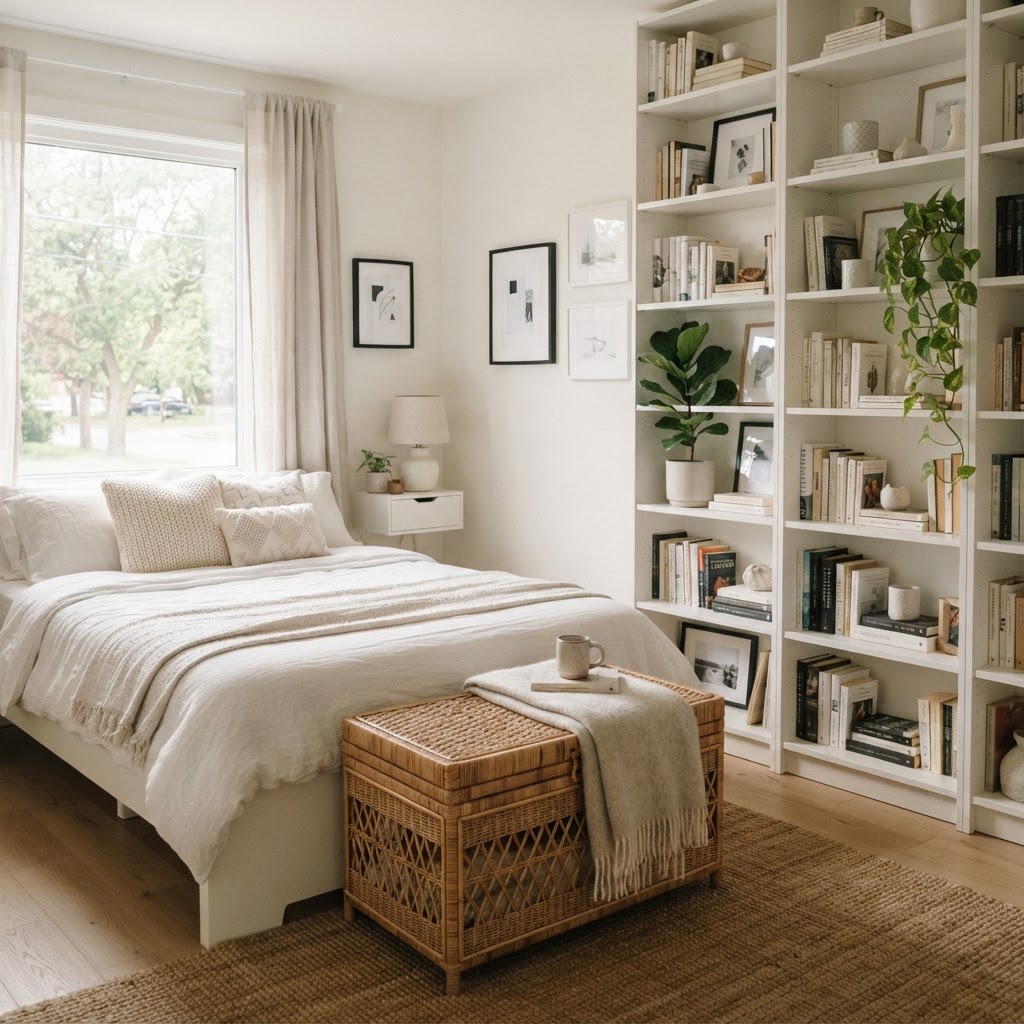
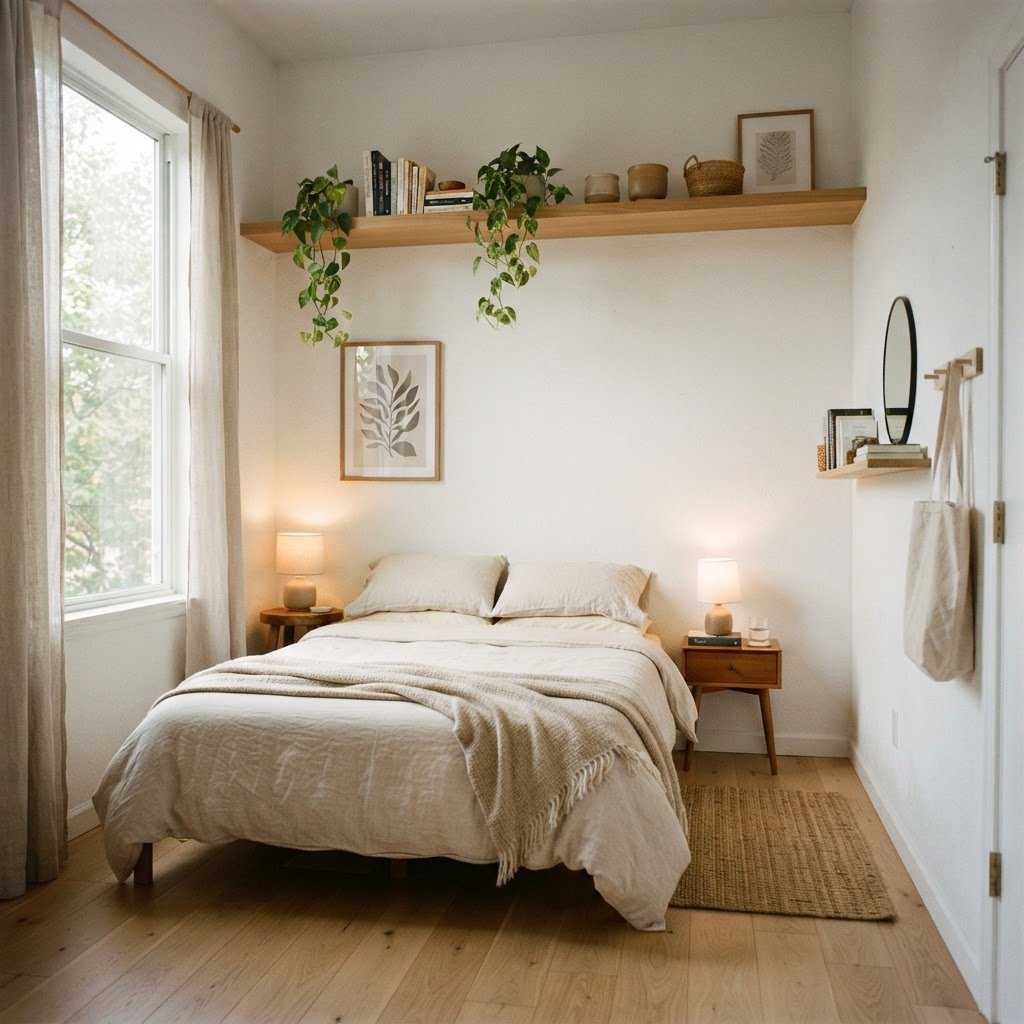
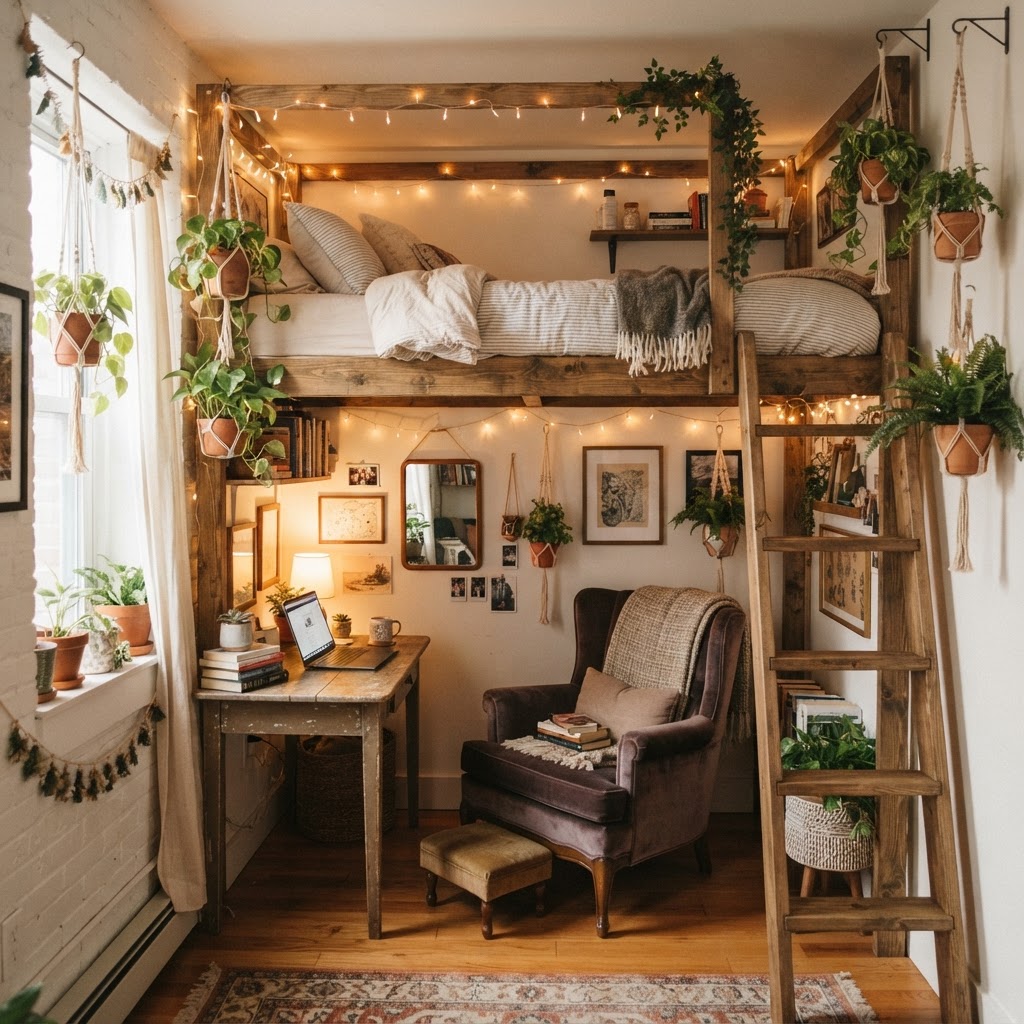
Walls are your best friends when floor space is non-existent. You should aim to bring your storage all the way to the ceiling, as this draws the eye upward and makes the room feel significantly taller. Install open shelving above your door frame or along the upper perimeter of the wall to store books, plants, or decorative boxes. This keeps high-traffic areas clear and utilizes the often-wasted space above eye level.
Creative Wall Hacks
Beyond shelving, consider using pegboards for jewelry, scarves, and accessories, which keeps them organized and accessible without needing a bulky dresser. You can also utilize wall-mounted coat racks for hoodies or bags that would otherwise end up in a heap on your chair. By treating your walls as vertical storage units, you keep the floor footprint as minimal as possible.
Lighting Techniques for Room Expansion
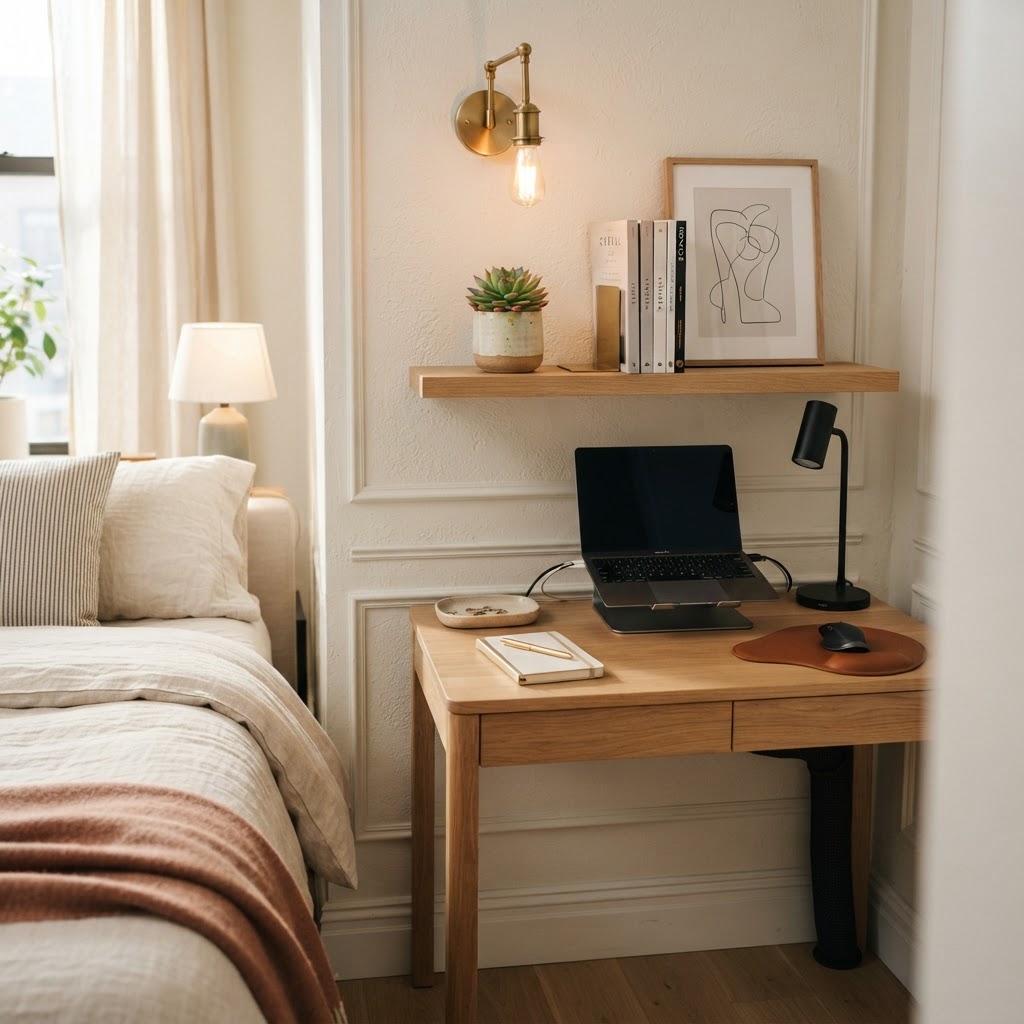
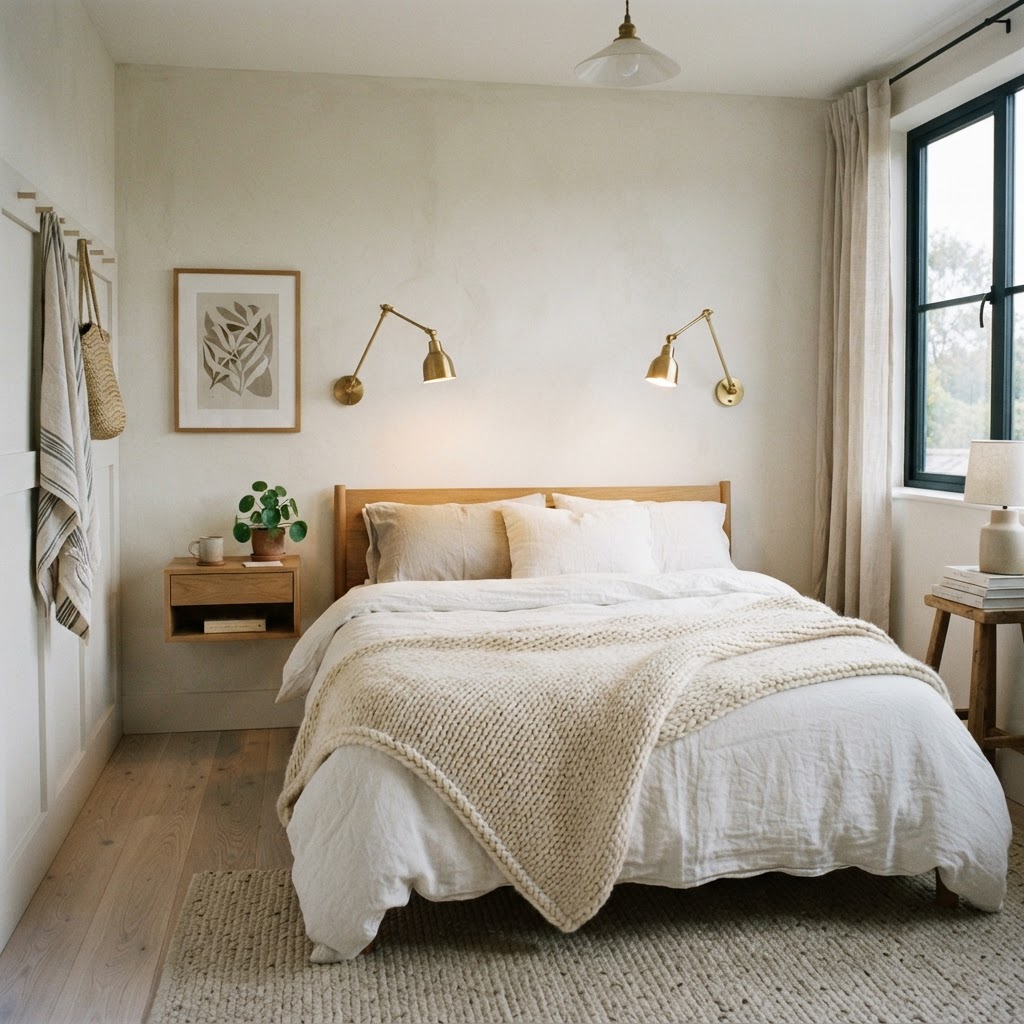
Dark corners make a room feel cramped and claustrophobic. You want to layer your lighting to ensure every corner is illuminated, which creates a sense of depth. Instead of relying on a single bulky floor lamp, utilize wall sconces that free up surface space. If you are renting, look for plug-in sconces that do not require any hardwiring but offer the same high-end, space-saving aesthetic.
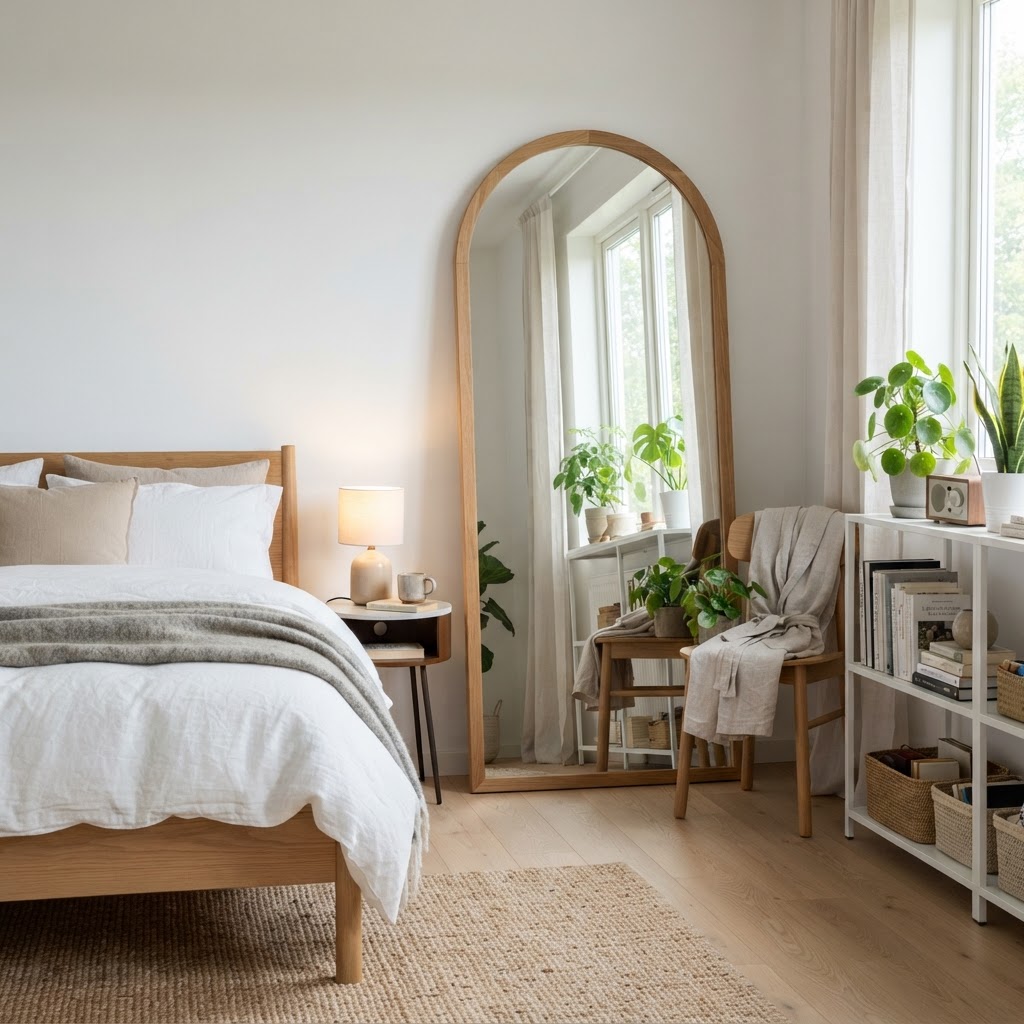
Additionally, mirrors are an essential component of tiny bedroom apartment ideas because they bounce light around the room. A large floor mirror or a wall covered in mirror tiles can trick the brain into perceiving more depth. Placing a mirror opposite a window will reflect the outdoor light, brightening up the room significantly during the day.
Streamlining Your Color Palette
While personal style is important, color choice plays a massive role in how spacious a room feels. Lighter, neutral colors such as soft whites, creams, light grays, and pale pastels reflect light and make walls feel like they are receding. If you love color, try keeping the walls neutral and incorporating your personality through bedding, art, and curtains. This maintains a clean base while preventing the room from feeling closed in.
Curating Your Closet and Essentials
Sometimes, the problem isn’t the room size, but the volume of items we keep. To maximize a small space, you must be ruthless with decluttering. Utilize vacuum-seal bags to condense winter duvets and thick coats, which significantly reduces the space they take up in your closet. Use tiered hangers to double your hanging capacity and consider an over-the-door shoe organizer for items beyond just footwear, such as electronics or toiletries.
Open Closet Systems
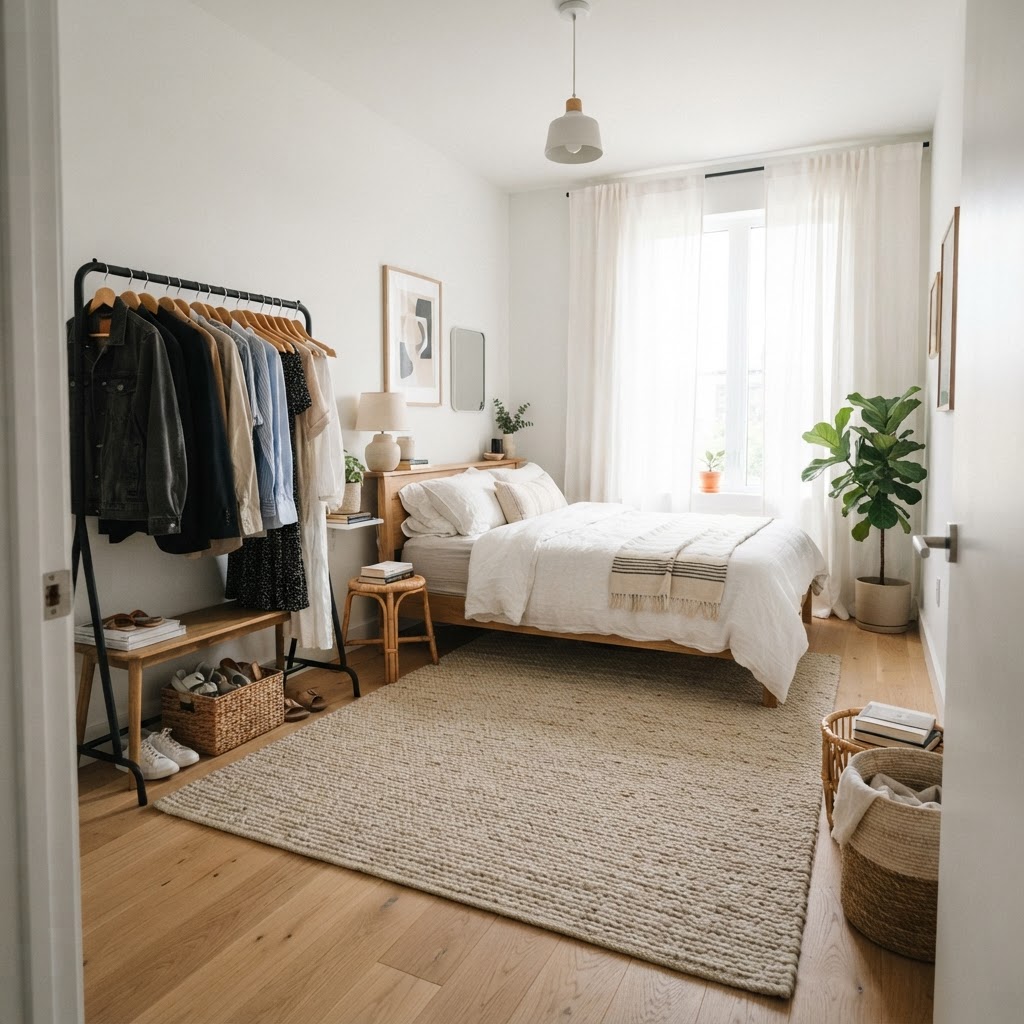
If your apartment lacks a proper closet, create a minimalist open-wardrobe setup with a chic rolling rack and a few matching baskets. This forces you to stay organized and curate a capsule wardrobe, which prevents the “messy bedroom” vibe that occurs when you have too much clothing packed into an overflowing, hidden closet space.
Smart Textiles and Decor Choices
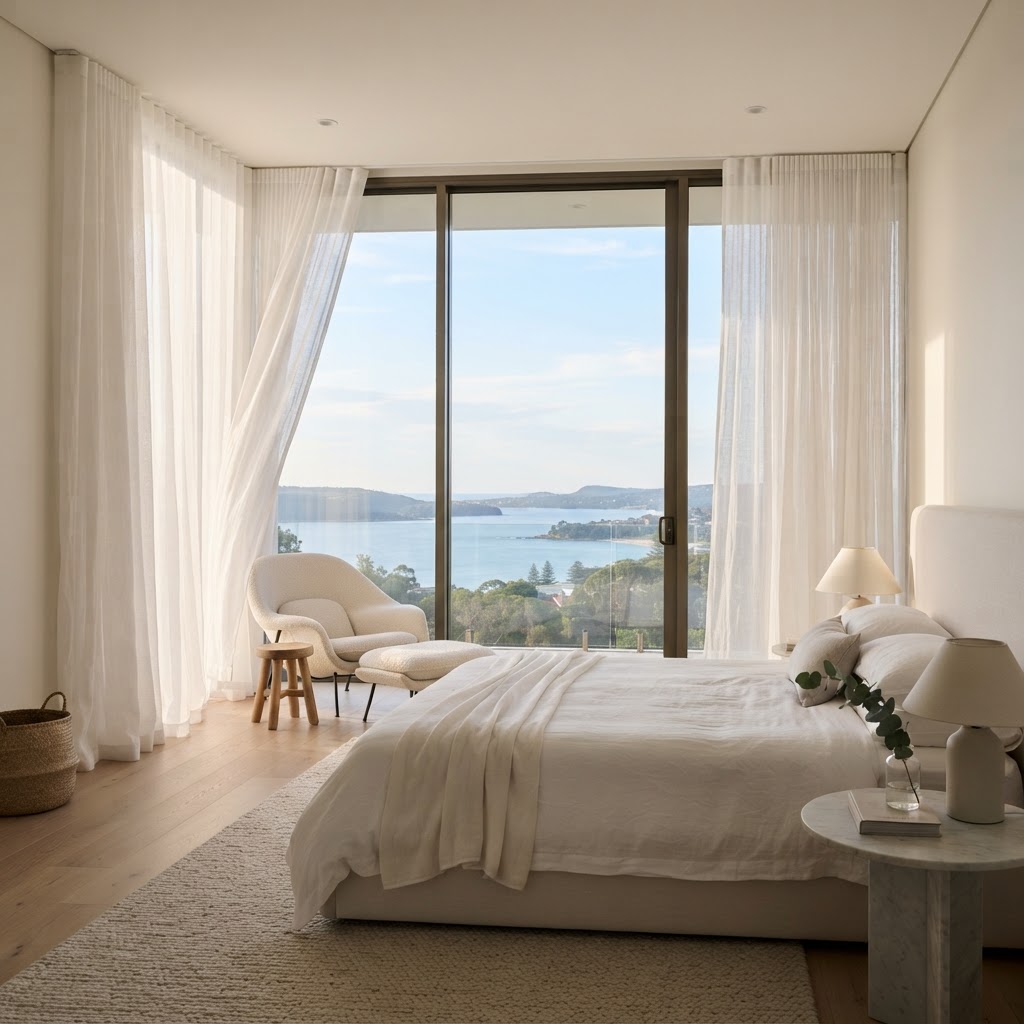
Heavy, dark drapes can make a tiny bedroom feel like a bunker. Opt for light, breezy fabrics like linen or sheer cotton that allow natural light to filter through while still providing necessary privacy. When it comes to bedding, avoid patterns that are too busy or chaotic. Simple textures and solid colors tend to create a more harmonious, airy environment that feels larger and more peaceful.
The Area Rug Trick
Do not be afraid of using a rug in a small room. While it seems counterintuitive, a large rug can actually anchor the room and make it feel more cohesive than several tiny mats scattered about. Just ensure the rug extends slightly under the bed to define the sleeping zone without creating a choppy look that breaks up the floor continuity.
Designing for Daily Functionality
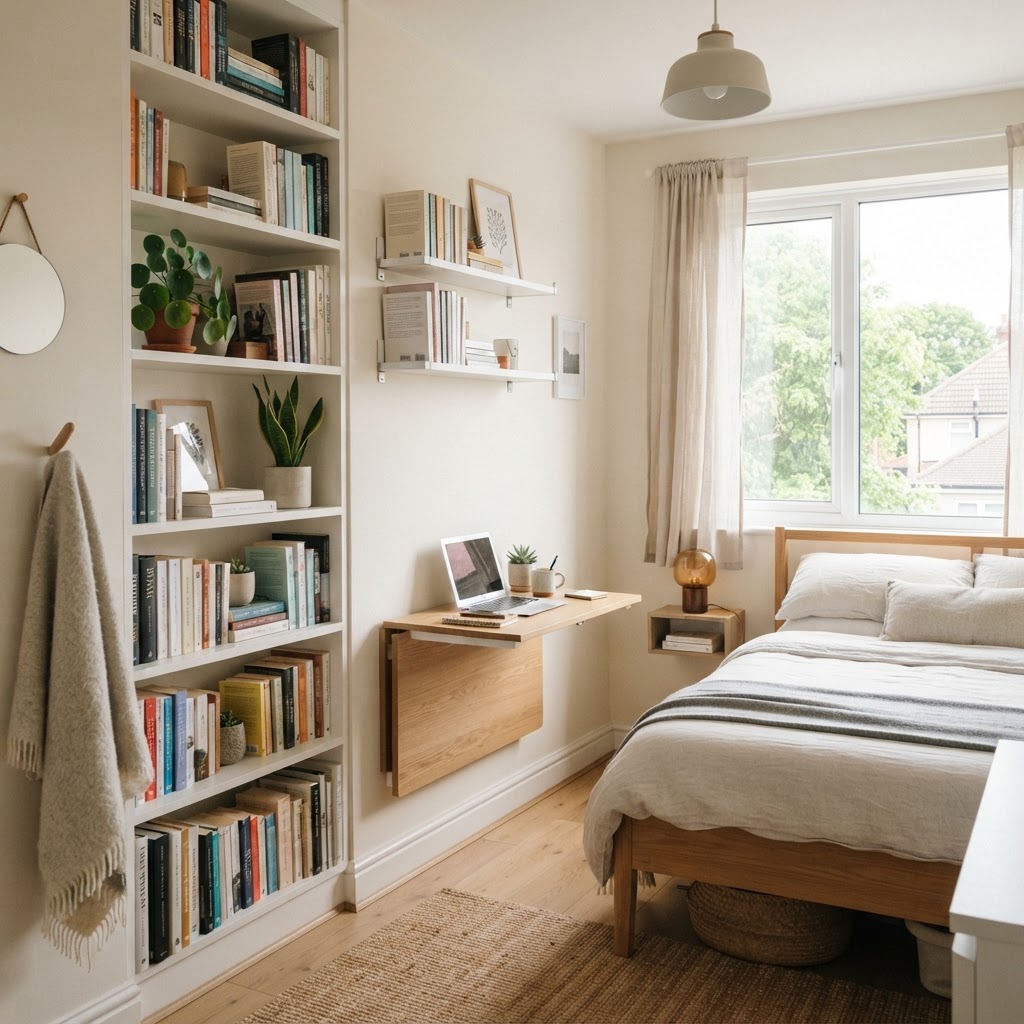
Every day, you should assess how your room serves you. If you work from home, look for a drop-leaf desk that folds flat against the wall when you are not working. This is a game-changer for tiny apartments. Additionally, ensure that your power cables and chargers are managed with cord organizers. Visible tangled cords are one of the fastest ways to make a room feel small, chaotic, and stressful.
Conclusion
Maximizing a tiny space is truly an art form that balances aesthetics with extreme utility. By incorporating these 30 genius tiny bedroom apartment ideas—from utilizing vertical wall space to choosing multi-functional furniture and using light effectively—you can transform your sleeping quarters into a functional, beautiful retreat. Start small by decluttering your surfaces or adding one mirror to test the difference it makes. Remember, the goal is to create a space that breathes and supports your lifestyle rather than feeling confined by your walls. Which of these ideas will you implement this weekend to refresh your space?
Living in a small bedroom requires balancing multifunctional furniture with vertical storage to maximize limited square footage while maintaining a peaceful aesthetic. By utilizing wall-mounted lighting, light-reflecting surfaces, and intentional zoning, you can effectively transform a cramped apartment or studio into an organized, relaxing sanctuary that promotes better sleep and rejuvenation.
The Power of Color and Light
One of the most effective small bedroom ideas involves manipulating light and color to create the illusion of depth by using light-reflective palettes. Experts recommend a monochromatic color scheme using shades like ‘Swiss Coffee’ white or soft ‘Agreeable Gray’ to blur room boundaries, which makes walls appear to recede and increases perceived volume by up to 15%. To enhance this effect, prioritize matte finishes for walls to reduce harsh glares, paired with semi-gloss trim to subtly bounce natural light into darker corners. You should avoid dark, saturated accent walls that absorb light, as they visually shrink a bedroom; instead, introduce color through low-profile textiles.
Lighting Strategies for Small Rooms
Lighting should prioritize verticality by eliminating bulky floor lamps, which typically occupy two square feet of precious floor space. Instead, integrate wall-mounted sconces with plug-in cords or hardwired bedside lights to keep nightstands completely clear for essential items. A layered lighting approach—combining 3000K warm-temperature ambient overhead lights with directed 2700K task lighting—creates a cozy, ‘hotel-style’ atmosphere. Research indicates that warm, dimmable lighting improves sleep quality by signaling the brain’s circadian rhythm to produce melatonin, making these lighting choices both functional for space and health.
Maximizing Vertical Storage Solutions
When floor space is limited, your best asset is your wall height, which effectively doubles your storage capacity without increasing the furniture footprint. Installing floor-to-ceiling shelving units allows you to draw the eye upward, a classic interior design technique that makes ceilings feel higher and rooms feel grander. You should target the top 12 inches of your wall space for seasonal storage bins, leaving lower levels for frequently accessed items like books or electronics.
Storage Solution
Benefit
Best Use Case
Floating Shelves
Adds storage without floor obstruction
Books, decor, small plants
Wall-Mounted Desk
Folds away to save 4-6 square feet
Remote work or vanity space
Ceiling-Height Units
Maximizes dead air space
Seasonal clothes, bulky linens
Creative Wall-Mounted Options
Consider floating shelves or wall-mounted desks that can fold away when not in use. This approach saves space while ensuring that every item in your room serves a purpose. By keeping your surfaces clean, you inherently reduce stress and create a more relaxing environment. A wall-mounted desk can often support up to 50 pounds, proving that you don’t need a heavy permanent piece to maintain high functionality in a studio layout.
Choosing Multifunctional Furniture
In a tiny apartment, every piece of furniture must serve at least two purposes to justify its presence in a cramped bedroom. Beds with integrated hydraulic lifts or under-bed storage drawers are the most efficient investments, providing up to 20 cubic feet of storage space that otherwise sits idle. When selecting these pieces, prioritize designs with raised, slim legs; seeing the floor underneath the bed creates a ‘floating’ visual effect that prevents the room from feeling heavy or cramped.
Ottomans and Nested Tables
Look for ottomans that double as storage chests or nested side tables that can be stacked when extra room is needed. Multifunctional pieces are the backbone of successful small bedroom ideas because they provide utility without visual bulk. Choose items with slim legs; seeing the floor underneath furniture can make a room feel larger and more open. If your floor space is less than 80 square feet, stick to furniture with rounded edges to improve flow and prevent hip-bumping in tight corridors.
Mirrors and Reflective Surfaces
Mirrors are a classic designer trick for a reason, effectively doubling the perceived light and space in a small bedroom. Placing a large floor mirror or a wall of mirrors creates a reflection that tricks the eye into thinking the room is twice its actual size. For the best effect, place your mirror directly opposite a window so it bounces natural light throughout the space. If a wall mirror isn’t possible, consider mirrored closet doors; this simple upgrade can hide storage while acting as a seamless light-reflector across the entire bedroom wall.
Curating Your Bedding for Comfort
Your bed is the center of the room, so treat it as the focal point by using luxury-focused, space-efficient textiles. Even in a small space, high-quality, plush bedding can make the room feel luxurious without taking up physical room space. Layering textures—think a soft wool throw, linen sheets, and silk pillows—adds visual interest. Avoid heavy, patterned comforters that can make a room feel busy. Stick to solid, neutral colors that match your wall palette; a tidy, well-made bed is the simplest way to make a bedroom look professionally designed and instantly more relaxing.
Bedding Material
Pros
Best Season
Linen
Breathable, textured, minimalist
Summer
Wool Throws
Adds warmth without bulk
Winter
Silk/Satin
Low friction, smooth appearance
All-Year
Zoning Your Tiny Sanctuary
Even if your bedroom is just a corner of a studio apartment, you can create a sense of “zones” that help separate living from sleeping. Use a large area rug to anchor the bed and physically separate it from your workspace or living area. This psychological boundary helps your brain separate work from rest, which is essential for relaxation and improved mental health in tight living quarters.
Privacy Curtains and Room Dividers
If you live in a studio, consider installing a ceiling-mounted curtain track to create a soft, flexible partition. A sheer, neutral-colored curtain provides visual privacy for your sleeping area while still letting light filter through to the rest of the room. It is a soft, romantic touch that adds character and depth to any small bedroom without the permanence and bulk of a bookshelf divider.
Decluttering as a Lifestyle
None of the small bedroom ideas mentioned will work if the room is filled with unnecessary items. Adopt a minimalist mindset. Before you move into a tiny space, take the time to purge clothes, books, and gadgets you no longer use. Every item in a small room should either be functional or spark joy. Follow the ‘one-in, one-out’ rule, where for every new item you bring into your bedroom, an old one must be donated or discarded, ensuring your space stays within its storage limits.
Incorporating Personal Touches
Just because a space is small does not mean it lacks personality. Use your vertical wall space for a curated gallery wall or a single piece of statement art. Adding plants can also bring life to a cramped corner, cleaning the air and providing a connection to nature that is vital for mental health. Choose low-light varieties like Snake Plants or Pothos that thrive in small spaces and don’t require sprawling floor pots.
FAQ
Q: How can I make a tiny bedroom look bigger?
Using light, monochromatic color palettes and large mirrors is the fastest way to make a tiny bedroom look bigger. These elements reflect light and create depth, preventing walls from feeling like they are closing in on you while making the space appear significantly more expansive.
Q: What is the best furniture for small bedrooms?
Multifunctional furniture is essential, such as beds with built-in storage drawers or ottomans that double as seating and storage. Opt for pieces with thin, elevated legs to expose more floor area, which reduces visual clutter and makes the room feel airier and more open.
Q: How should I light a small bedroom without floor space?
Utilize wall-mounted sconces or ceiling-suspended pendant lights instead of traditional floor lamps. These solutions free up valuable surface area on nightstands and floor space, while providing warmer, more directed ambient light that improves the room’s mood and functionality.
Q: How do I store items in a small bedroom without a closet?
Leverage vertical space by installing floor-to-ceiling shelving units and over-the-door storage organizers. By drawing the eye upward and utilizing hidden spaces under the bed, you can maximize your storage capacity without sacrificing the limited floor space available in your room.
Q: What color scheme is best for a small room?
Stick to a monochromatic palette of soft whites, light creams, or pale greys to create an expansive, airy feel. These neutral colors reflect light effectively, making the bedroom feel larger and more serene compared to darker, high-contrast color choices that can make a space feel busy and confined.
Small bedroom layouts succeed by prioritizing vertical storage, multi-functional furniture, and strategic bed placement to maximize floor area. To optimize any room shape, use light color palettes to expand visual depth, mount lighting on walls to clear surfaces, and utilize the footprint beneath your bed frame for essential hidden storage.
Rethink Your Foundation: The Bed Placement Strategy
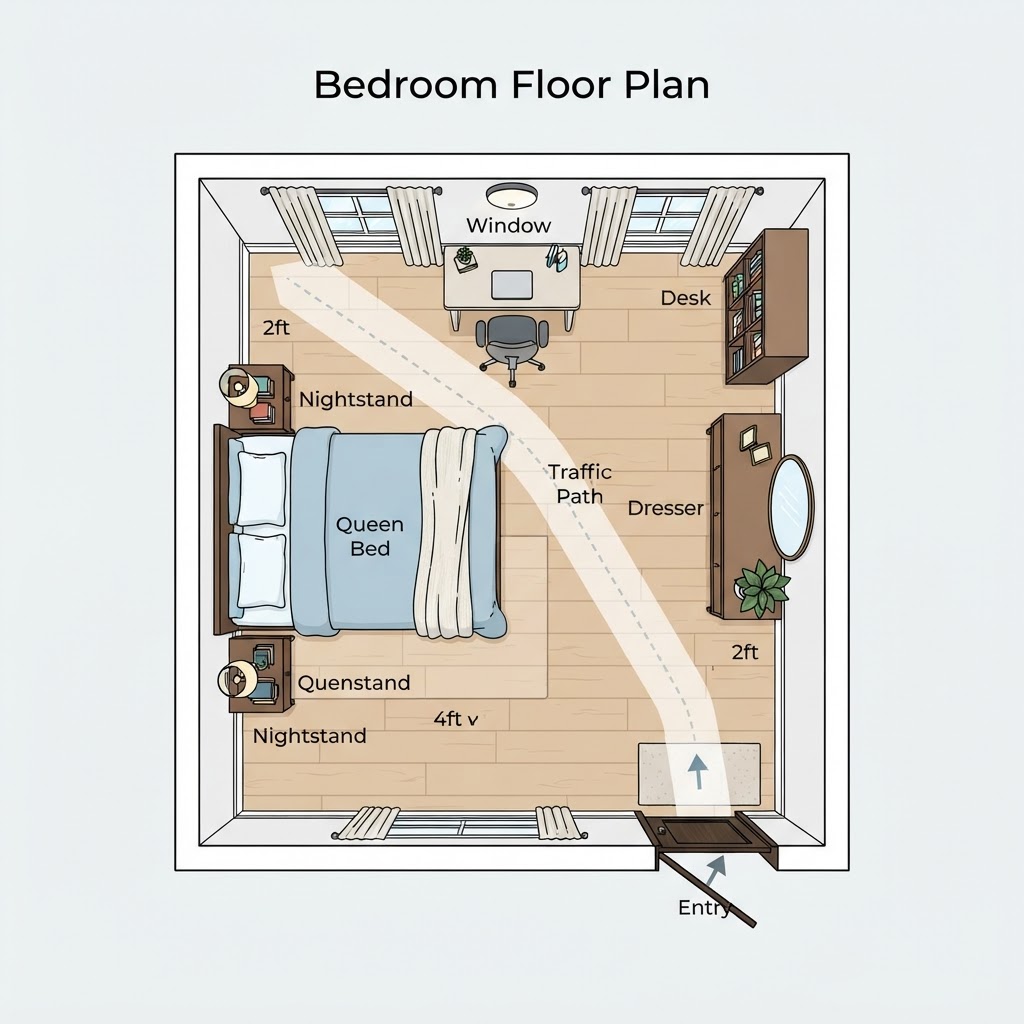
The bed is the primary anchor of your bedroom, and its placement dictates the entire flow and usability of the floor space. In a standard square bedroom measuring roughly 10×10 feet, centering the bed on the main wall provides necessary symmetry and access to both sides for nightstands. However, in narrow or rectangular rooms, pushing the bed into a corner can reclaim up to 20 square feet of floor space, which is critical for adding a desk or extra storage. When evaluating your layout, consider that placing the bed against a corner wall is 30% more efficient for room traffic flow than a center-position in rooms under 100 square feet.
Floating the Bed
Pulling the bed away from the wall to create a ‘floating’ effect can transform a cramped room into a luxury suite while creating hidden utility. This layout allows for a 12-to-18-inch gap behind the headboard, which can serve as a custom shelving unit or a makeshift walk-in closet for seasonal items. By using hydraulic lift bed frames—which can cost between $300 and $800 depending on quality—you gain access to the entire floor area beneath the mattress. This approach effectively turns a dead-zone into a highly organized storage area, adding approximately 15-20 cubic feet of additional capacity.
Optimizing Flow in Awkwardly Shaped Rooms
Irregularly shaped bedrooms with slanted ceilings or weird alcoves require a calculated, creative approach to furniture arrangement to maintain open pathways. Your primary goal is to ensure an unobstructed 30-inch-wide path from the door to the window or closet, as narrow walkways are the leading cause of “claustrophobic” room design. According to interior design standards, avoiding large furniture in direct sightlines from the entryway increases the perceived size of a room by nearly 20%. To soften the harsh impact of irregular angles, incorporate rounded furniture like circular ottomans or curved headboards, which alleviate the visual tension caused by sharp 90-degree corners in small spaces.
Dealing with Slanted Ceilings
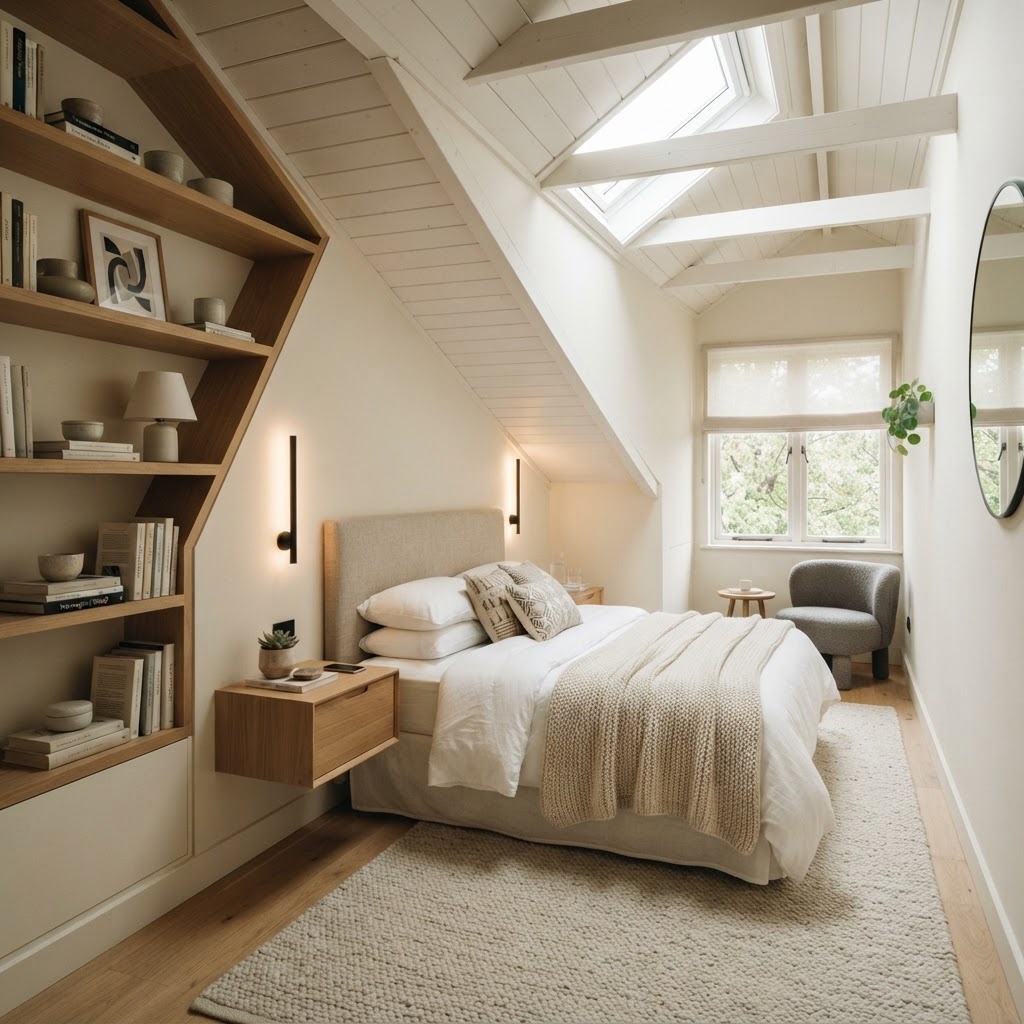
When working with attic bedrooms or eaves, the most effective layout places the headboard directly under the lowest point of the slope. This configuration protects the taller, more usable vertical space for standing and dressing. If the slope prevents a standard headboard, install custom cabinetry or built-in shelving that balances the wall height. By squaring off the area with custom shelving, you can hide irregular structural elements while gaining 4-6 linear feet of storage for books or decorative items, effectively turning a design flaw into a functional, high-end feature.
Room Shape
Best Layout Strategy
Floor Space Gained
Square (10×10)
Centered Bed
0% (Symmetry focus)
Narrow (8×12)
Corner Bed
25% (Walkway focus)
Slanted/Attic
Bed under Slope
15% (Verticality focus)
Harnessing Vertical Storage Solutions
Walls are the most underutilized assets in small bedroom design; using verticality draws the eye upward and keeps the floor clear to create an illusion of space. Implement floating shelves, floor-to-ceiling bookcases, and wall-mounted lighting to maximize every inch of vertical capacity. Keeping the floor visible creates a psychological sense of openness, making a 100-square-foot room feel significantly larger. High-impact vertical solutions, such as mounting shelves at least 7 feet high, ensure that storage doesn’t interfere with your line of sight or daily movement patterns.
The Power of Wall-Mounted Lighting
Replacing bulky bedside lamps with wall-mounted sconces is a cost-effective, aesthetic game-changer for small environments. By installing sconces 24 to 30 inches above the mattress, you reclaim the entire surface area of your nightstands, which typically measures about 1.5 to 2 square feet per table. Opt for models with adjustable arms, which provide task lighting for reading without occupying precious space. This sleek, modern aesthetic also reduces visual clutter, which is a major contributor to stress in small sleeping quarters.
Multi-Functional Furniture for Maximum Impact
In a small bedroom, every piece of furniture must provide at least two distinct functions to justify its footprint and keep the environment clutter-free. Items like ottomans with hidden storage, desks that double as nightstands, or murphy beds for ultimate flexibility are essential investments. A quality murphy bed, while costing more ($1,500-$3,000), can increase the usable floor area of a room by 50% when retracted. By selecting pieces that perform double duty, you can transform your bedroom into a home office or yoga studio during the day, maintaining a clean, minimalist aesthetic at night.
Selecting the Right Bed Frame
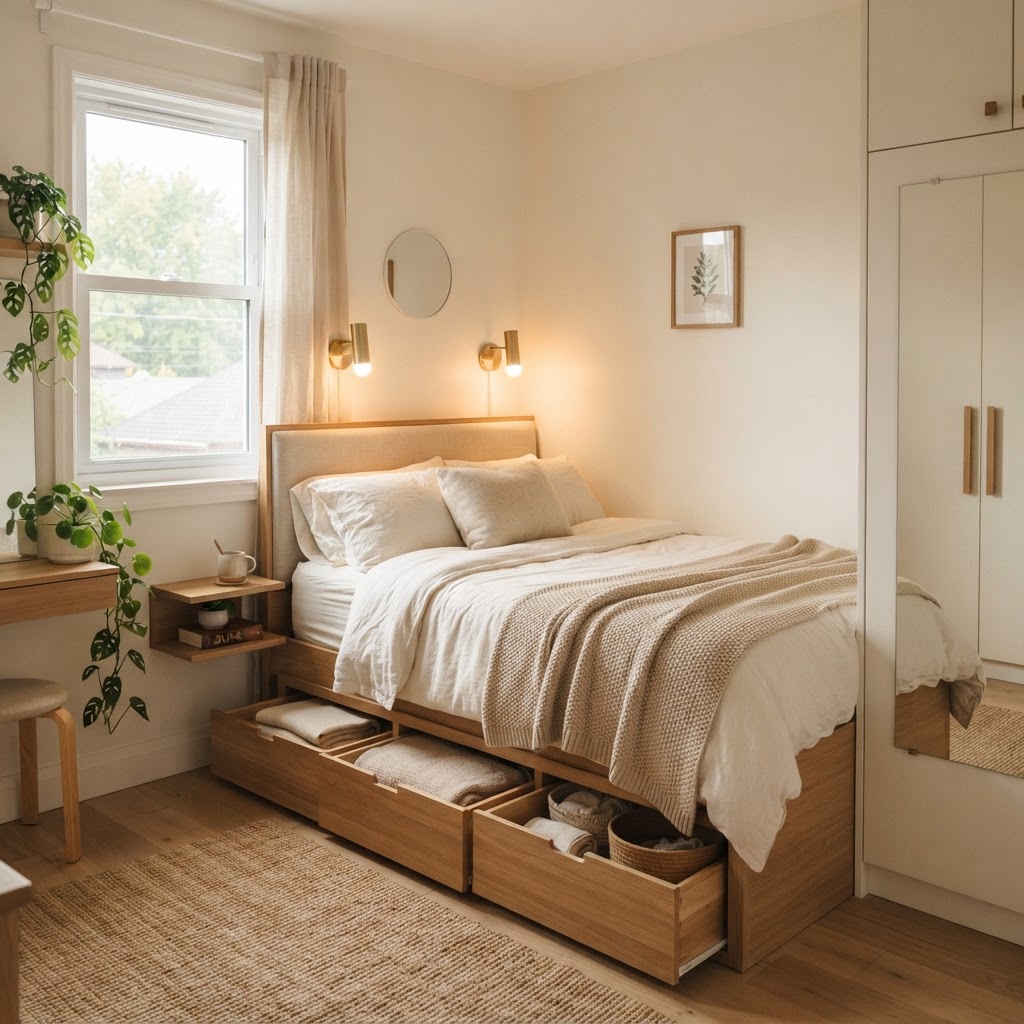
Investing in a bed frame with integrated storage is the most impactful decision for clearing floor clutter. Whether you choose hydraulic lift storage or built-in pull-out drawers, you effectively add a secondary dresser to your room. This design choice provides approximately 10 to 20 cubic feet of storage, which is ideal for linens, seasonal clothes, and spare pillows. By removing the need for a separate dresser, you can add 4-6 square feet back into the room’s open floor plan, significantly improving the room’s flow and perceived size.
Lighting and Color Schemes to Expand the Space
Color and lighting serve as functional tools that physically alter the perception of depth within a confined space. Utilizing a monochromatic, light-toned color palette—such as soft whites, creams, or light grays—blurs the boundaries between walls and ceilings, making the room feel larger. Studies suggest that lighter color schemes can increase the perceived volume of a space by up to 10-15%. Additionally, layering artificial lighting with warm color temperatures (2700K-3000K) creates a cozy, expansive atmosphere that avoids the harshness of a single overhead light source.
Mirror Magic
Strategic mirror placement is a professional interior designer’s favorite trick for doubling visual space. Placing a large mirror directly across from a window reflects natural light into dark corners, which can brighten a room by up to 30%. Consider a floor-to-ceiling mirror panel on a closet door to maximize the effect without sacrificing any square footage. Even a gallery of small, framed mirrors can create an expansive, high-end feel while maintaining the necessary balance and proportion of the room’s overall layout.
Storage Feature
Typical Space Gained
Under-bed Drawers
10-15 cu ft
Wall-Mounted Sconces
2 sq ft (table space)
Floating Shelves
6-8 linear ft
Multi-purpose Ottoman
3-5 cu ft
FAQ
Q: What is the best bed size for a small room?
A: The best bed size for most small rooms is a Full or Queen, provided the frame has integrated storage. If the room is smaller than 80 square feet, a Full bed is recommended to ensure you maintain at least 24 inches of clearance on both sides for easy movement.
Q: How can I make a tiny bedroom look bigger?
A: Use a light, monochromatic color palette and incorporate large mirrors opposite windows to bounce natural light around the room. Additionally, keeping the floor visible by using wall-mounted furniture creates an illusion of extra space that makes the room feel significantly larger.
Q: Should I put my bed in the corner?
A: Yes, placing your bed in the corner is a great strategy for rooms under 100 square feet. This layout maximizes the center floor space, providing enough room for extra furniture like a desk or a dresser that wouldn’t fit if the bed were centered.
Q: How do I organize a bedroom without a closet?
A: Utilize vertical storage by installing floor-to-ceiling shelving and high-mounted clothing racks. Incorporating a bed frame with built-in storage drawers or a storage-equipped ottoman can hold the contents of a dresser, effectively compensating for the lack of a traditional closet.
Q: What lighting is best for small bedrooms?
A: Wall-mounted sconces are the best choice for small bedrooms because they provide focused task lighting without taking up surface space on nightstands. Pairing these with warm-toned bulbs helps create an inviting, spacious, and cozy environment suitable for relaxation.
Simple Bedroom Makeover Ideas You’ll Be Obsessed With
Transform your bedroom into a restful retreat by focusing on high-impact, low-cost updates like layering textures, optimizing lighting, and strategic decluttering. By swapping out basic bedding, installing dimmable wall-mounted sconces, and using floor-to-ceiling curtains, you can achieve a professional designer look in just one weekend without a major renovation budget.
The Power of a Bedding Refresh
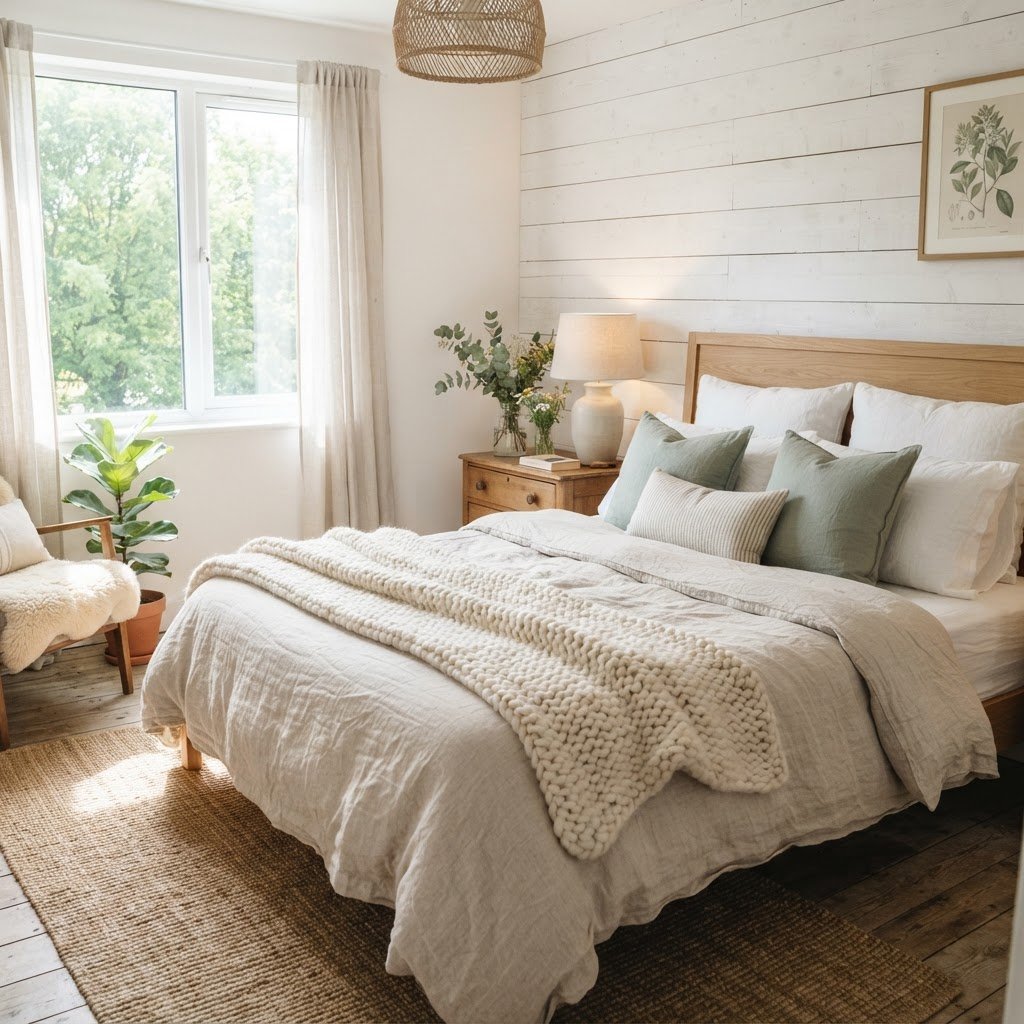
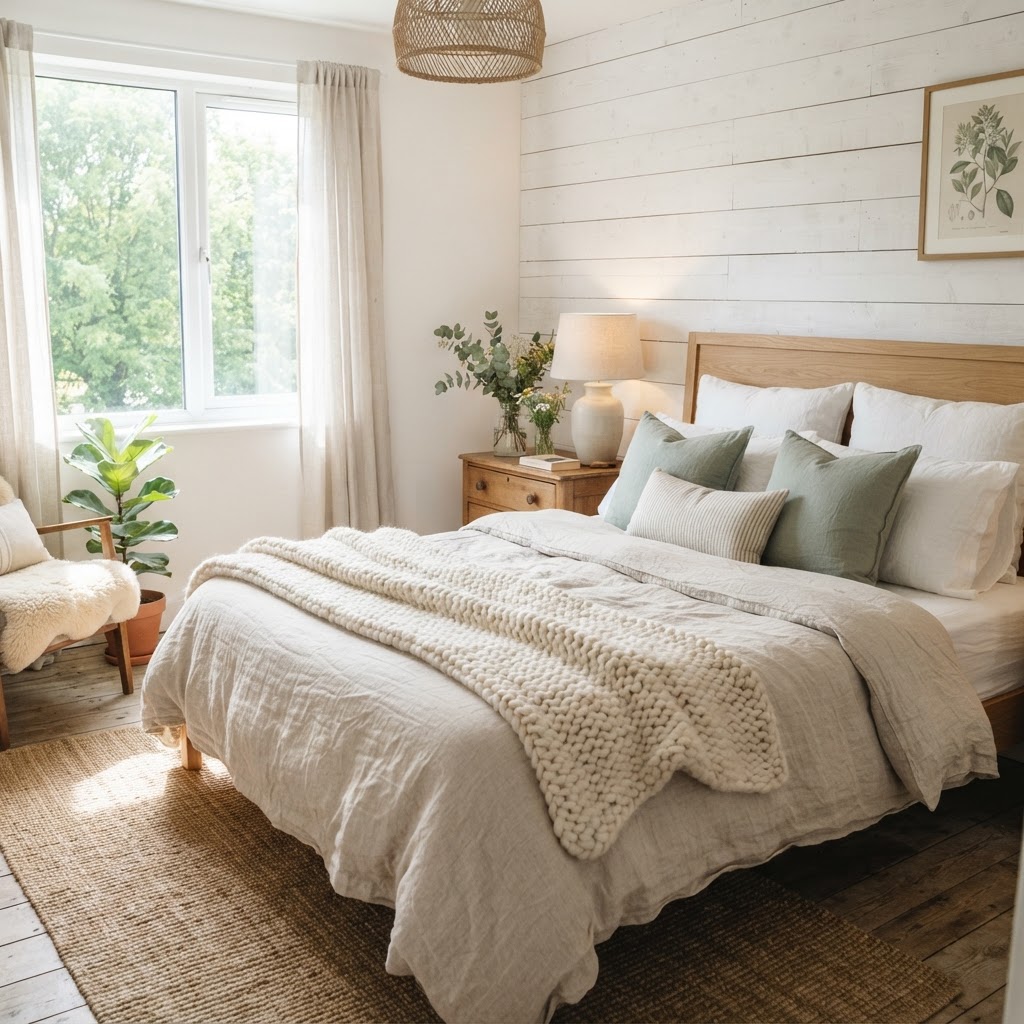
One of the most effective ways to change the mood of your room is to swap out your bedding because your bed acts as the visual centerpiece of the space. Instead of purchasing an expensive new duvet, focus on layering textures to create depth and warmth. Mixing high-thread-count cotton sheets with a chunky knit throw at the end of the bed creates an immediate “magazine-ready” aesthetic. To maximize psychological relaxation, interior designers recommend a palette of sage green, pale blue, or warm cream tones which are proven to lower heart rates before sleep. For those on a budget, look for textile bundles under $100 to achieve this look efficiently. Consider the following comparison when selecting your next bedding set:
Feature
Linen Sheets
Cotton Sheets
Texture
Raw and breathable
Smooth and crisp
Durability
High (gets softer with time)
High (easy to wash)
Price Point
Mid to High
Low to Mid
Best For
Summer/All-year comfort
Daily wear and tear
Playing with Pillows and Throws
Never underestimate the versatility of throw pillows as the easiest way to inject personality and color into a bedroom. If your walls are neutral, go bold with textured cushions in rich velvet or patterned cotton. If you already have a lot of color on your walls or window treatments, stick to monochromatic pillows to keep the vibe calm and cohesive. Aim for a mix of two large Euro shams at the back, two standard pillows in front, and one decorative lumbar pillow to master the professional “bed styling” formula.
Refreshing Your Wall Decor
Blank walls are a wasted opportunity for expression, and upgrading your wall art provides one of the highest returns on investment for room transformations. Instead of purchasing a single large, expensive canvas, curate a gallery wall using a combination of travel photos, abstract prints, and botanical illustrations in matching metallic or wooden frames. This approach creates a cohesive focal point that draws the eye upward. Alternatively, removable wallpaper is a game-changer for renters or those who prefer seasonal updates. Peel-and-stick options are now available in durable vinyl that can last up to 5 years, allowing for bold floral patterns or subtle geometric prints that can be removed without damaging drywall. When planning your layout, ensure your art is hung at “eye level,” which is typically 57 to 60 inches from the floor to the center of the print, ensuring the space feels balanced and intentional.
Lighting Design for Ambiance
Poor lighting is the fastest way to kill the mood, so you must transition from a single harsh overhead fixture to a layered, ambient lighting scheme. Start by replacing bedside lamps with sculptural designs, or if surface space is limited, install wall-mounted plug-in sconces. Sconces provide a hotel-inspired look and free up vital nightstand space. Crucially, replace all “daylight” (5000K+) bulbs with “warm white” (2700K to 3000K) bulbs, as the latter mimics sunset and promotes melatonin production. Adding a simple smart-bulb or a plug-in dimmer switch, which costs less than $20, allows you to transition your space from a bright, functional area for getting ready in the morning to a dim, relaxing zone for winding down. Layering a ceiling fixture, bedside lamps, and perhaps an LED strip behind the headboard will create the multi-dimensional lighting depth that makes a bedroom feel expensive and cozy.
A clean, minimalist aesthetic is the most budget-friendly way to upgrade your room, as a messy environment leads to mental fatigue. Before introducing new decor, perform a “purge” of unused items; studies suggest that clear surfaces increase productivity and relaxation. Once purged, utilize vertical space to maintain order. Install floating shelves to replace bulky nightstands and use under-bed storage bins for seasonal items. A good rule of thumb is to ensure at least 25% of your drawer and closet space remains empty to prevent future clutter accumulation. For small rooms, opt for furniture with hidden storage, such as ottomans or bed frames with integrated hydraulic lifts, which can add up to 20 cubic feet of additional storage space. By keeping the floor and surfaces relatively empty, you physically expand the room’s footprint, making the entire space feel significantly larger and more intentional.
Incorporating Natural Elements
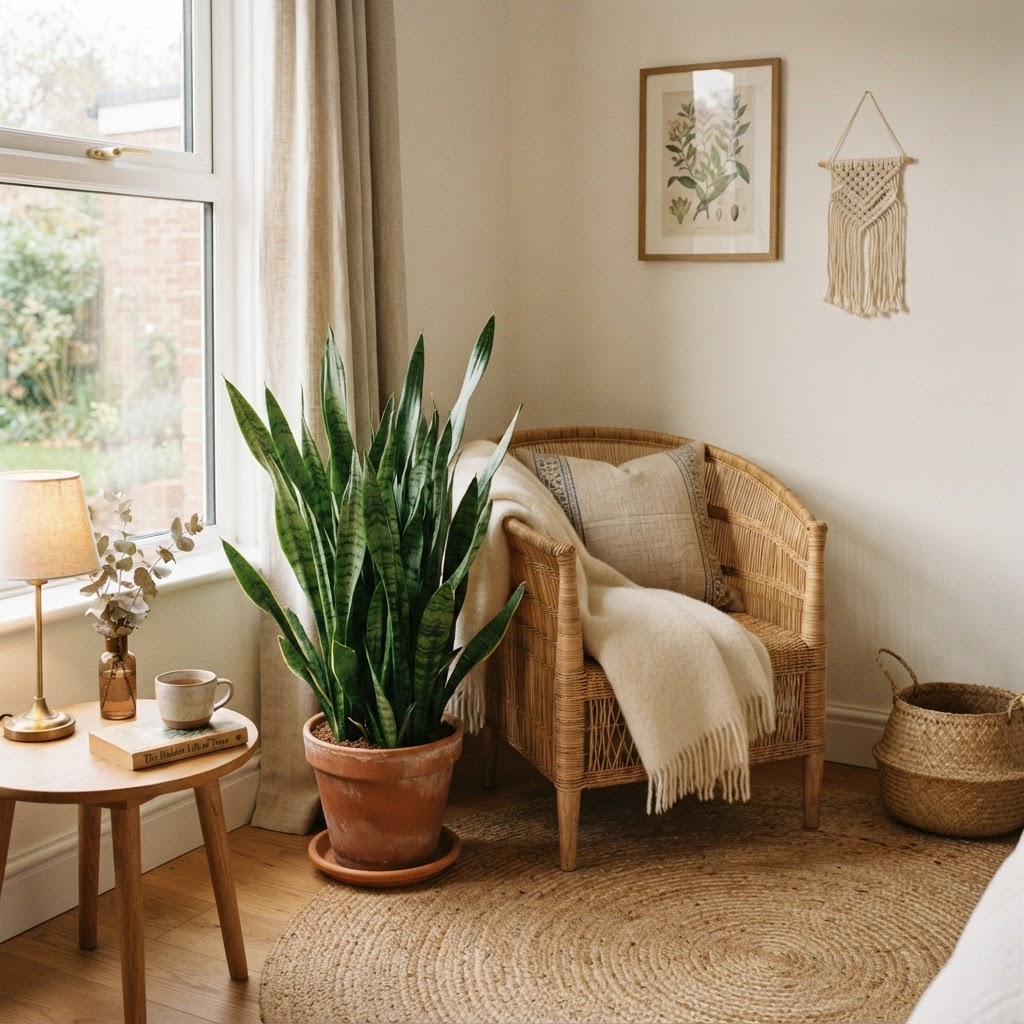
Bringing the outdoors in is a hallmark of modern interior design that improves air quality and adds vital texture to the room. Houseplants like the Snake Plant (Sansevieria) or ZZ Plant (Zamioculcas zamiifolia) are ideal for bedrooms because they are incredibly hardy, thrive in low light, and release oxygen at night. To integrate these with decor, use natural materials like rattan, jute, and unfinished wood. A jute rug under the bed or a raw-wood stool provides tactile interest that synthetic materials lack, grounding the room in organic beauty. Designers suggest following the “rule of three” when styling natural items—grouping plants or textures in threes (e.g., a plant, a rattan basket, and a wooden vase) to create a visually balanced, professional-looking arrangement.
Textiles and Window Treatments
Your windows set the tone for natural light and privacy, and upgrading from plastic blinds to floor-to-ceiling curtains is one of the most effective ways to add height. By mounting your curtain rod 6 to 10 inches above the window frame, you create the illusion of a much taller ceiling. Choose sheer, linen-look curtains for a breezy, light-filled atmosphere, or opt for heavy velvet blackout curtains if you require deep, uninterrupted sleep. Don’t forget the floor; a plush area rug placed partially under the bed frame adds an immediate layer of physical warmth and comfort. When selecting rugs, look for one that extends at least 18 to 24 inches beyond the sides of your bed to ensure the room feels proportional. This creates a cozy, finished look that ties the furniture pieces together, preventing the room from feeling like a collection of disjointed items.
Quick Summary of Refresh Tips
Use warm-toned light bulbs (2700K) for a cozy mood.
Install floor-to-ceiling curtains to make the ceilings look higher.
Rotate your art and photos every six months for a fresh feel.
Invest in a high-quality scent diffuser for a signature bedroom smell.
Use a consistent color palette to avoid visual clutter.
Personalizing Your Sanctuary
Ultimately, a bedroom should reflect your personality, so do not feel pressured to follow fleeting trends if they do not bring you genuine joy. Focus on creating a space that supports your personal habits, such as adding a dedicated reading nook with a back-friendly chair or a small floor area for yoga mats. If you have heirloom furniture, use it as a statement piece by surrounding it with more modern, clean-lined decor to create an eclectic, curated look. When the room supports your specific lifestyle needs, you will naturally feel more relaxed and at home. Remember that personalization is about function as much as aesthetics; ensure your layout allows for at least 30 inches of walking space around the sides of the bed to maintain a comfortable traffic flow.
FAQ
Q: What is the fastest way to make a bedroom look more expensive?
To make a bedroom look expensive, upgrade to floor-to-ceiling curtains, replace harsh lighting with warm-toned bulbs, and layer your bedding with high-quality textures. These three changes collectively mimic the look of luxury boutique hotels for a relatively low investment.
Q: Should I use light or dark colors in a small bedroom?
While traditional advice suggests light colors to open a space, using dark, monochromatic colors can actually make small bedrooms feel cozier and more sophisticated by blurring the corners of the room. Choose the palette that matches your desired mood rather than worrying strictly about size.
Q: How often should I update my bedroom decor?
A light refresh, such as rotating throw pillows or art, should happen every 6 months to keep the space feeling current. A more significant “makeover” involving paint or furniture layouts is typically performed every 2 to 3 years as your lifestyle and personal style evolve.
Q: Does adding plants really improve a bedroom?
Yes, plants improve air quality and provide psychological benefits by lowering stress levels and increasing feelings of well-being. Varieties like the Snake Plant are particularly effective for bedrooms because they are low-maintenance and continue to provide oxygen even in low-light conditions.
Q: How do I hide clutter in a small bedroom?
Utilize under-bed storage containers, floating shelves, or furniture with dual purposes like ottomans with interior storage. Keeping the floor clear of items is the most effective way to make a small room feel organized and intentionally designed.
10 Genius Extremely Small Bedroom Ideas with Built-Ins
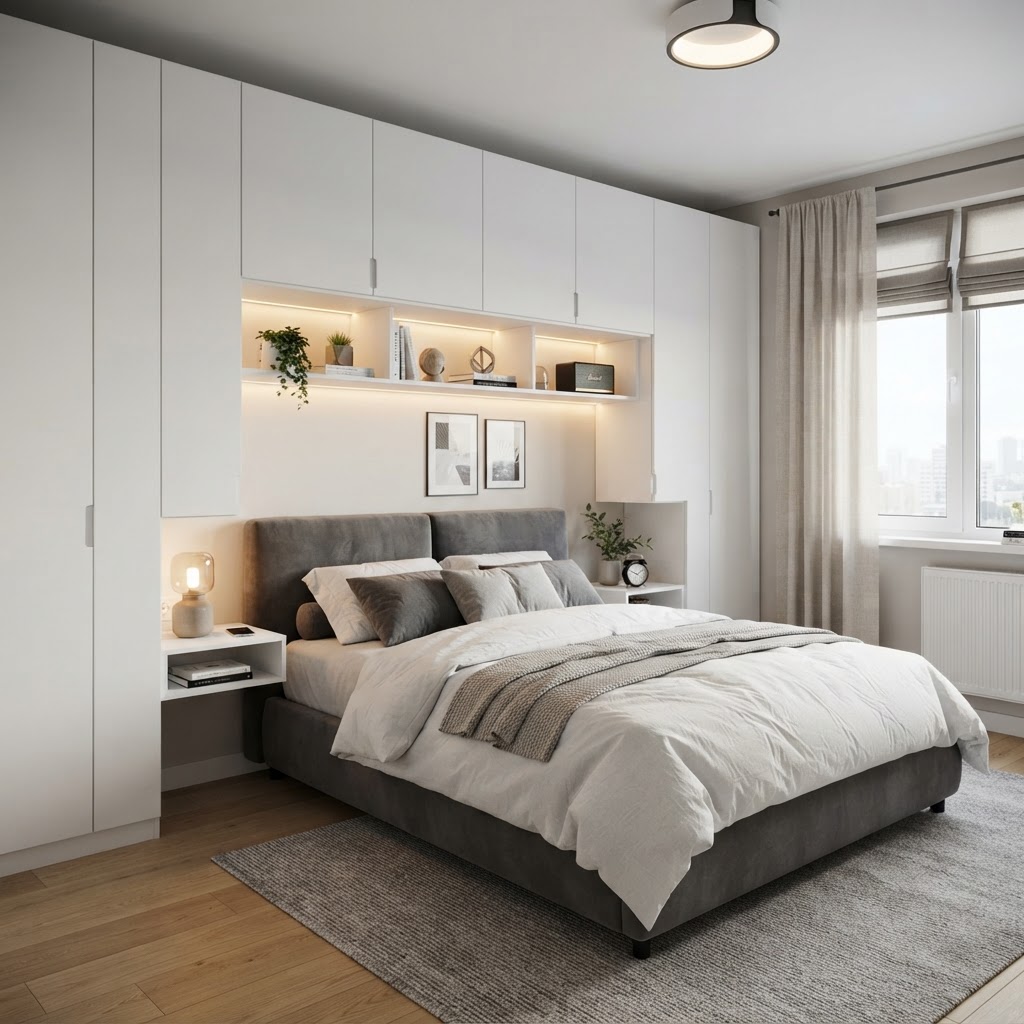
To maximize an extremely small bedroom, install wall-to-wall cabinetry that reaches the ceiling, utilize under-bed hydraulic storage, and incorporate “bridge” shelving around your headboard. These built-in solutions eliminate visual clutter and reclaim floor space by integrating storage directly into the room’s architecture, turning a tiny footprint into a functional sanctuary.
The Philosophy of Vertical Thinking
Most homeowners leave 30% to 50% of their vertical wall space underutilized, which is the primary reason small bedrooms feel claustrophobic. By installing floor-to-ceiling cabinetry, you draw the eye upward, creating an optical illusion of height while adding critical square footage for storage. Successful built-in design relies on the “floor-to-ceiling rule,” which suggests that vertical storage units should be flush with both the floor and the ceiling to prevent dust accumulation and visual breaks. This method effectively transforms walls into high-capacity wardrobes that house clothes, linens, and personal electronics without protruding into your walking path. When selecting finishes, use light-reflective materials or high-gloss white lacquers to bounce ambient light around the room, which can make a 100-square-foot space feel 20% larger. Implementing custom wall-to-wall units instead of freestanding furniture can save you approximately 12 to 18 inches of floor depth per wall. By reducing visual noise through seamless, handle-less doors, you create a monochromatic aesthetic that allows the eyes to glide across the room without stopping at bulky dressers or chests.
Strategic Wall-to-Wall Cabinetry
Instead of buying standalone wardrobes that eat up precious inches, consider custom wall-to-wall units. These can house your clothing, seasonal linens, and even a compact workstation, all hidden behind seamless, handle-less doors. The uniformity of the cabinetry reduces visual noise, which is essential for keeping a small room feeling calm and uncluttered rather than chaotic.
Feature
Standalone Furniture
Built-In Cabinetry
Floor Usage
High (Depth/Legs)
Zero (Wall-mounted)
Customization
Low (Standard Sizes)
High (Wall-to-Wall)
Visual Noise
High (Gap/Shadows)
Low (Seamless)
Cost Efficiency
Low (Frequent Replacement)
High (Permanent Value)
Integrating Storage Into the Bed Frame
The bed is typically the largest piece of furniture in the room, consuming a massive portion of the floor area, often accounting for 40% of the room’s square footage. By replacing a standard frame with a custom platform bed, you convert dead air space beneath the mattress into a high-density storage reservoir capable of holding up to 20 cubic feet of gear. A hydraulic lift mechanism is the gold standard for small spaces, allowing you to access items like seasonal clothing, luggage, or extra bedding with a single lift, even if the bed is placed against a wall. If a hydraulic lift is not feasible, opt for deep, full-extension drawers installed into the base. These drawers should ideally be 24 inches deep to mimic the capacity of a standard dresser. To ensure longevity, choose drawers with soft-close slides and solid plywood construction, as these will endure the frequent daily use required in a tight living environment. When the bed frame is integrated into a larger millwork unit, the transition between sleeping area and storage feels intentional, effectively anchoring the room’s design and preventing the “cluttered look” associated with scattered storage bins under an exposed frame.
The Power of Drawer Platforms
Deep drawers installed into the base of your bed frame can easily replace a bulky dresser. Think of this as your secondary closet. By choosing a design that integrates the bed into a larger millwork unit, you create a cohesive look that feels intentional and high-end rather than cramped.
Utilizing Alcoves and Nooks
Every tiny bedroom possesses architectural quirks, such as chimney breasts, slanted ceilings, or recessed window alcoves, which are often dismissed as dead space. Converting these odd dimensions into custom shelving can yield 5 to 10 additional square feet of usable storage without encroaching on the central room walkway. For window alcoves, a built-in bench creates a multifunctional zone; the seat provides a comfortable reading area, while the interior cavity functions as a deep chest for blankets, pillows, or winter gear. When designing these nooks, prioritize fixed shelving over adjustable options if you want a cleaner look; using 3/4-inch furniture-grade plywood will support heavier weights for books or media hardware. Slanted ceilings are particularly well-suited for low-profile cabinets that follow the pitch of the roof, effectively hiding items in the lowest part of the room where standing is impossible. By painting these built-ins the same color as the surrounding wall trim—often using a satin finish for durability—you achieve a “built-in” aesthetic that visually recedes rather than projecting into the space, making the room feel larger than it truly is.
Creating Functional Window Seats
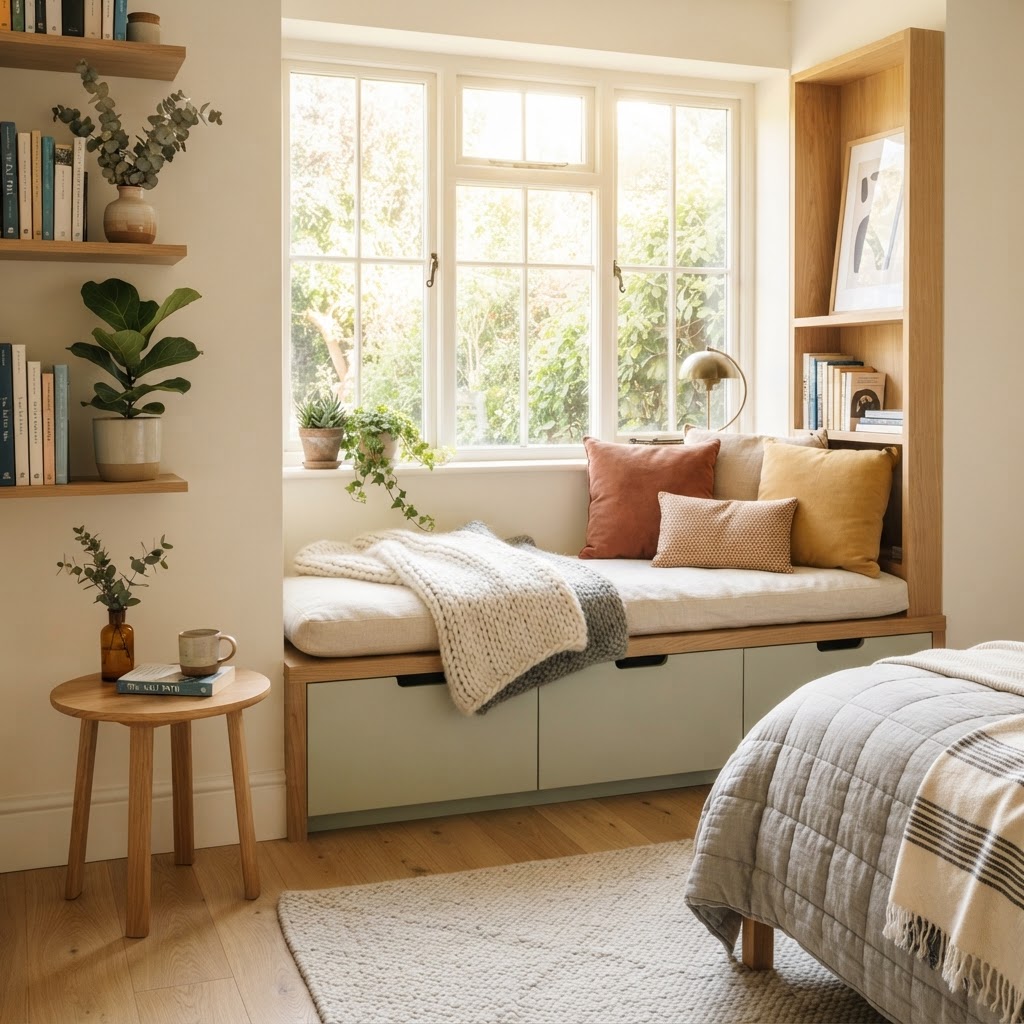
If you have a window, don’t waste the space underneath it. A built-in bench with storage bins underneath is one of the most beloved extremely small bedroom ideas. It provides a cozy spot to read and a clever place to tuck away blankets, shoes, or storage baskets, keeping your floors clear of debris.
The Bridge Concept for Bedside Storage
A “bridge” storage unit, which frames the headboard with overhead cabinets and side towers, is the most efficient way to replace standard nightstands and heavy bookshelves in a compact bedroom. Standard nightstands occupy at least 18 inches of floor width on either side of a bed; a bridge unit eliminates this footprint entirely by lifting storage to the wall plane. These units often feature built-in reading lights or recessed outlets, solving the issue of cord management that often leads to visual chaos in small rooms. When planning a bridge unit, ensure the horizontal shelving component is at least 30 inches above the mattress to prevent hitting your head while sitting up. Using this configuration can effectively store up to 50% of your personal daily-use items—such as chargers, books, and glasses—without taking up a single inch of floor space. To maintain an airy feel, incorporate glass-front doors or open shelving in the center section while using closed cabinetry for the side towers to hide bulkier items. This strategic balance ensures that the bridge acts as both a visual focal point and a highly functional storage hub.
Maximizing Corners with Custom Shelving
Corners are notorious “dead zones” in bedroom design. Installing floating corner shelves or a custom corner wardrobe can utilize these awkward gaps effectively. By painting your built-ins the same color as the walls, they will seem to disappear into the background, allowing the room to feel more open and airy.
Lighting and Mirroring Effects
Built-ins serve a dual purpose as both structural storage and ambient lighting platforms, which is essential for creating depth in small rooms. By installing LED strips recessed into the underside of shelving or behind the crown molding of a cabinet unit, you create a sophisticated glow that emphasizes the room’s height. When you pair this lighting with mirrored cabinet doors, the visual expansion is immediate. Mirrors reflect both natural and artificial light, effectively doubling the apparent depth of the space. In rooms under 80 square feet, using mirrored finishes on wardrobe doors can increase perceived spaciousness by as much as 40%. For the best results, place mirrors directly opposite a window to maximize the intake of daylight. Beyond aesthetics, consider the utility of recessed lighting within the built-in itself; using 3000K warm white LEDs provides a cozy, relaxing environment perfect for a bedroom. Ensure all LED drivers are hidden within the cabinetry chassis to maintain a clean, minimalist profile. This design strategy allows you to turn a standard storage wall into a dynamic lighting feature that changes the mood of the room throughout the day and night.
Reflective Surfaces as a Design Strategy
Mirrored finishes on wardrobe doors can hide the bulk of your clothes while simultaneously reflecting light around the room. This is a classic designer trick to make any small space feel more open, and it works exceptionally well when integrated directly into custom millwork.
Choosing the Right Hardware and Finishes
In a tiny bedroom, your choice of finish and hardware will either make the room feel cohesive or fragmented. A monochromatic color palette—where the cabinetry matches the wall color exactly—is the industry standard for making bulky storage disappear into the architectural shell of the room. When choosing hardware, avoid protruding knobs that catch on clothes or bedding; instead, select recessed pulls, push-to-open magnetic latches, or minimalist edge-mount pulls. These options ensure that nothing breaks the visual lines of the room, keeping the focus on your curated items rather than the storage furniture itself. For finish materials, choose matte or satin sheens over high-gloss if you are concerned about dust visibility, as satin is significantly easier to wipe down. If you choose to mix textures, do so within the same color family; for example, a matte-painted wardrobe cabinet paired with a smooth, light-reflecting glass mirror provides visual interest without creating clutter. Keeping your hardware selections consistent—using the same finish throughout the room—will create a unified, professional designer aesthetic that elevates the value of the entire bedroom.
The Importance of Minimalism
Even with great storage, the key to success is keeping surfaces clear. Use your built-ins to hide everything possible. The goal of using extremely small bedroom ideas is to make the room feel curated, not merely packed with stuff. If your built-ins are designed well, you will find that you can live comfortably with less visible furniture.
Budget-Friendly Alternatives
Custom millwork can be expensive, but you can achieve an identical “built-in” look using flat-pack units combined with simple trim carpentry. Purchasing tall, narrow IKEA units (such as the PAX or BILLY systems) and securing them to the wall provides the structural foundation for your project. The secret to making store-bought furniture look custom lies in the filler strips and crown molding. By installing 1-inch wooden filler pieces between units and covering the seams with caulk, you create a seamless wall of cabinetry that appears custom-built to your room’s exact dimensions. Adding a decorative baseboard and crown molding at the ceiling level ties the units to the room’s architecture, making them look like part of the original home design rather than temporary additions. Painting both the units and the trim with a high-quality furniture-grade enamel—using a sprayer for a streak-free finish—will hide the cheaper construction materials. This DIY approach typically costs 60% to 75% less than hiring a custom carpenter, allowing you to invest the savings into higher-end hardware or specialized interior storage organizers like velvet-lined drawers or pull-out shoe racks.
IKEA Hacks for Small Rooms
By taking standard bookcases and raising them on a base, or adding doors to open shelving units, you can create a customized look that fits your specific needs. The key is in the finishing details like handles and paint, which can elevate inexpensive materials into a sophisticated storage wall.
FAQ
Q: What is the most effective way to store clothes in a tiny bedroom?
Use floor-to-ceiling custom cabinets with internal organizing systems like vertical dividers and pull-out trays to maximize every inch. Prioritizing double-hanging rods allows you to store twice as many garments in the same footprint compared to standard wardrobes.
Q: Can built-ins make a small room look smaller?
Built-ins only make a room look smaller if the color creates too much contrast with the walls. Choosing a paint color that matches your walls exactly ensures the cabinetry blends into the architecture, maintaining an airy, open feel while increasing your storage capacity significantly.
Q: How much floor space does a bridge headboard save?
A bridge headboard setup can save approximately 3 to 4 square feet of floor space by eliminating the need for two traditional bedside nightstands. This layout also consolidates your electrical outlets and storage into one centralized, sleek vertical unit.
Q: Are there DIY ways to get a custom built-in look?
Yes, you can use IKEA PAX or BILLY units finished with custom trim, caulk, and matching paint to create a seamless wall-to-wall effect. Adding baseboards and crown molding creates a permanent, professional aesthetic that hides the gaps between the units and the walls.
Q: What hardware is best for tiny room storage?
Push-to-open latches and recessed finger-pulls are the best hardware choices for small bedrooms. These options remove physical protrusions, ensuring your path around the bed remains clear and preventing the “chopped up” look that handles often create in cramped quarters.
Small Bedroom Ideas That Fix the Real Problem First
To make a small bedroom feel significantly larger and more functional, prioritize optimizing traffic flow and clearing floor space rather than simply buying smaller furniture. Start by auditing your room’s movement patterns, maintaining clear sightlines, and utilizing vertical storage to eliminate the friction that makes compact spaces feel cramped and chaotic.
The Psychology of Space and Flow
Human perception of room volume relies heavily on uninterrupted visual paths; when your eyes can travel across a floor to the wall base without obstruction, the brain registers the space as larger. A small room feels claustrophobic primarily because of “visual noise”—clutter, awkward furniture placement, or poor lighting that creates visual stop signs. Research in environmental psychology suggests that maintaining 60% of floor visibility can make a room appear up to 20% more spacious. To achieve this, you must treat your floor as a continuous plane rather than a surface for storage. If you currently have piles of laundry or bulky items hindering your movement, these act as psychological barriers that shrink the room’s perceived size. By clearing these obstructions, you shift your brain’s interpretation of the space from a cluttered box to an open sanctuary. Focus on removing any item that forces you to walk around it. When the eye can see the intersection of floor and wall, you successfully expand the room’s perceived dimensions without changing a single square foot of architectural space.
Identifying Your Primary Friction Point
Is your bedroom a place for sleep, or is it a dumping ground for laundry, work files, and tech gadgets? Most small rooms suffer because they attempt to serve too many masters. By auditing what actually happens in the room, you can strip away the non-essentials.
The Rule of Uninterrupted Sightlines
To make a space feel airy, aim to keep the floor surface as visible as possible. When your eyes see the edges of the room where the floor meets the wall, your brain registers more volume. This is why floating furniture is a game-changer for those searching for effective small bedroom ideas.
Why Your Current Furniture Layout Is Likely Failing
Most homeowners place furniture based on wall alignment, but the most effective layouts prioritize the “traffic triangle”—the natural paths you take to your closet, bed, and door. A layout that forces you to shimmy past a bulky dresser is fundamentally broken, regardless of how “cute” the furniture is. Expert designers suggest mapping your daily rituals for 72 hours; identify where you trip or where items naturally accumulate. If you are regularly navigating an obstacle course to reach your bedside lamp, your furniture is too large for the room’s circulation flow. Replacing a standard 24-inch deep dresser with a 15-inch deep slim-profile unit can regain 9 square inches of floor area per linear foot, significantly opening up pathways. Consider floating your bed away from a corner if it allows for a more efficient path, even if it creates a small gap behind the headboard for hidden shelving.
Feature
Traditional Placement
Optimized Flow Placement
Bed Position
Corner/Wall
Centered/Floating
Floor Space
Minimal
Maximum
Circulation
Obstructed
Clear Pathways
Visual Depth
Low
High
Mapping Your Daily Rituals
If you have to do an obstacle course just to reach your bedside lamp, your layout is the problem, not your square footage. Track your movement for three days. Where do you trip? Where do you drop things? Where is the ‘clutter magnet’ zone? Fixing the path of movement is the most important step in optimizing your environment.
Vertical Real Estate: The Untapped Frontier
When floor space is at a premium, the ceiling becomes your most valuable storage asset. Most people fail to utilize the top two-thirds of their walls, leaving critical “dead space” that could host floating shelves or high-reach cabinetry. Drawing the eye upward effectively shifts focus away from the room’s narrow width, creating an illusion of height that makes the entire environment feel grander and more intentional. Installing high-reach shelving near the ceiling line can house seasonal items or extra linens, removing them from your daily floor-level storage needs. This technique is particularly effective in rooms with ceilings 8 feet or higher. Furthermore, wall-mounted lighting is a non-negotiable upgrade; replacing a standard 10-inch diameter lamp base with a wall sconce saves roughly 78 square inches of surface area per nightstand. This change isn’t just aesthetic—it eliminates the visual noise of cords and bases, reducing the room’s “clutter score” and creating a boutique hotel aesthetic that feels inherently more spacious and refined.
Installing High-Reach Shelving
Instead of a bulky bookshelf that takes up floor space, install floating shelves near the ceiling line to store books, seasonal items, or decor. This keeps the floor clean while utilizing dead space that would otherwise collect dust. It is one of the most effective small bedroom ideas to shift the focus away from the room’s width and toward its height.
The Power of Wall-Mounted Lighting
Table lamps are wonderful, but in a tiny room, they occupy essential surface area on nightstands. Swapping to wall-mounted sconces creates a boutique hotel look and frees up your bedside table entirely. This simple swap reduces visual noise, making the room feel more intentional and less cluttered.
Multi-Functional Furniture as a Last Resort
Multi-functional furniture should be your secondary priority, utilized only after you have decluttered and optimized your primary traffic flow. Investing in high-cost “smart” furniture like $1,500 Murphy beds or storage ottomans often masks underlying organizational issues rather than solving them. Focus first on the “Bed Storage Revolution”: replace standard bed frames with hydraulic-lift platforms. A hydraulic frame can provide up to 30 cubic feet of storage, effectively acting as an extra closet hidden beneath your mattress. If a full replacement isn’t in your budget, look for “risers” that add 6 inches of clearance, allowing for the use of low-profile rolling bins. This is significantly more effective than buying multi-tiered furniture that adds visual bulk. By utilizing the “dead zone” beneath the bed, you preserve your limited vertical and horizontal surface areas for essential items, adhering to a minimalist design philosophy that prioritizes functionality over ornamental clutter.
Furniture Type
Benefit
Best For
Hydraulic Bed
Max Storage
Heavy Storage Needs
Wall Sconces
Surface Clearance
Tiny Nightstands
Floating Shelves
Vertical Utility
Decorative/Books
The Bed Storage Revolution
If your bed has legs that show a dark, shadowy gap underneath, you are losing prime real estate. Storage bins or under-bed drawers are essential, but even better is a hydraulic bed frame that lifts completely. This turns the entire footprint of your bed into a massive, hidden closet.
Lighting Strategies to Expand the Perimeter
Lighting is the secret weapon for small bedroom ideas that actually work. Poor lighting creates corners of darkness that act as visual boundaries, effectively shrinking the room’s perceived footprint. By layering your light—using ambient, task, and accent lighting—you can blur the edges of your room and make it feel like it extends further than it actually does. Incorporate a minimum of three light sources: an overhead ambient light, bedside task lighting (sconces), and floor-level or strip lighting to “wash” the corners with illumination. Mirrors are the most efficient way to maximize this light; a full-length mirror positioned directly opposite a window will reflect natural daylight, doubling the perceived depth of the room. Avoid using several small, decorative mirrors, as they create a “broken” reflection that adds to visual clutter; instead, use one large-scale, high-quality mirror to maintain a clean, cohesive visual field.
Bouncing Light with Mirrors
Mirrors are a design cliché for a reason: they work. However, placement is everything. A large mirror placed directly opposite a window will bring the outside in and effectively double the visual depth of the room. Avoid small, decorative mirrors; instead, opt for a full-length floor mirror or a wall-to-wall treatment behind your nightstands.
Curating Your Belongings: The Zero-Based Design Approach
If you want to fix your room, you must be ruthless about what you keep inside it. Every object in a small bedroom must either be beautiful or functional. If it is neither, it is stealing your peace of mind. Apply the ‘zero-based’ principle: if you were moving into this room tomorrow, what would you choose to bring with you? Implementing the 24-hour rule is essential here; any flat surface, from your dresser top to your window sill, is a landing strip for junk. By ensuring no item (mail, clothes, chargers) remains on a flat surface for more than 24 hours, you keep the room from reverting to its ‘cramped’ state. This daily audit prevents the accumulation of the “micro-clutter” that causes even large rooms to feel claustrophobic. By curating your space intentionally, you turn a small box into a curated sanctuary where rest is the primary objective rather than storage management.
The 24-Hour Rule for Surfaces
Any flat surface, from your dresser top to your window sill, is a landing strip for junk. Implement the 24-hour rule: no item (mail, clothes, chargers) can remain on a flat surface for more than 24 hours. This keeps the room from reverting to its ‘cramped’ state, regardless of how small it is.
FAQ
Q: What is the best way to make a tiny bedroom look bigger?
To make a tiny bedroom look bigger, prioritize clearing the floor and creating uninterrupted sightlines. Remove excess furniture to expose more floor area and use vertical storage or wall-mounted lighting to keep surfaces clean and open.
Q: Does painting a small bedroom white always help?
While light colors reflect more light, painting a small room white is not a miracle cure if the room remains cluttered. Proper furniture layout, lighting layering, and keeping surfaces clear are more effective than paint color for maximizing space.
Q: Should I use multi-functional furniture in a small room?
Use multi-functional furniture only after you have decluttered and optimized your flow. Focus on “hidden” storage like hydraulic bed frames first, as these provide utility without consuming precious floor or vertical visual space.
Q: How can I optimize my bedroom layout for better movement?
Map your daily movement patterns for 72 hours to identify where you trip or where obstacles exist. Aim to create a clear, direct path between your doorway, closet, and bed to improve room flow and efficiency.
Q: How many light sources should a small bedroom have?
Use at least three layers of light: ambient lighting for general illumination, task lighting like sconces for reading, and accent lighting to brighten dark corners. This effectively blurs the room’s boundaries and increases perceived depth.
Designing a modern small bedroom requires prioritizing multifunctional furniture, vertical storage solutions, and a cohesive, light-reflecting color palette to maximize square footage while maintaining a cozy, high-end feel. By incorporating wall-mounted fixtures and intentional, minimalist decor, you can transform a compact room into a sleek, efficient personal sanctuary.
The Philosophy of Modern Small Bedroom Design
Modern small bedroom design centers on the philosophy of intentional minimalism, where every square inch serves a dual purpose to eliminate visual noise. Rather than allowing clutter to consume limited space, homeowners should invest in streamlined furniture, such as bed frames with integrated hydraulic lifts for seasonal storage or wall-mounted nightstands that keep floor space completely clear. By maintaining visible floor area, the eye perceives a larger, more open footprint, which is a critical psychological trick for compact living. Experts recommend ensuring at least 24 to 30 inches of clearance around the bed for comfortable movement. Transitioning away from bulky, traditional bedroom sets in favor of bespoke, multipurpose pieces ensures that your room feels architectural rather than cramped. This design approach prevents the sterile feeling often associated with minimalism by allowing you to curate essential items that balance functionality with personal comfort.
Strategic Use of Lighting and Reflection
Lighting is the most effective tool for expanding a small bedroom’s perceived volume, with layered illumination proving superior to a single overhead source. To maximize efficiency, install wall sconces on either side of the bed to free up valuable surface area on nightstands, while using floor lamps in corners to provide height and ambient warmth. Mirrors act as architectural multipliers in compact rooms; a large, floor-to-ceiling mirror placed directly opposite a window will reflect natural light back into the space, effectively doubling the light output. For a contemporary, sophisticated aesthetic, opt for bronze-tinted or antique-finish mirrors which provide a moody depth without sacrificing the reflective benefits. Incorporating smart lighting systems with color-temperature adjustments allows you to transition the room from a bright, productive workspace during the day to a soft, relaxing sleep environment in the evening.
Lighting Method
Best Use Case
Benefit
Wall Sconces
Bedside reading
Saves surface space
Floor Mirrors
Expanding depth
Bounces light deeply
Smart LED Strips
Under-bed glow
Adds luxury/ambience
Overhead Pendant
Decorative focal point
Elevates ceiling height
Maximizing Vertical and Hidden Storage
Vertical space is the most underutilized asset in small bedrooms, and leveraging it through floor-to-ceiling storage can dramatically alter the room’s proportions. By installing shelves that run all the way to the ceiling, you force the eye upward, creating an optical illusion of a higher ceiling while gaining significant display area for books, art, and plants. Custom cabinetry that utilizes the vertical span of a single wall can replace traditional dressers entirely, consolidating clothing and personal items into one sleek, unified structure. Hidden storage is equally vital; look for beds with internal compartments or utilize the area beneath a raised bed frame for deep, organized storage bins. For those working in a studio environment, specialized hardware like high-quality Murphy bed mechanisms allows a full-sized sleeping space to vanish completely, converting the room into a functional office or yoga studio in under 30 seconds.
Creative Storage Solutions
Under-bed storage bins or custom built-in drawers are perfect for bulky seasonal items.
Over-the-door organizers can be hidden behind curtains or sliding barn doors to keep accessories tidy.
Floating shelves act as bedside tables, keeping the area beneath them airy and accessible.
Murphy beds or loft beds are excellent for those who need their bedroom to double as a home office or creative studio.
Texture as the Foundation of Comfort
Texture serves as the critical anchor for comfort in a modern, streamlined space, ensuring the room feels like a sanctuary rather than a showroom. Because a modern design restricts excess furniture, you must introduce tactile interest through high-quality materials like heavy wool, velvet, or washed linen. These fabrics create a “sensory depth” that makes the space feel luxurious and soft. Start with a neutral, monochromatic base—such as soft white, light gray, or greige—and layer textures in the bedding and throw blankets to create contrast. For instance, pairing a smooth linen duvet with a chunky knit wool throw provides a sophisticated aesthetic that feels incredibly inviting. By maintaining a restricted color palette of no more than three harmonizing tones, you ensure the textures stand out, providing a sense of warmth without ever creating visual clutter.
Choosing the Right Furniture Scale
Proper furniture scale is the difference between a functional, professional-grade small bedroom and one that feels disorganized. The most common mistake involves selecting furniture that is either too small, which creates a ‘dollhouse’ effect, or too large, which obstructs traffic flow. Aim for ‘proportional anchoring’: a bed should be the largest piece, but it must be paired with low-profile furniture to prevent it from overwhelming the room. Utilizing a bench at the foot of the bed or a slim, wall-folding desk provides necessary utility without blocking pathways. Always maintain a minimum of 24 inches of walkway space between the bed and other furniture to keep the room breathable. When choosing pieces, prioritize items with tapered legs or glass tops, as these allow the floor to remain visible, reducing the visual ‘weight’ of the furniture and keeping the space feeling airy and open.
Implementing a Cohesive Color Palette
Modern design thrives on strict color discipline, with a monochromatic scheme often being the most effective tool for expanding small spaces. Using varying shades and intensities of a single color removes the harsh breaks in vision that occur with multi-colored schemes, causing the walls and furniture to blend into one another. If you prefer a more layered look, utilize the ‘rule of 60-30-10’: 60% of the room should be a primary neutral, 30% a secondary tone, and 10% a bold accent color. Lighter colors like eggshell, cream, and soft sage reflect up to 80% of incident light, which significantly brightens darker corners. These hues can be refreshed seasonally by simply swapping out throw pillows or art, allowing the room to evolve without requiring a full renovation or significant expense. Staying within a cohesive palette creates a psychological sense of calm that is essential for a high-quality bedroom experience.
Incorporating Personal Touches without Clutter
Personalizing a small bedroom requires shifting from a quantity-focused approach to a quality-focused one. Instead of filling surfaces with various knick-knacks, choose one or two impactful, large-scale art pieces to create a focal point that defines the room’s character. Utilizing a single statement mirror or an oversized abstract canvas provides the personality you desire without the clutter of a gallery wall. Integrate life into the room with low-maintenance plants like snake plants or pothos, which can be placed on windowsills or suspended in hanging planters to save floor space. These living elements improve air quality and provide an organic, soothing presence that complements a modern aesthetic. By curating every item on display, you ensure the bedroom remains a peaceful retreat rather than a storage zone for sentimental objects.
FAQ
What are the best colors for a small bedroom?
Light, neutral tones like soft whites, light grays, and creams are the best for small bedrooms because they reflect more light. Using a monochromatic color scheme helps eliminate visual boundaries, making the walls feel further apart and the entire space appear larger.
How can I make a tiny bedroom look bigger?
To make a tiny bedroom appear larger, maximize natural light with floor-to-ceiling mirrors and choose furniture with exposed legs to show more floor area. Keeping your floor clear of clutter and utilizing vertical shelving are essential strategies for improving visual flow and depth.
Is a king-sized bed too big for a small room?
Generally, a king-sized bed is too large for a small room because it limits walking space and restricts the ability to include necessary storage furniture. If you have less than 24 inches of clearance on all sides of the bed, consider opting for a queen or full-size frame instead.
What is the 60-30-10 design rule?
The 60-30-10 rule suggests that 60 percent of your bedroom should be a primary neutral, 30 percent a secondary color, and 10 percent an accent color. This ratio creates a balanced, professional look that prevents the room from feeling chaotic or overly crowded with too many colors.
How do I store clothes in a small bedroom without a closet?
If you lack a closet, use a combination of a tall, floor-to-ceiling garment rack with built-in drawers and under-bed storage containers. Adding a high-quality decorative curtain to separate this storage area from the sleeping space can keep the room looking clean and minimalist.
15 Small Cozy Bedroom Ideas Perfect for Tiny Spaces
To make a small bedroom feel cozy and spacious, prioritize vertical storage, use multifunctional furniture like storage beds, and implement a light, monochromatic color palette to reflect light. These targeted design strategies transform cramped quarters into functional, stylish sanctuaries by maximizing every square inch of your limited floor plan.
Maximizing Vertical Space for Storage
In a tiny bedroom, your greatest asset is the wall space that often goes overlooked, allowing you to reclaim floor area for better flow. Installing floating shelves exactly 12 to 18 inches above your headboard or desk creates essential storage for books and bedside necessities without encroaching on your walking path. Floor-to-ceiling wardrobes, which typically offer 30% more storage than standard units, draw the eye upward, giving the illusion of a taller room while providing ample space to hide clutter. Consider custom cabinetry that utilizes the full height of your walls, often up to 9 or 10 feet, to effectively store seasonal items that would otherwise occupy precious closet floor space.
Storage Solution
Benefit
Best For
Floating Shelves
Adds surface area without footprint
Books, plants, decor
Vertical Wardrobes
Maximizes ceiling height
Clothing, linens
Under-Bed Drawers
Hidden storage utility
Shoes, seasonal items
The Power of Wall-Mounted Furniture
Wall-mounted bedside tables are a game changer because they open up floor sightlines, which psychologically makes a room feel larger. By removing the bulky legs of traditional nightstands, you reclaim roughly 2 to 4 square feet of floor space, which creates a cleaner, more spacious look. Integrate multi-functional pieces like a drop-leaf desk that folds flush against the wall when not in use; this flexibility is vital for multi-purpose rooms where your sleeping area must also serve as a professional home office. Studies suggest that reducing furniture “ground contact” increases the perception of space by up to 15% in compact environments.
Selecting the Perfect Color Palette
Light colors serve as the primary tool in interior design for reflecting natural light and expanding the perceived dimensions of a room. White, cream, soft greys, and light pastels provide a high Light Reflectance Value (LRV), which helps bounce sunlight into darker corners, making your room feel significantly more open. However, small cozy bedroom ideas are not limited to stark whites. You can introduce sophistication by using a monochromatic color scheme or by painting a single accent wall in a warmer, darker hue; this creates a sense of cocoon-like intimacy that feels intentional rather than cramped. Research shows that keeping a 60-30-10 color ratio (dominant, secondary, and accent colors) prevents visual clutter in rooms under 100 square feet.
Creating Illusion with Mirrors
Strategic mirror placement is essential for tricking the eye into seeing more depth. A floor-length mirror leaning against a wall or a large mirror mounted above a dresser can bounce ambient light around the room, effectively doubling the perceived illumination. When a mirror reflects an outside window or an open doorway, it provides an illusion of a “second room,” making the space feel less like a box. For the best impact, position mirrors perpendicular to windows rather than directly across to prevent harsh glares while maximizing natural light dispersion throughout the day.
Clever Bedding and Furniture Choices
Your bed is typically the largest object in your room, so it must be selected with extreme intention to preserve your square footage. A platform bed with built-in storage drawers beneath the mattress eliminates the need for bulky dressers, often saving an entire footprint of 6 to 8 square feet. If you are starting from scratch, consider a daybed or a loft bed—provided your ceiling height exceeds 8 feet—which opens up the entire floor underneath for a dedicated reading nook or a productive workstation. Keeping your bedframe streamlined ensures that the room maintains a sense of flow rather than feeling packed with heavy, oversized headboards or ornate frames.
Incorporating Smart Lighting Solutions
Lighting plays a pivotal role in setting the atmosphere and masking the limitations of small rooms. In a compact bedroom, avoid relying solely on a single overhead light, which can create harsh shadows in corners and make the space feel significantly smaller. Instead, layer your lighting: use wall sconces on either side of the bed to save surface space, or utilize clip-on lamps for a modern, functional approach. Warm bulbs, typically rated between 2700K and 3000K, enhance the cozy factor, making the environment feel more like an upscale hotel suite. Properly layered lighting can trick the brain into ignoring room boundaries, focusing instead on the highlighted zones of the bedroom.
The Importance of Dimmable Switches
Installing dimmers allows you to adjust the room’s mood instantly and serves as a low-cost, high-impact upgrade. Whether you are reading, getting ready for the day, or winding down for sleep, being able to lower the light intensity helps signal your body that it is time to rest. This small upgrade costs under $30 for a standard switch and significantly increases the utility and luxury feel of your bedroom without requiring major structural renovations.
Texture and Layers for Coziness
Even when you lack space for excess furniture, you can make a bedroom feel rich and layered by focusing on tactile textures. A small cozy bedroom relies on these layers to provide character, such as chunky knit throw blankets, velvet pillows, and high-pile rugs. When the room lacks space for decorative figurines or large art, the materials you use for your bedding and window treatments become the primary focal point of the design. Stick to a cohesive, monochromatic color palette to ensure these layered elements provide depth and comfort without creating visual chaos, which is essential for maintaining a restful environment in tight quarters.
Essential Organization Strategies
Clutter is the primary enemy of a small bedroom, and maintaining clear surfaces is the fastest way to make a room appear twice its size. Use under-bed storage containers to organize seasonal clothing, shoes, or extra bedding, which keeps the floor surface visible and uncluttered. Inside your closet, maximize space with double-hanging rods and vertical organizers; this can increase your hanging capacity by up to 50% compared to a single rod. If you lack a traditional closet, consider a stylish garment rack that displays your curated wardrobe, turning your everyday clothes into a functional decor element that adds personality to the room.
5 Pro Tips for Tiny Bedroom Layouts
Keep your walkway clear to maintain an easy flow throughout the room, ideally leaving at least 24 inches of clearance.
Use oversized art pieces rather than a cluster of small pictures to avoid a cluttered look and anchor the room.
Choose furniture with exposed legs to show more floor and increase the perception of space by revealing the ground beneath.
Utilize the back of your bedroom door for hanging robes, bags, or jewelry using over-the-door storage hooks.
Maintain a strictly curated collection of items; use the “one-in, one-out” rule for every new item you bring into your space.
FAQ
How can I make a tiny bedroom look bigger?
To make a tiny bedroom look bigger, use light-reflecting colors like white or soft pastels and position large mirrors to bounce natural light. Additionally, keeping the floor clear by using wall-mounted furniture and vertical storage creates an airy, open atmosphere that expands the visual footprint of the room.
What is the best bed for a small bedroom?
A platform bed with built-in storage drawers or a loft bed is the best choice for small bedrooms. These options eliminate the need for bulky dressers and utilize the space beneath the mattress, providing maximum storage without adding physical clutter to your limited floor space.
How do you organize a bedroom with no closet?
If you have no closet, use a stylish garment rack to display clothes as decor and install wall-mounted hooks for bags or accessories. Incorporating under-bed storage bins and vertical shelving units allows you to hide essentials out of sight while keeping your room looking organized and intentional.
How many light sources should a small bedroom have?
A small bedroom should have at least three light sources to create a layered, cozy environment. Use a combination of ambient overhead lighting, wall sconces for reading, and subtle accent lighting to eliminate harsh shadows and create the illusion of a larger, more sophisticated space.
Is it okay to use dark colors in a small bedroom?
Yes, it is perfectly fine to use dark colors in a small bedroom, especially on a single accent wall. While light colors expand space, a rich, dark hue can create a sense of cocoon-like depth and intimacy that makes a tiny bedroom feel intentional and purposeful rather than just small.
25+ Cozy Tiny Bedroom Aesthetic Ideas That Feel Luxe
A cozy tiny bedroom aesthetic achieves a luxe, hotel-inspired feel by prioritizing vertical storage, layered ambient lighting, and high-quality tactile textures over excess floor furniture. By clearing 80% of floor-level clutter and utilizing wall-mounted fixtures, you can transform even a 100-square-foot space into a serene, high-end sanctuary.
The Psychology of Small Space Design
Designing a small room requires a psychological shift from viewing limits as obstacles to embracing intimacy through a “cocoon effect” design strategy. When you minimize visual noise, you trigger a sense of calm that is essential for a luxury aesthetic. Data shows that maintaining a clear floor path of at least 24 inches creates a subconscious feeling of spaciousness, even in rooms under 120 square feet. To achieve this, adopt the “one-in, one-out” rule for decor items to prevent the accumulation of visual clutter that makes a room feel cramped rather than curated. Focus on high-impact focal points, such as a single piece of statement art or a premium headboard, rather than a collection of small trinkets that draw the eye toward every corner. This disciplined approach ensures that every square inch contributes to a cohesive, high-end narrative.
Maximizing Vertical Space for Elegance
When floor space is at a premium, your walls become your most valuable real estate for both storage and aesthetic elevation. Installing floor-to-ceiling drapery panels approximately 2 to 4 inches below the ceiling line creates a vertical illusion that makes standard 8-foot ceilings appear significantly taller.
Creative Shelving Solutions
Instead of bulky dressers, consider floating shelves finished in a warm wood tone or painted to match your wall color. This keeps the floor clear and provides a spot for curated decor pieces. For a luxe touch, add a strip of LED lighting beneath these shelves to provide a warm, ambient glow that highlights your favorite books or art. Incorporating shelves at eye level creates a visual “gallery” that distracts from the room’s actual perimeter dimensions.
The Power of Wall-Mounted Nightstands
Traditional nightstands often consume floor space and make a room feel boxy. Swapping them for wall-mounted floating drawers instantly opens up the perimeter of the bed. This simple change allows more of the floor to be seen, which tricks the brain into perceiving the room as larger. Utilizing wall-mounted options also allows for easy cleaning, maintaining that crisp, hotel-like aesthetic.
Storage Strategy Comparison
Feature
Traditional Furniture
Vertical/Wall-Mounted
Impact on Space
Floor Visibility
Obstructed
Clear
High Increase
Visual Weight
Heavy
Light
Maximized
Storage Capacity
Moderate
Optimized
High Efficiency
Lighting Strategies for a Luxe Atmosphere
Lighting is the single most important factor in making a tiny room feel luxe, as poor overhead lighting can flatten the room and make it feel clinical. Aim for a layered lighting scheme that incorporates at least three distinct sources: ambient, task, and accent. Experts recommend using bulbs with a color temperature between 2700K and 3000K to achieve a warm, inviting glow that mimics the hospitality industry’s standard for luxury suites. Dimmers are a non-negotiable addition for a luxurious feel, as they allow you to transition the room from a workspace to a soft, intimate retreat. By placing light sources at varying heights—such as a floor lamp in a corner, wall sconces at head height, and a bedside lamp—you create depth that prevents the eyes from focusing on the room’s actual walls.
Selecting a Luxe Color Palette
Color choices dramatically impact the perception of scale. While white is the classic choice for small rooms, a ‘luxe’ aesthetic often benefits from deeper, moodier tones that add dimension. If you prefer light colors, stick to a monochrome palette—using various shades and textures of cream, beige, or taupe prevents the space from feeling flat while keeping it airy. If you prefer darker tones, consider a navy blue or forest green accent wall behind your bed. This creates a focal point that adds depth and sophistication. When paired with high-quality linens and metallic accents, these darker shades make a tiny bedroom feel like a hidden, high-end jewel box. Research indicates that using a uniform color for baseboards, walls, and trim can visually push the boundaries of a small room outward by up to 10%.
Furniture Choices That Save Space
Furniture in a small bedroom should be multifunctional or visually light to maintain an airy atmosphere. A heavy, dark wood bed frame will overwhelm a small room, so look for beds with slender metal frames, upholstered headboards, or built-in hydraulic storage underneath. Utilizing the space under your bed is a classic trick for small-space living, but ensure you use attractive bins or custom drawers to keep it looking polished. Choose pieces with visible legs rather than solid bases, as the ability to see the floor underneath furniture increases the perception of open space.
Multifunctional Pieces
If your room serves multiple purposes, such as a bedroom and home office, use furniture that bridges the gap. A desk that doubles as a vanity with a mirror above it saves precious floor space while maintaining a high-end look. By selecting pieces that serve two functions, you reduce the total furniture count by 30%, which directly correlates to a more luxe, uncluttered aesthetic.
Textures and Fabrics: The Key to Comfort
To achieve a cozy tiny bedroom aesthetic that feels expensive, invest heavily in high-thread-count textiles to create a “cloud-like” effect. Start with 400+ thread count cotton or bamboo sheets, add a plush duvet, and finish with an array of pillows and a weighted throw blanket. Mixing textures is essential for depth; combine smooth silk or satin pillowcases with a chunky knit throw or velvet cushions. These varying textures add tactile interest to the room without requiring extra furniture or physical objects. In a small space, textiles are your primary tool for adding personality without sacrificing the clean, open look of the room. Aim for at least four different fabric types—such as linen, velvet, silk, and wool—to create a professional, layered interior design look.
Mirrors and Reflective Surfaces
It is the oldest trick in the book, but for a good reason: mirrors expand space. A large floor-to-ceiling mirror or a series of framed mirrors can double the visual size of a room. Position them across from a window to capture natural light and bounce it throughout the space, brightening up even the darkest corners. Consider mirrored closet doors if your room has built-in storage. This prevents the closet from feeling like a ‘solid’ wall, making the room feel like it continues beyond the physical walls. The reflections also add a layer of glamour and sparkle that fits perfectly into a luxe design scheme. When placing mirrors, ensure they reflect the most beautiful part of your room to amplify that specific aesthetic feature.
Organization as a Design Feature
In a tiny bedroom, organization isn’t just about utility; it’s part of the aesthetic. If your things are out, they should be beautiful. Use matching hangers in your closet, decant daily essentials into glass or ceramic jars, and keep surfaces clear of clutter. Hidden storage solutions like ottomans with lift-off lids or bedside tables with deep drawers are your best friends. Remember, a small space highlights everything. When every item has a dedicated place, the room naturally stays cleaner. This maintenance is what keeps the ‘luxe’ feeling alive, as clutter is the fastest way to diminish the quality of your interior design. Investing in drawer dividers and closet organizers can increase your functional storage capacity by 50% without adding a single piece of furniture to the room footprint.
Summary of Luxe Small Bedroom Tips
Use floor-to-ceiling curtains to draw the eye up.
Opt for wall-mounted lighting to save bedside space.
Keep the floor clear of excess furniture or decor.
Incorporate a monochrome or moody color palette for depth.
Layer high-quality textures like velvet, silk, and wool.
Use mirrors to bounce light and expand the room.
Choose furniture with thin legs to maintain a sense of lightness.
FAQ
Q: What is the best color for a small, luxurious bedroom?
A: Monochrome palettes, such as creams and taupes, provide an airy feel, while moody, deep tones like navy or forest green add sophisticated dimension. Use a single color for walls, baseboards, and trim to maximize the appearance of square footage.
Q: How can I make a tiny bedroom look like a hotel room?
A: Focus on high-quality textures, such as velvet and silk, and implement a layered lighting scheme with dimmable fixtures. Clearing all floor clutter and using wall-mounted storage to keep surfaces empty are the quickest ways to achieve a professional hotel-suite aesthetic.
Q: Does painting a small bedroom dark make it look smaller?
A: Not necessarily; painting a room a dark, moody color can actually blur the corners and create an intimate, “jewel box” effect. When paired with metallic accents and warm lighting, dark colors often enhance the perceived luxury of a small space.
Q: What is the most effective way to store clothes in a tiny room?
A: Utilize vertical wall-mounted shelving and under-bed storage containers to free up floor space. Decanting items into uniform, labeled bins and using slim, matching velvet hangers will make the storage feel intentional rather than chaotic.
Q: How much space should I keep clear on the floor?
A: Try to keep at least 24 inches of clear walking path around the bed to maintain an open, uncluttered feeling. Minimizing the number of items touching the floor is the primary design secret for making a small room feel significantly larger.
18 Clever Small Bedroom Ideas to Make Your Space Feel Huge
To make a small bedroom feel huge, focus on increasing floor visibility through leggy furniture, maximizing vertical storage, and utilizing light, neutral color palettes. These design strategies physically and visually expand the room, turning tight quarters into a functional, airy retreat without the need for structural renovations.
The Psychology of Light and Color
One of the most effective ways to make a room appear larger is through the expert use of color, specifically light-reflecting palettes like soft whites, cream, or pale greys. These shades act as a canvas that bounces natural light, visually pushing walls outward. While dark, moody colors add depth, they often shrink a space, making them less ideal for tiny bedrooms where every square inch counts. To further enhance the illusion of space, paint your ceiling a shade or two lighter than your walls to draw the eye upward, creating an airy atmosphere that feels taller.
Reflective Surfaces as Design Tools
Mirrors are perhaps the oldest trick in the book, but they remain an essential component of clever small bedroom ideas. Placing a large floor-length mirror or a wall of mirrored wardrobe doors reflects the room back to itself, effectively doubling the visual depth. For the best effect, position mirrors opposite a window to bounce natural sunlight into every corner of the room, instantly eliminating dark shadows that make a space feel confined.
Feature
Effect on Space
Design Tip
Light Walls
Expands visually
Use semi-gloss trim to reflect light
Dark Walls
Adds intimacy
Use only on the accent wall behind the bed
Mirrors
Doubles visual depth
Place at 90-degree angles to windows
Rethinking Your Furniture Layout
When square footage is at a premium, every piece of furniture must earn its keep, and the biggest mistake homeowners make is buying bulky furniture that dominates the room. Opt for leggy furniture; pieces that sit on thin, tapered legs allow you to see the floor underneath, which creates a sense of openness. When your eyes can trace the perimeter of the floor, the brain perceives the room as being larger than it actually is. By lifting the weight of the furniture off the floor, you eliminate visual “heavy points” that contribute to a cramped aesthetic.
Choosing Multi-Functional Pieces
Prioritize items that serve double duty to reduce visual clutter. Consider a bed frame with built-in drawers, or a storage ottoman at the foot of your bed that holds extra linens or seasonal clothing. Nightstands with drawers or small shelving units are far superior to open tables, as they provide hidden storage for books, chargers, and skincare, keeping surfaces clear and uncluttered. For example, a bed with built-in hydraulics can provide up to 25 cubic feet of additional storage—effectively replacing a small dresser.
Smart Vertical Storage Solutions
If you cannot build out, build up, as many people ignore the vast amount of wall space available above their furniture. Installing floor-to-ceiling shelving units allows you to display books and decor items without consuming precious floor space. This draws the eye upward, highlighting the height of the room rather than its narrow width. For best results, ensure shelving is consistent with wall color to prevent visual fragmentation.
The Power of Wall-Mounted Fixtures
Wall-mounted bedside lamps are another essential in our list of small bedroom ideas. By removing lamps from your nightstand, you reclaim valuable surface area. This simple switch makes the room feel cleaner, more organized, and intentionally designed, providing a sleek hotel-like aesthetic that elevates the overall room design. Using hardwired sconces or plug-in wall lamps can save roughly 1 to 2 square feet of surface space per side of the bed.
The Art of Decluttering and Minimalism
In a tiny bedroom, surface area is everything, and minimalism is a necessity for anyone looking to maximize small bedroom space. Start by editing your decor: only keep items on your dresser or nightstand that you use daily or that bring you genuine joy. Store everything else out of sight in bins or closet organizers. A rule of thumb is to keep surfaces at 20% capacity; if a dresser is covered in items, it creates visual chaos that makes a small room feel claustrophobic.
Clearing the Visual Path
Keep high-traffic areas clear of shoes, laundry baskets, and stray items. When the floor is clear, the room feels significantly larger. Use under-bed storage boxes for items you rarely need, keeping them tucked away securely while maintaining easy access whenever the time comes to swap out seasonal goods. Consider utilizing modular storage cubes that stack to exactly the width of your closet opening.
Textile and Window Treatments
How you dress your windows can define the scale of your bedroom, and heavy, dark curtains can act as a frame that makes a window—and by extension, the room—feel smaller. Instead, choose floor-to-ceiling curtains in a light, sheer fabric. Mounting the curtain rod high above the window frame creates the illusion of taller walls, making the room feel grander. Aim to hang rods at least 6 inches above the frame to maximize the vertical line.
Simplify Your Bedding
While we all love a pile of decorative pillows, too many can overwhelm a tiny bed. Opt for a sleek, streamlined duvet cover and one or two decorative pillows rather than a massive mountain of cushions. Using a monochromatic bedding set also helps to unify the bed with the rest of the room’s furniture, preventing the bed from looking like a bulky focal point that consumes the entire area. A single large throw blanket folded neatly at the foot can add texture without the visual weight of excessive pillows.
Strategic Use of Lighting
Layered lighting is critical, as relying on a single harsh overhead light can make a room feel boxy and flat. Use a combination of ambient, task, and accent lighting to create depth. Soft LED strips behind the headboard or under the bed frame can create a “floating” effect, which is one of the most effective small bedroom ideas to create an illusion of space. By separating the bed from the wall via light, you increase the perception of depth.
Recessed Lighting and Pendants
If you have the budget, consider recessed lighting. It eliminates the need for bulky fixtures that hang down into your field of vision. For a more decorative touch, consider pendant lights hung on either side of the bed. They offer a stylish alternative to table lamps and free up space in a way that feels intentional and high-end. Aim for warm light (around 2700K to 3000K) to maintain a cozy, restful environment.
Customizing Your Closet Space
Closets are often the most underutilized areas in a bedroom. If you have a traditional door, consider removing it and replacing it with a stylish curtain, or switching to sliding bypass doors that don’t take up floor space when opened. Installing a custom closet system can also help you organize your belongings more efficiently, allowing you to remove bulky dressers from the main bedroom area entirely.
The “Dresser in the Closet” Hack
If your closet is deep enough, try placing a dresser or shelving unit inside. This clever storage solution clears up massive amounts of floor space, allowing you to use your bedroom solely as a place for rest rather than a combination of sleep and storage. By treating your closet as a functional extension of the room, you gain back valuable floor space, typically adding 4 to 6 square feet of usable room area.
FAQ
Q: What is the best color to paint a small bedroom to make it look bigger?
Light, neutral colors like soft whites, off-whites, and pale greys are the best for making small rooms look bigger. These shades reflect natural light, which minimizes shadows and creates an expansive, airy feel by visually pushing the walls away from the viewer.
Q: Does under-bed storage really save space?
Yes, utilizing under-bed storage allows you to reclaim floor area previously occupied by bulky furniture like dressers. By choosing a frame with integrated drawers or using low-profile storage bins, you can store seasonal clothing and linens, effectively doubling the storage capacity of a standard closet.
Q: Should I use floor-to-ceiling curtains in a small room?
Absolutely, as mounting floor-to-ceiling curtains draws the eye upward and emphasizes the height of the walls. Using light, sheer fabrics prevents the window treatment from feeling heavy, which helps maintain a sense of openness and verticality throughout the entire space.
Q: How do I arrange furniture in a tiny bedroom?
Focus on “leggy” furniture that allows you to see the floor underneath, as this increases the sense of space. Place larger pieces like the bed against the wall, keep high-traffic paths clear of clutter, and use vertical wall space for shelving instead of placing more furniture on the floor.
Q: What lighting is best for a small room?
Layered lighting is ideal, using a mix of recessed lights, wall sconces, and LED strips to create depth. Avoid large, low-hanging pendant lights that obstruct your line of sight, and try to install lighting that highlights corners to eliminate dark spots that shrink a room’s perceived size.